
Common Flower Bug
Anthocoris nemorum
This record describes Anthocoris nemorum (species). Recorded family: Anthocoridae. Recorded order: Hemiptera.
Identification and Appearance
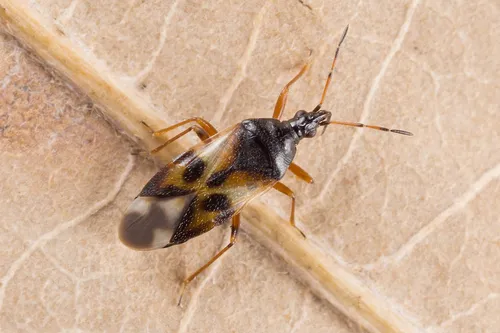
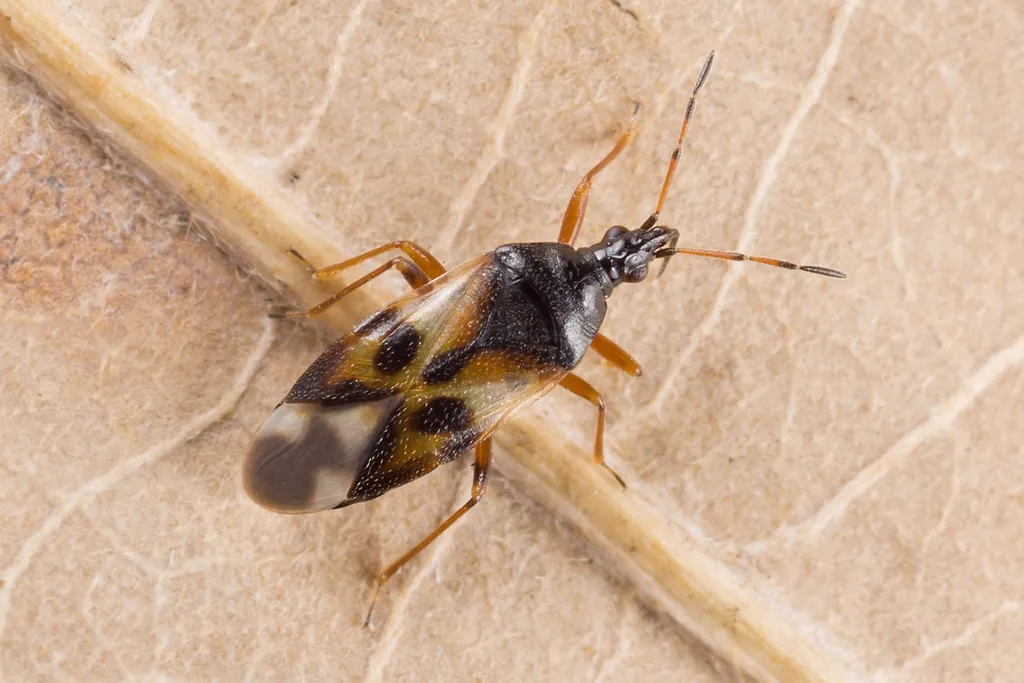
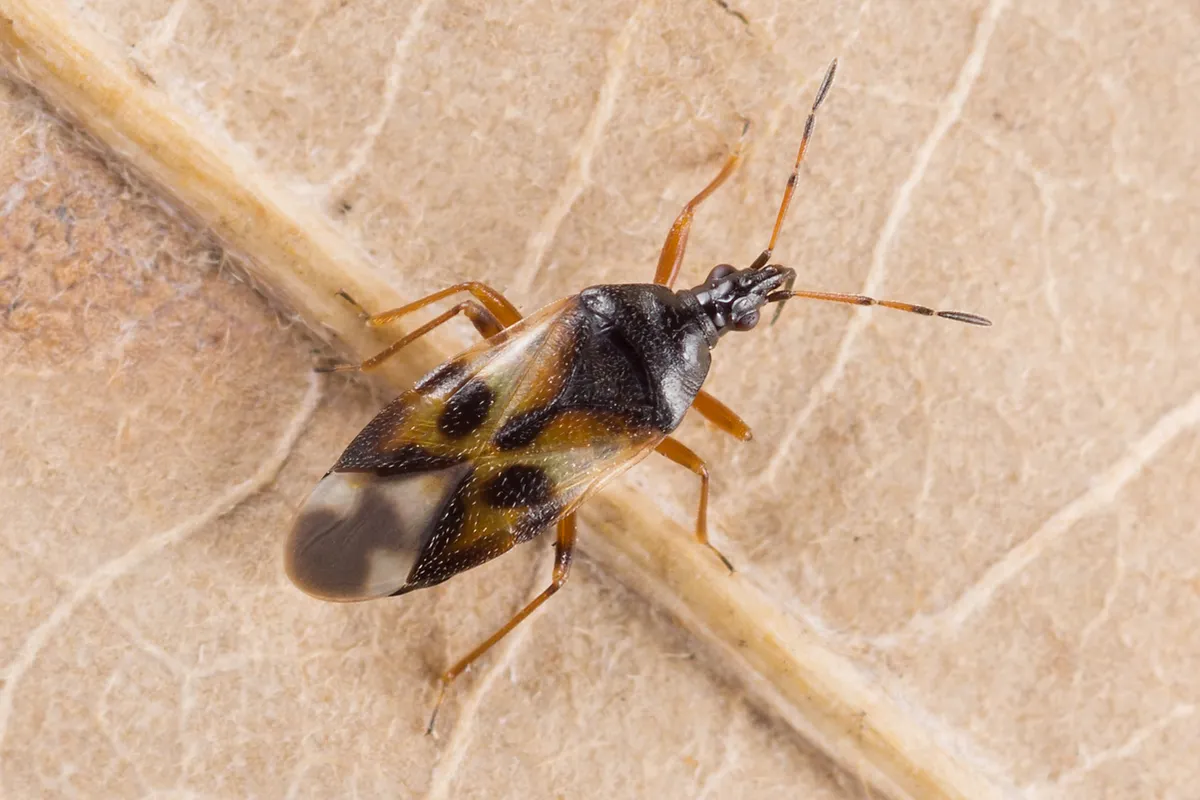
Length 3.5-4.5mm. Probably the most common species of this difficult genus. The forewings are entirely reflective and the pronotum entirely black. The legs are mostly orange-brown, with variable development of small dark patches near the tip of the femora, especially on the hind leg. The antennae are largely pale in the 2nd and 3rd segments, with dark tips to the segments, and dark 1st and 4th segments; length of second antennal segment greater than width of head across eyes . The dark patch on the membrane is typically hourglass-shaped. Detailed examination of the specimen is needed to identify this species. Photographs need to show the key features: forewings entirely reflective and the pronotum entirely black ; legs are mostly orange-brown, with variable development of small dark patches near the tip of the femora, especially on the hind leg. The antennae are largely pale in the 2nd and 3rd segments, with dark tips to the segments, and dark 1st and 4th segments; LENGTH OF SECOND ANTENNAL SEGMENT GREATER THAN WIDTH OF HEAD ACROSS EYES . The dark patch on the membrane is typically hourglass-shaped. Found on almost any plants, but preferring lower vegetation to trees.
Wikipedia reference for Anthocoris nemorum: http://en.wikipedia.org/wiki/Common_flowerbug.
Classification
- Kingdom
- Animalia
- Phylum
- Arthropoda
- Class
- Insecta
- Order
- Hemiptera (True Bugs, Cicadas, Hoppers, Aphids and Allies)
- Suborder
- Heteroptera
- Superfamily
- Cimicoidea
- Family
- Anthocoridae (Minute Pirate Bugs)
- Tribe
- Anthocorini
- Genus
- Anthocoris
Imported taxonomy record. Source availability varies; see the source references and editorial policy below.
Habitat and Range
Habitat
Found on almost any plants, but preferring lower vegetation to trees.
Seasonal Activity
Adult: all year.
Diet and Behavior
Life History
The species is predatory.
Additional species information
Recorded status
Abundant across the UK.
About True Bugs, Cicadas, Hoppers, Aphids and Allies: the wider group
Order-level background for Hemiptera, the group containing Anthocoris nemorum. Species-specific details appear above.
Group overview
Hemiptera (true bugs) includes over 80,000 described species across cicadas, aphids, leafhoppers, shield bugs, and bed bugs. Aphids alone cost global agriculture an estimated $2.5 billion annually in crop losses.
Ecological role of the group
Many Hemiptera are essential food sources for birds and predatory insects. Cicadas provide massive nutrient pulses during emergence events - a single Brood X emergence can involve trillions of individuals across 15 states.
Economic and practical significance of the group
The brown marmorated stink bug (Halyomorpha halys) caused $37 million in apple crop losses in a single year in the U.S. Mid-Atlantic region. Bed bug infestations in the U.S. increased by 500% between 2001-2010, costing the hotel industry hundreds of millions annually.
Recorded sources for this group: USDA, EPA, University research. Imported estimates may describe particular regions or reporting periods.
Photos of Common Flower Bug (3)
Frequently Asked Questions About Common Flower Bug
What is Common Flower Bug?
Common Flower Bug (Anthocoris nemorum) is a species in the family Anthocoridae, within the order Hemiptera.
How big is Common Flower Bug?
3.5-4.5mm. Probably the most common species of this difficult genus. The forewings are entirely reflective and the pronotum entirely black. The legs are mostly orange-brown, with variable development of small dark patches near the tip of the femora, especially on the hind leg. The antennae are largely pale in the 2nd and 3rd segments, with dark tips to the segments, and dark 1st and 4th segments;
Where is Common Flower Bug found?
Habitat: Found on almost any plants, but preferring lower vegetation to trees.
When is Common Flower Bug active?
Common Flower Bug: seasonal activity - Adult: all year..
What is the life cycle of a Common Flower Bug?
The species is predatory.