
Common Backswimmer
Notonecta glauca
This record describes Notonecta glauca (species). Recorded family: Notonectidae. Recorded order: Hemiptera.
Identification and Appearance
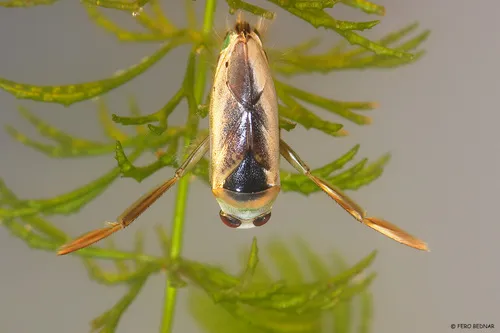
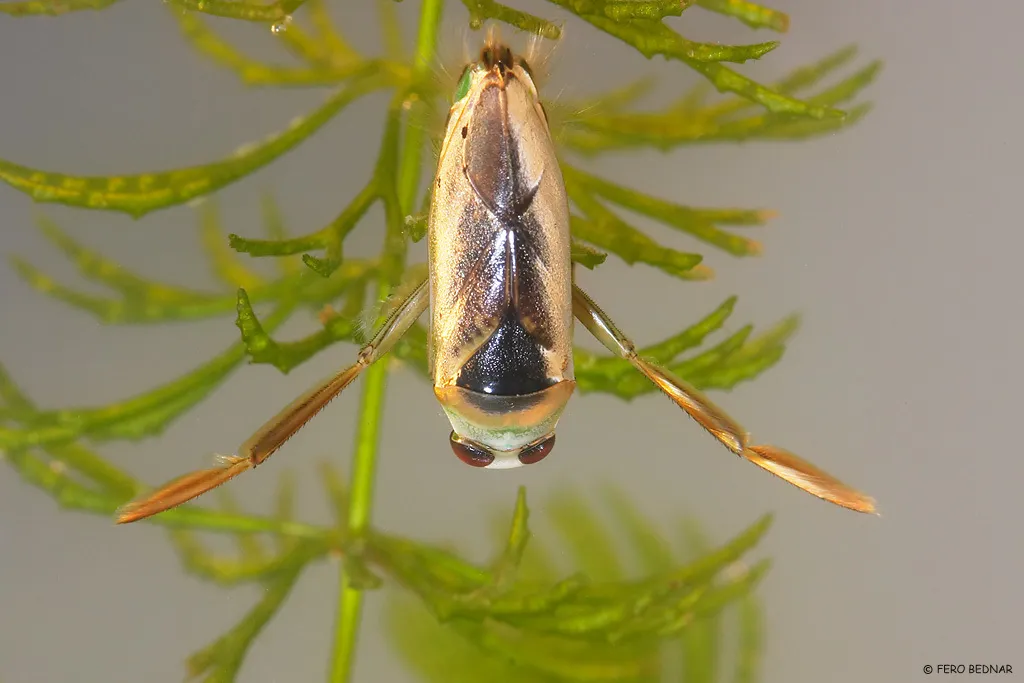
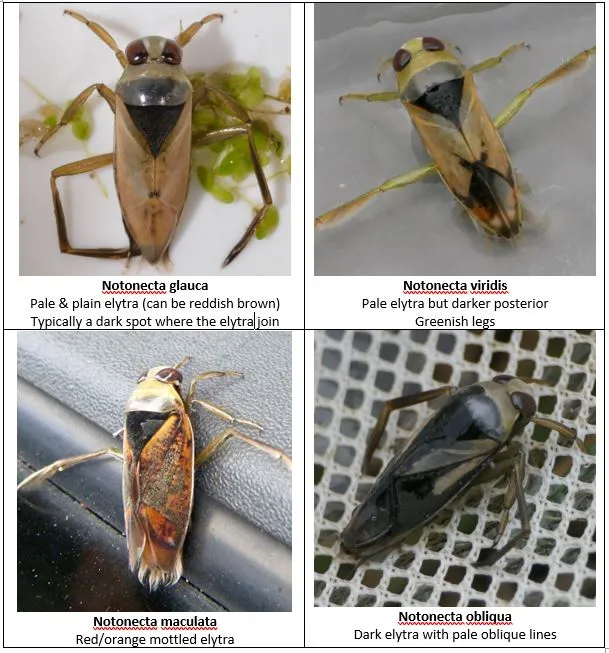
Up to nearly 2 cm in size, and commonly called backswimmers because they swim upside down and are often seen at the surface of the water. Notonecta glauca is light brown in colour with a number of dark markings and large reddish eyes. It often looks silvery as air becomes trapped in a layer of bristles covering the lower surface. The powerful oar-like hind legs are modified for swimming; they are long, flattened and fringed with hairs There are four UK Notonecta species and whilst they look broadly similar they can all be separated in the field from the different elytral markings. See ID Aids below. N. glauca is most likely to be confused with N. viridis . Both have pale wing coverings (these are darker in the other two species). The front corners of the N. viridis pronotum are pointed and they extend partly under the eye. The front pronotum corners are more or less square in N. glauca . A good photo of the dorsal surface is needed and ideally a side view showing the front corner of the pronotum. Alternatively the specimen needs to have been examined and the ID method described. Water dwelling, in ponds, cattle troughs, etc. Backswimmers are predators that attack prey as large as tadpoles and small fish, the forelegs, which are short and strong, are used for grabbing prey. In contrast to other aquatic insects that cling to submerged objects using the extra oxygen supply from haemoglobin in their abdomen, instead of using oxygen dissolved in the water. Common: the most widespread and abundant of the genus in Britain.
Wikipedia reference for Notonecta glauca: http://en.wikipedia.org/wiki/Notonecta_glauca.
Classification
- Kingdom
- Animalia
- Phylum
- Arthropoda
- Class
- Insecta
- Order
- Hemiptera
- Family
- Notonectidae
- Genus
- Notonecta
Imported taxonomy record. Source availability varies; see the source references and editorial policy below.
Habitat and Range
Habitat
Water dwelling, in ponds, cattle troughs, etc.
Seasonal Activity
All year round.
Diet and Behavior
Life History
Backswimmers are predators that attack prey as large as tadpoles and small fish, the forelegs, which are short and strong, are used for grabbing prey. In contrast to other aquatic insects that cling to submerged objects using the extra oxygen supply from haemoglobin in their abdomen, instead of using oxygen dissolved in the water.
Additional species information
Recorded status
Common: the most widespread and abundant of the genus in Britain.
About True Bugs, Cicadas, Hoppers, Aphids and Allies: the wider group
Order-level background for Hemiptera, the group containing Notonecta glauca. Species-specific details appear above.
Group overview
Hemiptera (true bugs) includes over 80,000 described species across cicadas, aphids, leafhoppers, shield bugs, and bed bugs. Aphids alone cost global agriculture an estimated $2.5 billion annually in crop losses.
Ecological role of the group
Many Hemiptera are essential food sources for birds and predatory insects. Cicadas provide massive nutrient pulses during emergence events - a single Brood X emergence can involve trillions of individuals across 15 states.
Economic and practical significance of the group
The brown marmorated stink bug (Halyomorpha halys) caused $37 million in apple crop losses in a single year in the U.S. Mid-Atlantic region. Bed bug infestations in the U.S. increased by 500% between 2001-2010, costing the hotel industry hundreds of millions annually.
Recorded sources for this group: USDA, EPA, University research. Imported estimates may describe particular regions or reporting periods.
Photos of Common Backswimmer (4)
Frequently Asked Questions About Common Backswimmer
What is Common Backswimmer?
Common Backswimmer (Notonecta glauca) is a species in the family Notonectidae, within the order Hemiptera.
Where is Common Backswimmer found?
Habitat: Water dwelling, in ponds, cattle troughs, etc.
When is Common Backswimmer active?
Common Backswimmer: seasonal activity - All year round..
What is the life cycle of a Common Backswimmer?
Backswimmers are predators that attack prey as large as tadpoles and small fish, the forelegs, which are short and strong, are used for grabbing prey. In contrast to other aquatic insects that cling to submerged objects using the extra oxygen supply from haemoglobin in their abdomen, instead of using oxygen dissolved in the water.