
Primitive Winged Insects
Order Coleoptera
The Primitive Winged Insects (Order Coleoptera) includes 15,720 species across 160 families and 3,716 genera in our directory.
About Primitive Winged Insects
Coleoptera is the largest order of insects with over 400,000 described species, representing ~25% of all known animal species and ~40% of all insects. In the U.S. alone, nearly 30,000 beetle species have been identified.
Economic Impact
Beetles have major economic significance: leaf beetles (Chrysomelidae) and weevils (Curculionoidea) are among the most destructive agricultural pests globally, costing billions annually, while predatory species like ladybugs provide natural pest control.
Ecological Role
Beetles are prominent decomposers, especially in forests, breaking down dead wood and recycling nutrients. As predators, they reduce populations of pest insects. Many species are also important pollinators of flowering plants.
Families in Coleoptera (160)
Species in Coleoptera (15,720)
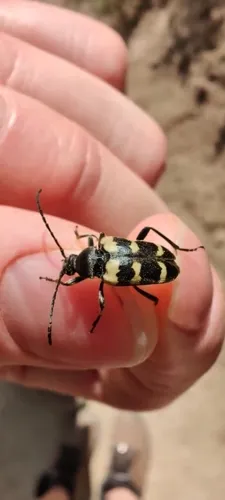
Black-banded Long-horned Beetle
Judolia gaurotoides
Judolia gaurotoides is a species of beetle in the family Cerambycidae. It was described by Casey in 1893.
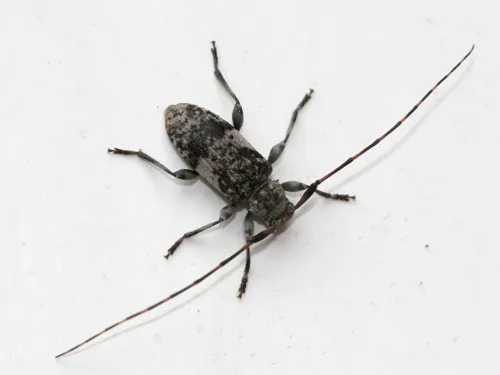
Black-clouded Longhorn Beetle agg.
Leiopus nebulosus agg.
In recent years Leiopus nebulosus has been split into two sibling species - namely Leiopus nebulosus and Leiopus linnei, which are best separated by examination of the genitalia. We have therefore treated the records below as an aggregate as it has n
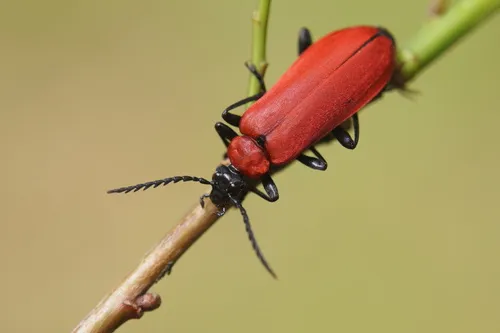
Black-headed Cardinal Beetle
Pyrochroa coccinea
Length 14 to 20 mm. Pronotum and elytra quite smooth and bright red or scarlet, otherwise rather shiny black and with a black head. Records must be supported by good photograph(s). They are diurnal and lead an exposed and conspicuous lifestyle on her
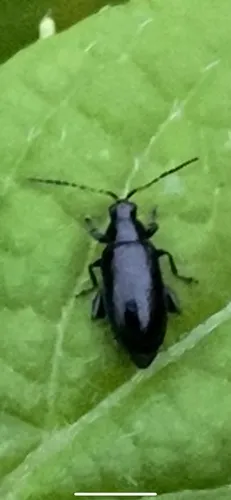
Black-headed Systena
Systena hudsonias
Systena hudsonias, the black-headed flea beetle, is a species of flea beetle in the family Chrysomelidae. It is found in North America.
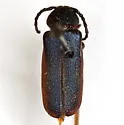
Black-horned Juniper Borer
Callidium texanum
Identification: Hard to ID to species from images (Steven Lingafelter, pers. comments to EG)
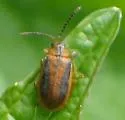
Black-margined Loosestrife Beetle
Neogalerucella calmariensis
Identification: "Light brown, usually with a black triangle or a broad, dark stripe on the thorax. The body has parallel sides, is 3-5 mm long and half as wide, and is punctuated with coarse dots and fine, dense hairs." - Cornell Imported from Europe
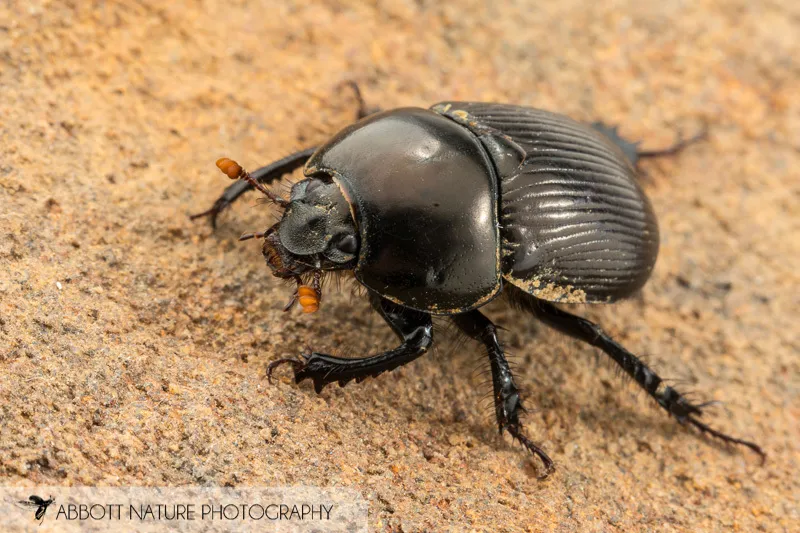
Blackburn's Earth Boring Beetle
Geotrupes blackburnii
Blackburn's Earth Boring Beetle (Geotrupes blackburnii) is a species in the family Geotrupidae, commonly known as earth-boring scarab beetles, belonging to the order Coleoptera (Beetles). It is classified within the subfamily Geotrupinae, suborder Po
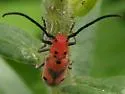
Blackened Milkweed Beetle
Tetraopes melanurus
Identification: Distinctive heavy marks on elytra, in addition to spots. Weak callus on pronotum. Antennae all dark.
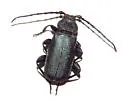
Blackhorned Pine Borer
Callidium antennatum
Usually found on fallen pine branches in the Sierra in spring
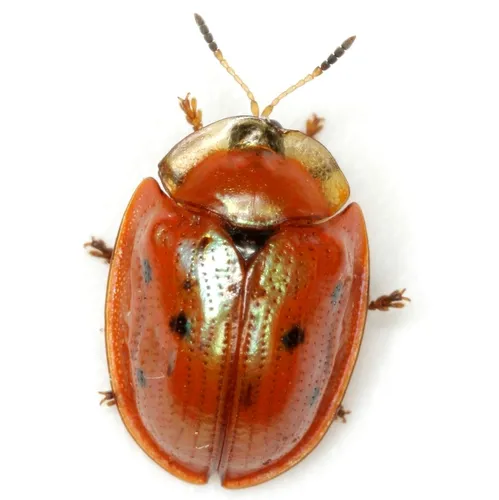
Blacklegged Tortoise Beetle
Jonthonota nigripes
Identification: Black scutellum - also, adult reddish-orange with 3 black spots on each elytron; legs mostly black or dark brown, body shape oblong and nearly parallel-sided, elytral margins opaque or translucent but not transparent, surface not high
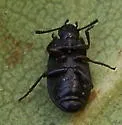
Blapstinus metallicus
Blapstinus metallicus
Identification: Body shining, sometimes slightly metallic; both apical & basal pronotal angles prominent; punctures of elytral striae interrupted, with noticeable sections often missing; wings fully developed
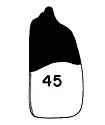
Bledius actitus
Bledius actitus
Identification: apex of elytra yellow Type Locality: Copano Bay, 9 miles north of Rockport, Aransas Co., Texas, from a sand flat near the beach. Paratypes: 40 females and 33 males, with same collection data as holotype.
Bledius albonotatus
Bledius albonotatus
Identification: variable, but usually characteristic colour pattern on elytra (pale yellow / black); abdomen with pubescence inclined posteromedially in middle, posterolaterally in lateral portions. Elytra, left, variation of color pattern. - FIGS. 3
Bledius cognatus 0
Bledius cognatus
Identification: Color reddish brown. Head dark reddish brown, dorsum often paler. Pronotum orangish brown to pale orange, darker than elytra. Elytra, legs, and antennae pale orange to yellowish brown, elytral epipleuron and disk concolorous. Abdomen
Bledius dissimilis
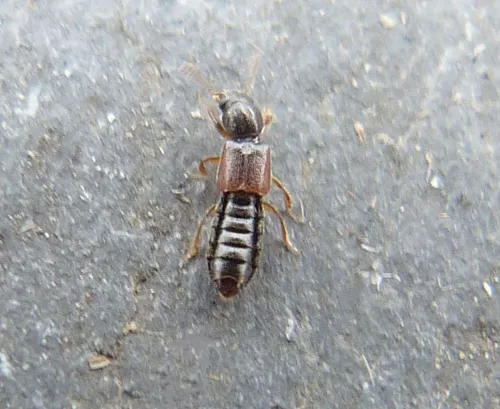
Bledius dissimilis
A small (3.5 to 4 mm) rove beetle. The short elytra and legs are orange. Unless identified by a recognised expert, a photo is required and the specimen should be examined with a microscope. In the comments box, state the key or ID method used and des
Bledius emarginatus
Bledius emarginatus
Identification: Color black, reddish brown, and yellowish brown. Head black to dark reddish brown. Pronotum and abdomen dark reddish brown to pale reddish brown. Elytra yellowish brown with broad, diffuse, pale reddish brown sutural stripe; epipleuro
Bledius fenyesi
Bledius fenyesi
Identification: resembles B. monstratus, but elytra longer, 1.17 - 1.36 times as long as pronotum [monstratus: 0.86 - 1.14]; frequently darker in colour
Bledius forcipatus
Bledius forcipatus
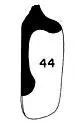
Identification: VARIATION: The subapical, brown sutural spot of the elytra is occasionally enlarged posterolaterally into a triangular, obliquely transverse stripe. Increased size of the elytral spot is more prevalent in the populations from Yuma, Ar
Bledius fortis
Bledius fortis
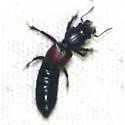
Identification: the only one in the mandibularis group that is black with bright brownish red elytra. Type Locality: Galveston, TX
Bledius gallicus
Bledius gallicus
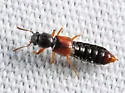
Identification: Males have an emargination of the 7th sternite which is filled by a membranous lobe. This emargination is not flanked by spinous processes. Well-developed longitudinal groove on pronotum. see also earliest record in our area: before 1
Bledius litoreus
Bledius litoreus
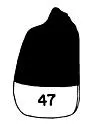
Identification: Elytron with basal two-thirds bright reddish brown; apical third pale brownish yellow (fig. 47). - left elytron Type Locality: Pass-a-Grille, Pinellas County, Florida, in beach sand, collected by J. C. Bradley on February 26, 1937 Par
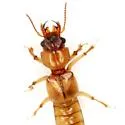
Bledius mandibularis
Bledius mandibularis
Identification: Elytra yellow to reddish yellow; remainder of body brownish black to brown to yellow Det. E. G. Riley, 2009
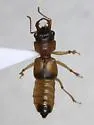
Bledius pallipennis
Bledius pallipennis
Identification: DIAGNOSIS: easily separated from nearly all individuals of all species of the mandibularis group by the color pattern of the elytra (fig. 234); the apex and suture are black to reddish black, the remainder yellowish brown to pale redd
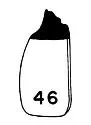
Bledius playanus
Bledius playanus
Identification: elytra with less than basal half brown (fig. 46) Type Locality: Oklahoma, Alfalfa County, 6 miles east, 3 miles south of Cherokee, Great Salt Plains National Wildlife Refuge, on the salt flats, collected by Lee H. Herman, Jr. on June
Bledius rubiginosus 0
Bledius rubiginosus
Identification: the only species of the semiferrugineus group in the US that has the head notably darker than the pronotum. The head is reddish black to reddish brown and the pronotum usually reddish orange or occasionally reddish brown. In instances
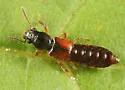
Bledius semiferrugineus
Bledius semiferrugineus
Identification: Chestnut-brown, shining, elytia paler, legs yellow-brown. Head coarsely punctured, with a smooth space on the vertex, in the middle of which is a large deep puncture. Prothorax nearly globose, truncate in front, coarsely rather densel
Bledius susae
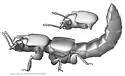
Bledius susae
Identification: Color reddish brown and yellowish brown. Head and abdomen dark reddish brown. Prothorax reddish brown. Elytra and legs yellowish brown. Type Locality: Texas: Aransas County: 4 miles S Rockport, route 35, April 27, 1981, sand flat near
Bledius suturalis
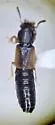
Bledius suturalis
Identification: There are no unique features by which this species may be separated from all other bidentate members of the annularis group so a combination of characters must be used. The species is small, has bicolored elytra (figs. 175-177) with a
Bledius tarandus
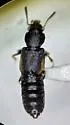
Bledius tarandus
Identification: Pronotum with front angles rounded, constricted basally, with rectangular hind angles. Elytra bicolored, with a yellow to reddish spot that can vary in size (absent in some individuals). Labrum deeply emarginate; mandibles bidentate.
Bledius zophus
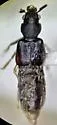
Bledius zophus
Identification: Pronotum strongly constricted in the basal third, with rectangular hind angles. Elytral pubescence medially directed towards midlateral side. Overall color dark reddish brown to black to metallic blue. Labrum deeply emarginate, bident
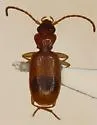
Blemus discus
Blemus discus
Identification: head dark brown or blackish; pronotum and basal half of elytra reddish-brown; distal half of elytra yellowish-brown; legs yellowish; pronotum trapezoidal, widest anteriorly; a broad dark brown or blackish band runs across the elytra j
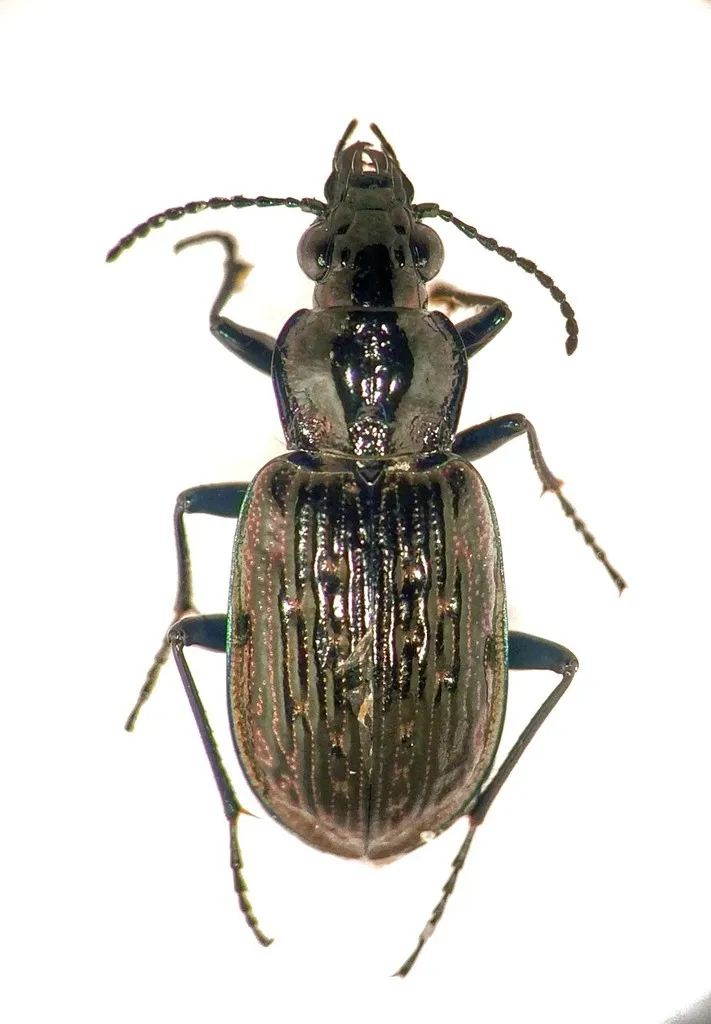
Blethisa hudsonica
Blethisa hudsonica
Blethisa hudsonica is a species of ground beetle in the family Carabidae. It is found in Europe & Northern Asia (excluding China) and North America.
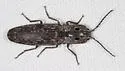
Blind Click Beetle
Alaus myops
Blind Click Beetle (Alaus myops) is a species in the family Elateridae, commonly known as click beetles, belonging to the order Coleoptera (Beetles). It is classified within the subfamily Agrypninae, tribe Hemirhipini, suborder Polyphaga, superfamily
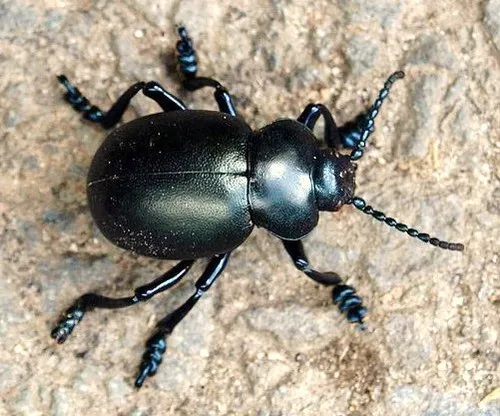
Bloody-nosed Beetle
Timarcha tenebricosa
This is a large flightless species of beetle. The rounded body is blackish in colour, often with a shiny iridescence. Adults are seen between April and June. Active mainly at night, hiding in moss or under stones during the day. It earns its common n
Blue Ghost Firefly
Phausis reticulata
Identification: One of three luminescent species in the genus. According to the description by Fender, males of this all-brown species have large eyes, a short second antennomere (less than half the length of the third), semi-elliptical pronotum (two
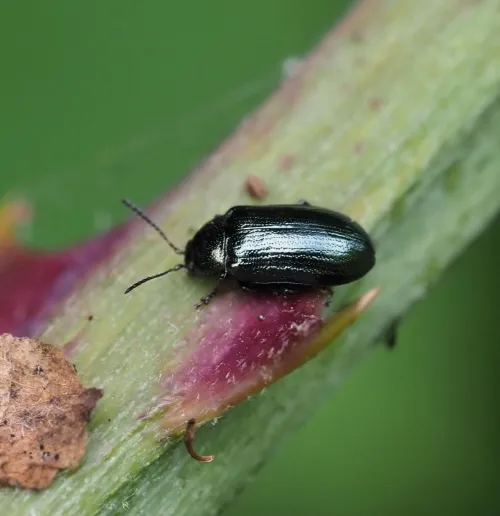
Blue Willow Beetle
Phratora vulgatissima
4-5mm. Usually blue and shiny, but despite the common name it can vary in colour from blue/green to bronze/black. It is generally oblong in shape with a pronotum that has parallel sides and a fine basal margin. Legs and antennae are dark. The elytra
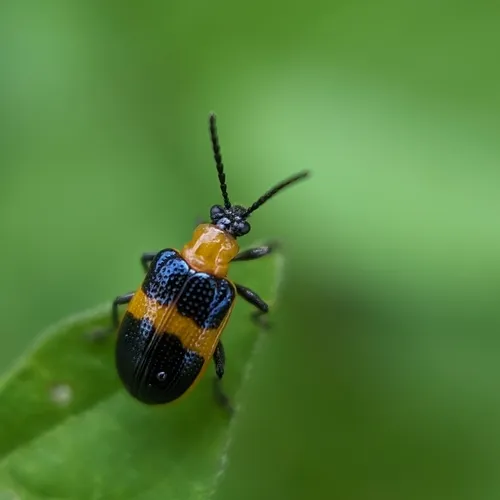
Blue-banded Lema Leaf Beetle
Lema solani
Lema solani is a species of leaf beetle in the family Chrysomelidae. It is found in North America.
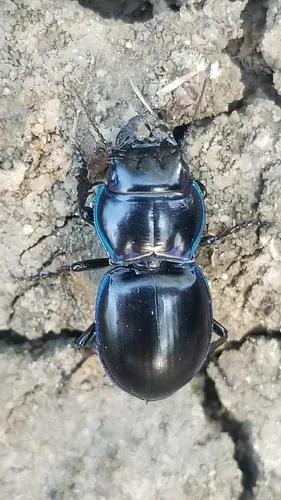
Blue-bordered Pedunculate Ground Beetle
Pasimachus elongatus
Pasimachus elongatus is a species of ground beetle in the family Carabidae. It is found in Central America and North America.
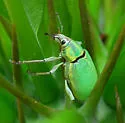
Blue-green Citrus Root Weevil
Pachnaeus litus
A native species of root weevil and a minor pest of citrus and other plants. The egg masses are easily mistaken by those of Diaprepes abbreviatus , which is an intrduced serious pest of citrus.
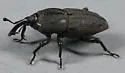
Bluegrass Billbug
Sphenophorus parvulus
Identification: Small, slender; black but usually coated with opaque gray, pronotum evenly, densely punctured all over except sometimes for median line of varying length, elytra with sinuous intervals. Differs from the similar S. minimus (that also o
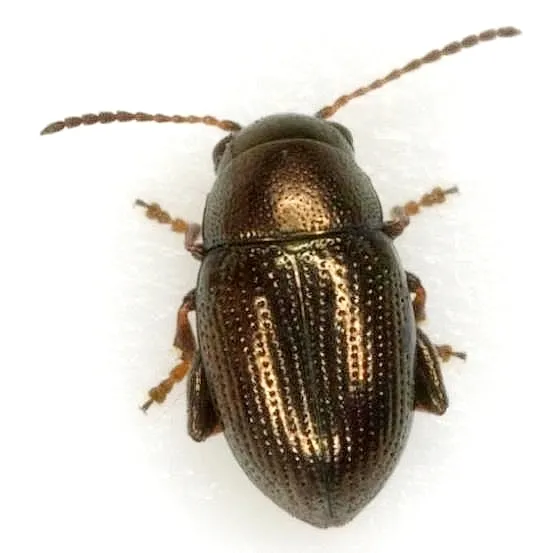
Boca Chica flea beetle
Chaetocnema rileyi
Identification: distinguished based on a combination of the vertex of head with a few punctures above each eye, the pronotal punctures distinct and evenly distributed, the pronotal margin posterior to the anterior pronotal angle lacking an irregulari
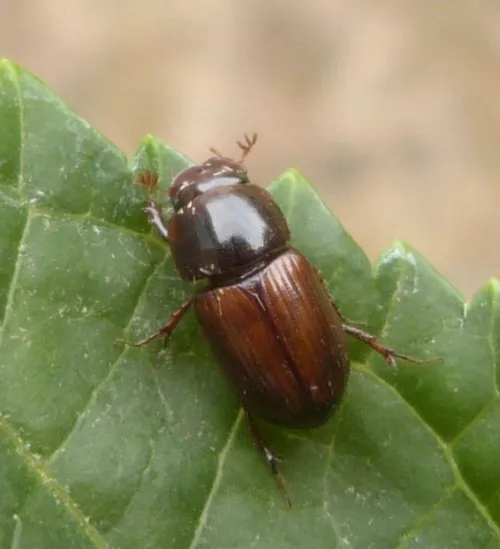
Bodilopsis rufa
Bodilopsis rufa
Length 5 to 7 mm. The pronotum usually has a paler lateral margin and the elytra colour can vary. It can resemble several other species in the tribe Aphodiini , and detailed examination is necessary. A late summer/autumn species late June to early
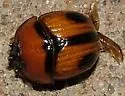
Bolbocerosoma biplagiatum
Bolbocerosoma biplagiatum
Identification: last couplet in Howden: Elytral spot almost circular; black border at posterior of pronotum usually extended forward at the midline, making a spikelike pattern; pronotal declivity coarsely punctate only in apical half. Variation in th
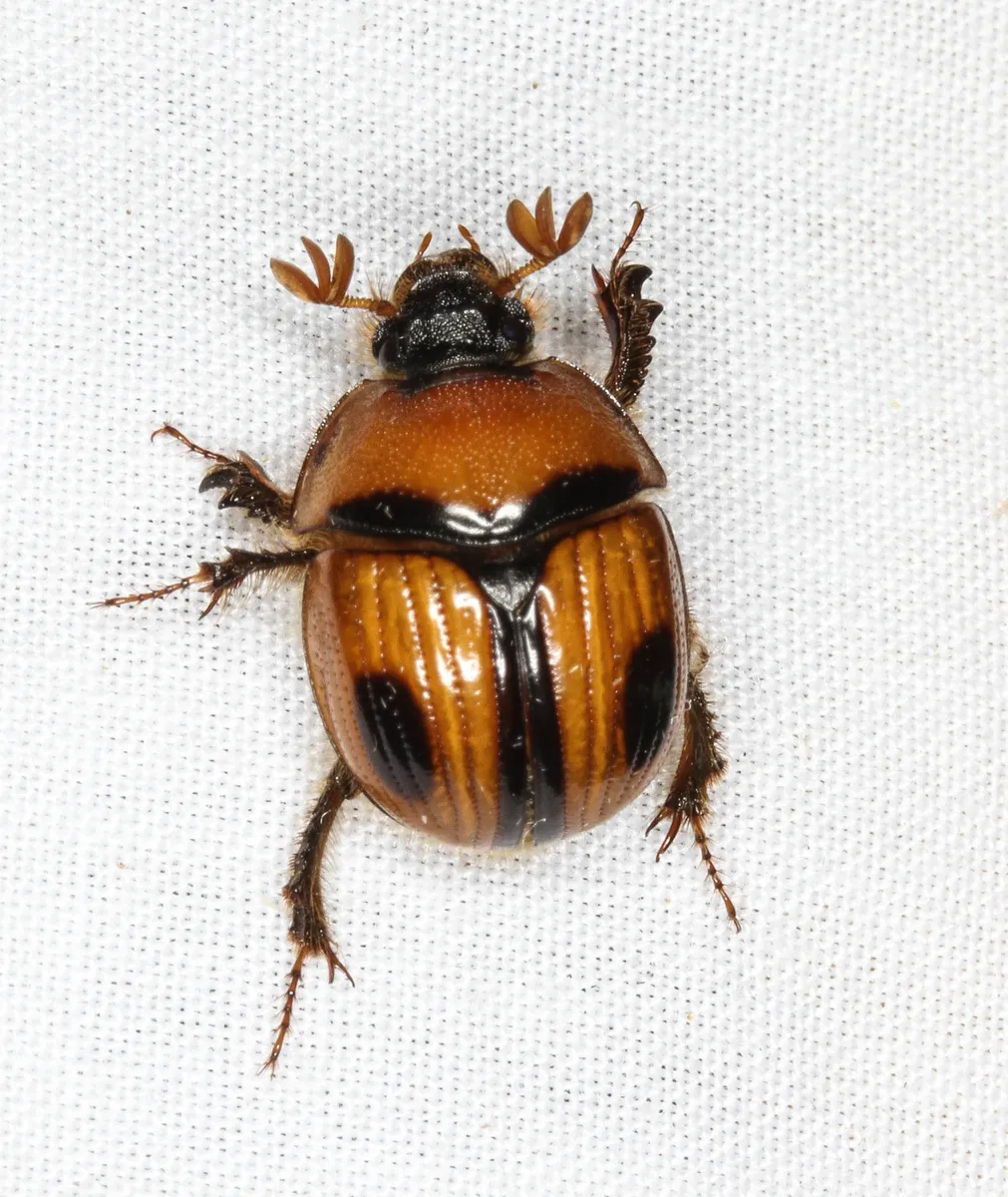
Bolbocerosoma confusum
Bolbocerosoma confusum
Identification: Elytral spot almost twice as long as wide; basal black border of pronotum not projecting forward at midline; pronotal declivity with at least the apical two-thirds coarsely punctate
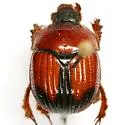
Bolbocerosoma elongatum
Bolbocerosoma elongatum
Identification: last couplet in Howden Body shape elongate; vertex and pronotum at most moderately coarsely punctured; vague circular postmedian elytral spot confined to posterior third of elytron; lateral lobe of male genital capsule about 1.8 times
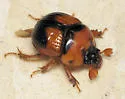
Bolbocerosoma hamatum
Bolbocerosoma hamatum
Identification: A medium-large, very convex beetle, boldly patterned in reddish/yellowish and brownish-black.
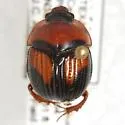
Bolbocerosoma lepidissimum
Bolbocerosoma lepidissimum
Identification: The lack of second elytral stria, the sparse punctures, the male genitalia, and usually the color are diagnostic
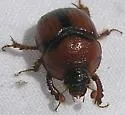
Bolbocerosoma pusillum
Bolbocerosoma pusillum
Identification: among NE spp., note small size, 5 elytral striae betw. suture and humerus, elytral intervals w/ sparse setae, and suture and apical half of elytra black
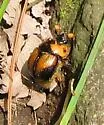
Bolbocerosoma tumefactum
Bolbocerosoma tumefactum
Identification: Orange-brown with dark markings. Note medial dark spot on pronotum, often merging with basal band.
Bolitophagus corticola
Bolitophagus corticola
Identification: Smaller than Bolitotherus . Male not horned
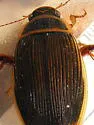
Boreal Water Beetle
Dytiscus alaskanus
Identification: Relatively small for the genus; metacoxal lobes acuminate; abdominal sterna yellow with expanded black markings; sulcate (ridged) females with ridges separated by yellow striae, ridges 7 & 10 and 8 & 9 fused apically
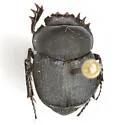
Boreocanthon ebenus
Boreocanthon ebenus
Identification: "distinguished from all other Canthon in NE by the lack of a marginal line on the anteroventral surface of the posterior tibia, a deep indentation betw. the clypeus and gena, and presence of large granules on the elytra." Det. C. S. W
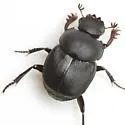
Boreocanthon lecontei
Boreocanthon lecontei
Identification: pronotal sculpturing unique, consists of double granulation. The larger granulation is very fine and densely coalescent, producing an even, rather finely granulorugose surface no close affinity within genus
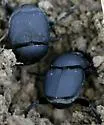
Boreocanthon praticola
Boreocanthon praticola
Identification: "similar in to B. probus. B. praticola has granules of two sizes on the promotum, elytra, and pugidium, whereas B. probus has granules of one size only. Large spmns of B. practicola approach small spmns of B. ebenus in size, but B. eb
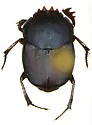
Boreocanthon puncticollis
Boreocanthon puncticollis
Identification: has a tubercle beneath the anterior pronotal angle (lacking in C. simplex )
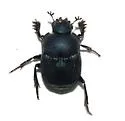
Boreocanthon simplex
Boreocanthon simplex
Identification: pronotal hypomeron beneath the anterior pronotal angle without tubercle ( C. puncticollis has the tubercle)
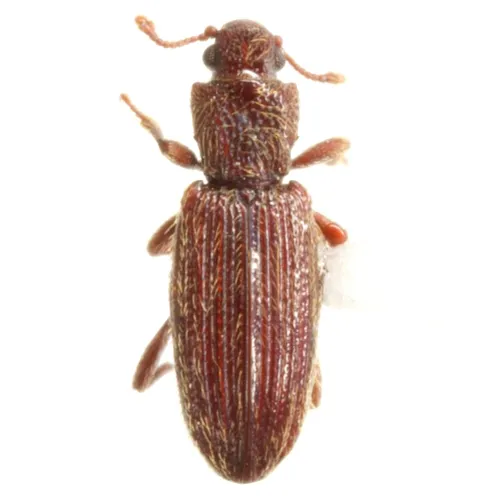
Bothrideres cryptus
Bothrideres cryptus
Bothrideres cryptus is a species of dry bark beetle in the family Bothrideridae. It is found in North America.
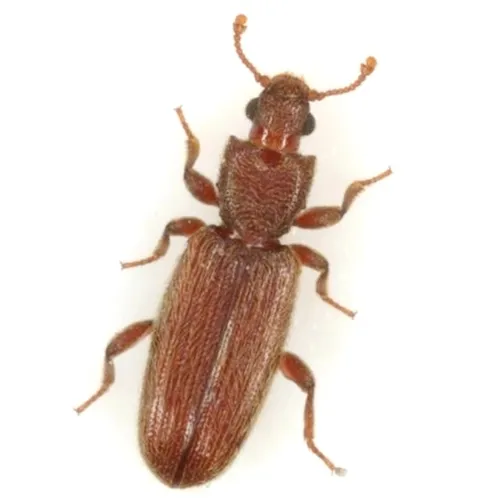
Bothrideres geminatus
Bothrideres geminatus
Identification: One of two eastern species that are nearly identical: B. geminatus has two rows of small punctures on the raised humeral interval and appressed elytral pubescence; B. cryptus , one row of small punctures on the raised humeral interval
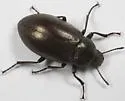
Bothrotes plumbeus
Bothrotes plumbeus
Identification: Lead-bronze, almost opaque, briefly gray-pubescent, head densely punctate, thorax almost half as wide, narrowed anteriorly, sides rounded, anterior angles subacute, not prolonged, densely subtly punctate; elytra densely punctate and w
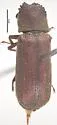
Boxwood Borer
Heterobostrychus brunneus
common in Africa where it is often a pest in debarked logs and in timber used in floors/roof
Brachiacantha blaisdelli 0
Brachiacantha blaisdelli
Identification: Gordon's Figures - Elytron black with orange maculation varying from a form with irregular median band and apical spot to a form with median band and apical spot obscurely connected only member of the dentipes group with an extreme we
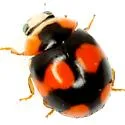
Brachiacantha decora
Brachiacantha decora
Identification: Gordon's Figures Type locality: Brownsville, Cameron Co., Texas
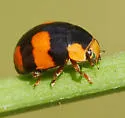
Brachiacantha dentipes
Brachiacantha dentipes
Identification: Gordon's figures Fairly large (for this genus). Front tibia has arc-shaped flange, prominent spine. Elytra strongly marked with yellow spot at apex (tip) plus a band above, sometimes broken into two spots. See discussion here: Type lo
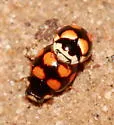
Brachiacantha felina
Brachiacantha felina
Identification: Gordon's figures this sp. is kinda messed up in that Gordon didn't find the type for felina and he described rotunda as a sympatric n. sp. and later agreed that rotunda should by a synonym of felina , which again has no type...
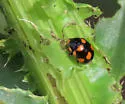
Brachiacantha illustris 0
Brachiacantha illustris
Identification: Gordon's Figures Type Locality: Beaver Brook, Clear Creek Co., CO
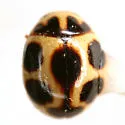
Brachiacantha lepida
Brachiacantha lepida
Identification: Gordon's figures - elytral color pattern unique within genus Gordon located 3 type specimens of lepida and here designate and label a male labeled "Mexico" as the lectotype. One paralectotype in the Paris Museum bears no data and one
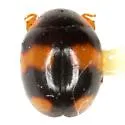
Brachiacantha quadrillum
Brachiacantha quadrillum
Identification: Gordon's figures "Most examples of B. quadrillum can be recognized by the elytral color pattern because the presence of a single apical spot on the elytron is a character not shared by other members of the group. Those specimens havin
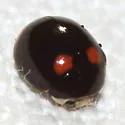
Brachiacantha quadripunctata
Brachiacantha quadripunctata
Identification: Gordon's figures Both subspecies: B. quadripunctata flavifrons :
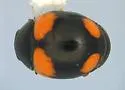
Brachiacantha schwarzi
Brachiacantha schwarzi
Identification: Gordon's figures Form round. Head yellow. Pronotum black except anterior margin and anterolateral angle yellow, apical margin of black area uneven. Elytron black except 2 yellow, fused spots occupying basal 1/2, large apical spot pres
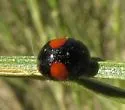
Brachiacantha subfasciata
Brachiacantha subfasciata
Identification: Gordon's figures , typical form has bands wider, redder, and more distant from suture than its congeners Det. M. A. Quinn, 2011 Type locality: "Mexique"
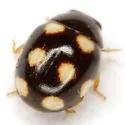
Brachiacantha testudo
Brachiacantha testudo
Identification: Gordon's figures - The rounded form, 5 spots on each elytron, and southern Texas distribution make correct identification of this species easy. Type locality: Brownsville, Texas
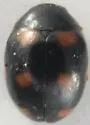
Brachiacantha ursina
Brachiacantha ursina
Identification: Gordon's Figures 5 spots on each elytron; elyrta finely punctured, slightly dullж body more elongated than in most congeners. The combination of large size and elongate body will separate ursina from other eastern congeners of similar
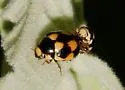
Brachiacantha uteella
Brachiacantha uteella
Identification: Gordon's figures - "Form elongate oval. Elytron variable, typical form black with 5 yellow spots, basal spot often faint, or spots expanded, partially confluent. Pronotum of male black except anterior margin and anterolateral angle br
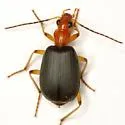
Brachinus aabaaba
Brachinus aabaaba
Identification: last couplet: Knees infuscated; elytral pubescence evenly distributed over surface; pronotum narrow (fig. 421) Antennal articles 3 and 4, and knees infuscated, otherwise ferrugineous. elytra slate-grey, including the edge. rather mini
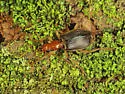
Brachinus adustipennis
Brachinus adustipennis
Identification: The brown elytra and pale epipleura (elytral edge), and pubescent elytral disc separate members of this species from all others east of the continental divide in the United States. knees infuscated. Antennal articles 3 and 4, usually
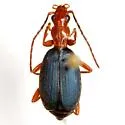
Brachinus alexiguus
Brachinus alexiguus
Identification: Submentum densely setiferous (16 or more setae, fig. 21); larger, more robust beetles; antennae ferrugineous B. americanus (LeConte), p. 55 Submentum sparsely setiferous (10 or less, fig. 19); smaller beetles; antennal articles 3 and
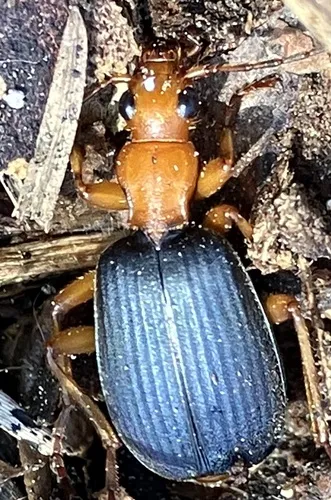
Brachinus alternans
Brachinus alternans
Identification: 1. Elytra concolourus, epipleura (margin) dark. Head & pronotum lighter than elytra. [suture also apparently dark, as in Brachinus phaeocerus , B. phaeocerus doesn't have prominent elytral ribs] 2. Mentum flat with 2 shallow lateral p
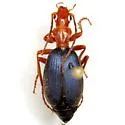
Brachinus americanus
Brachinus americanus
Identification: "Head, thorax, and legs ferruginous. Antenna; ferruginous, growing dusky towards the extremity. Head smooth, with a deep and long longitudinal impression between the eyes; eyes black. Thorax sparsely punctured; transverse impressions
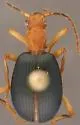
Brachinus costipennis
Brachinus costipennis
Identification: Mentum with a setose deep central sulcus, abdomen pale ventrally, elytra glabrous Ferrugineous, except antennal article 4 occasionally infuscated. Dorsal surface and epipleura of elytra blue. the only member of costipennis group in ou
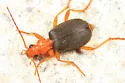
Brachinus cyanipennis
Brachinus cyanipennis
Identification: The most distinctive feature (magnifications required) are the extra long erect setae along elytral interval 3.
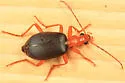
Brachinus cyanochroaticus
Brachinus cyanochroaticus
Identification: Differs from the nearest species by the combination of antennomere 3 pale in proximal half, legs entirely pale, and with protibia finely strigose (parrallel lines).
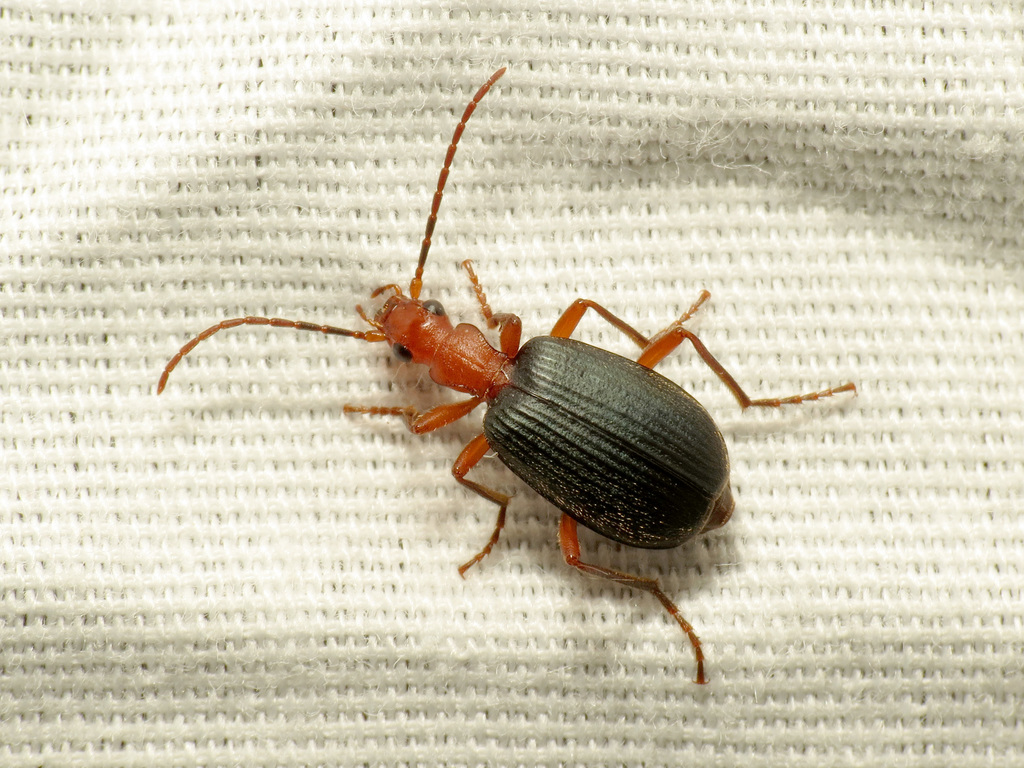
Brachinus elongatulus
Brachinus elongatulus
(c) Katja Schulz, some rights reserved (CC BY)Identification: differs from very similar B. texanus, B. elongatulus in that it has a limited southwestern range; elytra distinctly broader, with more prominent costae, and bluish reflection (may not be visible at all angles, not grey-greenish); and
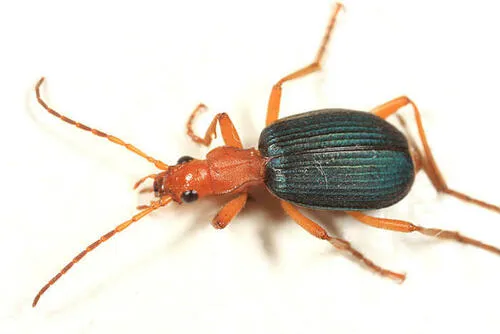
Brachinus favicollis
Brachinus favicollis
Identification: pronotal punctures coarse, dense, uniformly distributed
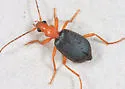
Brachinus fulminatus
Brachinus fulminatus
Identification: Externally, the combination of third antennomere mostly dark plus legs uniformly pale excludes very similar B. cyanochroaticus and B. quadripennis.
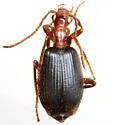
Brachinus geniculatus
Brachinus geniculatus
Identification: last key couplet: Tarsi, tibiae, and apices of femora infuscated to black Usually the antennal articles 3 and 4 darker than 1 and 2. Tibiae infuscated, degree varied with specimens; elytra slate-colored. Det. Peter W. Messer, 2021 Typ
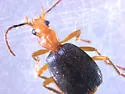
Brachinus imporcitis
Brachinus imporcitis
Identification: Apex of antennal articles 3 and 4, otherwise ferrugineous. Outer antennal articles usually dark. Dorsal surface and epipleura (edge) of elytra bright blue, with black sutural margins. Type locality: Pinal Creek, Globe, Gila County, Ar
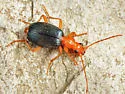
Brachinus janthinipennis
Brachinus janthinipennis
Identification: "This widespread Brachinus species is characterized by venter completely pale. Most other Brachinus have at least some ventral portions dark" - P. Messer
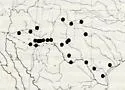
Brachinus javalinopsis 0
Brachinus javalinopsis
Identification: As in quadripennis , except antennal articles 3 and 4 infuscated only apically, and tibiae, tarsi, and palpi ferrugineous. The color of antennal articles 3 and 4 is paler in some individuals. Type locality: Willcox, Cochise County, Ar
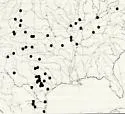
Brachinus kavanaughi 0
Brachinus kavanaughi
Identification: last key couplet: Knees not infuscated; elytral pubescence in rows between barely elevated costae; pronotum cordiform (fig. 226) elytra blue Type locality: Superior, Boulder County, Colorado, along Coal Creek.
Brachinus lateralis
Brachinus lateralis
Identification: A southwestern species distinguished by dark knees against pale legs; elytra dark brownish with abrupt absence of pubescence on disc (center portion).
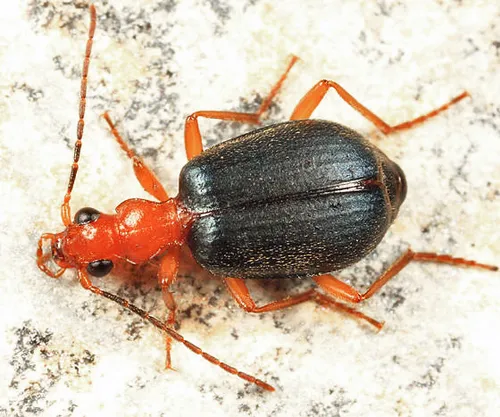
Brachinus medius
Brachinus medius
Identification: Dark venter including lateral portion of metasternum. Entire metasternum may be pale in some individuals; metasternum not shortened; glabrous proepipleura & poroepisterna; antennomere #3 completely dark; antennomere #1 proportionately
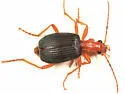
Brachinus mexicanus
Brachinus mexicanus
Identification: Most characteristic is pubescence limited to lateral and apical portions of elytra, absent over entire center portion. last couplet: Elytra blue, micro sculpture coarse, surface dull The composition of this species seems to be more co
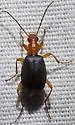
Brachinus phaeocerus
Brachinus phaeocerus
Identification: femora orange, tibiae and tarsi infuscated to black; elytra bright blue with black sutural margin; antennal articles 3-11 usually dark. Type Locality: Texas
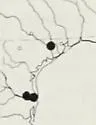
Brachinus puberulus 0
Brachinus puberulus
Identification: Anterior tibia with anterior surface strigose; elytra with costae moderately elevated Type locality: Brownsville, Cameron Co., Texas
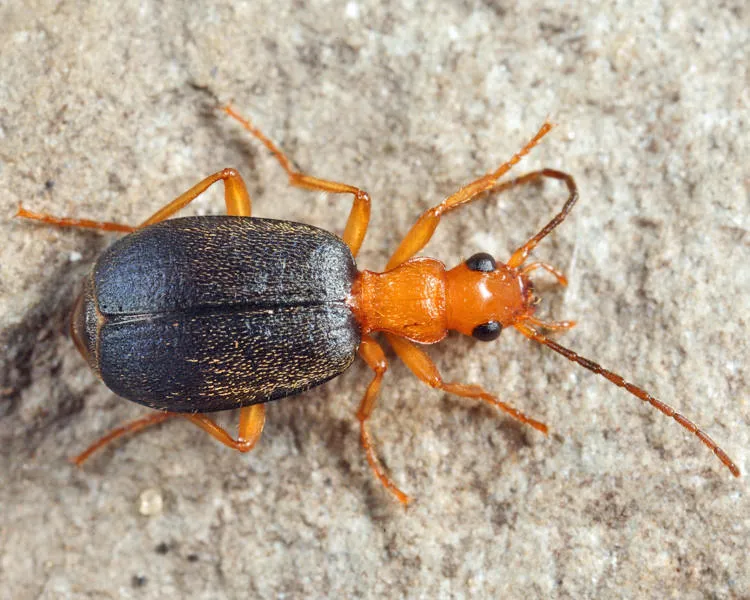
Brachinus rugipennis
Brachinus rugipennis
Brachinus rugipennis is a species of ground beetle in the family Carabidae. It is found in North America.
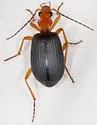
Brachinus tenuicollis
Brachinus tenuicollis
Identification: Antennal articles 3 and 4 infuscated at apex in some specimens, otherwise beetles ferrugineous. Dorsal surface and epipleura (narrow margin) of elytra blue. The large size, strongly costate elytra, and infuscated mesepisterna separate
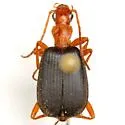
Brachinus texanus
Brachinus texanus
Identification: Last Couplet: Elytra slate-grey with greenish luster. Det. V. Belov, 2018
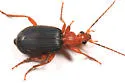
Brachinus vulcanoides
Brachinus vulcanoides
Identification: Helpful clues include location (northeastern USA), the color pattern of antennae, an especially deep constriction of the pronotum, and protibiae with smooth surface
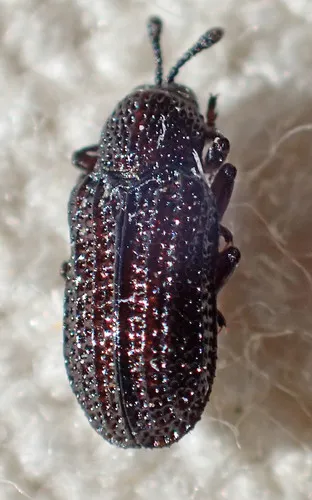
Brachycoryna dolorosa
Brachycoryna dolorosa
Identification: Three color forms (shiny black, reddish-brown, or yellow), not considered subspecies, all of which can be found in a single population.
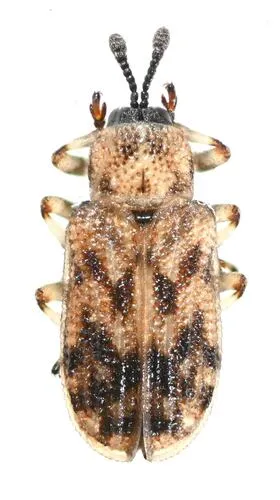
Brachycoryna hardyi
Brachycoryna hardyi
Brachycoryna hardyi is a species of leaf beetle in the family Chrysomelidae. It is found in Central America and North America.