
Black-margined Loosestrife Beetle
Neogalerucella calmariensis
This record describes Neogalerucella calmariensis (species). Recorded family: Chrysomelidae. Recorded order: Coleoptera.
Identification and Appearance
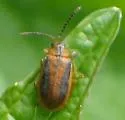
Light brown, usually with a black triangle or a broad, dark stripe on the thorax. The body has parallel sides, is 3-5 mm long and half as wide, and is punctuated with coarse dots and fine, dense hairs. - Cornell Imported from Europe as a biocontrol to combat purple loosestrife ( Lythrum salicaria )
Classification
- Kingdom
- Animalia
- Phylum
- Arthropoda
- Class
- Insecta
- Order
- Coleoptera (Beetles)
- Suborder
- Polyphaga
- Superfamily
- Chrysomeloidea
- Family
- Chrysomelidae (Leaf Beetles)
- Subfamily
- Galerucinae
- Tribe
- Galerucini
- Genus
- Neogalerucella (Purple Loosestrife Beetles)
Imported taxonomy record. Source availability varies; see the source references and editorial policy below.
Habitat and Range
Geographic Range
Native to the entire Palaearctic Region ; introduced since 1992 in a number of ne. and nw. US states and several areas in Canada
Diet and Behavior
Diet: Very specific host, the invasive purple loosestrife, Lythrum salicaria . It is not known to feed on any native plants.
Life History
Female lays 300-400 eggs per year. Pupation occurs in the soil. From egg to adult takes about 6 weeks, and the adult lives 8-10 weeks. One generation per year.
Additional species information
Species notes from the sources
Etymology: Author: Linnaeus, 1767
About Primitive Winged Insects: the wider group
Order-level background for Coleoptera, the group containing Neogalerucella calmariensis. Species-specific details appear above.
Group overview
Coleoptera is the largest order of insects with over 400,000 described species, representing ~25% of all known animal species and ~40% of all insects. In the U.S. alone, nearly 30,000 beetle species have been identified.
Ecological role of the group
Beetles are prominent decomposers, especially in forests, breaking down dead wood and recycling nutrients. As predators, they reduce populations of pest insects. Many species are also important pollinators of flowering plants.
Economic and practical significance of the group
Beetles have major economic significance: leaf beetles (Chrysomelidae) and weevils (Curculionoidea) are among the most destructive agricultural pests globally, costing billions annually, while predatory species like ladybugs provide natural pest control.
Recorded sources for this group: Britannica, Smithsonian, NCSU Entomology. Imported estimates may describe particular regions or reporting periods.
Photos of Black-margined Loosestrife Beetle (5)
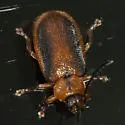
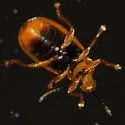
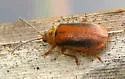
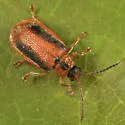
Photo credits: Contributed by tom murray; Additional contributions by Hannah Nendick-Mason , Beatriz Moisset , Boris Bueche , v belov
Frequently Asked Questions About Black-margined Loosestrife Beetle
What is Black-margined Loosestrife Beetle?
Black-margined Loosestrife Beetle (Neogalerucella calmariensis) is a species in the family Chrysomelidae, within the order Coleoptera.
How do you identify Black-margined Loosestrife Beetle?
Light brown, usually with a black triangle or a broad, dark stripe on the thorax. The body has parallel sides, is 3-5 mm long and half as wide, and is punctuated with coarse dots and fine, dense hairs. - Cornell
Where is Black-margined Loosestrife Beetle found?
Range: Native to the entire Palaearctic Region ; introduced since 1992 in a number of ne. and nw. US states and several areas in Canada
What does Black-margined Loosestrife Beetle eat?
The diet of the Black-margined Loosestrife Beetle includes Very specific host, the invasive purple loosestrife, Lythrum salicaria . It is not known to feed on any native plants..
What is the life cycle of a Black-margined Loosestrife Beetle?
Female lays 300-400 eggs per year. Pupation occurs in the soil. From egg to adult takes about 6 weeks, and the adult lives 8-10 weeks. One generation per year.