
Vedalia Beetle
Novius cardinalis
This record describes Novius cardinalis (species). Recorded family: Coccinellidae. Recorded order: Coleoptera.
Identification and Appearance
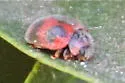
Life cycle photos - Natural History of Orange Co., University of California The vedalia beetle, Rodolia cardinalis , is the most famous introduced beneficial insect in history. Introduced from Australia to control Cottony Cushion Scale - Icerya purchasi Over the winter of 1888-1889 a lady beetle called vedalia beetle was introduced into California from Australia to combat cottony cushion scale, Icerya purchasi - also an introduced species. Cottony cushion scale was causing infestations so severe in California citrus groves that growers were pulling out their trees and burning them. Orchard values were plummeting. Yet, by the fall of 1889, the pest was completely controlled in the areas of introduction. The vedalia beetle literally saved the California citrus industry, and since the California success, it has been exported to many other parts of the world, often with equally successful results. The introduction of the vedalia beetle is considered to be the beginning of classical biological control. - Cornell University This species proved to be an immediate and spectacular success, and this success precipitated a wave of coccinellid introductions ... Available records show that 179 species have been intentionally imported into North America; 8 species have become established through accidental introductions, 5 of these had been intentionally introduced but did not become established where released. A total of 26 species of foreign Coccinellidae are now definitely or possibly established in North America, 16 of these resulting from intentional releases.
Classification
- Kingdom
- Animalia
- Phylum
- Arthropoda
- Class
- Insecta
- Order
- Coleoptera (Beetles)
- Suborder
- Polyphaga
- Superfamily
- Coccinelloidea
- Family
- Coccinellidae (Lady Beetles)
- Subfamily
- Coccidulinae
- Tribe
- Noviini
- Genus
- Novius
Imported taxonomy record. Source availability varies; see the source references and editorial policy below.
Habitat and Range
Habitat
Acacia, boxwood, citrus, magnolia, Nandina, olive, Pittosporum, and rose - all species attacked by cottony cushion scale. - Cornell University
Geographic Range
CA, TX, FL / Mex., etc. - Map [Cite: ( 4 ) , native to Australia
Seasonal Activity
There are 8 generations per year in the cooler coastal areas of California, and 12 generations per year in the hot, dry inland areas. - Cornell University
Diet and Behavior
Diet: R. cardinalis is host specific to cottony cushion scale. Adults and mature larvae feed on all scale stages; young feed on eggs. - Cornell University
Life History
A female will lay from 150-190 eggs during her lifetime. - Cornell University
Additional species information
Species notes from the sources
Etymology: 'Vedalia Beetle' refers to original genus. Cardinalis probably refers to the bright red color, similar to the red robes of Catholic cardinals.
About Primitive Winged Insects: the wider group
Order-level background for Coleoptera, the group containing Novius cardinalis. Species-specific details appear above.
Group overview
Coleoptera is the largest order of insects with over 400,000 described species, representing ~25% of all known animal species and ~40% of all insects. In the U.S. alone, nearly 30,000 beetle species have been identified.
Ecological role of the group
Beetles are prominent decomposers, especially in forests, breaking down dead wood and recycling nutrients. As predators, they reduce populations of pest insects. Many species are also important pollinators of flowering plants.
Economic and practical significance of the group
Beetles have major economic significance: leaf beetles (Chrysomelidae) and weevils (Curculionoidea) are among the most destructive agricultural pests globally, costing billions annually, while predatory species like ladybugs provide natural pest control.
Recorded sources for this group: Britannica, Smithsonian, NCSU Entomology. Imported estimates may describe particular regions or reporting periods.
Photos of Vedalia Beetle (5)
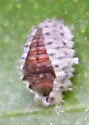
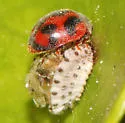
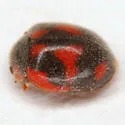
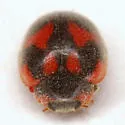
Photo credits: Contributed by Eric R. Eaton; Additional contributions by Beatriz Moisset , Chuck Entz , Mike Quinn , Ron M. , Abigail Parker
Frequently Asked Questions About Vedalia Beetle
What is Vedalia Beetle?
Vedalia Beetle (Novius cardinalis) is a species in the family Coccinellidae, within the order Coleoptera.
How big is Vedalia Beetle?
Length 2.6 to 4.2 mm
How do you identify Vedalia Beetle?
Life cycle photos - Natural History of Orange Co., University of California
Where is Vedalia Beetle found?
| Feature | Details |
|---|---|
| Habitat | Acacia, boxwood, citrus, magnolia, Nandina, olive, Pittosporum, and rose - all species attacked by cottony cushion scale. - Cornell University |
| Range | CA, TX, FL / Mex., etc. - Map [Cite: ( 4 ) , native to Australia |
What does Vedalia Beetle eat?
The diet of the Vedalia Beetle includes R. cardinalis is host specific to cottony cushion scale. Adults and mature larvae feed on all scale stages; young feed on eggs. - Cornell University.
When is Vedalia Beetle active?
Vedalia Beetle: seasonal activity - There are 8 generations per year in the cooler coastal areas of California, and 12 generations per year in the hot, dry inland areas. - Cornell University.
What is the life cycle of a Vedalia Beetle?
A female will lay from 150-190 eggs during her lifetime. - Cornell University