
Valgus canaliculatus
This record describes Valgus canaliculatus (species). Recorded family: Scarabaeidae. Recorded order: Coleoptera.
Identification and Appearance
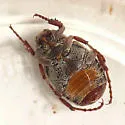
integument usually lighter than in V. seticollis but telling the two apart from above may be difficult; see key in Males have a dense patch of ochre scales on the ventral side of abdomen: Females have a long process on the pygidium : Differences in dorsal scale cover can be used, if well preserved (see under V. seticollis )
Classification
- Kingdom
- Animalia
- Phylum
- Arthropoda
- Class
- Insecta
- Order
- Coleoptera (Beetles)
- Suborder
- Polyphaga
- Superfamily
- Scarabaeoidea
- Family
- Scarabaeidae (Scarab Beetles)
- Subfamily
- Cetoniinae
- Tribe
- Valgini
- Genus
- Valgus
Imported taxonomy record. Source availability varies; see the source references and editorial policy below.
Habitat and Range
Geographic Range
e. US (PA-n.FL to MO-e.TX) - Map [must verify the RI record in =v=]
Seasonal Activity
Adults Mar to early Aug (rarely in Feb & Nov) under logs; Mar-Jun in SC
Diet and Behavior
Diet: Adults--primarily, or only, males --visit a variety of spring flowers for nectar. These include trees, shrubs, and herbs.
Life History
Adults found taking nectar on spring flowers. Presumably, adults seek out termite galleries and lay eggs there in late spring to summer. Larvae "feed on the walls of termite galleries", specifically, those of Reticulitermes . (What are they actually eating?) Pupation occurs in late summer, in small oval cells made from bits of wood or soil. Adults emerge in late summer and overwinter, apparently under logs, etc. (Near the termite galleries?) Adults are found in colonies (associated with the termites), usually with approximately equal numbers of males and females. ( 7 )
Additional species information
Species notes from the sources
Etymology: Valgus canaliculatus ( Olivier 1789)
About Primitive Winged Insects: the wider group
Order-level background for Coleoptera, the group containing Valgus canaliculatus. Species-specific details appear above.
Group overview
Coleoptera is the largest order of insects with over 400,000 described species, representing ~25% of all known animal species and ~40% of all insects. In the U.S. alone, nearly 30,000 beetle species have been identified.
Ecological role of the group
Beetles are prominent decomposers, especially in forests, breaking down dead wood and recycling nutrients. As predators, they reduce populations of pest insects. Many species are also important pollinators of flowering plants.
Economic and practical significance of the group
Beetles have major economic significance: leaf beetles (Chrysomelidae) and weevils (Curculionoidea) are among the most destructive agricultural pests globally, costing billions annually, while predatory species like ladybugs provide natural pest control.
Recorded sources for this group: Britannica, Smithsonian, NCSU Entomology. Imported estimates may describe particular regions or reporting periods.
Photos of Valgus canaliculatus (5)
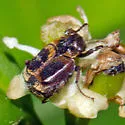
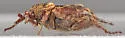
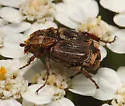
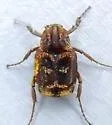
Photo credits: Contributed by Cotinis; Additional contributions by Mike Quinn , Boris Bueche , v belov
Frequently Asked Questions About Valgus canaliculatus
What is Valgus canaliculatus?
Valgus canaliculatus is a species in the family Scarabaeidae, within the order Coleoptera.
How big is Valgus canaliculatus?
4-5 mm
How do you identify Valgus canaliculatus?
integument usually lighter than in V. seticollis but telling the two apart from above may be difficult; see key in Males have a dense patch of ochre scales on the ventral side of abdomen: Females have a long process on the pygidium : Differences in dorsal scale cover can be used, if well preserved (see under V. seticollis )
Where is Valgus canaliculatus found?
Range: e. US (PA-n.FL to MO-e.TX) - Map [must verify the RI record in =v=]
What does Valgus canaliculatus eat?
The diet of the Valgus canaliculatus includes Adults--primarily, or only, males --visit a variety of spring flowers for nectar. These include trees, shrubs, and herbs..
When is Valgus canaliculatus active?
Valgus canaliculatus: seasonal activity - Adults Mar to early Aug (rarely in Feb & Nov) under logs; Mar-Jun in SC.
What is the life cycle of a Valgus canaliculatus?
Adults found taking nectar on spring flowers. Presumably, adults seek out termite galleries and lay eggs there in late spring to summer. Larvae feed on the walls of termite galleries, specifically, those of Reticulitermes . (What are they actually eating?) Pupation occurs in late summer, in small oval cells made from bits of wood or soil. Adults emerge in late summer and overwinter, apparently under logs, etc. (Near the termite galleries?) Adults are found in colonies (associated with the termites), usually with approximately equal numbers of males and females. ( 7 )