
Wasp Nest Beetle
Metoecus paradoxus
This record describes Metoecus paradoxus (species). Recorded family: Ripiphoridae. Recorded order: Coleoptera.
Identification and Appearance
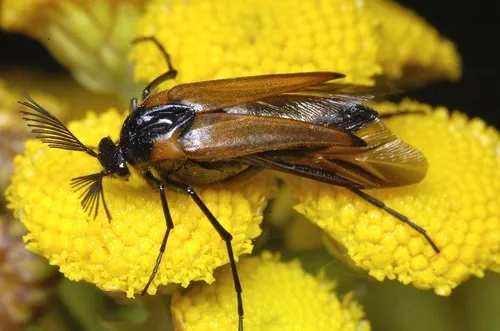
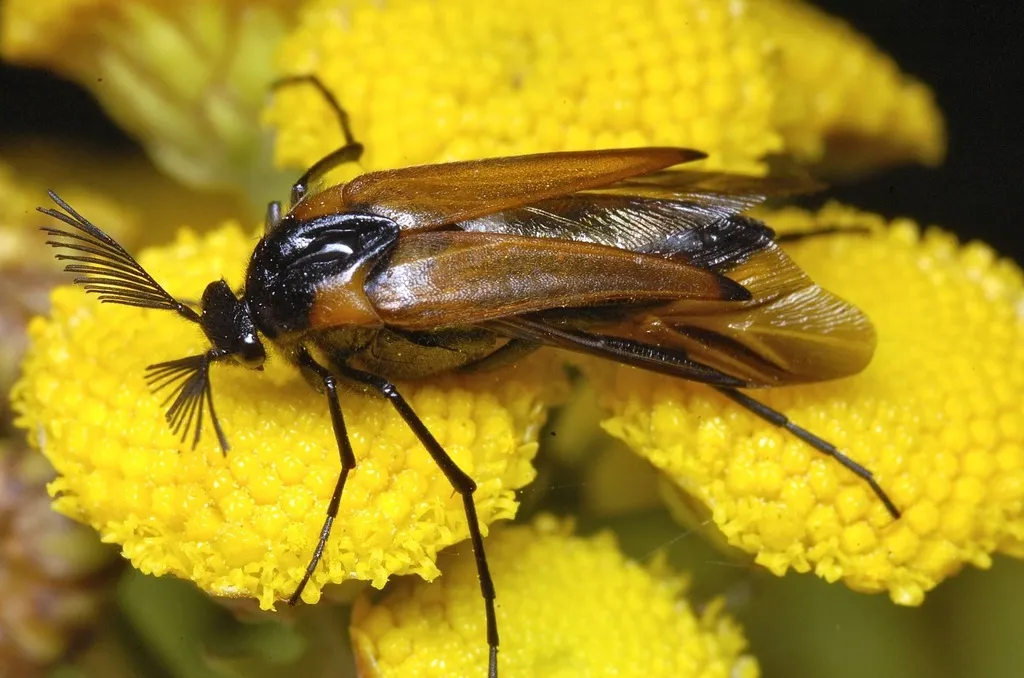
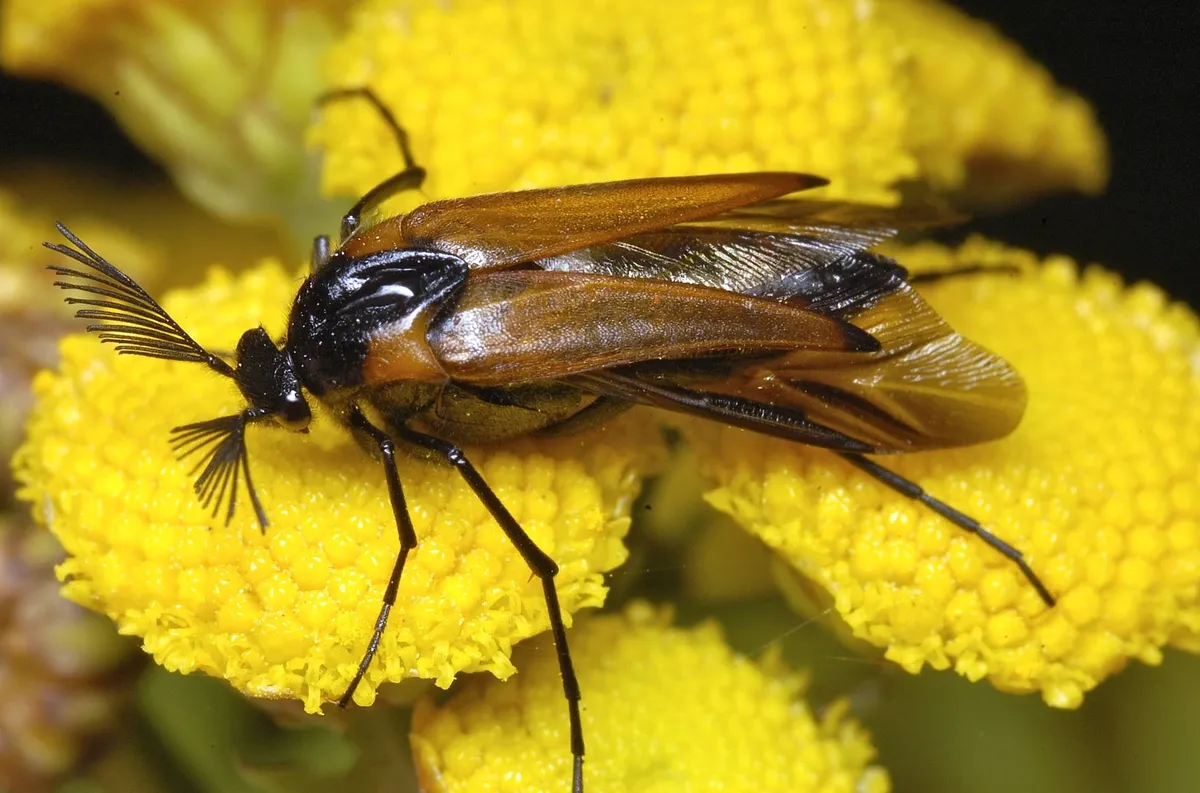
This is a rather odd-looking, almost fly-like, insect about 10 mms long with narrow pointed elytra which do not completely cover the wings or abdomen. It has feathery antennae and is a parasite of wasps' nests. Normally associated with underground wasps' nests but several have been found emerging from wasps' nests in house roof spaces. The adults emerge during the summer months. This species has a fascinating life history which was only worked out in Victorian times. The adult lays eggs on rotting wood in the hope that a wasp will visit to harvest wood fibre for its nest. If one does, the beetle larva tries to climb onto the back of the wasp and is transported to the nest. It then seeks out a wasp grub and parasitises it. The beetle grows and pupates and emerges as an adult just after the time the wasp would have done. More details This species is widespread but not common in Britain. For a good detailed description of the life cycle of this fascinating beetle follow this link to the website of Worcestershire Biodiversity Record Centre
Wikipedia reference for Metoecus paradoxus: https://en.wikipedia.org/wiki/Metoecus_paradoxus.
Classification
- Kingdom
- Animalia
- Phylum
- Arthropoda
- Class
- Insecta
- Order
- Coleoptera
- Family
- Ripiphoridae
- Genus
- Metoecus
Imported taxonomy record. Source availability varies; see the source references and editorial policy below.
Habitat and Range
Habitat
Normally associated with underground wasps' nests but several have been found emerging from wasps' nests in house roof spaces.
Seasonal Activity
The adults emerge during the summer months.
Diet and Behavior
Life History
This species has a fascinating life history which was only worked out in Victorian times. The adult lays eggs on rotting wood in the hope that a wasp will visit to harvest wood fibre for its nest. If one does, the beetle larva tries to climb onto the back of the wasp and is transported to the nest. It then seeks out a wasp grub and parasitises it. The beetle grows and pupates and emerges as an adult just after the time the wasp would have done. More details
Additional species information
Recorded status
This species is widespread but not common in Britain.
About Primitive Winged Insects: the wider group
Order-level background for Coleoptera, the group containing Metoecus paradoxus. Species-specific details appear above.
Group overview
Coleoptera is the largest order of insects with over 400,000 described species, representing ~25% of all known animal species and ~40% of all insects. In the U.S. alone, nearly 30,000 beetle species have been identified.
Ecological role of the group
Beetles are prominent decomposers, especially in forests, breaking down dead wood and recycling nutrients. As predators, they reduce populations of pest insects. Many species are also important pollinators of flowering plants.
Economic and practical significance of the group
Beetles have major economic significance: leaf beetles (Chrysomelidae) and weevils (Curculionoidea) are among the most destructive agricultural pests globally, costing billions annually, while predatory species like ladybugs provide natural pest control.
Recorded sources for this group: Britannica, Smithsonian, NCSU Entomology. Imported estimates may describe particular regions or reporting periods.
Photos of Wasp Nest Beetle (3)
Frequently Asked Questions About Wasp Nest Beetle
What is Wasp Nest Beetle?
Wasp Nest Beetle (Metoecus paradoxus) is a species in the family Ripiphoridae, within the order Coleoptera.
Where is Wasp Nest Beetle found?
Habitat: Normally associated with underground wasps' nests but several have been found emerging from wasps' nests in house roof spaces.
When is Wasp Nest Beetle active?
Wasp Nest Beetle: seasonal activity - The adults emerge during the summer months..
What is the life cycle of a Wasp Nest Beetle?
This species has a fascinating life history which was only worked out in Victorian times. The adult lays eggs on rotting wood in the hope that a wasp will visit to harvest wood fibre for its nest. If one does, the beetle larva tries to climb onto the back of the wasp and is transported to the nest. It then seeks out a wasp grub and parasitises it. The beetle grows and pupates and emerges as an adult just after the time the wasp would have done. More details