
Primitive Winged Insects
Order Coleoptera
The Primitive Winged Insects (Order Coleoptera) includes 15,720 species across 160 families and 3,716 genera in our directory.
About Primitive Winged Insects
Coleoptera is the largest order of insects with over 400,000 described species, representing ~25% of all known animal species and ~40% of all insects. In the U.S. alone, nearly 30,000 beetle species have been identified.
Economic Impact
Beetles have major economic significance: leaf beetles (Chrysomelidae) and weevils (Curculionoidea) are among the most destructive agricultural pests globally, costing billions annually, while predatory species like ladybugs provide natural pest control.
Ecological Role
Beetles are prominent decomposers, especially in forests, breaking down dead wood and recycling nutrients. As predators, they reduce populations of pest insects. Many species are also important pollinators of flowering plants.
Families in Coleoptera (160)
Species in Coleoptera (15,720)
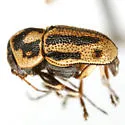
Pachybrachis kentuckyensis
Pachybrachis kentuckyensis
Type Locality: KY: Hardin Co. / Eastview Barrens SNP / 37.603476 -86.047614 / 9 Jun 2009
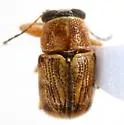
Pachybrachis laevis
Pachybrachis laevis
Identification: Small, yellow, polished. Standard spots variable from black or nearly so through pale brown, diffuse and indistinct to entirely wanting. Type Locality: Colorado Springs, Colorado
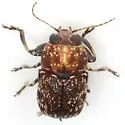
Pachybrachis latithorax
Pachybrachis latithorax
Identification: "Size large, reddish brown variegated with numerous small yellow [pronotal] spots , lustre dull; eyes separated in the female by a distance subequal to the vertical width of their upper lobes, front without ocular lines; elytra deeply
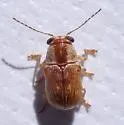
Pachybrachis livens
Pachybrachis livens
Identification: Prothorax with a usually nearly parallel and entire rufo-testaceous stripe occupying the middle third (last key couplet) a rufo-testaceous or pale brown entire nearly parallel sided median stripe occupying a little less than the middl
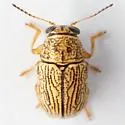
Pachybrachis lodingi
Pachybrachis lodingi
Identification: the short vertical narrow basal mid-pronotal line appears to be a pretty consistent character Type Series: Two males, Spring Hill, three females, Grand Bay, Alabama, three North Carolina, one Florida. Type coll., Bowditch. Sent me by
Pachybrachis luctuosus 0
Pachybrachis luctuosus
Identification: for the genus, quite regular and deep elytral striae
Pachybrachis luridus
Pachybrachis luridus
Identification: Pronotum may be completely black with red lateral margins, may have a red medial vitta or be completely red. Elytra completely black or with a few yellow specks, especially at apex. , see: "Here appears luridus , the first of our spec
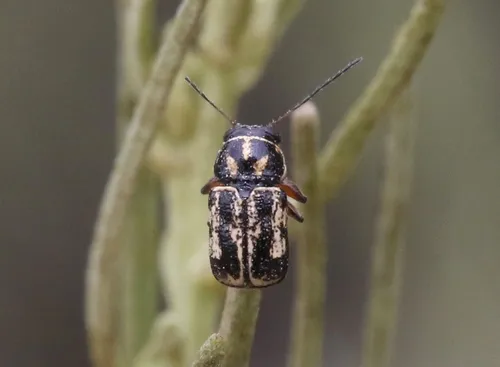
Pachybrachis lustrans
Pachybrachis lustrans
Pachybrachis lustrans is a species of case-bearing leaf beetle in the family Chrysomelidae. It is found in Central America and North America.
Pachybrachis m-nigrum
Pachybrachis m-nigrum
Identification: Det. E. G. Riley, 1998 This species was often found misidentified in collections as P. intricatus or P. picturatus . It cannot be reliably distinguished from P. deceptor except by examination of the male genitalia. On average, however
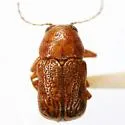
Pachybrachis macronychus
Pachybrachis macronychus
Identification: Fall's description: Rather large, yellow, brown punctate, minutely alutaceous, moderately shining; cephalic spots small, pale brown, thoracic M represented by pale diffuse rust colored shades, elytra without spots; ocular lines wantin
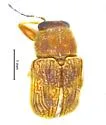
Pachybrachis madera
Pachybrachis madera
Identification: fine white pubescence on the elytra, which is not present on the pronotum and very difficult to detect, plus the very large median lobe, makes P. madera particularly distinctive relative to the other members of this pubescent species-
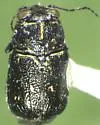
Pachybrachis melanostictus
Pachybrachis melanostictus
Identification: Black and dull yellow, mottled, sometimes the pale, sometimes the dark, areas in excess. A widely dispersed and very common species in the Pacific Region and variable in a greater or less degree in almost all its characters. For that
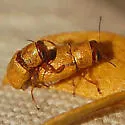
Pachybrachis mellitus
Pachybrachis mellitus
Identification: "upper side entirely dark honey-yellow, shining. The large size and shining yellow colour make this species easy to recognize." "Robust, dark honey yellow, immaculate, integuments very minutely alutaceous but rather strongly shining,
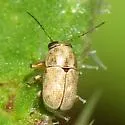
Pachybrachis mercurialis
Pachybrachis mercurialis
Identification: Light yellow pale brown punctate integuments polished; elytra immaculate; prothorax with small diffuse pale brownish clouds.
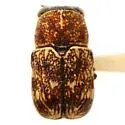
Pachybrachis mobilis
Pachybrachis mobilis
Identification: Pale yellow with standard spots variably developed, brown to fuscous; eyes more distant in the male than the vertical width of their upper lobes; front without ocular lines; punctuation rather dense, the elytral striae more or less di
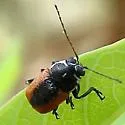
Pachybrachis newmani
Pachybrachis newmani
Identification: The orange-red elytra, enlarged claws, and large size make P. discoideus readily recognizable. The size of the black sutural macula is variable, and the pronotum of females is often entirely black. Elytra orange-red with wide, black s
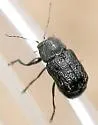
Pachybrachis nigricornis
Pachybrachis nigricornis
Identification: P. nigricornis autolycus Fall - striped, other forms mostly or entirely black
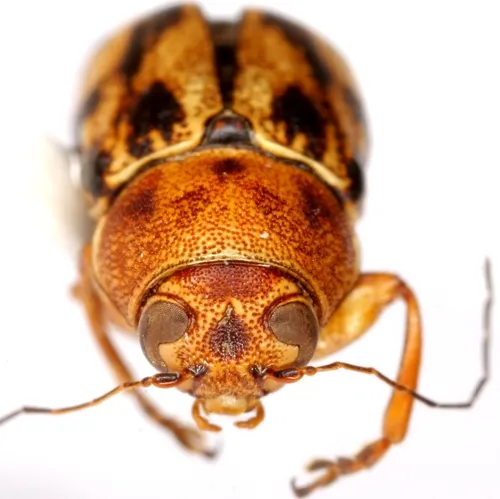
Pachybrachis nobilis
Pachybrachis nobilis
Identification: There are at least two big honkers like this on pines in AZ and nobilis is one of them. (E. G. Riley, 2013 pers. comm. to MAQ) Type Locality: Williams, Coconino Co., Arizona, west of Flagstaff.
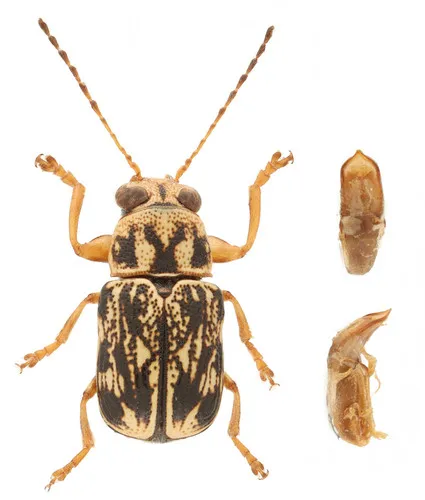
Pachybrachis obsoletus
Pachybrachis obsoletus
Identification: Yellow, strongly marked with black, varying to nearly completely yellow with brown maculations. Head yellow with vertex black or brown, frons with or without median black vitta; strongly punctate. Pronotum yellow with black M varying
Pachybrachis osceola 0
Pachybrachis osceola
FLORIDA: Lake Co., Astor, 10.v.1956, ex. Taxodium distichum , F. W. Mead [1♂ 1♀, FSCA]; Volusia Co., Enterprise, 11.vi, Hubbard & Schwarz Collection [1♂ 1♀, 1♂ holotype, USNM].
Pachybrachis othonus
Pachybrachis othonus
Identification: Pachybrachis othonus othonus (Say) Say's description: Black; thorax with a narrow margin and abbreviated line, dull fulvous; elytra yellowish, with two black vittae. Det. M. A. Quinn, 2015 Pachybrachis othonus pallidipennis Suffrian F
Pachybrachis pawnee
Pachybrachis pawnee
Identification: "Elytra yellow, with suture or sutural bead and two discal vittae on each black or brownish. Front claws of male distinctly enlarged; lustre dull, outer elytral vitta confined to the 7th and 8th interspaces." Type Locality: Onaga, Kan
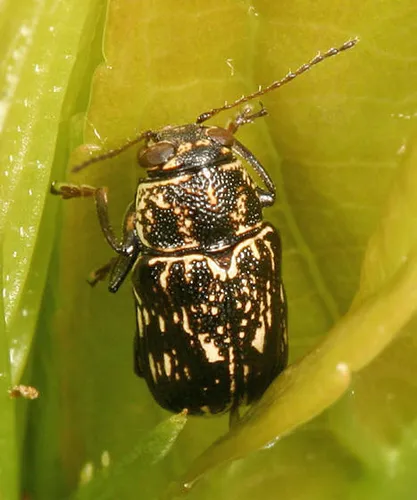
Pachybrachis peccans
Pachybrachis peccans
Identification: Ocular lines prominent; males with enlarged foreleg claws; color extremely variable, ranging from yellowish with faint black spots to almost black speckled with small yellow marks
Pachybrachis pectoralis
Pachybrachis pectoralis
Identification: Form, especially of the male, narrower than usual; color dull yellow, maculate with brown or black; surface not or scarcely shining; eyes narrowly separated ; ocular lines present... Front tibiae sinuate on the inner margin beyond the
Pachybrachis pinguescens
Pachybrachis pinguescens
Identification: Closely allied to californicus differing only as follows: Size larger, a little stouter, prothorax similarly strongly rounded in the male and distinctly more inflated in the female than in californicus , widest nearly at the middle in
Pachybrachis praeclarus
Pachybrachis praeclarus
Identification: pale elytral margin Fall considered it to be extremely rare, but Doug LeDoux collected multiple short series from several locations in MO. (spmns now in the TAMUIC.)
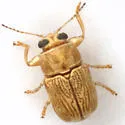
Pachybrachis pusillus
Pachybrachis pusillus
Identification: eyes bulge, nearly touch... among the most commonly coll'ed beetle spp. (at UV lights) at Laguna Atascosa NWR, Rio Hondo, Cameron Co., TX ( 6 )
Pachybrachis rileyi
Pachybrachis rileyi
Identification: a robust species with a very localized range Type Locality: FLA: Monroe Co., Upper Key Largo, April 30, 1988, E. Riley & F. Whitford, collected at mercury vapor & blacklight
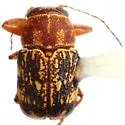
Pachybrachis sanrita
Pachybrachis sanrita
Identification: elytral striae very imperfect and fragmentary but present at least toward and on the posterior convexity; prothoracic markings reddish brown, broadly suffused, the elytral spots black, heavy. (last key couplet) Det. E. G. Riley, 1987
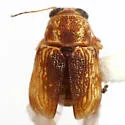
Pachybrachis signatus
Pachybrachis signatus
Identification: broad median thoracic stripe narrowly divided in front
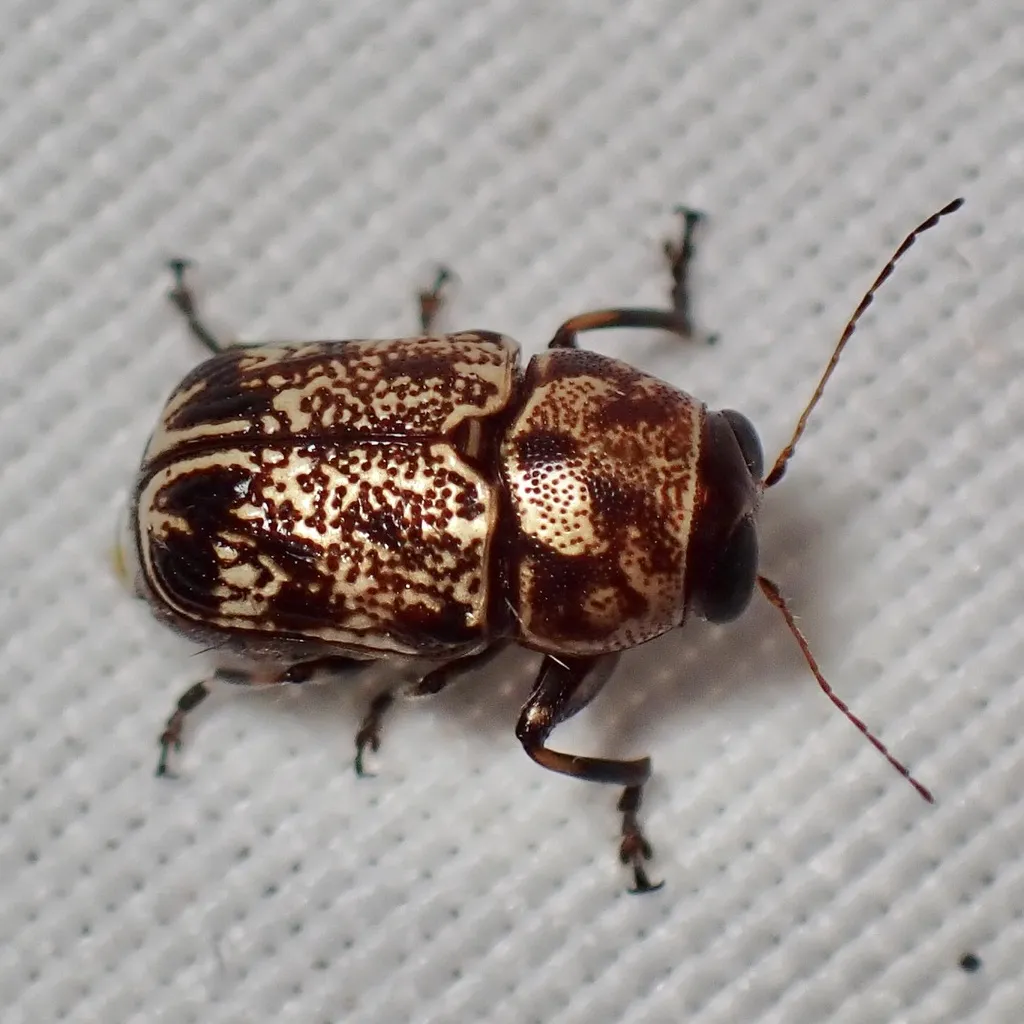
Pachybrachis snowi
Pachybrachis snowi
Identification: Lustre moderately shining, prothorax not very densely punctate, terminal joint of antennae not dilated. Elytral punctuation much confused, striae feebly impressed. (last key couplets) Large, robust, yellow with red-brown to piceous ma
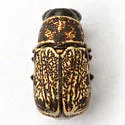
Pachybrachis sonorensis
Pachybrachis sonorensis
Identification: "rather easily separable by its almost completely confused punctuation without trace of impressed striae except the lateral one. There are in most examples short, slightly raised elytral costae extending back from the basal margin"
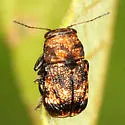
Pachybrachis spumarius
Pachybrachis spumarius
Identification: Redescription : Yellow, with brown, reddish brown, or rust-colored punctures, with standard maculae diffuse, often dark brown or fuscous. Head: Slightly wider than thoracic apex; eyes moderately separated; face yellow with brown, W-sh
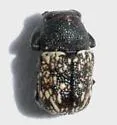
Pachybrachis stygicus
Pachybrachis stygicus
Identification: a common, widespread species from the mid-Atlantic Coast to the 100th meridian (Map 1B). While virtually totally black specimens can be found from Florida to Nebraska, trends to a paler form in the southwestern part of its range. Det.
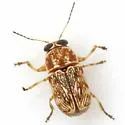
Pachybrachis texanus
Pachybrachis texanus
Identification: eyes nearly touch... Det. M. A. Quinn, 2013 The type and great majority of specimens seen by Fall (1915) from Brownsville.
Pachybrachis texasensis 0
Pachybrachis texasensis
Holotype: USA: TEX: Grayson Co. Juniper Point Campground 33.85962°N 96.83010°W IV-27-2012, E. Riley, UV
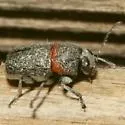
Pachybrachis thoracicus
Pachybrachis thoracicus
Identification: Robust, black, prothorax at base and the raised basal margin of the elytra red; rather densely silvery white pubescent, especially the head, pygidium and under surface. Det. T. O. Robbins, 2011
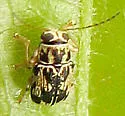
Pachybrachis tridens
Pachybrachis tridens
Since P. tridens has not been collected from Canada in the last 55 years, it can be considered as extirpated from the Canadian fauna. ( 5 )
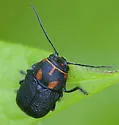
Pachybrachis trinotatus
Pachybrachis trinotatus
Identification: Pronotum red with heavy, sharply defined, black M-mark, and with pale anterior and lateral margins; elytra entirely black.
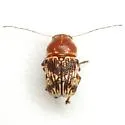
Pachybrachis turbidus
Pachybrachis turbidus
Identification: Medium to large yellow with red brown markings which may become nearly black on the elytra; elytral striae deep with convex intervals. variable, among the most common Pachybrachis spp. in TX Type Locality: Texas among the most common
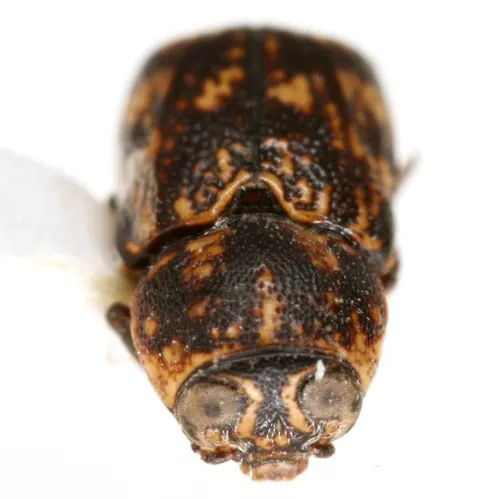
Pachybrachis turgidicollis
Pachybrachis turgidicollis
Identification: Black or fuscous and yellow maculate, the darker color predominating. Eyes separated by a distance distinctly less than, in the male, or, in the female, subequal to the vertical width of their upper lobes; front without ocular lines.
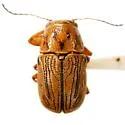
Pachybrachis umbraculatus
Pachybrachis umbraculatus
Identification: Fall's description: Pale dull yellow, minutely alutaceous but somewhat shining; prothorax with a blackish Y shaped median vitta and a lateral vitta each side inclosing (as usual) somewhat imperfectly an external pale spot; elytra each
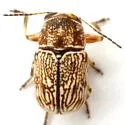
Pachybrachis varians
Pachybrachis varians
Identification: Robust, yellow, with fuscous punctures, standard maculae diffuse, luster dull Bowditch's lectotypes and paralectotypes from Opelousas, St. Landry Parish, Louisiana
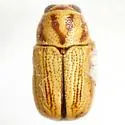
Pachybrachis vau
Pachybrachis vau
Identification: "Pale yellow or testaceous, integuments polished, prothorax with a median V shaped mark and a vitta each side [emphasis added], the elytra with the suture and two discal stripes, black; the outer stripe occupying the seventh and eight
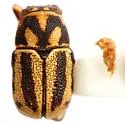
Pachybrachis viduatus
Pachybrachis viduatus
Identification: P. viduatus was long confused with the common and widespread Pachybrachis bivittatus (Say). Like the other vittate species of the viduatus species-group, this species is uncommon in collections.
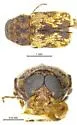
Pachybrachis vigilans
Pachybrachis vigilans
Identification: eyes may touch, but this is not diagnostic Lectotype - MCZ, Harvard not listed in Riley et al.
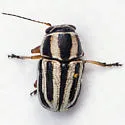
Pachybrachis virgatus
Pachybrachis virgatus
Identification: median pronotal stripe dilated at middle, but the anterior part not bifurcate Det. E. G. Riley a somewhat scarce species of which Fall saw ten examples . There were only 2 spmns in the TAMUIC in 2014.
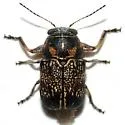
Pachybrachis wenzeli
Pachybrachis wenzeli
Identification: Robust, varying from almost entirely black to yellow, more or less heavily maculate and irrorate with black; prothoracic punctuation nearly equally dense to the extreme margins, elytral punctuation largely confused. [irrorate = marked
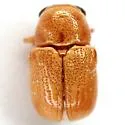
Pachybrachis xantholucens
Pachybrachis xantholucens
Identification: elytra conspicuously wider at base than the prothorax Type Locality: El Paso, Texas
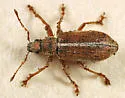
Pachyrhinus elegans
Pachyrhinus elegans
The only species of the genus in the eastern US. From there to the Pacific Coast, with many color forms. (Charles O'Brien, pers.comm., 5/22/09)
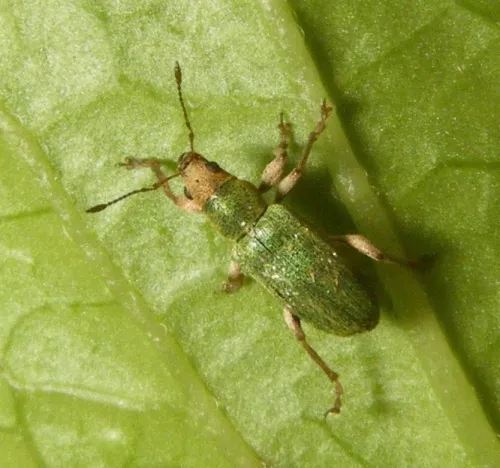
Pachyrhinus lethierryi
Pachyrhinus lethierryi
3.6 - 4.5mm. Usually bright green due to oval scales and with a domed head and wide-set eyes. It has a bare ridge across the rostrum between the eyes. Variety lostiae has a differently coloured head due to golden or pinkish scales. It is an infrasubs
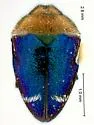
Pachyschelus fisheri
Pachyschelus fisheri
Identification: "This is a distinct buprestid beetle, not likely to be confused with similar species. ... The body is flattened and broadly wedge-shaped. The head and pronotum are copper-colored, the later with a narrow vague band of pubescence on ea
Pachyschelus laevigatus
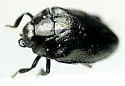
Pachyschelus laevigatus
Identification: All black (a trait shared with P. confusus )
Pachyschelus purpureus
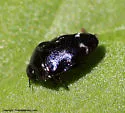
Pachyschelus purpureus
Identification: Elytra bright blue in the nominate ssp., reddish-purple in P. p. uvaldei , with patches of condensed setae
Pachyta armata
Pachyta armata
Identification: "Broad-shouldered, strongly tapering posteriorly, and black with mostly yellow elytra" .
Pacific Coast Tiger Beetle
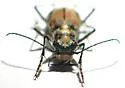
Cicindela bellissima
Identification: “Above brown with coppery reflections. The maculations are heavy, but are separated into three distinct lines. The middle line has a curved bend toward the rear, but lacks the sharp “elbow” of other species.”
Pacificanthia consors
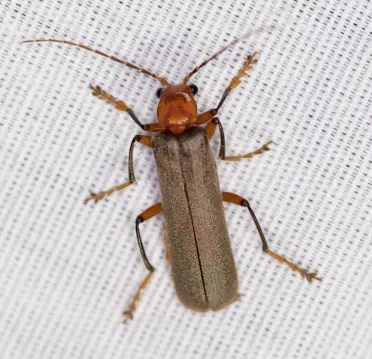
Pacificanthia consors
common at lights in late spring & early summer; emits musty odor
Pactorrhinus grisescens
Pactorrhinus grisescens
Identification: identity unclear, likely refers to Ericydeus lautus
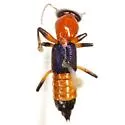
Paederus grandis
Paederus grandis
Identification: Head in male larger than elytra; robust; legs almost completely black
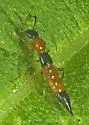
Paederus iowensis
Paederus iowensis
Identification: brachypterous, elytra not wider, and rather shorter than pronotum
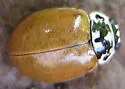
Painted Lady Beetle
Mulsantina picta
Identification: Gordon's figures "The elytral color pattern is extremely variable, but the pronotal markings are quite constant and afford an easy means of recognition." Venter (underside) distinctive: "When the underside is examined, the yellow mark
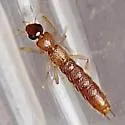
Palaminus larvalis
Palaminus larvalis
Identification: Strongly narrowed prothorax, small size (~ 3.1 mm), head & pronotum coarsely but not densely punctate.
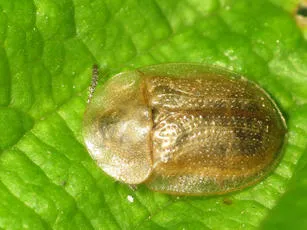
Pale Tortoise Beetle
Cassida flaveola
At 4-6mm, this pale-golden coloured Tortoise Beetle is generally the smallest in the genus. It has a translucent yellowish rim. Areas of long grass, flowers and coarse vegetation. Best months are May and June, however it overwinters in grass tussocks
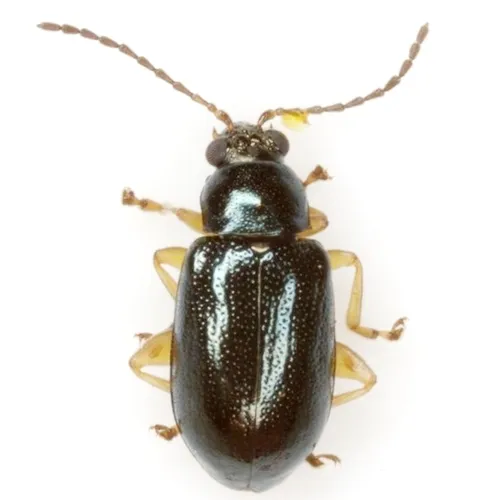
Pale-legged flea beetle
Lysathia ludoviciana
Identification: note pale legs (Fall, 1910) Det. E.G. Riley, 2009 Type Locality: Morgan City, LA
Pales Weevil
Hylobius pales
Can be a pest in Chrismas-tree and other pine plantations. The first evidence of attack is a series of small holes/pits in the bark ( 5 )
Pallodes plateosus
Pallodes plateosus
Type Locality: Huachuca Mtns, AZ collected in quantity on August 3 in Ramsey Canyon, Huachuca Mts.
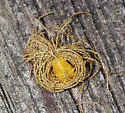
Palmetto Tortoise Beetle
Hemisphaerota cyanea
Larvae of this species create strands of fecal matter enclosing them in a nestlike thatch that protects them from predators. Thatch is retained when the larvae pupate, until the adult has emerged and its shell has hardened. Thomas Eisner has a very
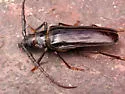
Palo Verde Root Borer
Derobrachus hovorei
Identification: see ; distinguished from true D. geminatus (formerly D. forreri ) by its more weakly striolate antennae. ―Ted MacRae
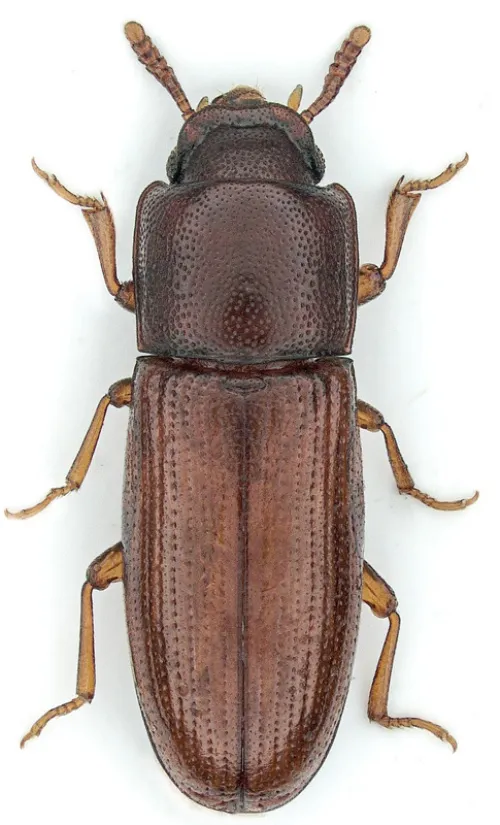
Palorus subdepressus
Palorus subdepressus
A small reddish brown beetle only 2.5 to 3.0 mm in length. Unless identified by a recognised expert, a photo is required and the specimen should be examined with a microscope. In the comments box, state the key or ID method used and describe the size
Palos Verdes Minute Intertidal Beetle
Bembidion palosverdes
Bembidion palosverdes is a species of ground beetle in the family Carabidae. It is found in North America.
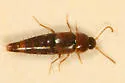
Palporus nitidulus
Palporus nitidulus
Identification: Extremely variable. Very small (head to elytra length 1.1 to 1.4 mm). Light yellowish to dark reddish-brown, sometimes darker. Head often darker than pronotum and elytra. Elytra usually lighter than pronotum and head. Pubescence of el
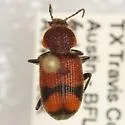
Panagaeus fasciatus
Panagaeus fasciatus
Identification: head and pronotum not black Adults are taken most frequently at light sources
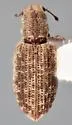
Pandeleteinus elytroplanatus
Pandeleteinus elytroplanatus
Identification: Thorax mostly light brown, indistinctly darker medially, whitish vitta along middle of sides. Elytra mostly fuscous, with base and suture light brown, some whitish scales scattered over all, especially on the sides. Howden discusses t
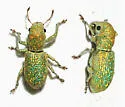
Pandeleteinus submetallicus
Pandeleteinus submetallicus
Identification: Its metallic green, gold, or blue color is unique in the Pandeleteini, and its non-metallic, sometimes vaguely maculate, tan specimens are equally as striking. Type Locality: Beaver Co., Utah
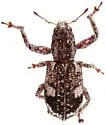
Pandeleteius buchanani
Pandeleteius buchanani
Identification: can be separated by the combination of broad subapical piceous band on elytra broadly bordered anteriorly and posteriorly with white; scales margined, granular to reticulate; dorsal surface of beak narrowed anteriorly, pregenae and se
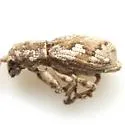
Pandeleteius cinereus
Pandeleteius cinereus
Identification: Color predominantly gray, thorax with dark fusiform vitta, and two oblique bicolored fasciae of elytra (emphasis added). Det. M. A. Quinn, 2019 Type Locality: Texas
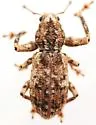
Pandeleteius hilaris
Pandeleteius hilaris
Identification: pronotum generally more boldly marked than in other Pandeleteius spp.
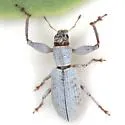
Pandeleteius longicollis
Pandeleteius longicollis
Identification: Fore femur without tibial groove or projected margin. Color beige immaculate or with a few faint brown dots on elytra and light brown median line on thorax. (last key couplet) ( 3 ) Det. E. G. Riley, 2009 fairly common via beating and
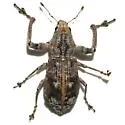
Pandeleteius robustus
Pandeleteius robustus
Identification: The large size, more robust form, and the short antennal scrobes make this an easily recognizable species Lectotype Locality: Huachuca Mountains, Cochise Co., Arizona
Pandeleteius simplarius 0
Pandeleteius simplarius
Identification: easily distinguished from other species by its distinctive habitus , truncate epistoma, short arcuate scrobe, and secondary sexual characters. It bears the maximum expression of secondary sexual characters of US species. Eight specime
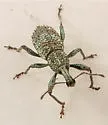
Panscopus gemmatus
Panscopus gemmatus
Panscopus gemmatus (Panscopus gemmatus) is a species in the family Curculionidae, commonly known as snout and bark beetles, belonging to the order Coleoptera (Beetles). It is classified within the subfamily Entiminae, tribe Byrsopagini, suborder Poly
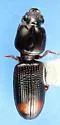
Paraclivina convexa
Paraclivina convexa
Identification: Protibia with anterior spur bent at near 90°
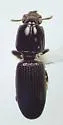
Paraclivina sulcipennis
Paraclivina sulcipennis
Identification: Pronotum impunctate, elytra dark, small size • description
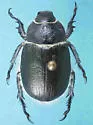
Paracotalpa deserta
Paracotalpa deserta
Flights occur in a narrow window, later in the day than other related species, usually corresponding with the hottest portion of the day (typically mid to late afternoon).
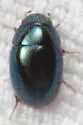
Paracymus confusus
Paracymus confusus
Identification: Very similar to other Paracymus, especially Paracymus subcupreus. Males of P. confusus have unequal claws on the front leg, while in P. subcupreus they are similarly shaped. Females of the two species are inseparable. Epler (page 12.5
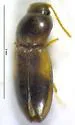
Paradonus beckeri
Paradonus beckeri
Identification: body usually with a humeral spot on each elytron, sometimes a faint apical spot, spots rarely completely absent
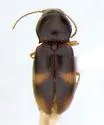
Paradonus obliquatulus
Paradonus obliquatulus
Identification: transverse yellow band on elytron distinctive among our spp.
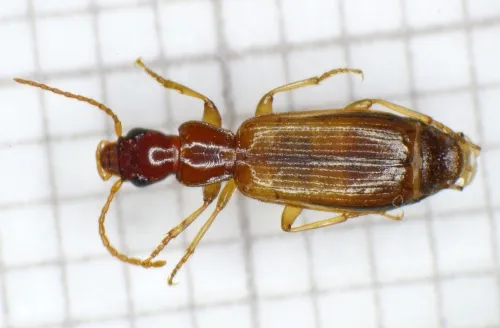
Paradromius linearis
Paradromius linearis
Length 4.5 to 6 mm. This is a long, slim, reddish brown ground beetle. The head is barely longer than wide (ignoring the mandibles). P. longiceps has a head that is notably longer than wide and it usually has a dark midline around the elytral sutures
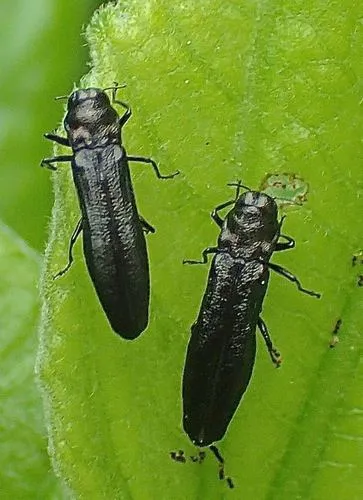
Paragrilus tenuis
Paragrilus tenuis
Paragrilus tenuis is a species of metallic wood-boring beetle in the family Buprestidae. It is found in North America.
Paramordellaria carinata
Paramordellaria carinata
Identification: Similar markings to P. triloba , but with reddish coloration on humeral band and found from the southern states.
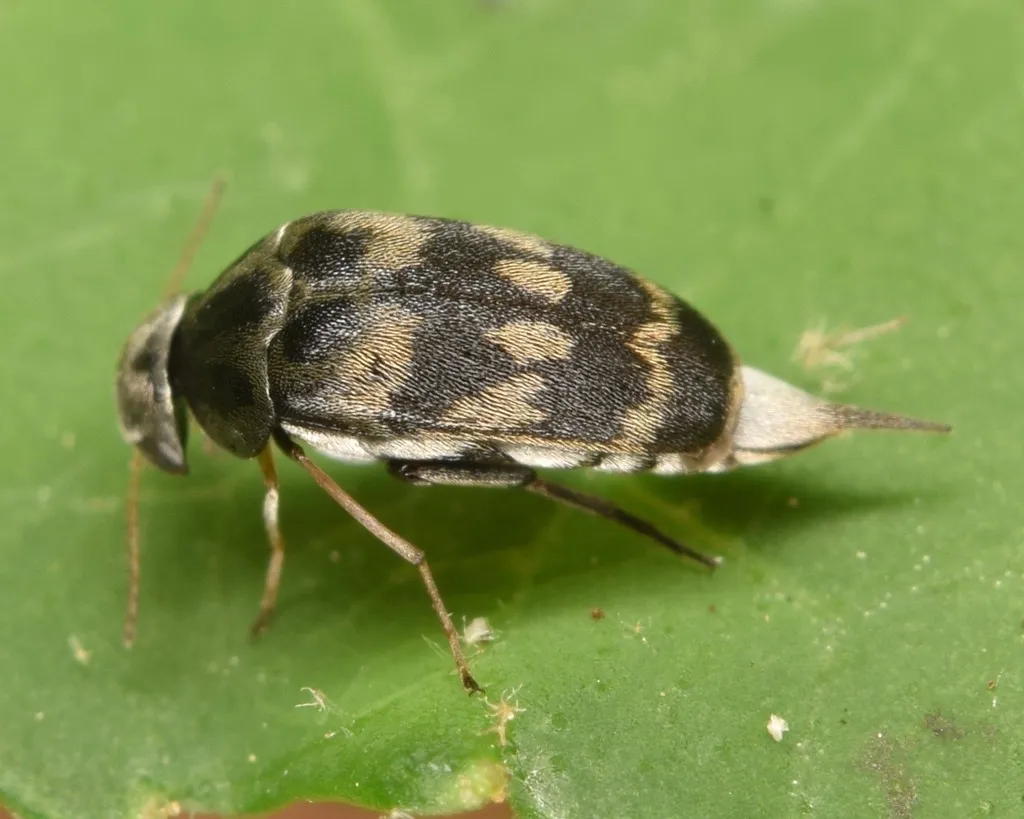
Paramordellaria triloba
Paramordellaria triloba
Identification: Description : Subcuneiform, broadest in female; black, except mouthparts, antennae, and legs which are fuscotestaceous; head with fine pubescence; thorax with irregular lines or marks of yellowish gray pubescence comprising a line oil
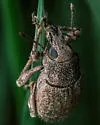
Paranametis distincta
Paranametis distincta
Identification: Apex of hind tibia with distinct, glabrous outer bevel; pronotal disc with distinctive structure of separate low nodules, each nodule with a central suberect, seta-like scale and surrounded by 5–6 distinct microfilamentous scales coll
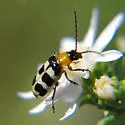
Paranapiacaba tricincta
Paranapiacaba tricincta
Identification: variable: - last pic of an unusually dark spmn
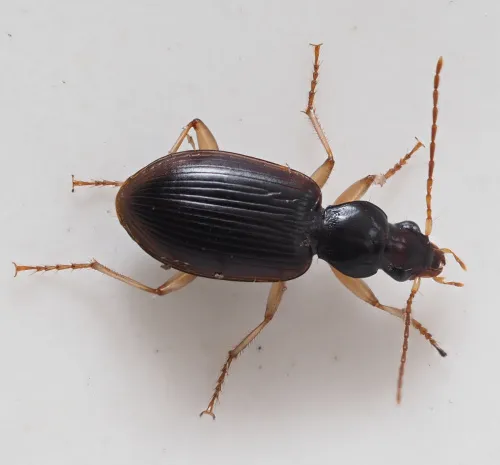
Paranchus albipes
Paranchus albipes
This is a 6 to 9mm long, dark brown ground beetle with conspicuous pale yellow legs and antennae. The first three antennal segments are all non-pubescent. Under stones and among litter or on mud at the side of lakes, streams and rivers.
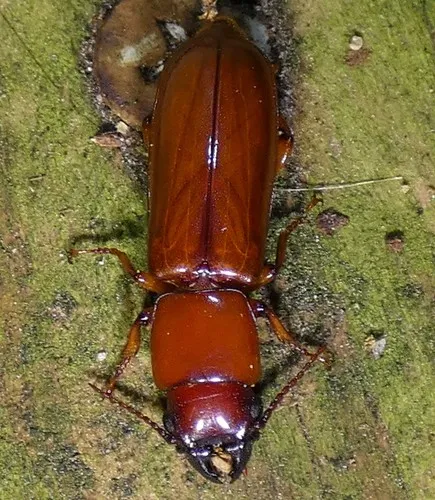
Parandra polita
Parandra polita
Parandra polita (Parandra polita) is a species in the family Cerambycidae, commonly known as longhorn beetles, belonging to the order Coleoptera (Beetles). It is classified within the subfamily Parandrinae, suborder Polyphaga, superfamily Chrysomeloi
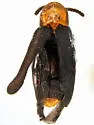
Paraphausis eximius
Paraphausis eximius
females & larvae unknown; males fly by day but do have two tiny lights on last abdominal segment (all the info here from Dr Cicero's comment )
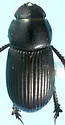
Parapsammodius bidens
Parapsammodius bidens
Riley & Wolfe collected first Texas record (one specimen) at uv light from a location in Kenedy County with deep sandy soil.
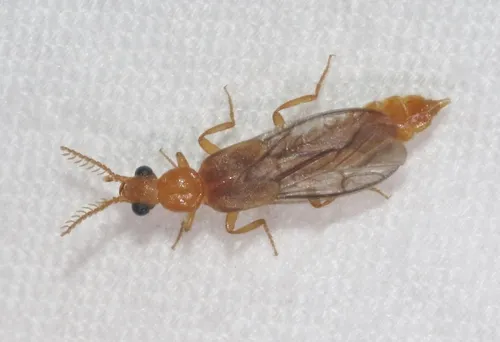
Paraptorthodius mirabilis
Paraptorthodius mirabilis
Type Locality: San Diego, Duval Co., Texas One specimen in the Hubbard and Schwarz coll. US National Museum taken by Mr Schwarz June 6 in San Diego, Texas
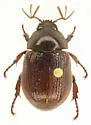
Parastasia brevipes
Parastasia brevipes
Identification: male antennal club twice as long as antennomeres 2‒7 color dark reddish brown to black Det. E. G. Riley, 1998 comes to lights
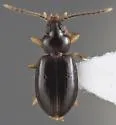
Paratachys albipes
Paratachys albipes
Identification: Large and dark, elytra iridescent due to dense microsculpture lines; hind angles of pronotum obtuse, basal margin oblique near them; males with first two protarsomeres dilated and with ventral adhesive setae.