
Primitive Winged Insects
Order Coleoptera
The Primitive Winged Insects (Order Coleoptera) includes 15,720 species across 160 families and 3,716 genera in our directory.
About Primitive Winged Insects
Coleoptera is the largest order of insects with over 400,000 described species, representing ~25% of all known animal species and ~40% of all insects. In the U.S. alone, nearly 30,000 beetle species have been identified.
Economic Impact
Beetles have major economic significance: leaf beetles (Chrysomelidae) and weevils (Curculionoidea) are among the most destructive agricultural pests globally, costing billions annually, while predatory species like ladybugs provide natural pest control.
Ecological Role
Beetles are prominent decomposers, especially in forests, breaking down dead wood and recycling nutrients. As predators, they reduce populations of pest insects. Many species are also important pollinators of flowering plants.
Families in Coleoptera (160)
Species in Coleoptera (15,720)
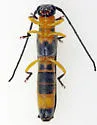
Oberea praelonga
Oberea praelonga
Identification: quite variable in coloration: the elytra sometimes are paler down the middle, the antenna are sometimes paler toward the tip, the legs are often pale, the basal pronotal spot is sometimes reduced or missing, the head is sometimes pale
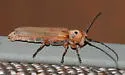
Oberea pruinosa
Oberea pruinosa
Identification: Per Lingafelter, Oberea pruinosa Casey 1913 is morphologically identical to and a potential synonym of Oberea schaumii LeConte 1852 the descriptions of Oberea schaumii, caseyi, pruinosa in Lingafelter and Yanega are in disagreement wi
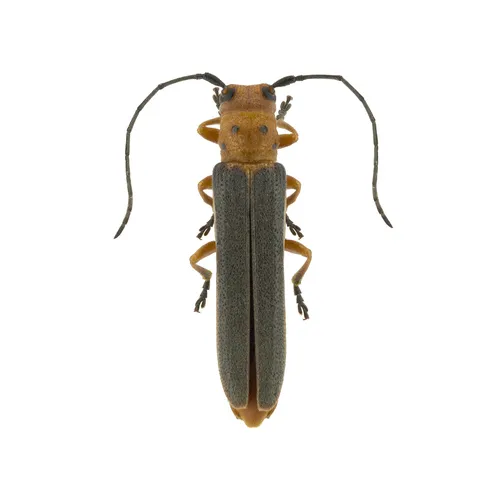
Oberea schaumii
Oberea schaumii
Identification: Per Lingafelter, first two or three abdominal sternites nearly completely dark (at least at center), remainder pale yellow or testaceous, rear top of head usually dark, posterolateral pronotal spot usually larger than the central spot
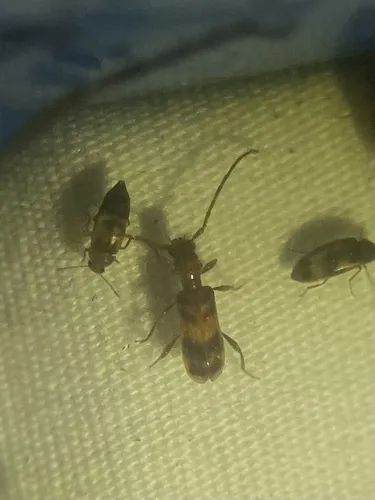
Obrium glabrum
Obrium glabrum
Described from a unique female labeled Davis Mountains, TEXAS, July 10. ( 3 ) Obrium glabrum is rare in collections, only 8 specimens, all from the Davis Mountains, had been collected by the time of Hovore & Chemsak's (1979) publication.
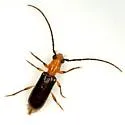
Obrium mozinnae
Obrium mozinnae
"This tiny, bicolored species is often abundant on blossoms of leguminous trees and shrubs and is also attracted to lights."
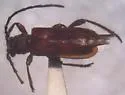
Obrium rubidum
Obrium rubidum
Identification: largest and darkest of the three eastern spp.; shape distinctive Type Locality: Pennsylvania
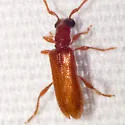
Obrium rufulum
Obrium rufulum
Identification: uniformly pale, shining; pronotum with lateral tubercles; shape distinctive comes to lights
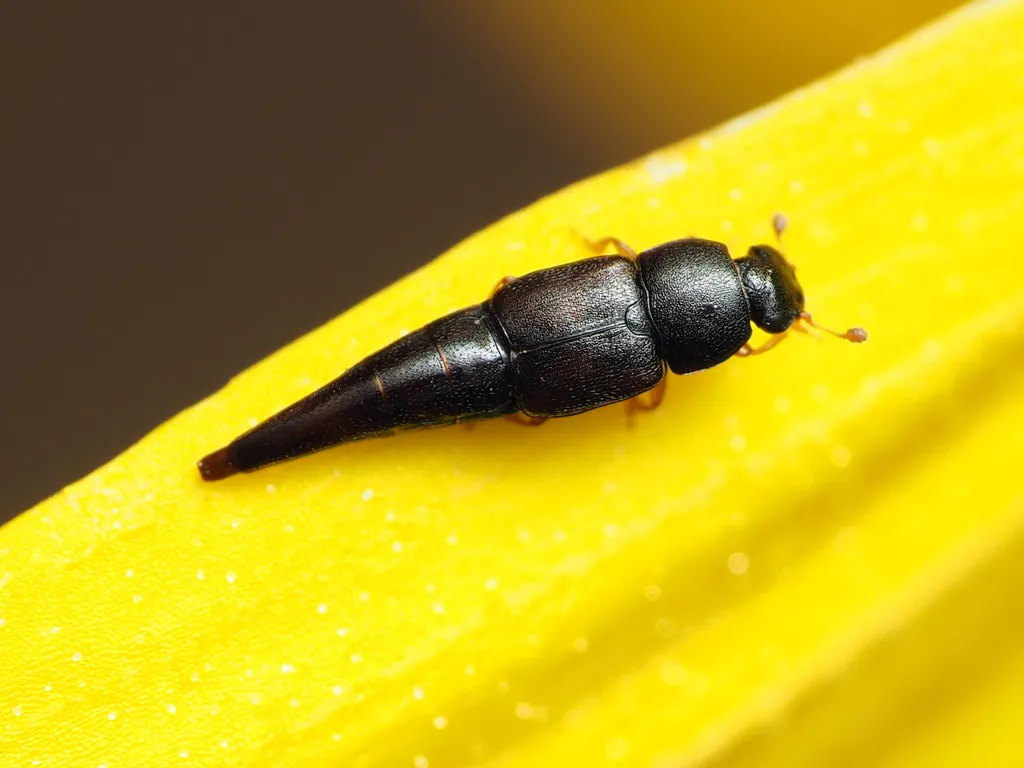
Obscure Sap Beetle
Conotelus obscurus
Obscure Sap Beetle (Conotelus obscurus) is a species in the family Nitidulidae, commonly known as sap-feeding beetles, belonging to the order Coleoptera (Beetles). It is classified within the subfamily Cillaeinae, suborder Polyphaga, superfamily Cucu
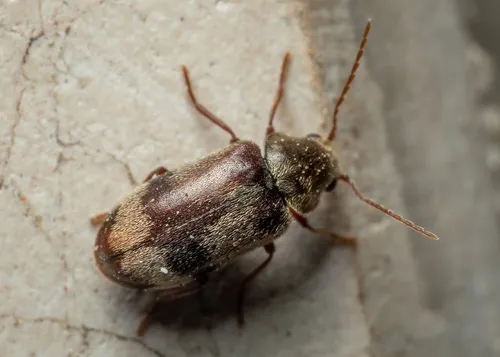
Ochina ptinoides
Ochina ptinoides
A small beetle 2.5 to 3.5 mm long. The brown elytra are usually tipped with red at the ends. Adults may be found on umbel flowers during hot weather especially near ivy, but can also be found on the leaves of various plants. They sometimes come to li
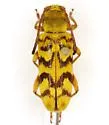
Ochraethes citrinus
Ochraethes citrinus
several old spmns labelled only as having come from Hidalgo or Cameron County ( 7 ) , though a modern record exists from west of Ciudad Victoria, Tamps, Mex. ( 8 )
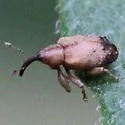
Ochyromera ligustri
Ochyromera ligustri
earliest record in our area: NC 1959 (accidentally introduced with host plant); by 2005, reached c.TX ( 7 ) ( 8 )
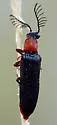
Octinodes gracilior
Octinodes gracilior
Identification: This graceful species because of its shining appearance, more or less cylindrical prothorax, with coarse yet well spaced punctures and contrasting coloration, stands well apart from our California species. note that the reddish pronot
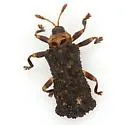
Octotoma championi
Octotoma championi
Introduced into Australia for the control of Lantana
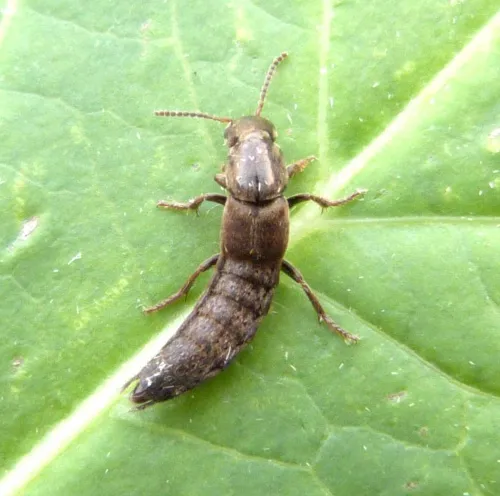
Ocypus aeneocephalus
Ocypus aeneocephalus
A species of extensive habitats on damp but well drained soils. All year round, but peak time is summer and autumn. Widespread and fairly frequent in Britain. No additional images available for this species.
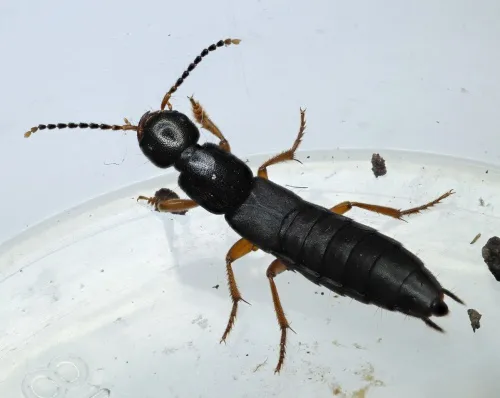
Ocypus brunnipes
Ocypus brunnipes
A large dark brown or blackish rove beetle with orange legs. It can measure up to 13 mm or more. Various habitats including damp but well drained soils, in woods and under stones. Widespread and fairly frequent in Britain.
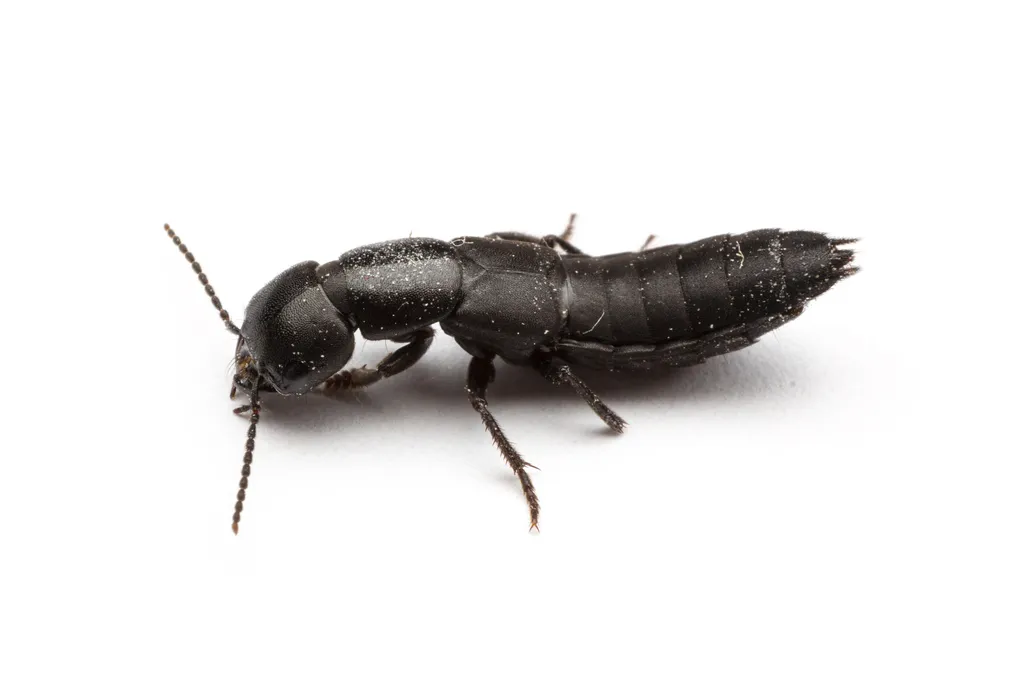
Ocypus nitens
Ocypus nitens
Identification: Very similar to Tasgius melanarius . Relevant details separating on the generic level are in the mouthparts, rarely visible on life images. The wings are visibly shorter than the pronotum in O. nitens , and pronotal punctures dense, b
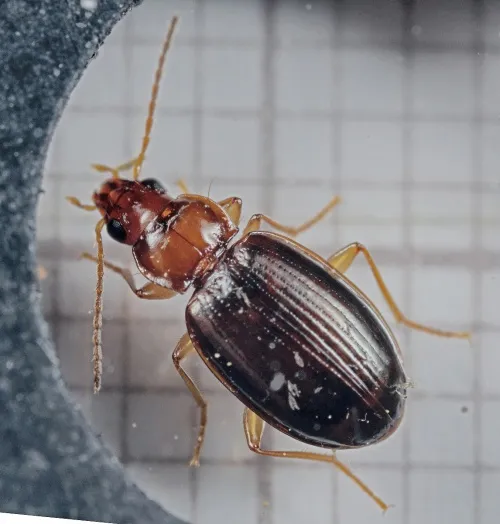
Ocys harpaloides/tachysoides
Ocys harpaloides / tachysoides
Beetles previously thought to be Ocys harpaloides have recently been shown to comprise two species , the other being Ocys tachysoides , but they can only be separated by examination of the genitalia or DNA analysis. If you are unable to separate the
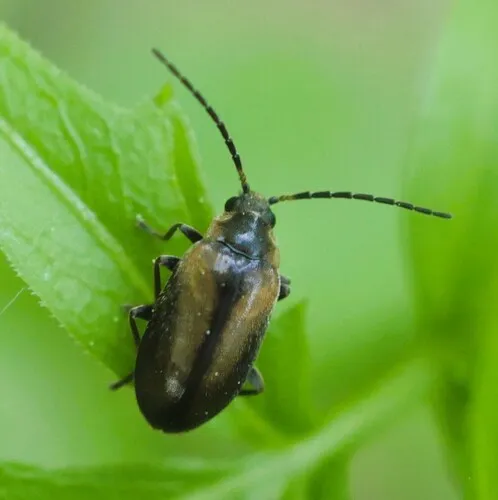
Odeles marginata
Odeles marginata
Around 5mm. Generally dirty yellow and black with the elytral hairs increasing towards the apex and sides. The head is black and the pronotum is dark in the centre but with yellowish margins. Antennal segment 2 and 3 are pale. See the ID checklist be
Odonteus thoracicornis
Odonteus thoracicornis
Identification: Males usually have pronotal armature, sometimes large curving projections. Among the NA species, this one is most similar to the European O. armiger
Odontocorynus falsus
Odontocorynus falsus
Identification: our only Odontocorynus with a slender body shape males easily recognized by anteriolateral pronotal tubercles:
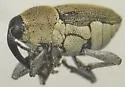
Odontocorynus pulverulentus
Odontocorynus pulverulentus
Identification: the only species with scaled elytral striae
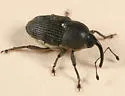
Odontocorynus salebrosus
Odontocorynus salebrosus
Identification: Most O. salebrosus are easily identifiable, except for females from se.US where O. calcarifer and O. larvatus occur. In particular, small and abraded specimens require direct comparison with typical specimens. As in O. umbellae , reli
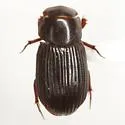
Odontolytes denominatus
Odontolytes denominatus
Odontolytes denominatus (Odontolytes denominatus) is a species in the family Scarabaeidae, commonly known as scarab beetles, belonging to the order Coleoptera (Beetles). It is classified within the subfamily Aphodiinae, tribe Eupariini, suborder Poly
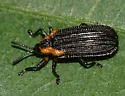
Odontota scapularis
Odontota scapularis
Identification: femoral base orange Det. E. G. Riley
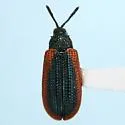
Odontota signaticollis
Odontota signaticollis
Identification: The dark metallic greenish blue elytra trimmed with red and the pair of faint orange spots on the otherwise dark pronotum are diagnostic.
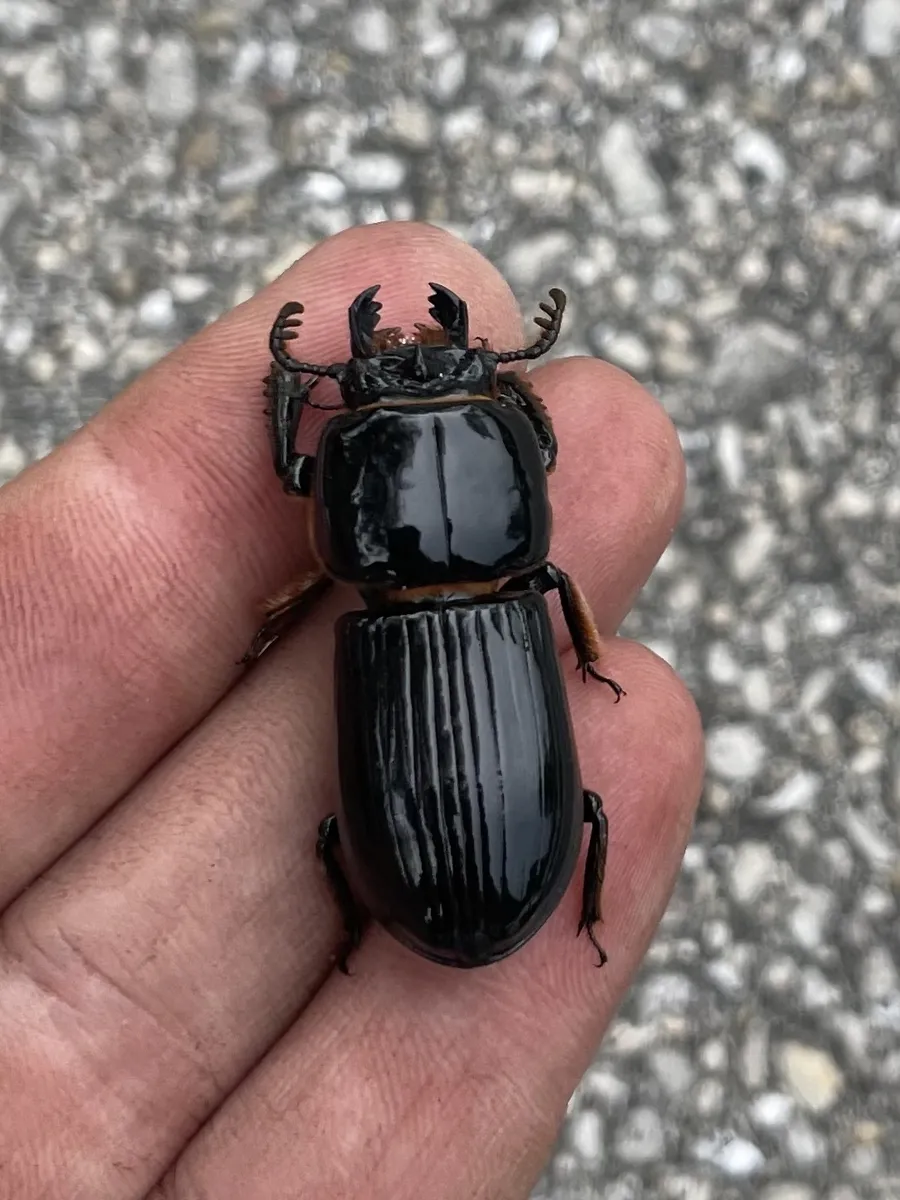
Odontotaenius floridanus
Odontotaenius floridanus
Identification: Distinguished from O. disjunctus (which also occurs in FL) by the horn shape and wider foretibia Type Locality: Archbold Biological Station near Lake Placid, Highlands Co., Florida
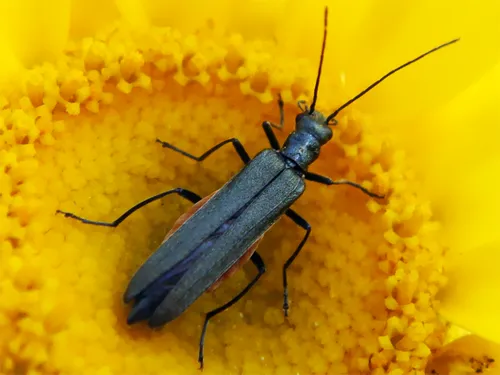
Oedemera lurida
Oedemera lurida
Length 5 to 8 mm. A generally long and slender species, which is a greyish sage green in colour. It often leaves its elytra (wing cases) agape. Active in bright sunshine in open habitats with plenty of wild flowers such as Hawthorn and umbellifers, w
Ohlone Tiger Beetle
Cicindela ohlone
Federally listed endangered species. For details (including some interesting natural history) see this PDF from the US Fish & Wildlife Service's website. The Ohlone Tiger Beetle was discovered and named by the late Randy Morgan ...naturalist extraor
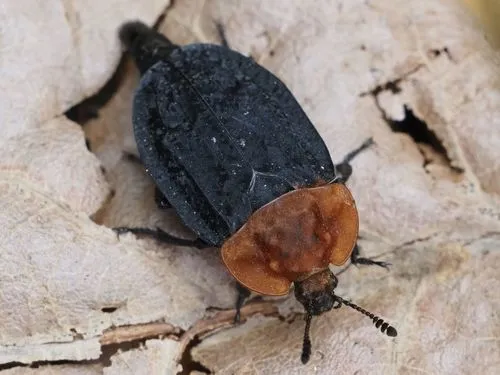
Oiceoptoma thoracicum
Oiceoptoma thoracicum
Sometimes known as the Red-breasted Carrion Beetle, this is a two coloured species and distinctive in appearance. Found on or under the carcasses of birds and small mammals, often in woodland habitats. Curiously enough this species does not eat the m
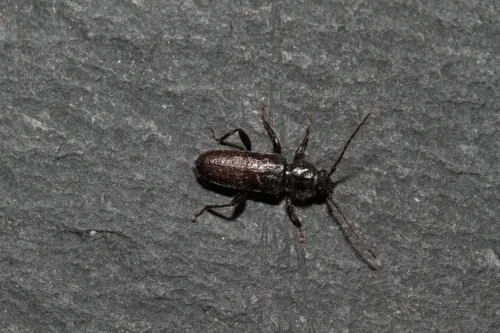
Old House Borer
Hylotrupes bajulus
This beetle is around 15 mm long and brown to black, sometimes appearing greyer because of a fine grey furriness on most of the upper surface. On the pronotum two conspicuously hairless tubercles are characteristic of the species. Unless identified b
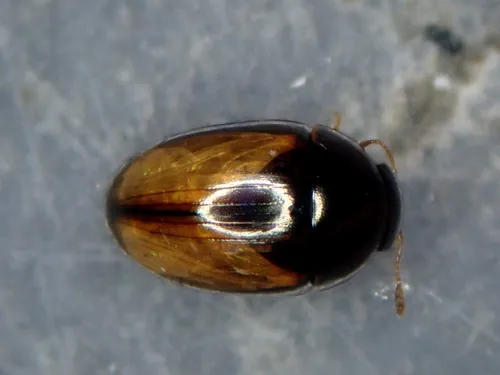
Olibrus corticalis
Olibrus corticalis
The elytra are a straw brown colour but with a darker brown triangle behind the pronotum. As with all Olibrus species, the final antennal segment is nipple-shaped. The second elytral stria meets the first before the apex. Usually found on flowers in
Oligomerus sericans
Oligomerus sericans
Identification: Front coxae separated, 10 antennomeres
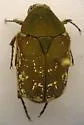
Olive Euphoria
Euphoria herbacea
fairly common in early summer in Durham, NC. I have not seen it at flowers, however, as is common with E. sepulcralis . (This could just be due to my limited experience with the beetles.) Almost all E. herbacea I have seen appear to be in a frantic r
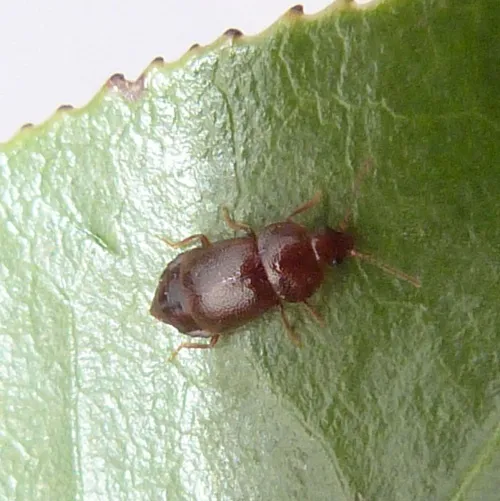
Olophrum piceum
Olophrum piceum
This is a small chestnut brown beetle with an unusual appearance for a member of the Staphylinidae family. It has strongly pitted elytra and pronotum with a black head and small black scutellum. Most frequently encountered in leaf litter. Can be foun
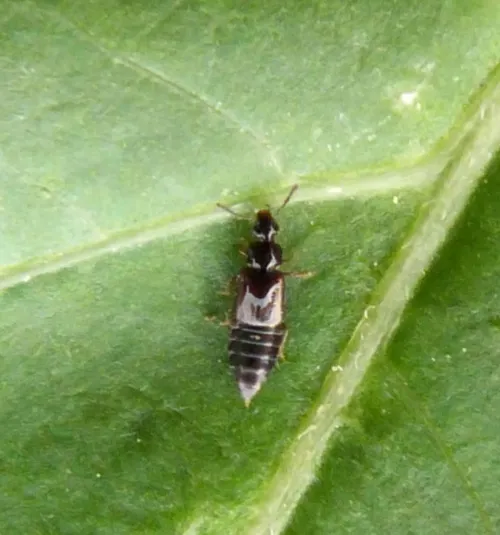
Omalium rivulare
Omalium rivulare
This is a small (3.5 to 5 mm), mainly brown rove beetle. Associated with decomposing material of all kinds, fungi, rotting wood, birds nests etc. Widespread and fairly frequent in Britain.
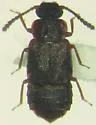
Omalium undescribed
Omalium undescribed
Identification: Transverse pronotum, and relatively thick antennomere 3-5 blending into a 6-seg. club Page created to accomodate this distinctive but not yet described (in process) northeastern species
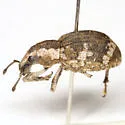
Omileus epicaeroides
Omileus epicaeroides
Identification: Det. M. A. Quinn, 2015 Type Locality: Texas
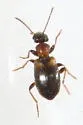
Omonadus formicarius
Omonadus formicarius
must have been established in NA long before 1895, when Casey produced three junior synonyms of it
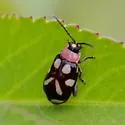
Omophoita albicollis
Omophoita albicollis
Identification: Median spot on each elytron oblique and linear - Doris Blake "This probably is not O. cyanipennis , but a new record for U.S. It seems identical with e.g. https://www.inaturalist.org/observations/431771 from the Caribbean, which is di
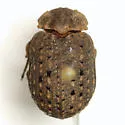
Omorgus howelli
Omorgus howelli
Identification: Closely related to the widespread O. suberosus and to a lesser degree to O. tytus considered by FL to be a Species of Greatest Conservation Need • comes to light
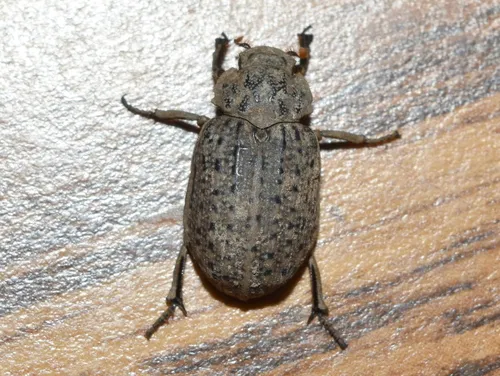
Omorgus suberosus
Omorgus suberosus
Omorgus suberosus (Omorgus suberosus) is a species in the family Trogidae, commonly known as hide beetles, belonging to the order Coleoptera (Beetles). It is classified within the suborder Polyphaga, superfamily Scarabaeoidea. This species belongs to
Omorgus tytus
Omorgus tytus
Rarely collected , but occasionally comes to lights (BG data)
Omorgus umbonatus
Omorgus umbonatus
Identification: ...wierdly confluent elytral punctures, lack of elytral humeral umbones, and parallel elytra being fairly diagnostic. (Wm B. Warner, 2010)
Omosita colon
Omosita colon
Identification: aedeagus illustrated here the commonest member of the genus in Europe
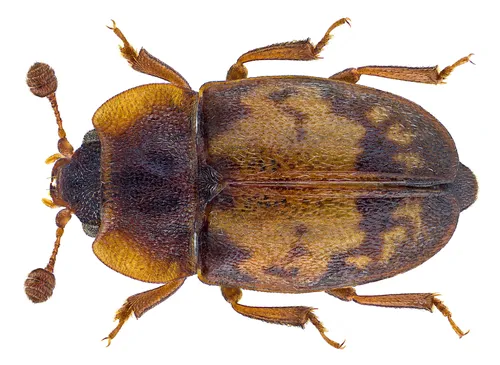
Omosita discoidea
Omosita discoidea
Omosita discoidea (Omosita discoidea) is a species in the family Nitidulidae, commonly known as sap-feeding beetles, belonging to the order Coleoptera (Beetles). It is classified within the subfamily Nitidulinae, tribe Nitidulini, suborder Polyphaga,
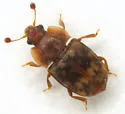
Omosita nearctica
Omosita nearctica
there are confirmed specimens of true O. colon from ON (Kirejtshuk 1987) and across Canada
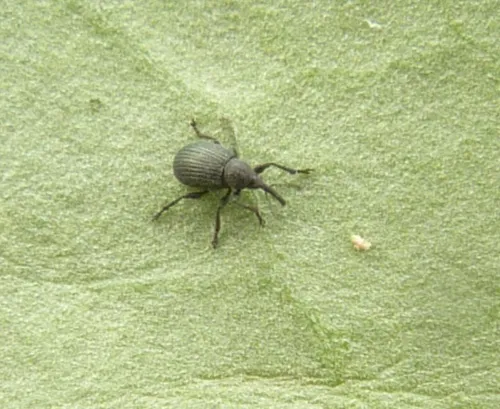
Omphalapion hookerorum
Omphalapion hookerorum
A small (1.6 to 2 mm) grey-black weevil with ribbed elytra. Unless identified by a recognised expert, photographic evidence is required and the specimen should be examined with a microscope. In the comments box, state the key or ID method used. Note
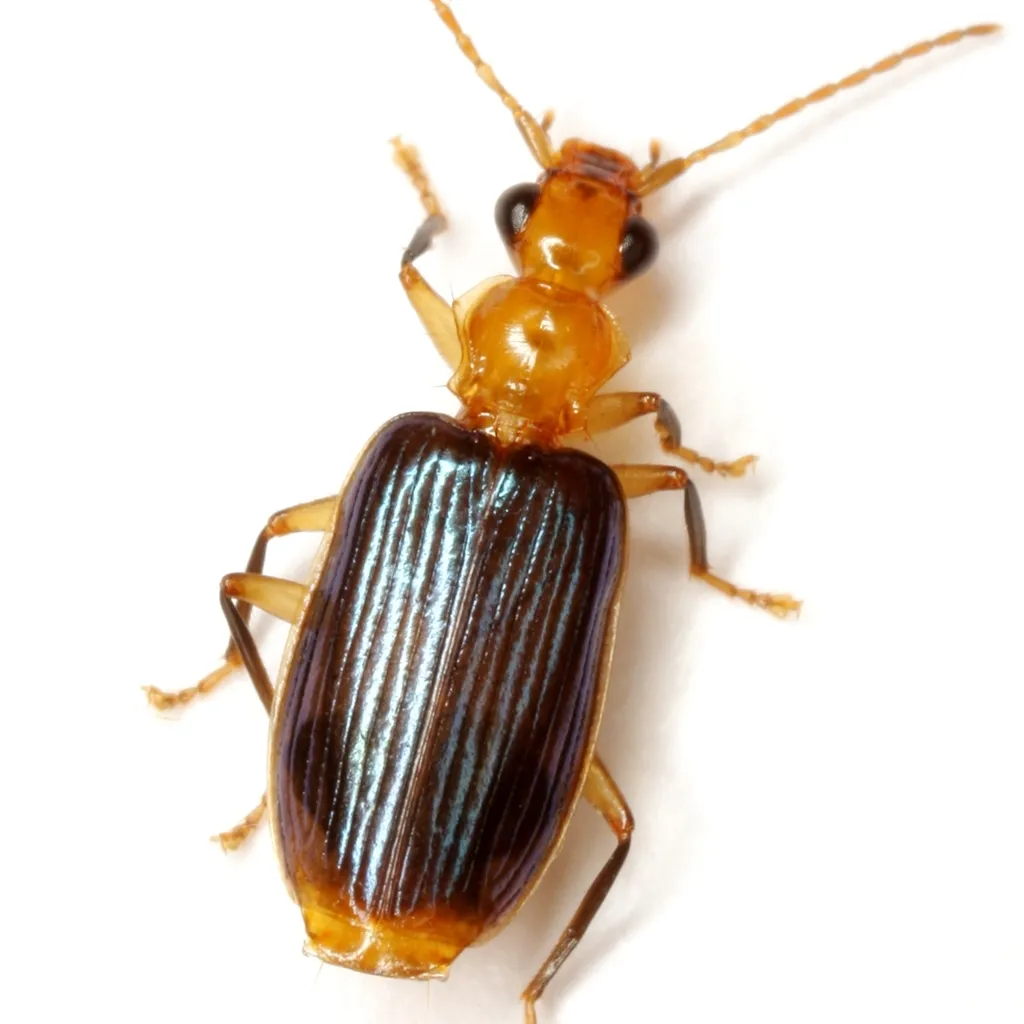
Onota angulicollis
Onota angulicollis
Onota angulicollis is a species of ground beetle in the family Carabidae. It is found in Central America, North America, and South America.
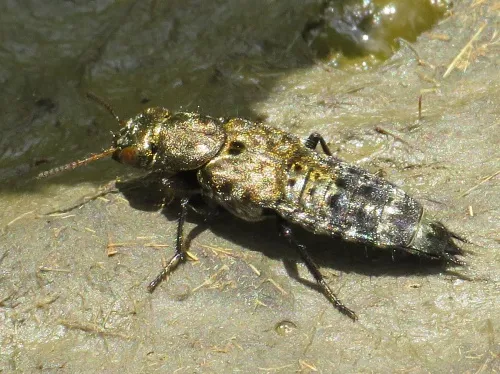
Ontholestes murinus
Ontholestes murinus
A very distinctive rove beetle which is around 14mm in length. The thorax has a few gingery hairs and a general brownish mottled appearance, whilst the abdomen shows some grey. Distinguished from the only other member of the genus, O. tesselatus , by
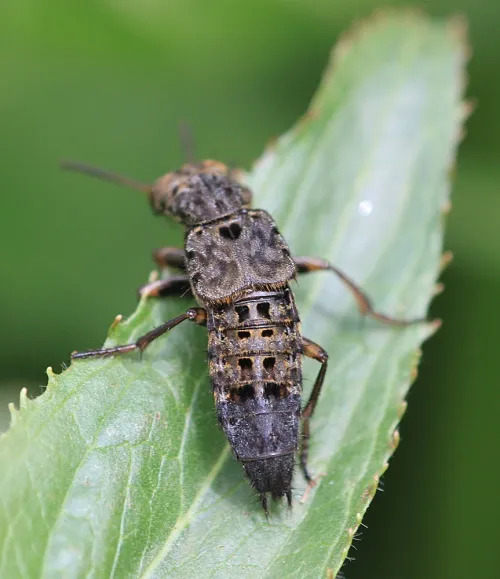
Ontholestes tessellatus
Ontholestes tessellatus
Length 14 to 19 mm. A very distinctive rove beetle with some orangey-yellow colouring in the legs. It is similar to Ontholestes murinus but that species has completely dark legs. Usually found in association with carrion. All year round especially in
Onthophagus altivagans
Onthophagus altivagans
Identification: Males of O. altivagans differ from O. subopacus males by the form of the pronotal prominence, and in that the pygidium is shiny only towards the apex. Additionally, the pronotal setation is longer and denser.
Onthophagus batesi
Onthophagus batesi
Although this species can be considered common throughout much of its range in Mexico and Central America it is apparently rare in south Texas. The only published records for Texas (and the United States) are those accompanying the original descripti
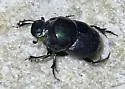
Onthophagus cavernicollis
Onthophagus cavernicollis
Slay et al. (2012) categorize this sp. as a troglophile (an animal that may complete its life cycle in a cave, but can also survive outside)
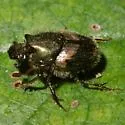
Onthophagus concinnus
Onthophagus concinnus
Identification: Bicolored green and yellow; male with anteriorly projected pronotal lobe
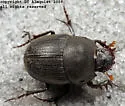
Onthophagus depressus
Onthophagus depressus
Identification: clypeus sharply emarginate, pronotum appear rough, granulate earliest record in our area: GA 1937
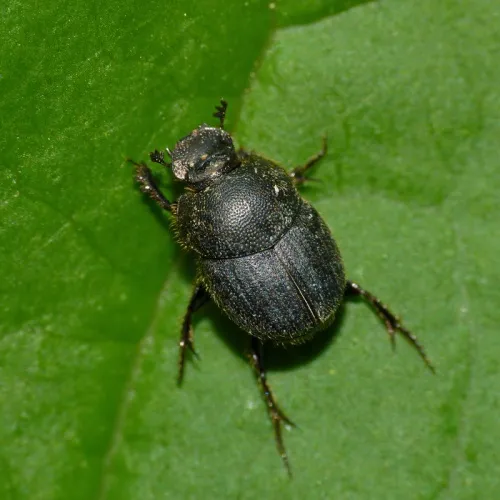
Onthophagus joannae
Onthophagus joannae
A uniformly dark grey-black beetle measuring 4 to 6 mm. Associated with animal dung especially sheep dung. Widespread in the south of Britain but infrequent further north. No additional images available for this species.
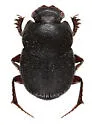
Onthophagus knausi
Onthophagus knausi
Identification: Small size, elytra with 6 striæ between suture and humerus, striæ 2‒5 with two irregular rows of small tubercles locally abundant in se.NE
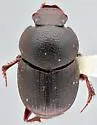
Onthophagus mextexus
Onthophagus mextexus
an important component for sustainable tropical cattle ranching in Veracruz, Mexico
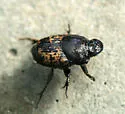
Onthophagus nuchicornis
Onthophagus nuchicornis
accidentally introduced to North America prior to the 1840s
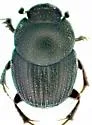
Onthophagus oklahomensis
Onthophagus oklahomensis
Identification: Similar to O. pennsylvanicus , but usually smaller and with two sizes of punctures on pronotum (punctures uniform in O. pennsylvanicus )
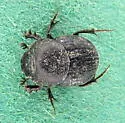
Onthophagus pennsylvanicus
Onthophagus pennsylvanicus
Identification: Sexual dimorphism not pronounced [males without obvious horns or protuberances]; similar to O. oklahomensis
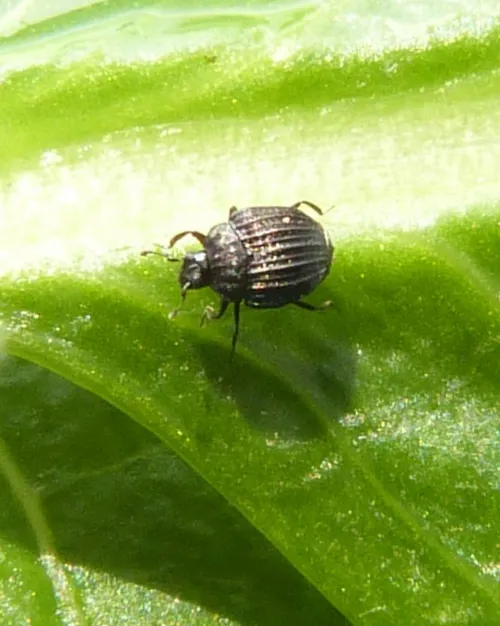
Onthophilus striatus
Onthophilus striatus
A very small greyish beetle being only about 2 mm long, the elytra are deeply ridged. Under rotting plants, in manure, on carrion and fungi. All year but especially in spring and summer. Widespread and fairly frequent in England and Wales, less well
Oomorphus floridanus
Oomorphus floridanus
Type Locality: collected in some numbers at Biscayne, Fla. by E. A. Schwarz.
Oosternum attacomis
Oosternum attacomis
Spangler reported that Moser submitted what became the type series of Oosternum attacomis from Louisiana for identification. They were collected from detritus cavities 2-8 feet underground in nests of the Texas leaf-cutting ant, Atta texana and were
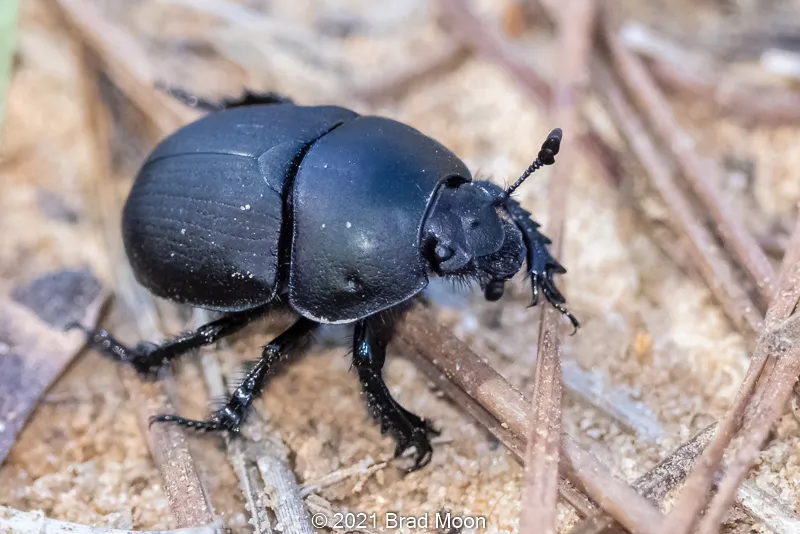
Opaque Earth Boring Beetle
Geotrupes opacus
Identification: Moderately dull; black; elytra without striae, just rows of punctures (same as ulkei ) - easy to ID
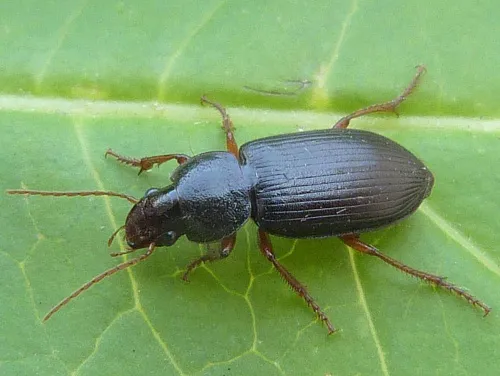
Ophonus ardosiacus
Ophonus ardosiacus
Length 10 to 14 mm. A rather variable species - the elytra may vary from a bright dark blue to almost black. The legs are usually brown. Usually found on disturbed ground or post industrial sites often under stones. All year round, but most likely to
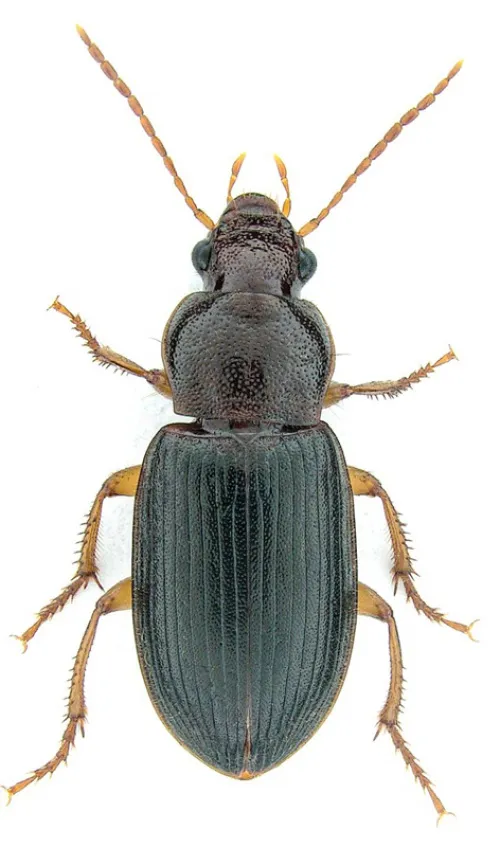
Ophonus puncticeps
Ophonus puncticeps
A 6.5 to 9 mm long, brownish black, seed eating ground beetle. Unless identified by a recognised expert, a photo is required and the specimen should be examined with a microscope. In the comments box, state the key or ID method used and describe the
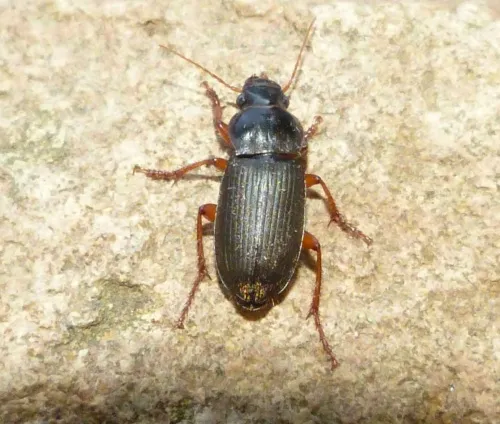
Ophonus rufibarbis
Ophonus rufibarbis
This medium sized beetle (7-9mm) has a dark brown body and pale legs and antennae. The pronotum is strongly sinuate with sharp points at the hind angles. Found in sparsely vegetated habitats on all soil types.
Ophraella americana
Ophraella americana
Identification: generally more oval than most of its congeners, mid-elytral stripe generally straight, subsutural line also straight but faint Det. E. G. Riley, 2010 uncommon
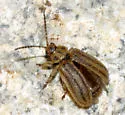
Ophraella conferta
Ophraella conferta
Identification: Det. from specimen, Brad Barnd, 2022
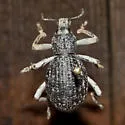
Ophryastes argentatus
Ophryastes argentatus
Identification: LeConte: One female, with the elytra nearly twice as wide as the thorax; the anterior and posterior marginal impressions of the thorax are entire and very distinct, uniting with the dorsal line; the color is more uniform than in the o
Ophryastes decipiens 0
Ophryastes decipiens
Identification: In this species there is a great deal of variation in size, shape, and degree of maculation. Some specimens are robust, convex, the body dilaited and widest behind the middle, others are flatter and more parallel, with the body widest
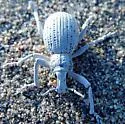
Ophryastes desertus
Ophryastes desertus
Identification: Elytra oblong oval, three times as long as the thorax, one and a-half times as long as wide, strive broad and shallow, punctures coarse and serrate, intervals feebly convex. Body beneath and legs densely covered with whitish scales. D
Ophryastes dunnianus 0
Ophryastes dunnianus
Identification: Scales light and dark gray, confusedly mottled; elytral striae impressed, finely punctate (last key couplet) This name seems to have caused considerable confusion. Casey's description of the species states that it is white, with the s
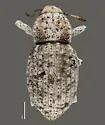
Ophryastes huachucae
Ophryastes huachucae
Identification: head and sides of prothorax dominantly white; brown scales of pronotal disk more or less concentrated into two broad stripes, one on either side of the middle; disk of elytra clouded but mainly brown, the legs barred. Det. C. W. O.Bri
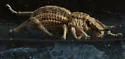
Ophryastes latirostris
Ophryastes latirostris
Identification: This species differs from [most (all?) spp.] by the obliquity of the lateral grooves of the rostrum, which is also thicker than in the other species. Type Locality: "on the Arkansas River, near the mountains."
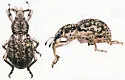
Ophryastes nivosus
Ophryastes nivosus
Identification: The male is pure white throughout; the female is feebly mottled with faint oval annular spots, each centered on a strial puncture. In the female the median sulcus of the rostrum is longer than in the male, extending somewhat indefinit
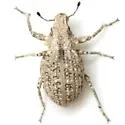
Ophryastes ovipennis
Ophryastes ovipennis
Type locality: [El] Paso del Norte, Mexico (=Ciudad Juárez)
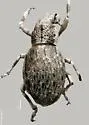
Ophryastes pilosus
Ophryastes pilosus
Identification: Color dark gray, sparingly and irregularly mottled with black, especially upon the basal portions of the second and fourth elytral intervals; pronotum bearing a blackish lateral stripe upon each side and a narrow black median line. De
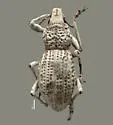
Ophryastes shufeldti
Ophryastes shufeldti
Identification: readily distinguished from tuderosus and latirostris of LeConte by the much less transverse prothorax. Det. C. W. O'Brien, 2011 Type Locality: Fort Wingate , New Mexico
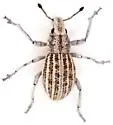
Ophryastes simulans
Ophryastes simulans
Identification: This species like others in the genus is quite variable in size and somewhat unstable as to color pattern. I have selected as types specimens of intermediate size and of the most characteristic color pattern. Some specimens are of a m
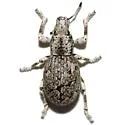
Ophryastes sordidus
Ophryastes sordidus
Identification: the brown and gray scales are intermixed and do not form any well defined spaces; the latter color predominates on the head, and the former on the elytra. Det. Charles W. O'Brien, 2009 Type Locality: One female specimen, Platte River.
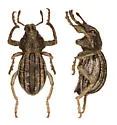
Ophryastes tuberosus
Ophryastes tuberosus
Identification: Thorax nearly twice as wide as long, constricted at apex and base, sides (tuberosities) slightly divergent and notched at middle, surface deeply punctured and very irregular. Elytra regularly oval with rows of large, deeply impressed
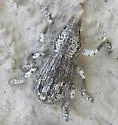
Ophryastes turbinatus
Ophryastes turbinatus
Identification: near O. dunnianus Casey (AZ-w.TX), and O. decipiens LeC. (AZ-w.TX), from both of which, it may be distinguished by the anteriorly widened prothorax. (Sharp, 1911) Det. C. W. O'Brien, 2010 Type Locality: Lampazos, Nuevo Leon, Mexico (C
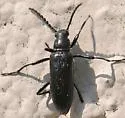
Oploptera simplicicollis
Oploptera simplicicollis
Identification: thick ant. segments separate Oploptera from most Strongylium
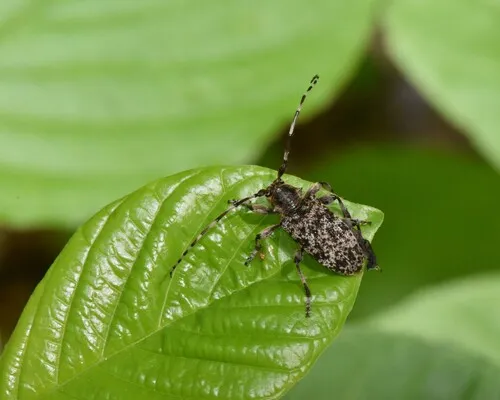
Oplosia nubila
Oplosia nubila
Oplosia nubila is a species of beetle in the family Cerambycidae. It was described by John Lawrence LeConte in 1862.
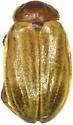
Ora hyacintha
Ora hyacintha
Identification: distinctive: dorsum glabrous, elytra costate
Ora zacki
Ora zacki
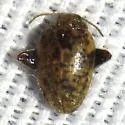
described by Epler (2026) from material from Guatemala and Texas. This species was previously known as O. cf. marmorata Champion based on a single male specimen from Texas.
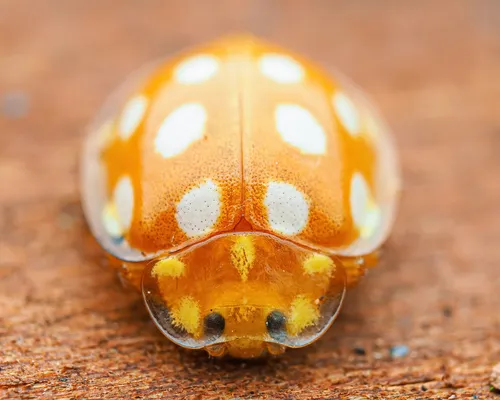
Orange Ladybird
Halyzia sedecimguttata
Easy to identify, with its orange/yellow head, body and legs. This species is relatively easy to identify and is unlikely to be confused with anything else. However photos are always helpful to confirm your record. It is often found in woodland, part
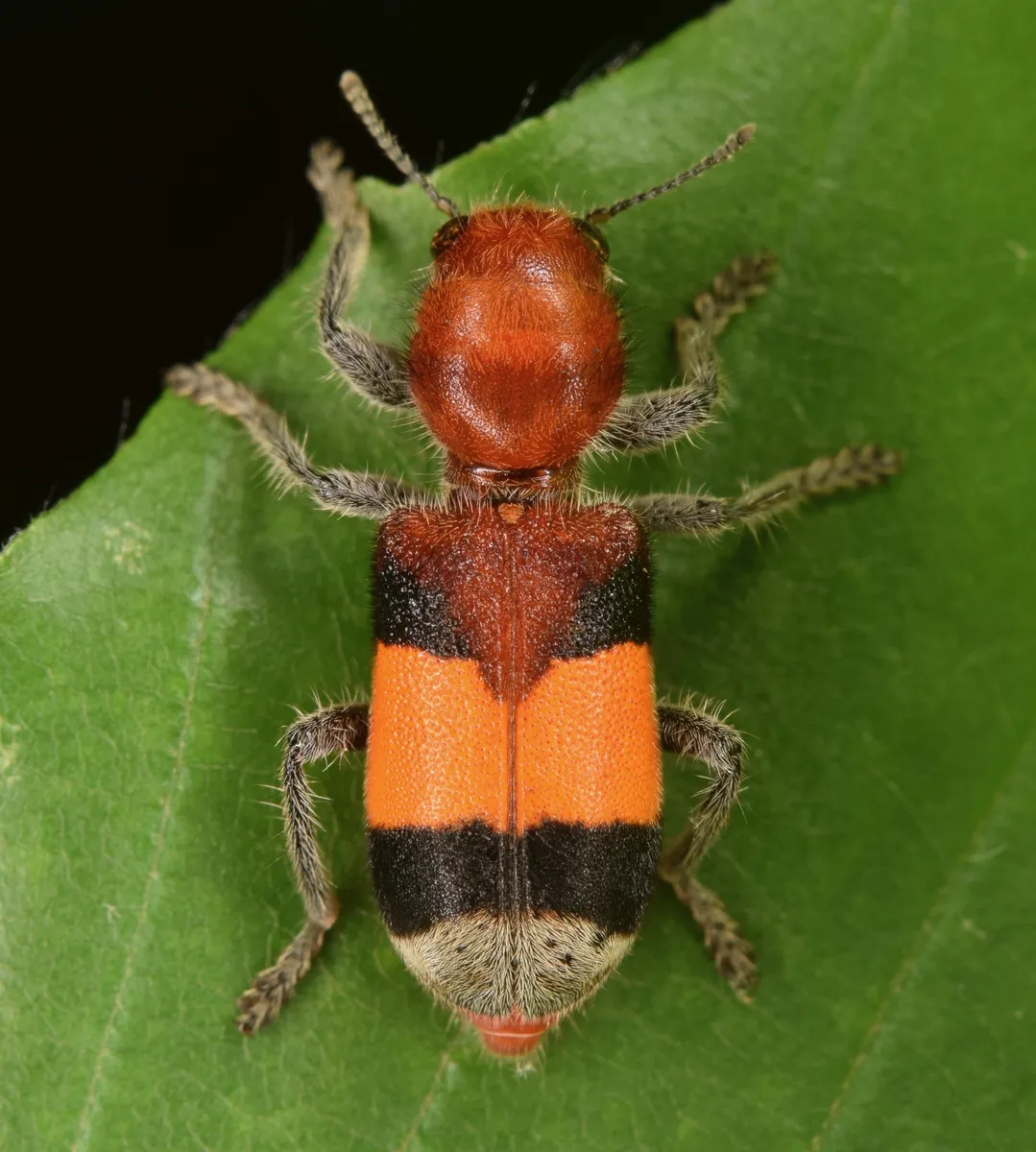
Orange-banded Checkered Beetle
Enoclerus ichneumoneus
Identification: A very wide orangish-brown band across the middle of the elytra and an elongate scutellum
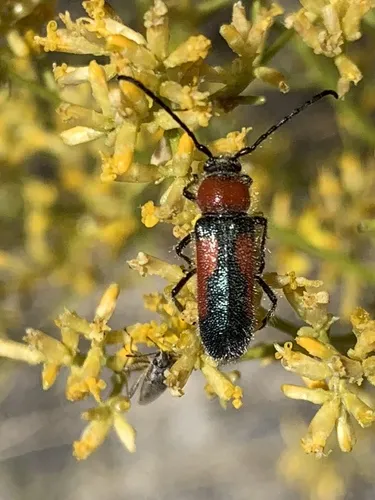
Orange-bracketed Longhorned Beetle
Crossidius discoideus
Associated with composites in the genera Gutierrezia & Haplopappus ; larvae bore in the root crown while adults are found on the flowers and foliage. --T.C. MacRae
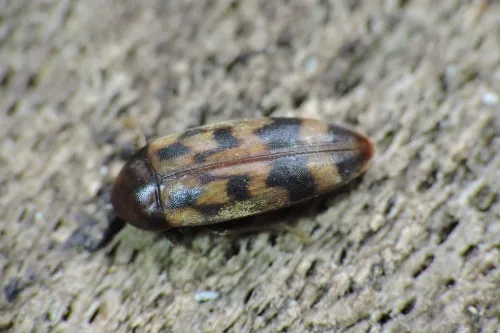
Orchesia undulata
Orchesia undulata
There are three British species in the genus, but the other two are both plain coloured, without a pattern. Widespread in England and Wales, less common further north. No additional images available for this species.
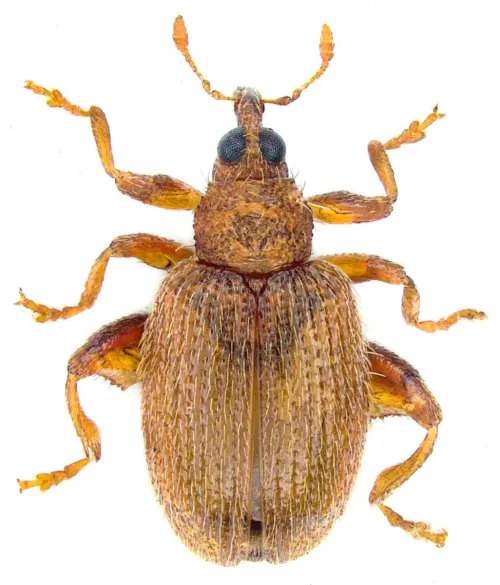
Orchestes betuleti
Orchestes betuleti
Orchestes betuleti is a very small (about 2.5mm) weevil associated with Elm. It may vary from orange-red to darker red. The unmarked elytra, head, legs and rostrum are all red. The larvae mine the mature leaves of Elm (see ‘Life History’ section belo
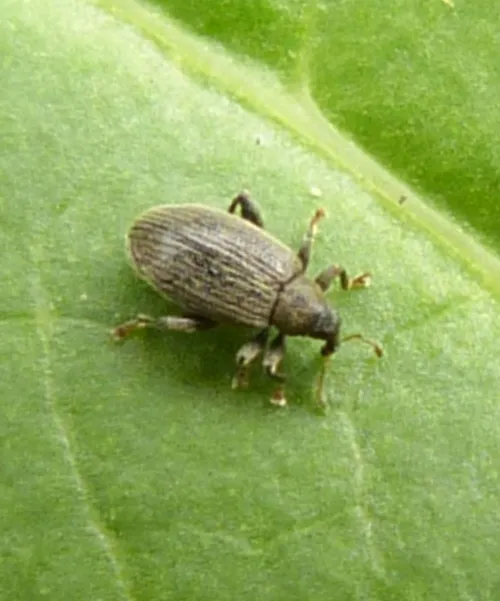
Orchestes fagi
Orchestes fagi
These are small (2 to 3 mm) but very distinctive weevils, black dark brown or blackish with antennae, tarsi and sometimes the extreme tip of the rostrum and tibial apices red. The larva mines the leaves of Beech. Adult : Unless identified by a recogn
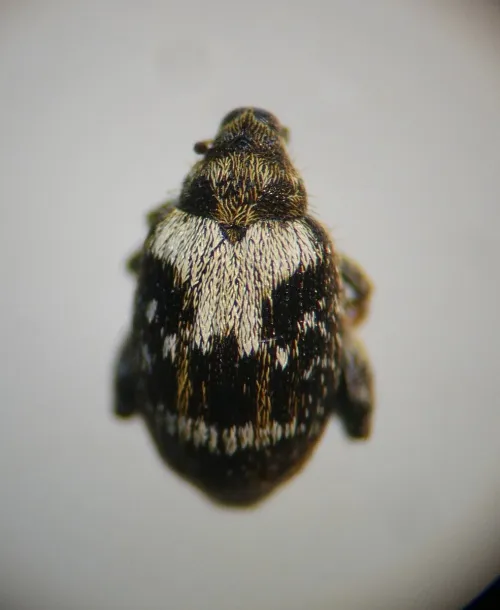
Orchestes hortorum
Orchestes hortorum
The larvae mine the leaves of Oak creating a gallery along the edge of the leaf leading to a circular blotch, from which a case is cut leaving a round hole. The adult weevil is black with white markings. Mines are commonly found in English Oak, but c
Orchestes mixtus
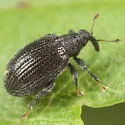
Orchestes mixtus
Identification: hind femur slightly to moderately expanded discussion of a 2007 outbreak in Dallas of the "Elm flea weevil" - Mike Merchant, 2007
Orchestes quercus
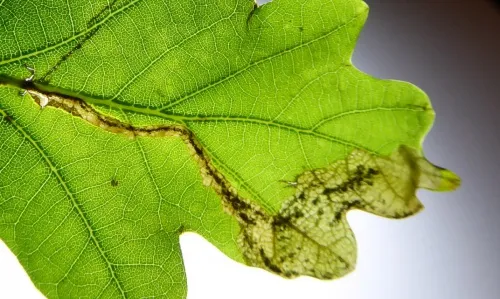
Orchestes quercus
A small weevil of just over 3.5 mm in length, it is chestnut brown coloured and hairy. The larva mine the leaves of various oak species causing a leafmine. There is an oviposition scar in the midrib. The first part of the corridor follows the midrib,
Orchestes rusci
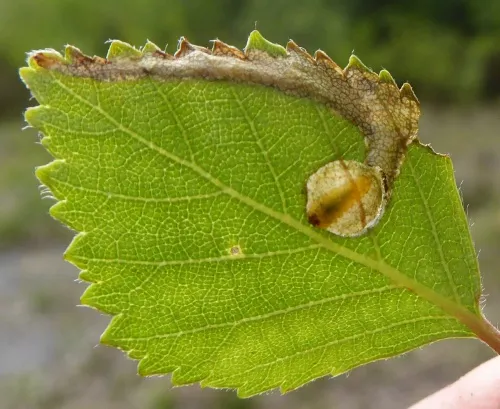
Orchestes rusci
A tiny weevil of just over 2 mm in length. The larva mines Birch leaves, creating a broad gallery leading eventually to a hole in the leaf where the larva has cut out a circular leaf sandwich. This falls to the ground with the larva inside, and it pu
Orchid Beetle
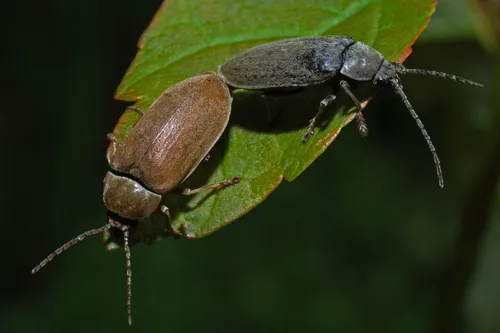
Dascillus cervinus
This beetle is about 1 cm long and is covered in hair, which is yellowish brown in the females and greyer in the males. Rough grassland, usually on flowers, but sometimes in bushes. The larvae eat roots, mainly those of vigorous grasses.
Orchid Weevil
Orchidophilus aterrimus
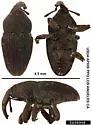
the most frequently intercepted and noxious species of the genus; earliest record in our area: DC 1906