
Primitive Winged Insects
Order Coleoptera
The Primitive Winged Insects (Order Coleoptera) includes 15,720 species across 160 families and 3,716 genera in our directory.
About Primitive Winged Insects
Coleoptera is the largest order of insects with over 400,000 described species, representing ~25% of all known animal species and ~40% of all insects. In the U.S. alone, nearly 30,000 beetle species have been identified.
Economic Impact
Beetles have major economic significance: leaf beetles (Chrysomelidae) and weevils (Curculionoidea) are among the most destructive agricultural pests globally, costing billions annually, while predatory species like ladybugs provide natural pest control.
Ecological Role
Beetles are prominent decomposers, especially in forests, breaking down dead wood and recycling nutrients. As predators, they reduce populations of pest insects. Many species are also important pollinators of flowering plants.
Families in Coleoptera (160)
Species in Coleoptera (15,720)
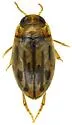
Neobidessus youngi
Neobidessus youngi
Identification: The modified hind trochanters are distinctive. Otherwise, a lightly marked species similar to N. pulloides .
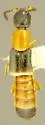
Neobisnius occidentoides
Neobisnius occidentoides
Type Locality: Lake Corpus Christi State Park, San Patricio Co., Texas
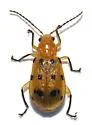
Neobrotica pluristicta
Neobrotica pluristicta
Type Locality: Baboquivari Mountains, southern Arizona
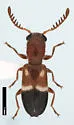
Neocallotillus elegans
Neocallotillus elegans
Identification: Neocallotillus spp. are the only tillines of N. Amer. with the elytral surface adorned with a pale transverse, blister-like, swollen fascia.
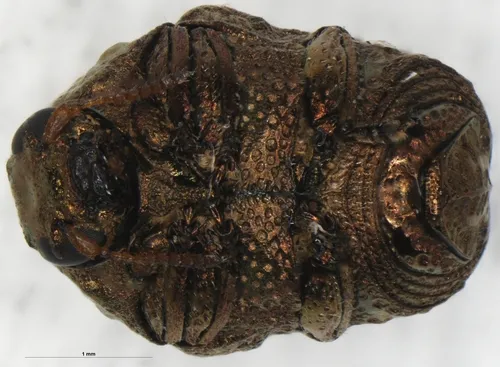
Neochlamisus velutinus
Neochlamisus velutinus
Neochlamisus velutinus is a species of warty leaf beetle in the family Chrysomelidae. It is found in Central America and North America.
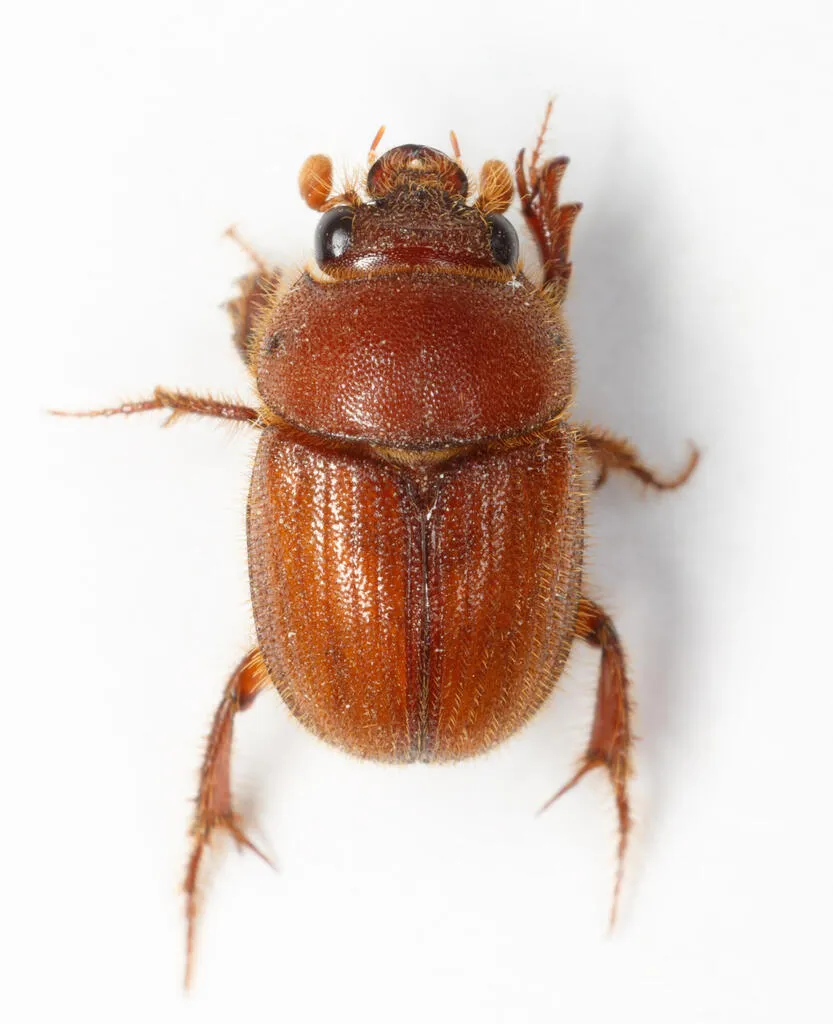
Neochodaeus frontalis
Neochodaeus frontalis
Identification: Frontal tubercle on head behind anterior margin (not on margin); hind femur with large tooth near apex.
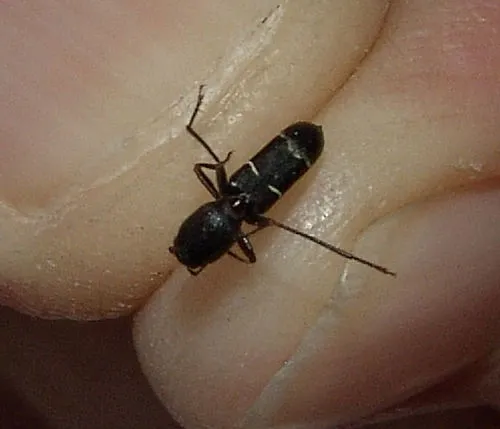
Neoclytus jouteli
Neoclytus jouteli
Identification: Neoclytus j. simplarius Blatchley Det. M. A. Quinn, 2016 both subspp./ color forms are uncommon ( 6 )
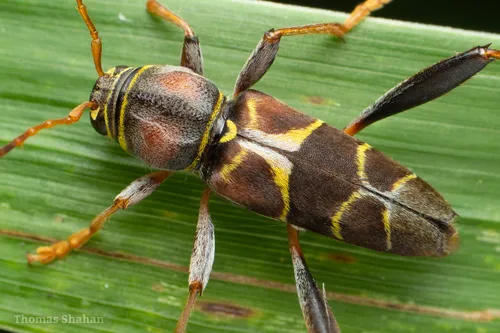
Neoclytus mucronatus
Neoclytus mucronatus
Identification: Pronotum (thorax) Reddish-brown in central area, darkening toward all margins. Yellow stripe outlines all borders of thorax. Elytra (wings) Reddish-brown. Yellow slanted L-shape covers first 1/3 of elytra. Wide sideways U-shape on low
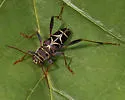
Neoclytus scutellaris
Neoclytus scutellaris
Identification: Elytra have gray bases. Pronotum has yellow band.
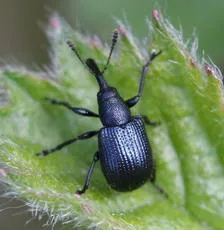
Neocoenorrhinus germanicus
Neocoenorrhinus germanicus
This is a dark blue-black shiny weevil with a body length of about 3mm. It is covered in short pubescence which on the elytra is uniformly pointed backwards. Legs and antennae are dark brown.It is distinguished from other species in the genus by the
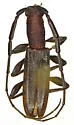
Neocompsa puncticollis
Neocompsa puncticollis
Identification: note elytral setae in rows Neocompsa puncticollis orientalis Martins & Chemsak Det. F. Skillman a single spmn of orientalis coll'ed by Vogt at lights in Pharr, Hidalgo Co., TX in August tentatively ID'd as Neocompsa puncticollis orien
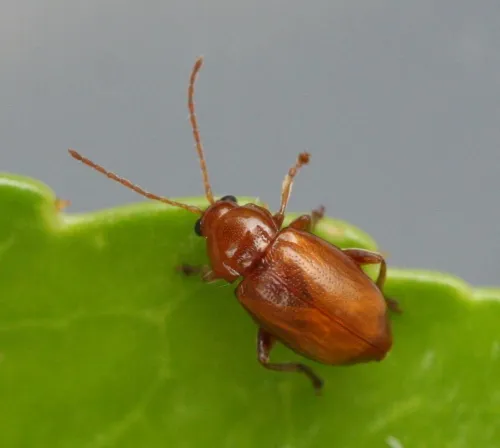
Neocrepidodera transversa
Neocrepidodera transversa
The genus is identified by the transverse furrow across the pronotum. This is an orangey brown flea beetle. N. transversa is distinguished from the similar N. ferruginea by having the elytral pores in ragged lines (compared with the neat, straight li
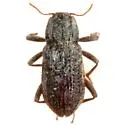
Neocylloepus boeseli
Neocylloepus boeseli
Identification: PARATYPE Type Locality: Devil's River about 20 mi S of Juno, Val Verde Co., TX - August 1967. Elevation about 1,200 ft. Holotype deposited in OMNH, Norman, OK. (Brown 1970) Texas considers this a "Species of Greatest Conservation Need
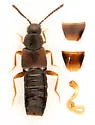
Neodimetrota tenuiducta
Neodimetrota tenuiducta
Identification: This species bears close resemblance to A. burwelli, A. curvipennis, and A. caribou, but it can be distinguished from them by differences in the shape of male genitalia and some external characteristics. Females of this species may be
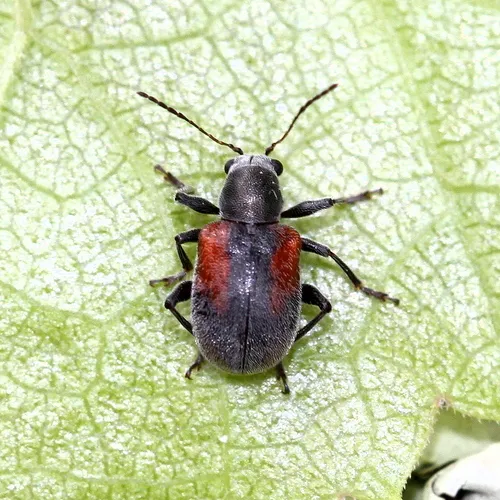
Neofidia humeralis
Neofidia humeralis
Neofidia humeralis is a species of leaf beetle. It ranges from southeastern Arizona and southwestern New Mexico, along the Sierra Madre Occidental and Sierra Madre del Sur, south to Oaxaca in southwestern Mexico. It was first described as two species
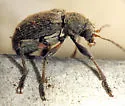
Neofidia longipes
Neofidia longipes
Identification: Integument dark; at least one pair of femora bicolored (rarely not so), base lighter reddish compared to darker distal areas; coarse pronotal punctures; males with front tibial spurs separated by at least the width of spur base
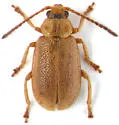
Neogalerucella pusilla
Neogalerucella pusilla
Identification: usually pale, with dark spots on vertex and shoulders. less frequently with pattern like N. calmariensis . safe recognition (and separation from native species) by male genitalia. introduced to combat the invasive Lythrum weeds ( 3 )
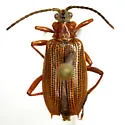
Neohaemonia flagellata
Neohaemonia flagellata
Neohaemonia flagellata is a species of aquatic leaf beetle in the family Chrysomelidae. It is found in North America.
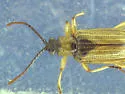
Neohaemonia melsheimeri
Neohaemonia melsheimeri
Identification: distinguished from other members of the genus by the presence of oblique, impressed, usually darkened bands on either side of the midline of the pronotum, as well as its small size. (Lapierre et al. 2019)
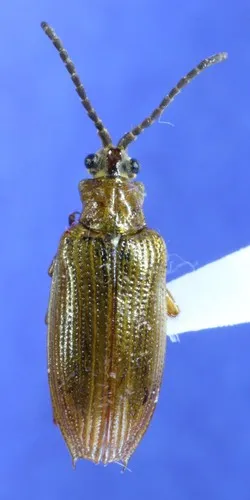
Neohaemonia nigricornis
Neohaemonia nigricornis
Neohaemonia nigricornis is a species of aquatic leaf beetle in the family Chrysomelidae found in North America. Its range includes the northern United States and southern Canada.
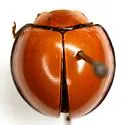
Neoharmonia marginalis
Neoharmonia marginalis
full A tray of spmns, all from Mexico, in the TAMUIC
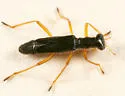
Neohydnocera tabida
Neohydnocera tabida
Identification: tabida's elytra are longer, with more rounded apices. (J. Leavengood, pers. comm. to MAQ, 2014)
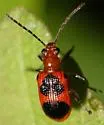
Neolema cordata
Neolema cordata
Identification: elytral anterior maculae coalesce to form a heart-shaped spot
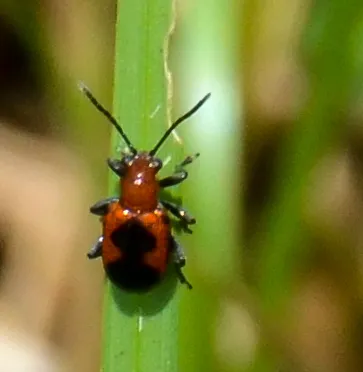
Neolema ephippium
Neolema ephippium
Neolema ephippium is a species of leaf beetle in the family Chrysomelidae. It is found in North America.
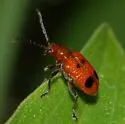
Neolema quadriguttata
Neolema quadriguttata
Identification: N. sexpunctata (e.US, 4.8‒6.2 mm) has humeral dark spots & smaller, denser strial punctures
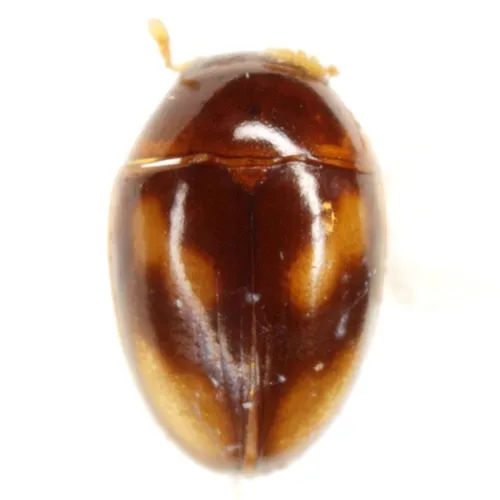
Neolitochrus pulchellus
Neolitochrus pulchellus
Identification: Holotype • distinctive; markings highly variable. ‒Matt Gimmel, 2011
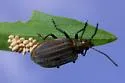
Neolochmaea obliterata
Neolochmaea obliterata
Identification: From Galerucinae: hind femur not abnormally broad and adapted for jumping; tarsal claws simple, or bifid with inner lobe comparatively narrow and pointed; procoxal cavities closed behind; tarsomere 1 about as long as 5; external surfa
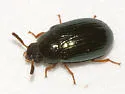
Neomida bicornis
Neomida bicornis
Identification: The percentage of individuals with an orange pronotum decreases n. of FL
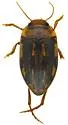
Neoporus arizonicus
Neoporus arizonicus
Identification: possibly same species as N. dimidiatus
Neoporus pratus
Neoporus pratus
Identification: iNaturalist Type Locality: Kansas, Douglas Co., Grant township, Scorpion Hill
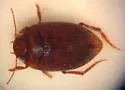
Neoporus uniformis
Neoporus uniformis
Identification: Similar to N. lobatus , and possibly a southern form of this species. "Lighter in color, more coarsely punctate, and more shining and smaller than typical N. lobatus ."
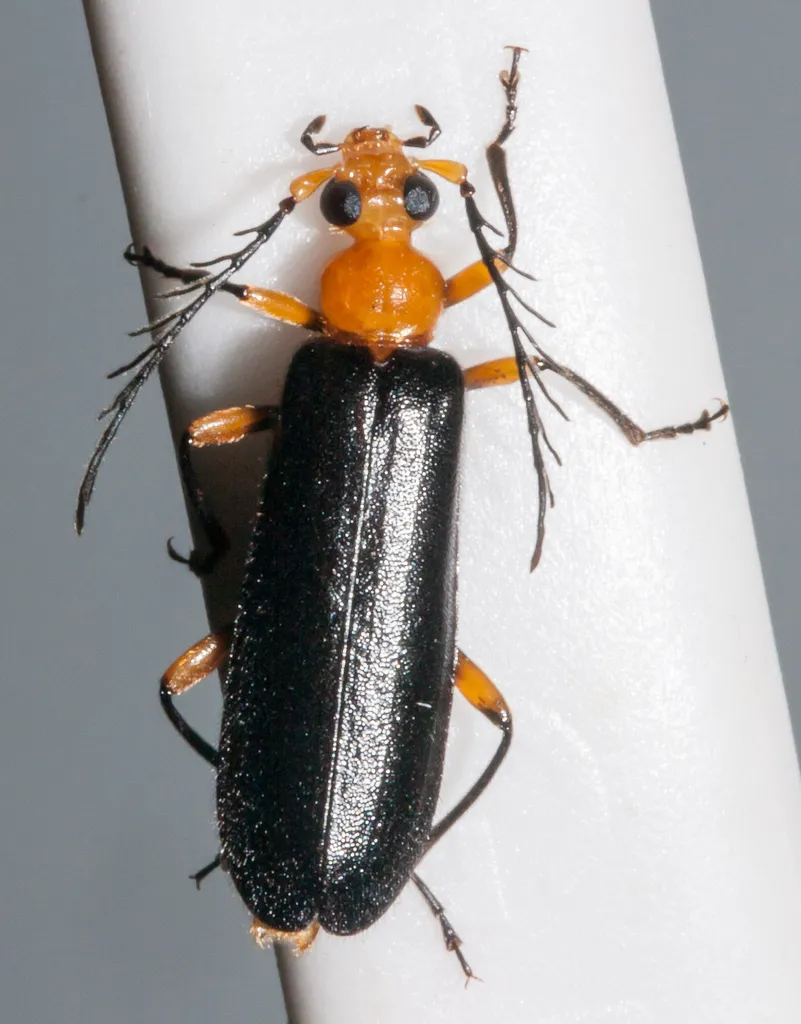
Neopyrochroa femoralis
Neopyrochroa femoralis
Identification: all legs bicolored (orange femora, and black beyond the femora)
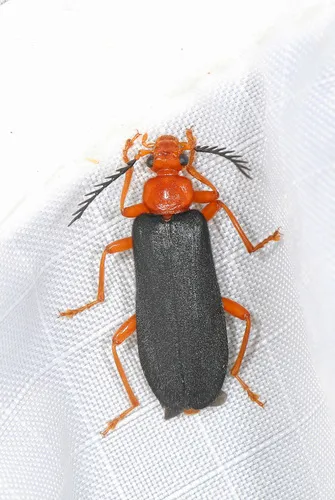
Neopyrochroa flabellata
Neopyrochroa flabellata
Identification: all legs unicolored orange adults primarily nocturnal found under bark, on vegetation in daytime
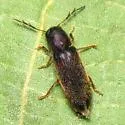
Neorthopleura texana
Neorthopleura texana
Identification: disc of pronotum light brown, pronotal fringes dark brown , overall color pattern is brick and brown Det. M. A. Quinn, 2016 the following is not true antennomeres entirely dark in N. thoracica , funicular segments paler in N. texana a
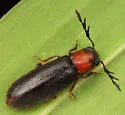
Neorthopleura thoracica
Neorthopleura thoracica
Identification: pronotal disc is red and the lateral margins are narrowly black , overall color pattern is red and black Det. M. A. Quinn, 2016 the following is not true antennomeres entirely dark in N. thoracica , funicular segments paler in N. texa
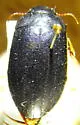
Neoscutopterus hornii
Neoscutopterus hornii
Identification: Antennae and palpi entirely pale, with little or no darkening; metasternal wing narrow
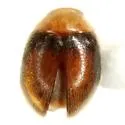
Nephaspis oculatus
Nephaspis oculatus
Identification: Gordon's figures ( 3 ) Type locality: Dunedin, Florida ( 3 )
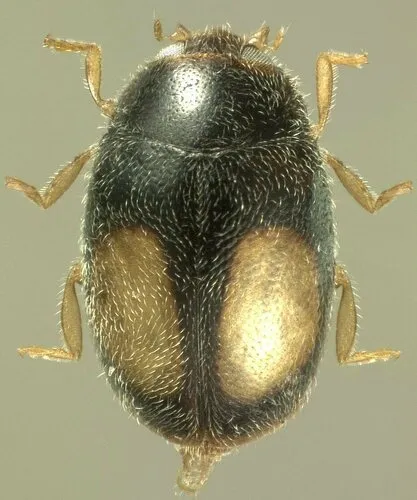
Nephus alyssae
Nephus alyssae
Identification: The small size, elytron with single golden central spot, and dorso-ventrally flattened body distinguishes N. alyssae from any other US species of Nephus . (Golia & Golia 2014) TYPE Type Locality: Holotype, female with label data “Flor
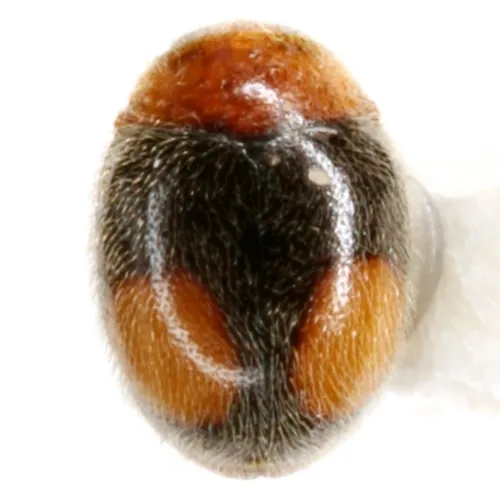
Nephus bivulnerus
Nephus bivulnerus
Identification: Gordon's figures Type Locality: Key West, FL
Nephus flavifrons
Nephus flavifrons
Identification: Gordon's figures black with red apical spots (apical spots are yellow in southmost TX) commonly collected, wide spread sp.
Nephus guttulatus
Nephus guttulatus
Nephus guttulatus (Nephus guttulatus) is a species in the family Coccinellidae, commonly known as lady beetles, belonging to the order Coleoptera (Beetles). It is classified within the subfamily Scymninae, tribe Scymnini, suborder Polyphaga, superfam
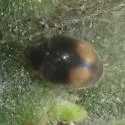
Nephus quadrarius
Nephus quadrarius
Identification: each elytron with 2 yellow spots, one on disc, one on apical thrid Type Locality: Benson, Cochise Co., Arizona
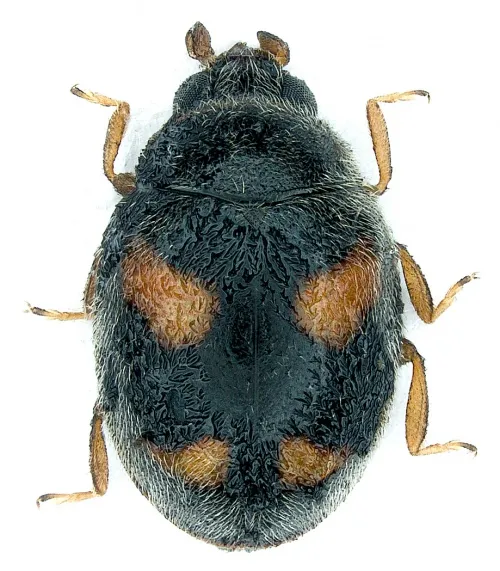
Nephus quadrimaculatus
Nephus quadrimaculatus
Length: 1.5 to 2 mm. Basic colour is black with four (two pairs) reddish-brown kidney-shaped spots, the front pair being larger than the rear pair. Pronotum and head colour is black. Leg colour: brown. Other features: hairy; abdomen has a reddish-bro
Nephus redtenbacheri 0
Nephus redtenbacheri
Identification: externally inseparable from N. ornatus naviculatus earliest record in our area: NS 2024
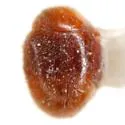
Nephus timberlakei
Nephus timberlakei
Identification: Color brownish red, elytron dark brown in basal l/2, dark brown area blended into brownish red of apical area - Gordo's figures Type series, 4 spmns from Brownsville, TX. No males were available for study, so the genitalic affinities
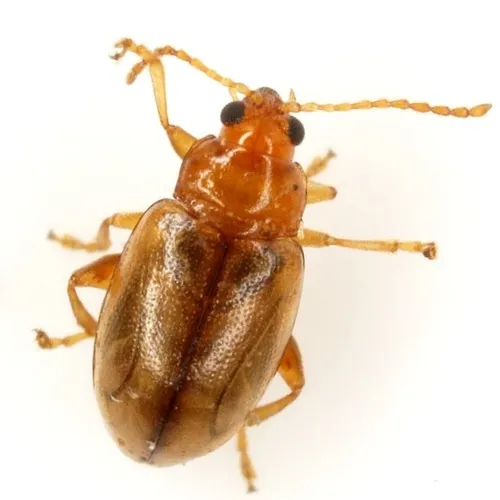
Nesaecrepida infuscata
Nesaecrepida infuscata
Nesaecrepida infuscata is a species of flea beetle in the family Chrysomelidae. It is found in Central America and North America.
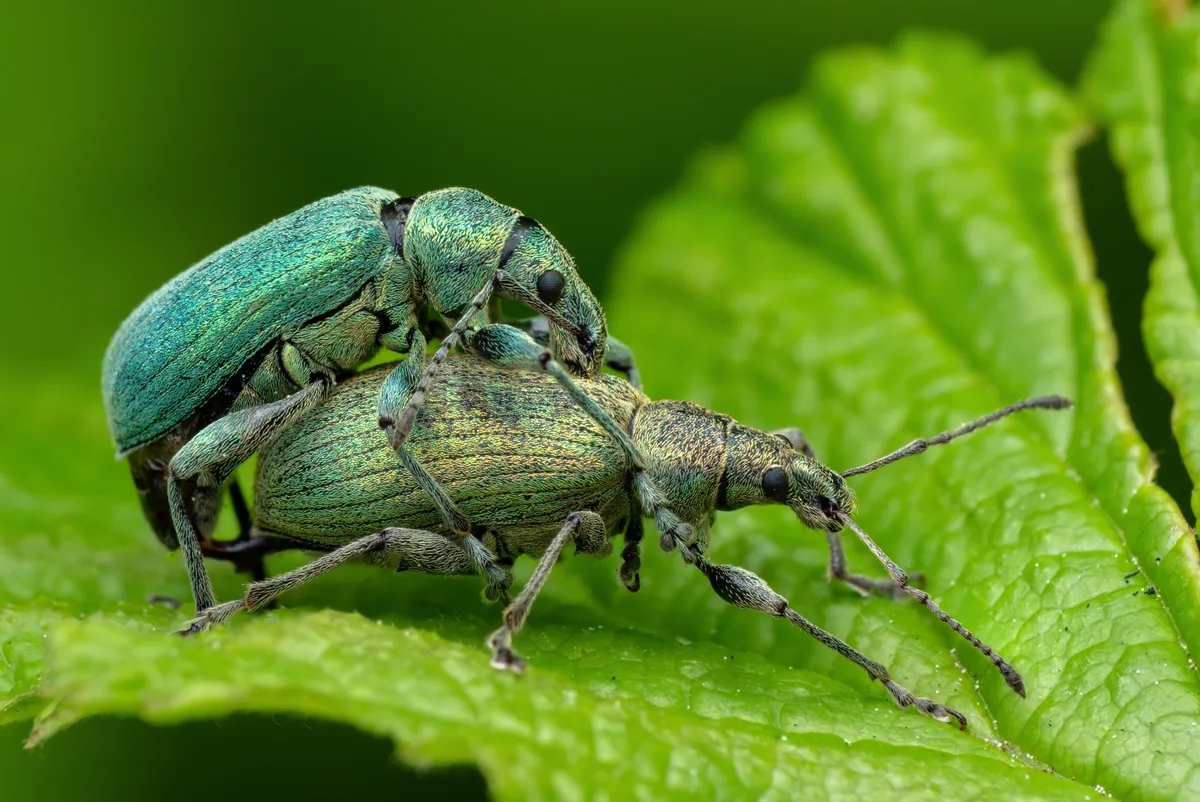
Nettle Weevil
Phyllobius pomaceus
Length 7-9 mm. This beetle has a metallic green/blue covering of thin, elongate scales which are pointed apically. However the scales easily rub off and older specimens can look almost black. The front femur has a prominent tooth. The rostrum is long
New York Weevil
Ithycerus noveboracensis
rarely encountered but occasionally a pest in orchards
Nicagus obscurus
Nicagus obscurus
usually collected in flight, on sand, or under debris/driftwood. Females tend to be larger and darker.
Nicagus occultus
Nicagus occultus
Identification: PARATYPE News Release - Texas Parks & Wildlife Dept. Dec. 5, 2005 New Beetle Species Discovered at State Park AUSTIN, Texas - Sometimes even the most well-trod ground can yield surprises. That was the case in May when a graduate stude
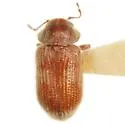
Nicobium castaneum
Nicobium castaneum
may severely damage softwood (incl. furniture, wood artifacts), books ( 4 ) , and be a pest in museums and libraries ( 3 )
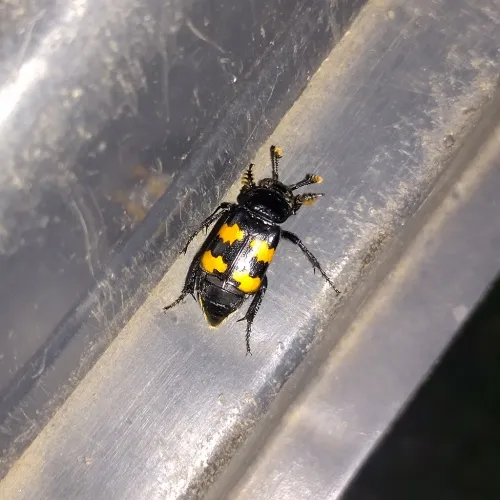
Nicrophorus interruptus
Nicrophorus interruptus
Up to 20mm. Robust and shiny black with two broken orange bands across the abdomen. Antennae are black with orange clubs. All the abdominal segments are fringed with yellow hairs. The hind tibia are straight . Nicrophorus vespillo is similar but with
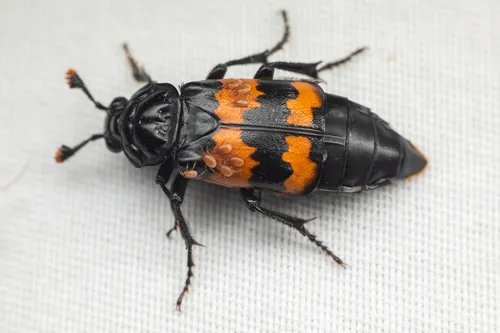
Nicrophorus investigator
Nicrophorus investigator
This Sexton, at 26 mm, is somewhat larger than the Common Sexton Beetle ( N. Vespilloides ). This species has dark reddish tips to its antennae. Other identifying features include the absence of hairs on the thorax and straight tibias on the hind leg
Nicrophorus obscurus
Nicrophorus obscurus
Identification: can be distinguished from the similar N. guttula by the deeply emarginate outer edge of antennomere 3 and from N. marginatus by the long setae on the anterior face of the procoxa in the basal half
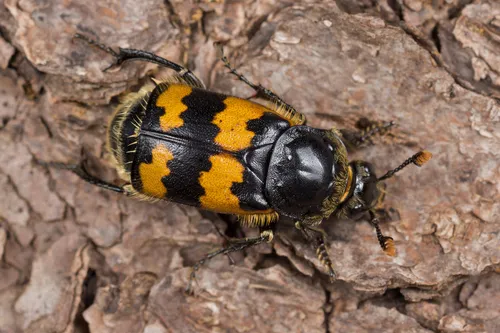
Nicrophorus vespillo
Nicrophorus vespillo
12 to 22 mm. This species is identified by the combination of orange antennal clubs, an interrupted anterior red elytral band, the hind tibia being concave on the inside edge and the presence of golden hairs on the fore margin of the pronotum. Usuall
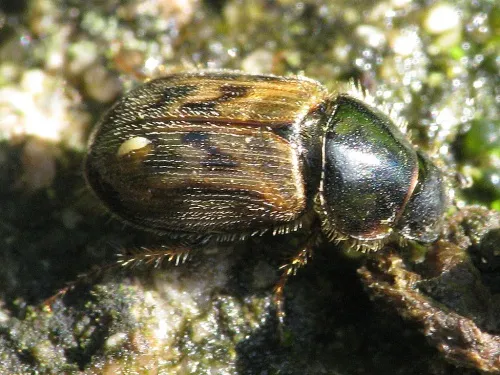
Nimbus contaminatus
Nimbus contaminatus
Pronotum fringed with hairs, a bit like false eye-lashes stuck along the rim. This species has a regular pattern of black streaks on the elytra. In contrast, Melinopterus prodromus has quite plain elytra with no black dashes only the dark area of the
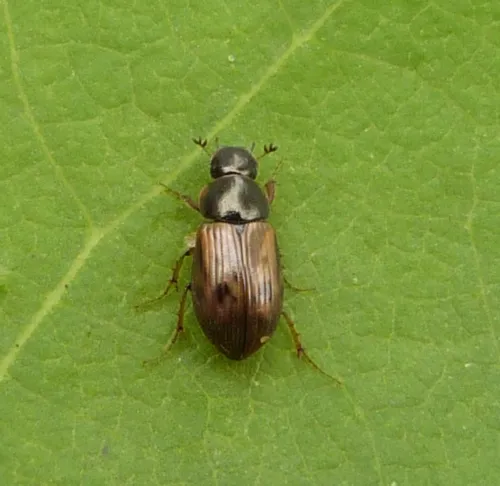
Nimbus obliteratus
Nimbus obliteratus
Length 5 to 7 mm. The elytra are mainly pale brown marked with darker blotches, whilst the head and pronotum are nearly black. There are similar species, particularly Nimbus contaminatus, and detailed examination is necessary for identification. Some
Nine-spotted Lady Beetle
Coccinella novemnotata
Identification: Gordon's Figures The spotless form of C. novemnotata may be confused with the bandless form of C. trifasciata subversa . Click on thumbnail for details. C. californica In 1985, Gordon called this sp. "...extremely widespread in North
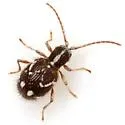
Niptinus ovipennis
Niptinus ovipennis
Identification: note oval shoulders, though most spmns not quite as rounded as this individual Det. E. G. Riley, 2010 Type locality: Described from five examples collected by Mr. Soltau at San Antonio, Texas, in June, and now in the National Museum c
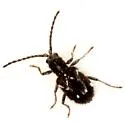
Niptinus unilineatus
Niptinus unilineatus
Identification: Very similar to ovipennis , except as follows:
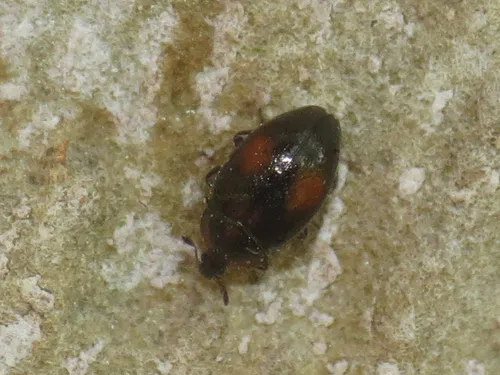
Nipus biplagiatus
Nipus biplagiatus
Identification: Gordon's figures - Form elongate, parallel-sided, abruptly narrowed posteriorly. Color piceous; large median area of elytron and anterior margin of pronotum yellow, ventral surface yellowish brown. Type locality: Los Angeles, Californ
Nipus niger 0
Nipus niger
Identification: Gordon's Figures - Form elongate, oval, gradually narrowed posteriorly. Color brownish piceous; anterior margin of pronotum yellowish brown, ventral surface brown. Type locality: Sonoma Co., California
Nipus occiduus 0
Nipus occiduus
Identification: Gordon's Figures - Color piceous; elytron with yellow spot occupying 1/2 to 2/3 of elytron, anterior margin of pronotum yellowish brown. Type locality: Wasatch, Utah
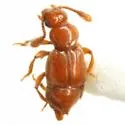
Nisaxis caudata
Nisaxis caudata
Identification: Very distinct from any of the described species by the dentate intermediate femora and the abdominal structure of the males. (Schaeffer 1905) Type Locality: Three males and one female taken at light at Esperanza Ranch, Rrownsville, Te
Northeastern Sculptured Pine Borer
Chalcophora liberta
Identification: from brilliant metallic coppery orange to dull black; extremely variable in size, dorsal sculpturing, and density of ventral setae; readily distinguished by truncate or rounded elytral apices, small size, and usually bright metallic,
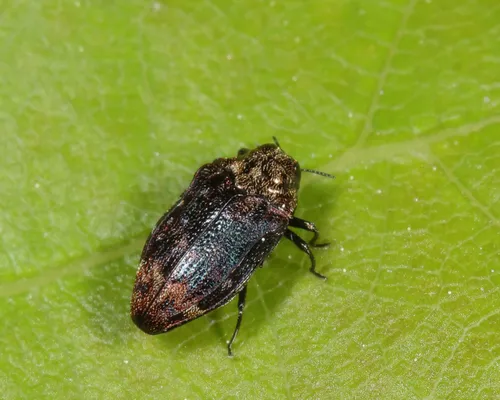
Northern Red Oak Jewel Beetle
Brachys aerosus
Brachys aerosus is a species of metallic wood-boring beetle in the family Buprestidae. It is found in North America.
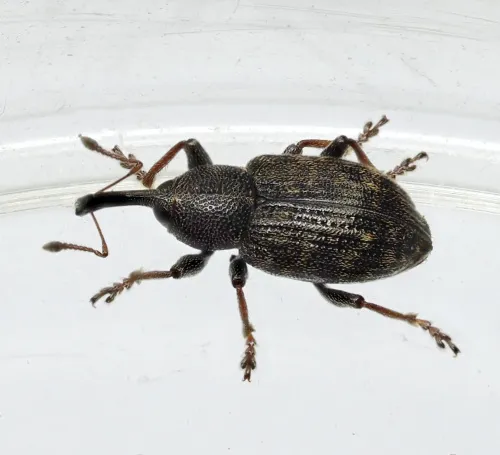
Notaris acridulus
Notaris acridulus
3.5-5mm. Generally dark. Elytra and pronotum with short yellow hair-like scales and usually with two dense patches, one on each elytra towards the tip. Antennae pale brown but with dark clubs. Legs dark except for pale brown tibia. Notaris scirpi is
Notaris aethiops
Notaris aethiops
Identification: adult habitus (specimen from Europe)
Notaris scirpi
Notaris scirpi
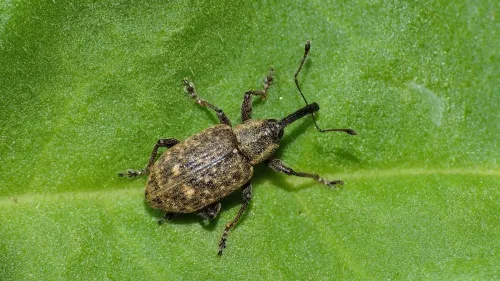
Length 6 to 7.5 mm. The body is dark but covered with pale hair-like scales. The rostrum is black and the legs are dark brown. Note this species is very similar to other species and a specimen should be examined in detail. Unless identified by a reco
Noterus clavicornis
Noterus clavicornis
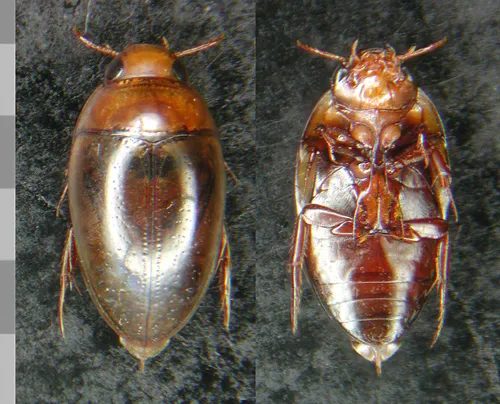
There are two UK Noterus species. The genus can be recognised by the broad coxal process on the underside - see ID Aids below. Length 4 - 5 mm. This species is boat-shaped with the elytra broadest in front of middle. The colour of the elytra is varia
Notiobia maculicornis
Notiobia maculicornis
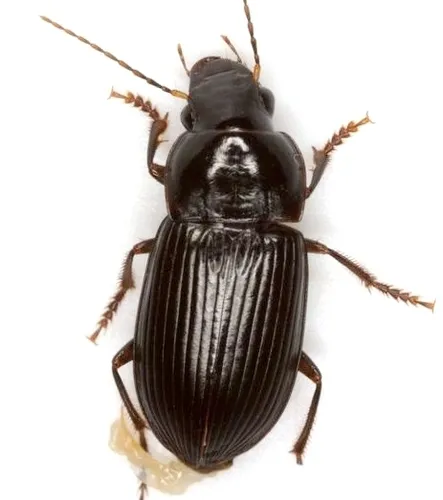
Notiobia maculicornis is a species of ground beetle in the family Carabidae. It is found in North America.
Notiobia mexicana
Notiobia mexicana
Identification: A southwestern species with distinctive pronotum (lateral margins sinuate and strongly beaded before dentate hind angles) and elytra with supposedly a hint of purplish shade
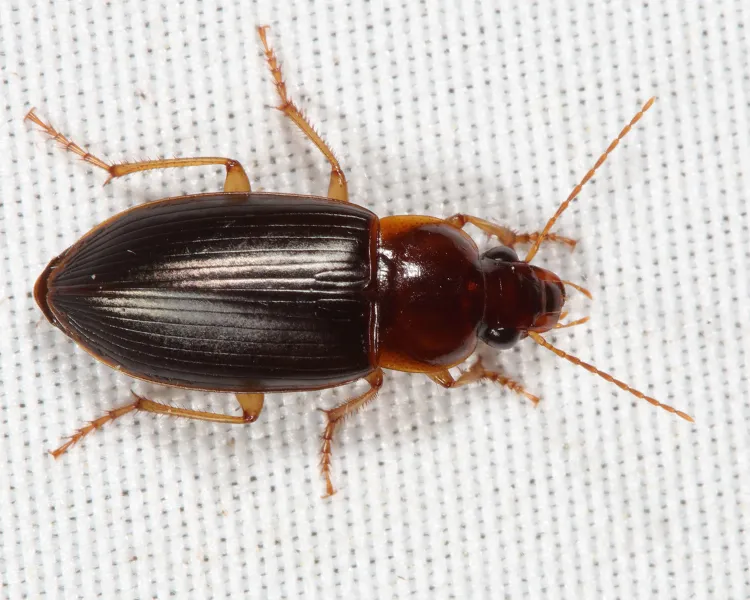
Notiobia terminata
Notiobia terminata
Notiobia terminata is a species of ground beetle in the family Carabidae. It is found in North America.
Notiodes disgregus
Notiodes disgregus
Type Locality: Oregon, 10 mi. N. W. Klamath Falls, “in swamp”, 16 June 1952, No. 54-10685 (V. Roth)
Notiophilus aeneus
Notiophilus aeneus
Identification: Elytra with two preapical setigerous punctures, antennae and legs pale reddish, pronotum markedly constricted basally.
Notiophilus aquaticus
Notiophilus aquaticus
Identification: Elytra with single preapical setigerous puncture; legs dark/black; apex of elytra with little pronounced, ± irregular microreticulation; intervals behind shoulder without or with only suggested microsculpture Quite similar in the abov
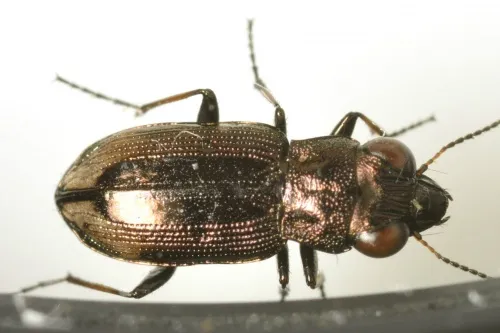
Notiophilus biguttatus
Notiophilus biguttatus
The Notiophilus beetles are very distinctive with prominent eyes. There are eight species in Britain, all very similar but often in different habitats. N. biguttatus usually has pale apical spots or patches on the apical ends of the elytra, though th
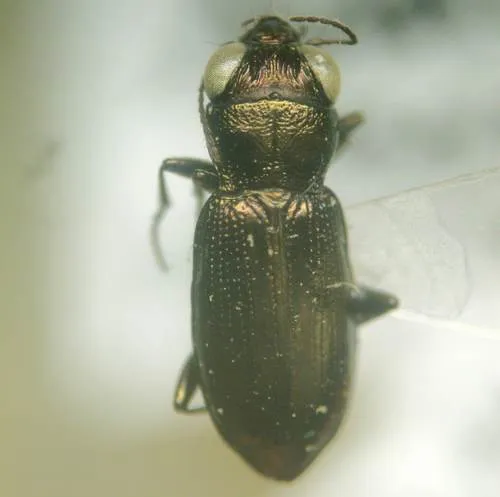
Notiophilus borealis
Notiophilus borealis
Notiophilus borealis is a species of ground beetle in the family Carabidae. It is found in Europe & Northern Asia (excluding China) and North America.
Notiophilus novemstriatus
Notiophilus novemstriatus
Identification: Smallest of our Notiophilus species. Elytra with two preapical setigerous punctures; legs and antennae not entirely pale; elytral intervals smooth, shiny on basal 1/2; striae 2-3 obliterated before apex; elytra without distinct pale a
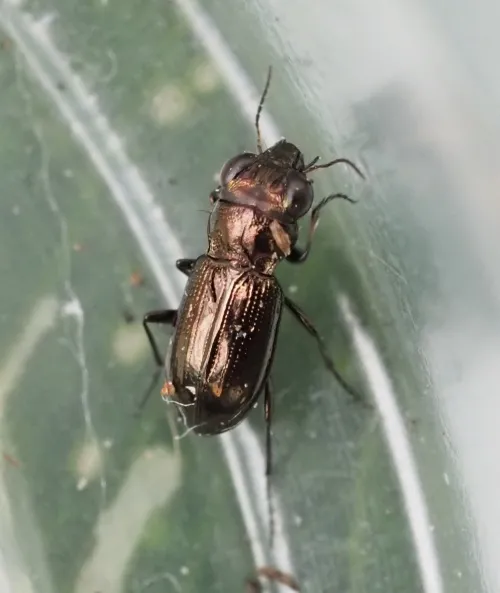
Notiophilus palustris
Notiophilus palustris
Length 5 to 6 mm. Very shiny black, lacking a paler patch at the tips of the elytra and with brown hind tibiae. Eyes very large, head wider than pronotum. Elytral interval 2 is no wider than 3, 4 and 5 combined. There are two pores at each of the ely
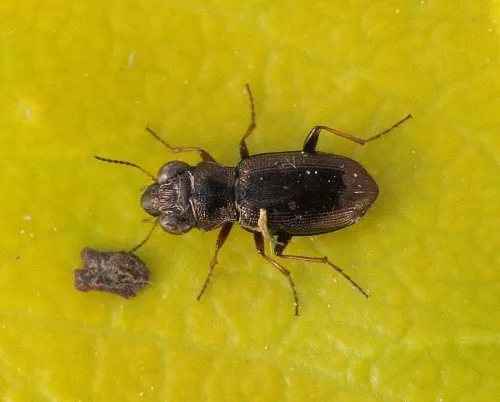
Notiophilus rufipes
Notiophilus rufipes
5.5 to 6.5 mm. Ranging from coppery bronze to almost black with studded elytra and the 2nd elytral interval as wide as the next three combined. The antennae are black with four basal segments yellow and the head and eyes are very large, even for Noti
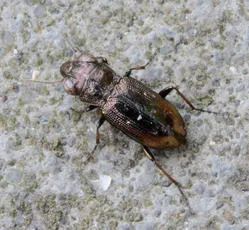
Notiophilus substriatus
Notiophilus substriatus
A small (5 mm) beetle with large bulging eyes and brassy brown studded elytra. Distinguished from N. biguttatus by the finer elytral pores. It usually prefers open ground with short, sparse vegetation and is often recorded from urban areas and fairly
Notolomus basalis
Notolomus basalis
Identification: Testaceous, head and beak brown; elytra with an oblique dark band commencing near the base of the third interspace, and running to the suture. Type Locality: Capron, Fla [Fort Capron, St. Lucie County, Florida]
Notoxus desertus
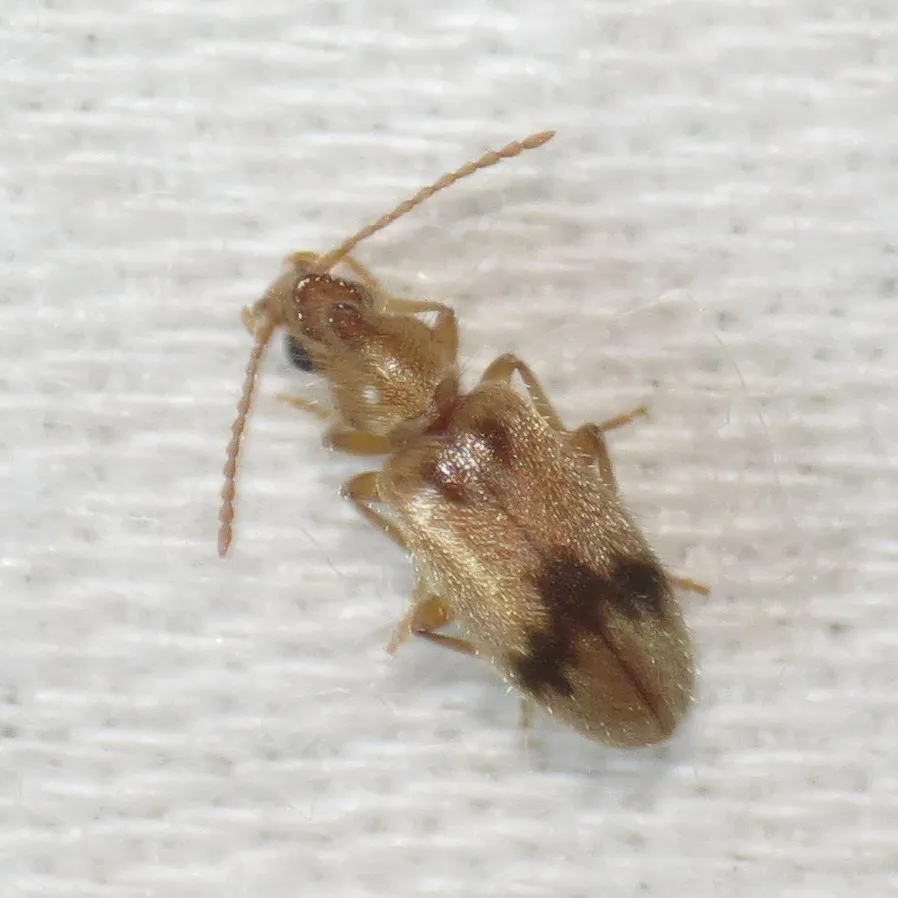
Notoxus desertus
Identification: the only way to separate [ N. monodon and N. desertus , where sympatric] is to look at male genitalia. --D.S. Chandler, 2.vii.2010 Det. D. S. Chandler, 2018 Type Locality: Tucson, Gila Valley, Pima Co., Arizona
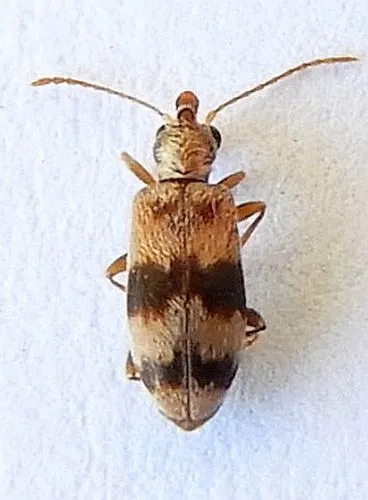
Notoxus gelidus
Notoxus gelidus
Notoxus gelidus is a species of monoceros beetle in the family Anthicidae. It is found in Central America and North America.
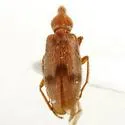
Notoxus monodon
Notoxus monodon
Identification: the only way to separate [ N. monodon and N. desertus , where sympatric], is to look at male genitalia (D.S. Chandler, 2.vii.2010) Det. D. S. Chandler, 2010
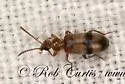
Notoxus postictus
Notoxus postictus
Identification: Often with some elytral setae slightly raised giving slightly ruffled appearance; horn margins rarely extending posteriorly past crest apex; similar to haustrus & nuperus in the deep impression of male sternite V. Easily separated fro
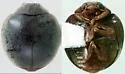
Novius circumclusus
Novius circumclusus
Identification: In living specimens the ventral abdomen is bright blood red. (Michael C. Thomas, BG comment 2008) previously known only from Honduras, Mexico, and Panama (Gordon 1972). It has now been collected from three sites in Florida: one in Por
Novius koebelei
Novius koebelei
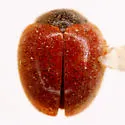
Identification: can only be diagnosed by the details of the male genitalia introduced into California from Australia in 1891, but does not exist there now, although it was thought to have been established for some time.
Novius virginalis
Novius virginalis
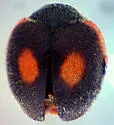
Identification: variable pattern, see Gordon's figures
Nutgrass Billbug
Sphenophorus cariosus
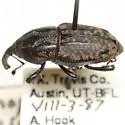
Identification: Adult: blackish with pale gray markings; pronotum with black diamond-shaped raised vitta in median region; elytra with large and widely-spaced fovae along striae destructive to corn in MO ( 4 ) ; can be a pest in Hawaii
Nuttall's Blister Beetle
Lytta nuttalli
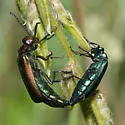
Identification: variable first collected by Say along the Colorado Front Range where some of the local bushes "were loaded" with this sp.
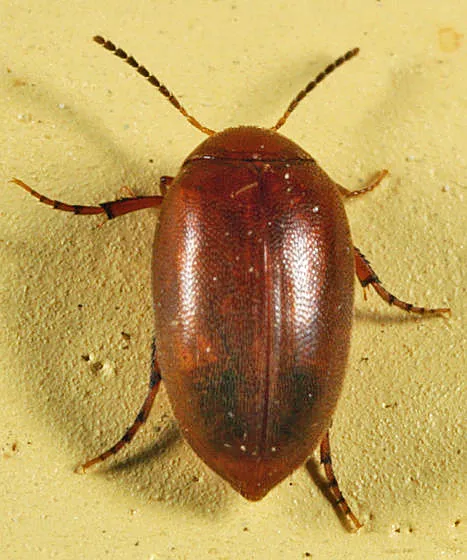
Nycteus testaceus
Nycteus testaceus
Identification: Pale & rather drastically narrowed behind
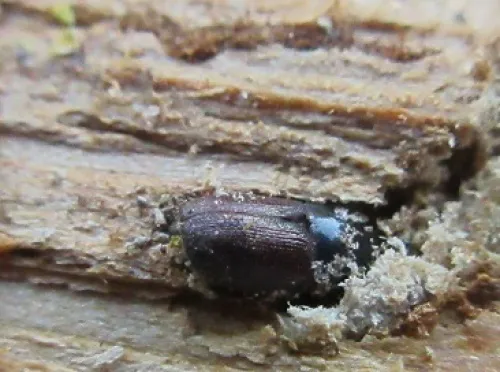
Oak Bark Beetle
Scolytus intricatus
A small (2 to 3.5 mm) beetle with reddish-brown elytra and light-brown antennae and legs. Unless identified by a recognised expert, photographic evidence is required and the specimen should be examined with a microscope. In the comments box, state th
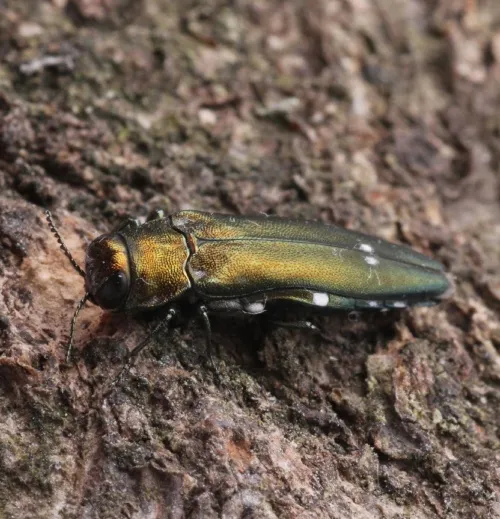
Oak Jewel Beetle
Agrilus biguttatus
It is similar to some other members of the genus with shiny metallic looking elytra, but the elytra of Agrilus biguttatus are rounded at the tips, and there is only one white scaly patch on each elytron somewhere at the end of the second third and be
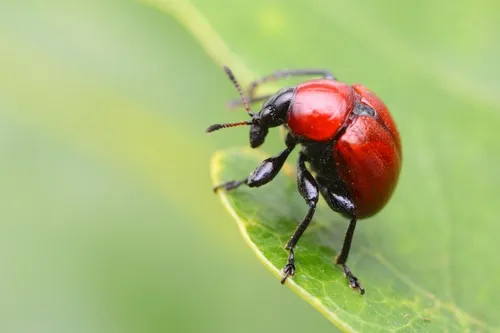
Oak Leaf-roller
Attelabus nitens
This is a distinctive reddish brown coloured weevil with a black head. The males measure about 5 mm in length, but the females are larger, at around 7 to 8 mm. This species is relatively easy to identify and is unlikely to be confused with anything e
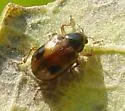
Oak Paria
Paria opacicollis
Oak Paria (Paria opacicollis) is a species in the family Chrysomelidae, commonly known as leaf beetles, belonging to the order Coleoptera (Beetles). It is classified within the subfamily Eumolpinae, tribe Typophorini, suborder Polyphaga, superfamily
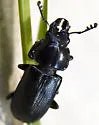
Oak Stag Beetle
Platycerus quercus
Identification: reddish brown to blackish, may have brassy or greenish tinge; male mandibles as long as head ( 3 ) ♂ ♀
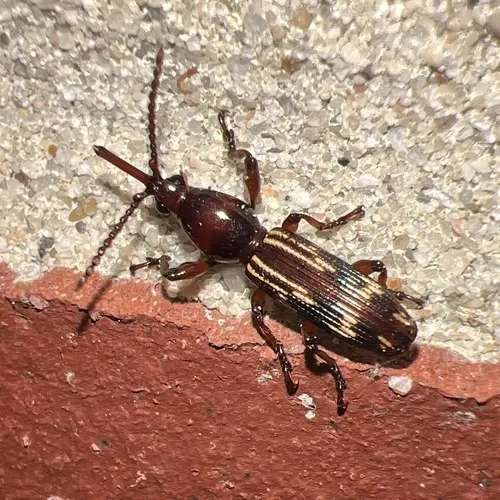
Oak Timberworm
Arrenodes minutus
Identification: snout is broad in males, long & narrow in females ♂ ♀ comes to lights
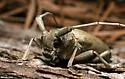
Oak sapling borer
Goes tesselatus
Identification: Scattered spots of pale pubescence on elytra. Very similar to the more southern Goes tumifrons . See Yanega ( 3 ) for details. Lingafelter's (2007) ( 4 ) key couplet on pg. 103 says the mid-elytral "suture with brighter white pubescen