
Primitive Winged Insects
Order Coleoptera
The Primitive Winged Insects (Order Coleoptera) includes 15,720 species across 160 families and 3,716 genera in our directory.
About Primitive Winged Insects
Coleoptera is the largest order of insects with over 400,000 described species, representing ~25% of all known animal species and ~40% of all insects. In the U.S. alone, nearly 30,000 beetle species have been identified.
Economic Impact
Beetles have major economic significance: leaf beetles (Chrysomelidae) and weevils (Curculionoidea) are among the most destructive agricultural pests globally, costing billions annually, while predatory species like ladybugs provide natural pest control.
Ecological Role
Beetles are prominent decomposers, especially in forests, breaking down dead wood and recycling nutrients. As predators, they reduce populations of pest insects. Many species are also important pollinators of flowering plants.
Families in Coleoptera (160)
Species in Coleoptera (15,720)
Mordellistena andreae
Mordellistena andreae
Identification: characteristic pattern Today, restricted on the typical andreae form of authors, other "subspecies" have been found not being conspecific: Jackman and Lu also noted that the penultimate segments of the anterior and middle tarsi are em
Mordellistena aspersa
Mordellistena aspersa
Identification: entirely black with brownish-gray pubescence. Hind leg ridges, 2,3,2 (not counting subapical on tibia), with tibia with "rudiment of a third ridge, this third ridge sometimes rather long, but very narrow and usually more oblique than
Mordellistena bicinctella
Mordellistena bicinctella
Identification: Similar to trifasciata , except with only one ridge on the tibia, with pronotum darker around base vice apex, and with black basal band on elytra with nearly straight apical edge thorax sometimes black, sometimes rufous
Mordellistena cervicalis
Mordellistena cervicalis
Identification: "Head and pronotum reddish yellow with black spot or cloud at base of each, antennae with four basal segments pale, others black, elytra black with gray/brown pubescence, front and middle legs pale (male only), posterior legs black, f
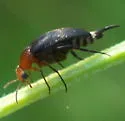
Mordellistena comata
Mordellistena comata
Identification: dense, silky, metallic, silvery pubescence on the elytra and undersurface, and the testaceous or rufo-testaceous head and thorax should be safficient to identify it; the other [similar] species have black elytra. The groulld color of
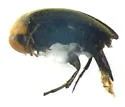
Mordellistena divisa
Mordellistena divisa
Identification: reddish brown (or yellow-brown) head with apically reddish brown pronotum sharply delineated from black/green basal coloration (amount may vary, with females being almost all dark). Black elytra with yellow brown or silvery pubescence
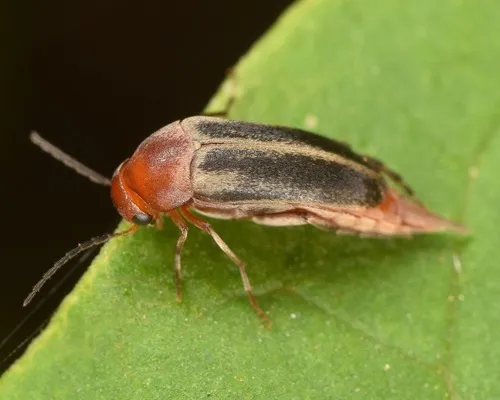
Mordellistena fuscipennis
Mordellistena fuscipennis
Identification: From Liljeblad's ref., this is Mordellistena fuscipennis (Melsheimer) "This species easily recognized by more or less ferruguinous head and thorax, the nearly black or dark brown elytra having the suture, the lateral margin and the hu
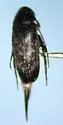
Mordellistena guttulata
Mordellistena guttulata
Identification: Hind leg ridges 2-3-2, the upper ridge of the tibia extending across its face. Overall black, with front of head, antenna, front and middle legs lighter brown. Elytra with mottled pattern "very rare"
Mordellistena husseyi
Mordellistena husseyi
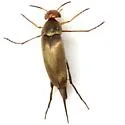
variable in colour; hindleg ridge pattern: tibia 2 - 3 (middle one very long) 1st tarsite 3 - 5 2nd tarsite 2 2nd ridge on the tibia cutting across the entire face, and the very long anal style.
Mordellistena incommunis
Mordellistena incommunis
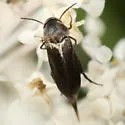
Identification: hind leg ridges 3,4,3. Head, Pronotum, and Elytra black with yellow or silver along suture, and a lateral vitta from approx humerus to slightly more than middle. Antenna and legs black.
Mordellistena limbalis
Mordellistena limbalis
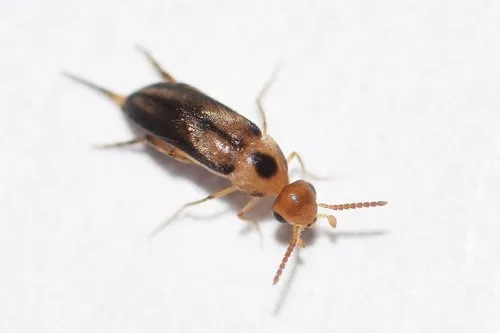
Identification: Posterior tibiae with two parallel, oblique ridges, subapical not included; first segment of posterior tarsi with two ridges and second with one ridge. Slender, nearly parallel; color testaceous, with black markings; head testaceous w
Mordellistena liturata
Mordellistena liturata
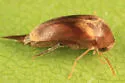
Identification: Liljelbad, pp. 155-156 , comments on identification of this species: See the above reference, and comments on images, for details on identification. See details of ridges on metatibiae, metatarsi, here:
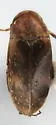
Mordellistena masoni
Mordellistena masoni
Identification: "Posterior tibiae with four parallel, oblique ridges, subapical not included; first segment of posterior tarsi with four, second with two ridges." Type Locality: Hemlock Falls, NJ
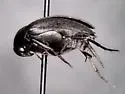
Mordellistena morula
Mordellistena morula
Identification: ridges - 3,3,2 all black with brownish-grey pubescence. Similar to M. aspersa, which has 2,3,2 + a rudimentary third "sometimes long" on the tibia.
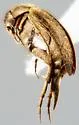
Mordellistena rubrifascia
Mordellistena rubrifascia
Identification: ridges 2,3,2 "This species is readily distinguished from the other species most nearly allied to M. aspersa by the filiform antennae, the color of the head" (rufo-testaceous) and four basal segments of antennae, maxillary palpi, anter
Mordellistena scalaris 0
Mordellistena scalaris
Identification: unique pattern quite resembles, and keys out next to discolor (Melsheimer), may also belong in Falsomordellistena
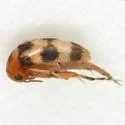
Mordellistena sexnotata
Mordellistena sexnotata
Identification: ridge formula is 2,2,1 coloration is distinctive Re: Mordellistena sexnotata Dury in central Texas. M. sexnotata Dury was described in 1902 from a single specimen coll. in KY. Liljeblad examined Dury's type and found only one other sp
Mordellistena splendens
Mordellistena splendens
Identification: Covered in golden setae. Ridges 2-3-2, sometimes 3-4-2. All antenomeres subequal in length. Antenomeres 3 and 4 narrow. Antennae short, only reaching middle of pronotum.
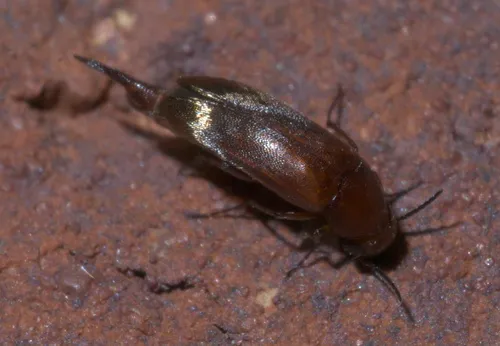
Mordellistena subfucus
Mordellistena subfucus
Identification: ridge pattern can be seen as 2,3,2, with the apical tibia ridge extending obliquely across the face, entirely fusco-ferruginous (except antenna and palpi in females) Type Locality: AZ
Mordellistena suturella
Mordellistena suturella
Identification: Ridges: 4,5,3 All black except basal half of anterior femora in male, which is ferruginous. Covered with fine sericeous, cinereous pubescence on head and thorax. The elytra have a narrow sutural cinereous line. Underside and base of a
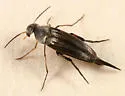
Mordellistena syntaenia
Mordellistena syntaenia
Identification: close to M. convicta , but antennal segments 1 - 4, and anteriour legs partly, pale; Elytral hair pattern condensed into two stripes, fused in front, and apically. Assumed "type" of M. convicta belongs here, and does not fully match L
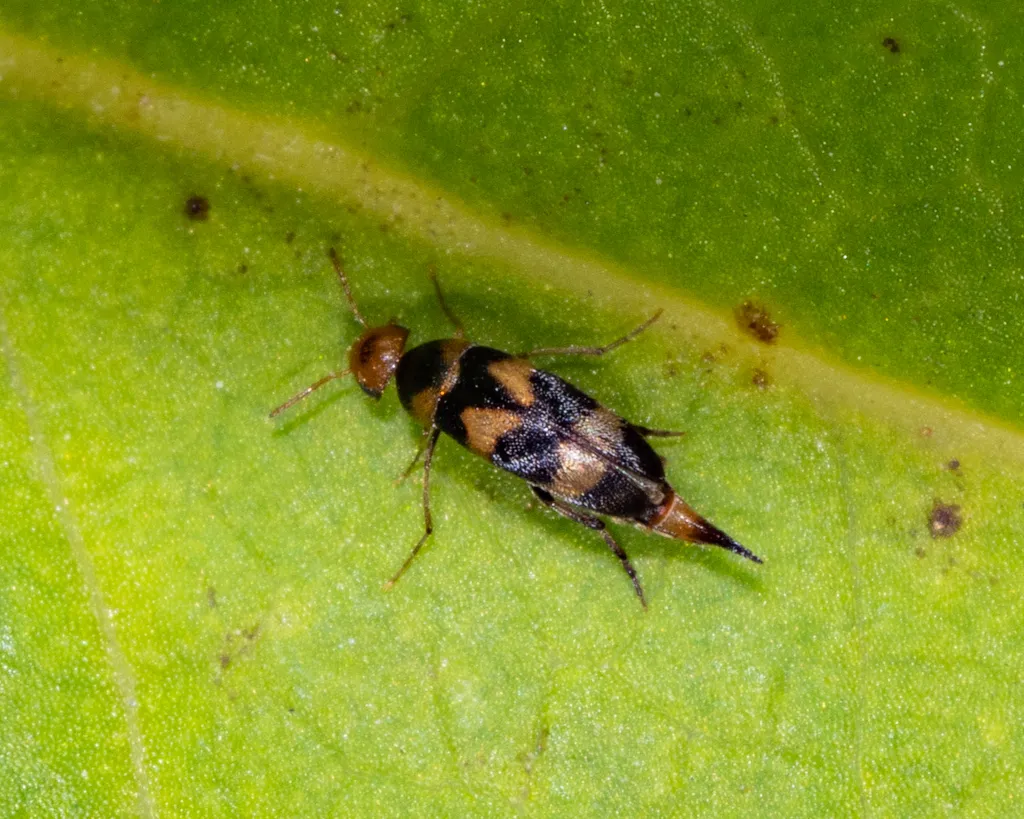
Mordellistena trifasciata
Mordellistena trifasciata
Identification: Det. T. R. Moyer, 2009 Re: Mordellistena sexnotata Dury in central Texas. M. sexnotata Dury was described in 1902 from a single specimen coll. in KY. Liljeblad examined Dury's type and found only one other spmn, from NM, that he deter
Mordellistena vilis 0
Mordellistena vilis
Identification: has the form of Mordellina nigricans (Melsheimer), but it is more finely pubescent, and the basal lobe of the thorax is less prominent. Type Locality: San Diego, California
Mordellistena wenzeli 0
Mordellistena wenzeli
Type Locality: Tybee Tsland, Georgia, A male, collected June 27-30, by H. W. Wenzel
Mordellistena yumae
Mordellistena yumae
Identification: head and pronotum pallid, with dark blotches on vertex and posteriour disk; elytra and venter dark, covered with very sense, silvery pubescence.
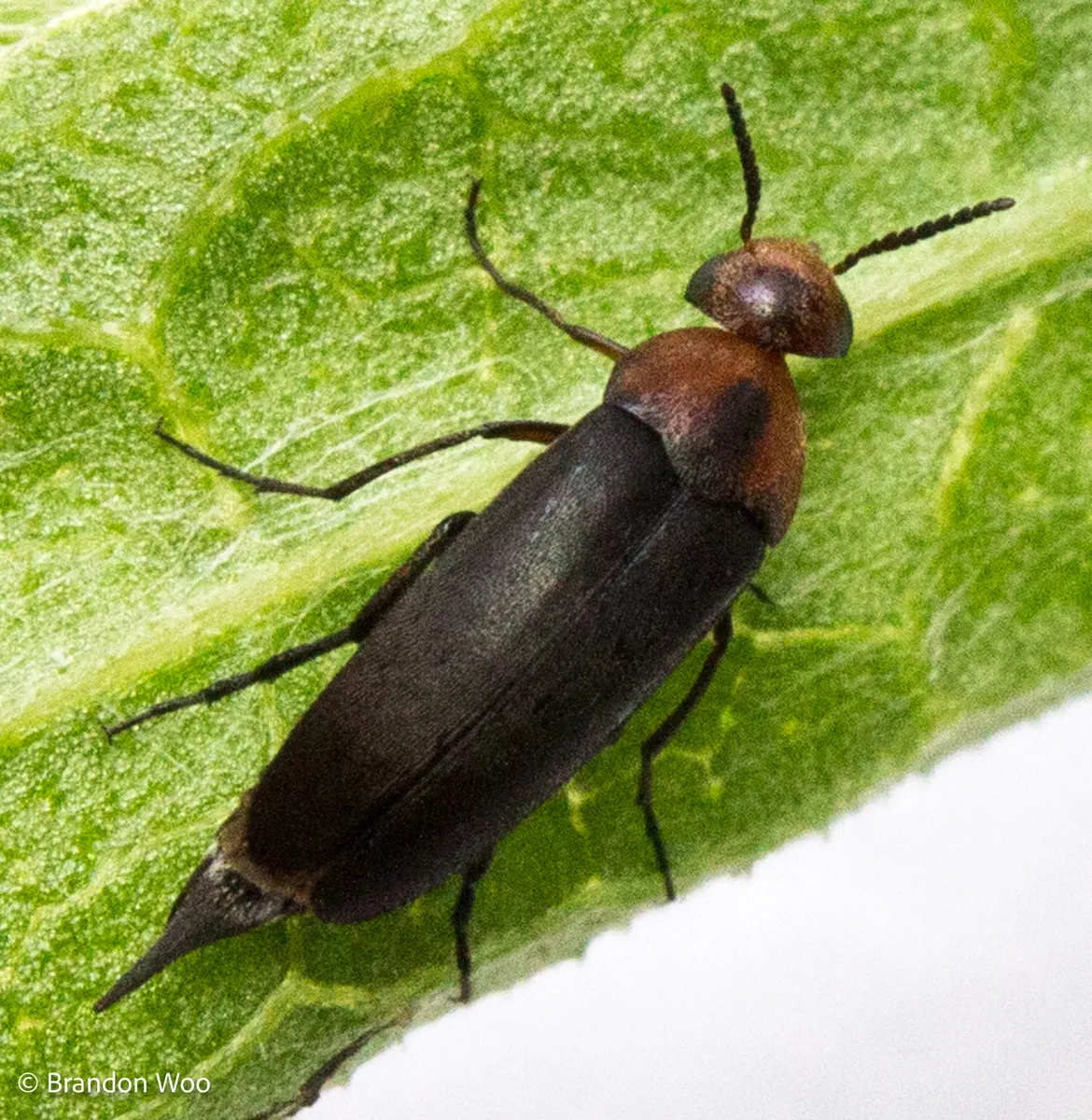
Mordellochroa abdominalis
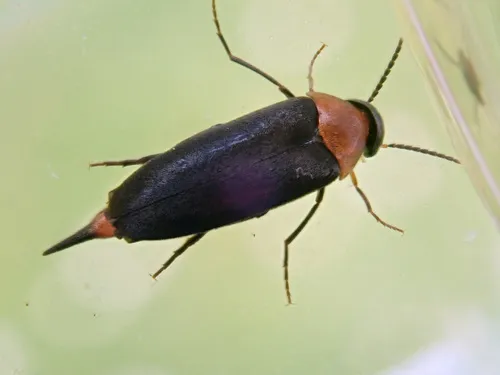
Mordellochroa abdominalis
Length 6 mm. This tumbling flower beetle has blackish grey elytra and a red thorax. They are sometimes known as pintail beetles, because of the elongated and pointed abdominal tip which aids them with tumbling movements to escape predators. To be see
Morion monilicornis
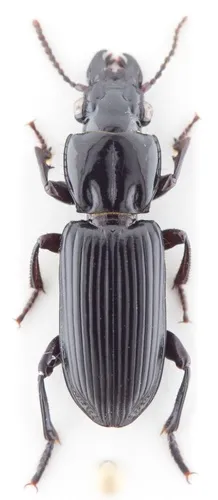
Morion monilicornis
Morion monilicornis is a species of ground beetle in the family Carabidae. It is found in North America.
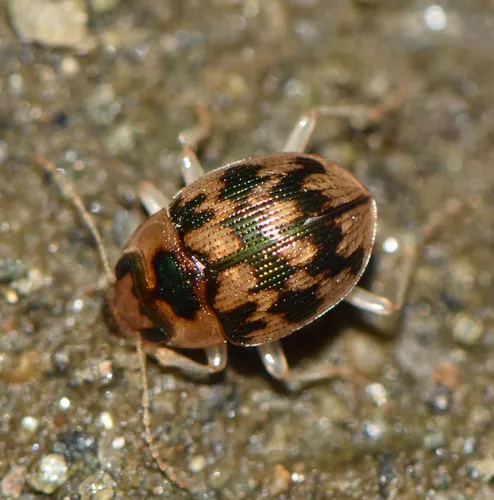
Mosaic Round Sand Beetle
Omophron tessellatum
Omophron tessellatum, the mosaic round sand beetle, is a species of ground beetle in the family Carabidae. It is found in North America.
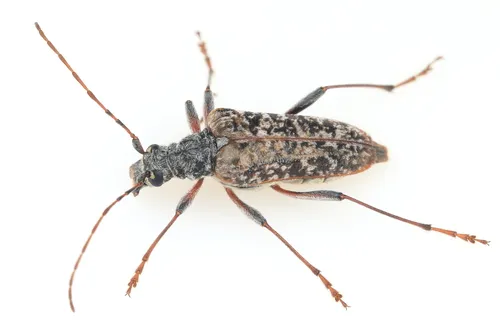
Mottled Longhorned Beetle
Anthophylax attenuatus
Identification: Head: Black, covered with gray-white pile. Middle line dark. Eyes black, indented (emarginate) around antenna bases. Not metallic like other Anthophylax. Antenna: Reach to about middle of elytra, male antenna shorter. Reddish. Thorax
Mottled Waterhyacinth Weevil
Neochetina eichhorniae
Introduced intentionally in 1972 to combat Eichhornia crassipes ; native to Argentina and bordering countries
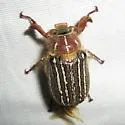
Mount Hermon June Beetle
Polyphylla barbata
Federally listed January, 1997 as an Endangered Species. on California's "Special Animals" List. The primary threats have been sand mining and urban development. At the time of listing [Jan 1997] it was estimated that 60% of the sand hills habitat ha
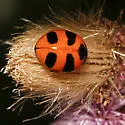
Mountain Lady Beetle
Coccinella monticola
Identification: Gordon's figures (nearly all ~30 spmns in the TAMUIC more closely resemble fig. f. vs fig. g.) Elytral spots, except for scutellar spot, entirely lacking in some western specimens, elytron in eastern and northern specimens with large,
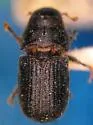
Mountain Pine Beetle
Dendroctonus ponderosae
A significant forestry pest throughout much of its range.
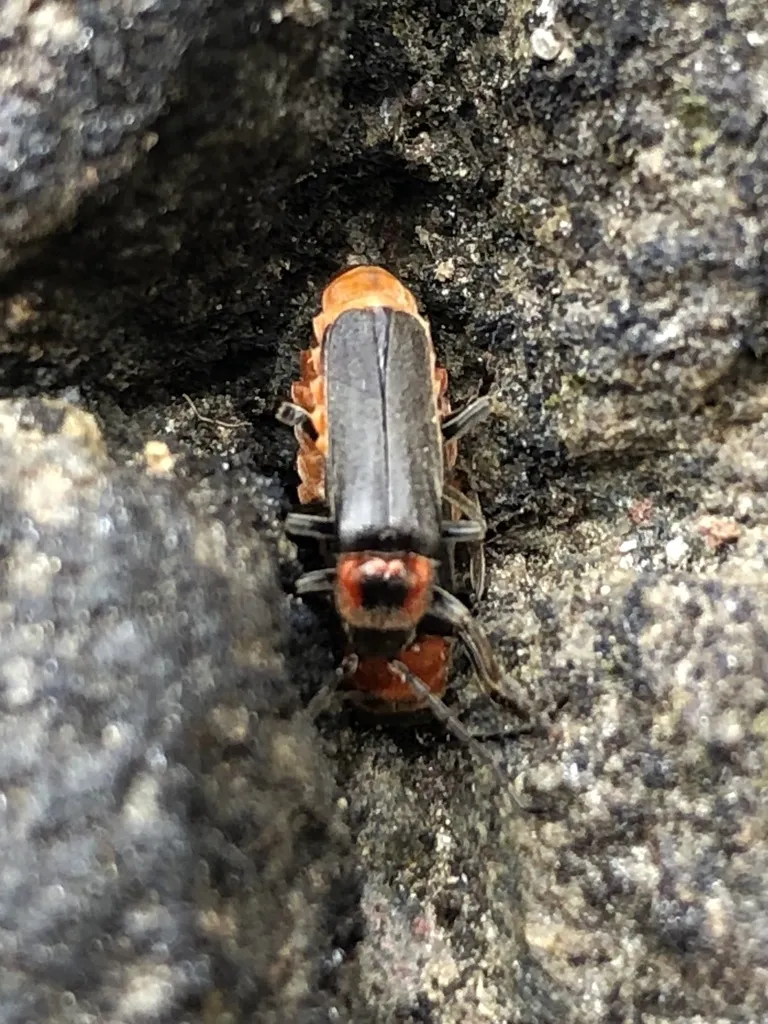
Mountaineer Cantharid Beetle
Cantharis alticola
Cantharis alticola is a species of soldier beetle in the family Cantharidae. It is found in North America.
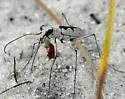
Moustached Tiger Beetle
Ellipsoptera hirtilabris
Identification: Dorsum coppery with maculations over much of the elytra. White setae cover much of the head and pronotum.
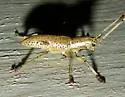
Mulberry Borer
Dorcaschema wildii
Identification: white lateral lines running from the head backwards, small scattered black spots
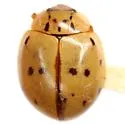
Mulsantina cyathigera
Mulsantina cyathigera
Identification: Gordon't figures - Color yellow except pronotum with median, brown, M-shaped marking; elytron with 6 brown spots (Fig. 688 f), spots sometimes reduced
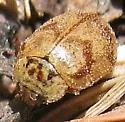
Mulsantina quinquelineata
Mulsantina quinquelineata
Identification: pronotal pattern less variable than that of the elytra. (Chapin 1985) this is a pale form of the species: Det. J. B. Chapin, 1984 (by dissection) Species not included in Gordon's publication.
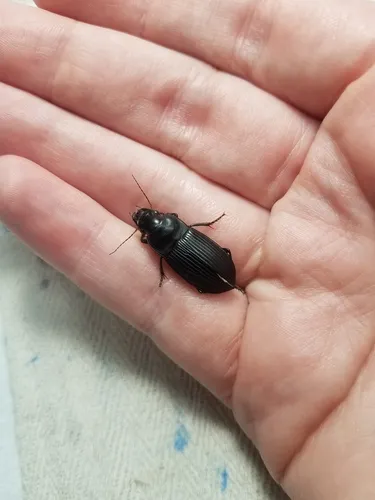
Murky Ground Beetle
Harpalus caliginosus
Identification: Literature says head distinctly punctate, otherwise externally little different from Harpalus katiae which has head impunctate. In females the last tergite (pygidium) demonstrates an angulated apex with abrupt upturn of the margin at
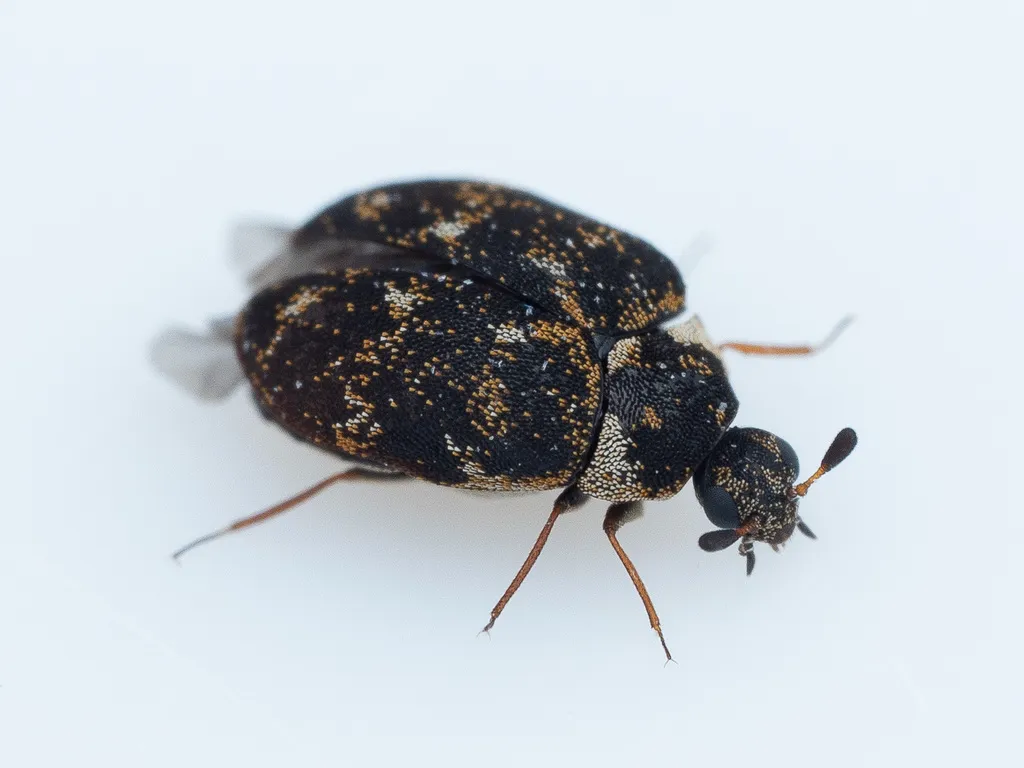
Museum Beetle
Anthrenus museorum
Identification: Bright scales of dorsal surface condensed on side margins of pronotum and forming three (usually narrow) fasciae on elytra. Eyes not notched in front, Antennae 8-segmented, with club of two segments. Antennal club considerably shorter
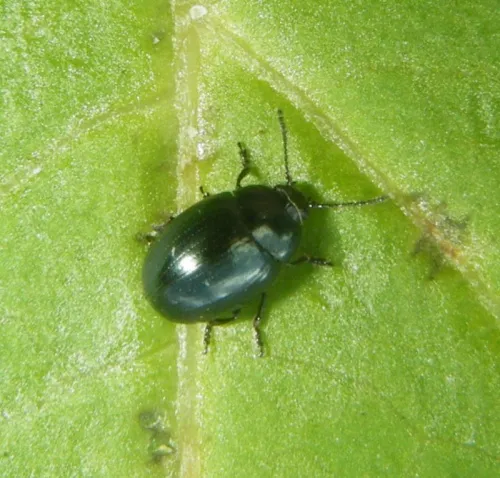
Mustard Beetle
Phaedon cochleariae
3 to 4 mm. Elongate oval and metallic blue in colour. Humeral calli are distinct (bulges at the front of the pronotum). The antennae are black except for the underside of the first two segments which are yellow/orange. Found around most wetland areas
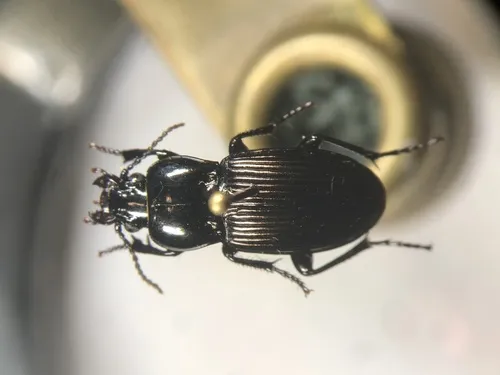
Myas cyanescens
Myas cyanescens
Myas cyanescens is a species of woodland ground beetle in the family Carabidae. It is found in North America.
Mycetina idahoensis
Mycetina idahoensis
Identification: Very close to M. hornii , male metatibiae the main difference
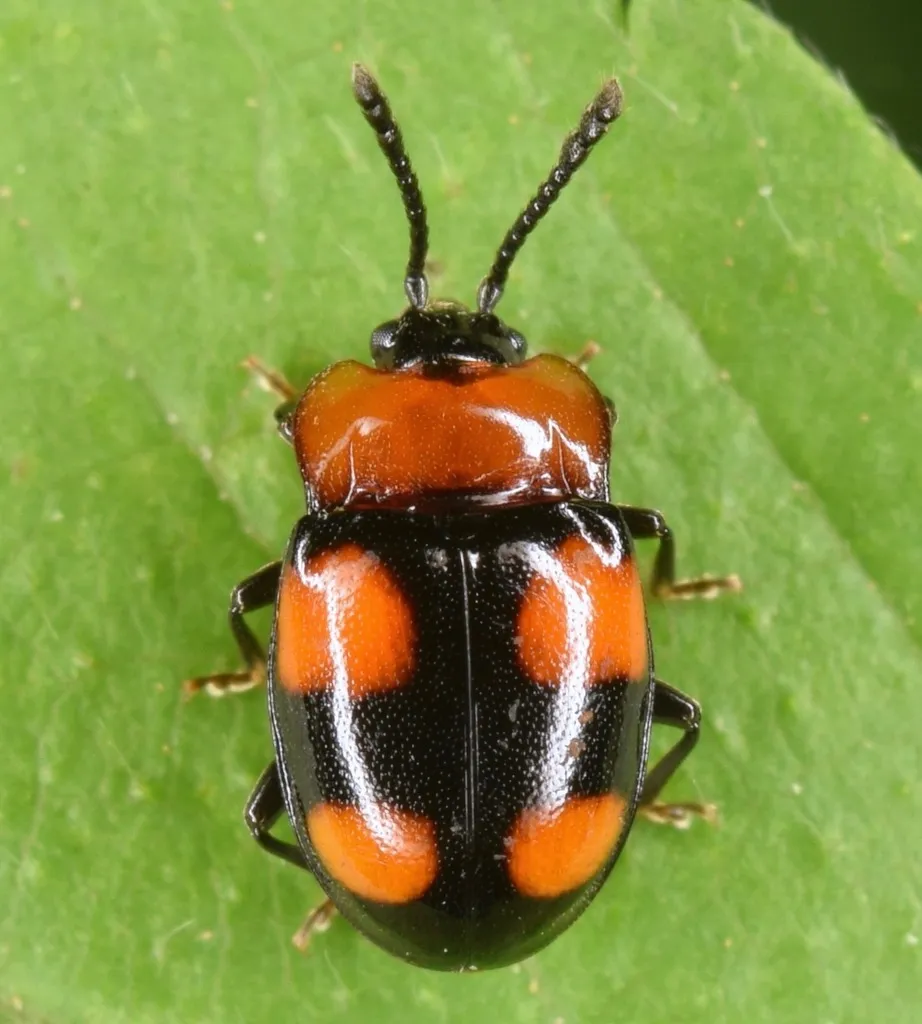
Mycetina perpulchra
Mycetina perpulchra
Mycetina perpulchra (Mycetina perpulchra) is a species in the family Endomychidae, commonly known as handsome fungus beetles, belonging to the order Coleoptera (Beetles). It is classified within the subfamily Lycoperdininae, suborder Polyphaga, super
Mycetochara analis
Mycetochara analis
Identification: Procoxae contiguous (Binotata Group) Distinguished from binotata by the lighter color dorsally, the complete absence of paler humeral markings, and the larger eyes of the male Holotype ♀
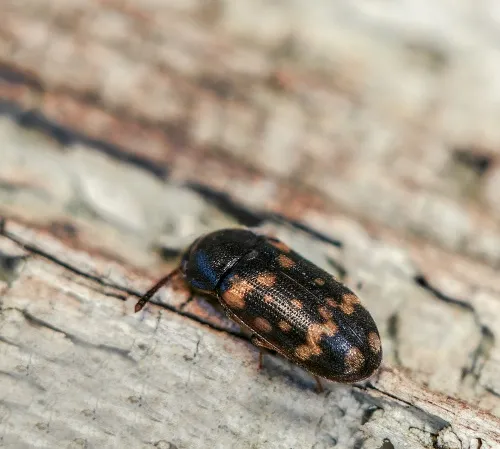
Mycetophagus atomarius
Mycetophagus atomarius
Length 3.5 to 4.5 mm. This beetle has dark brown or blackish elytra which are heavily marked with orangey-yellow. The legs are yellow. Associated with the fruiting bodies of Daldinia concentrica on Ash and Hypoxylon fragiforme on Beech and may be fou
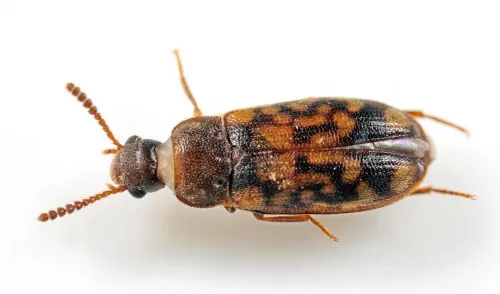
Mycetophagus multipunctatus
Mycetophagus multipunctatus
A spotted fungus beetle found in fungi growing on hardwoods. Unless identified by a recognised expert, a photo is required. If the photo doesn't show the key ID features then in the comments box describe the size and identifying characters you have o
Mycetophagus piceus
Mycetophagus piceus
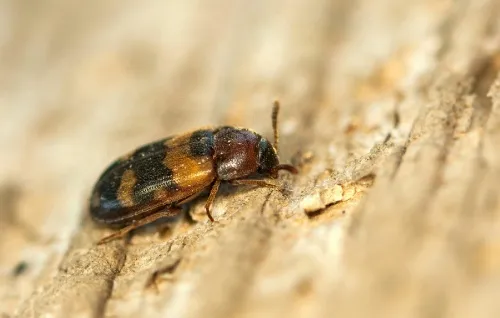
Length about 5 mm. This beetle has dark brown or blackish elytra marked with almost a full orange band near pronotal base and other smaller orange markings. It has a black head, and dark reddish pronotum. It is found under fungus infected bark and in
Mycetophagus pluriguttatus
Mycetophagus pluriguttatus
Identification: elytral markings may be reduced or absent The posterior third of the elytra is usually free from spots, sometimes a very small one is seen near the apex. Type Locality: San Jose, California
Mycetophagus populi
Mycetophagus populi
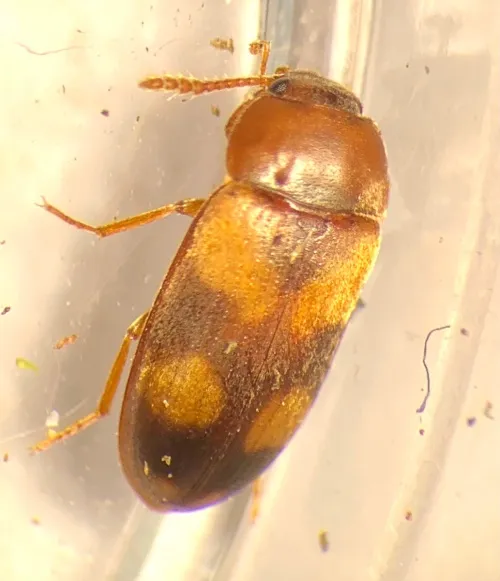
4.0 to 4.5 mm. Distinguished from other members of the genus by the dense and very fine dorsal punctures and pubescence, and the form of the terminal segment of the maxillary palp which is distinctly broader than the penultimate segment. The shape is
Mycetophagus quadripustulatus
Mycetophagus quadripustulatus
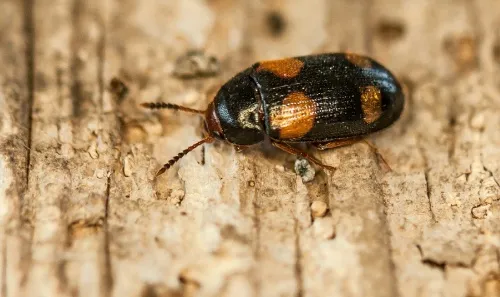
Length 5 or 6 mm. A dark blackish beetle with four large oval orange spots. It has a red head and black pronotum. Associated with fungi especially the bracket fungus Polyporus squamosus (Dryads Saddle). Widespread and fairly frequent throughout Engl
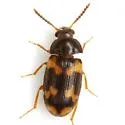
Mycetophagus serrulatus
Mycetophagus serrulatus
Identification: antennomeres 5‒10 distinctly subserrate
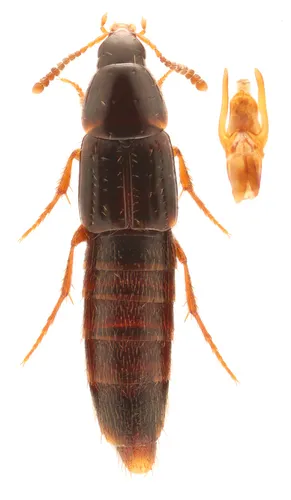
Mycetoporus consors
Mycetoporus consors
Identification: Distinct chaetotaxy of pronotum & elytra as well as form of genitalia. See Campbell for more information.
Myctides imberbis
Myctides imberbis
pest of rose apple ( Syzygium jambos ) ; first detected in FL 1976
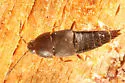
Myllaena audax
Myllaena audax
Identification: Very similar to M. insomnis Casey, genitalia must be examined to separate the species where their ranges overlap.
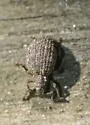
Myosides seriehispidus
Myosides seriehispidus
Identification: see Author of this species is Willem Roelofs (1822 – 1897) was a Dutch painter and amateur entomologist.
Myrmecoderus laevipennis
Myrmecoderus laevipennis
Texas considers this a "Species of Greatest Conservation Need" (SGCN)
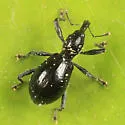
Myrmex chevrolatii
Myrmex chevrolatii
Identification: The sparsely punctured thorax, strongly arched elytra, deeply foveate front and more sparsely pilose surface, at once distinguish this species.
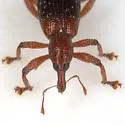
Myrmex dichrous
Myrmex dichrous
Identification: Dull ferruginous, with scattered white short hairs Det. E. G. Riley, 2009
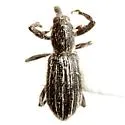
Myrmex horni
Myrmex horni
Identification: M. horni is remarkable in having the femoral tooth much smaller than any known species. (Sleeper, 1954) Type Locality: Holotype female, Morris Ranch , Gillespie Co., Texas, V-7, (in ELSC). One paratype, same data, (in ELSC). Enchanted
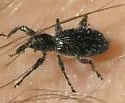
Myrmex scrobicollis
Myrmex scrobicollis
Myrmex scrobicollis (Myrmex scrobicollis) is a species in the family Curculionidae, commonly known as snout and bark beetles, belonging to the order Coleoptera (Beetles). It is classified within the subfamily Curculioninae, tribe Otidocephalini, subo
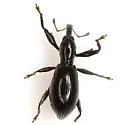
Myrmex texanus
Myrmex texanus
Identification: The form of thorax and antennal club, the frontal fovea and feeble punctuation of elytra distinguish this species. (Schaeffer 1907) Type Locality: Esperanza Ranch, Brownsville, Cameron Co., Texas (Schaeffer 1907)
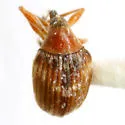
Nanodactylus obesulus
Nanodactylus obesulus
One specimen beaten from alder, May 21, near Bass Lake, Starke Co., Ind.
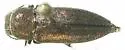
Nanularia obrienorum
Nanularia obrienorum
Adults are frequently found on Eriogonum in the late afternoon to evening (5-7 pm) in desert like habitat. Type locality: CA, Kern Co., McKittrick
Narrow Searcher
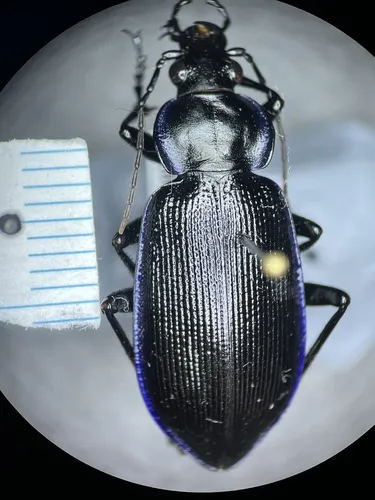
Calosoma externum
Identification: Very large, black with margins of elytra and pronotum brilliant blue. Elytra with evenly-spaced rows of punctured grooves (striae) and a few large punctures (foveae). Pronotum rounded, not flared out on the apical (head) end. Resemble
Narrow-lined Cucumber Beetle
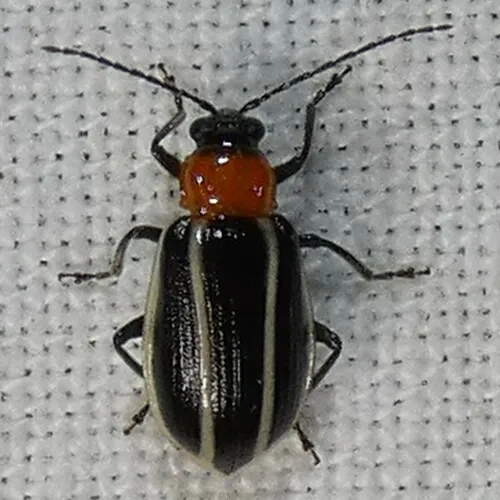
Acalymma vinctum
Acalymma vinctum is a species of leaf beetle in the family Chrysomelidae. It is found in North America.
Narrow-necked Grain Beetle
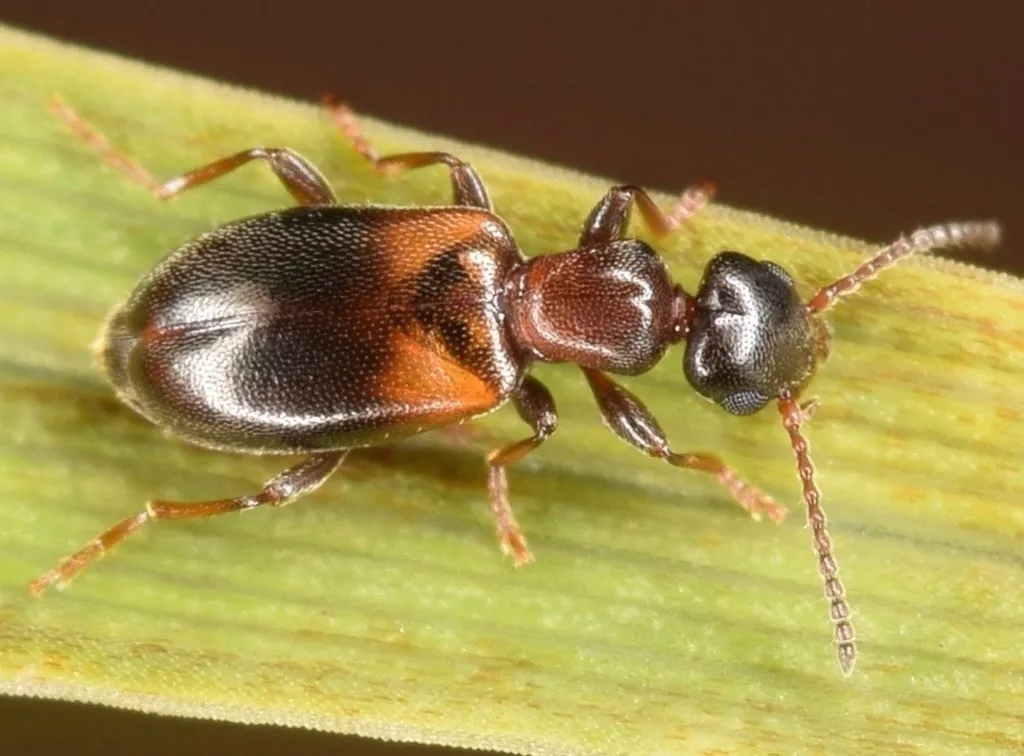
Omonadus floralis
Identification: "head base is wide and indented" - Donald S. Chandler, 2010 world's most commonly reported anthicid associated with stored products ; infests grain and dried fruit
Nartus sinuatus
Nartus sinuatus
Identification: Black with dark rufous legs; posterior margin of pronotum arched just before hind angles ( 3 ) An uncommonly seen/collected species, most likely due to habitat inaccessibility.
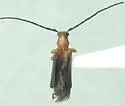
Nathriobrium methioides
Nathriobrium methioides
Type Locality: Lake Corpus Christi State Park, San Patricio County, Texas. The entire type series (12 spmns) was reared from small branches of Texas Ebony gathered from slash piles at the south edge of Corpus Christi State Park . ( 3 )
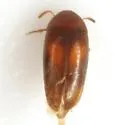
Naucles basalis
Naucles basalis
Identification: the elytra piceous with a spot at the shoulders and the sides towards the apex reddish or testaceous; the intermediate joints of the antennae infuscate. (Champion, 1891) Det. Andrew Johnston, 2023 Type Locality: Guatemala, Capetillo,
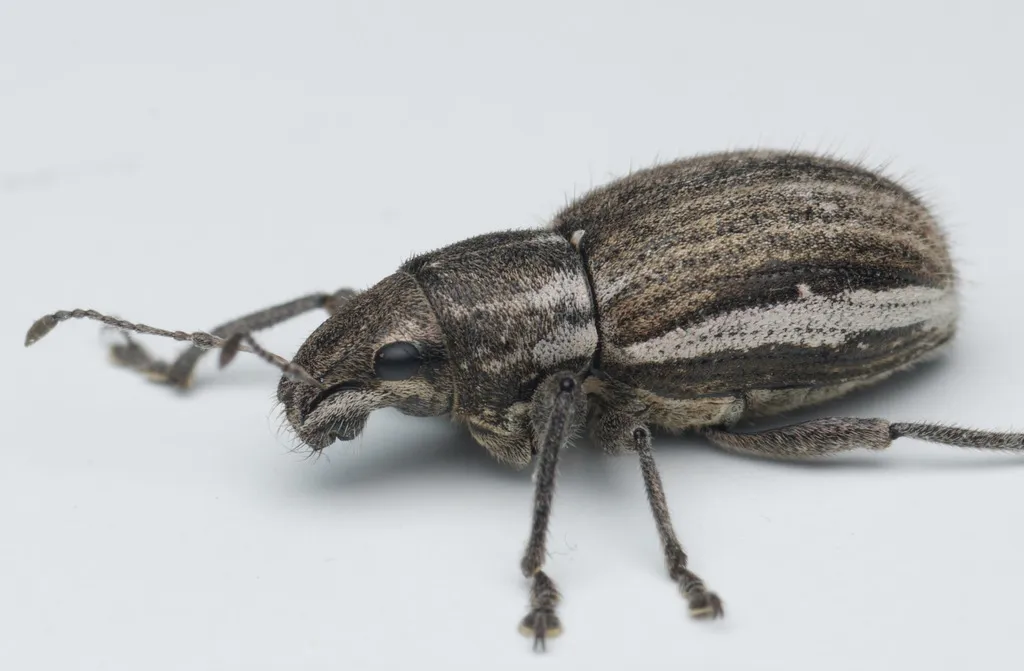
Naupactus leucoloma
Naupactus leucoloma
Identification: eyes slighly convex; lateral carina on rostrum distinct; rostral groove wider towards apex; setae at base of pronotum directed anterad; elytral scales elongate-oval earliest record in our area: FL 1936
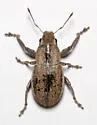
Naupactus peregrinus
Naupactus peregrinus
Identification: tend to be smaller, paler tan; eyes more convex; carina on rostrum less distinct; groove on rostrum does not widen toward apex; setae at base of pronotum directed posterad (unique for leucoloma-Group); elytral scales more rounded
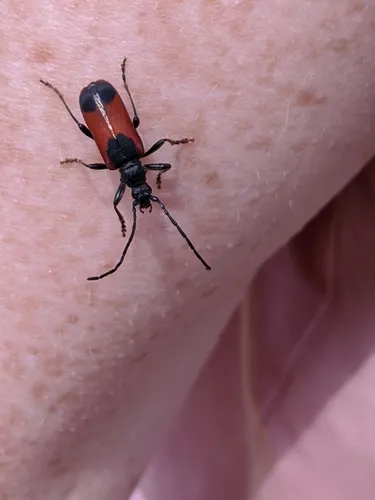
Neanthophylax mirificus
Neanthophylax mirificus
Neanthophylax mirificus is a species of Long-Horned Beetle in the beetle family Cerambycidae. It is found in North America, Costa Rica, and Mexico.
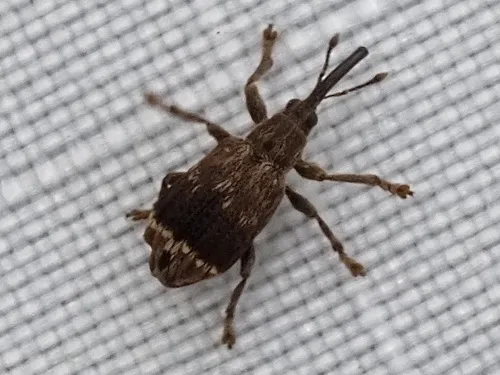
Neapion herculanum
Neapion herculanum
Identification: Densely uniformly scaly metepisternum, relatively short beak that lacks sexual dimorphism, antennal insertions close to eyes (usually less than length of frons), small size (1.77-2.61mm)
Nebria bellorum
Nebria bellorum
Identification: Superficially similar to N. pallipes but can be easily distinguished by the uniformly dark head lacking rufous spots on the frons and the pronotum possessing midlateral setae Previously treated as a subspecies of N. lacustris ; raised
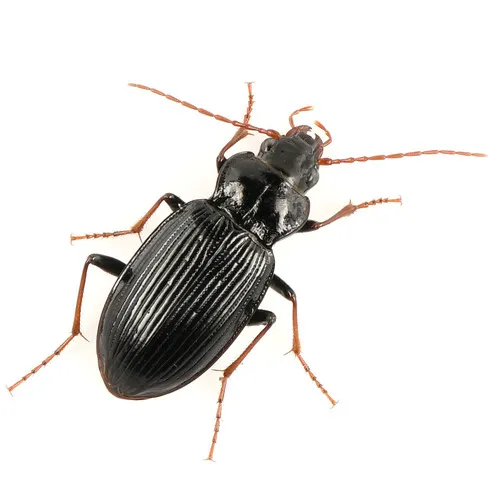
Nebria brevicollis
Nebria brevicollis
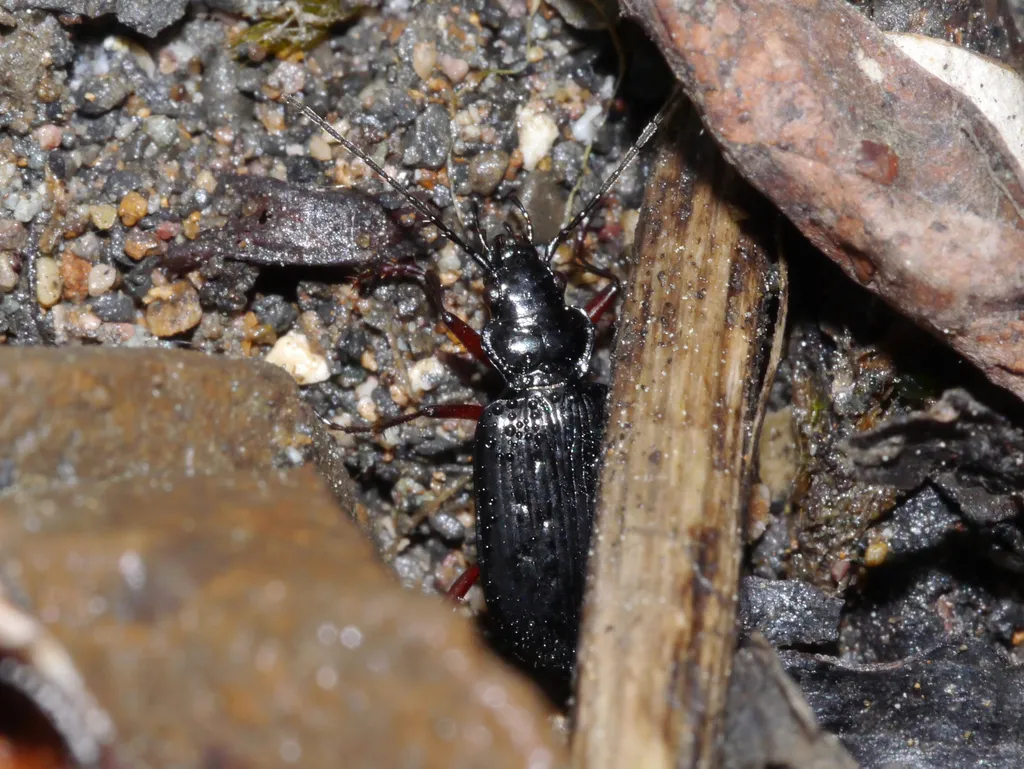
This is a large ground beetle (10-14mm) with a broad pronotum. It is black or dark brown but with mid-brown legs and antennae, though the femora are usually darker brown. It is very similar to N. salina which prefers damper habitats. Nebria brevicoll
Nebria nivalis
Nebria nivalis
Nebria nivalis is a ground beetle in the subfamily Nebriinae. It is found mainly in Scandinavia and northern Russia; it is rare in the British Isles, where it occurs at isolated upland locations in North Wales, northern England, Scotland and the west
Nebria praedicta
Nebria praedicta
Identification: see https://www.biodiversitylibrary.org/page/63533781#page/79/mode/1up
Nebria salina
Nebria salina
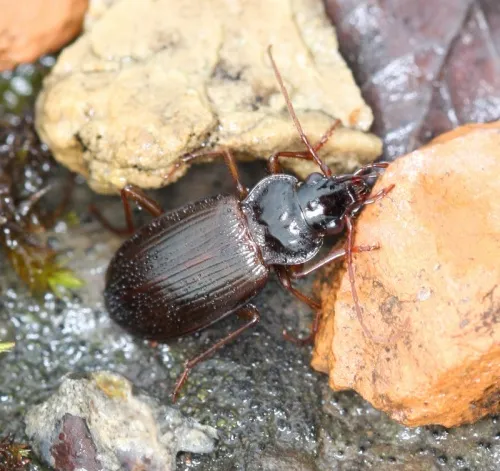
Moderately large (10-14 mm) dark brown or blackish ground beetle. The antennae and legs are a paler red/brown, though the femora are usually dark. Nebria brevicollis and N. salina are indistinguishable without examining the beetles under a microscope
Nebulous Lady Beetle
Scymnus nebulosus
" phelpsii " form occasionally collected in southern part of range.
Necklace Ground Beetle
Carabus monilis
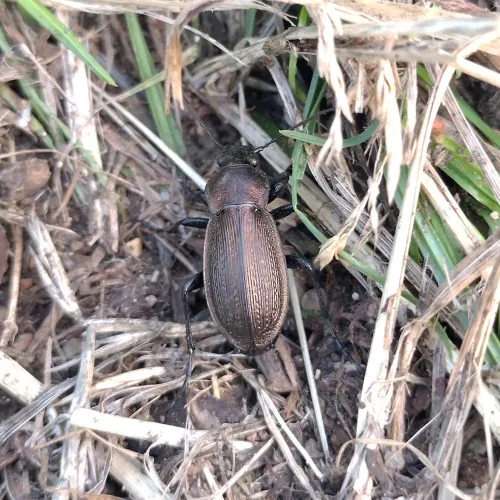
A large beetle (22 to 26mm). Body entirely metallic green or coppery. The elytral sculpture is suggestive of strings of beads, and this gives rise to the common name of Necklace Ground Beetle. Good quality photograph(s) required to support your recor
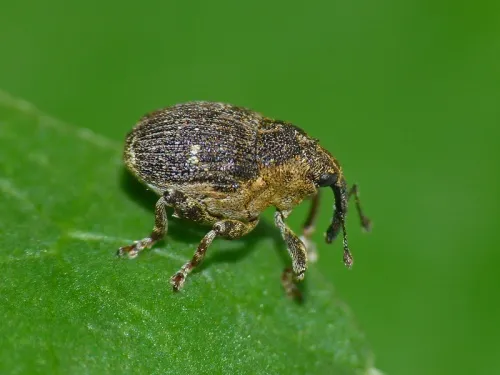
Nedyus quadrimaculatus
Nedyus quadrimaculatus
Length about 3 mm. This small dark and very convex weevil may often be rocognised by the presence of two prominent patches of pale scales on the elytra although these may be absent and the extent of pale scaling in general varies. Nedyus quadrimacula
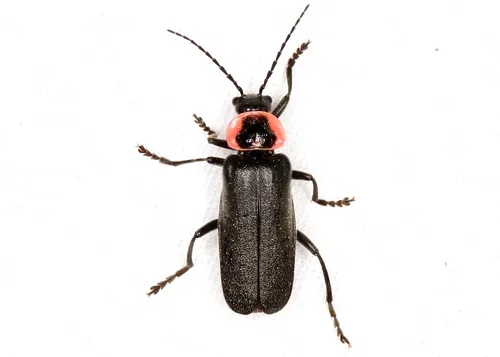
Neglected Soldier Beetle
Atalantycha neglecta
Atalantycha neglecta is a species of soldier beetle in the family Cantharidae. It is found in North America.
Nelsonphotus aridus
Nelsonphotus aridus
Identification: "You can see a picture of the holotype at my website . Dried specimens lose pronotal convexity and the brilliant color. Only a few male specimens are known. The female is unknown and will be larviform." --Joe Cicero
Neltumius arizonensis
Neltumius arizonensis
Identification: Black variegated with white and ochreous pubescence Type Locality: Pinal Mountains, Gila Co., Arizona
Neltumius gibbithorax 0
Neltumius gibbithorax
Identification: easily distinguished by the rounded protuberance in the apical one-half of the pronotal disk, the body size, and the feebly patterned pygidium in both sexes. It is subequal in size to N. arizonensis , but larger than N. texanus . Type
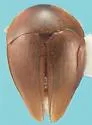
Nemadus brachyderus
Nemadus brachyderus
Identification: body shape distinctive our only representative of the subgenus Laferius Perkovsky that contains one more species from se. Siberia
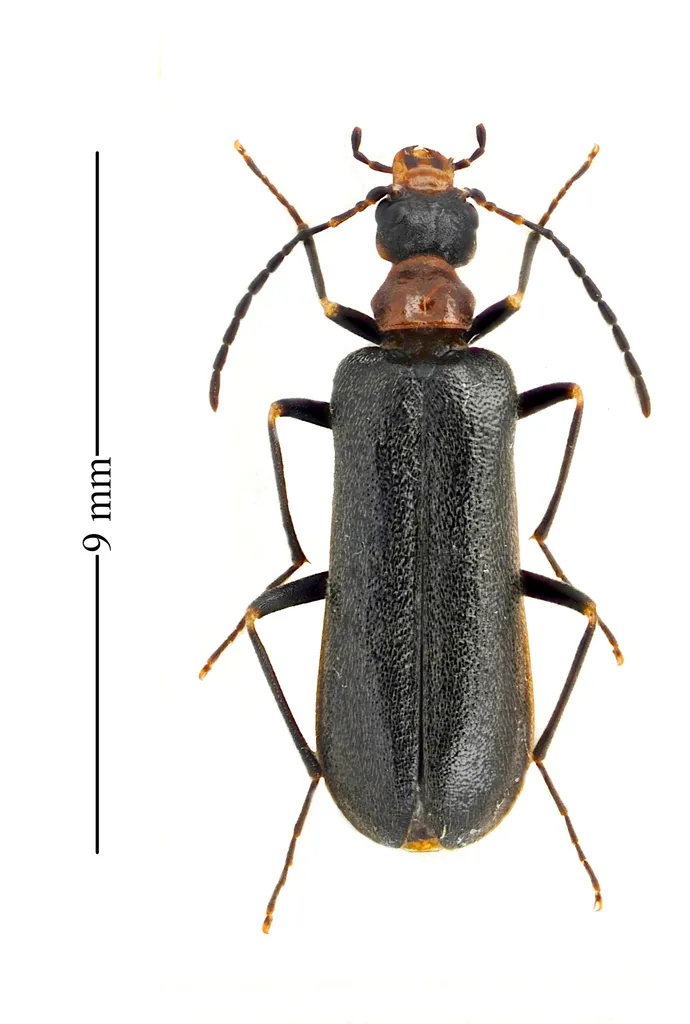
Nematoplus collaris
Nematoplus collaris
Nematoplus collaris (Nematoplus collaris) is a species in the family Stenotrachelidae, commonly known as false longhorn beetles, belonging to the order Coleoptera (Beetles). It is classified within the suborder Polyphaga, superfamily Tenebrionoidea.
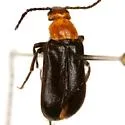
Nemognatha bifoveata
Nemognatha bifoveata
Identification: Allied to N. piazata but readily distinguished from that species by its shorter galeae, shorter metatibial spurs, erect elytral pubescence and sparser punctation, different color pattern, and deep, elongate oval foveae on the fourth a
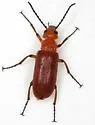
Nemognatha explanata
Nemognatha explanata
Identification: Resembles N. lutea but differs markedly in its reddish color; expanded posterior angles of the pronotum . (emphasis added) Body surface moderately shining, reddish head and pronotum and reddish-testaceous elytra Det. Boris Büche, 2025
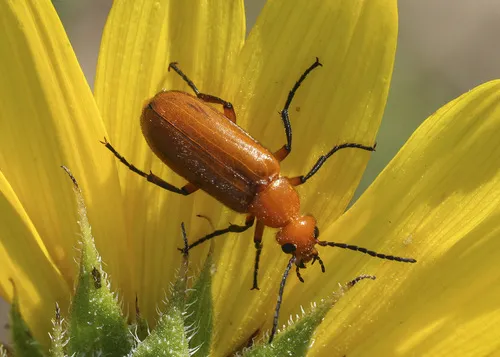
Nemognatha lurida
Nemognatha lurida
Identification: Specimens from opposite extremes of the range, however, may be separated as follows: Pronotum usually densely punctate, punctures laterally on disk often contiguous; anterior angles moderately abrupt; pubescence pale or dark; pronotal
Nemognatha nemorensis
Nemognatha nemorensis
Identification: head occasionally pale like some of the western spp.
Nemognatha nigripennis
Nemognatha nigripennis
Identification: Pronotum scarcely wider than long, not oval; abdomen usually reddish, rarely fuscous; western US Head and pronotum orange; femora excl. tips orange; elytra either orange, with darker tips, or black . (empaphsis added) pale forms usual
Nemognatha nitidula
Nemognatha nitidula
Identification: Related to and resembling N. lutea but readily distinguished by its reddish-testaceous ground color, usually vittate elytra, pale golden pubescence, more densely punctate pronotum and elytra. Body surface shining. Color uniformly redd
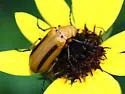
Nemognatha punctulata
Nemognatha punctulata
Identification: John Pinto, pers.comm.: "Problem with the inflated head feature is that the difference is not qualitataive -- the temples are rather inflated in piazata , and many other Nemognatha , also, only somewhat less so -- so one needs to look
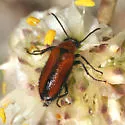
Nemognatha scutellaris
Nemognatha scutellaris
Identification: Entire ventral surface shining piceous; head piceous except vertex triangularly pale; elytra flavous or somewhat rufous usually with sutures and margins piceous at least apically (last key couplet) (Piceous is a glossy, brownish-black
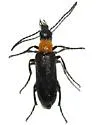
Nemognatha selanderi
Nemognatha selanderi
Identification: Elytra finely punctate or rugose; pronotum finely to moderately coarsely punctate, immaculate; sw U. S.
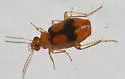
Nemotarsus elegans
Nemotarsus elegans
Identification: Similar to Lebia , distinguished by tibial spurs, etc. Body, legs, antennae dull yellow-brown; elytra dark with a large pale spot
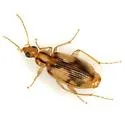
Nemotarsus rhombifer
Nemotarsus rhombifer
Texas considers this a Species of Greatest Conservation Need (SGCN) ( 4 ) ; fairly common at lights and in Lindgren funnel traps at Laguna Atascosa NWR ( 5 )
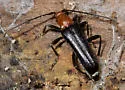
Neoalosterna capitata
Neoalosterna capitata
Neoalosterna capitata (Neoalosterna capitata) is a species in the family Cerambycidae, commonly known as longhorn beetles, belonging to the order Coleoptera (Beetles). It is classified within the subfamily Lepturinae, tribe Lepturini, suborder Polyph