
Mount Hermon June Beetle
Polyphylla barbata
This record describes Polyphylla barbata (species). Recorded family: Scarabaeidae. Recorded order: Coleoptera.
Identification and Appearance
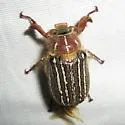
Federally listed January, 1997 as an Endangered Species. on California's Special Animals List. The primary threats have been sand mining and urban development. At the time of listing [Jan 1997] it was estimated that 60% of the sand hills habitat had been disturbed. Of the remaining habitable areas, nearly two-thirds is unprotected (i.e. privately owned). The majority of known localities of the Mt. Hermon June Beetle are in close proximity to active sand mines. Though continued use of this habitat by mining companies will require some habitat restoration and revegetation, it is questionable whether true restoration is possible. Protection of remaining habitat should be the primary goal.
Classification
- Kingdom
- Animalia
- Phylum
- Arthropoda
- Class
- Insecta
- Order
- Coleoptera (Beetles)
- Suborder
- Polyphaga
- Superfamily
- Scarabaeoidea
- Family
- Scarabaeidae (Scarab Beetles)
- Subfamily
- Melolonthinae
- Tribe
- Melolonthini
- Genus
- Polyphylla (Lined June Beetles)
Imported taxonomy record. Source availability varies; see the source references and editorial policy below.
Habitat and Range
Habitat
The Santa Cruz Mountains, while mostly covered in dense forests, have scattered patches of very sandy soils derived from the sandstones (and lesser amounts of limestones) of the Santa Margarita formation (largely Miocene shoreline deposits). These sandy patches form the substrate for a distinctive habitat known as the "Zayante Sand Hills", with interspersed chaparral, sandy open areas, and relatively sparse woodlands. The Zayante Sand Hills provide the primary, if not the only, habitat for Polyphylla barbata , as well as a number of other endemic insects and plants.
Geographic Range
Santa Cruz Co., CA: Localized in the Zayante Sandhills habitat of the Santa Cruz Mountains, in the vicinity of Mt. Hermon and Scotts Valley.
Seasonal Activity
Jun-Jul (BG data)
Additional species information
Species notes from the sources
Etymology: Polyphylla barbata Cazier 1938
About Primitive Winged Insects: the wider group
Order-level background for Coleoptera, the group containing Polyphylla barbata. Species-specific details appear above.
Group overview
Coleoptera is the largest order of insects with over 400,000 described species, representing ~25% of all known animal species and ~40% of all insects. In the U.S. alone, nearly 30,000 beetle species have been identified.
Ecological role of the group
Beetles are prominent decomposers, especially in forests, breaking down dead wood and recycling nutrients. As predators, they reduce populations of pest insects. Many species are also important pollinators of flowering plants.
Economic and practical significance of the group
Beetles have major economic significance: leaf beetles (Chrysomelidae) and weevils (Curculionoidea) are among the most destructive agricultural pests globally, costing billions annually, while predatory species like ladybugs provide natural pest control.
Recorded sources for this group: Britannica, Smithsonian, NCSU Entomology. Imported estimates may describe particular regions or reporting periods.
Photos of Mount Hermon June Beetle (5)
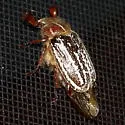
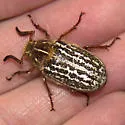
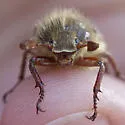
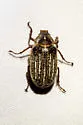
Photo credits: Contributed by Phillip Harpootlian; Additional contributions by Mike Quinn , Aaron Schusteff , v belov
Frequently Asked Questions About Mount Hermon June Beetle
What is Mount Hermon June Beetle?
Mount Hermon June Beetle (Polyphylla barbata) is a species in the family Scarabaeidae, within the order Coleoptera.
Where is Mount Hermon June Beetle found?
| Feature | Details |
|---|---|
| Habitat | The Santa Cruz Mountains, while mostly covered in dense forests, have scattered patches of very sandy soils derived from the sandstones (and lesser amounts of limestones) of the Santa Margarita formation (largely Miocene shoreline deposits). These sandy patches form the substrate for a distinctive habitat known as the Zayante Sand Hills, with interspersed chaparral, sandy open areas, and relatively sparse woodlands. The Zayante Sand Hills provide the primary, if not the only, habitat for Polyphylla barbata , as well as a number of other endemic insects and plants. |
| Range | Santa Cruz Co., CA: Localized in the Zayante Sandhills habitat of the Santa Cruz Mountains, in the vicinity of Mt. Hermon and Scotts Valley. |
When is Mount Hermon June Beetle active?
Mount Hermon June Beetle: seasonal activity - Jun-Jul (BG data).