
Mordellistena limbalis
This record describes Mordellistena limbalis (species). Recorded family: Mordellidae. Recorded order: Coleoptera.
Identification and Appearance
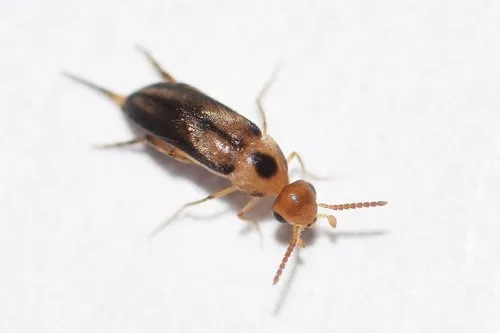
Posterior tibiae with two parallel, oblique ridges, subapical not included; first segment of posterior tarsi with two ridges and second with one ridge. Slender, nearly parallel; color testaceous, with black markings; head testaceous with a dusky cloud between eyes; antennae pale at base, dusky outwardly; palpi dusky; mandibles black at tip; thorax pale testaceous with a black spot on disk , varying in outline, triangular, rhomboidal, or sometimes oval; anterior angles more or less dusky; elytra testaceous with suture and lateral margins black , lateral broadest, basal margin in some specimens a little dusky; legs and metasternum pale, pectus and abdomen more or less dusky; pubescence long, yellowish, except at base and sides of elytra and middle of thorax, where it is black. (emphasis added) Det. J. A. Jackman, 1993 comparatively scarce in collections.
Classification
- Kingdom
- Animalia
- Phylum
- Arthropoda
- Class
- Insecta
- Order
- Coleoptera (Beetles)
- Suborder
- Polyphaga
- Superfamily
- Tenebrionoidea
- Family
- Mordellidae (Tumbling Flower Beetles)
- Tribe
- Mordellistenini
- Genus
- Mordellistena
Imported taxonomy record. Source availability varies; see the source references and editorial policy below.
Habitat and Range
Geographic Range
e. NA - Map
Seasonal Activity
Jun-Aug 21 spmns coll'ed May-June in c. TX
Diet and Behavior
Life History
has been taken on the flowers of spirea and other plants.
About Primitive Winged Insects: the wider group
Order-level background for Coleoptera, the group containing Mordellistena limbalis. Species-specific details appear above.
Group overview
Coleoptera is the largest order of insects with over 400,000 described species, representing ~25% of all known animal species and ~40% of all insects. In the U.S. alone, nearly 30,000 beetle species have been identified.
Ecological role of the group
Beetles are prominent decomposers, especially in forests, breaking down dead wood and recycling nutrients. As predators, they reduce populations of pest insects. Many species are also important pollinators of flowering plants.
Economic and practical significance of the group
Beetles have major economic significance: leaf beetles (Chrysomelidae) and weevils (Curculionoidea) are among the most destructive agricultural pests globally, costing billions annually, while predatory species like ladybugs provide natural pest control.
Recorded sources for this group: Britannica, Smithsonian, NCSU Entomology. Imported estimates may describe particular regions or reporting periods.
Photos of Mordellistena limbalis (2)
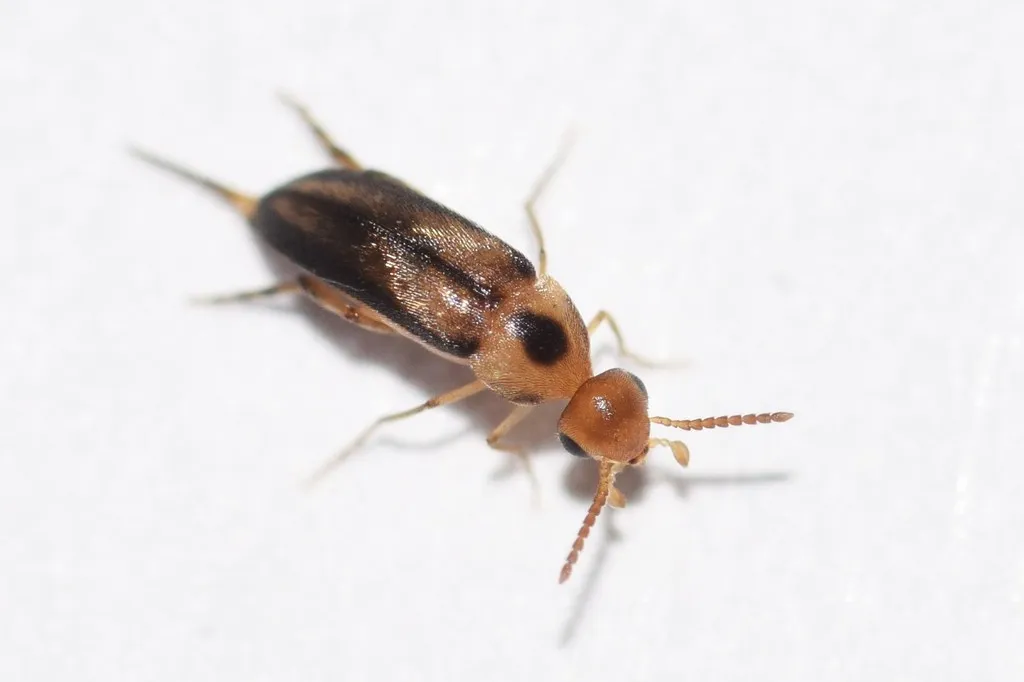
Photo credits: Contributed by Blaine Mathison; Additional contributions by Mike Quinn , Robert Lord Zimlich
Frequently Asked Questions About Mordellistena limbalis
What is Mordellistena limbalis?
Mordellistena limbalis is a species in the family Mordellidae, within the order Coleoptera.
How big is Mordellistena limbalis?
Length: to apices of elytra, 3.25 mm.; to tip of anal style, 5 mm.
How do you identify Mordellistena limbalis?
Posterior tibiae with two parallel, oblique ridges, subapical not included; first segment of posterior tarsi with two ridges and second with one ridge. Slender, nearly parallel; color testaceous, with black markings; head testaceous with a dusky cloud between eyes; antennae pale at base, dusky outwardly; palpi dusky; mandibles black at tip; thorax pale testaceous with a black spot on disk , varying in outline, triangular, rhomboidal, or sometimes oval; anterior angles more or less dusky; elytra testaceous with suture and lateral margins black , lateral broadest, basal margin in some specimens a little dusky; legs and metasternum pale, pectus and abdomen more or less dusky; pubescence long, yellowish, except at base and sides of elytra and middle of thorax, where it is black. (emphasis added) Det. J. A. Jackman, 1993
Where is Mordellistena limbalis found?
Range: e. NA - Map
When is Mordellistena limbalis active?
Mordellistena limbalis: seasonal activity - Jun-Aug 21 spmns coll'ed May-June in c. TX.
What is the life cycle of a Mordellistena limbalis?
has been taken on the flowers of spirea and other plants.