
Primitive Winged Insects
Order Coleoptera
The Primitive Winged Insects (Order Coleoptera) includes 15,720 species across 160 families and 3,716 genera in our directory.
About Primitive Winged Insects
Coleoptera is the largest order of insects with over 400,000 described species, representing ~25% of all known animal species and ~40% of all insects. In the U.S. alone, nearly 30,000 beetle species have been identified.
Economic Impact
Beetles have major economic significance: leaf beetles (Chrysomelidae) and weevils (Curculionoidea) are among the most destructive agricultural pests globally, costing billions annually, while predatory species like ladybugs provide natural pest control.
Ecological Role
Beetles are prominent decomposers, especially in forests, breaking down dead wood and recycling nutrients. As predators, they reduce populations of pest insects. Many species are also important pollinators of flowering plants.
Families in Coleoptera (160)
Species in Coleoptera (15,720)
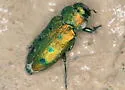
Knowltonia atrifasciata
Knowltonia atrifasciata
Identification: Dets. S. G. Wellso (one by dissection)
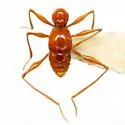
Kretschmarr Cave Mold Beetle
Texamaurops reddelli
Identification: A small, long-legged beetle with short elytra leaving five abdominal tergites exposed; metathoracic wings absent. Color reddish-brown, shiny; pubescent hairs pale, moderately abundant and partially laid back; general body surface spar
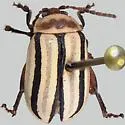
Kuschelina barberi
Kuschelina barberi
Identification: Holotype Type Locality: Greeley, Colorado [Weld County]
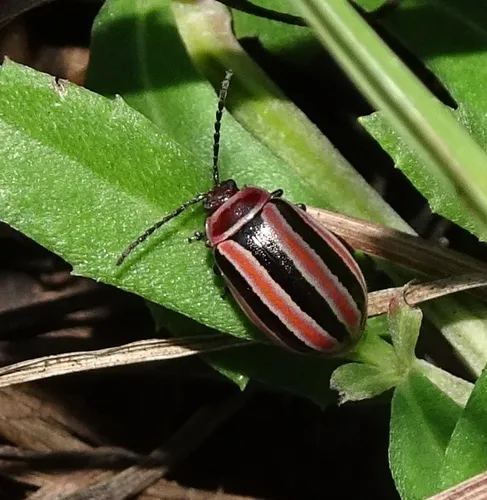
Kuschelina fallax
Kuschelina fallax
Identification: Description : Oblong oval, moderately convex. Head shining, red-brown, coarsely punctate. Prothorax light yellow with irregular red-brown fascia, slightly alutaceous, finely punctate; yellow with black sutural and median fascia; somet
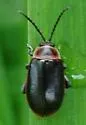
Kuschelina fimbriata
Kuschelina fimbriata
Identification: Dull reddish or brownish, head and pronotum with rather ill defined dark areas of various extent. Elytra usually pale, with narrowly dark suture only. Variations:
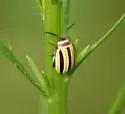
Kuschelina floridana
Kuschelina floridana
Type Locality: Lakeland, Florida, collected on collards, Jan. 18, 1944, collector unknown.
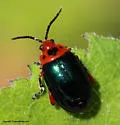
Kuschelina gibbitarsa
Kuschelina gibbitarsa
Identification: larger black thoracic spots and shinier elytra than K. thoracica Det. M. A. Quinn, 2018
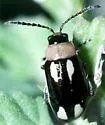
Kuschelina laeta
Kuschelina laeta
Identification: Det. M. A. Quinn, 2013 White apical spots often connected to pale lines within each elytron: Type Locality: Texas
Kuschelina minata
Kuschelina minata
Identification: distinguished mainly by the median elytral vitta which is straight, narrow, often interrupted and not curved at the apex towards the suture as it is in others of the group. Usually the markings are paler also, being reddish brown, and
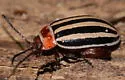
Kuschelina petaurista
Kuschelina petaurista
Bechyné, 1958 (Entom. Arb. Frey 9): 686, footnote: Transfer to genus Alagoasa proposed (number and position of setae on labrum)
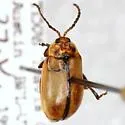
Kuschelina suturella
Kuschelina suturella
Identification: Elytra pale with slightly darker sutural area
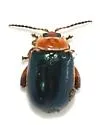
Kuschelina tenuilineata
Kuschelina tenuilineata
Bechyné, 1958 (Entom. Arb. Frey 9): 686, footnote: Transfer to genus Alagoasa proposed (number and position of setae on labrum)
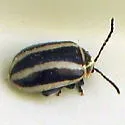
Kuschelina ulkei
Kuschelina ulkei
Identification: oval convex shape, fine punctation, wide dark elytral vittae , and the subequal 3rd and 4th antennal joints distinguish this species. (emphasis added) Type Locality: FL
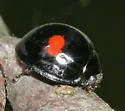
Kuwana's Lady Beetle
Chilocorus kuwanae
Identification: can be distinguished from the native congeners by :
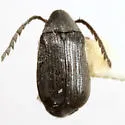
Kytorhinus prolixus
Kytorhinus prolixus
Identification: The combination of characters-two sclerotized, prepygidial terga; strongly pectinate male antenna (see Type ); prominent eyes in male; uniformly dark brown or black integument; unarmed metafemur; and lack of tibial carinae-easily char
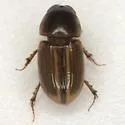
Labarrus pseudolividus
Labarrus pseudolividus
Labarrus pseudolividus (Labarrus pseudolividus) is a species in the family Scarabaeidae, commonly known as scarab beetles, belonging to the order Coleoptera (Beetles). It is classified within the subfamily Aphodiinae, tribe Aphodiini, suborder Polyph
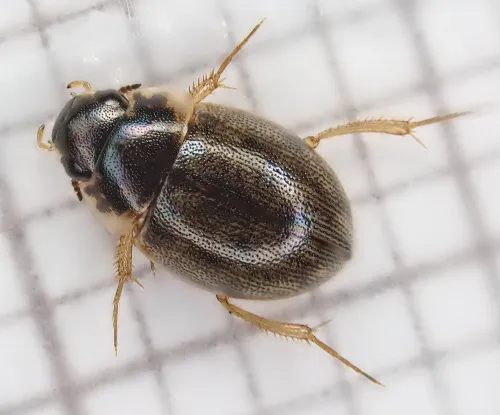
Laccobius bipunctatus
Laccobius bipunctatus
A small (3.2 to 3.8 mm), dark coloured water beetle. Female prosternum with sharp median keel. Unless identified by a recognised expert, a photo is required and the specimen should be examined with a microscope. In the comments box, state the key or
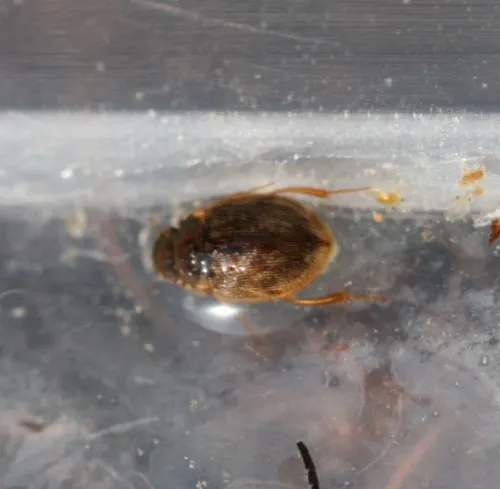
Laccobius minutus
Laccobius minutus
Unless identified by a recognised expert, a photo is required and the specimen should be examined with a microscope. In the comments box, state the key or ID method used and describe the size and identifying characters. Widespread and fairly frequent
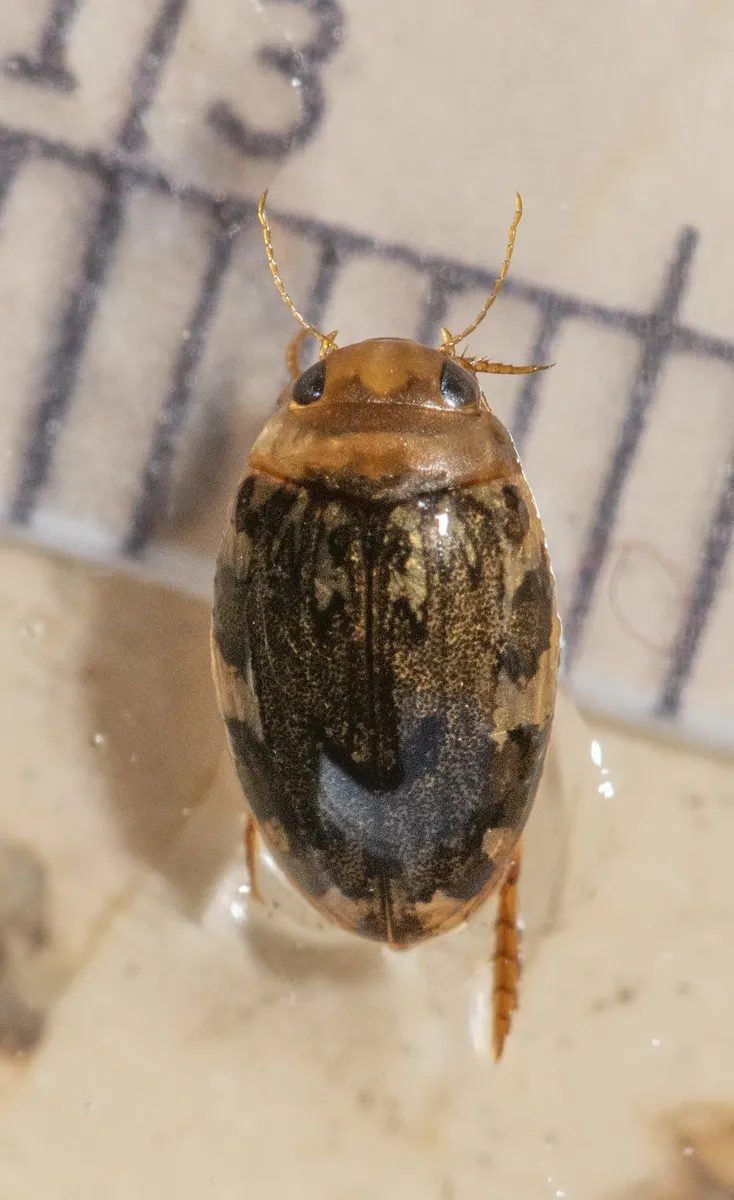
Laccophilus maculosus
Laccophilus maculosus
Identification: Relatively large compared to other members of the genus; overall brownish in colour with elytra irrorate (freckled); the density of freckling varied, with the greatest around pale spots located along lateral, basal, and sutural margin
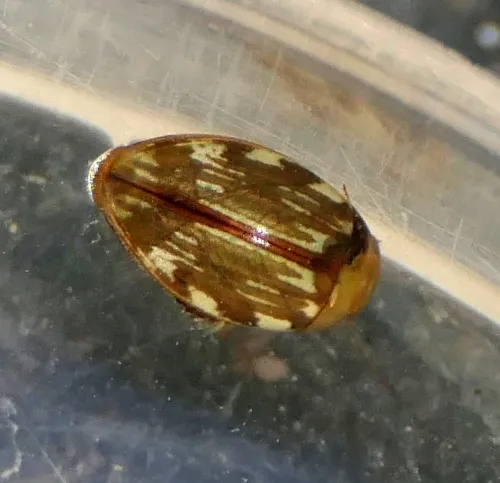
Laccophilus minutus
Laccophilus minutus
Length about 4.5 mm. A small green/brown diving beetle, the elytra can be dark but may have varied paler markings. Mainly found in ponds and pools but has occasionally been recorded from flowing water. Has been recorded in most months of the year. Wi
Laccophilus proximus
Laccophilus proximus
Identification: Elytral iorrations (freckling) more even in density without significant darkening around the pale sublateral spots. Most similar to L. maculosus but in maculosus , the pale spots are outlined/surrounded by denser, darker freckling; al
Laccornis conoideus
Laccornis conoideus
Identification: Antenna with outer antennomeres infuscate apically (show some degree of darkening); colour as described by Larson-reddish brown overall, head brown with reddish areas anteriorly, ventrally, pronotum dark brown with some red laterally,
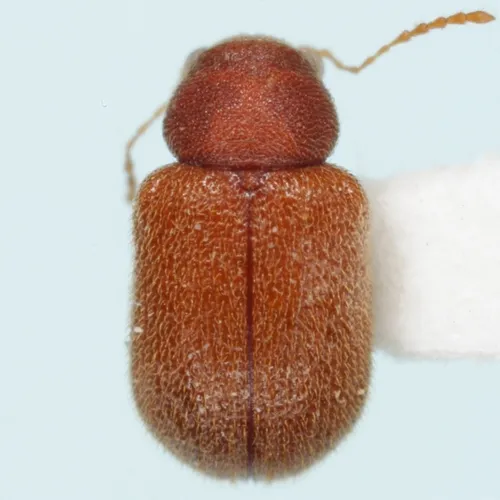
Lacey Oak Xanthonia
Xanthonia parva
Identification: dorsal ground color light to medium reddish brown, immaculate or nearly so Type Locality: TEXAS: Kerr Co., Kerr Wildlife Management Area, Spring Trap, IV-24-2005, Coll. E. G. Riley, beating Quercus glaucoides Paratypes. (18 total) TEX
Lachnodactyla texana
Lachnodactyla texana
Type Locality: Esperanza Ranch, Brownsville, Cameron Co., Texas (Schaeffer 1906) Texas considers this to be a "Species of Greatest Conservation Need" (SGCN) ( 4 )
Lacon mexicanus
Lacon mexicanus
Identification: last key couplet: Scales on dorsum mixed black and golden ; elytral usually has a post median scaleless band Det. E. G. Riley, 2010
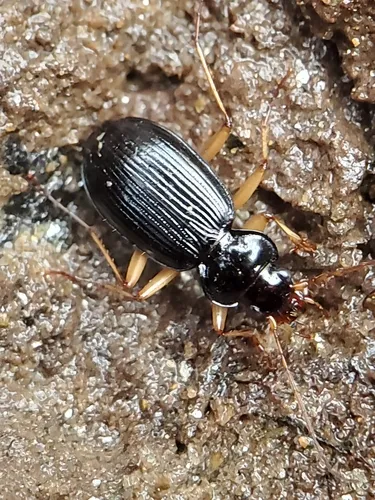
Lacustrine Gazelle Beetle
Nebria lacustris
Nebria lacustris, also known as the lacustrine gazelle beetle, is a species of ground beetle in the Nebriinae subfamily that can be found in southern Canada and in the US states such as Tennessee and Wisconsin. One of such species was found in Great
Lacustrine Lady Beetle
Scymnus lacustris
the most commonly encountered Scymnus sp. in Alberta
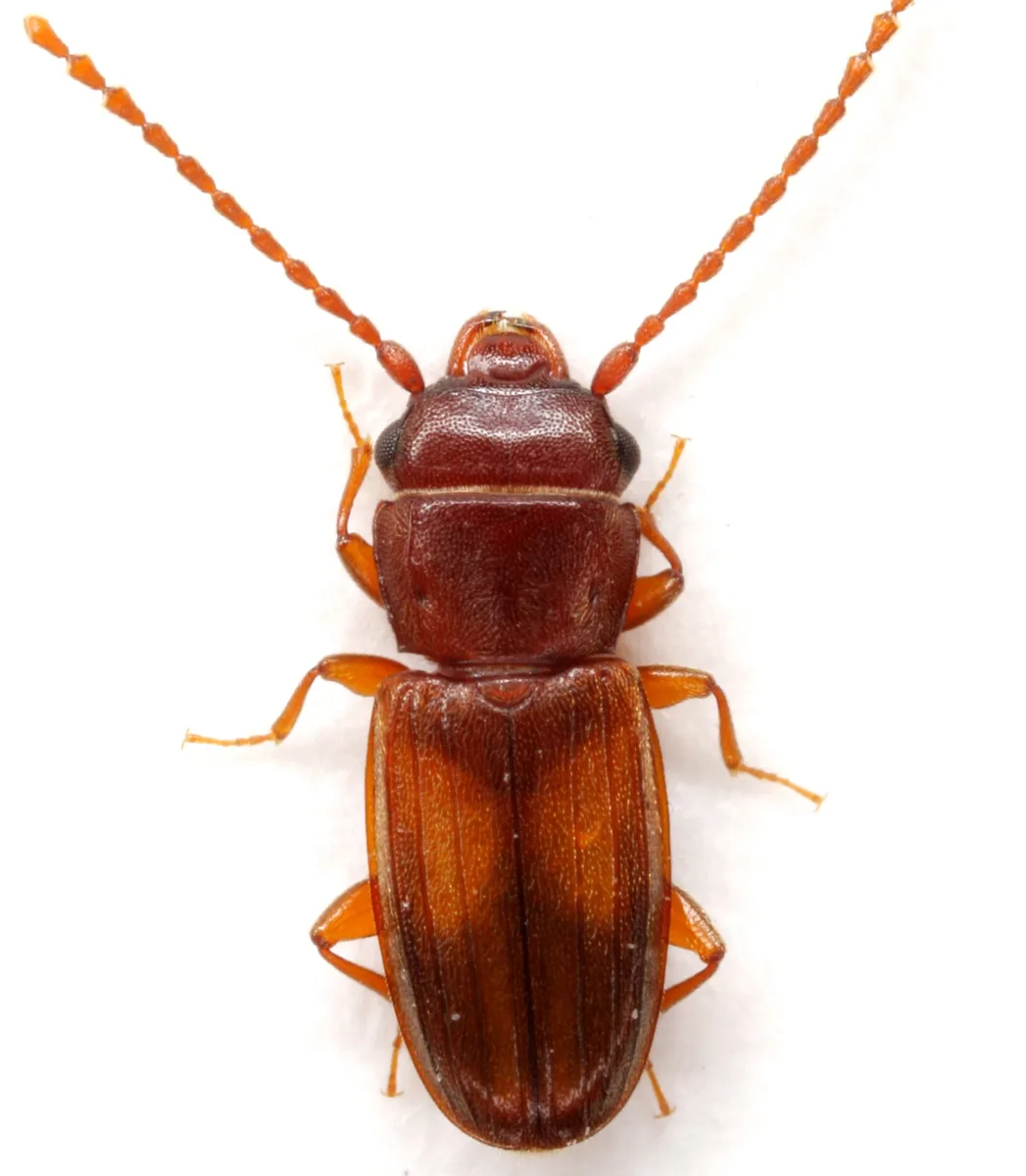
Laemophloeus apache
Laemophloeus apache
Identification: large elytral pale spots with indistinct borders Dets. M. C. Thomas
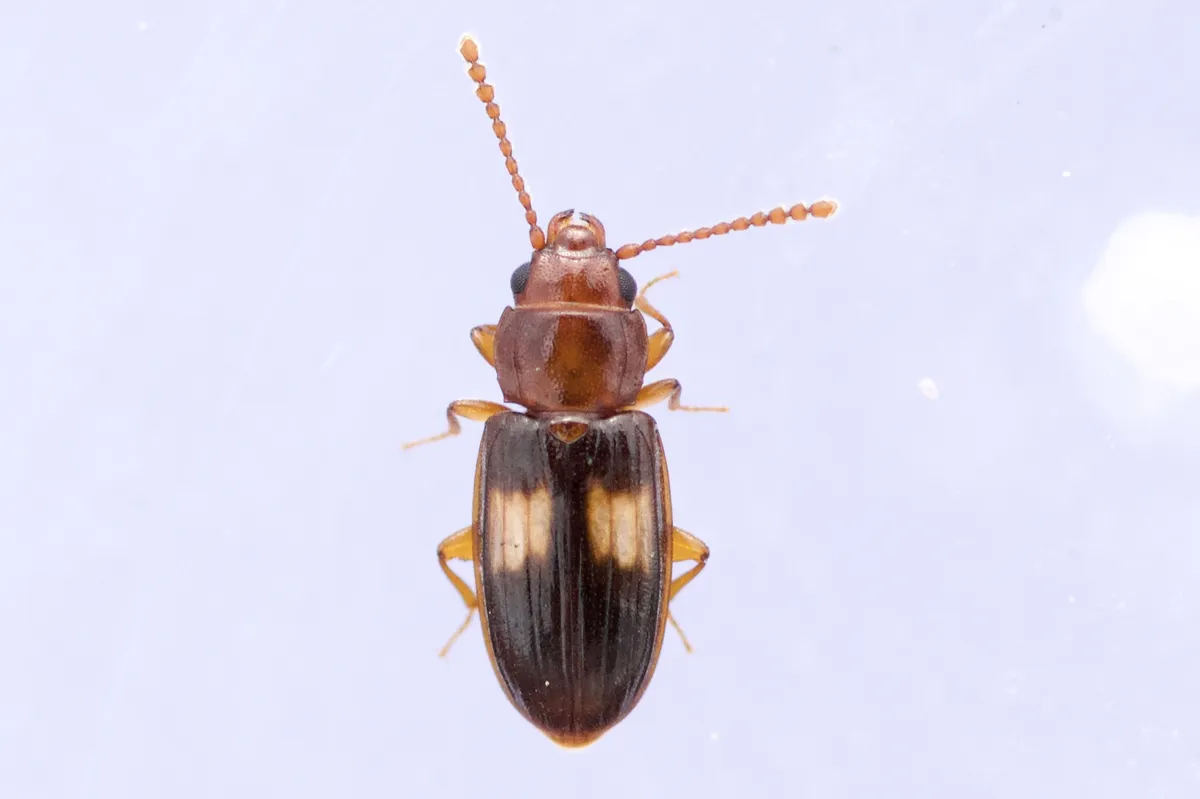
Laemophloeus fasciatus
Laemophloeus fasciatus
Identification: fairly distinctive due to the shape and high contrast of their elytal spots
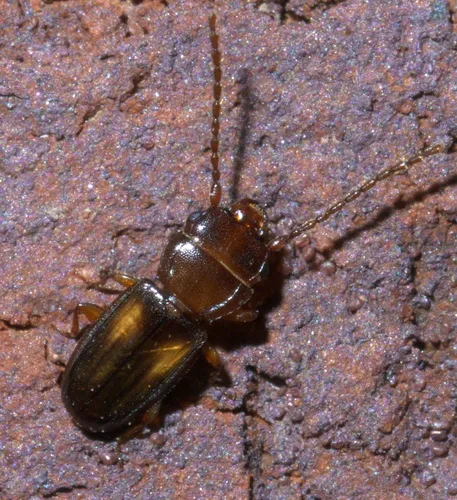
Laemophloeus fervidus
Laemophloeus fervidus
Identification: Dets. Michael C. Thomas - illustration
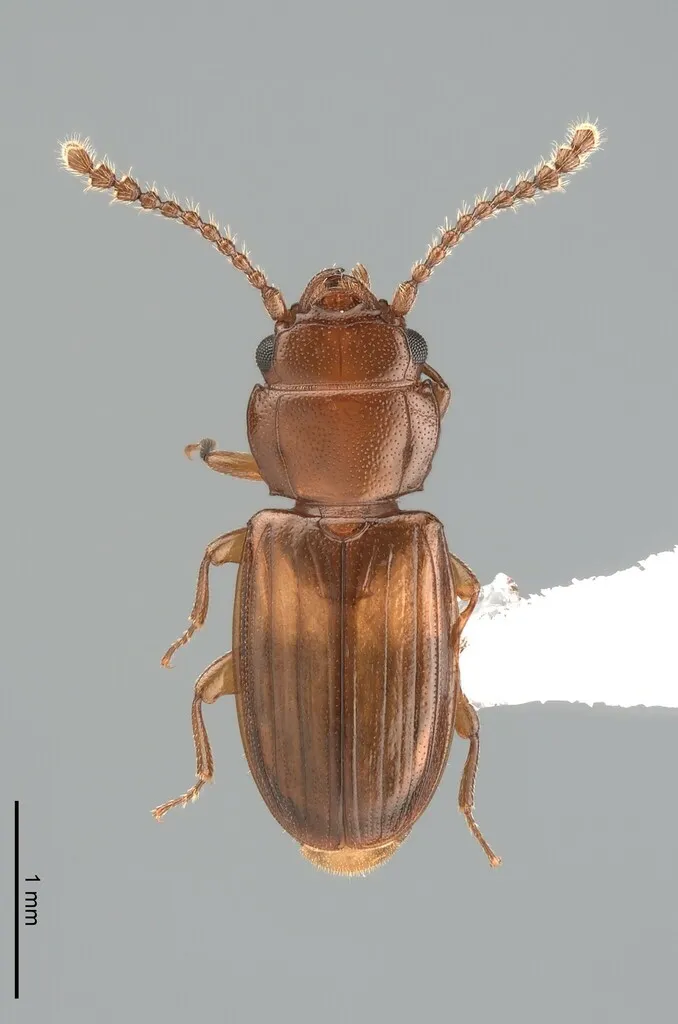
Laemophloeus megacephalus
Laemophloeus megacephalus
Identification: As may be expected, it exhibits considerable colorvariation throughout its tremendous range, but surprisingly little structural variation. Neotropical specimens tend to be pale, with infuscate elytral sutural and basal margins, much a
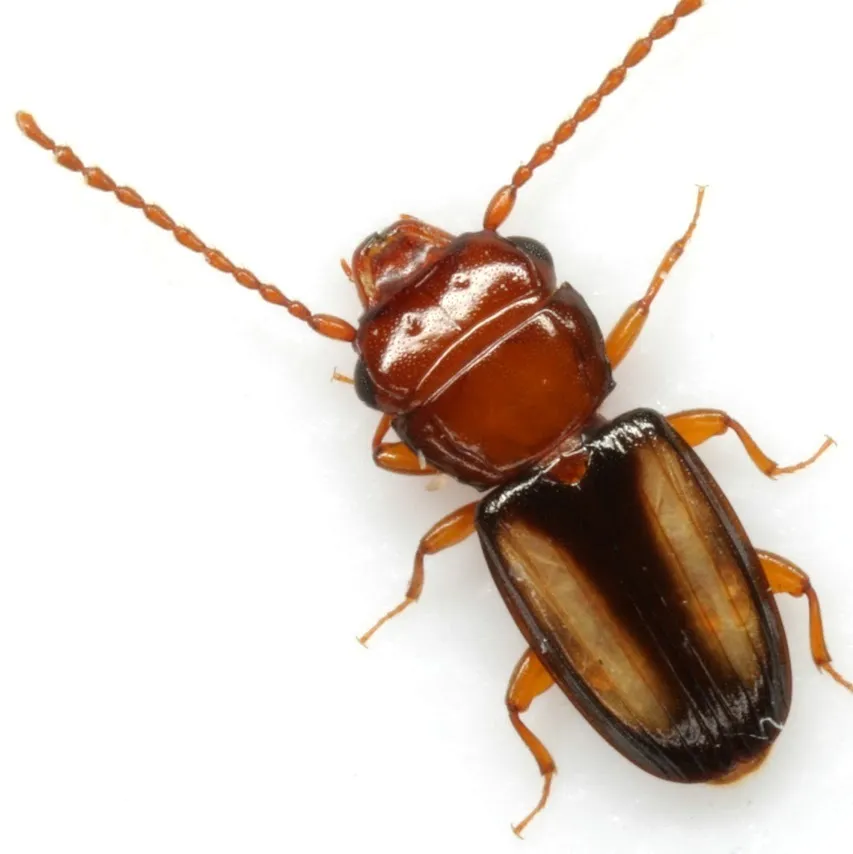
Laemophloeus terminalis
Laemophloeus terminalis
Identification: male, female - Det. Michael C. Thomas, 2013 common at lights in c.TX. =v=
Laemosaccus burkei
Laemosaccus burkei
Identification: Frons with dense, white setae, obscuring area between eyes and on rostrum only above antennal insertions; Red spots on elytra usually >0.5 length of elytra frequently collected southwestern and Mexican member of the L. nephele group w
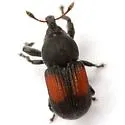
Laemosaccus clytrinoides
Laemosaccus clytrinoides
Type: Arizona: Cochise Co., Chiricahua Mts., E Turkey Creek, 6.5 mi. W Portal, 6400′, 31°54-55′N 109°15′W, 16.07.1981, H. A. Hespenheide, on Quercus sp. (USNM).
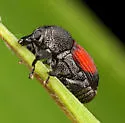
Laemosaccus nephele
Laemosaccus nephele
Identification: as compared to L. obrieni , the sympatric eastern species, L. nephele tends to be larger, with maculae reaching the elytral base and lateral margin, and pronotal punctures coarse and non-coalescing
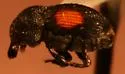
Laemosaccus obrieni
Laemosaccus obrieni
Identification: among the two eastern spp., obrieni is usually smaller than L. nephele ; has smaller posthumeral spots (not reaching elytral base or lateral margin) and finer pronotal punctures confluent on anterior half (vs coarser, separate punctur
Laemosaccus vaurieae 0
Laemosaccus vaurieae
Identification: last key couplets: Species usually >4 mm; with conspicuous, strong teeth on elytral intervals 3 at middle and 5 beyond middle; rostrum 1.5X as long as depth of eyes; aedeagus tapering, acute, with black central region. Anterior surfac
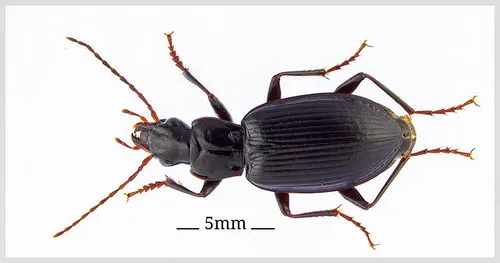
Laemostenus (Laemostenus) complanatus
Laemostenus complanatus
Laemostenus complanatus is a species of ground beetle native to Europe....
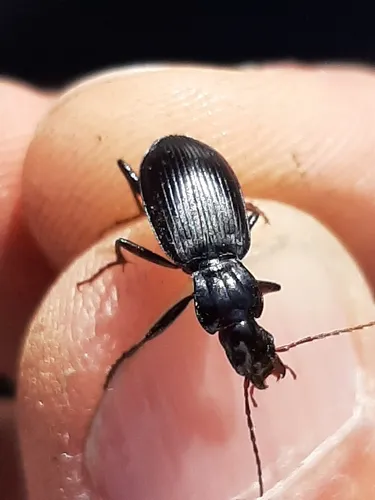
Laemostenus (Pristonychus) terricola
Laemostenus terricola
Laemostenus terricola is a species of ground beetle native to Europe....
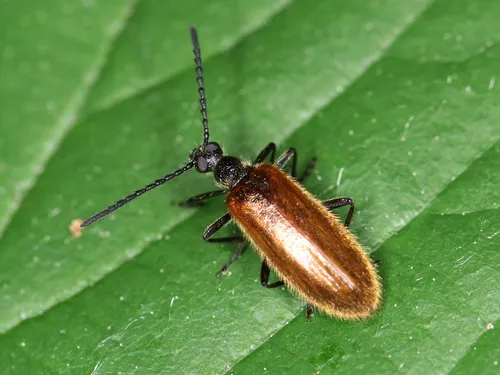
Lagria hirta
Lagria hirta
This beetle has conspicuous yellow-brown wing cases with a darker head. It also has a rather odd oval sort of shape. The whole animal is conspicuously bristly. Found mostly in areas with light or sandy soils. The adults feed on nectar and pollen on o
Lampetis webbii
Lampetis webbii
Identification: Det. J. Basham, 2013 Type Locality: Ures, Sonora, Mexico
Languria angustata
Languria angustata
Identification: very variable head black (empahsis added); antennal club 5-segmented, emerging abruptly from stem; thorax with or without dark spot (e. a.); metasternum (usually) and last two abdominal sterna piceous front femora red at base, piceous
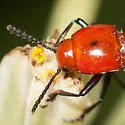
Languria bicolor
Languria bicolor
Identification: Large, robust (emphasis added); antennal club 6-segmented, emerging gradually from stem; head red; thorax with median dark spot (e. a.) though spot occasionally lacking; legs, last abdominal segment piceous Det. M. A. Quinn, 2014
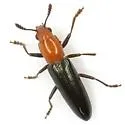
Languria denticulata
Languria denticulata
Identification: resembles mozardi but elytral tip sinuate, with a denticle at suture ( vs smooth and evenly rounded) , and body slightly larger in average antennae with some basal segments usually red, club five-segmented, emerging gradually from ste
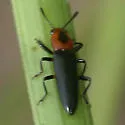
Languria discoidea
Languria discoidea
Identification: thorax alutaceous, with median dark spot spreading from apex to behind middle
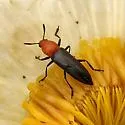
Languria laeta
Languria laeta
Identification: head red; thorax spotless; antennal club emerging abruptly from stem, seventh segment (base of club) at least twice as wide as preceding segments, segments strongly dilated to inner side [pro]thorax ventrally red (except betw. legs),
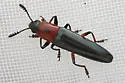
Languria marginipennis
Languria marginipennis
Identification: "green-blue or blue" (Schwarz, 1878a) Both Schwarz (1878a, p. 357) and Schaeffer (1904, p. 200) say the thorax has a median dark spot, but, although the majority of specimens examined have it, some do not, or it is so faint as not to
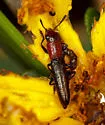
Languria taedata
Languria taedata
Languria taedata (Languria taedata) is a species in the family Erotylidae, commonly known as pleasing fungus beetles, belonging to the order Coleoptera (Beetles). It is classified within the subfamily Erotylinae, tribe Languriini, suborder Polyphaga,
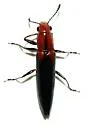
Langurites lineatus
Langurites lineatus
Identification: color extremely variable Large; head red, often with piceous spot; thorax red with three piceous stripes of varying widths, or thorax all piceous or all red; elytra piceous with red [humerus], or all piceous. Elytral apices ending in
Lanorus aequalis
Lanorus aequalis
introduced several times to Europe; Mexican records also appear to be off range.
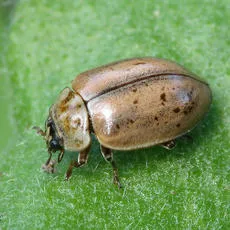
Larch Ladybird
Aphidecta obliterata
Size 4 to 5 mm. Elytra are light tan brown in colour, with very little patterning except perhaps a dark oblique line posteriorly and variable small blotches and spots. The pronotum is beige with brown M mark, and the legs are brown. Unless identified
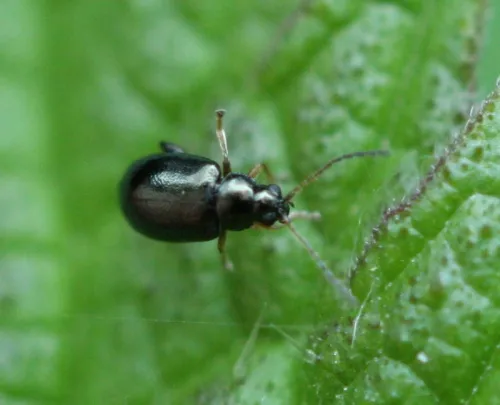
Large Flax Flea Beetle
Aphthona euphorbiae
1.5 to 2.4 mm. Black but may have a metallic greenish or bronze tinge. The elytra are coarsely punctate and in a confused pattern. Antennae are yellow at the base and becoming black apically. Legs are yellow but with dark femora. As with all Apthona,
Large Grassland Tiger Beetle
Cicindelidia obsoleta
Identification: “Above dark black, brown, green, and rarely dark blue with maculations that are absent in some populations, reduced to incomplete lines and dots in others, and thin but complete in others. If maculations are present, usually only the
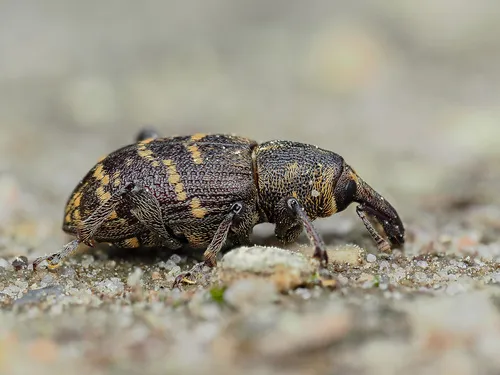
Large Pine Weevil
Hylobius abietis
This large weevil (10 -13mm) has orange or creamy-yellow bands on the elytra across a dark background. Unless identified by a recognised expert, good photos are required that show the key ID features. Also state the beetle's size in the comments box.
Large Pine-shoot Beetle
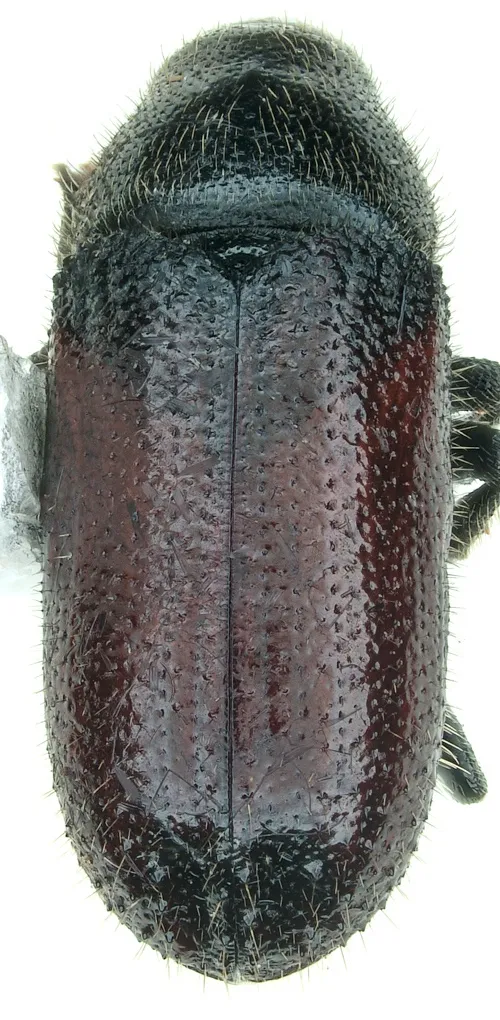
Tomicus piniperda
Size 3.5 to 4.8 mm. Elongate and cylindrical with the head narrowly visible from above, entirely black or very dark brown with the elytra contrastingly dark reddish-brown. Head evenly convex, finely punctured and pubescent. Unless identified by a rec
Large Striped Flea Beetle
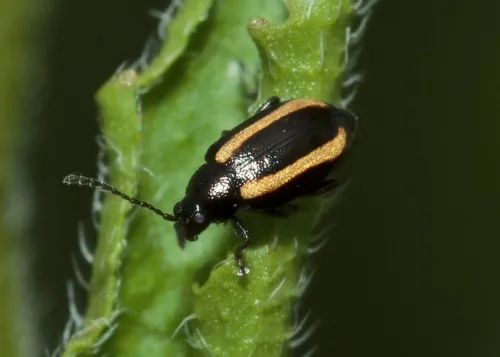
Phyllotreta nemorum
2.5-3mm. The black elytra are marked with broad pale yellow longitudinal stripes that are roughly parallel in shape. Pronotum is black. Antennae are pitchy brown to black. All tibia are unicoloured - dark brown to black. The hind tarsi can be pale. I
Large Thistle Weevil
Cleonis pigra
Identification: Elytra with double V-pattern. Rostrum with three sulci. Freshly emerged specimens covered with yellow, dusty secretion. introduced into NA prior to 1919 larvae parasitized by Acaenitus dubitator (Ichneumonidae) ( Shaw & Wahl 1989 )
Large-spotted Buckeye Borer
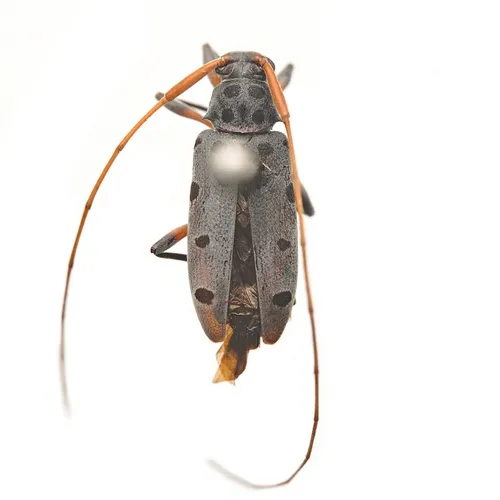
Lepturges regularis
Identification: densely clothed with very short ash-colored pubescence; thorax with four rounded spots arranged in a square; elytra adorned with about 6 dark spots; antennae and femora tawny, the latter black at the tips; elytra rounded at the tips;
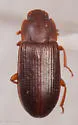
Larger Black Flour Beetle
Cynaeus angustus
common pest of farm-stored grain in north-central US ( 4 )
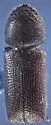
Larger Grain Borer
Prostephanus truncatus
is a pest in Central America and Africa; can survive for long periods in wooden bins and in cobs and stalks of maize
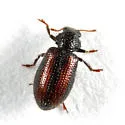
Laricobius erichsoni
Laricobius erichsoni
earliest record in our area: NB 1951 (released for biocontrol purposes) ( 4 )
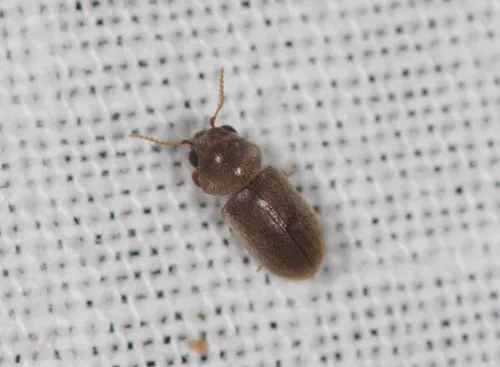
Lasioderma baudii
Lasioderma baudii
Identification: Body flattened subcylindrical, pronotum with scattered larger punctures mixed with fine basic ones; pubescence on pronotum directed backwards in middle, vortically arranged at sides. Protibiae wide. No Bugguide entries, or literature
Lasioderma falli
Lasioderma falli
Identification: General similarity to Lasioderma serricorne , but elytra dark, and pronotal pubescence swirly. Type Locality: Peekskill, NY
Lasioderma haemorrhoidale
Lasioderma haemorrhoidale
Identification: Similar to L. serricorne but a little more elongate; hairs on pronotum +/- distinctly parted side to side along the midline; head and venter always darker brown, often also pronotum and base of elytra (in its native range can be almos
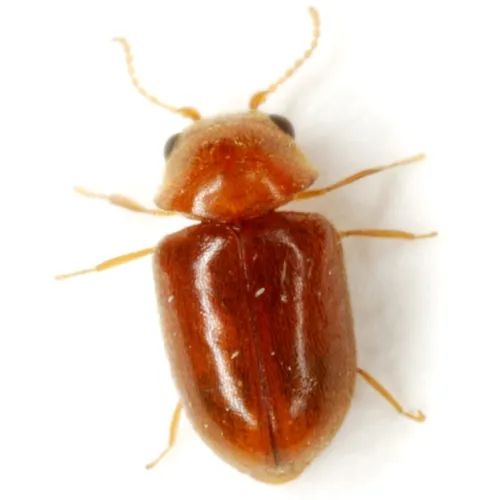
Lasioderma hemiptychoides
Lasioderma hemiptychoides
Lasioderma hemiptychoides (Lasioderma hemiptychoides) is a species in the family Ptinidae, commonly known as death-watch and spider beetles, belonging to the order Coleoptera (Beetles). It is classified within the subfamily Xyletininae, tribe Lasiode
Lateral Lady Beetle
Hyperaspis lateralis
Identification: Black with 1‒3 red/yellow spots on each elytron; pattern is highly variable , but there is usually a subhumeral spot that extends from base to ~2/5 length of elytron A sizeable population almost always contains 2 or more variants. Pro
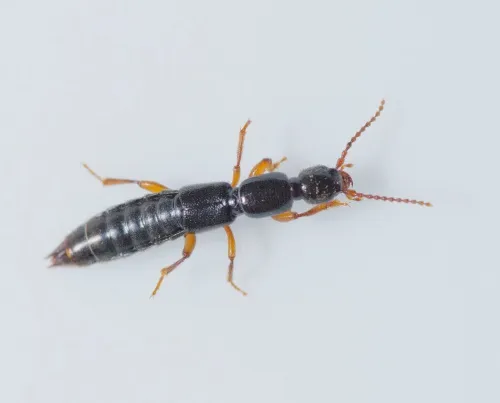
Lathrobium brunnipes
Lathrobium brunnipes
Length around 10 mm. A very dark almost black rove beetle with orangey coloured legs. They generally inhabit leaf litter and other decaying matter. All year round but especially late spring to autumn. No additional images available for this species.
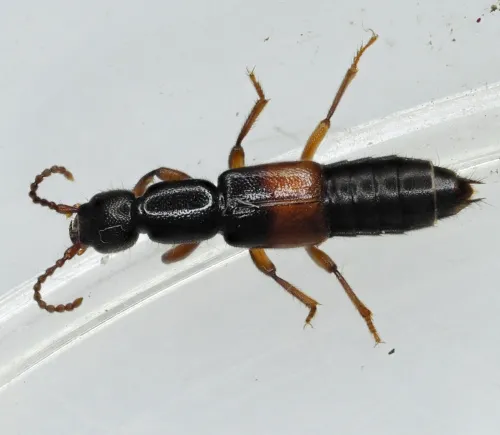
Lathrobium fulvipenne
Lathrobium fulvipenne
7.5 to 9 mm. A fairly large and slender rove beetle, the short elytra are reddish with a darker base. The legs are also orangey red. Unless identified by a recognised expert, a photo is required and the specimen should be examined with a microscope.
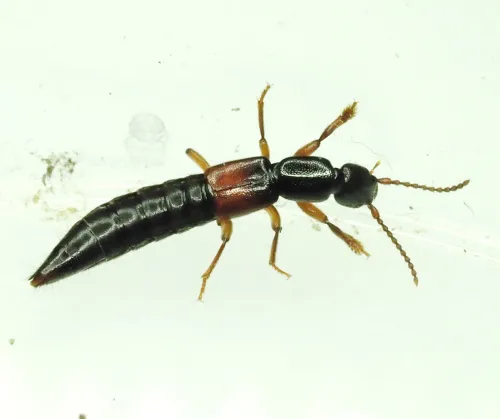
Lathrobium geminum
Lathrobium geminum
Size 7.5 to 10.5 mm. It is very similar to other members of the genus and detailed examination is necessary in order to identify to species. Unless identified by a recognised expert, a photo is required and the specimen should be examined with a micr
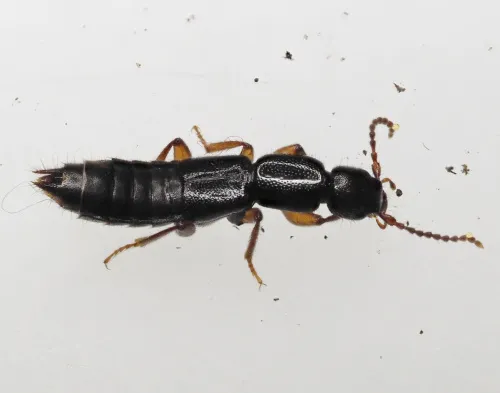
Lathrobium impressum
Lathrobium impressum
5.5-7mm. Generally black and glossy but with red-brown legs, palps and antennae. Males are easier to identify than females due to having upturned hooks at the end of each style - a unique character. Other Lathrobium species, particular L. fovulum . T
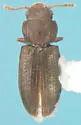
Lathropus vernalis
Lathropus vernalis
Identification: only US species with that particular shape of pronotum. (Michael C. Thomas, 28 December, 2009)
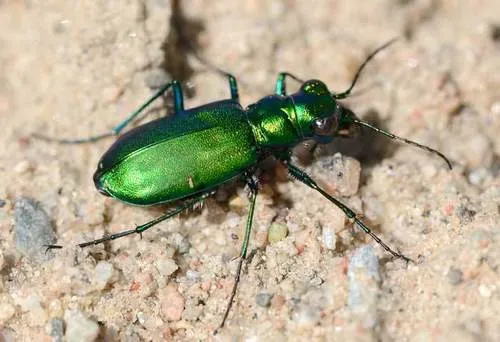
Laurentian Tiger Beetle
Cicindela denikei
Cicindela togata, Laurentian tiger beetle is a species of tiger beetle in the Cicindelinae subfamily that can be found in Minnesota, Manitoba, and Ontario. The species have green coloured elytron and is 13–15 millimetres (0.51–0.59 in) long. It can b

LeConte's Giant Lady Beetle
Anatis lecontei
Identification: Black border around elytra, no spots; pronotum black with two white stripes, often with two small white marks at base Type Locality: Fort Wingate, McKinley Co., New Mexico
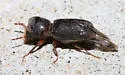
Lead Cable Borer
Scobicia declivis
Identification: Forestry Images may attack newly painted houses, wine casks, hardwood paneling, and flooring. Attacks on asphalt roofing and lead cables may be linked to local forest fires, particularly in stands of oak, where the beetle occurs in la
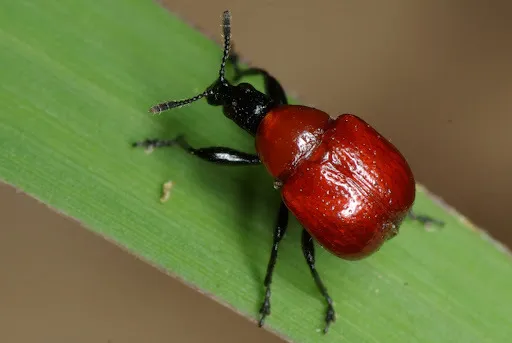
Leaf-Rolling Weevil
Homoeolabus analis
Identification: Claws connate, forelegs enlarged, body glabrous except for a few scattered fine, erect setae, profemora unarmed. Scutellar striole present. Males with longer temples on the head than females and with only 1 uncus or apical spur on the
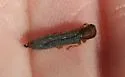
Leafy Spurge Stem Boring Beetle
Oberea erythrocephala
Introduced in 1980 to control Euphorbia esula (Leafy Spurge.
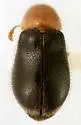
Lebasiella pallipes
Lebasiella pallipes
This species has appeared but once in our lists under the name of pallipes and is not given in the Henshaw List. The species was stricken from our catalogues upon the supposition that it did not belong to our fauna, but that it was a species of Mexic
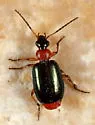
Lebia abdominalis
Lebia abdominalis
Identification: Thorax narrowly margined. our only species with both a strongly constricted neck and narrow pronotal margins (emphasis added); superficially similar in color to viridipennis also, yellow on legs is generally paler and black on legs ge
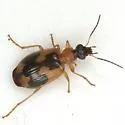
Lebia analis
Lebia analis
Identification: The dark (usually almost black) striated frons and the pale abdomen combine to distinguish analis from all our other Lebia except scalpta . Where these two overlap in TX the elytral pattern of scalpta is distinctive (fig. 26). In AZ t
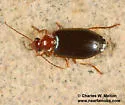
Lebia arizonica
Lebia arizonica
Identification: See BugGuide's Info page for Lebia tuckeri regarding the distinction between these two similar species. Type locality: Huachuca Mountains, Cochise Co., Arizona
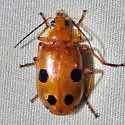
Lebia balli
Lebia balli
Identification: similar to L. quadrinotata Chaudoir
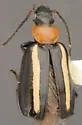
Lebia bilineata
Lebia bilineata
Identification: each elytron usually with only one pale vitta, sometimes two when epipleuron pale
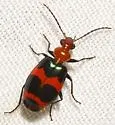
Lebia bitaeniata
Lebia bitaeniata
Identification: Head - metallic or pale Prothorax - Entirely pale Elytra - Disc metallic with pale fasciae (fig. 22) - Fig. 22 the only member of bitaeniata group in our fauna
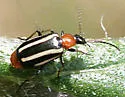
Lebia bivittata
Lebia bivittata
Lebia bivittata (Lebia bivittata) is a species in the family Carabidae, commonly known as ground beetles, belonging to the order Coleoptera (Beetles). It is classified within the subfamily Harpalinae, tribe Lebiini, suborder Adephaga. This species be
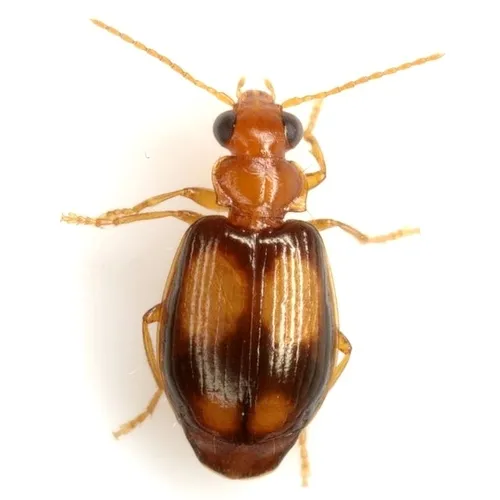
Lebia bumeliae
Lebia bumeliae
Identification: The color pattern, vaulted elytra, and small size distinguish this species from any others within its range - Det. E. G. Riley, 2009 Fig. 43. Lebia ornata Type locality: Brownsville, Cameron Co., Texas
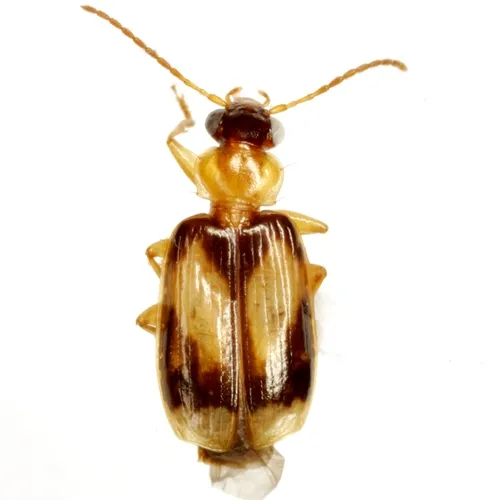
Lebia calliope
Lebia calliope
Identification: Elytra - Disc dark with pale markings (fig. 47) - Fig. 47 Casey's Type Casey's type, coll'ed by Wickham, from Brownsville, TX
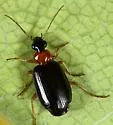
Lebia collaris
Lebia collaris
Identification: Elytral entirely dark except for lateral margin; frons equally dark; abdomen pale, darkening apically There appears to be no important variation in collaris . the only member of collaris group in our fauna
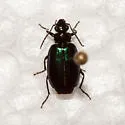
Lebia cyanipennis
Lebia cyanipennis
Identification: two color forms: a dark form with the prothorax dark like the frons, and a light form with prothorax pale (intermediate specimens occur). In most specimens from SK-AB-MT which always seem to be the pale form, the frons is reddish brow
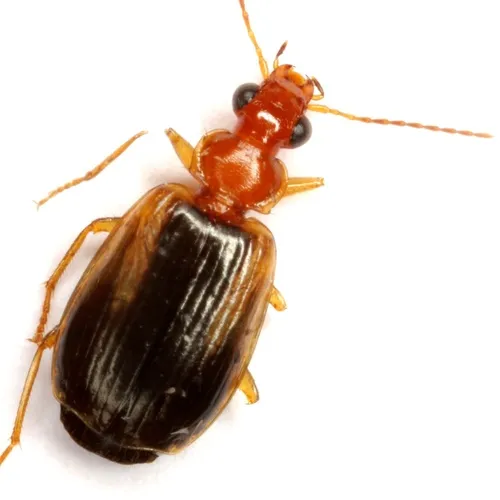
Lebia cymindoides
Lebia cymindoides
Identification: large rufo-testaceous humeral spot - typical pattern Variation - The extent of the pale elytral markings varies from entirely absent (except for the lateral margins) to covering the anterior three fourths of the lateral areas of the d
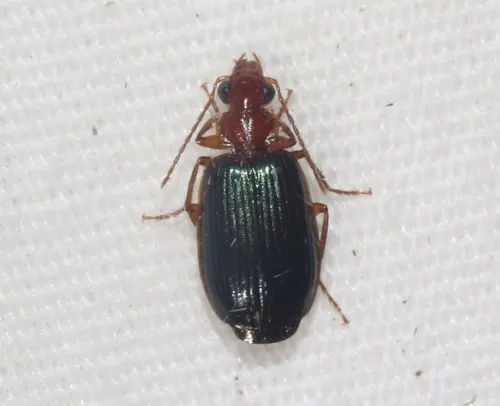
Lebia deceptrix
Lebia deceptrix
Identification: The elytral disc is typically bright blue, rarely with a greenish tinge. Type Locality: Pena Blanca, Santa Cruz Co., Ariz., 4000', August 11, 1960, at light, G. E. Ball family and R.B. Madge.
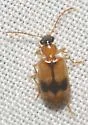
Lebia esurialis
Lebia esurialis
Identification: Elytra - Disc dark with extensive pale markings (fig. 46) Det. E. G. Riley, 2010 Type Locality: Brownsville, Cameron Co., TX
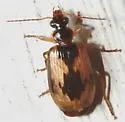
Lebia fuscata
Lebia fuscata
Identification: Variation: In most specimens the postmedian fascia is wide but often reduced or absent in larger individuals most closely resembles L. ornata , from which can be distinguished by complete basal ridge and by the shape of the pale apica
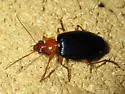
Lebia grandis
Lebia grandis
Identification: cannot be separated externally from some southwestern spp. Adults active primarily at night. Used as biocontrol ( 5 )
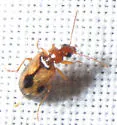
Lebia guttula
Lebia guttula
Identification: Holotype can be distinguished by elytral pattern from all our spp. except dark specimens of L. abdita , from which it can be distinguished by entirely dark abdomen and smoother frons L. guttula
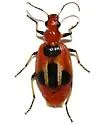
Lebia histrionica
Lebia histrionica
Identification: The only other species with a pale head and black-tipped femora occurring in the range of L. histrionica north of Mexico is L. vittata ; the two can easily be separated by elytral patterns
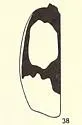
Lebia insulata 0
Lebia insulata
Identification: easily recognized by its elytral pattern. The only other species in which the pattern is similar (especially in the shape of the pale apical marking of the elytra) are fuscata and subrugosa , both allopatric to insulata . Fig. 38. Leb
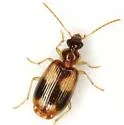
Lebia lobulata
Lebia lobulata
Identification: Typical pattern as in fig. 42 , dark pronotum, and pale areas of elytra are tan vs. pale orange - Fig. 42 Det. E. G. Riley, 2000
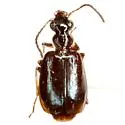
Lebia marginicollis
Lebia marginicollis
Identification: our only Lebia with the elytra metallic and the rest of the body dark except for pale pronotal margins
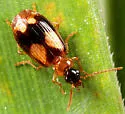
Lebia ornata
Lebia ornata
Identification: Elytra - Disc dark with pale markings (figs. 43-45) or entirely dark ( 3 ) , edges of pale basal elytral spots are generally smooth, not jagged as in fuscata - typical; - southern pale form (note lateral scapular vitta) and dark forms
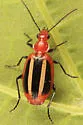
Lebia pectita
Lebia pectita
Identification: The pale head and black-tipped femora separate L. pectita from all eastern spp. except L. vittata ; the non-furcate, black, sutural vitta and the incomplete basal ridge of the elytra of pectita distinguish these two Det. Peter W. Mess