
Kretschmarr Cave Mold Beetle
Texamaurops reddelli
This record describes Texamaurops reddelli (species). Recorded family: Staphylinidae. Recorded order: Coleoptera.
Identification and Appearance
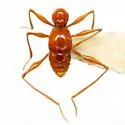
| Feature | Description |
|---|---|
| Additional details | A small, long-legged beetle with short elytra leaving five abdominal tergites exposed; metathoracic wings absent. Color reddish-brown, shiny; pubescent hairs pale, moderately abundant and partially laid back; general body surface sparsely and weakly dotted with small pits. Ventral surface of head heavily pubescent. |
| Eyes | Eyes absent, but represented by small knobs with six vestigial eye facets. |
| Antennae | Antennae 11-segmented, simple. Type Specimen: Female holotype, Kretschmarr Cave, Travis County, Texas, March 2, 1963. Collected by James R. Reddell and David McKenzie. Deposited in the Field Museum of Natural History, Chicago. Found under a rock in the second room of the cave, about 10 m from the entrance. Listed : Endangered; September 16, 1988 Texas considers this a Species of Greatest Conservation Need (SGCN) The genus seems to be a synonym of Batrisodes . |
Classification
- Kingdom
- Animalia
- Phylum
- Arthropoda
- Class
- Insecta
- Order
- Coleoptera (Beetles)
- Suborder
- Polyphaga
- Superfamily
- Staphylinoidea
- Family
- Staphylinidae (Rove Beetles)
- Subfamily
- Pselaphinae
- Tribe
- Jubini
- Genus
- Texamaurops
Imported taxonomy record. Source availability varies; see the source references and editorial policy below.
Habitat and Range
Habitat
troglobite (cave obligate)
Geographic Range
Known from six caves in Travis Co., Texas
Diet and Behavior
Diet: Food preferences are unknown, but it is believed to be a predator
Additional species information
Species notes from the sources
Etymology: Texamaurops reddelli Barr and Steeves in 1963 Patronym for Texas biospeleologist James R Reddell. Kretschmarr Cave Mold Beetle - Official USF&WS name which denotes the type locality, Kretschmarr Cave.
About Primitive Winged Insects: the wider group
Order-level background for Coleoptera, the group containing Texamaurops reddelli. Species-specific details appear above.
Group overview
Coleoptera is the largest order of insects with over 400,000 described species, representing ~25% of all known animal species and ~40% of all insects. In the U.S. alone, nearly 30,000 beetle species have been identified.
Ecological role of the group
Beetles are prominent decomposers, especially in forests, breaking down dead wood and recycling nutrients. As predators, they reduce populations of pest insects. Many species are also important pollinators of flowering plants.
Economic and practical significance of the group
Beetles have major economic significance: leaf beetles (Chrysomelidae) and weevils (Curculionoidea) are among the most destructive agricultural pests globally, costing billions annually, while predatory species like ladybugs provide natural pest control.
Recorded sources for this group: Britannica, Smithsonian, NCSU Entomology. Imported estimates may describe particular regions or reporting periods.
Photos of Kretschmarr Cave Mold Beetle (3)
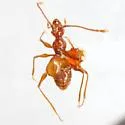
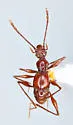
Photo credits: Contributed by Mike Quinn; Additional contributions by Thrasher
Frequently Asked Questions About Kretschmarr Cave Mold Beetle
What is Kretschmarr Cave Mold Beetle?
Kretschmarr Cave Mold Beetle (Texamaurops reddelli) is a species in the family Staphylinidae, within the order Coleoptera.
How big is Kretschmarr Cave Mold Beetle?
Body length 2.72-3.08 mm.
How do you identify Kretschmarr Cave Mold Beetle?
| Feature | Description |
|---|---|
| Additional details | A small, long-legged beetle with short elytra leaving five abdominal tergites exposed; metathoracic wings absent. Color reddish-brown, shiny; pubescent hairs pale, moderately abundant and partially laid back; general body surface sparsely and weakly dotted with small pits. Ventral surface of head heavily pubescent. |
| Eyes | Eyes absent, but represented by small knobs with six vestigial eye facets. |
| Antennae | Antennae 11-segmented, simple. |
Where is Kretschmarr Cave Mold Beetle found?
| Feature | Details |
|---|---|
| Habitat | troglobite (cave obligate) |
| Range | Known from six caves in Travis Co., Texas |
What does Kretschmarr Cave Mold Beetle eat?
The diet of the Kretschmarr Cave Mold Beetle includes Food preferences are unknown, but it is believed to be a predator.