
Primitive Winged Insects
Order Coleoptera
The Primitive Winged Insects (Order Coleoptera) includes 15,720 species across 160 families and 3,716 genera in our directory.
About Primitive Winged Insects
Coleoptera is the largest order of insects with over 400,000 described species, representing ~25% of all known animal species and ~40% of all insects. In the U.S. alone, nearly 30,000 beetle species have been identified.
Economic Impact
Beetles have major economic significance: leaf beetles (Chrysomelidae) and weevils (Curculionoidea) are among the most destructive agricultural pests globally, costing billions annually, while predatory species like ladybugs provide natural pest control.
Ecological Role
Beetles are prominent decomposers, especially in forests, breaking down dead wood and recycling nutrients. As predators, they reduce populations of pest insects. Many species are also important pollinators of flowering plants.
Families in Coleoptera (160)
Species in Coleoptera (15,720)
Hypasclera floridana 0
Hypasclera floridana
Identification: last key couplet: Elytra entirely pale, without vittae Type Locality: One specimen. Biscayne Bay, Florida. (Schwarz.)
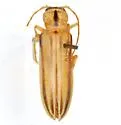
Hypasclera pleuralis 0
Hypasclera pleuralis
Identification: Each elytron with [a single] lateral vitta dark and contrasting with pale area not sure why this sp. hasn't been imaged given it's wide distribution.
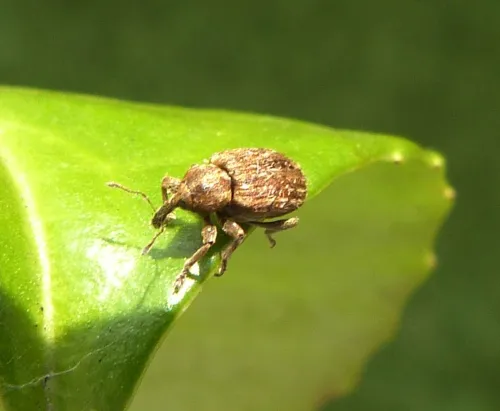
Hypera meles
Hypera meles
A medium-sized, 3.9 to 4.8 mm, weevil with strongly rounded pronotum and parallel-sided elytra, usually showing a light and dark brown elytral pattern which may vary in intensity. Unless identified by a recognised expert, photographic evidence is req
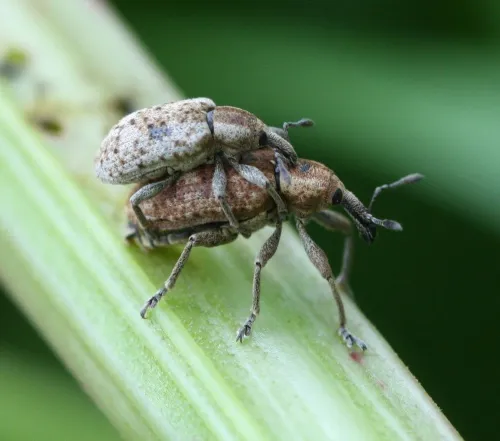
Hypera rumicis
Hypera rumicis
Size 4 or 5 mm. A pale buff coloured weevil with variable darker brown markings on the elytra. Has flat scales and a few flattened bristles. Usually found on docks. See ID guidance below for more details. Unless identified by a recognised expert, goo
Hyperaspidius andrewsi 0
Hyperaspidius andrewsi
Identification: Form elongate, slender, narrowed posteriorly, lateral margin of elytron feebly curved. Head and pronotum yellow, pronotum with base narrowly black medially, 4 maculae present in basal I. Elytron yellow with sutural margin narrowly bla
Hyperaspidius comparatus
Hyperaspidius comparatus
Identification: Gordon's figures Type Locality: Alameda Co., California
Hyperaspidius flavocephalus 0
Hyperaspidius flavocephalus
Identification: Gordon's Figures Type Locality: Dunedin, Fla W.S.B. Coll. 3-27-18
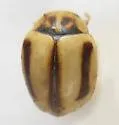
Hyperaspidius hardyi
Hyperaspidius hardyi
Identification: Gordon's figures - "This species has the facies of a member of Hyperaspis rather than Hyperaspidius because of the round, convex body shape. On that basis alone this species is quite distinctive, also the coarse punctures on the elytr
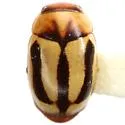
Hyperaspidius ingenitus
Hyperaspidius ingenitus
Identification: Gordon's figures - Form oblong, lateral margin of elytron feebly curved Type locality: Las Cruces, New Mexico
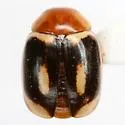
Hyperaspidius insignis
Hyperaspidius insignis
Identification: Gordon's Figs - The pale pronotum and head in both sexes along with the usually large, robust body form distinguish H. insignis from other members of the vittigerus group. No known species occurring in the same geographic area is simi
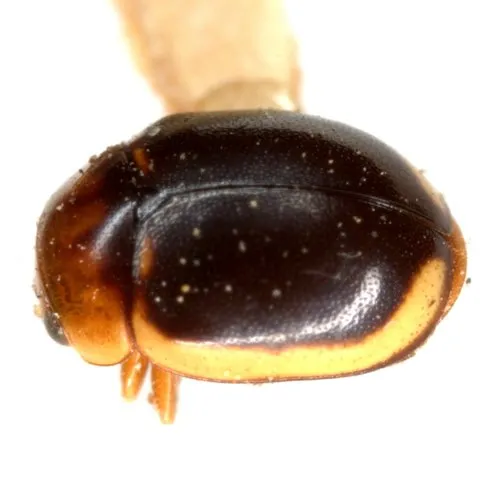
Hyperaspidius marginatus
Hyperaspidius marginatus
Identification: Form oblong, lateral margin of elytron feebly curved. Pronotum of male black or dark brown with nebulous black areas in basal, always with lateral margin narrowly yellow; female pronotum entirely black except anterior angle obscurely
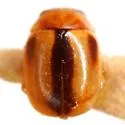
Hyperaspidius militaris
Hyperaspidius militaris
Identification: Pronotum of male yellow with obscure brownish yellow maculation in basal I; pronotum of female black with lateral border narrowly yellow. Elytron yellow except broad sutural border brown or black, short vitta present on humerus Gordon
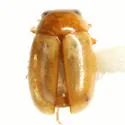
Hyperaspidius nanellus
Hyperaspidius nanellus
Type Locality: Brownsville, Cameron Co., TX, VII, Wickham
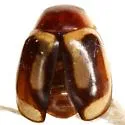
Hyperaspidius oblongus
Hyperaspidius oblongus
Identification: Gordon's figure Type Locality: El Paso, Texas. Described from four spmns.
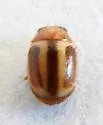
Hyperaspidius pallescens
Hyperaspidius pallescens
Identification: Form oblong, lateral margin of elytron distinctly curved. Pronotum of male yellow with indistinct yellowish brown maculation; pronotum of female uniformly yellowish brown except lateral margin narrowly yellow. Elytron with 2 broad, ye
Hyperaspidius shauli
Hyperaspidius shauli
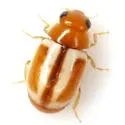
Identification: Form oblong, elongate, extremely parallel sided, strongly dorso-ventrally flattened. Pronotum of male yellow with nebulous brown maculation in basal; female pronotum mostly yellow with median brown area. Elytron brown with complete ye
Hyperaspidius transfugatus
Hyperaspidius transfugatus
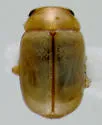
Identification: Gordon's figures Type locality: Mount Tom, Hampden, Massachusetts
Hyperaspidius venustulus
Hyperaspidius venustulus
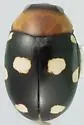
Identification: Gordon's Figure - Pronotum yellowish red, elytron black with 4 yellow spots. considered to be rare ( comment by Michael C. Thomas, 2008 )
Hyperaspidius vittigerus
Hyperaspidius vittigerus
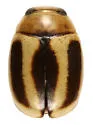
Identification: Gordon's figures Type locality: "Missouri Territory"
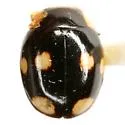
Hyperaspis aemulator
Hyperaspis aemulator
Identification: Gordon's figures Type locality: Nogales, Santa Cruz Co., Arizona
Hyperaspis bensonica
Hyperaspis bensonica
Identification: Gordon's figures Type locality: Benson, Cochise Co., Arizona
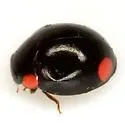
Hyperaspis bigeminata
Hyperaspis bigeminata
Identification: Gordon's figures Elytra with a large red or yellow apical spot; a large pale spot occupying entire lateral area of pronotum. One of the most common arboreal coccinellids in Oak-Juniper Woodlands of c. TX
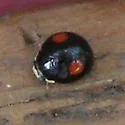
Hyperaspis binotata
Hyperaspis binotata
Identification: Gordon's figures - all from Okla. Dets. R. Gordon a common, widespread species recognized with certainty only from male genitalia
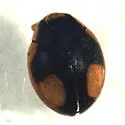
Hyperaspis bolteri
Hyperaspis bolteri
Identification: Gordon's figures - "The highly distinctive color pattern and extremely dull pronotal surface characterize this species." Type Locality: Illinois
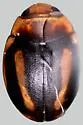
Hyperaspis brunnescens
Hyperaspis brunnescens
Identification: Gordon's figures - Pronotum of male mostly dull yellow; pronotum of female brownish black with indistinct, yellow lateral border. Elytron brownish black with 2 vittae, one complete marginal vitta and oblique discal vitta (Fig. 446 c).
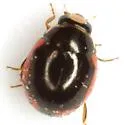
Hyperaspis caseyi
Hyperaspis caseyi
Identification: Gordon's figures Type Locality: Thurber, Erath Co., Texas
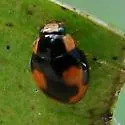
Hyperaspis connectens
Hyperaspis connectens
Identification: Gordon's figures According to Gordon (as discussed here ): Broad yellow areas on the sides of the pronotum (the part between the head and the wings) and a pair of spots on each side of the elytra. The spots are usually- but not always
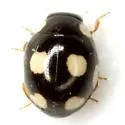
Hyperaspis conspirans
Hyperaspis conspirans
Identification: Gordon's figures Type Locality: Nogales, Santa Cruz Co., AZ
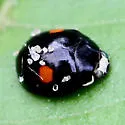
Hyperaspis conviva
Hyperaspis conviva
Identification: Gordon's figures "This is the most easily recognized species in the [Hyperaspis] signata group because of the dorsoventrally flattened, elongate form which is characteristic of most females and many of the males." Type locality: South
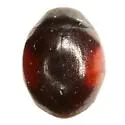
Hyperaspis cruenta
Hyperaspis cruenta
Identification: Gordon's figures - Elytron with single marginal spot of varying size Type Locality: Dallas, Texas
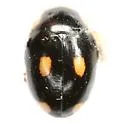
Hyperaspis disrupta
Hyperaspis disrupta
Identification: Gordon's figures Because of the different type of male genitalia, Gordon considered H. disrupta a valid species rather than a subspecies of H. bensonica
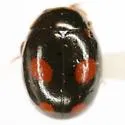
Hyperaspis haematosticta
Hyperaspis haematosticta
Identification: Gordon's Figures - The combination of elongate body and elytral color pattern makes H. haematosticta a reasonably distinctive species in the geographic region in which it occurs. Type Locality: Santa Fe, NM
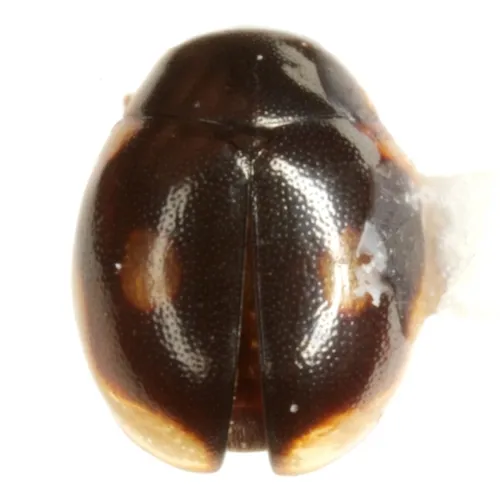
Hyperaspis imitator
Hyperaspis imitator
Identification: Gordon's Figures - Pronotum black with lateral area yellow; elytron black with discal spot and lateral yellow villa from base to apex Holotype. Male. TEXAS: Bexar Co., San Antonio, Olmos Park, 28-VI-1947, B. E. White Coll., sweeping C
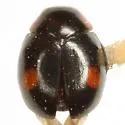
Hyperaspis inedita
Hyperaspis inedita
Identification: Gordon's figures - Pronotum with broad lateral area yellow/orange. Elytron single red spot of variable size, rarely immaculate the center of discal spots are caudad to middle of length
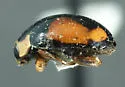
Hyperaspis jovialis
Hyperaspis jovialis
Identification: Gordon's figures - Color pattern on elytron variable from black with 2 orange spots to mostly orange with black border and enclosed black spot
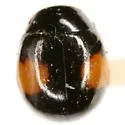
Hyperaspis leachi
Hyperaspis leachi
Identification: Gordon's figures - The orange spot on the elytron nearly reaches the lateral margin
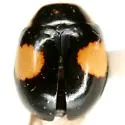
Hyperaspis lewisi
Hyperaspis lewisii
Identification: Gordon's figures - Elytron with large, yellow, discal spot extending from or near lateral margin nearly to suture
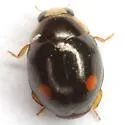
Hyperaspis oculifera
Hyperaspis oculifera
Identification: Gordon's figures "This little species is very distinctive because of the unusual toothed apical margin of the prosternum and the male genitalia which, although of the bigeminata type, have the basal lobe quite divergent from the norma
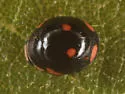
Hyperaspis pinguis
Hyperaspis pinguis
Identification: Gordon's Figures Description as for H. lateralis except pronotum of male with broad lateral area yellow; female pronotum with large, triangular lateral area yellow; elytron with subhumeral spot large, reaching humeral callus
Hyperaspis querquesi
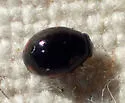
Hyperaspis querquesi
Identification: Gordon's Figures Type locality: Bird Observation Station, Marin Co., California.
Hyperaspis revocans
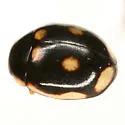
Hyperaspis revocans
Identification: Gordon's Figures - The paired basal spots of the elytra, especially when united with the discal spots, make H. revocans easily recognizable. The occasional specimen that lacks both spots or has only the discal spot is more difficult t
Hyperaspis rivularis
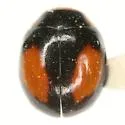
Hyperaspis rivularis
Identification: Gordon's figures - Color pattern as described for H. proba except elytron with single yellow or orange discal spot either round or elongate, often very large. female pronotal pattern is like that of many species in the bigeminata grou
Hyperaspis rotunda
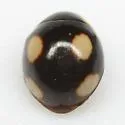
Hyperaspis rotunda
Identification: Gordon's figures Species described by Casey from a single specimen (male) collected at "St. Thomas" (now the Sabal Palm Sanctuary ), Brownsville, Cameron Co., Texas. Texas considers this to be a "Species of Greatest Conservation Need"
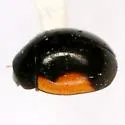
Hyperaspis schaefferi
Hyperaspis schaefferi
Identification: Gordon's figures PARATYPE Type Locality: Esperanza Ranch, Brownsville, Cameron Co., Texas, VII.30
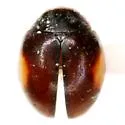
Hyperaspis significans
Hyperaspis significans
Identification: Gordon's figures - Elytron entirely black or with single spot of varying size on lateral margin The form with maculate elytra (significans) and the form with immaculate elytra (concurrens) often occur together without intergrades. Typ
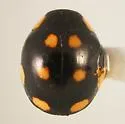
Hyperaspis triangulum
Hyperaspis triangulum
Identification: Gordon's figures this singular spmn, without a det. label, sits in Hyperaspis triangulum Casey, 1899 unit tray in the USNM/NMNH. the spots positionally, but not proportionally, are match for Gordon's H. triangulum figure, except for t
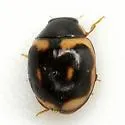
Hyperaspis trifurcata
Hyperaspis trifurcata
Identification: Gordon's figures - The elytral color pattern is somewhat variable, but always distinctive for this species. Types: One female collected by [Schaeffer] in Brownsville, Texas; another female and one male in Dietz's collection, the forme
Hyperaspis wickhami
Hyperaspis wickhami
Identification: pronotum broadly yellow in both sexes - Gordon's figures Type locality: Brownsville, Cameron Co., Texas
Hyperplatys femoralis
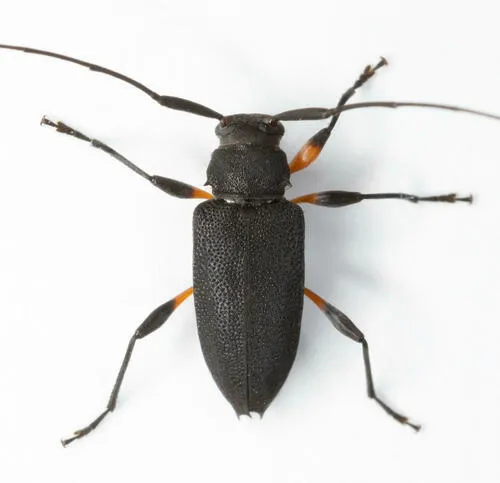
Hyperplatys femoralis
Hyperplatys femoralis (Hyperplatys femoralis) is a species in the family Cerambycidae, commonly known as longhorn beetles, belonging to the order Coleoptera (Beetles). It is classified within the subfamily Lamiinae, tribe Acanthocinini, suborder Poly
Hyperplatys maculata
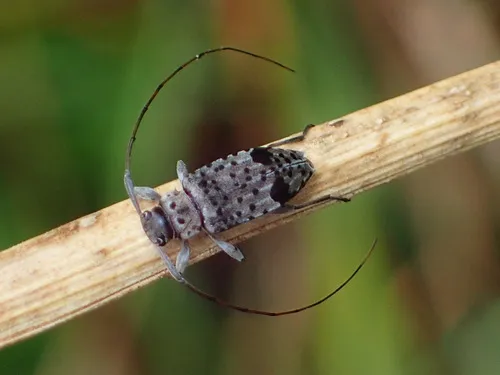
Hyperplatys maculata
Identification: quite variable, numerous small black elytral spots, usually has pale elytral stripes, dark lateral stripe (often not visible from above), and always has large posterior spots Det. Marlin E. Rice, 2020
Hypexilis pallida
Hypexilis pallida
Identification: Det. M.A. QUinn, 2011 common at lights
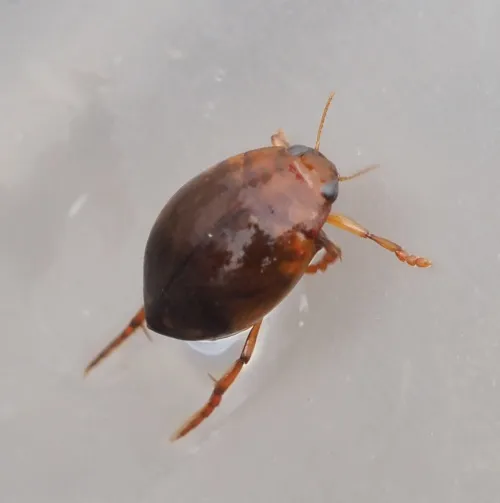
Hyphydrus ovatus
Hyphydrus ovatus
Length around 4.5 mm. The small oval/globular form and dark red to brown colouration are distinctive. Some have vague elytral patterning at the margins, especially in teneral specimens. Hyphydrus aubei is a similar size and shape but has a much more
Hypocaccus iris
Hypocaccus iris
Hypocaccus iris (Hypocaccus iris) is a species in the family Histeridae, commonly known as clown beetles, belonging to the order Coleoptera (Beetles). It is classified within the subfamily Saprininae, tribe Hypocaccini, suborder Polyphaga, superfamil
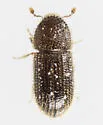
Hypothenemus californicus
Hypothenemus californicus
Identification: Distinguished from other members of the genus in our area by the combination of coarse, deep punctures on posterolateral area of pronotum, slender body form, and long slender interstrial scales earliest record in our area: CA 1895
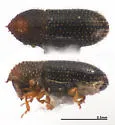
Hypothenemus miles
Hypothenemus miles
Identification: Distinguished from all other American Hypothenemus by the narrowly produced, hornlike, anterior marginal asperity, with no other marginal teeth.
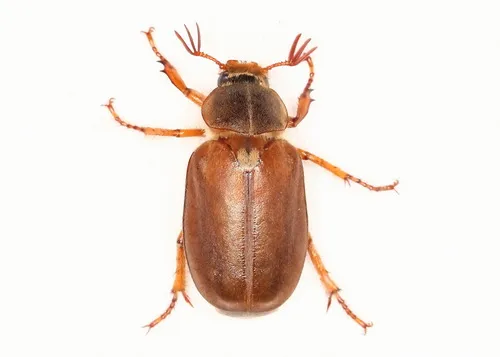
Hypothyce mixta
Hypothyce mixta
Identification: PARATYPE Type Locality: Tennessee colony, Anderson Co., TX Paratypes cited by Howden are from other localities in Anderson County, as well as in Harris, Nacogdoches and Wood counties. Hardy added Gonzales county. Currently only one sp
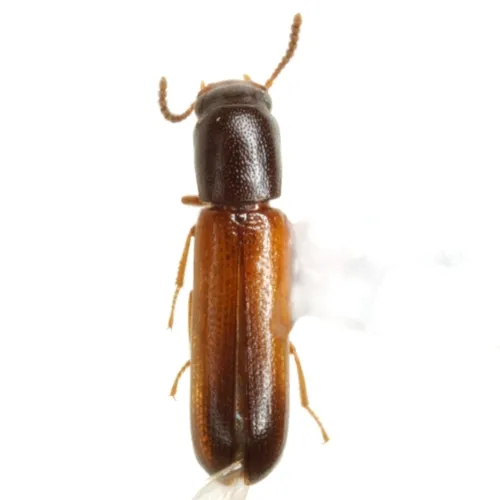
Iccius cylindricus
Iccius cylindricus
Known in US from 10 records: 2 OSUC, 2 USNM, 1 TAMUIC. 4 BG data, 1 iNat data under-reported south of the border as it is usually unidentified and sorted in with non-tenebrionid taxa. (M. Ivie, pers. comm. to MAQ, 2011)
Idaho Ice Cave Beetle
Glacicavicola bathyscioides
Identification: the most modified cave-adapted beetle in NA
Idiopidonia pedalis
Idiopidonia pedalis
Identification: dull, pubescent pronotum w narrow shiny midline Hind tibia distinctly longer than hind femur; long first hind tarsal segment Type Locality: Lake Superior
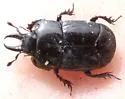
Iliotona cacti
Iliotona cacti
Identification: Prosternum carinate, acutely produced anteriorly; teeth of meso- & metatibiae equally spaced separates Iliotona from Hololepta
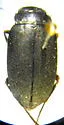
Ilybiosoma bjorkmanae
Ilybiosoma bjorkmanae
Identification: Color dark brown to black Pronotum constricted at the base, discontinuous in outline with the elytra.
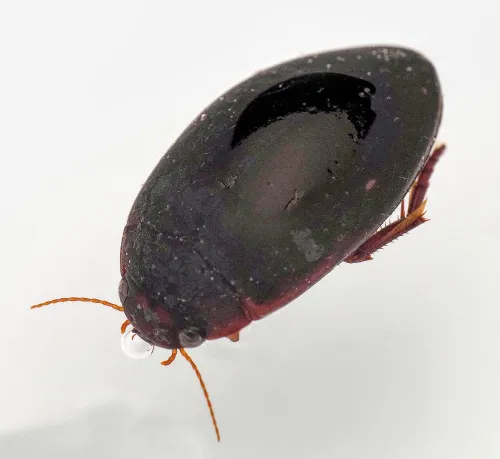
Ilybius ater
Ilybius ater
A fairly large smooth blackish water beetle. Always associated with aquatic environments, but flies well and can be attracted to light. The typical habitat is emergent vegetation in shallow water at the edge of ponds, lakes ditches etc. All year roun
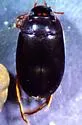
Ilybius discors
Ilybius discors
Identification: lectotype Externally similar to I. austrodiscors Larson, a n.CA endemic
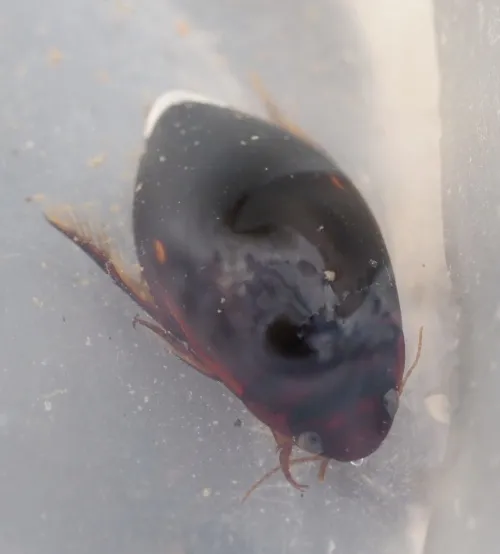
Ilybius fenestratus
Ilybius fenestratus
Length approx. 11 mm. This species has dark colouration and a broad-oval shape which is widest behind the middle. Unless identified by a recognised expert, a photo is required and the specimen should be examined with a microscope. In the comments box
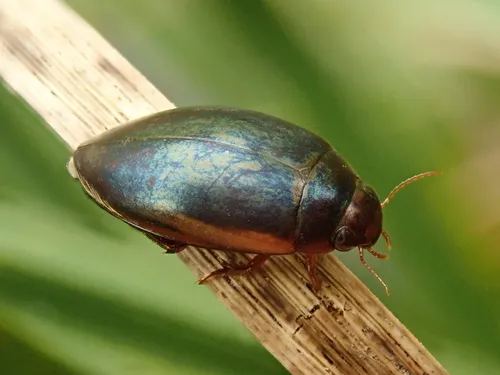
Ilybius fuliginosus
Ilybius fuliginosus
A 10 to 12 mm long dark brown bronze diving beetle with pale yellow stripes along the margins of the elytra. Permanent water which is vegetated, including rivers, canals, drainage ditches, ponds and lakes. It flies well and may be attracted to light.
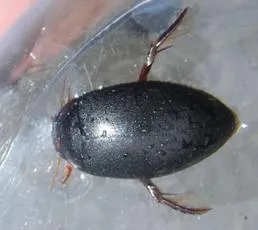
Ilybius subaeneus
Ilybius subaeneus
This family of water beetles is related to the ground beetles, but are much modified for life in water. Adults and larvae are fiercely carnivorous. Fairly frequent and widespread in much of Britain except the extreme north. No additional images avail
Ilybius wasastjernae
Ilybius wasastjernae
Ilybius wasastjernae (Ilybius wasastjernae) is a species in the family Dytiscidae, commonly known as predaceous diving beetles, belonging to the order Coleoptera (Beetles). It is classified within the subfamily Agabinae, tribe Agabini, suborder Adeph
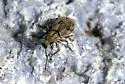
Imported Long-horned Weevil
Calomycterus setarius
Identification: see detailed description in may be very abundant on soybean crops and defoliate the seedlings ; when abundant, they crawl on humans, vehicles and in dwellings on walls, ceilings, furniture or even food on tables, and can cause complai
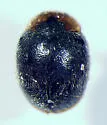
Indiana Lady Beetle
Scymnus indianensis
Identification: "The combination of small size, mostly black pronotum, and postcoxal line not reaching the hind margin of the first sternum will usually distinguish indianensis without dissection of genitalia."
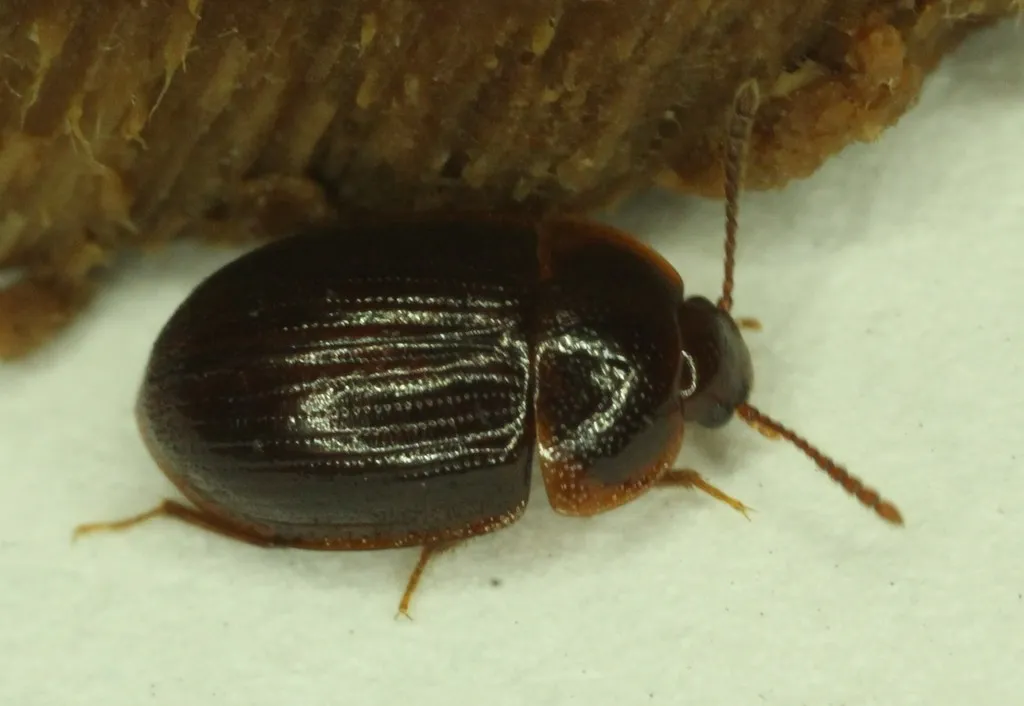
Ipelates latus
Ipelates latus
Ipelates latus is a species of primitive carrion beetle in the family Agyrtidae. It is found in North America.
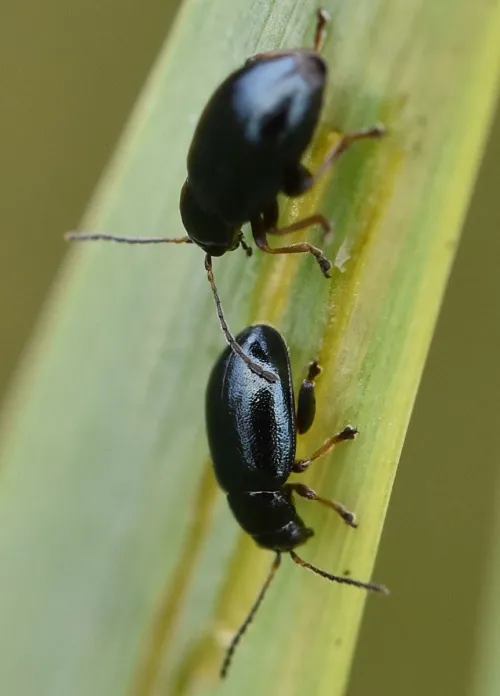
Iris Flea Beetle
Aphthona nonstriata
At 2.5 to 3 mm this is the largest member of the genus. It is more or less unicoloured - a dark metallic blue, green or bronze. The elytra have 'shoulders'. The antennae are dark apically but segments 2, 3 and the apical part of 1 are paler. The legs
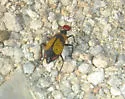
Iron Cross Blister Beetle
Tegrodera latecincta
Identification: Differs from its two congeners in having a somewhat longer (from front-to-back) black transverse stripe across the elytra than the others (taking up about 1/5 the elytral length)...as well as in a few other less conspicuous characters
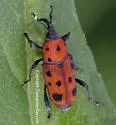
Ironweed Curculio
Rhodobaenus tredecimpunctatus
Identification: elytra and pronotum red with black spots that don't coalesce and don't form patches
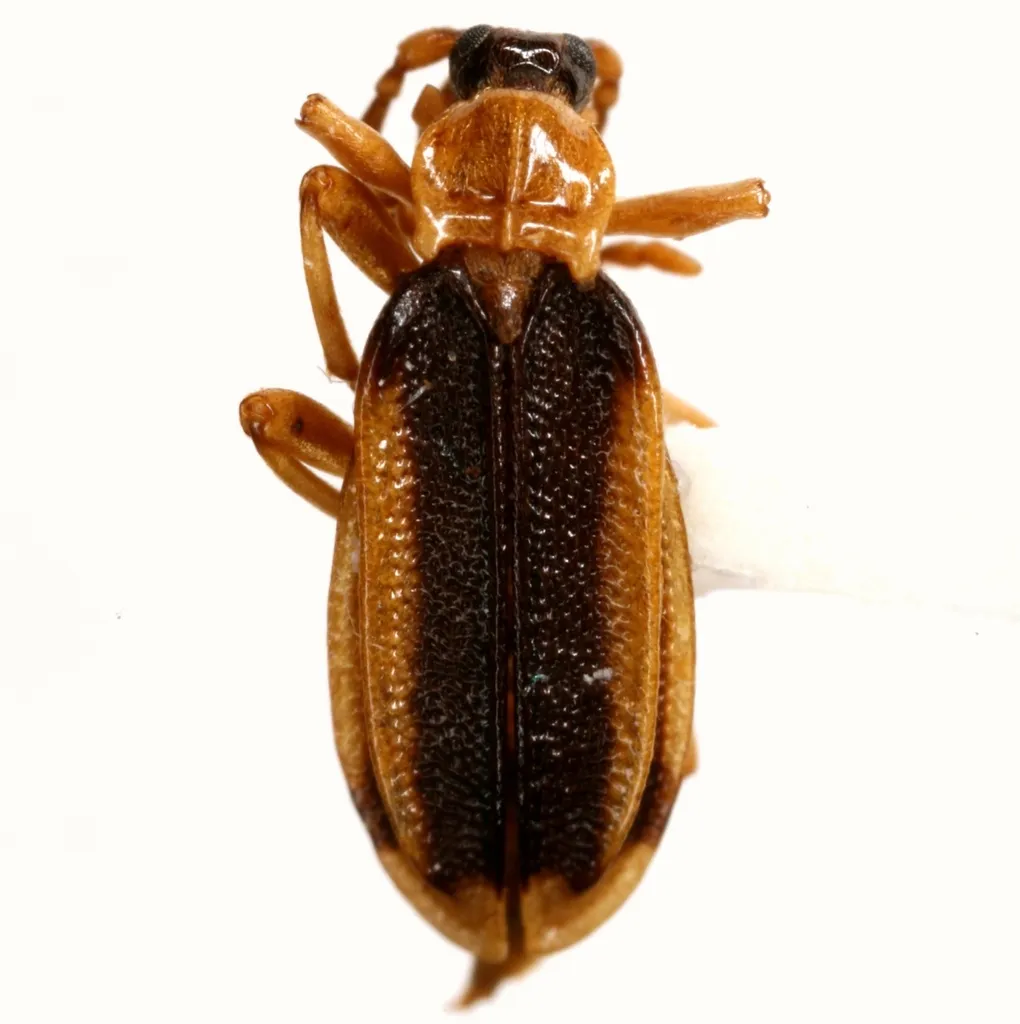
Ischalia costata
Ischalia costata
Ischalia costata (Ischalia costata) is a species in the family Ischaliidae, commonly known as broad-hipped flower beetles, belonging to the order Coleoptera (Beetles). It is classified within the subfamily Ischaliinae, suborder Polyphaga, superfamily
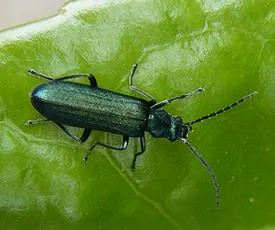
Ischnomera cyanea
Ischnomera cyanea
This beetle is about 12 mm long with bright iridescent blue/green elytra (wing cases), which sometimes gape to expose the body or wings. The top sections of its back legs are quite swollen. Adults are found on many flowers including those of Hogweed
Ischnomera puncticollis
Ischnomera puncticollis
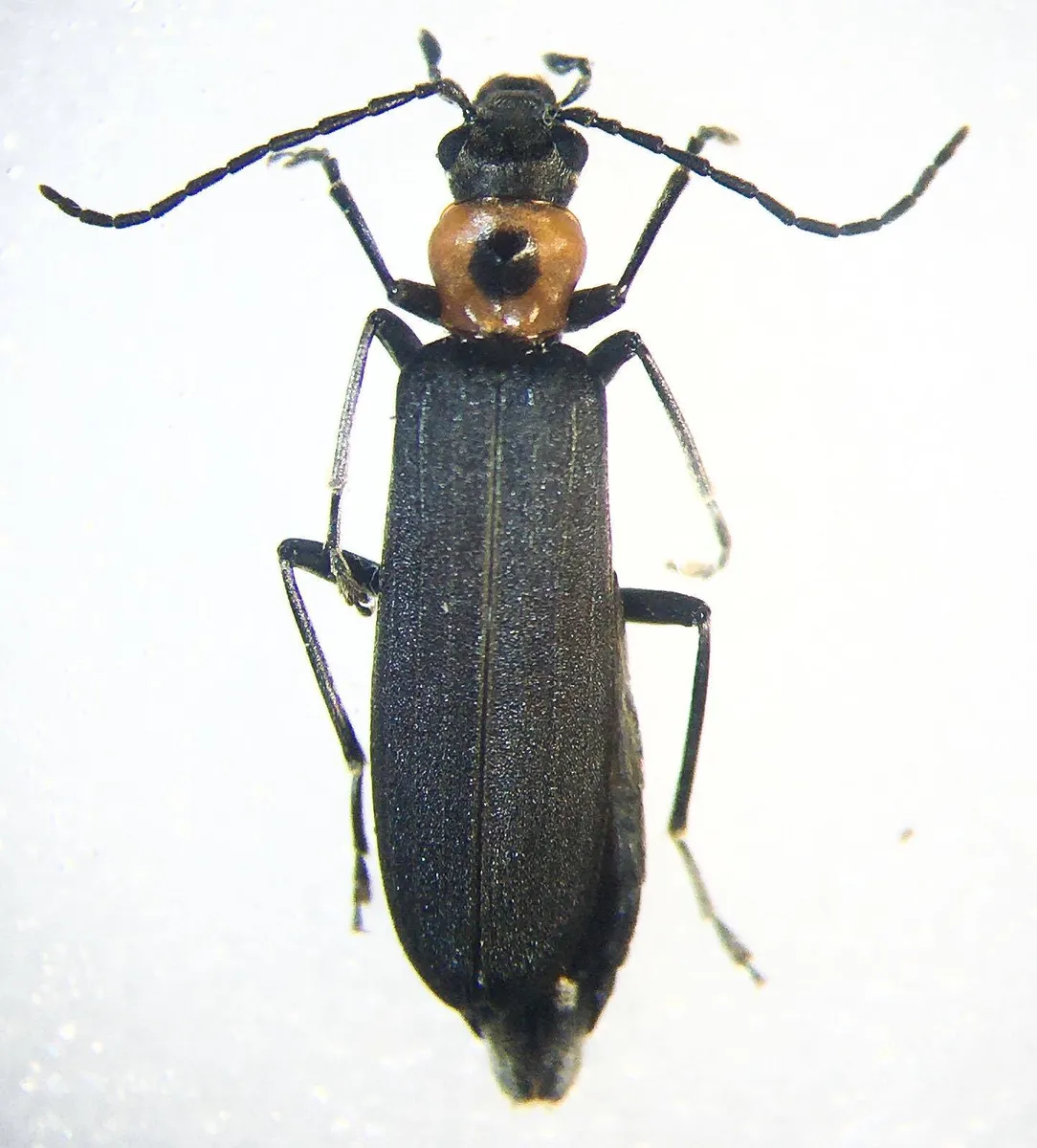
Identification: Claws toothed at base; pronotum with 3 deep impressions arranged in a triangle and with a large central dark spot ( 3 )
Ischnomera ruficollis
Ischnomera ruficollis
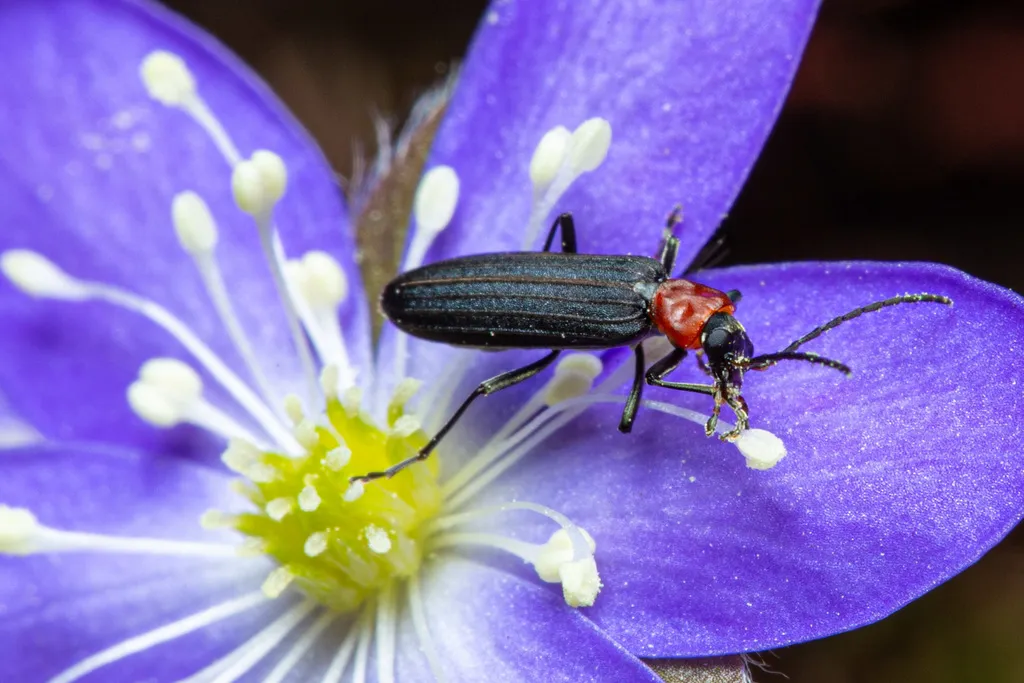
Identification: all black except dull red pronotum; each elytron with 3 ridges Type Locality: "Missouri nr. Rocky Mts."
Ischnopterapion loti
Ischnopterapion loti
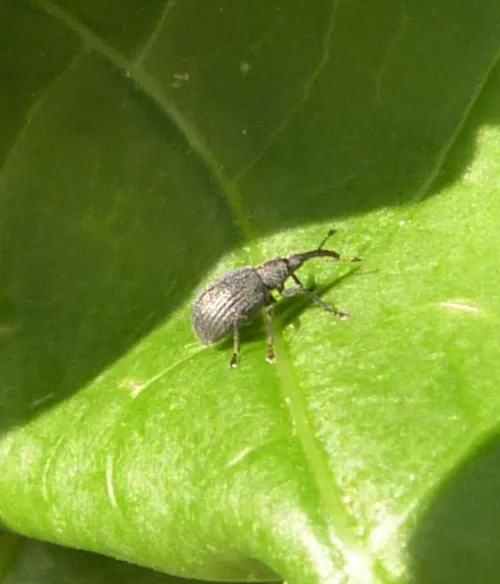
A small (2 to 2.5 mm) dark grey or blackish weevil. There are several similar species and detailed examination is required to reach a safe identification. Unless identified by a recognised expert, photographic evidence is required and the specimen sh
Ischnosoma flavicolle
Ischnosoma flavicolle
Ischnosoma flavicolle (Ischnosoma flavicolle) is a species in the family Staphylinidae, commonly known as rove beetles, belonging to the order Coleoptera (Beetles). It is classified within the subfamily Mycetoporinae, suborder Polyphaga, superfamily
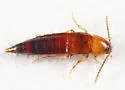
Ischnosoma virginicum
Ischnosoma virginicum
Identification: Close to I. flavicolle but lacking an apical palisade fringe of setae on the margin of the seventh tergite of the abdomen. Males of I. virgnicum may be readily distinguished from those of all other species of the Pictum group by the d
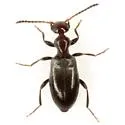
Ischyropalpus occidentalis
Ischyropalpus occidentalis
one of the most commonly coll'ed (via beating) beetle sp. at Laguna Atascosa NWR, Rio Hondo, Cameron Co., TX ( 3 )
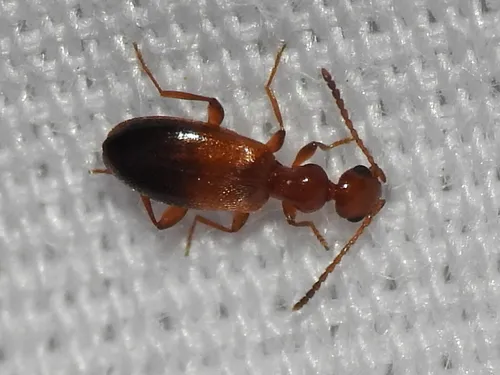
Ischyropalpus subtilissimus
Ischyropalpus subtilissimus
Ischyropalpus subtilissimus is a species of antlike flower beetle in the family Anthicidae. It is found in North America.
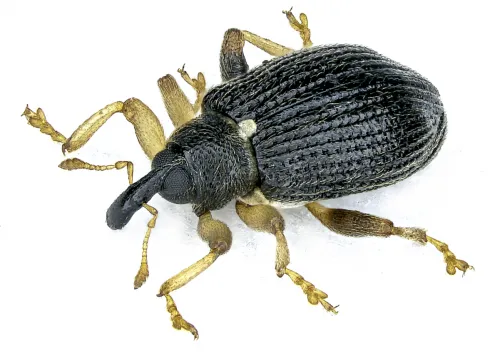
Isochnus sequensi
Isochnus sequensi
A tiny (2.0-2.5mm) black weevil with a white scutellum, pale tarsi and tibiae and yellow/red fore and mid femora. The antennal funiculus is six-segmented. The larvae feed on willow leaves, forming brown blotch mines. The adult must be reared out to i
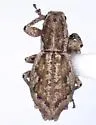
Isodacrys ovipennis
Isodacrys ovipennis
Identification: Most similar to I. burkei , but no ocular tooth on the prothorax. Elytral intervals 2 & 5 tumid at apex. Lectotype: Esperanza Ranch, Brownsville, Tex. VII.28, Brooklyn Museum Collection 1929
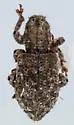
Isodrusus debilis
Isodrusus debilis
First US record reported by Green (1920) from the Davis Mountains of west Texas.
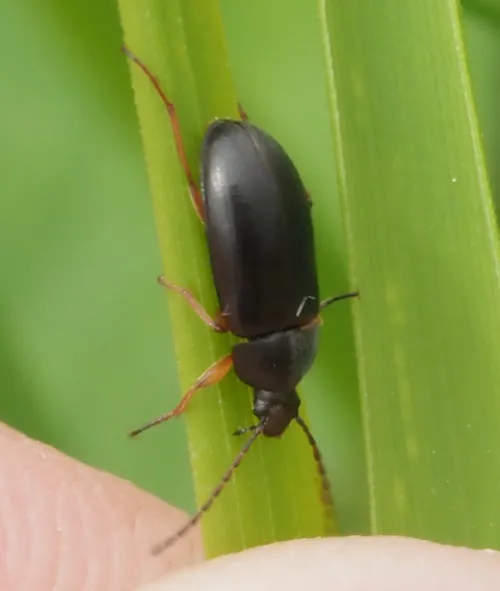
Isomira murina
Isomira murina
7mm. Variable colouring, with the elytra being either brown or black. The pronotum is black and rounded from the head to the elytra creating a more or less continuous outline. Legs are brown. Common and widespread, especially along the coasts. No add
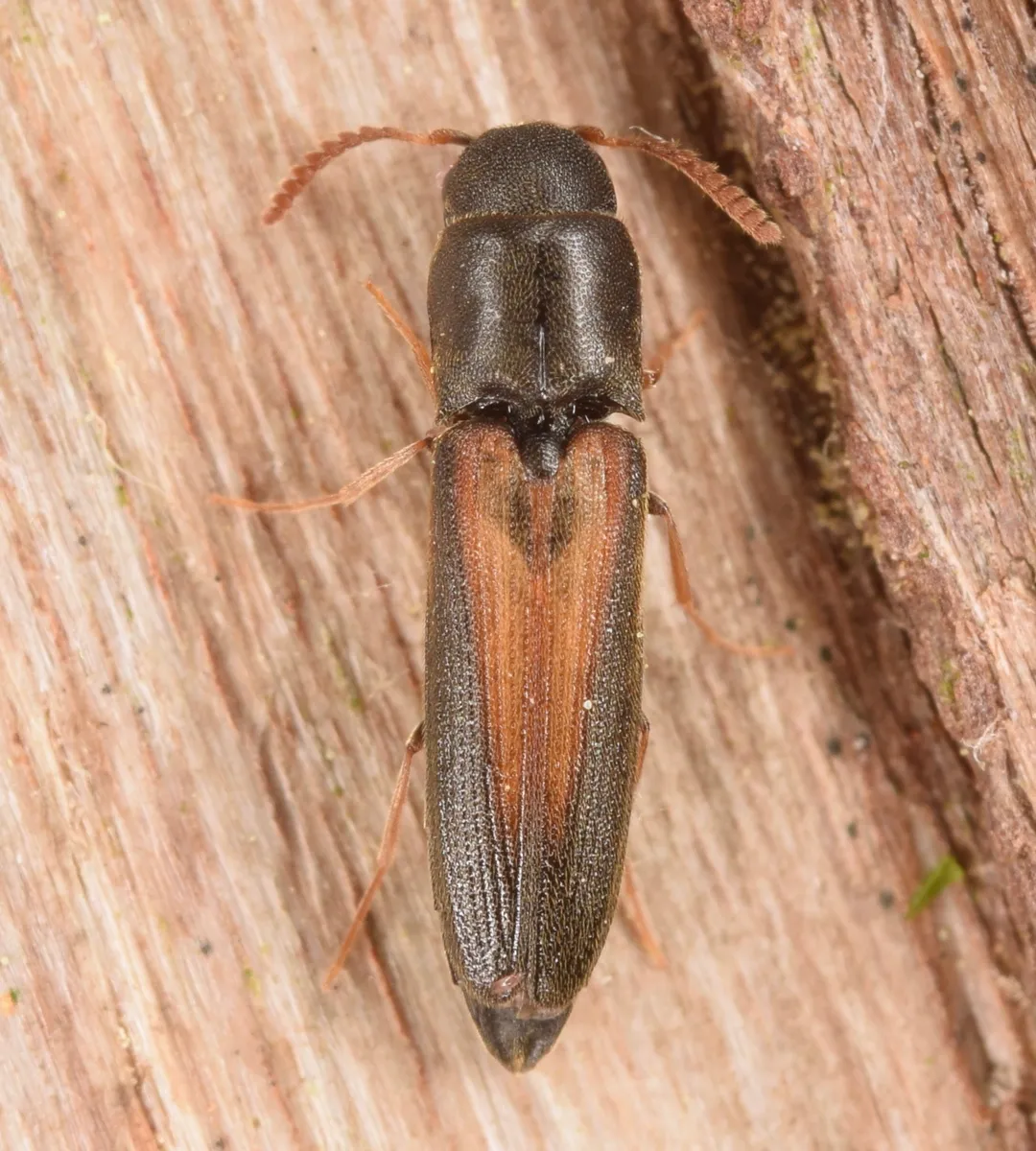
Isorhipis obliqua
Isorhipis obliqua
Identification: Elongate, narrow, bicolored. Head, pronotum, underside mostly dark brown or black, appendages lighter. Antennomeres 4-10 flabellate in male, serrate in female. Pronotum with narrow groove limited to basal half. Elytra with distinct an
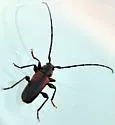
Japanese Cedar Longhorn Beetle
Callidiellum rufipenne
Identification: dorsal habitus earliest record in our area: BC 1927 (Hoebeke 1999)
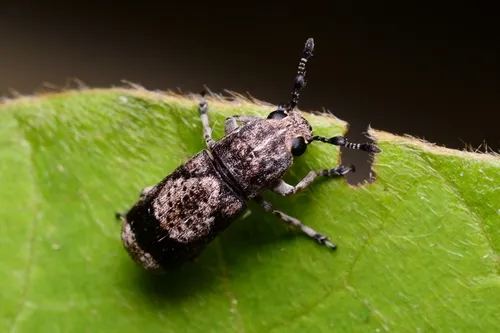
Japanese Fungus Weevil
Ozotomerus japonicus
i found one of these familiar-looking anthribids (i've seen a lot in the Far East) in Essex Co., NJ before i joined BG and became familiar with the nearctic fauna. i didn't think much of it: after all, many genera exhibit the E Asia + e NA distributi
Jonthonota mexicana
Jonthonota mexicana
Type Locality: Ventanas, Durango, Mexico uncommon (BG data)
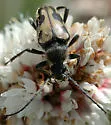
Judolia instabilis
Judolia instabilis
Identification: Rather variable, with elytral patterns ranging from all-black to pale yellow with black spots (see Internet References below for photos of type specimen).
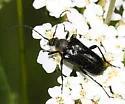
Judolia montivagans
Judolia montivagans
Identification: Pronotum black. Elytra black with cream to pale yellow marks. Wide cream stripe from base to about mid wing, lower border jagged and with 2 or 3 black oval marks through the middle – may vary. 2nd cream stripe on lower wings, both top
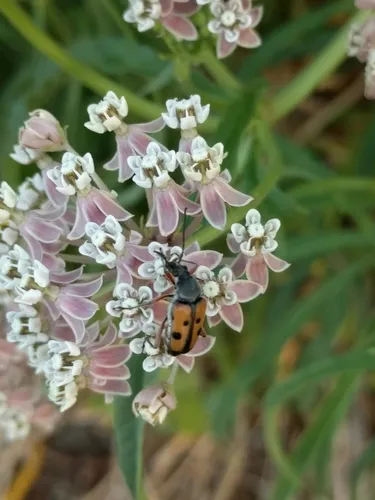
Judolia swainei
Judolia swainei
Judolia swainei is a species of beetle in the family Cerambycidae. It was described by Hopping in 1922.
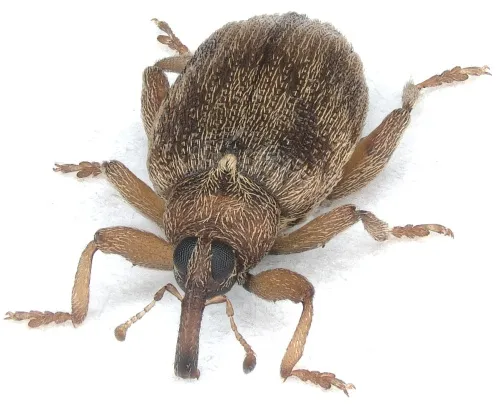
Jumping Weevil
Orchestes testaceus
The adult is 2.7 to 3.6 mm. The larva of Orchestes testaceus mines the leaves of Alder species. Initially a gallery is formed which runs towards the leaf edge from a vein or midrib. The gallery widens quickly and then becomes a blotch - a spherical c
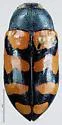
Juniper Metallic Wood-boring Beetle
Juniperella mirabilis
Juniperella mirabilis is a species of beetle in the family Buprestidae, the only species in the genus Juniperella.
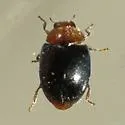
Kansas Lady Beetle
Scymnus kansanus
Identification: Last couplet in Gordon's key: "Form elongate, sides of elytra parallel at least medially; Pronotum narrower than elytra at base; male with last sternum barely perceptibly impressed" Type Locality: Kansas
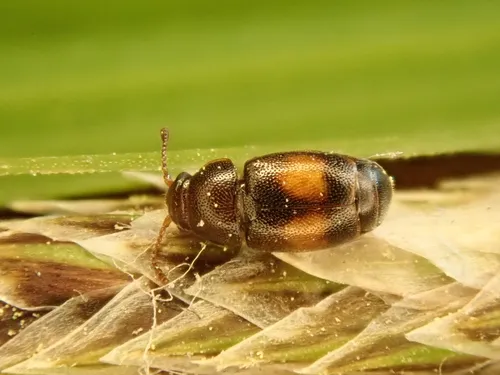
Kateretes pusillus
Kateretes pusillus
This is a small, Soft-winged Flower Beetle and measures around 2.5mm. Usually a very dark, almost blackish brown with patches of orange but the amounts of each colour may vary considerably. Prefers damp conditions and is often found on sedges. Local
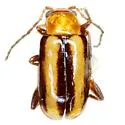
Keitheatus blakeae
Keitheatus blakeae
Type Locality: Big Bend State Park, Chisos Mts., Brewster County, Texas, July 12 to 16, 1941. At the time of discovery there were actually millions of the beetles available. A single blow on the host plant would completely cover the beating sheet and
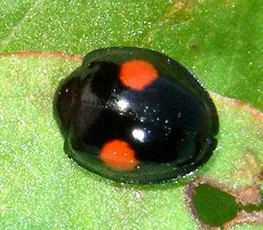
Kidney-spot Ladybird
Chilocorus renipustulatus
The Kidney-spot Ladybird has a black body with a large red spot on each wing casing (elytron). The antennae and underside are orange. The wing casings have a distinctly flattened flange all the way round. It is quite a small ladybird at about 5 mm. U

Klamath Weed Beetle
Chrysolina quadrigemina
Introduced from Australia in 1944 to combat Klamath weed (it could not be obtained from Europe because of war).