
Primitive Winged Insects
Order Coleoptera
The Primitive Winged Insects (Order Coleoptera) includes 15,720 species across 160 families and 3,716 genera in our directory.
About Primitive Winged Insects
Coleoptera is the largest order of insects with over 400,000 described species, representing ~25% of all known animal species and ~40% of all insects. In the U.S. alone, nearly 30,000 beetle species have been identified.
Economic Impact
Beetles have major economic significance: leaf beetles (Chrysomelidae) and weevils (Curculionoidea) are among the most destructive agricultural pests globally, costing billions annually, while predatory species like ladybugs provide natural pest control.
Ecological Role
Beetles are prominent decomposers, especially in forests, breaking down dead wood and recycling nutrients. As predators, they reduce populations of pest insects. Many species are also important pollinators of flowering plants.
Families in Coleoptera (160)
Species in Coleoptera (15,720)
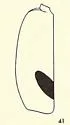
Lebia perpallida 0
Lebia perpallida
Identification: Fig. 41. Lebia perpallida Type Locality: Pena Blanca (4000’), Santa Cruz Co., Arizona
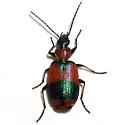
Lebia pulchella
Lebia pulchella
Identification: - eastern forms - Arizona forms the only member of pulchella group in our fauna
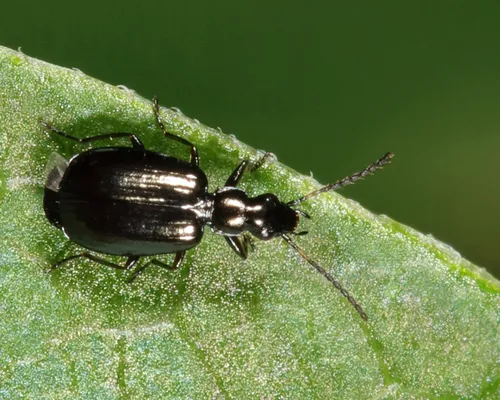
Lebia pumila
Lebia pumila
Identification: Overall dark, with antennomere 3 usually pale; legs pale or dark (the latter resemble the non-metallic form of L. viridis ) the only member of the pumila group in our fauna
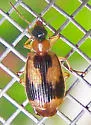
Lebia scalpta
Lebia scalpta
Identification: Elytra - Disc dark with pale markings, either patterned as in fig. 26 or lateral vitta reduced and pattern approaching that of analis (fig. 25). - Det. T.L. Erwin, 2010 Fig. 26. Lebia scalpta , Texas form the only member of scalpta gr
Lebia solea
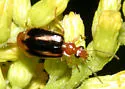
Lebia solea
Identification: elytral pattern variable; readily distinguished from the rest of our Lebia by the combination of strongly constricted neck, basally widened pronotal margins, and frons striated only on lateral thirds
Lebia subdola
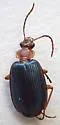
Lebia subdola
Type Locality: Madera Cn, Sta. Rita Mts., Sta. Cruz Co., Ariz. VIII 3, 60, 5000' - 5800', G. E. Ball family and R. B. Madge collectors.
Lebia subrugosa
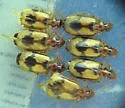
Lebia subrugosa
Identification: The head and pronotum are usually pale [reddish] but are infuscated [brownish] in some specimens. can usually be distinguished from the other pale sw.US species by the lateral dark vitta on the elytra; specimens with this vitta reduce
Lebia tricolor
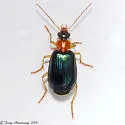
Lebia tricolor
Identification: Palpi and antennae pale , there appears to be no marked variation in tricolor .
Lebia tuckeri
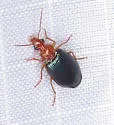
Lebia tuckeri
Identification: very similar to rufopleura [restricted to TX]; among Lebia s.str. spp. occurring in sw. US from w. TX to so. CA only tuckeri and arizonica have metallic green elytra and a pale head and pronotum: in tuckeri the metepisternum is usuall
Lebia variegata
Lebia variegata
Identification: Det. T.L. Erwin, 2011 (from photo) This new US record has not been corroborated by a spmn.
Lebia viridis
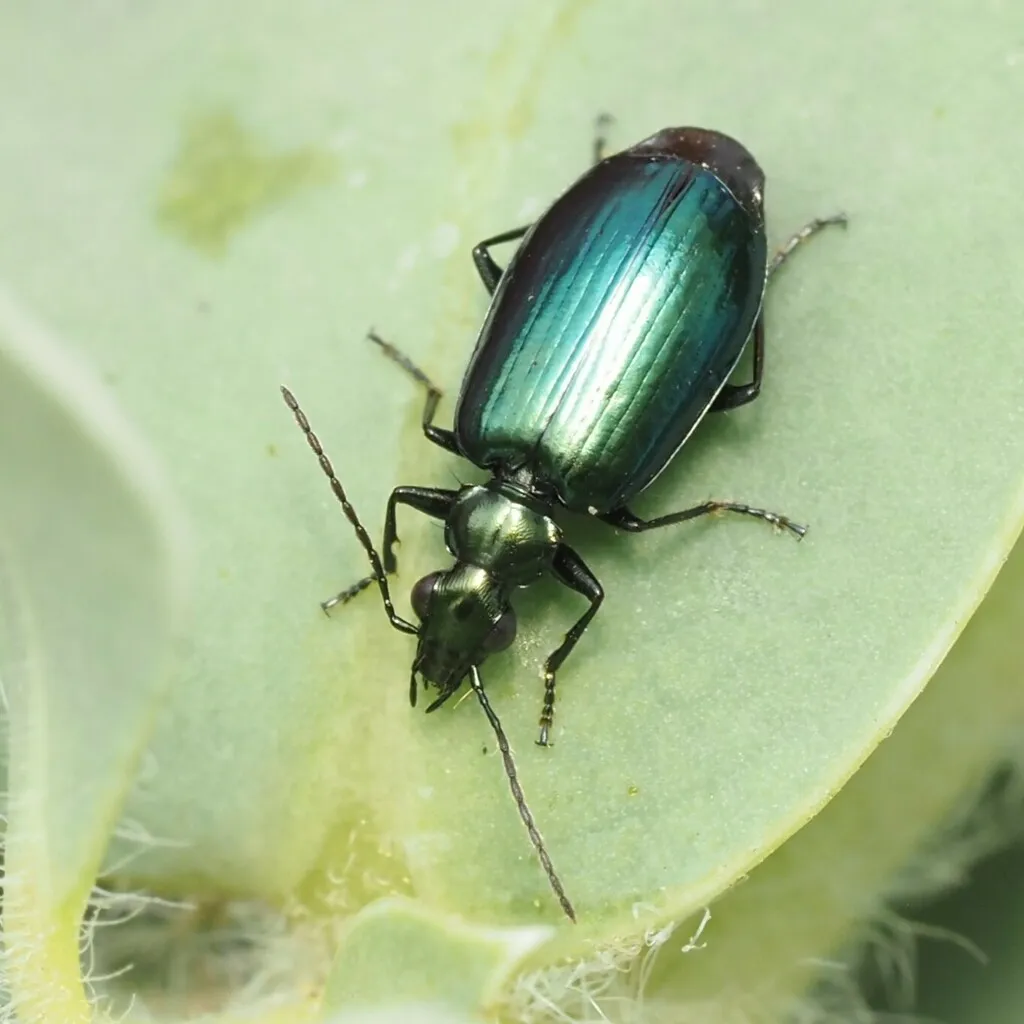
Lebia viridis
Lebia viridis (Lebia viridis) is a species in the family Carabidae, commonly known as ground beetles, belonging to the order Coleoptera (Beetles). It is classified within the subfamily Harpalinae, tribe Lebiini, suborder Adephaga. This species belong
Lebia vittata
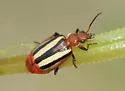
Lebia vittata
Identification: The vittate elytra, pale head, and femora dark at least apically, distinguish L. vittata from NA congeners except L. pectita in which the sutural vitta is not forked basally and elytral basal ridge incomplete
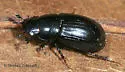
Lechorodius terminalis
Lechorodius terminalis
Identification: Dark coloration with more reddish elytral apices; fall-spring occurrence
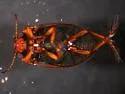
Leconectes striatellus
Leconectes striatellus
Identification: Each elytron with at least a sutural stria and several discal striae; dorsum densely punctate, with punctures bearing yellowish to brown hairs/setae. Colouration from almost uniformly black to vittate.
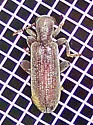
Lecontella brunnea
Lecontella brunnea
Identification: pronotal punctations small, fine and shallow Det. J. L. Neff, 2007 Type Locality: Brownsville, Texas

Lecontella gnara
Lecontella gnara
Identification: Punctations on pronotal disc coarse, deep and wide
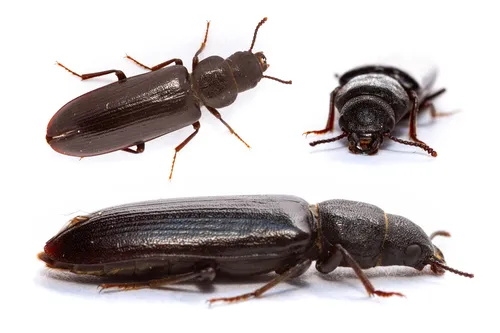
Lecontia discicollis
Lecontia discicollis
Lecontia discicollis (Lecontia discicollis) is a species in the family Boridae, commonly known as conifer bark beetles, belonging to the order Coleoptera (Beetles). It is classified within the suborder Polyphaga, superfamily Tenebrionoidea. This spec
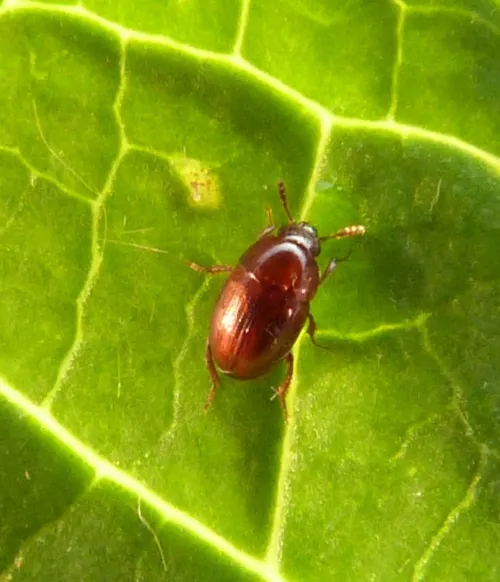
Leiodes calcarata
Leiodes calcarata
It's very variable in size, 1.8 - 4 mm, and in colour, usually brown or reddish brown, but some being much darker than others. Not much is known about the biology of any of the subfamily Leiodinae, but it is probable that most of them feed as larvae
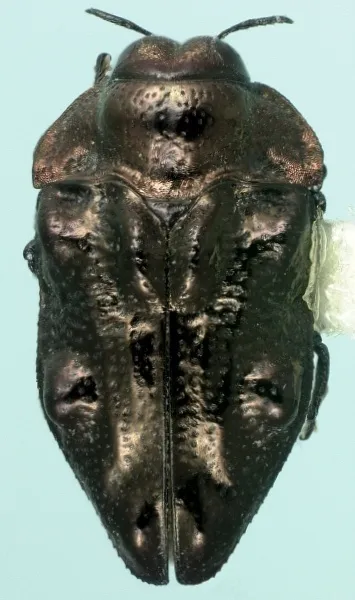
Leiopleura otero
Leiopleura otero
Leiopleura otero is a species of metallic wood-boring beetle in the family Buprestidae. It is found in the Caribbean Sea and North America.
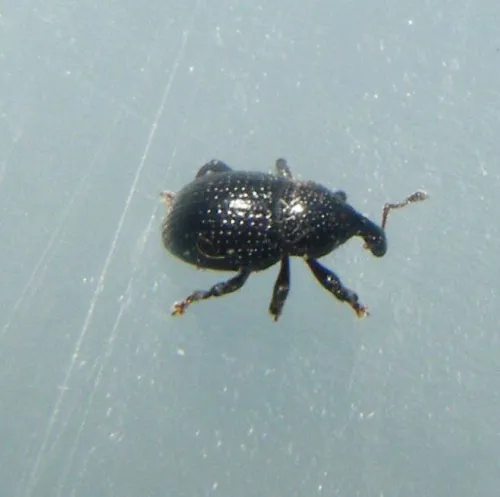
Leiosoma deflexum
Leiosoma deflexum
A small (3 mm) blackish weevil with studded elytra and a rather squat appearance. Unless identified by a recognised expert, photographic evidence is required and the specimen should be examined with a microscope. In the comments box, state the key or
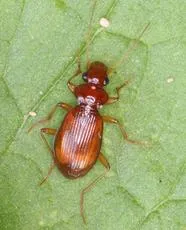
Leistus ferrugineus
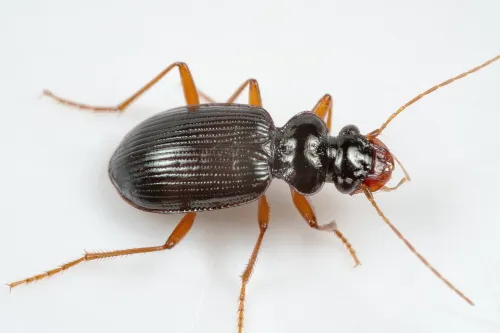
Leistus ferrugineus
About 8 mm long, this small colourful beetle is reddish brown or pale brown all over, with legs a shade paler than the body; it becomes darker coloured with age. It has a very rounded pronotum which is sharply sinuate to the rear corners, which have
Leistus fulvibarbis
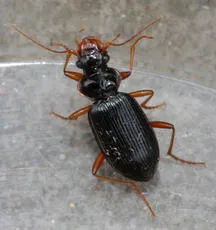
Leistus fulvibarbis
Small (6.5 to 8 mm) dark ground beetle usually with blue metallic elytral reflections in certain light, and may look very bluish. It has reddish-yellow legs and a specialised basket around its mouth for trapping springtail prey. Very similar to L. sp
Leistus rufomarginatus
Leistus rufomarginatus
Length 8 to 10 mm. This is a distinctive blue-black or reddish-black species, with the legs, antennae and palps all being reddish brown and with a broad flange on the edge of the pronotum of the same colour. Under logs and stones, often in well woode
Leistus spinibarbis
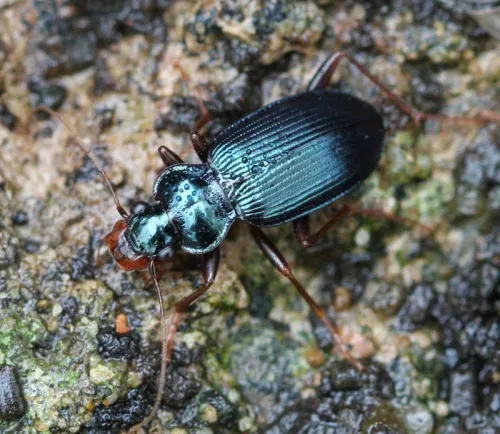
Leistus spinibarbis
8 - 10mm. A handsome ground beetle, with dark blue elytra, though the shade can vary in different light conditions. Very similar to L. fulvibarbis and best separated by the pronotum characters. In L. spinibarbis the flattened and punctured side margi
Leistus terminatus
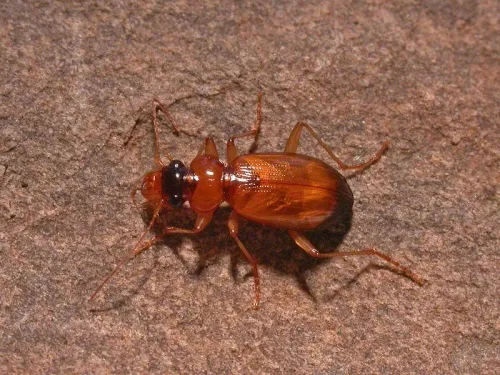
Leistus terminatus
About 8mm long it is a reddish brown beetle with a black head but darker, brown forms also occur. Similar to L. ferrugineus , except this species has a dark head and also a dark end to the elytra. Found primarily in damp places in woodland, damp gras
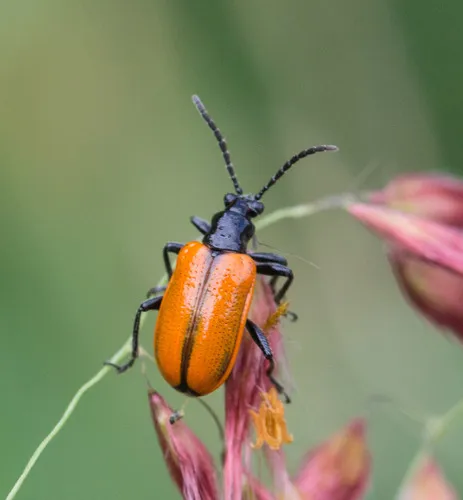
Lema confusa
Lema confusa
Lema confusa is a species of leaf beetle in the family Chrysomelidae. It is found in the Caribbean Sea, Central America, North America, and South America.
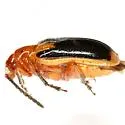
Lema conjuncta
Lema conjuncta
Identification: Each elytron mostly black with narrow lateral margin orange or yellow, also with basal light marking covering 3 intervals and extending 1/8 to nearly 1/2 length of elytron. Pronotum sometimes with 2 black spots.
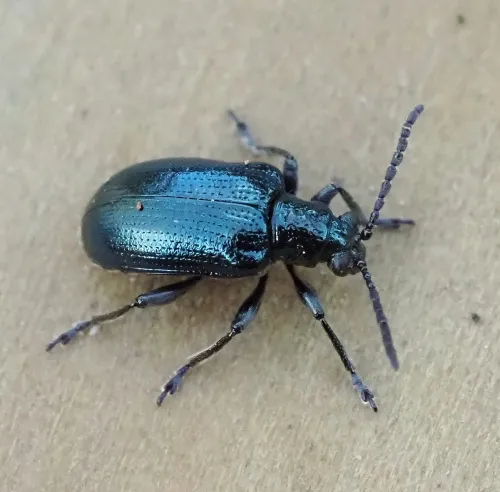
Lema cyanella
Lema cyanella
3.5 to 5 mm. This beetle is metallic blue or greenish. The pronotum is constricted in the middle (which separates the genus from Oulema). All tibia have two apical spurs. Oulema species look similar but lack the medially constricted pronotum. A varie
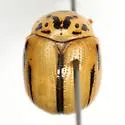
Leptinotarsa defecta
Leptinotarsa defecta
Syntype from Texas in the British Museum reportedly coll’ed in Runnels Co., TX, but that county was only created the year prior to the species’ description. ( 3 )
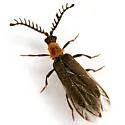
Leptoceletes basalis
Leptoceletes basalis
Identification: Antennae comb-like with branches arising from base of antennomere (male) or flat and serrate (female)
Leptoceletes dehiscens
Leptoceletes dehiscens
Identification: Det. M. A. Ivie, 2015 female is unk. Type Locality: Chisos Mountains of west Texas, male coll'ed July 17, 1940 by D.J. and J.N. Knull, spmn in the OSUC.
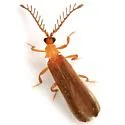
Leptoceletes pallidus
Leptoceletes pallidus
Identification: Det. M. A. Ivie, 2015 female is unk. Type series: six males coll'ed in the Chisos Mountains, Brewster Co. of west Texas, July 4-22, 1940 by D.J. and J.N. Knull. Holotype in the OSUC.
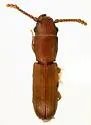
Leptophloeus angustulus
Leptophloeus angustulus
Identification: last key couple: Punctures of head and pronotum coarse, space between punctures less than the diameter of puncture
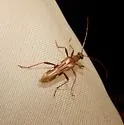
Leptorhabdium pictum
Leptorhabdium pictum
Leptorhabdium pictum (Leptorhabdium pictum) is a species in the family Cerambycidae, commonly known as longhorn beetles, belonging to the order Coleoptera (Beetles). It is classified within the subfamily Lepturinae, tribe Xylosteini, suborder Polypha
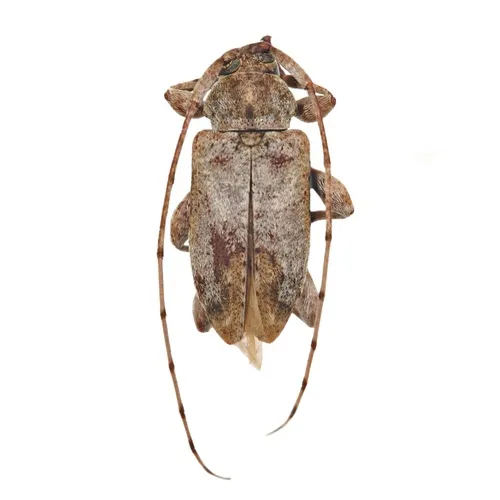
Leptostylus cretatellus
Leptostylus cretatellus
Identification: Leptostylus cretatellus Bates Det. E. G. Riley, 2009 Since 1989, numerous specimens have been taken in and near the Sabal Palm Grove Sanctuary, Brownsville, Cameron Co., TX by beating dead branches and rearing from dead branches of Te
Leptostylus transversus
Leptostylus transversus
Identification: Highly variable common, comes to lights
Leptotrachelus dorsalis
Leptotrachelus dorsalis
Identification: - - occasionally all dark Det. Jan Ciegler, 2012 comes to lights (BG data)
Leptura abdominalis
Leptura abdominalis
Identification: Large, coloration variable, from orangish to all black. Pronotum usually has two black spots. Antennae banded. Elytral tips spined. uncommon (BG data)
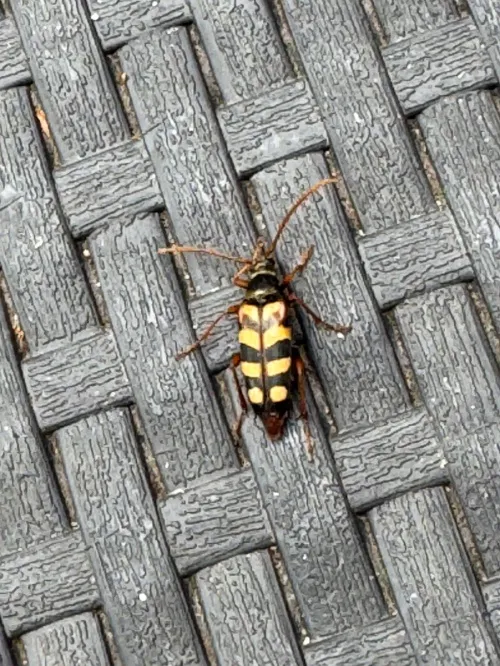
Leptura aurulenta
Leptura aurulenta
A large (up to 25mm) and striking longhorn beetle resembling the more frequent L. quadrifasciata . The yellow/orange markings on the elytra are usually a deeper orange and the pronotum has zones of yellow/orange hairs along the anterior and posterior
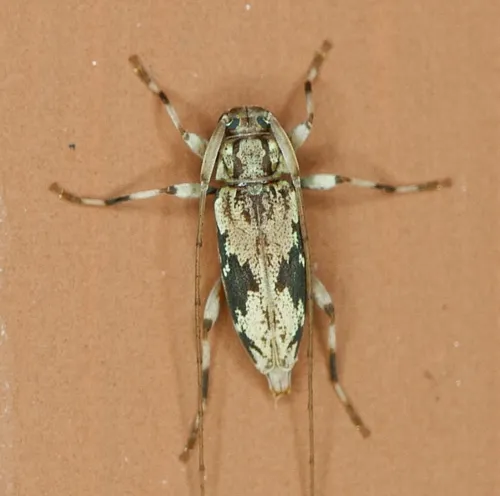
Lepturges angulatus
Lepturges angulatus
Lepturges angulatus (Lepturges angulatus) is a species in the family Cerambycidae, commonly known as longhorn beetles, belonging to the order Coleoptera (Beetles). It is classified within the subfamily Lamiinae, tribe Acanthocinini, suborder Polyphag
Lepturges infilatus
Lepturges infilatus
Identification: Det. E. G. Riley 2009 comes to lights ( 3 )
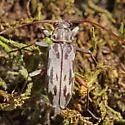
Lepturges pictus
Lepturges pictus
Identification: Elytra with dark markings incomplete and divided over lateral margin: Uncommon
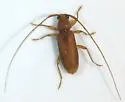
Lepturges yucca
Lepturges yucca
Type Locality: Palmerlee, Cochise Co., Arizona (Schaeffer 1905)
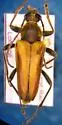
Lepturobosca chrysocoma
Lepturobosca chrysocoma
Identification: The very dense, appressed, metallic golden pubescence is distinctive
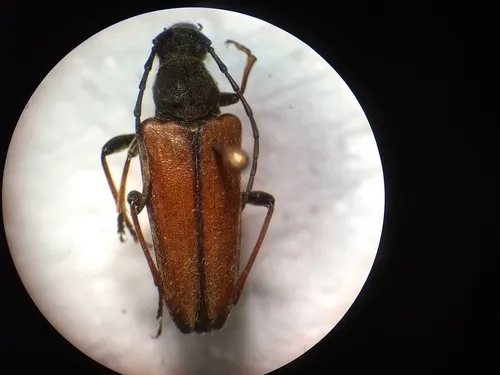
Lepturobosca nigrolineata
Lepturobosca nigrolineata
Lepturobosca nigrolineata is a species of beetle in the family Cerambycidae. It was described by Bland in 1865.
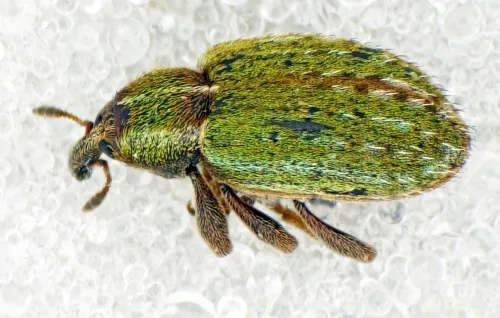
Lesser Clover Leaf Weevil
Hypera nigrirostris
3 to 4 mm, rostrum or beak is three times as long as it is broad and notched at its base. The eyes are large, taller than wide and non-protuberant. The elytra can be greenish-gold or coppery brown, both being the result of the presence of scales. Leg
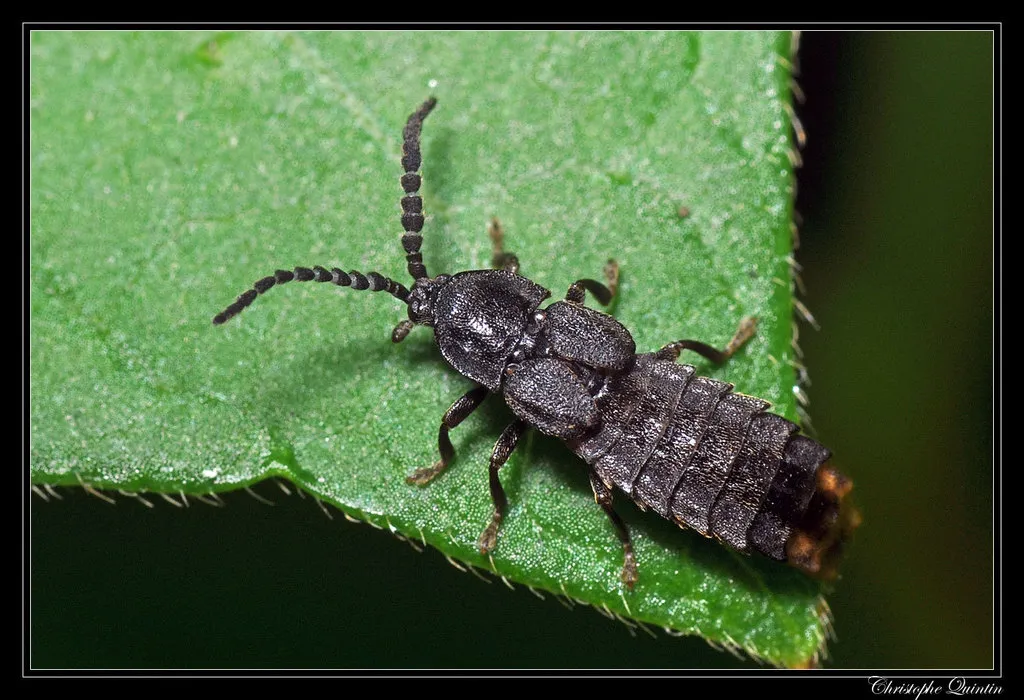
Lesser Glowworm
Phosphaenus hemipterus
Identification: the only known lampyrid with both sexes flightless; adults are diurnal earliest record in our area: NS 1947; the only lampyrid to have been introduced to NA; dispersal abilities of the beetle are limited, so different location where i
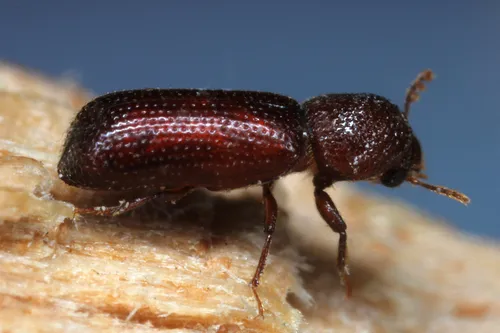
Lesser Grain Borer
Rhyzopertha dominica
Commonly infests flour, macaroni, beans, chickpeas, seeds, edible bulbs, grains, sometimes wood; damage can be considerable because adults and larvae feed on the surface and interior of grains. Adults readily fly. ( 4 )
Lesser Pine Borer
Acanthocinus nodosus
Identification: pattern distinctive; antennae ~3x as long as body in males, ~2x in females; female pygidium modified into a tube for ovipositing ♂ ♀
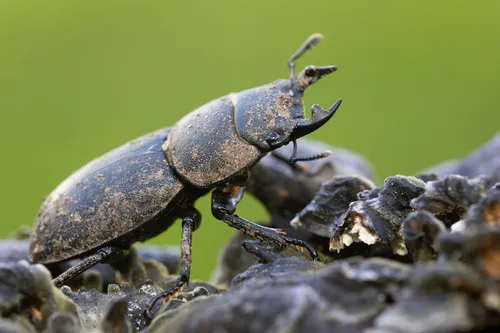
Lesser Stag Beetle
Dorcus parallelipipedus
This is the smaller cousin of the well known Stag Beetle. Though smaller, it is still a very large beetle but it doesn't have such enlarged mandibles as the male Stag Beetle. It is found in woodland and sometimes in gardens, especially where there ar
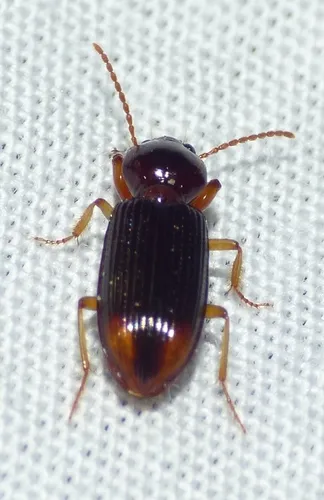
Lesser Tail-light Carabid
Aspidoglossa subangulata
Aspidoglossa subangulata is a species of ground beetle in the subfamily Scaritinae. It was described by Chaudoir in 1843.
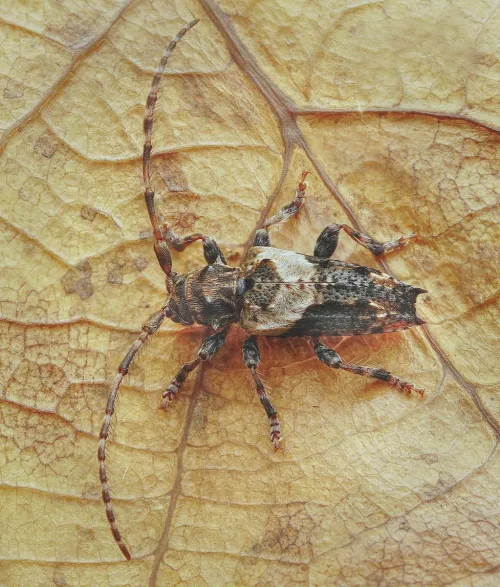
Lesser Thorn-tipped Longhorn Beetle
Pogonocherus hispidus
A small (6 or 7 mm) longhorn beetle said to be camouflaged to resemble a bird dropping, but looking quite handsome for all that. It is distinguished by a thorn like tooth at the tip of each elytron. Scutellum all black (c.f. Pogonocherus hispidulus).
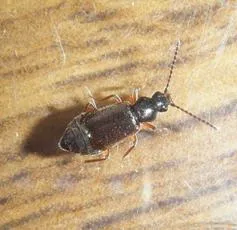
Lesteva longoelytrata
Lesteva longoelytrata
As is typical of the rove beetles the elytra on extend partway across its abdomen, in this case about two thirds. It also has a characteristic curvy shape to its pronotum. This beetle lives around water and in splashed habitats. All year round peakin
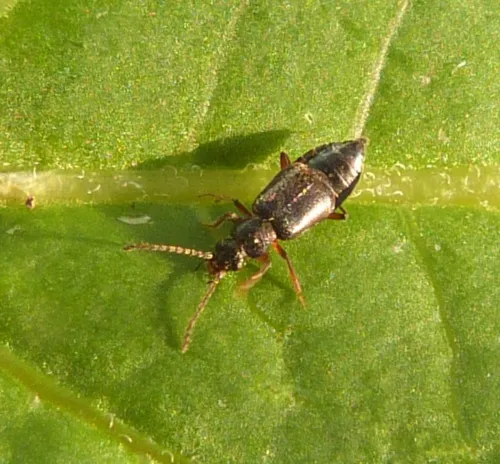
Lesteva sicula
Lesteva sicula
This is a fairly small dark brown to blackish rove beetle with orangey coloured legs. Often found in damp areas, in reed litter and flood refuse but also found under logs and stones. Widespread and fairly frequent in Britain. No additional images ava
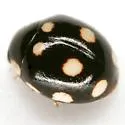
Levrat's Lady Beetle
Hyperaspis levrati
Identification: Elytron with 4 or 5 spots, normally 4 but subhumeral spot often divided Gordon's Fig. 373 d Unique dorsal color pattern- each elytron w/ 3 yellow discal spots including 1 close to the scutellum. Type locality: "Mexique"
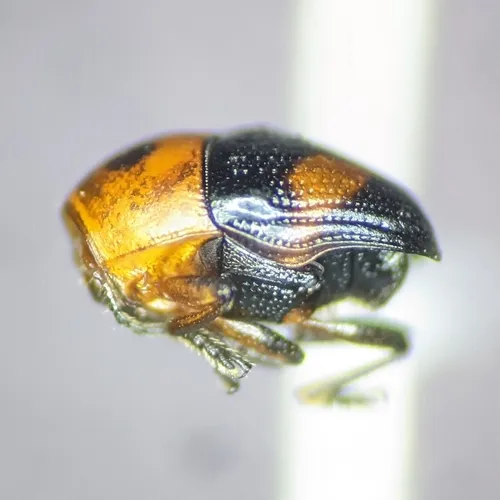
Lexiphanes mexicanus
Lexiphanes mexicanus
Lexiphanes mexicanus is a species of case-bearing leaf beetle in the family Chrysomelidae. It is found in Central America and North America.
Lichenophanes arizonicus
Lichenophanes arizonicus
Identification: In this species, and L. mutchleri , the antennae count 9 segments instead the usual 10. Pronotum with anteriour declivity spiniform on each side as in L. bicornis , but elytra without basal tubercle, or costae.
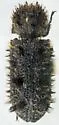
Lichenophanes fasciculatus
Lichenophanes fasciculatus
Might be a synonym of of the Mexican L. penicillatus (Lesne, 1895). Considerations found on iNaturalist
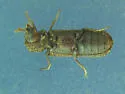
Lichenophanes mutchleri
Lichenophanes mutchleri
Identification: antenna 9-segmented (also in L. arizonicus ), vs the usual 10
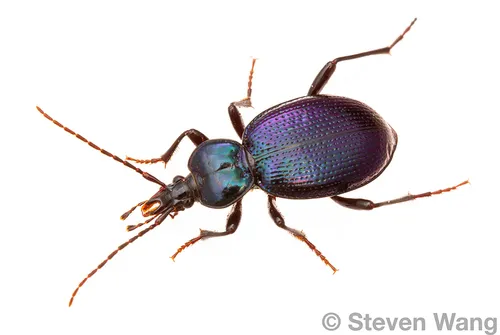
Liebeck's snail-eating beetle
Scaphinotus liebecki
Scaphinotus liebecki, or Liebeck's snail-eating beetle, is a species of ground beetle in the family Carabidae. It is found in North America.
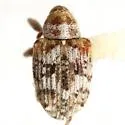
Lignyodes adamanteus
Lignyodes adamanteus
Identification: Det. H. R. Burke, 2007 Type Locality: Corpus Christi, (Rodd Field), Nueces Co., Texas, 27 Mar 1973
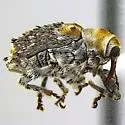
Lignyodes baboquivariensis
Lignyodes baboquivariensis
Identification: nearer L. pallidus (LeConte) than any other congener, differs in shape, vestiture, yellow humeral areas, elytral tubercles, form and vestiture of protibiae Type Locality: Presumido Pass, Baboquivari Mts., Ariz., VII-12, in E. L. Sleep
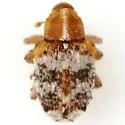
Lignyodes varius
Lignyodes varius
Identification: Easily distinguished by the different color of the pubescence, the more obtuse elytral callus, and the absence of the black sutural spot. Type Locality: One male, Texas, Belfrage.
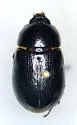
Ligyrus cuniculus
Ligyrus cuniculus
Identification: Apical angles of clypeus rounded; clypeal teeth triangular to transverse; I & II apical teeth of mandible equal in size and not joined; male genitalia distinctive our only representative of the subg. Anagrylius Casey 1915 that contain
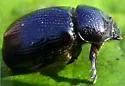
Ligyrus neglectus
Ligyrus neglectus
Identification: Type External protibial surface in frontal view nearly smooth, with only minute, sparse punctures. Pronotum and elytra deeply punctate, punctures large, round • apical half of parameres wide and parallel-sided, ventral tooth wide and
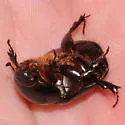
Ligyrus relictus
Ligyrus relictus
Identification: Protibia with 3 teeth and basal denticle, without denticle between basal and second tooth; parameres with ventral teeth acute and long may be found on lawns but are not turf feeders
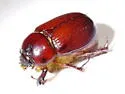
Ligyrus ruginasus
Ligyrus ruginasus
Identification: clypeus triangular, with 1 central tooth; frontal carina straight, entire; pronotum with prominent tubercle and deep, rounded fovea; pronotal punctation deep and large; metatibia with apex strongly narrowed
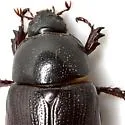
Ligyrus sallaei
Ligyrus sallaei
Identification: Protibia with 3 teeth, a basal denticle, and other denticle between basal and second tooth (Fig. 11E). Parameres with ventral teeth rounded and short (Fig. 15H).
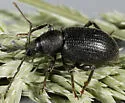
Lilac Root Weevil
Otiorhynchus meridionalis
Identification: Y-shaped carina on the rostrum diagnostic among NA spp. earliest record in our area: CA 1931
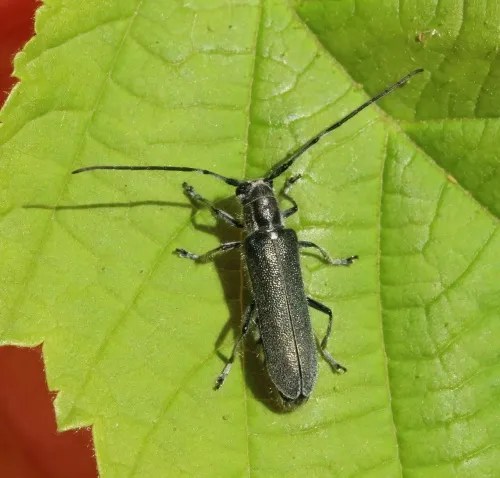
Lime Beetle
Stenostola dubia
This longhorn measures about 15mm in length. It is uniformly grey-black in colour, sometimes slightly bronzy and with punctured elytra. Good photographs required. This species is rare in our area so it is best to retain a specimen until identificatio
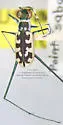
Lime-headed Tiger Beetle
Opilidia chlorocephala
Identification: Distinctive, hind legs are extremely long in both sexes
Limnichoderus lutrochinus
Limnichoderus lutrochinus
Identification: CA-AZ, TX-OK, s.IL / Mex. to C. Amer. - Map
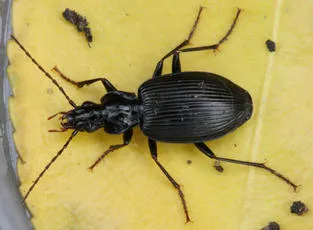
Limodromus assimilis
Limodromus assimilis
This all black beetle is 9-12mm and has dark brown legs and antennae, though the femora and antennal bases are black. It has a sinuate pronotum with sharp and raised hind angles. Various habitats in search of prey, but tends to favour damper location
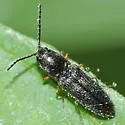
Limonius basilaris
Limonius basilaris
Identification: Black on top except for yellow or brown hind angles of pronotum, legs and first antenomere Det. M. A. Quinn, 2012
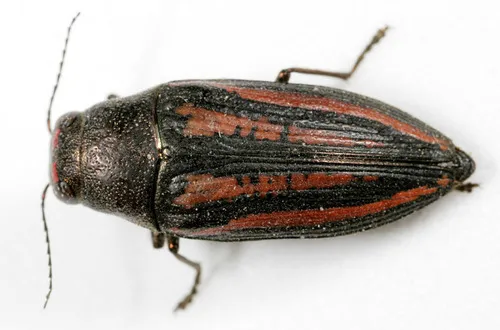
Lined Buprestis
Buprestis lineata
Buprestis lineata, the lined buprestris, is a species of metallic wood-boring beetle in the family Buprestidae. It is found in the Caribbean and North America.
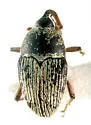
Linogeraeus capillatus
Linogeraeus capillatus
Identification: recognized by the long first desmomere that is shared in the study area only by L. hospes, a species with a different rostrum. The male possesses straight, peg-shaped prosternal spines and blunt, distally flattened metatibial spines.
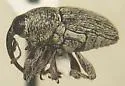
Linogeraeus finitimus
Linogeraeus finitimus
Identification: one of three similar spp. w/ homogeneous vestiture. spmns recognized by the bulky shape of the pronotum, the laterally compressed rostrum, and the miderately long prosternal spines in the male. Type coll'ed by Wickham in Dallas, TX
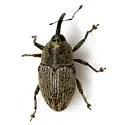
Linogeraeus neglectus
Linogeraeus neglectus
Identification: Many L. neglectus can be recognized readily by the presence of dark scales in the usually yellowish dorsal vestiture
Linsleya compressicornis 0
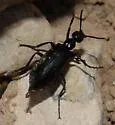
Linsleya compressicornis
Identification: Brilliant blue sometimes slightly violet. Head entirely blue, very coarsely but sparsely punctured. Thorax narrower than the head, sub-quadrate, feebly narrowed at base, moderately convex, with few coarse irregularly placed punctures.
Linsleya convexa
Linsleya convexa
Identification: Holotype easily recognized by its color: black; elytra dark metallic blue or greenish blue
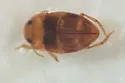
Liodessus flavicollis
Liodessus flavicollis
Identification: most distinct coloration of Liodessus with submedial and apical transverse pale fasciae
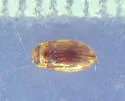
Liodessus obscurellus
Liodessus obscurellus
Identification: Reliably separated from L. affinis by aedeagus only comes in numbers to lights
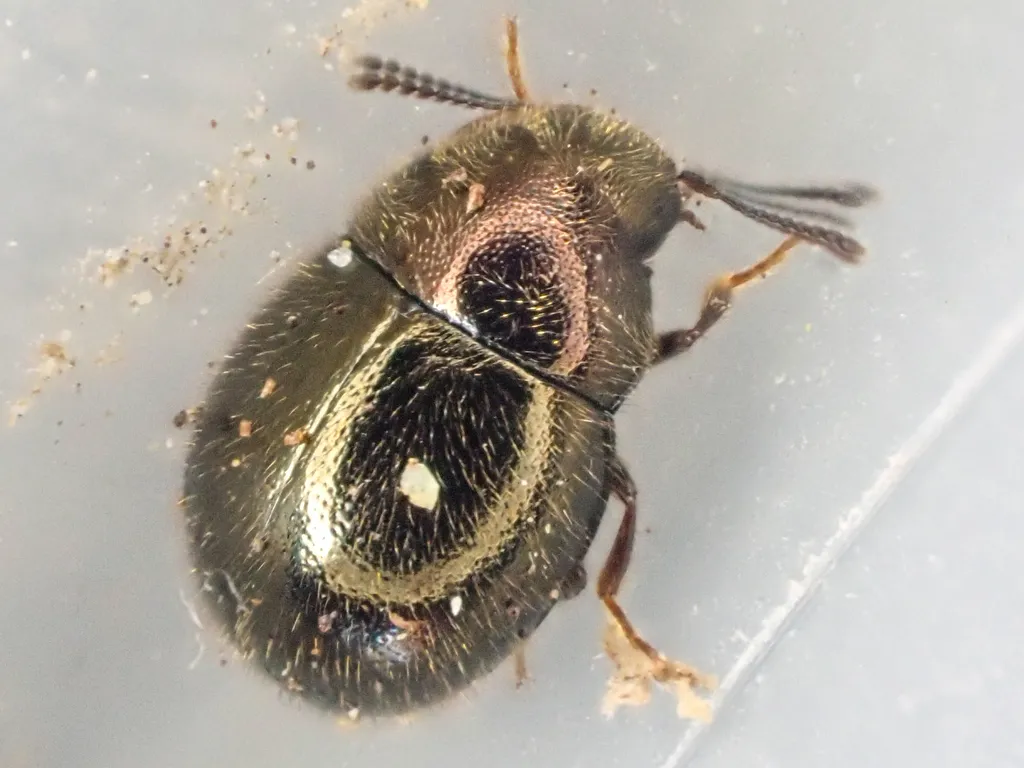
Lioon simplicipes
Lioon simplicipes
Lioon simplicipes is a species of pill beetle in the family Byrrhidae. It is found in North America.
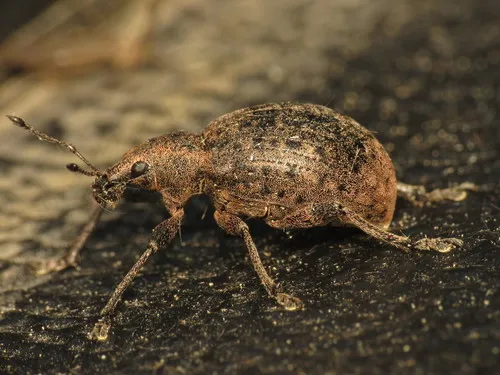
Liophloeus tessulatus
Liophloeus tessulatus
Reaching about 10 mm in length this is a buff or pale brown weevil with darker speckles on the elytra. Unless identified by a recognised expert, good photos are required that show the key ID features. Also state the beetle's size in the comments box.
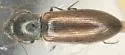
Liotrichus falsificus
Liotrichus falsificus
Identification: mczbase.mcz.harvard.edu/MediaSet.cfm?media_id=194635
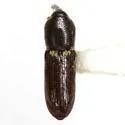
Lipancylus cracens
Lipancylus cracens
known from southmost Texas since 1975, but only recognized as a new species in 2012. 3 records from Bentsen-RGV SP (Type Locality) and Santa Ana NWR, Hidalgo Co., TX
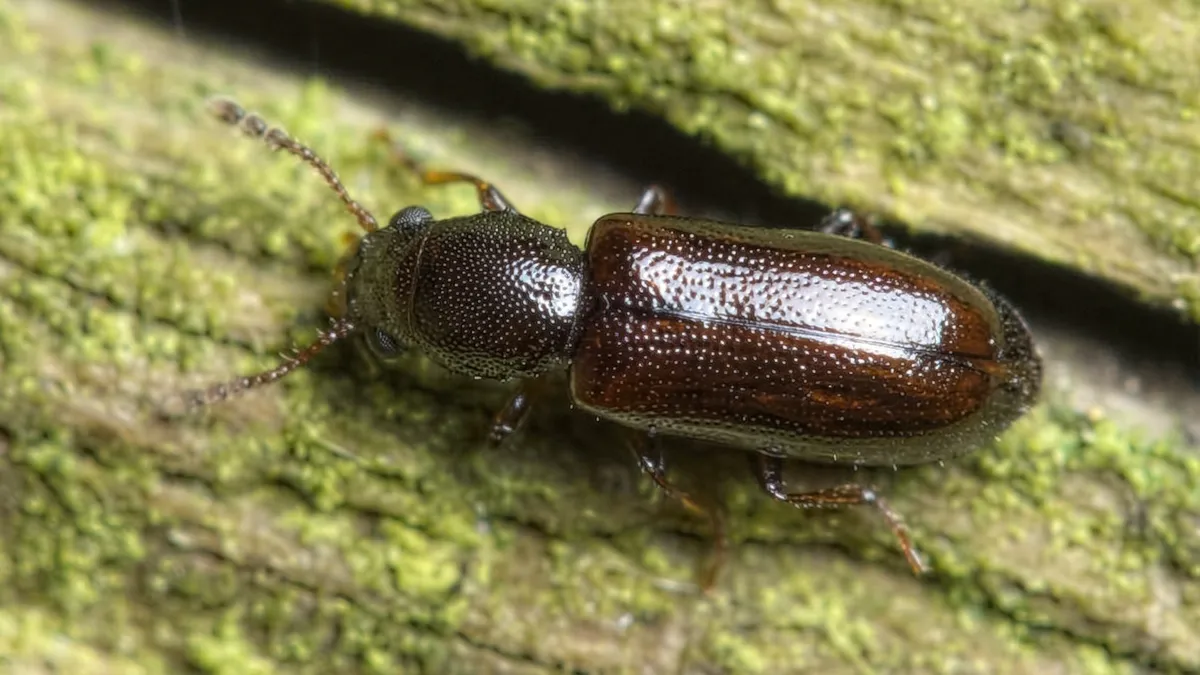
Lissodema cursor
Lissodema cursor
A small (2.5 to 3.6 mm) species with a dark brown, or blackish body. This species has small spikes around the edge of the pronotum but these may be very difficult to see without magnification. Unless identified by a recognised expert, a photo is requ
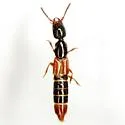
Lissohypnus texanus
Lissohypnus texanus
Identification: Det. E. G. Riley, 2010 Type Locality: Austin County, Texas
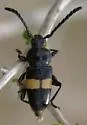
Lissonotus flavocinctus
Lissonotus flavocinctus
Adults have been taken at lights and in pitfall traps
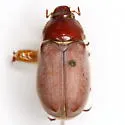
Listrochelus bottimeri
Listrochelus bottimeri
Type Locality: Big Bend National Park, Park hdqrs, Brewster County, Texas. Only two spmns in the TAMUIC , both coll'ed by H. S. Barber in 1948 in BBNP.
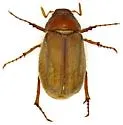
Listrochelus duncani
Listrochelus duncani
Identification: Similar in many regards to several other species of Listrochelus. Best differentiated using the characteristics of the male genitalia. Saylor (1940) states that the species is known only from the male holotype. The species appears to
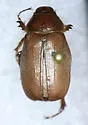
Listrochelus koehlerianus
Listrochelus koehlerianus
V. L. Wildermuth, at Koehler, N. Mex., July 3, 1914: "Tonight there occurred a remarkable flight of this beetle. The air was full of them, and the roar, for it was more a roar than a buzzing, from them was wonderful. They were like several swarms of
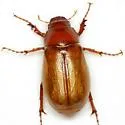
Listrochelus planeta
Listrochelus planeta
The type locality is Fort Davis (Jeff Davis County)(Reinhard, 1950). Riley & Wolfe recollected this species in Jeff Davis County and Howden reported specimens from Brewster County that he believed were intermediate between P. (L.) meadei Saylor from
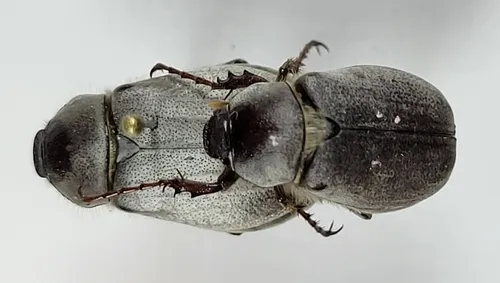
Listrochelus reinhardi
Listrochelus reinhardi
Identification: Saylor: Apical one-third of margin reflexed; general form in lateral view (fig. 8, a) quite different from that of either pulcher or mucorea Externally rather similar in both sexes to L. mucorea but quite different in the male genital
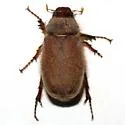
Listrochelus tarsalis
Listrochelus tarsalis
Identification: Though resembling several small and densely pruinose species, L. tarsalis is the only one with a thorax that is apparently (view vertically) impunctate and glabrous, except at the sides. Type locality: "Santa Rita Mts., Arizona."
Listrochelus texensis
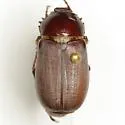
Listrochelus texensis
Identification: Saylor: Outer front claw with a larger intercalated tooth, inner claw without such tooth; pygidium normally convex; sides of thorax subangularly dilated, margin very coarsely crenate Type Locality: Brownsville, Cameron Co., Texeas, Ju
Listrochelus timidus
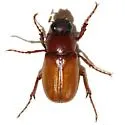
Listrochelus timidus
Identification: A common little species and one of the few in the genus in which the area of the vertex behind the transverse ridge of the front is densely, coarsely, and almost completely punctured; in most species this area is either entirely smoot
Listroderes costirostris
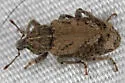
Listroderes costirostris
L. costirostris is currently restricted to CA and rarely from western AZ. All other North American vegetable weevil specimens are currently L. difficilis [that name will be changed soon], and are misidentified in most collections as L. costirostris .
Listronotus appendiculatus
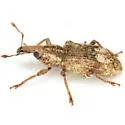
Listronotus appendiculatus
Listronotus appendiculatus (Listronotus appendiculatus) is a species in the family Curculionidae, commonly known as snout and bark beetles, belonging to the order Coleoptera (Beetles). It is classified within the subfamily Cyclominae, tribe Listroder
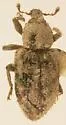
Listronotus dietzi
Listronotus dietzi
Identification: Photo of syntype @ https://mczbase.mcz.harvard.edu/guid/MCZ:Ent:1938