
Iris Flea Beetle
Aphthona nonstriata
This record describes Aphthona nonstriata (species). Recorded family: Chrysomelidae. Recorded order: Coleoptera.
Identification and Appearance
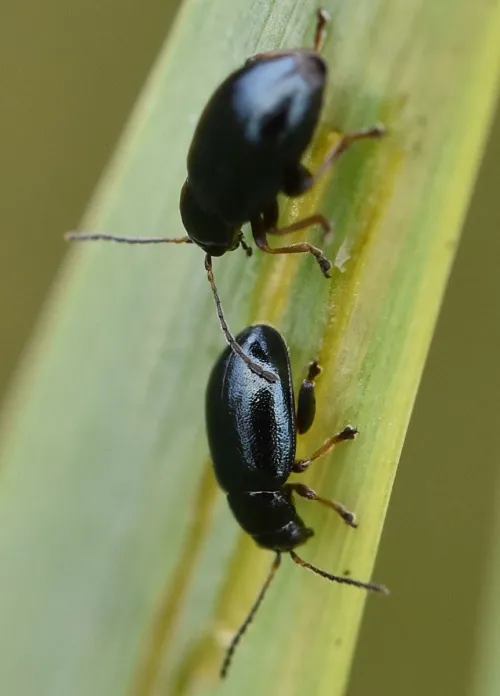
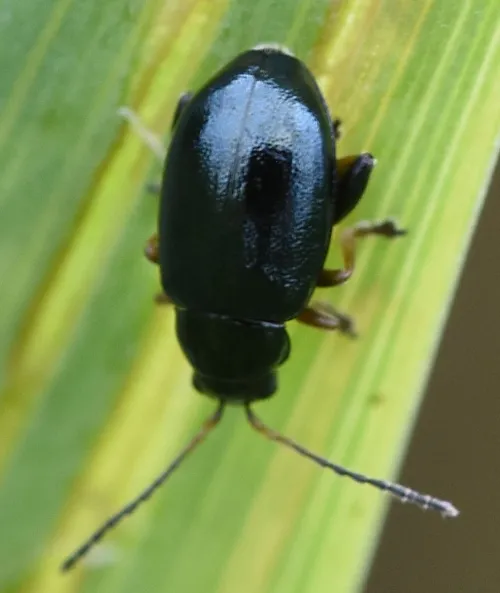
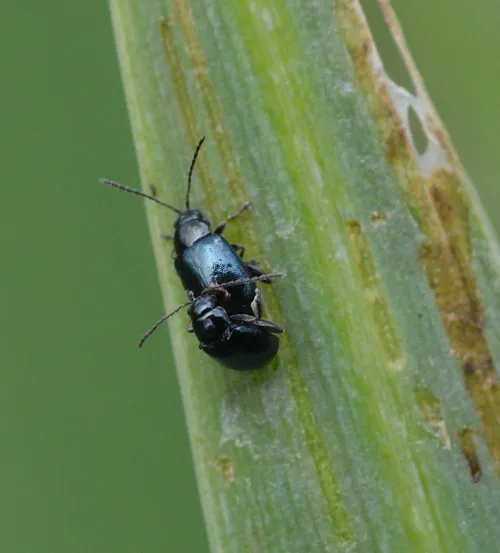
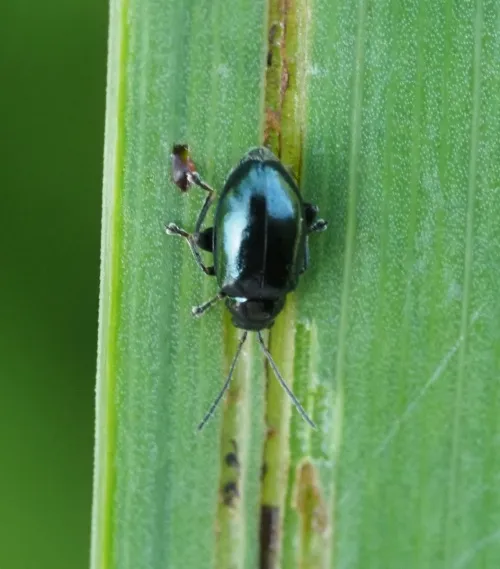
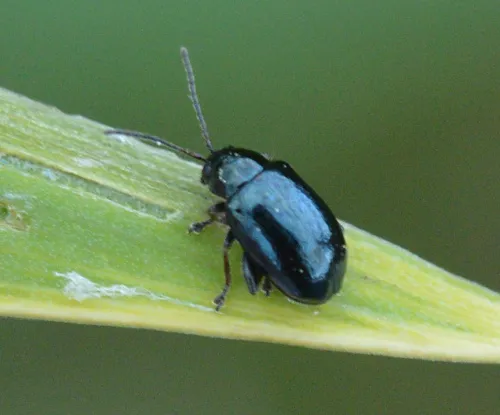
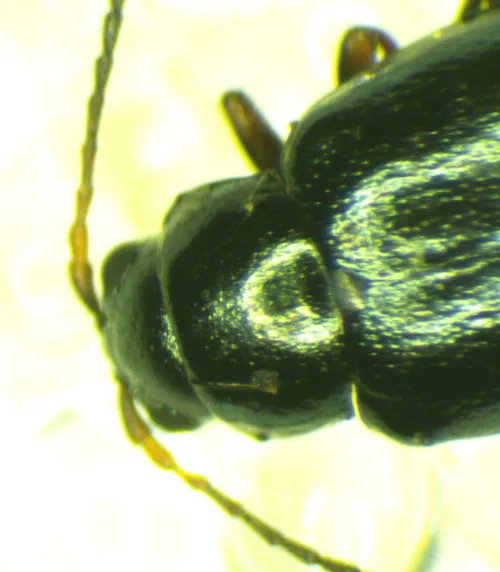
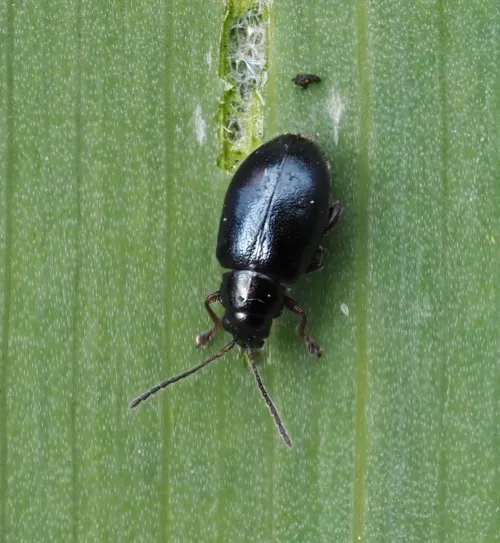
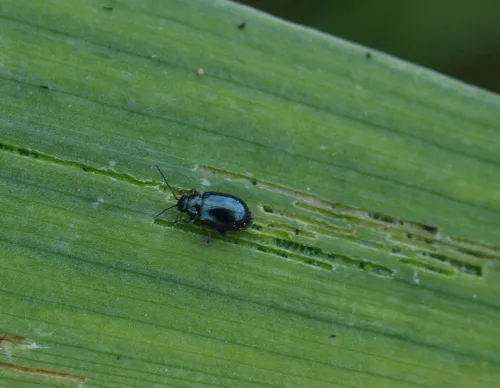
At 2.5 to 3 mm this is the largest member of the genus. It is more or less unicoloured - a dark metallic blue, green or bronze. The elytra have 'shoulders'. The antennae are dark apically but segments 2, 3 and the apical part of 1 are paler. The legs are tawny brown but with darker femora. Please provide a photograph and state the host plant species. Habitats include anywhere the host, Iris pseudacorus (Yellow Iris), grows in abundance, usually in wetlands but also permanently damp soil in woodlands, parks, gardens etc.. Most likely to be seen from March or April, peaking in abundance from May to July and remaining common into the autumn. Overwintered adults feed in the spring, consuming strips of epidermis parallel to the leaf margins and leaving conspicuous pale lines, before mating and ovipositing on the host foliage. Common and often abundant throughout England and Wales, becoming scattered further north and scarce in Scotland although there are plenty of records from the west and Western Isles.
Classification
- Kingdom
- Animalia
- Phylum
- Arthropoda
- Class
- Insecta
- Order
- Coleoptera
- Family
- Chrysomelidae
- Genus
- Aphthona
Imported taxonomy record. Source availability varies; see the source references and editorial policy below.
Habitat and Range
Habitat
Habitats include anywhere the host,
Seasonal Activity
Most likely to be seen from March or April, peaking in abundance from May to July and remaining common into the autumn.
Diet and Behavior
Life History
Overwintered adults feed in the spring, consuming strips of epidermis parallel to the leaf margins and leaving conspicuous pale lines, before mating and ovipositing on the host foliage.
Additional species information
Recorded status
Common and often abundant throughout England and Wales, becoming scattered further north and scarce in Scotland although there are plenty of records from the west and Western Isles.
About Primitive Winged Insects: the wider group
Order-level background for Coleoptera, the group containing Aphthona nonstriata. Species-specific details appear above.
Group overview
Coleoptera is the largest order of insects with over 400,000 described species, representing ~25% of all known animal species and ~40% of all insects. In the U.S. alone, nearly 30,000 beetle species have been identified.
Ecological role of the group
Beetles are prominent decomposers, especially in forests, breaking down dead wood and recycling nutrients. As predators, they reduce populations of pest insects. Many species are also important pollinators of flowering plants.
Economic and practical significance of the group
Beetles have major economic significance: leaf beetles (Chrysomelidae) and weevils (Curculionoidea) are among the most destructive agricultural pests globally, costing billions annually, while predatory species like ladybugs provide natural pest control.
Recorded sources for this group: Britannica, Smithsonian, NCSU Entomology. Imported estimates may describe particular regions or reporting periods.
Photos of Iris Flea Beetle (8)
Frequently Asked Questions About Iris Flea Beetle
What is Iris Flea Beetle?
Iris Flea Beetle (Aphthona nonstriata) is a species in the family Chrysomelidae, within the order Coleoptera.
Where is Iris Flea Beetle found?
Habitat: Habitats include anywhere the host,
When is Iris Flea Beetle active?
Iris Flea Beetle: seasonal activity - Most likely to be seen from March or April, peaking in abundance from May to July and remaining common into the autumn..
What is the life cycle of a Iris Flea Beetle?
Overwintered adults feed in the spring, consuming strips of epidermis parallel to the leaf margins and leaving conspicuous pale lines, before mating and ovipositing on the host foliage.