
Primitive Winged Insects
Order Coleoptera
The Primitive Winged Insects (Order Coleoptera) includes 15,720 species across 160 families and 3,716 genera in our directory.
About Primitive Winged Insects
Coleoptera is the largest order of insects with over 400,000 described species, representing ~25% of all known animal species and ~40% of all insects. In the U.S. alone, nearly 30,000 beetle species have been identified.
Economic Impact
Beetles have major economic significance: leaf beetles (Chrysomelidae) and weevils (Curculionoidea) are among the most destructive agricultural pests globally, costing billions annually, while predatory species like ladybugs provide natural pest control.
Ecological Role
Beetles are prominent decomposers, especially in forests, breaking down dead wood and recycling nutrients. As predators, they reduce populations of pest insects. Many species are also important pollinators of flowering plants.
Families in Coleoptera (160)
Species in Coleoptera (15,720)
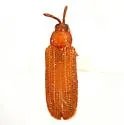
Heptispa brevicornis
Heptispa brevicornis
Identification: This is an unusual and noteworthy beetle possessing hispine characters not seen in other species from the United States and a combination of characters probably not found in any other hispine. The form of the antennae is its most uniq
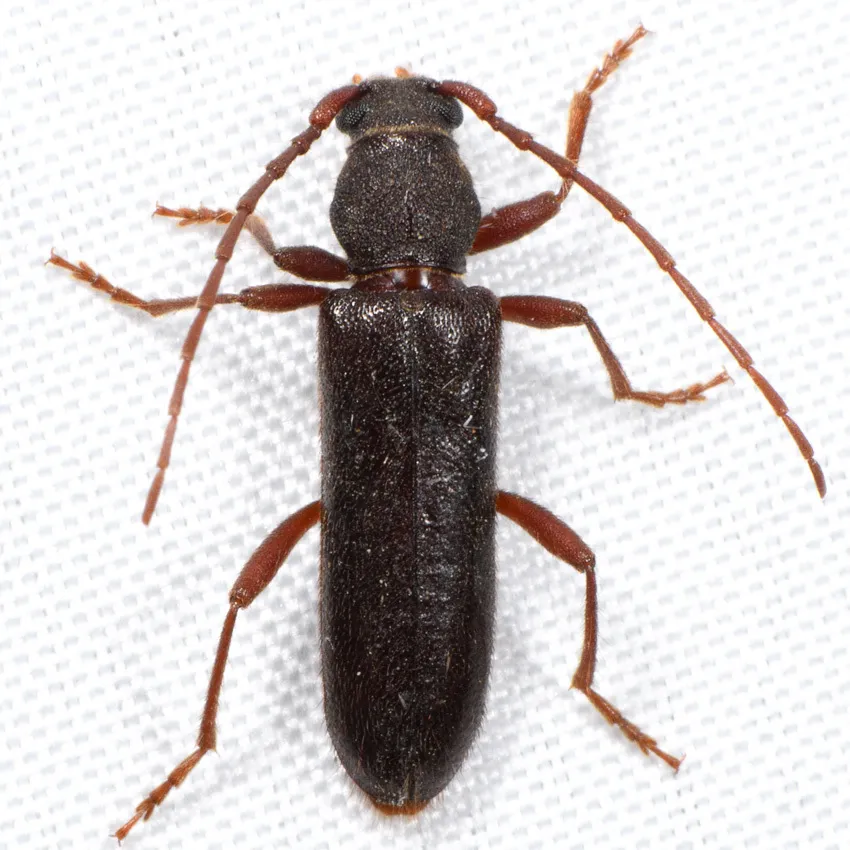
Hesperanoplium antennatum
Hesperanoplium antennatum
Hesperanoplium antennatum is a species of beetle in the family Cerambycidae. It was described by Linsley in 1932.
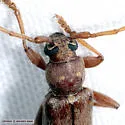
Hesperophanes pubescens
Hesperophanes pubescens
Hesperophanes pubescens (Hesperophanes pubescens) is a species in the family Cerambycidae, commonly known as longhorn beetles, belonging to the order Coleoptera (Beetles). It is classified within the subfamily Cerambycinae, tribe Hesperophanini, subo
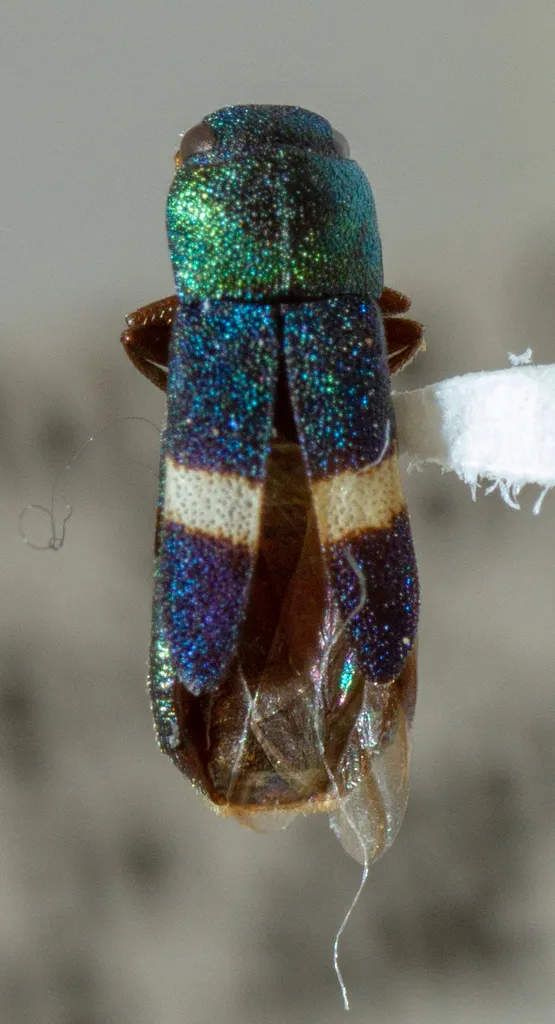
Hesperorhipis albofasciata
Hesperorhipis albofasciata
Hesperorhipis albofasciata is a species of metallic wood-boring beetle in the family Buprestidae. It is found in North America.
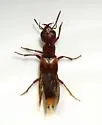
Hesperus arizonicus
Hesperus arizonicus
Hesperus arizonicus was described by Moore (1958) on the basis of a single male specimen from Patagonia, Santa Cruz County, Arizona. A single female specimen in the collection of the University of California at Riverside is from Cave Creek Ranch, ele
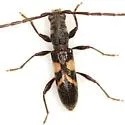
Heterachthes nobilis
Heterachthes nobilis
not common in collections, mostly collected at lights or on decadent mesquite
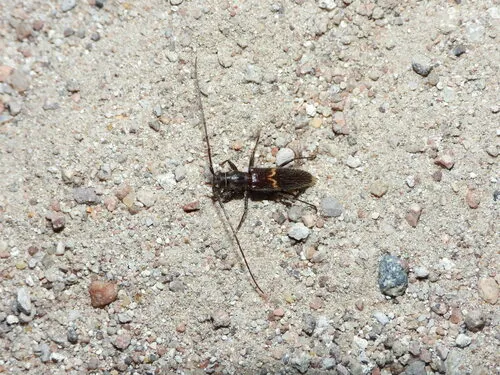
Heterachthes polingi
Heterachthes polingi
Type Locality: Described from a series of eight specimens, all taken by Mr. O. C. Poling in the Baboquivari Mts., Arizona.
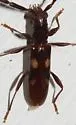
Heterachthes quadrimaculatus
Heterachthes quadrimaculatus
Heterachthes quadrimaculatus (Heterachthes quadrimaculatus) is a species in the family Cerambycidae, commonly known as longhorn beetles, belonging to the order Coleoptera (Beetles). It is classified within the subfamily Cerambycinae, tribe Ibidionini
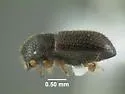
Heteroborips seriatus
Heteroborips seriatus
Identification: Elytra with a pair of pit mycangia parallel to sides of scutellum ―quite visible, although often filled with gunk: earliest record in our area: MA 2005
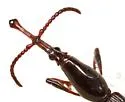
Heterobrenthus texanus
Heterobrenthus texanus
Described by Schaeffer (1915) from two specimens collected by Ottomar Dietz and Herbert Spencer Barber . Type Locality attributed to "Los Borregos" (a still unlocated place name) near Brownsville, Texas. A hundred years later two more specimens were
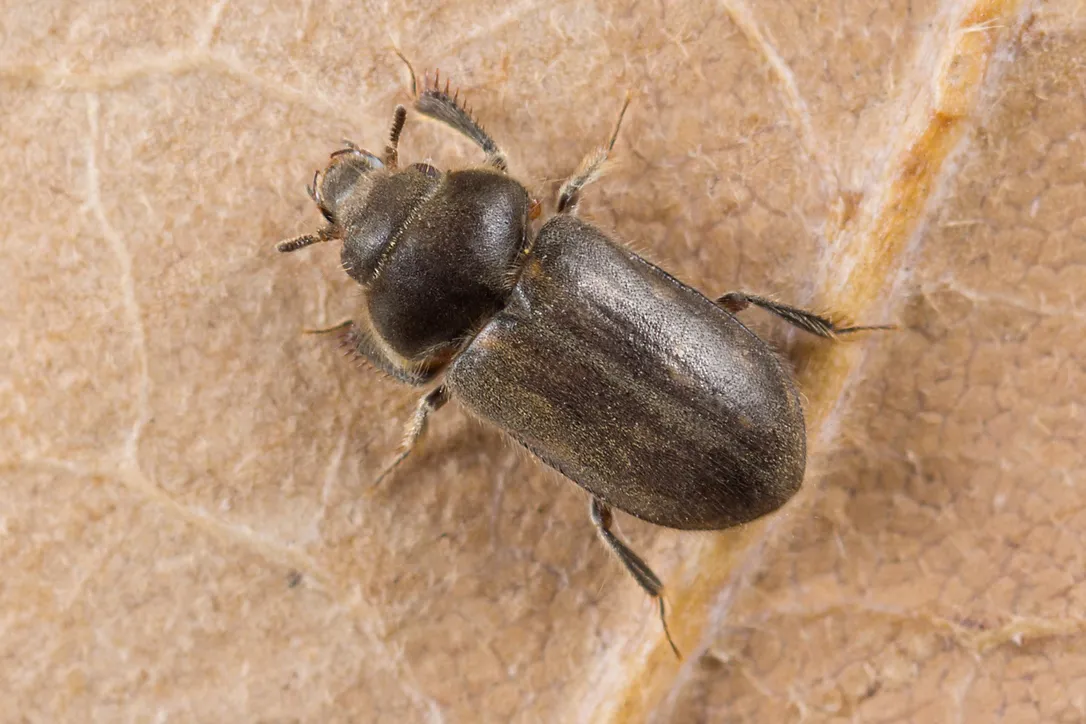
Heterocerus fenestratus
Heterocerus fenestratus
Only two species in this group are normally found inland. Heterocerus fenestratus has the two orange marks on the elytra, each side of the suture, reaching the front margin of the elytra. In H. marginatus, the other inland species, these marks are ab
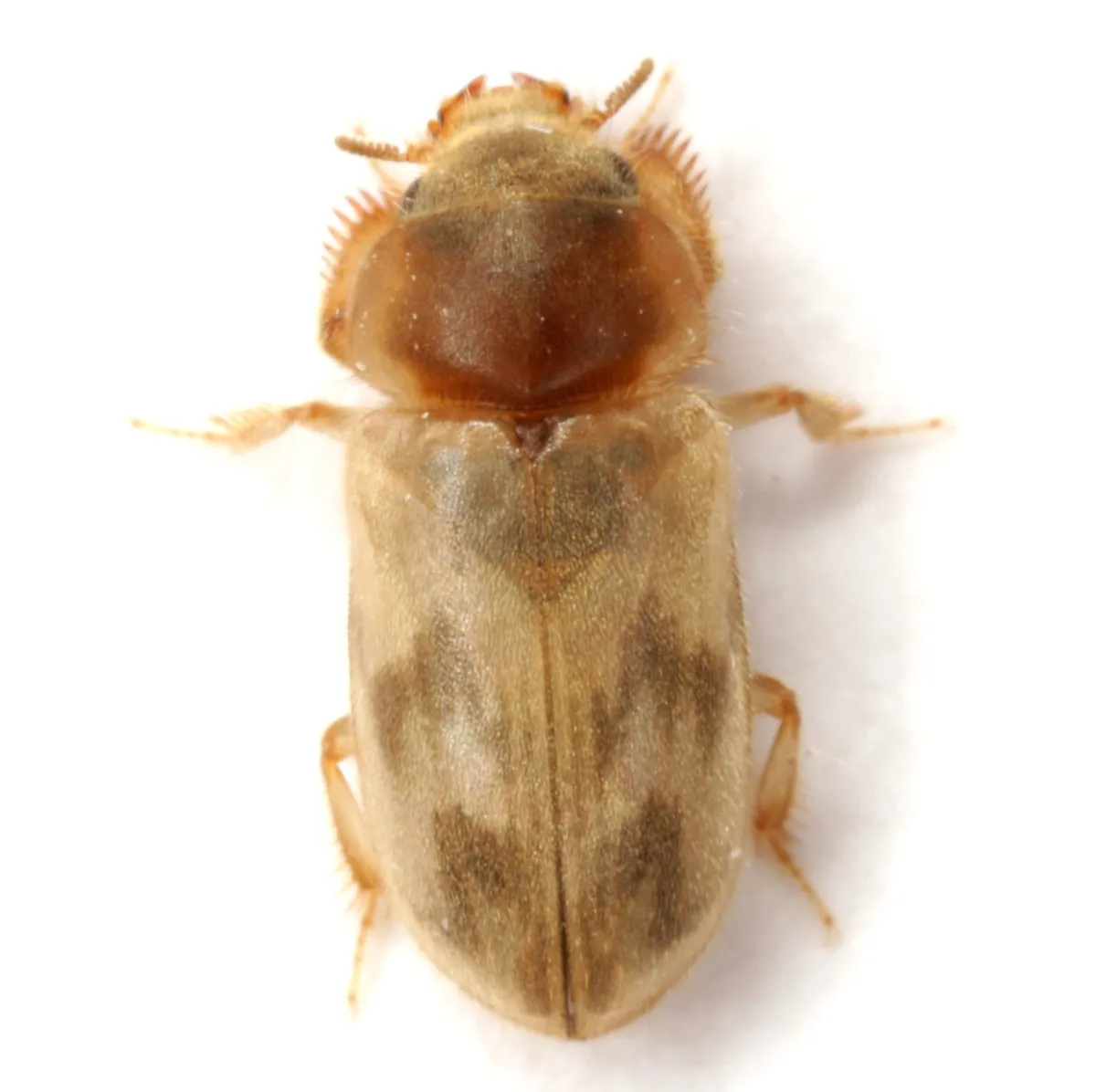
Heterocerus intermuralis
Heterocerus intermuralis
Identification: Elytra grayish-brown, without reddish hue; dominated by pale markings that are highly variable in shape and definition and only vaguely trifasciate
Heterocerus mexicanus
Heterocerus mexicanus
These beetles show up in numbers, one night, then none for years. … margarethe brummermann, 30.x.2016
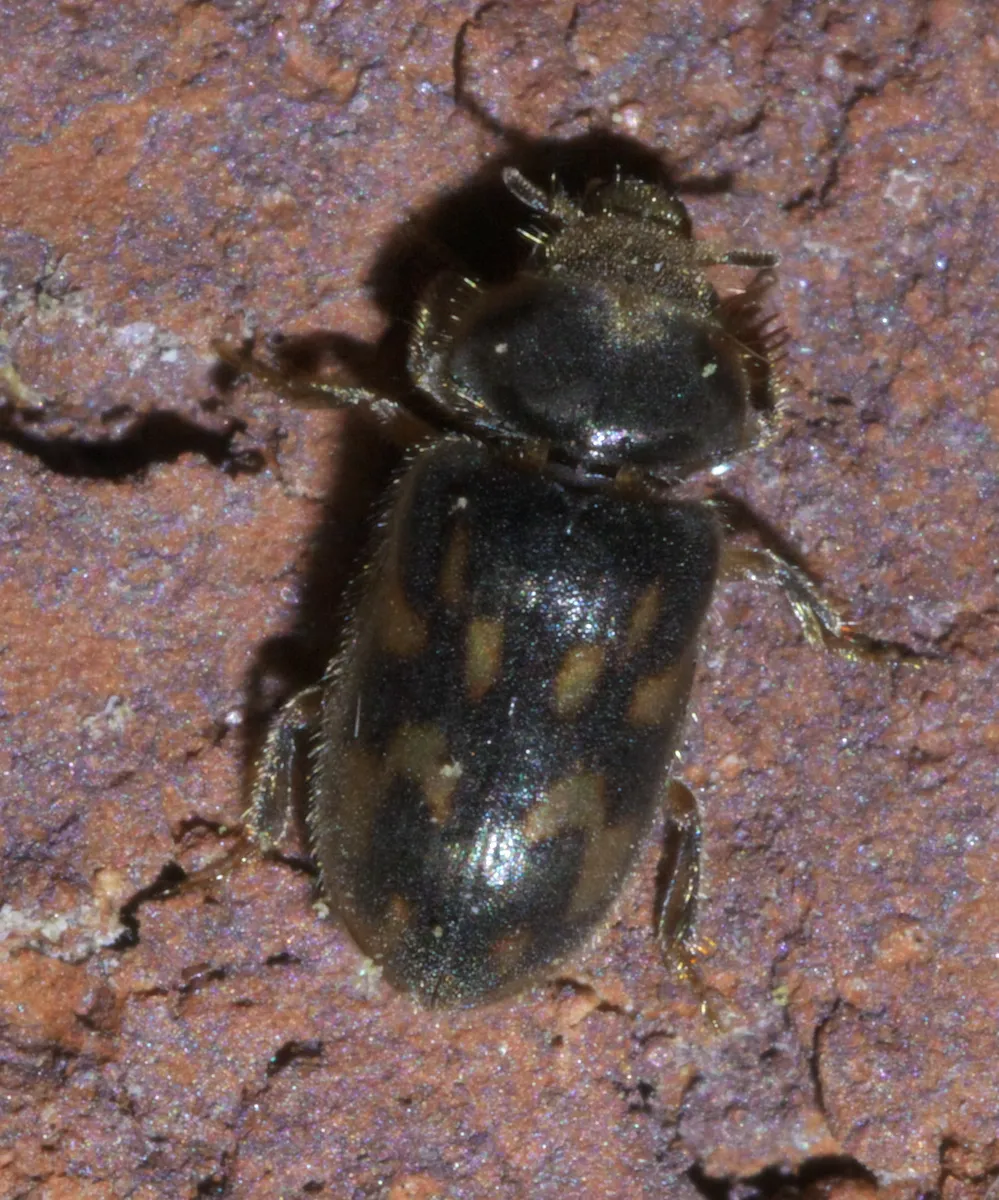
Heterocerus mollinus
Heterocerus mollinus
H. mollinus is the most common spp. of Heterocerus in N. Amer. Thousands of specimens can be collected in light traps placed near muddy river banks.
Heterocerus pallidus
Heterocerus pallidus
Identification: Elytra often testaceous, but may be dark brown, pronotum often with wide pale margins; some males hypermandibulate. Elytra dominated by highly variable pale markings; striae absent.
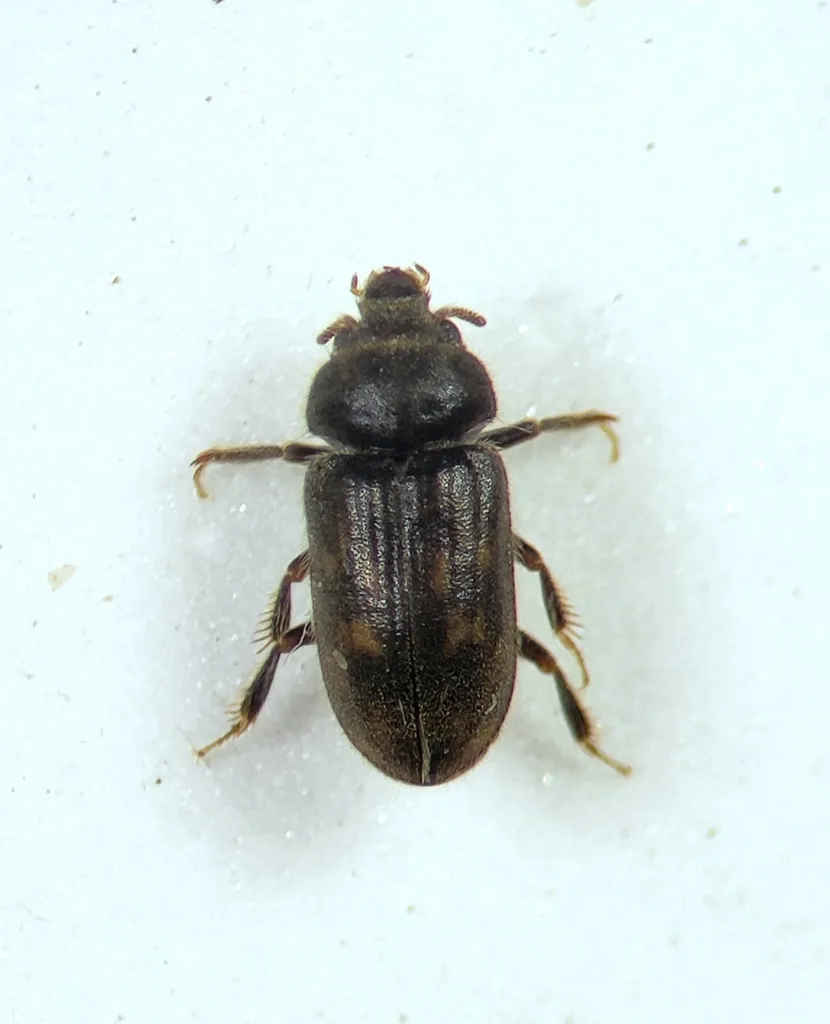
Heterocerus sandersoni
Heterocerus sandersoni
Identification: conspicuous longitudinal striations on the elytra
Heterocerus selanderi
Heterocerus selanderi
Identification: Small with faint fascia on the elytra. Very easy to confuse with Tropicus .
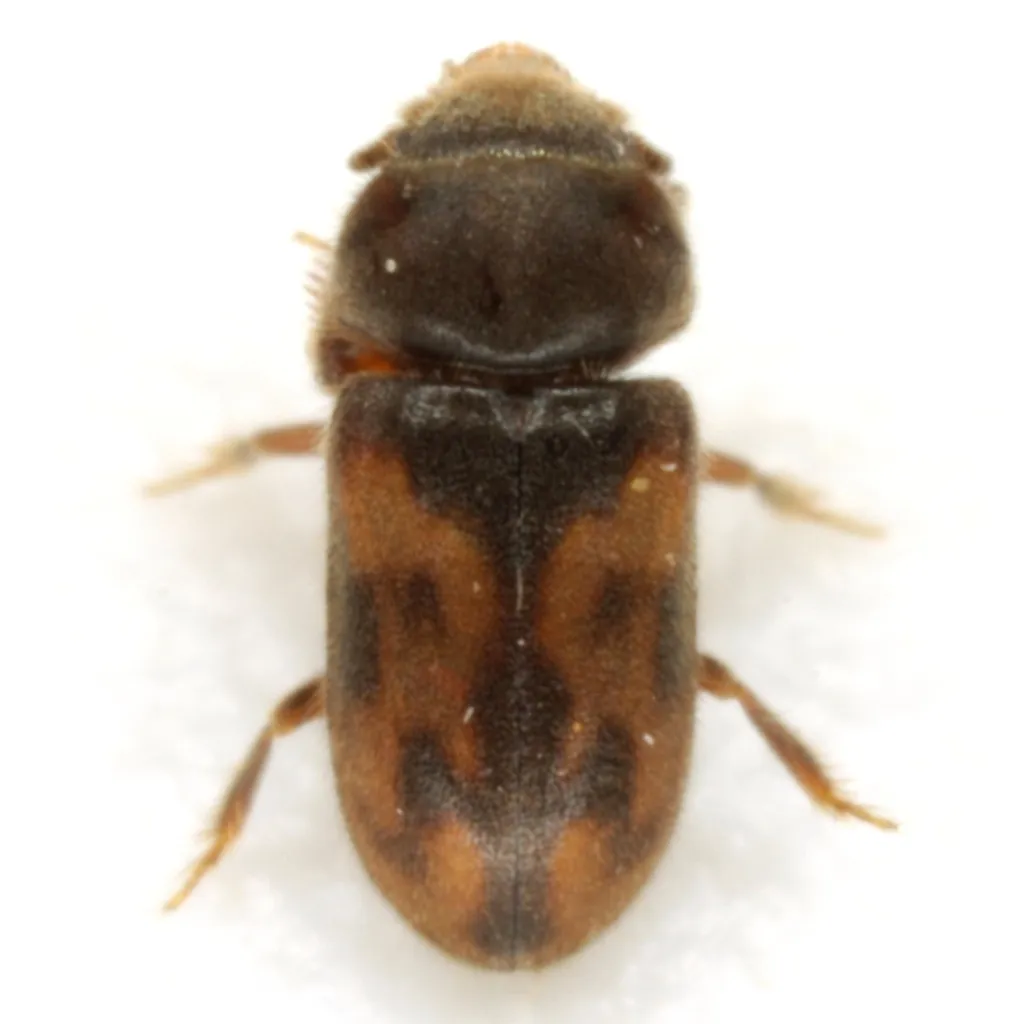
Heterocerus texanus
Heterocerus texanus
Identification: Det. Jonas G. King, 2012 Type Locality: Sabinal, Uvalde County, Texas
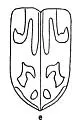
Heterocerus unicus
Heterocerus unicus
Identification: Basal margin of elytra well defined by a bright pale area that at times covers most of the margin. Type Locality: 9 mi. south of La Paz, Baja Calif., Mexico.
Hickory Borer
Megacyllene caryae
Identification: elytral bands typically narrow and alternating white & yellow ; metepisternum with white or yellow pubescence divided at middle comes to lights
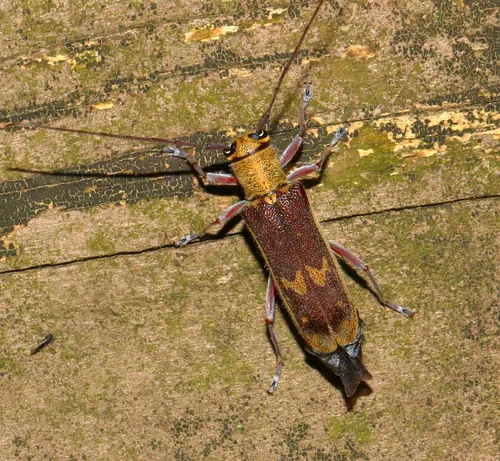
Hickory Saperda
Saperda discoidea
Identification: Remarkably dimorphic This species is remarkable in having the sexes so unlike that one unacquainted with it would certainly consider them distinct species. In a long series of males, however, there will be found individuals having the
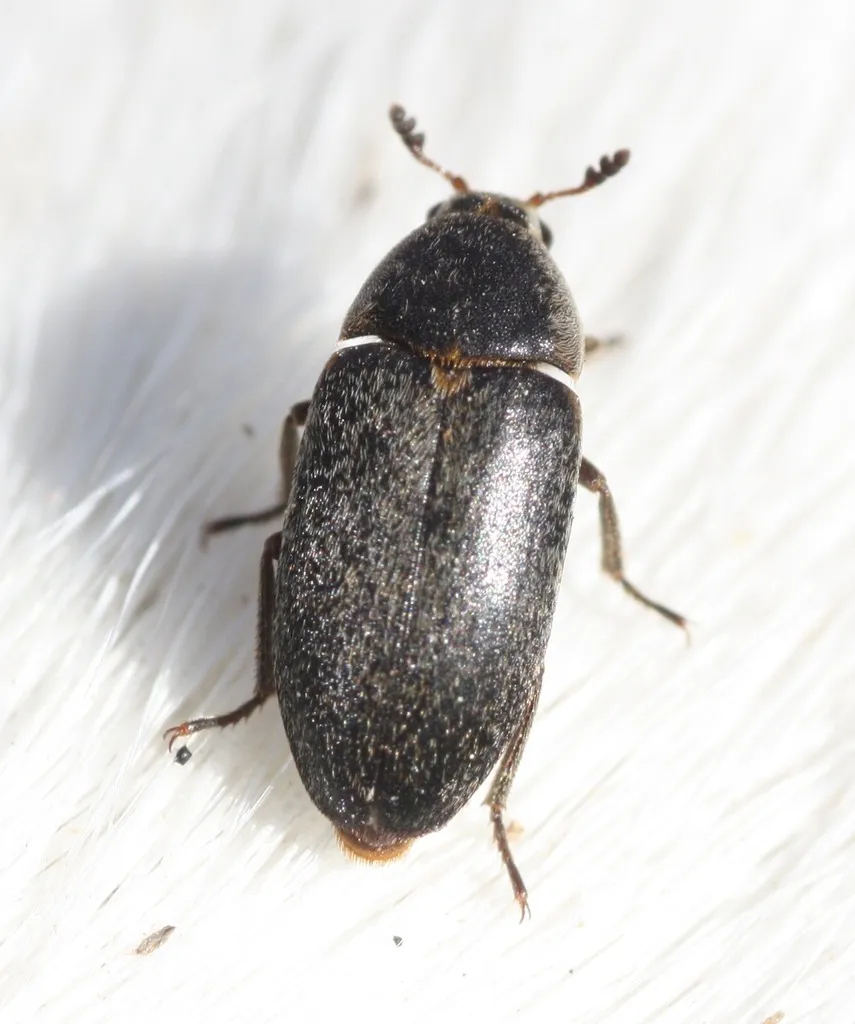
Hide Beetle
Dermestes maculatus
Identification: see used in museums to clean skeletons
High-country Lady Beetle
Coccinella alta
Identification: one of five PARATYPE spmns from Alta, UT in the USNM, Smithsonian Type Locality: Alta, Salt Late Co., Utah
Highlands Tiger Beetle
Cicindelidia highlandensis
Identification: Distinguished from similar species - C. abdominalis (Eastern Pinebarrens Tiger Beetle), widely distributed throughout the Atlantic and Gulf Coastal Plain, and C. scabrosa (Scabrous Tiger Beetle), confined to the Florida Peninsula and
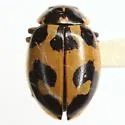
Hippodamia apicalis
Hippodamia apicalis
Identification: Gordon's figures Always has a black marking connecting at the suture (midline) in an apical (rear) spot. Pronotum with pale median spot at base. Tarsal claw with tooth not closely appressed. Externally inseparable from H. expurgata .
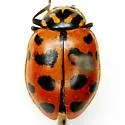
Hippodamia quindecimmaculata
Hippodamia quindecimmaculata
Identification: Gordon's figures - The heavily maculate appearance, strongly developed convergent spots on the pronotum, and geographic range will distinguish most specimens of this species. Elytral spots sometimes feebly confluent. An apparently unc
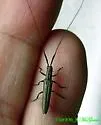
Hippopsis lemniscata
Hippopsis lemniscata
Identification: striped pronotum and long, thin antennae readily attracted to UV lights ( 5 )
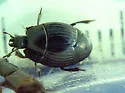
Hister abbreviatus
Hister abbreviatus
Identification: Both subhumeral striae present on elytron
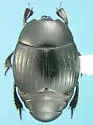
Hister coenosus
Hister coenosus
significant as a predator of the Horn Fly ( Haematobia irritans )
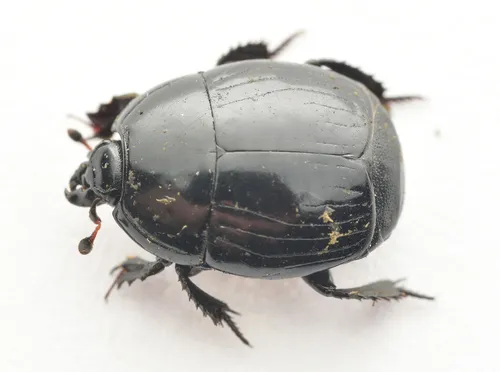
Hister unicolor
Hister unicolor
Length 8 to 10 mm. This is a fairly large, oval species that is uniformly black, but there are other similar members of this family, so detailed examination is necessary. All year round, but commonest in summer. Widely distributed throughout the Brit
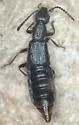
Holoboreaphilus nordenskioldi
Holoboreaphilus nordenskioldi
Holoboreaphilus nordenskioldi (Holoboreaphilus nordenskioldi) is a species in the family Staphylinidae, commonly known as rove beetles, belonging to the order Coleoptera (Beetles). It is classified within the subfamily Omaliinae, tribe Coryphiini, su
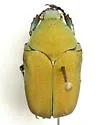
Hologymnetis argenteola
Hologymnetis argenteola
Identification: Venter a bright, shining brassy green, usually with distinct coppery reflection. Protibia with teeth subequally spaced from one another. (Ratcliffe and Deloya 1992) Apparently not abundant (Ratcliffe and Deloya 1992)
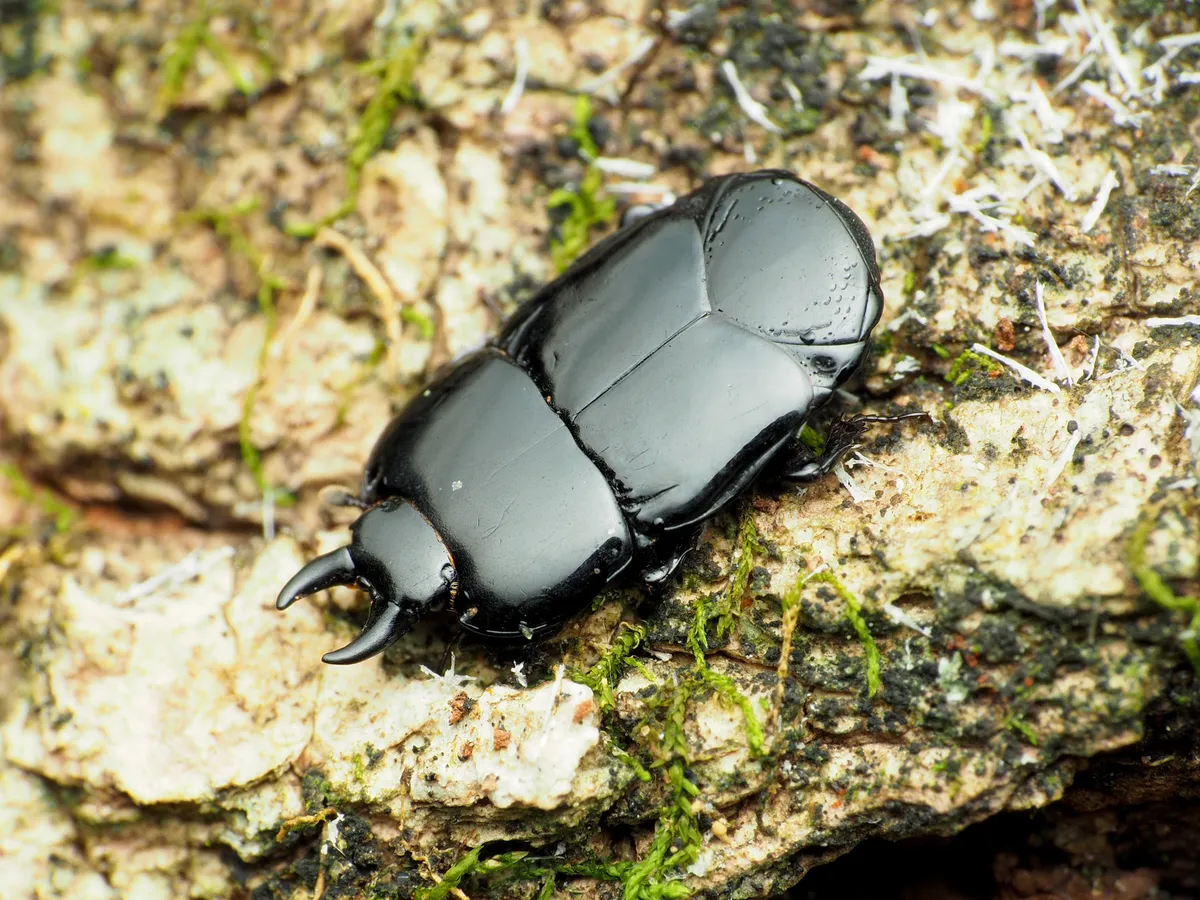
Hololepta aequalis
Hololepta aequalis
Identification: stria along the edge of elytron hardly reaches ¼ the of elytral length from base (complete in H. lucida )
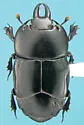
Hololepta lucida
Hololepta lucida
Identification: stria on side of each elytron reaches the apex
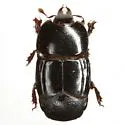
Hololepta minuta
Hololepta minuta
Introduced into Guam from Trinidad in 1953 and 1954 to control the banana weevil, Cosmopolites sordidus (Germar).
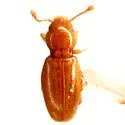
Holoparamecus floridanus 0
Holoparamecus floridanus
Identification: The form is a trifle less slender than in caularum , but the chief distinguishing characters are the im punctate surface and the form of the transverse subbasal impression of the pronotum, which is more nearly linear and lacks the two
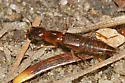
Homaeotarsus strenuus
Homaeotarsus strenuus
Identification: The mostly reddish species are easiest to ID using dorsal shots of the head. There are two (likely three) others in our region that are also of this mostly reddish look. Cheers, … Adam Brunke, 8 June, 2008
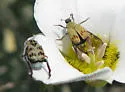
Hoplia dispar
Hoplia dispar
Identification: Readily distinguished by the round elytral scales and reduced prothoracic angulation
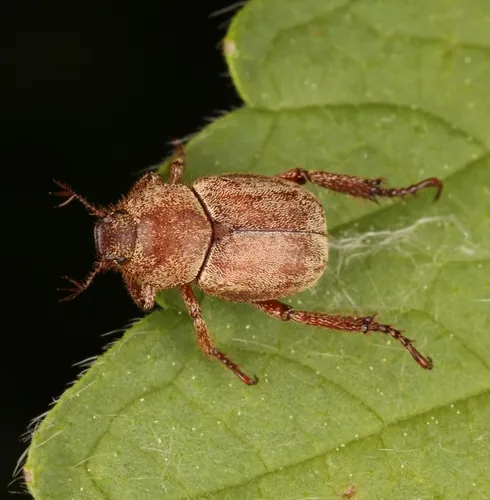
Hoplia equina
Hoplia equina
Identification: Syntype • the only Nearctic Hoplia with a single mesotarsal claw
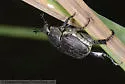
Hoplia laticollis
Hoplia laticollis
Identification: Holotype • very difficult to distinguish from the western H. callipyge ; may prove to be just a form of the latter
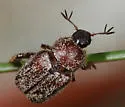
Hoplia mucorea
Hoplia mucorea
Identification: Body rather elongated compared to similar species. Clypeus separated from frons with a carina (ridge). Protibia bidentate
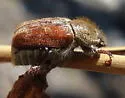
Hoplia sackenii
Hoplia sackenii
Identification: Syntype • may be distinguished from other western species by the pale, elongate elytral scales (individuals that lack elytral scales may key to H. callipyge )
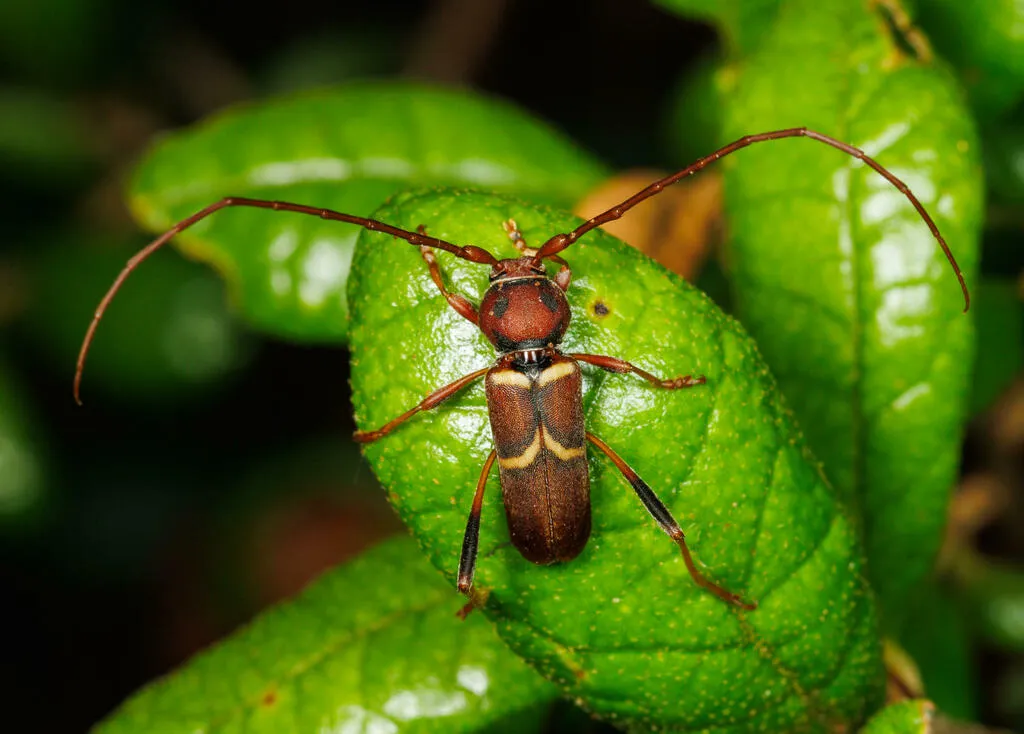
Horn's Aethecerinus Long-Horned Beetle
Aethecerinus hornii
Aethecerinus hornii is a species of beetle in the family Cerambycidae. It was described by Lacordaire in 1869. It is endemic to Florida scrubs in Highlands and Lee counties in Florida.
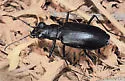
Horn's Tiger Beetle
Cicindelidia hornii
Usually quite ephemeral, out after rains but not too long. They also come in blue and green forms, but probably mostly black in NM. (Comment by Dr. C. Barry Kinsley).
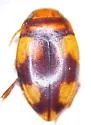
Hornectes quadrimaculatus
Hornectes quadrimaculatus
Identification: color pattern distinctive ▪ Syntype
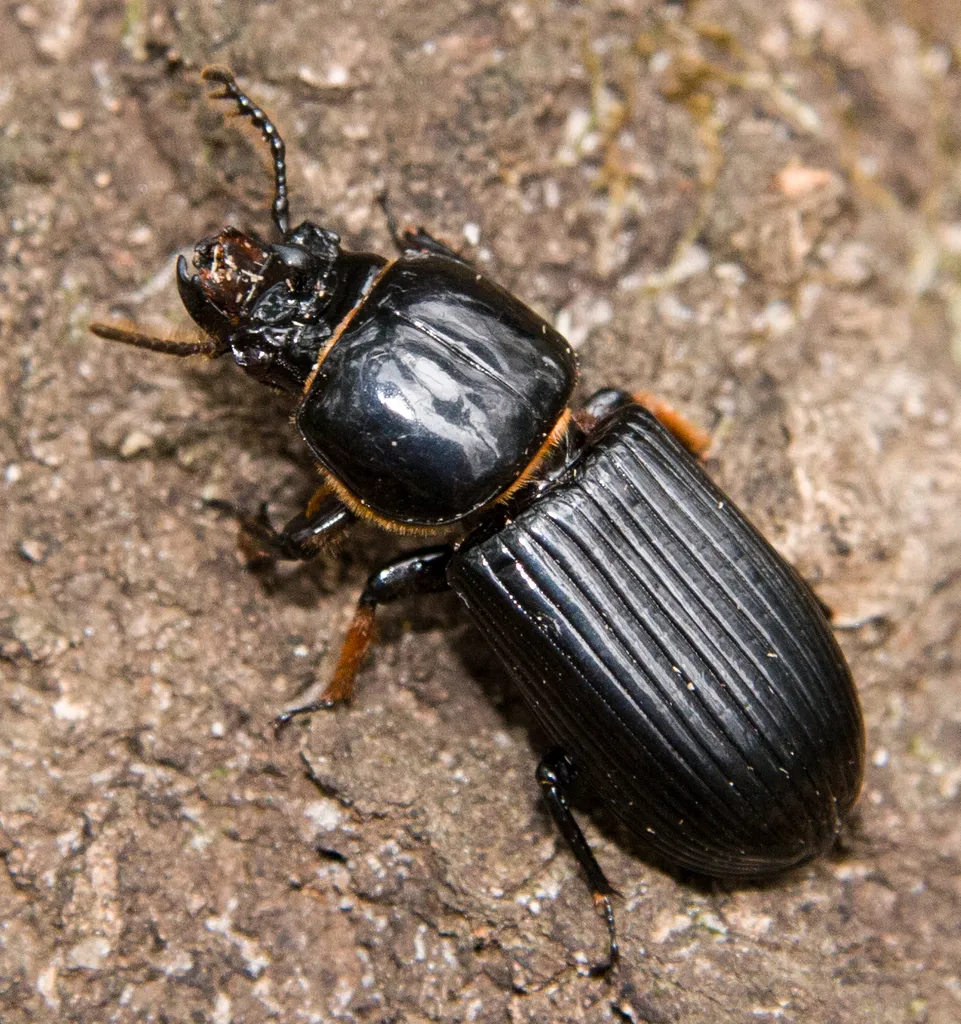
Horned Passalid
Odontotaenius disjunctus
Identification: Unique in its range: elongate shape, large size, deeply striated elytra. Larvae are scarabaeiform ( Passalidae page at Univ. Florida ), and appear to have only four legs. Hind legs are shortened, used for stridulation , communication
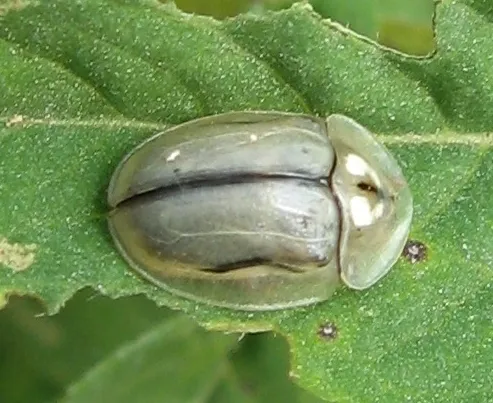
Horsemint Tortoise Beetle
Physonota unipunctata
Identification: Pale greenish yellow, three black dots on the thorax, white spots on elytra (colors fade in preserved specimens)
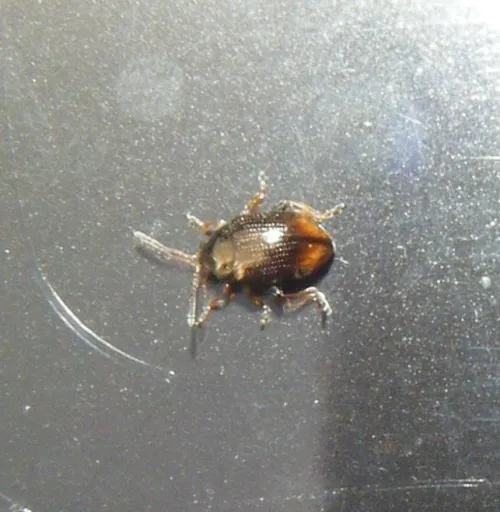
Horsetail Flea Beetle
Hippuriphila modeeri
This is a tiny (around 3 mm) flea beetle. Its dark brown punctate elytra become more golden at the rear. Damp places where horsetails are present. No additional images available for this species.
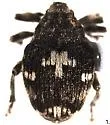
Hound's-tongue Root Weevil
Mogulones crucifer
populations in BC originated in Hungary and Serbia Introduced to control the invasive weed Cynoglossum officinale (Hound's Tongue) (Boraginaceae)
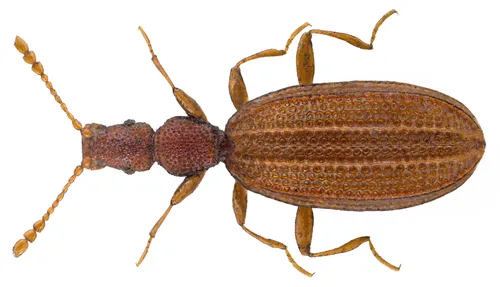
Household Fungus Beetle
Adistemia watsoni
Identification: Body elongate and depressed, pronotum without longitudinal ridges, head well produced in front of eyes. Eyes distant from rear margin of head (diagnostic vs. similar genera Dienerella & Acalyptoischion )
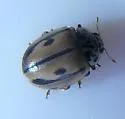
Hudsonian Lady Beetle
Mulsantina hudsonica
Identification: illustrations ; dorsal pattern variable, but the elytral vitta and the the broken M-mark on the pronotum are constant
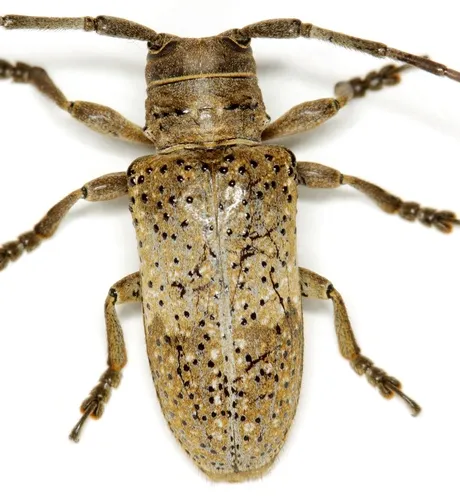
Huisache Girdler
Oncideres pustulata
Huisache Girdler (Oncideres pustulata) is a species in the family Cerambycidae, commonly known as longhorn beetles, belonging to the order Coleoptera (Beetles). It is classified within the subfamily Lamiinae, tribe Onciderini, suborder Polyphaga, sup
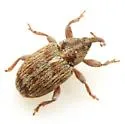
Huisache Sibinia Weevil
Sibinia inermis
Identification: See Clark (1978) to separate the spp. Type Locality: Brownsville, Texas Wickham
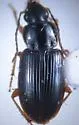
Humid Harp Ground Beetle
Stenolophus humidus
Stenolophus humidus is a species of ground beetle in the family Carabidae. It is found in North America.
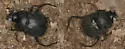
Humpback Dung Beetle
Deltochilum gibbosum
Identification: ♂ [prominent hump on each elytron] ♀ [no humps] Protarsi absent. Clypeus with 2 pairs of teeth, the inner ones pointy, the outer rounded:
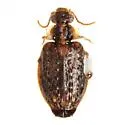
Hyboptera auxiliadora
Hyboptera auxiliadora
Identification: Sides of pronotum broadly reflexed throughout; neck broad. Elytral ground color black, surface with scattered metallic or brassy reflections; interval 5 with 6 tubercles. (Erwin 2004) Described by Terry Erwin from Bentsen-RGV State Pa
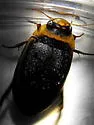
Hydaticus aruspex
Hydaticus aruspex
Identification: body and frons black, yellow-reddish spots on frons, elytra with sharply delimited yellow margins (Larson et al. 2001) ( H. piceus is brownish, with frons brown-rufous and no yellow lateral margins on the elytra)
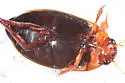
Hydaticus cinctipennis
Hydaticus cinctipennis
Identification: characterized by brown body, rufous to brownish frons, and sharp yellow margins on the elytra (in H. piceus paler margins fade away)
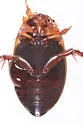
Hydaticus piceus
Hydaticus piceus
Identification: Very similar in terms of body and frons colouration to H. cinctipennis but lacks the sharply defined yellow margin on the elytron seen in the latter species.
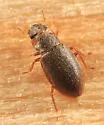
Hydraena americana
Hydraena americana
Jäch (1993) synonymized H. pennsylvanica with H. americana , as well as H. atlantica with H. pensylvanica (note differences in spelling of species names)
Hydraena pensylvanica
Hydraena pensylvanica
Jäch (1993) synonymized H. pennsylvanica with H. americana , as well as H. atlantica with H. pensylvanica (note differences in spelling of species names)
Hydrobiomorpha casta
Hydrobiomorpha casta
Identification: 6th and 7th antennomeres asymmetrical, 7th with a groove; clypeus emarginate, exposing part of the labrum ( 3 )
Hydrobius fuscipes
Hydrobius fuscipes
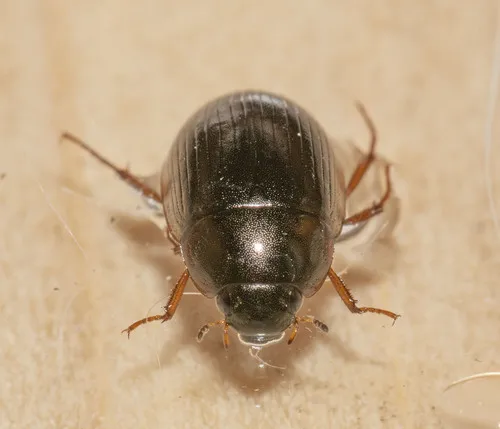
Length 6 to 8 mm with dark brown or black elytra, each with 10 grooved striae - the grooves fading towards the front, especially centrally. The legs are paler brown. The antennae have black clubs. Usually found in ponds and small pools with bank side
Hydrocanthus oblongus
Hydrocanthus oblongus
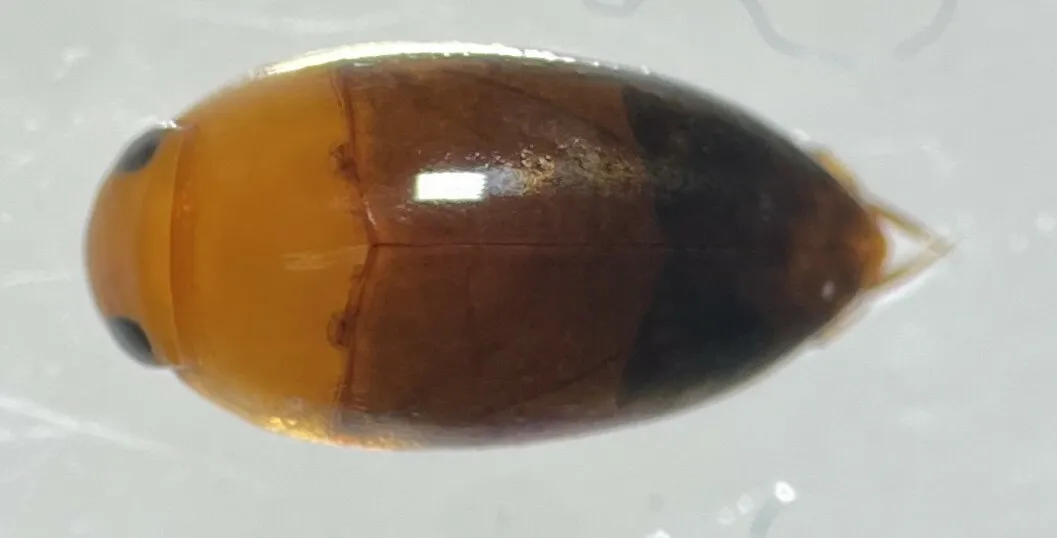
Identification: elytra may be slightly darker than head and pronotum The most abundant and common sp. in FL
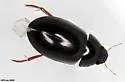
Hydrochara soror
Hydrochara soror
Identification: Often rusty below, sternal keel only slightly dilated--see print references and discussion here .
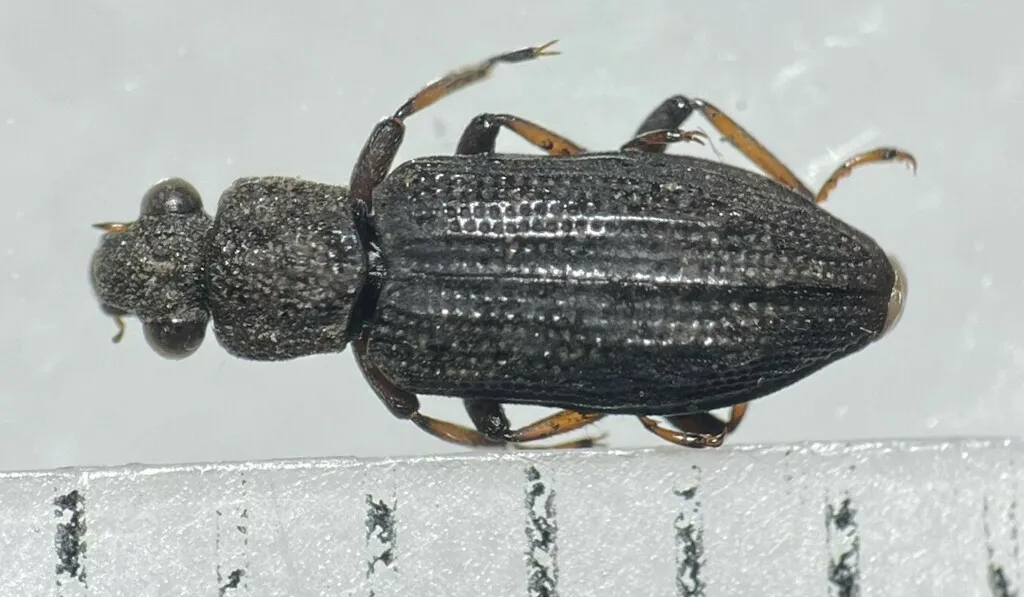
Hydrochus rugosus
Hydrochus rugosus
Identification: large size and distinct epicranial sulcus (groove)
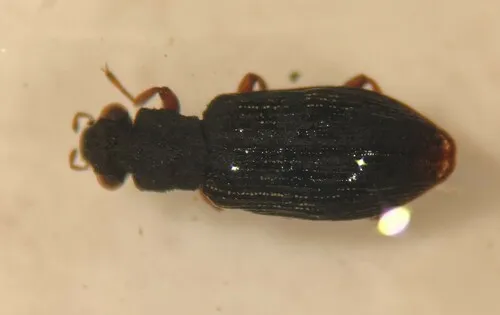
Hydrochus squamifer
Hydrochus squamifer
There is a southern species, H. jaechi Makhan, that also has expanded apices of the parameres. Known from FL, LA, MS, and TX.
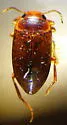
Hydrocolus paugus
Hydrocolus paugus
Hydrocolus paugus (Hydrocolus paugus) is a species in the family Dytiscidae, commonly known as predaceous diving beetles, belonging to the order Coleoptera (Beetles). It is classified within the subfamily Hydroporinae, tribe Hydroporini, suborder Ade
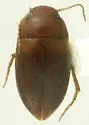
Hydrodytes dodgei
Hydrodytes dodgei
Identification: resembles a diminutive Copelatus , distinguished by smaller size and lack of elytral and sternal striae
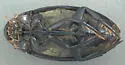
Hydrophilus ensifer
Hydrophilus ensifer
Identification: 2nd visible abdominal sternite with smaller glabrous (bare) area than H. triangularis or H. insularis
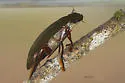
Hydrophilus insularis
Hydrophilus insularis
Identification: Very similar to H. triangularis . Male protarsus greatly expanded; female elytral apices with fine tooth; medial glabrous area on ventral tergites as shown in Short and McIntosh 2014.
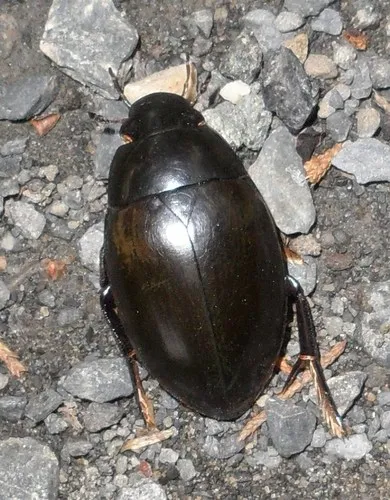
Hydrophilus ovatus
Hydrophilus ovatus
Identification: prosternum bilobed (undivided in Hydrophilus s. str., where other NA spp. belong) ; body broader and usually smaller than in H. triangularis the only member of the subgen. Dibolocelus in our area
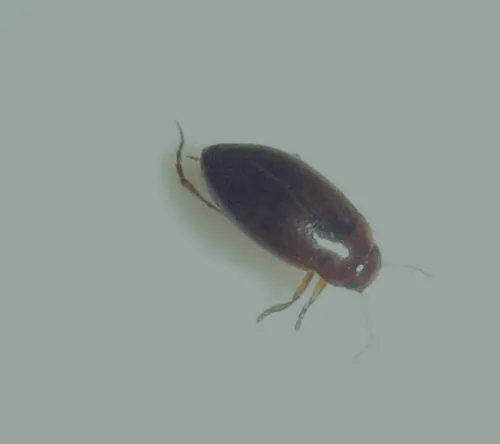
Hydroporus angustatus
Hydroporus angustatus
A small (approx 3 mm) mid to dark brown water beetle. No additional images available for this species.
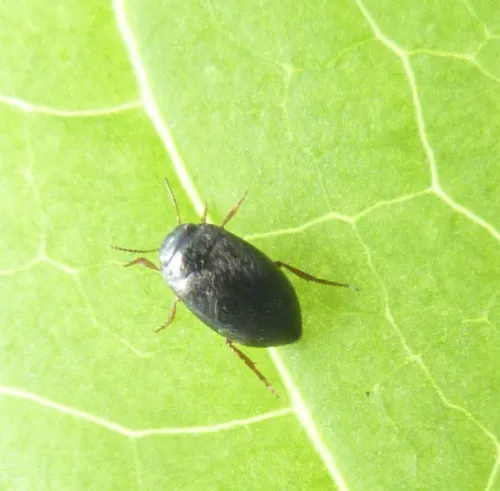
Hydroporus discretus
Hydroporus discretus
This is a small dark greeny black water beetle with orange brown legs and antennae. Widespread and fairly frequent in Britain. No additional images available for this species.
Hydroporus gossei
Hydroporus gossei
Identification: Similar to H. rectus, but more oval in shape, apexes of labial palps usually infuscated, and has coarser punctation.
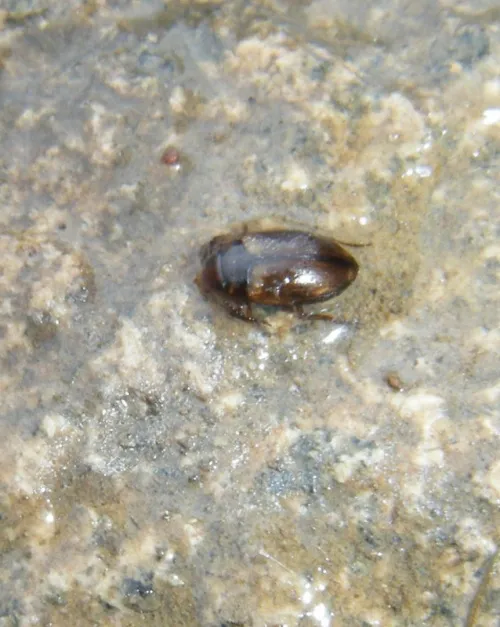
Hydroporus incognitus
Hydroporus incognitus
A small (3 to 3.5 mm) dark brownish water beetle with paler creamy orange coloured markings which vary from one specimen to another. In still water such as ponds and in slow moving water. No additional images available for this species.
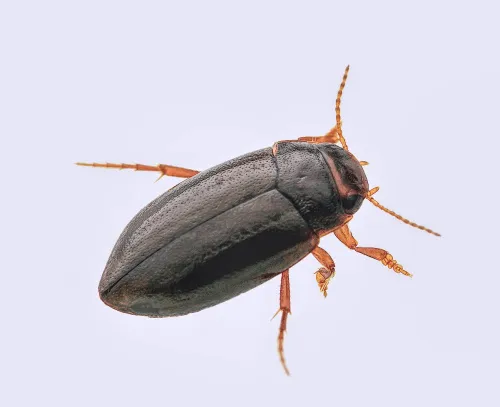
Hydroporus memnonius
Hydroporus memnonius
Length 3.8 to 4.3 mm. Sides more or less parallel. Colour may vary from rufous to almost black. Aedeagus with distinctive tongue-like process. Unless identified by a recognised expert, a photo is required and the specimen should be examined with a mi
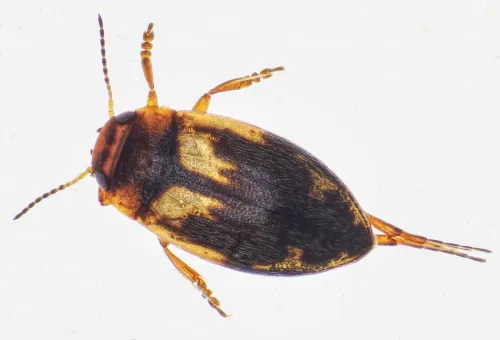
Hydroporus palustris
Hydroporus palustris
3.3 to 4.0 mm. Elongate oval; the elytral outline is smoothly curved from base to apex. Dark elytra with yellow patterning at the front and sides, though this can be variable. Head red at the front. Antennal segments darkened along the apical half. U
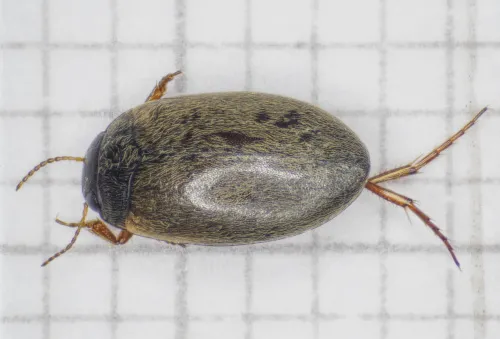
Hydroporus planus
Hydroporus planus
3.8 to 4.8 mm. Black head and pronotum with dark red/brown elytra. The front corners of the elytra are a paler grey. It is generally covered in long, pale hairs. Hydroporus species are generally very hard to separate but the size, black head, grey fr
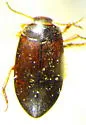
Hydroporus rectus
Hydroporus rectus
Identification: See Larson et al. for a detailed description.
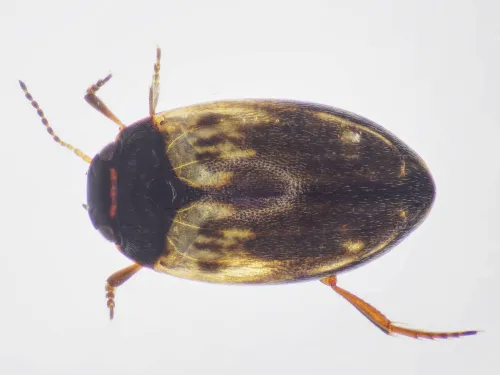
Hydroporus sinuatipes
Hydroporus sinuatipes
Identification: Relatively large species; protibia with ventral margin distinctly emarginate sub-basally, especially in the males • Holotype
Hydroporus tessellatus
Hydroporus tessellatus
Length 3.4-3.8mm. Whole of head and pronotum black. Elytra streaked and mottled, aedeagus blunt. No additional images available for this species.
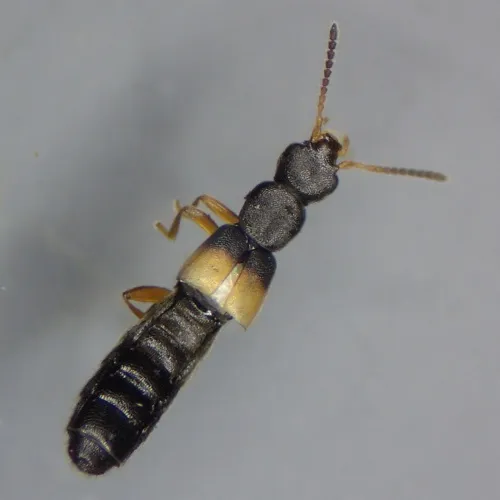
Hygronoma dimidiata
Hygronoma dimidiata
Length 3mm. Distal half of elytra yellow. Legs yellow. First four antennal segments yellow, the rest darker. Top of head and pronotum flattened. Unless identified by a recognised expert, the specimen should be keyed under a microscope and the disting
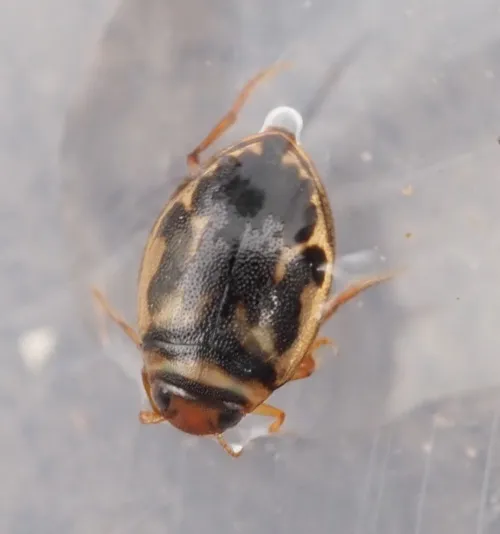
Hygrotus inaequalis
Hygrotus inaequalis
This is a small (3 mm) water beetle. The dark brown elytra are marked with paler yellowish buff. In the water of well vegetated ponds and ditches.
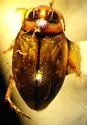
Hygrotus lutescens
Hygrotus lutescens
Identification: The only reliable character separating H. lutescens and H. sellatus is the sculpture of female abdominal sterna
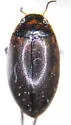
Hygrotus marklini
Hygrotus marklini
Identification: A rather uniformly coloured Hygrotus- dorsally brown to piceous (Very dark reddish brown) in colour, ventrally mainly black; head dark with an isolated pale spot on the frons; pronotum pale yellow brown anteriorly, darkened posteriorl
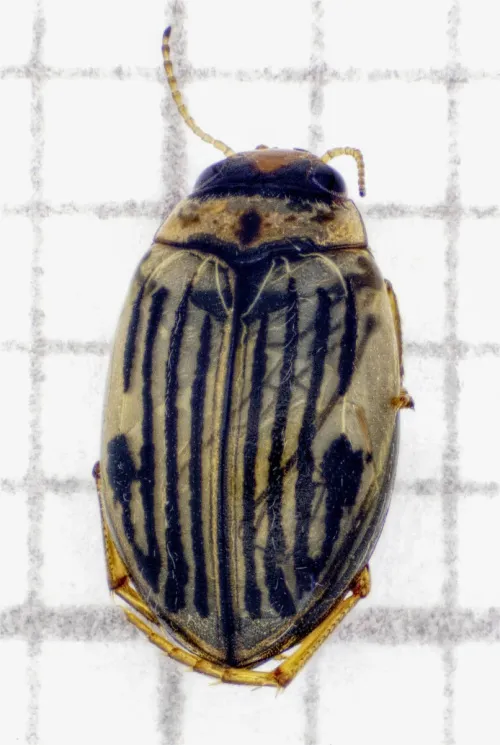
Hygrotus nigrolineatus
Hygrotus nigrolineatus
Length ~4mm. Distinctive body pattern of dark longitudinal lines. Pronotum predominantly pale yellow but typically with a dark patch or smudge in the middle. First recorded in the UK on 1983. Unless identified by a recognised expert, a photo is requi
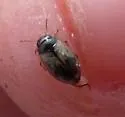
Hygrotus sellatus
Hygrotus sellatus
Identification: Species can be easily identified from the distinctive patterning of the elytra- there is distal brown blotch and a subhumeral spot on a pale background, the sutural margin is also dark; pronotum is dark, with paler anterolateral borde
Hygrotus wardii
Hygrotus wardii
The only species of Hygrotus with its primary distribution in Mexico
Hylastes macer
Hylastes macer
Identification: “unique in having the entire surfaces of the pronotum and elytra finely reticulate”
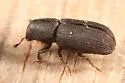
Hylastes opacus
Hylastes opacus
Identification: Couplet #3 in Wood’s key to the species of Hylastes of North and Central America was modified in Hoebeke to facilitate identification of H. opacus . earliest record in our area: NY 1987
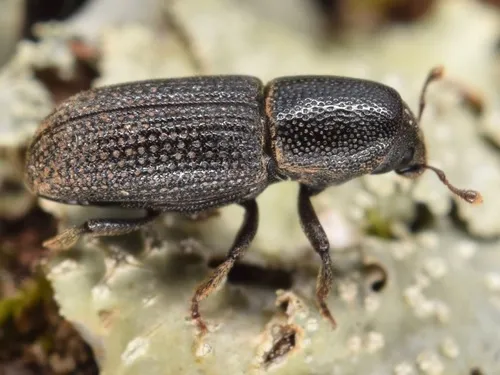
Hylastes porculus
Hylastes porculus
Adults are strongly attracted to freshly cut lumber. ( 3 )
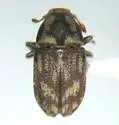
Hylesinus pruinosus
Hylesinus pruinosus
Identification: Similar to the more common H. aculeatus , but larger, lacks distinct asperites on pronotum, and coarse crenulations on elytral interstriae at high risk of endangerment due to the EAB
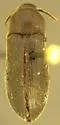
Hylis californicus
Hylis californicus
Identification: Species differs from other Nearctic species by the form of their antennae and larger size. Males have an elongated terminal antennal segment. Terminal four antennomeres are slightly elongate in female specimens. The Eucnemid is close
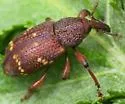
Hylobius transversovittatus
Hylobius transversovittatus
introduced in the US from Europe in 1992 to control purple loosestrife; released in NY-VA to MT-CO & WA-OR. Colonization of these introduced populations appear to have been successful . No indication that it feeds on other plants.
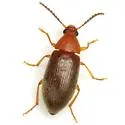
Hymenorus densus
Hymenorus densus
Identification: Det. E. G. Riley, 2011 Type Locality: Florida
Hymenorus discretus
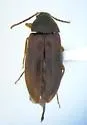
Hymenorus discretus
Reported by Walter et al. as a nest associate of Atta texana , but apparently, their ranges do not overlap . Waller & Moser suggest this might have been a misidentification of Lobopoda opacicollis Champion
Hymenorus dissensus
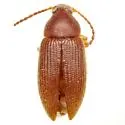
Hymenorus dissensus
Identification: Det. E. G. Riley, 2009 Type Locality: Galveston, Galveston Co., Texas
Hymenorus dorsalis
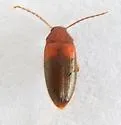
Hymenorus dorsalis
Identification: the red [elytral] color occupies not quite one-third of the length of the elytra Type Locality: Enterprise, Volusia Co., Florida
Hymenorus farri 0
Hymenorus farri
Identification: Hymenorus farri (Figs. 1, 2) is unique among its congeners in having dense median patches of fine setae and punctures on basal abdominal sternites in males (Fig. 3). Other species have punctures more evenly distributed over these surf