
Primitive Winged Insects
Order Coleoptera
The Primitive Winged Insects (Order Coleoptera) includes 15,720 species across 160 families and 3,716 genera in our directory.
About Primitive Winged Insects
Coleoptera is the largest order of insects with over 400,000 described species, representing ~25% of all known animal species and ~40% of all insects. In the U.S. alone, nearly 30,000 beetle species have been identified.
Economic Impact
Beetles have major economic significance: leaf beetles (Chrysomelidae) and weevils (Curculionoidea) are among the most destructive agricultural pests globally, costing billions annually, while predatory species like ladybugs provide natural pest control.
Ecological Role
Beetles are prominent decomposers, especially in forests, breaking down dead wood and recycling nutrients. As predators, they reduce populations of pest insects. Many species are also important pollinators of flowering plants.
Families in Coleoptera (160)
Species in Coleoptera (15,720)
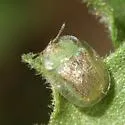
Eggplant Tortoise Beetle
Gratiana pallidula
Identification: Adult: in most live individuals, pronotum light green, elytra light golden brown with explanate, transparent margins; color of dead specimens mostly medium brown with lighter brownish-yellow margins; body oblong; elytral margins almos
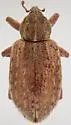
Egyptian Alfalfa Weevil
Hypera brunnipennis
Identification: close to H. postica , no reliable structural differences have been found except slight but consistent mandibular characters of the adult
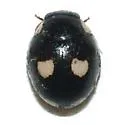
Eight-spotted Lady Beetle
Hyperaspis octonotata
Identification: Gordon's figures - Unique arrangement of elytral spots and shape of the discal spot
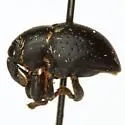
Eisonyx crassipes
Eisonyx crassipes
Identification: Det. H. R. Burke, 2002 Type Locality: Tex.
Eisonyx picipes 0
Eisonyx picipes
Identification: Body distinctly widest at middle (Fig. 12); hypomeron not carinate, with punctures nearly round; elytral striae deepest and most distinct basally Described from one specimen collected at Nashville, Tennessee, in September in a strawbe
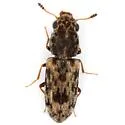
Elacatis senecionis
Elacatis senecionis
known from San Diego Co., CA and Hidalgo and La Salle counties, TX; also known from Baja (D. Pollock, 2016)
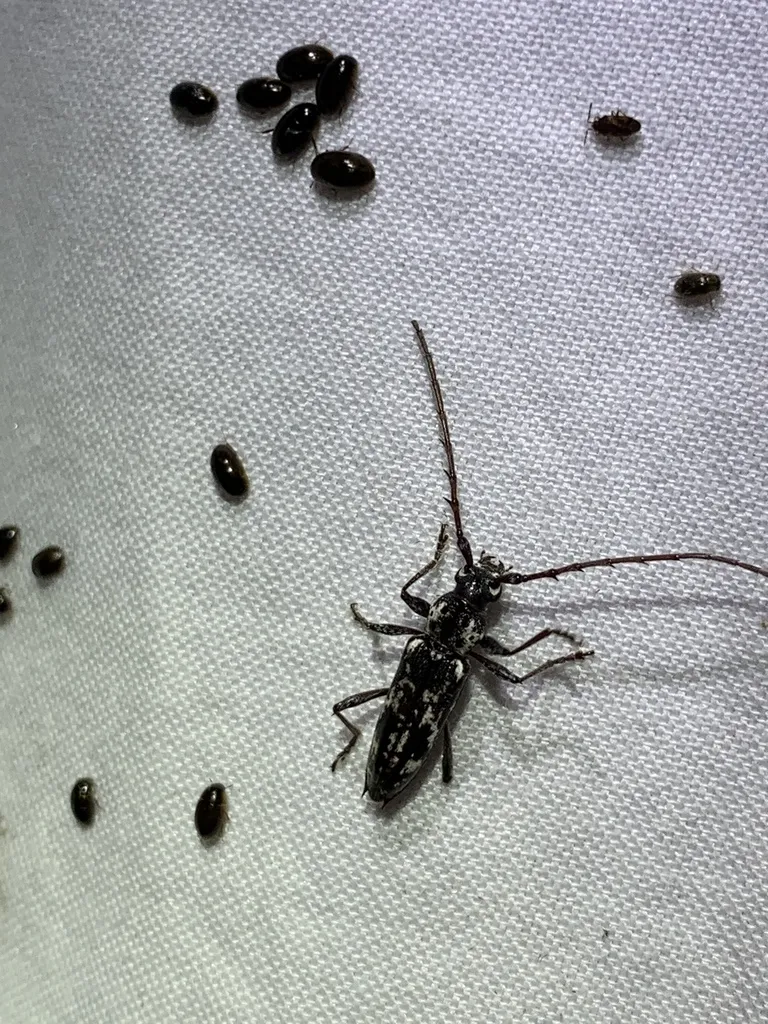
Elaphidion cryptum
Elaphidion cryptum
Elaphidion cryptum is a species of beetle in the family Cerambycidae. It was described by Linsley in 1963.
Elaphidion linsleyi
Elaphidion linsleyi
Identification: resembles E. mucronatum , but the apical spines on inside of meso- and metfemora are broad (acute in E. mucronatum )
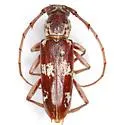
Elaphidion mimeticum
Elaphidion mimeticum
Identification: has white on the lower sides of the pronotum SYNTYPE Taken at molasses bait and attracted to lights ( 3 ) Types, two males and two females, Brownsville, Texas, Esperanza Ranch. (Schaeffer 1905)
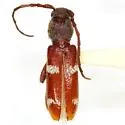
Elaphidionopsis fasciatipennis
Elaphidionopsis fasciatipennis
Type Locality: Devil's River near Del Rio, Val Verde Co., Texas "Very rare in collections"
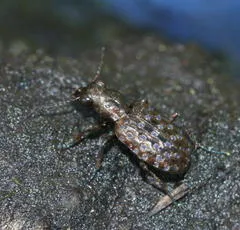
Elaphrus cupreus
Elaphrus cupreus
Length 8 or 9 mm. Bronze with conspicuous purple ocellate depressions on the elytra. Antennae are black, tibiae are brown and the rest of the legs are black but often with metallic, usually bluish, reflections. The head is wider than the quadrate pro
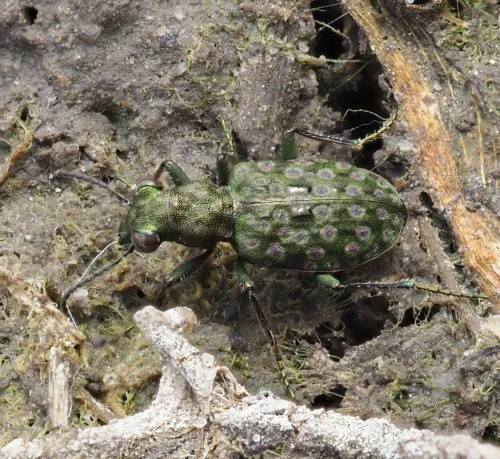
Elaphrus riparius
Elaphrus riparius
Length 6.5 to 7.5 mm. Metallic green elytra with pale lilac markings and a pair of round violet depressions that appear to be edged with silver in strong light. Legs long, femora metallic green, strongly microsculptured, tibiae red but darkened and m
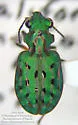
Elaphrus viridis
Elaphrus viridis
Identification: Bright metallic green, with no or reduced circular pits on the elytra federally threatened species as of 8.viii.1980 under the Endangered Species Act; on California's "Special Animals" list The development of the Central Valley for ag
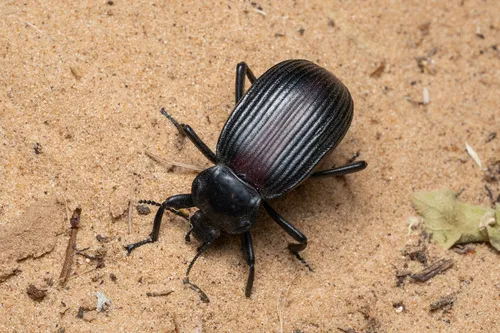
Eleodes acuta
Eleodes acuta
The gender of Eleodes is feminine , so adjectivic species names end -is or -a, not -um.
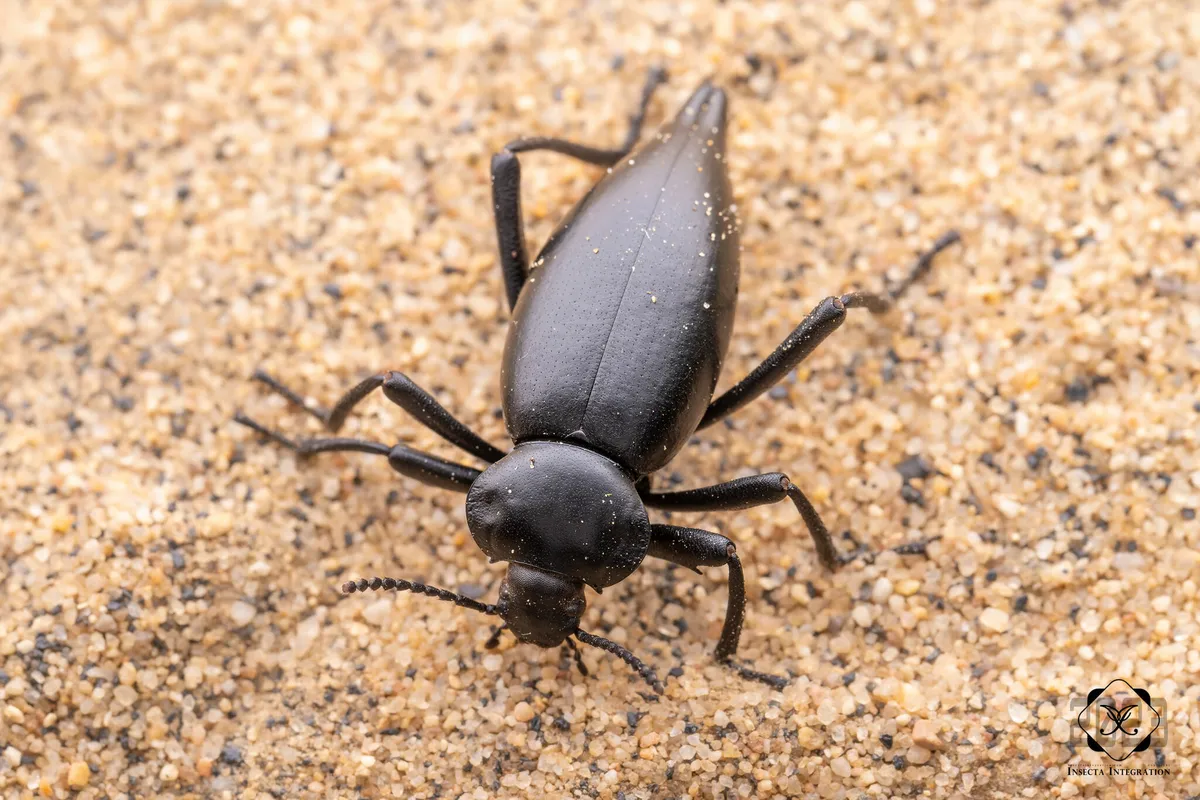
Eleodes acuticauda
Eleodes acuticauda
Identification: (Below comments drawn from experts on ) Strongly arcuate pronotum twice width of the head with dentate projections on the anterior corners. Versus Coelocnemis, has a large, broad head rather than a small one, and spines are present on
Eleodes debilis
Eleodes debilis
Identification: This is a small species, ovate and convex in body shape, which resembles some E. carbonarius in punctation. It is glabrous and shining with the integument finely and sparsely punctulate. The pronotum is subquadrate and widest at the m
Eleodes fusiformis
Eleodes fusiformis
Most abundant Eleodes in the high grasslands of central New Mexico (Wise 1981)
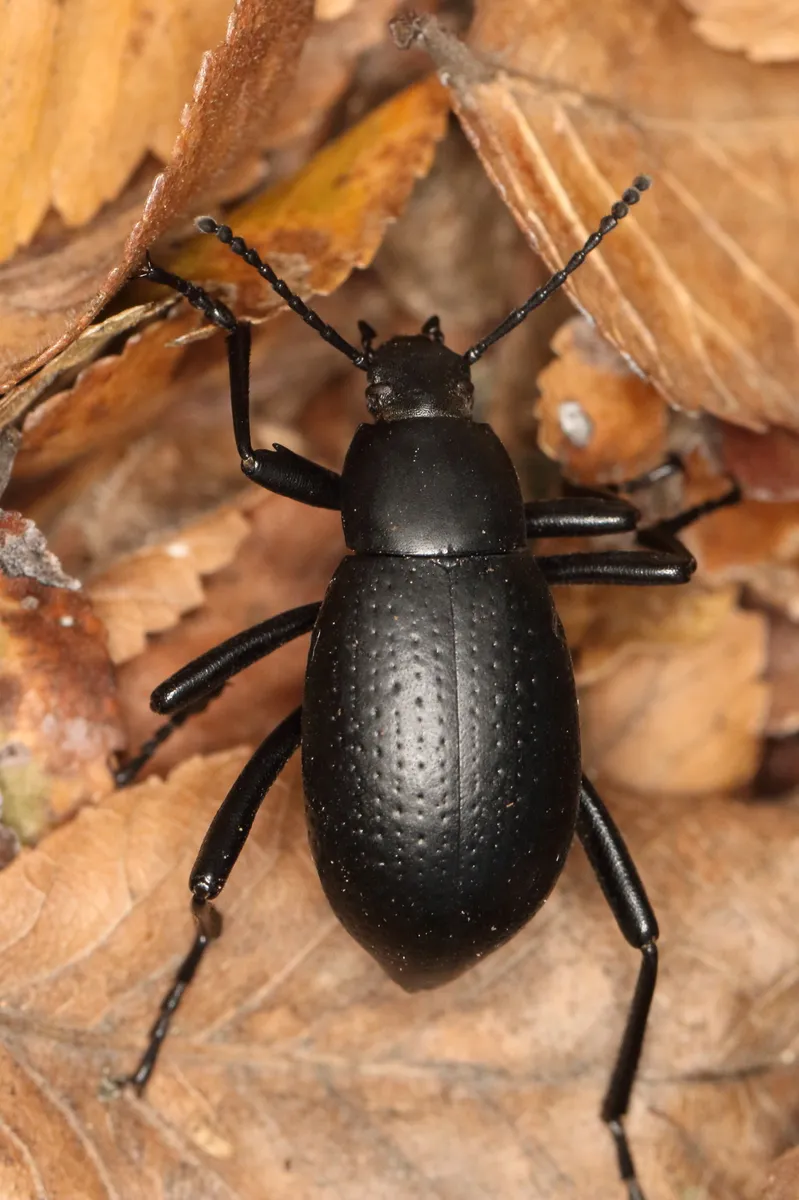
Eleodes goryi
Eleodes goryi
Identification: --- male --- and --- female --- Type Locality: Mexico
Eleodes halli
Eleodes halli
Identification: Very similar to E. rileyi but with conspicuous setae on the elytra
Eleodes knullorum
Eleodes knullorum
Identification: The elytral striae are formed by much finer punctures than E. goryi and the integument is dull Det. T. Hedlund, 2019
Eleodes mirabilis
Eleodes mirabilis
Identification: distinctive, each elytron with sutural and three discal costae, intervals between which are usually coated with clay-like material causing the shiny costae to stand out in bold relief PARATYPE (male) rare in collections, known from th
Eleodes nigropilosa
Eleodes nigropilosa
Identification: Similar to E. littoralis , but with black hairs ( vs pale or tawny), and occurring right along the coast (sand dunes, wetlands, etc.) ―J. Bailey
Eleodes spiculifera
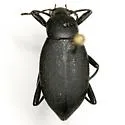
Eleodes spiculifera
Identification: last line in key: Integument dull, opaque; basal three protarsomeres of male with pads or tufts of golden setae on plantar surface
Eleodes striolata
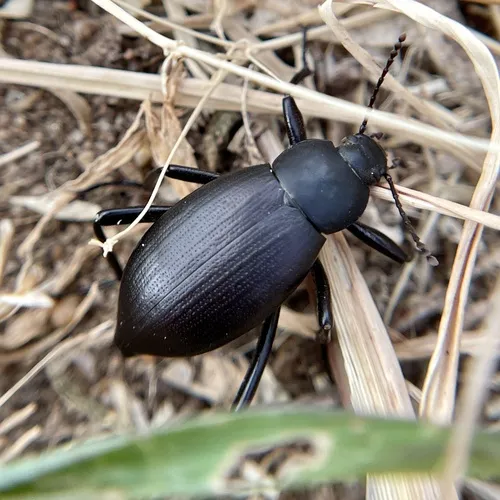
Eleodes striolata
Identification: easily recognized by the closely spaced double row series of fine elytral punctures. the profemora are dentate in the male, sinuate in the female. the body is fusiform (male) to ovate (female) and both sexes are briefly caudate. The g
Eleodes suturalis
Eleodes suturalis
Say's description of his first encounter with this beetle: "...the party arrived at the village of the Konza [Kansas] Indians, hungry, fatigued, and out of health. Commiserating our situation, these sons of nature, although suffering under the injust
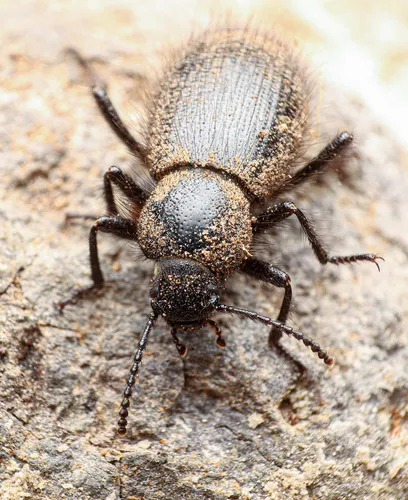
Eleodes tribulus
Eleodes tribulus
Identification: Body elongate ovate, covered in long, pilose setae. Pronotum subquadrate, lateral margins arcuate, narrowing posteriorly, anterior angles rounded, not produced, disc moderately punctate. Elytra with moderate punctures arranged in more
Eleodes tricostata
Eleodes tricostata
the most common and widespread member of the genus; garden and wheat pest The gender of Eleodes is feminine , so adjectivic species names end -is or -a, not -um.
Eleodes wenzeli
Eleodes wenzeli
Identification: "general shape of E. tricostata or E. pedinoides , but elytra not strongly sulcate" - I Fox
Eleven-spotted Lady Beetle
Coccinella undecimpunctata
Identification: More elongate and less convex than any other species of Coccinella . Head with 2 well separated pale spots ( C. novemnotata has a solid band) Elytral suture red, not or only slightly darker than the pale discal area. Elytron usually w
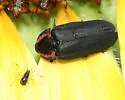
Ellychnia facula
Ellychnia facula
Identification: Lateral vitta of the pronotum wider than black margin, typically with two dark spots along inner margin in the discal area (sometimes merged with discal spot). Elytron with two costae.
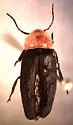
Ellychnia flavicollis
Ellychnia flavicollis
Identification: all-orange pronotum distinctive within the genus • Holotype Has fairly large lights for a diurnal species and they need to be photographed in the dark or otherwise measured to get some idea of how bright they are. Lights of male and f
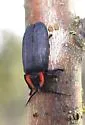
Ellychnia greeni
Ellychnia greeni
Identification: Separated from similar species in its range by the following characters:
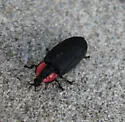
Ellychnia megista
Ellychnia megista
Identification: can be distinguished by black pubescence; CA distribution; convex median portion of pronotum finely punctate and shining; pronotum bicolored; with broad, uninterrupted, red, sub-lateral vittae from apex to base; narrow black lateral e
Elm Bark Borer
Physocnemum brevilineum
Identification: Det. Guy A. Hanley, 2010 uncommon ( 6 )
Elm Borer
Saperda tridentata
Identification: Elytra covered with powdery/pearly-gray to medium gray pubescence; orangish or reddish stripe along lateral margin, and 3 bands of same color across each elytron; basal band extends inward at right-angles to margin for short distance,
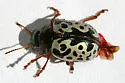
Elm Calligrapha
Calligrapha scalaris
has become less common due to its main host, the American Elm , being devastated by Dutch Elm Disease
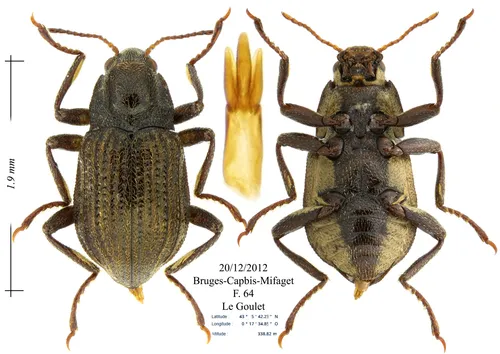
Elmis aenea
Elmis aenea
A very small (2 mm) riffle beetle that is equipped with strong claws to enable it to grip in strong currents. It is a dark coloured species with very deeply ridged elytra. It is a water beetle of running water, but cannot swim and lives amongst stone
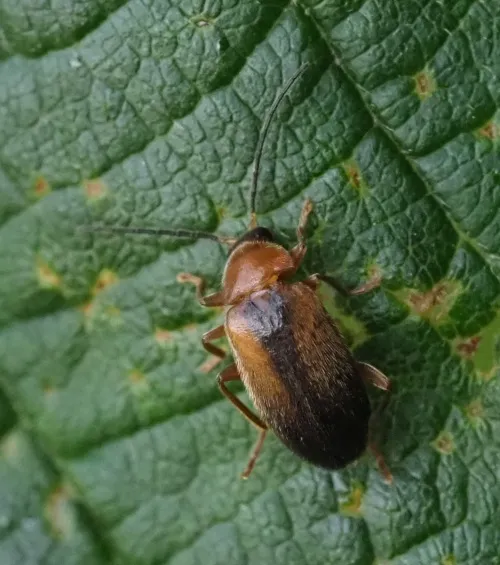
Elodes minutus
Elodes minutus
Please provide photograph to support your record. Although the larvae live in water, the adults can be found on vegetation. Peak months for this species are May and June. No additional images available for this species.
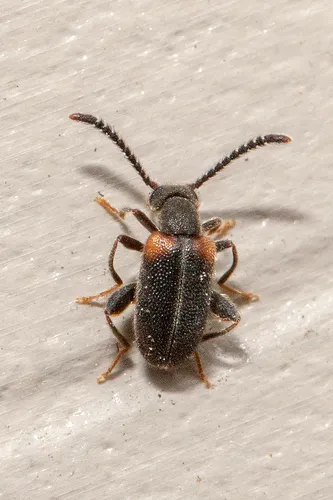
Elonus basalis
Elonus basalis
Identification: Distinct from other nearctic species with orange elytral marks by its elongate antenna (antennomeres 4–9 twice as long as wide), the unusually long male genitalia, and a post-median elytral stripe of whitish pubescence, distinct under
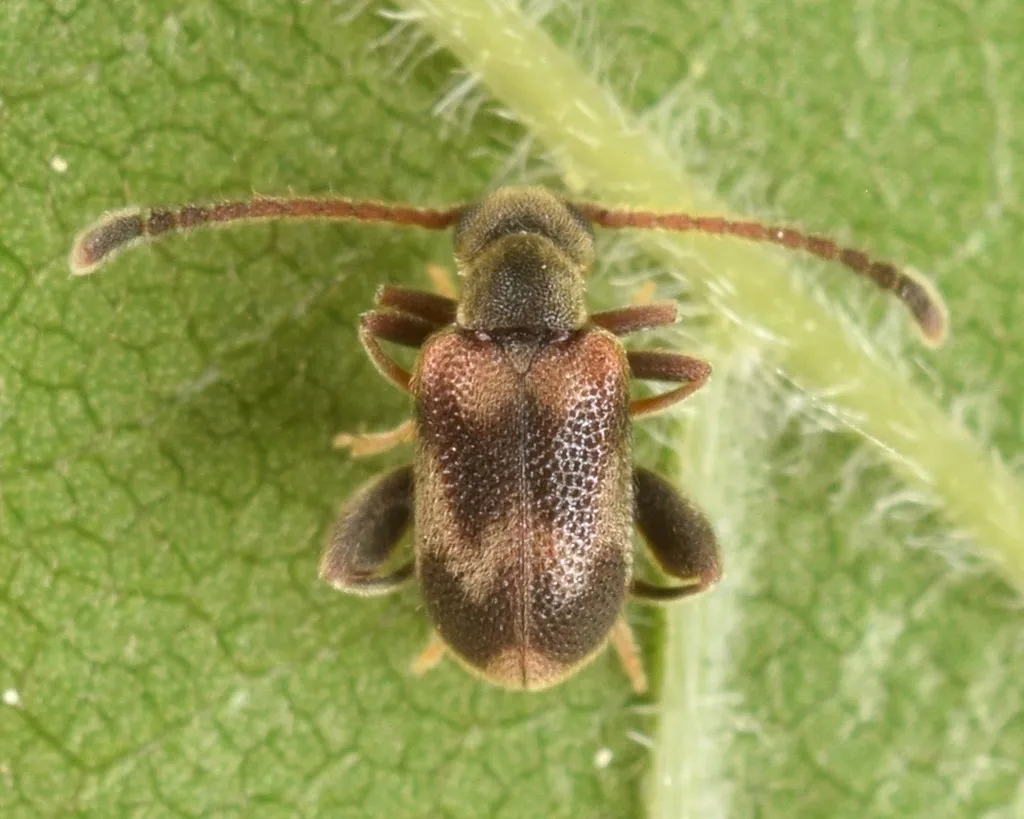
Elonus nebulosus
Elonus nebulosus
Identification: Markings distinctive among Nearctic aderids
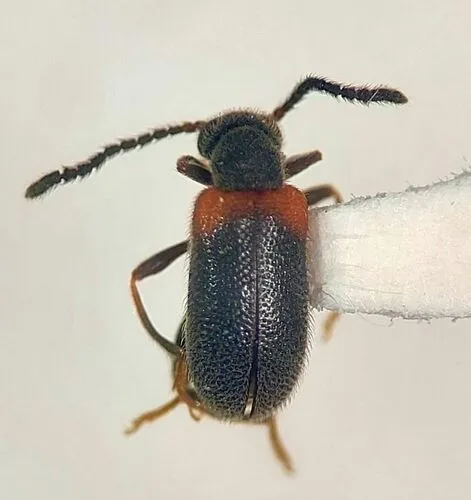
Elonus simplex
Elonus simplex
Elonus simplex is a species of ant-like leaf beetle in the family Aderidae. It is found in Central America and North America.
Elytroleptus divisus
Elytroleptus divisus
long series (12 spmns) in the UTIC coll'ed in April from Dimmit Co. in s. TX ( 5 )
Elytroleptus floridanus
Elytroleptus floridanus
Elytroleptus floridanus (Elytroleptus floridanus) is a species in the family Cerambycidae, commonly known as longhorn beetles, belonging to the order Coleoptera (Beetles). It is classified within the subfamily Cerambycinae, tribe Trachyderini, subord
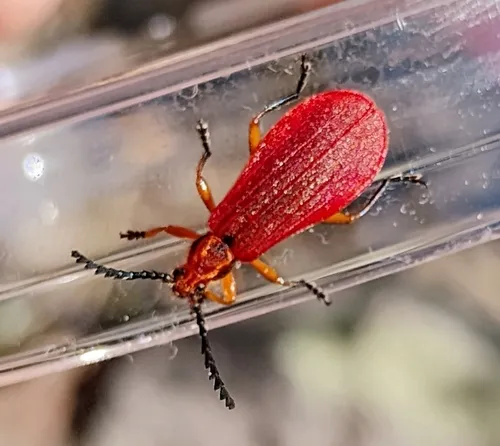
Elytroleptus limpianus
Elytroleptus limpianus
Elytroleptus limpianus is a species of beetle in the family Cerambycidae. It was described by Skiles & Chemsak in 1982.
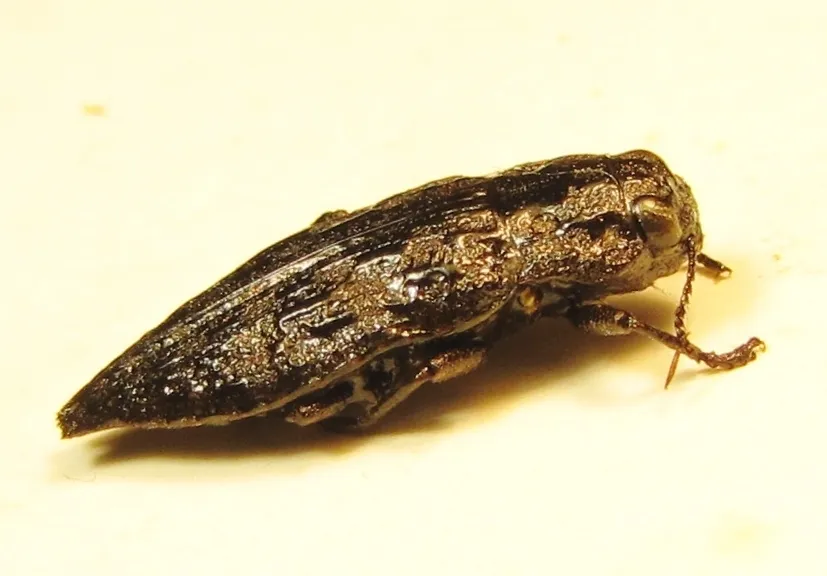
Embossed Hawthorn Buprestid
Dicerca lepida
Dicerca lepida, the embossed hawthorn buprestid, is a species of metallic wood-boring beetle in the family Buprestidae. It is found in North America and varies in size between 13.5 and 17.5 millimetres (0.53 and 0.69 in).
Emelinus butleri
Emelinus butleri
Identification: Some of the rami almost 2/5 total length of antenna (Werner 1956) Type Locality: Ramsey Canyon, Huachuca Mts., Cochise Co., Arizona, July 12, 1955, F. G. Werner & G. D. Butler
Enaphalodes archboldi
Enaphalodes archboldi
Identification: conspicuous uniform appressed fulvous pubescence that densely covers elytral surface Type Locality: Archbold Biological Station, Highlands Co., FL
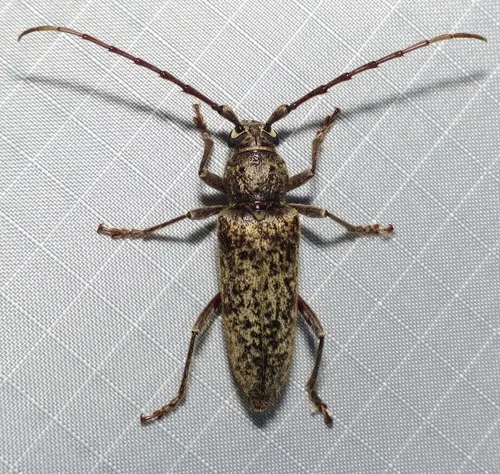
Enaphalodes atomarius
Enaphalodes atomarius
Enaphalodes atomarius is a species of beetle in the family Cerambycidae. It was described by Dru Drury in 1773 from New York City.
Enaphalodes niveitectus
Enaphalodes niveitectus
Identification: Det. S. Lingafelter, 2013 Type Locality: Miller Canyon, Huachuca Mountains, Cochise County, Arizona
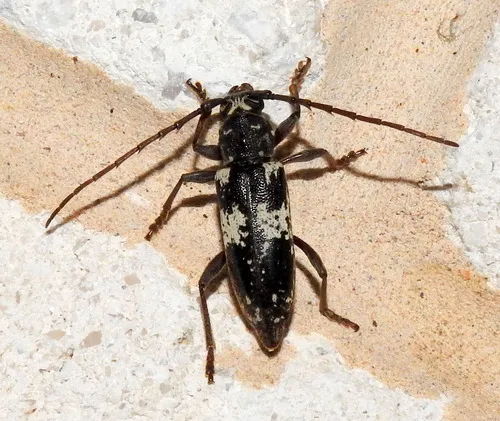
Enaphalodes taeniatus
Enaphalodes taeniatus
Identification: generally lacks white on the top edges of the pronotum, see: Cerambycidae Catalog Det. M. J. Heiman, 2011 taken at lights Type Locality: Between Laredo and Ringgold Barracks, [Starr Co.,] Texas
Enchodes sericea
Enchodes sericea
Identification: tarsi not as elongate as in Synchroa , and no fine rows of tiny silvery hairs on elytra. --Doug Yanega, 16.vi.2008 one of my favorite Serropalpines... they are fun to watch at night on their rotting logs or tree limbs. They move very
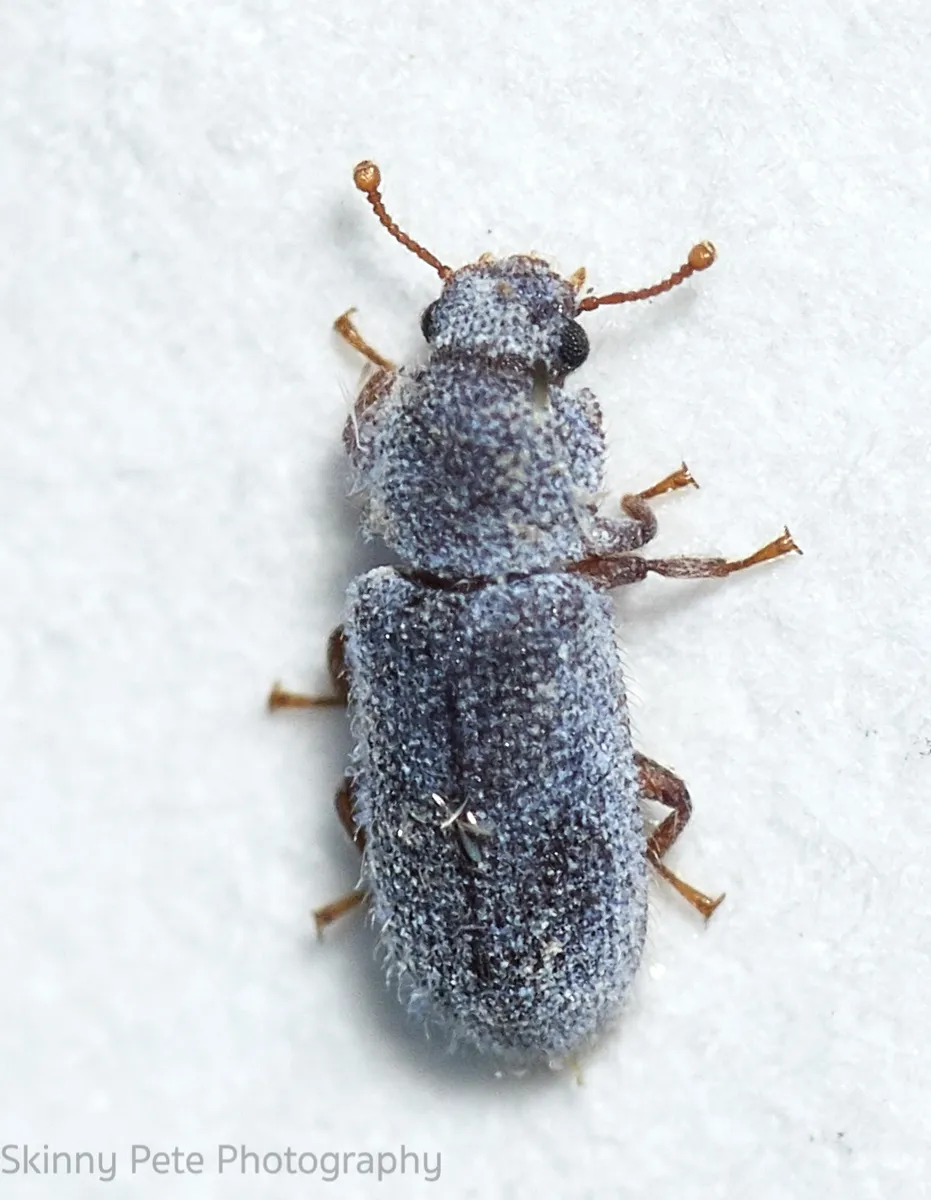
Endeitoma granulata
Endeitoma granulata
Endeitoma granulata (Endeitoma granulata) is a species in the family Zopheridae, commonly known as ironclad beetles, belonging to the order Coleoptera (Beetles). It is classified within the subfamily Colydiinae, tribe Synchitini, suborder Polyphaga,
Endeodes basalis
Endeodes basalis
Identification: According to Moore and Legner, 'This species is distinct in the combination of its long piceus elytra with the base pale and its cordate pronotum. The color of the abdomen is variable, ranging from entirely ferruginous to entirely pi
Enicmus aterrimus
Enicmus aterrimus
[the "introduced from Europe" remark in Downie and Arnett (1996) ( 4 ) is an error; this native nearctic sp. does not occur in Europe. =v=]
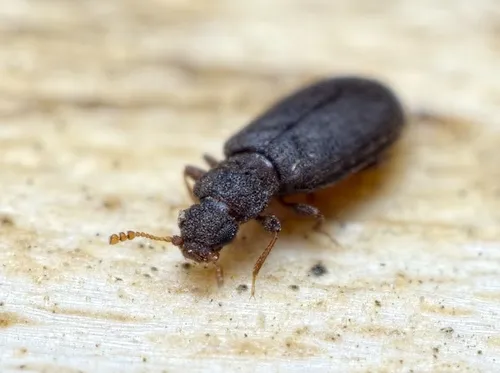
Enicmus brevicornis
Enicmus brevicornis
Length 1.5-2mm. Dull black, femora usually pitchy. Unless identified by a recognised expert, a photo is required and the specimen should be examined with a microscope. In the comments box, state the key or ID method used and describe the size and ide
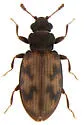
Enicmus maculatus
Enicmus maculatus
Identification: Elytra color testaceous, tessellated [checkered] with black quadrate spots, margin blackish Det. Nicolas Gompel, 2008 Type Locality: Detroit, MI
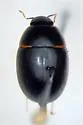
Enochrus cinctus
Enochrus cinctus
Identification: The distinctively undercut mesosternal crest easily identifies this species. Note also the pale lateral margins of the clypeus, pronotum and elytra, the shallow abdominal notch and the simple protarsal claws of the male (vs basally to
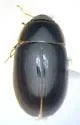
Enochrus hamiltoni
Enochrus hamiltoni
Identification: widely misidentified confused with other species, likely including many of the photos on the guide page here
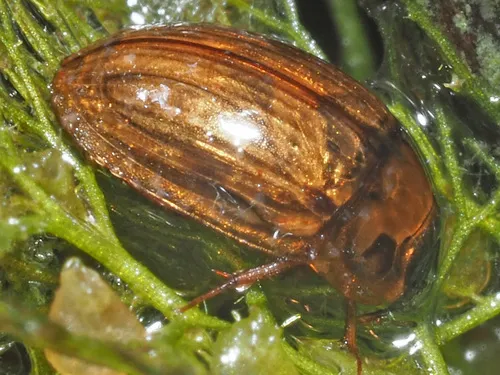
Enochrus melanocephalus
Enochrus melanocephalus
Length 5.5 to 6.5 mm. A pale straw coloured water beetle. Associated with richly vegetated pools and ponds, sometimes in shaded areas. It is widespread in England to Northumberland but few records for the south west, Wales and Ireland with none for S
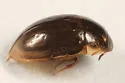
Enochrus ochraceus
Enochrus ochraceus
Identification: Low, rounded mesosternal crest; quite variable in coloration. Noted as "one of the most common and abundant water beetles in Florida."
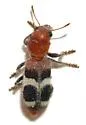
Enoclerus analis
Enoclerus analis
Identification: "quite variable across their range" (J. Rifkind, pers. comm. to MAQ, 2025)
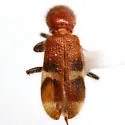
Enoclerus angustus
Enoclerus angustus
Identification: In FL, has blackish to reddish legs and is nearly entirely red to reddish-pink. Det. J. Rifkind, 2008 Leavengood's key to similar spp. in FL 3. Abdomen red..................................................4 3’. Abdomen black..........
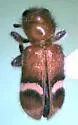
Enoclerus lunatus
Enoclerus lunatus
Identification: Each elytron with one crescent-shaped creamy white slightly elevated lunula located behind the middle, the punctation of the lunula being much less coarse and dense than the remaining elytral regions, the pubescence on the lunula no m
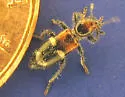
Enoclerus nigrifrons
Enoclerus nigrifrons
Identification: In FL, has a red head, pronotum, legs, antennae and mouthparts. The basal third of the elytra is red, followed by an arched, white mid-elytral fascia which is not anteriorly margined with black. - spmn from OK Det. K. H. Stephan, 2002
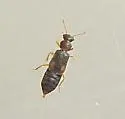
Ephelinus guttatus
Ephelinus guttatus
Identification: Differs from notatus by the spot being larger and posterior to the middle of the elytra. Det. Brad Barnd, 2025
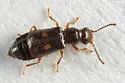
Ephelinus notatus
Ephelinus notatus
Identification: Differs from guttatus by the spot being smaller and not posterior to the middle of the elytra. Det. Margaret Thayer, 2013 Type Locality: Pennsylvania
Ephelinus pallidus 0
Ephelinus pallidus
Identification: The fuscous marks of the elytra consist of a sinuated vitta extending from the humerus to the tip near the suture; the external margin is also dark. Type Locality: Kansas
Ephistemus globulus
Ephistemus globulus
"very likely introduced in North America and not a truly Holarctic species" -Yves Bousquet, pers. comm. to =v=, 29.ii.2012
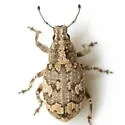
Epicaerus lepidotus
Epicaerus lepidotus
Described from eight specimens collected by E. A. Schwarz at San Antonio, Texas, May 9 and 10. It is also at hand from Cotulla and Brownsville, Texas. (Pierce 1910)
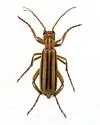
Epicauta abadona
Epicauta abadona
Identification: Each elytron with 2 well-defined black stripes, marked in ground color and pubescence, on a luteous background Det. Salvador Vitanza, 2022 Scarce. Most frequently taken at light
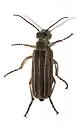
Epicauta alastor
Epicauta alastor
Identification: Though a member of Macrobasis , the first antennomere is not conspicuously modified even in males. Similar to E. hirsutipubescens/virgula , but antennomere 3 much longer than 2, and antennae relatively longer Type Locality: Florence,
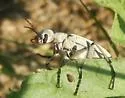
Epicauta albida
Epicauta albida
Identification: ant. pale basally, esp. in the male, and by the dark maculae on the abdomen medially like many meloids, this sp. has periodic outbreaks
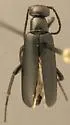
Epicauta alphonsii
Epicauta alphonsii
Horn's original usage was alphonsii which he continued in subsequent publications so clearly the spelling was intentional. Subsequent authors have continued with that same spelling. The name was in honor of a Mr. Alphonse so, true, we currently wou
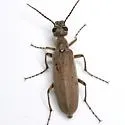
Epicauta arizonica
Epicauta arizonica
Identification: Legs brown, not contrasting with rest of body; male antennomeres 1 & 2 elongate, but together shorter than 3 thru 11; female antennomeres 1-2 with some cinereous pubescence may be common at light
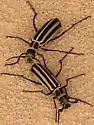
Epicauta atrivittata
Epicauta atrivittata
Identification: Elytra cinereous-pubescent, with two wide black stripes down each, these connected behind ( 3 ) Det. J. C. Abbott, 1993 generally rare in Arizona. ( 3 )
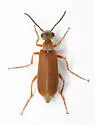
Epicauta batesii
Epicauta batesii
Identification: Pubescence as thin as in most E. pruinosa , a bit condensed at elytral margins, not much affecting colour of integument. Body tan to brown (head darker), legs even paler, eyes very large. • Holotype
Epicauta brunnea
Epicauta brunnea
Identification: large eyes, form of the ant., and brown color
Epicauta callosa
Epicauta callosa
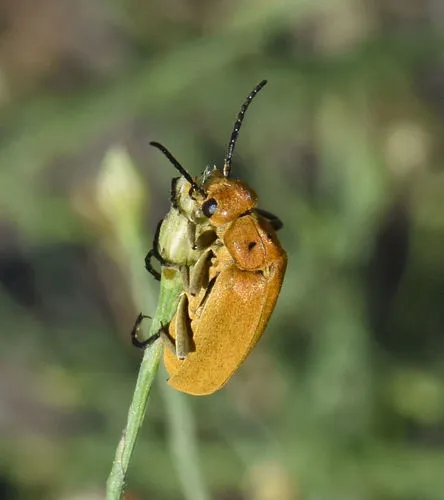
Identification: distinguished at once by the two glabrous callosities on the pronotum v belov, 22 August, 2020
Epicauta cazieri
Epicauta cazieri
Identification: closely related to E. maculata , it differs in the protibial spurs and maxillary palpi being unmodified in the male and in the maculae of the head and pronotum being densely placed, as well as in having the tibiae and tarsi pale.
Epicauta cicatrix 0
Epicauta cicatrix
Identification: "distinguished from the other members [of the caviceps -group], and from all other Nearctic and Neotropical members of Epicauta , by the form of the second antennal segment (see fig. 5)." Type Locality: Presidio, Texas, Nov. 14, 1944,
Epicauta conferta
Epicauta conferta
Identification: Elytra short, leaving the tip of the abdomen exposed, separately rounded. Wingless. Det. v. belov, 2019 Type locality: "Council Bluffs, Iowa and near the Rocky Mountains." Say's type lost. Neotype locality: Dallas, Texas.
Epicauta corvina
Epicauta corvina
Identification: black, feebly shiny; pubescence moderately dense and black. Posterior tibial spurs spiniform. ( 3 )
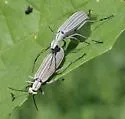
Epicauta costata
Epicauta costata
Identification: head and pronotum with narrow glabrous midline; elytra with the suture, side margins and four ridges on each sharply elevated; male with antennal segments 3-5, and to a lesser extent 2, elongate, slender, and shiny above. Det. Salvado
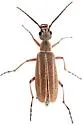
Epicauta crassitarsis
Epicauta crassitarsis
Identification: Male with basal segment of middle tarsi inflated (diagnostic). Ground color often uniformly tan but sometimes with head and pronotum clouded with brown to dark brown.
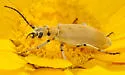
Epicauta diversipubescens
Epicauta diversipubescens
Identification: pubescence yellowish, some dark ventral maculation. Pubescence denuded at pronotal front angles (less so behind angles), resulting in darker spots. ( E. rileyi may show a similar pattern but have a very distinct pit at inner eye margi
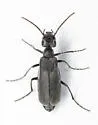
Epicauta excavatifrons
Epicauta excavatifrons
Identification: Head deeply impressed in middle to look deformed; base of elytra also depressed in a triangle
Epicauta fortis
Epicauta fortis
Populations of E. fortis in SE Texas are disjunct from the main range of the species. Besides distribution these populations differ slightly morphologically and occur later in the year. (J.D. Pinto, pers. comm. to =v= 6.xi.2010)
Epicauta hirsutipubescens
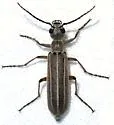
Epicauta hirsutipubescens
Epicauta hirsutipubescens (Epicauta hirsutipubescens) is a species in the family Meloidae, commonly known as blister beetles, belonging to the order Coleoptera (Beetles). It is classified within the subfamily Meloinae, tribe Epicautini, suborder Poly
Epicauta immaculata
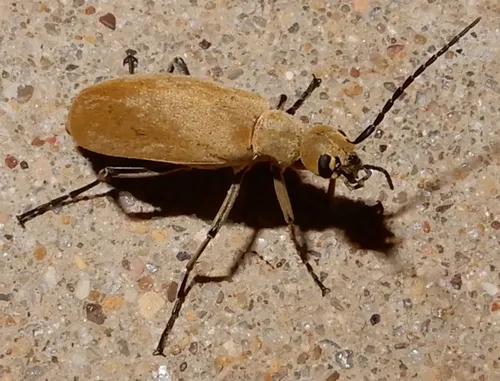
Epicauta immaculata
Identification: Dets. John D. Pinto Larson reports finding the remains of 94 individuals of E. immaculata in the course of examining the stomach contents of 100 individuals of the toad Bufo americanus Holbrook, taken in potato fields at Fort Thompson
Epicauta lauta
Epicauta lauta
Identification: Legs partly black, in contrast with body. Basal antennal segments not enlarged in either sex and without cinereous pubescence
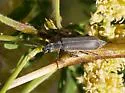
Epicauta liebecki
Epicauta liebecki
Identification: elytra brown, with paler margins; legs rufous with black tips to segments. male antennal segments 1 and 2 together longer than 3 to 11 together Det. Boris Büche, 2021
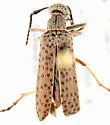
Epicauta maculifera
Epicauta maculifera
Identification: our only maculate member of this subgenus
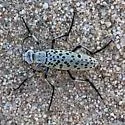
Epicauta magnomaculata
Epicauta magnomaculata
Identification: distinguished from other maculate species by the more slender form and a pair of small denuded callosities on the pronotum
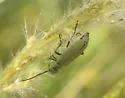
Epicauta mimetica
Epicauta mimetica
Identification: Labrum deeply incised - the giveaway character. Antennae slender, scape in male just reaching beyond eye, in female, almost so; pedicel half as long as scape in either sex; A3 2× as long as pedicel in female, ⅔ as long in male. • Synt
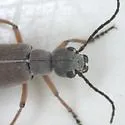
Epicauta nigritarsis
Epicauta nigritarsis
Identification: in part: light-colored elytral suture; distinct patch of dark setae on humeri; legs mostly orangish except black tarsi. Det. E. G. Riley, 2010 Key to species in Pinto Type Locality: Mexican Boundary
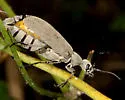
Epicauta obesa
Epicauta obesa
Identification: Most resembles E. cinerea , vestiture always in one colour (grey - brown - black); male antennae without long hairs within, shorter than in the other sp.. Dark abdominal spots in some males.
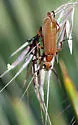
Epicauta ochrea
Epicauta ochrea
Identification: bright ferruginous with moniliform (beaded) antennae ( 3 ) Det. E. G. Riley, 2004 head and pronotum often darker than elytra male, female
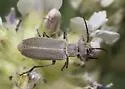
Epicauta oregona
Epicauta oregona
Identification: Maculate; vestiture rather thin, thus usually dark grey in colour; dotting small, or even indistinct. Male antennae wider, and flattened in the basal half (ensiform). belongs to the E. bispinosa -group
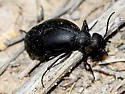
Epicauta parvula
Epicauta parvula
Identification: Easily mistaken for a Meloe by shape, and unusually strong, and spaced punctures flightless
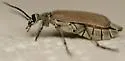
Epicauta polingi
Epicauta polingi
Identification: a pair of black spots on the elytral bases, plus the elytra are generally of a different shade of gray from that of the head and pronutum, males have thickened ant. basal segments male, female Type Locality: Davis Mtns, TX