
Epicauta immaculata
This record describes Epicauta immaculata (species). Recorded family: Meloidae. Recorded order: Coleoptera.
Identification and Appearance
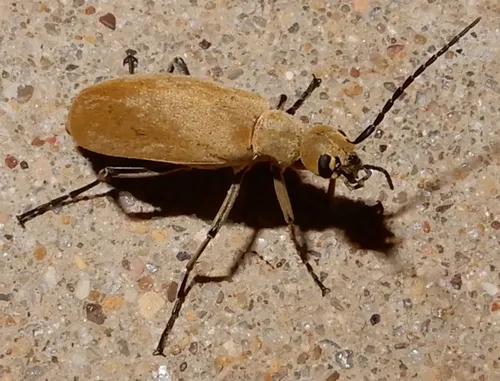
Dets. John D. Pinto Larson reports finding the remains of 94 individuals of E. immaculata in the course of examining the stomach contents of 100 individuals of the toad Bufo americanus Holbrook, taken in potato fields at Fort Thompson, South Dakota. In Miller's study adults of E. albida, E. immaculata, E. sublineata , and several other species of Meloidae proved to be highly acceptable as food items for caged adults of the horned lizard, Phrynosoma cornutum Harlan. It was also shown that whiptailed lizards, Cnemidophorus sackii gularis Baird and Girard, would pursue and investigate adult meloids, although they were consistently refused as food, apparently because of chemotactic repellency.
Identification notes
Dets. John D. Pinto
Classification
- Kingdom
- Animalia
- Phylum
- Arthropoda
- Class
- Insecta
- Order
- Coleoptera (Beetles)
- Suborder
- Polyphaga
- Superfamily
- Tenebrionoidea
- Family
- Meloidae (Blister Beetles)
- Subfamily
- Meloinae
- Tribe
- Epicautini
- Genus
- Epicauta
Imported taxonomy record. Source availability varies; see the source references and editorial policy below.
Habitat and Range
Habitat
adults found most frequently and in greatest abundance along roadsides, near ditches, in swales, and in other situations where the amount of soil moisture is sufficient to support the growth of herbaceous plants through the summer season.
Geographic Range
western edge of the Appalachian Mountains westward to South Dakota and the Rio Grande River (NM-TX-OH-SD) - Map , common from KS to the Rio Grande
Seasonal Activity
May-Aug (BG data)
Diet and Behavior
Diet: adults are polyphagous feeding on Solanum spp., milkweed ( Asclepias spp.), Asteraceae, Fabaceae as well as members of other plant families.
Life History
E. immaculata are known to form nonfeeding aggregations on plants, including species that are apparently never utilized as food sources. The functional significance of this behavior has not been determined, but it seems likely that temperature regulation is involved.
About Primitive Winged Insects: the wider group
Order-level background for Coleoptera, the group containing Epicauta immaculata. Species-specific details appear above.
Group overview
Coleoptera is the largest order of insects with over 400,000 described species, representing ~25% of all known animal species and ~40% of all insects. In the U.S. alone, nearly 30,000 beetle species have been identified.
Ecological role of the group
Beetles are prominent decomposers, especially in forests, breaking down dead wood and recycling nutrients. As predators, they reduce populations of pest insects. Many species are also important pollinators of flowering plants.
Economic and practical significance of the group
Beetles have major economic significance: leaf beetles (Chrysomelidae) and weevils (Curculionoidea) are among the most destructive agricultural pests globally, costing billions annually, while predatory species like ladybugs provide natural pest control.
Recorded sources for this group: Britannica, Smithsonian, NCSU Entomology. Imported estimates may describe particular regions or reporting periods.
Photos of Epicauta immaculata (2)
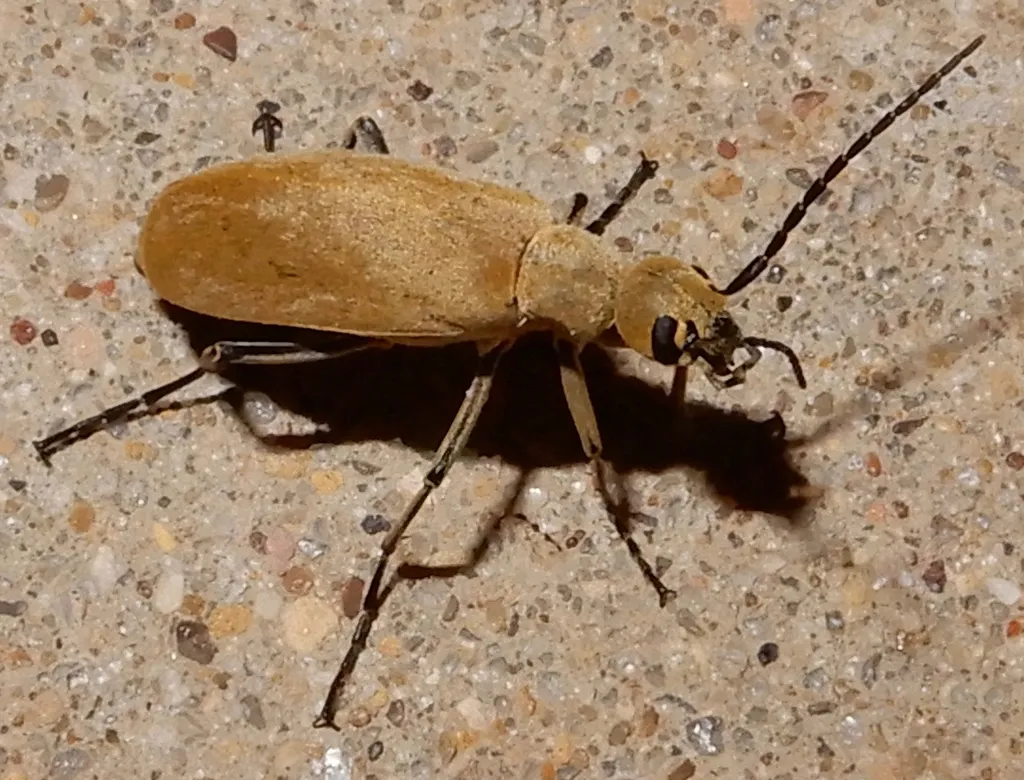
Photo credits: Contributed by v belov; Additional contributions by Mike Quinn
Frequently Asked Questions About Epicauta immaculata
What is Epicauta immaculata?
Epicauta immaculata is a species in the family Meloidae, within the order Coleoptera.
How big is Epicauta immaculata?
13-25 mm
How do you identify Epicauta immaculata?
Dets. John D. Pinto
Where is Epicauta immaculata found?
| Feature | Details |
|---|---|
| Habitat | adults found most frequently and in greatest abundance along roadsides, near ditches, in swales, and in other situations where the amount of soil moisture is sufficient to support the growth of herbaceous plants through the summer season. |
| Range | western edge of the Appalachian Mountains westward to South Dakota and the Rio Grande River (NM-TX-OH-SD) - Map , common from KS to the Rio Grande |
What does Epicauta immaculata eat?
The diet of the Epicauta immaculata includes adults are polyphagous feeding on Solanum spp., milkweed ( Asclepias spp.), Asteraceae, Fabaceae as well as members of other plant families..
When is Epicauta immaculata active?
Epicauta immaculata: seasonal activity - May-Aug (BG data).
What is the life cycle of a Epicauta immaculata?
E. immaculata are known to form nonfeeding aggregations on plants, including species that are apparently never utilized as food sources. The functional significance of this behavior has not been determined, but it seems likely that temperature regulation is involved.