
Elaphrus viridis
This record describes Elaphrus viridis (species). Recorded family: Carabidae. Recorded order: Coleoptera.
Identification and Appearance
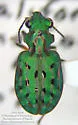
Bright metallic green, with no or reduced circular pits on the elytra federally threatened species as of 8.viii.1980 under the Endangered Species Act; on California's Special Animals list The development of the Central Valley for agriculture has eliminated much of the vernal pool habitat, by tilling it for crops, or by tapping the pools for irrigation. In some areas urban and suburban development are encroaching. Poorly managed grazing has brought on the degradation of much of the remaining habitat. Additionally, an introduced plant, garden lippia ( Phyla sp.), is an immediate threat. This plant forms dense mats in vernal pool areas crowding out native vegetation and hindering the beetle's foraging. Conservation depends on the protection of the vernal pool habitat.
Classification
- Kingdom
- Animalia
- Phylum
- Arthropoda
- Class
- Insecta
- Order
- Coleoptera (Beetles)
- Suborder
- Adephaga
- Family
- Carabidae (Ground Beetles)
- Subfamily
- Elaphrinae
- Genus
- Elaphrus (Marsh Ground Beetles)
Imported taxonomy record. Source availability varies; see the source references and editorial policy below.
Habitat and Range
Habitat
Around the margins of vernal pools and in bare areas along trails and roadsides. Found under low-growing vegetation such as filaree ( Erodium spp.)
Geographic Range
known to occur only in Jepson Prairie Preserve, Solano Co. (ne. of Bay Area); historically occurred through much of Central Valley and may be found in other parts thereof.
Seasonal Activity
emerges in January, breeds in Feb‒Mar, and enters a period of dormancy in May as the pools dry up
Diet and Behavior
Diet: Both larvae and adults are active predators that seek out small, soft-bodied arthropods such as midge larvae and springtails.
Additional species information
Species notes from the sources
Etymology: Elaphrus viridis Horn 1878
About Primitive Winged Insects: the wider group
Order-level background for Coleoptera, the group containing Elaphrus viridis. Species-specific details appear above.
Group overview
Coleoptera is the largest order of insects with over 400,000 described species, representing ~25% of all known animal species and ~40% of all insects. In the U.S. alone, nearly 30,000 beetle species have been identified.
Ecological role of the group
Beetles are prominent decomposers, especially in forests, breaking down dead wood and recycling nutrients. As predators, they reduce populations of pest insects. Many species are also important pollinators of flowering plants.
Economic and practical significance of the group
Beetles have major economic significance: leaf beetles (Chrysomelidae) and weevils (Curculionoidea) are among the most destructive agricultural pests globally, costing billions annually, while predatory species like ladybugs provide natural pest control.
Recorded sources for this group: Britannica, Smithsonian, NCSU Entomology. Imported estimates may describe particular regions or reporting periods.
Photos of Elaphrus viridis (5)
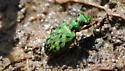
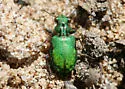
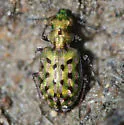
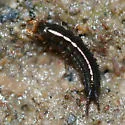
Photo credits: Contributed by Chris Wirth; Additional contributions by Mike Quinn , v belov
Frequently Asked Questions About Elaphrus viridis
What is Elaphrus viridis?
Elaphrus viridis is a species in the family Carabidae, within the order Coleoptera.
How big is Elaphrus viridis?
~6 mm
How do you identify Elaphrus viridis?
Bright metallic green, with no or reduced circular pits on the elytra
Where is Elaphrus viridis found?
| Feature | Details |
|---|---|
| Habitat | Around the margins of vernal pools and in bare areas along trails and roadsides. Found under low-growing vegetation such as filaree ( Erodium spp.) |
| Range | known to occur only in Jepson Prairie Preserve, Solano Co. (ne. of Bay Area); historically occurred through much of Central Valley and may be found in other parts thereof. |
What does Elaphrus viridis eat?
The diet of the Elaphrus viridis includes Both larvae and adults are active predators that seek out small, soft-bodied arthropods such as midge larvae and springtails..
When is Elaphrus viridis active?
Elaphrus viridis: seasonal activity - emerges in January, breeds in Feb‒Mar, and enters a period of dormancy in May as the pools dry up.