
Primitive Winged Insects
Order Coleoptera
The Primitive Winged Insects (Order Coleoptera) includes 15,720 species across 160 families and 3,716 genera in our directory.
About Primitive Winged Insects
Coleoptera is the largest order of insects with over 400,000 described species, representing ~25% of all known animal species and ~40% of all insects. In the U.S. alone, nearly 30,000 beetle species have been identified.
Economic Impact
Beetles have major economic significance: leaf beetles (Chrysomelidae) and weevils (Curculionoidea) are among the most destructive agricultural pests globally, costing billions annually, while predatory species like ladybugs provide natural pest control.
Ecological Role
Beetles are prominent decomposers, especially in forests, breaking down dead wood and recycling nutrients. As predators, they reduce populations of pest insects. Many species are also important pollinators of flowering plants.
Families in Coleoptera (160)
Species in Coleoptera (15,720)
California Glowworm
Ellychnia californica
Identification: Sides of median black area of pronotum straight, diverging from apex to base, with a small antebasal lobe extending into roseate area; in the sympatric E. megista , the black area is subparallel to the base, where it slightly widens (
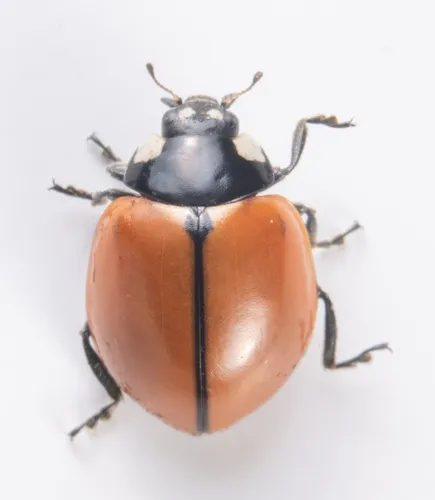
California Lady Beetle
Coccinella californica
Identification: Gordon's figures - Typical form: Gordon's figure - "johnsoni" form:
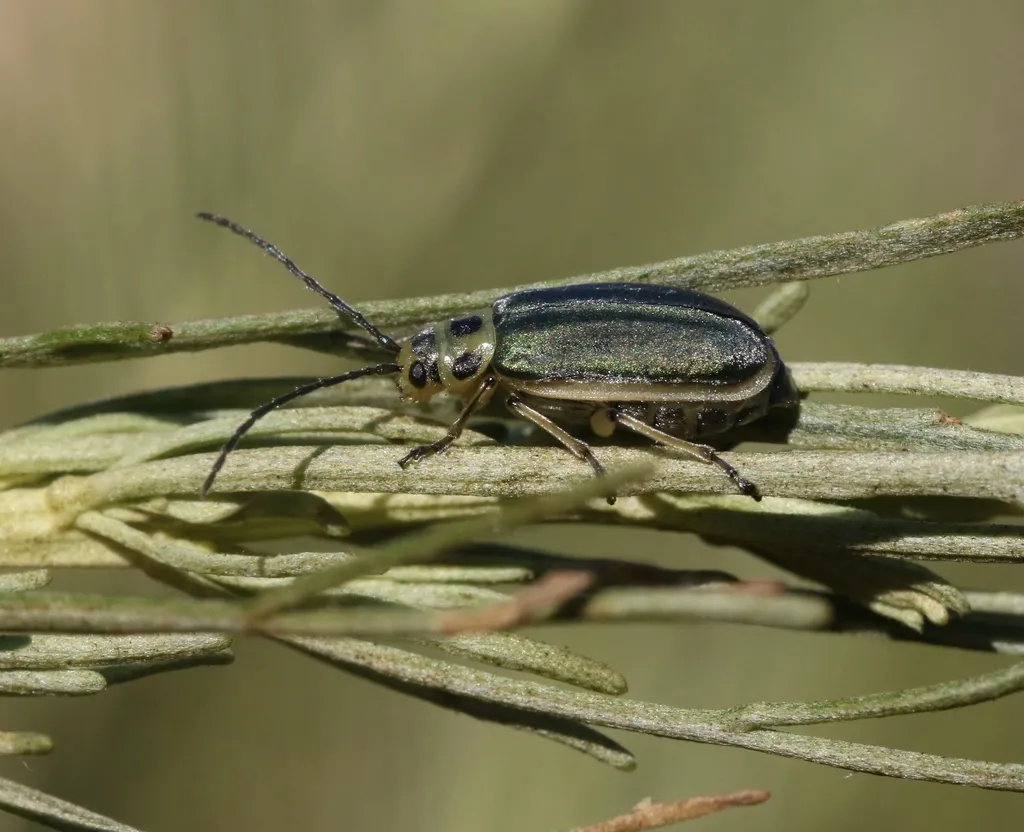
California sagebrush leaf beetle
Trirhabda sericotrachyla
Identification: T. sericotrachyla is easily confused with T. luteocincta ...below they're contrasted side-by-side: T. sericotrachyla T. luteocincta T. sericotrachyla T. luteocincta T. sericotrachyla T. luteocincta T. luteocincta on left T. sericotrac
Calleida decora
Calleida decora
Identification: Eyes large and prominent - key to separate the similarly colored C. punctata and C. decora
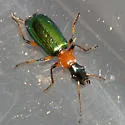
Calleida punctata
Calleida punctata
Identification: Eyes small - key to separate the similarly colored C. punctata and C. decora
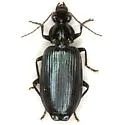
Calleida punctulata
Calleida punctulata
Identification: A species account written in English is available under the junior synonym Callida rugicollis G.H. Horn, 1894: page 361 . Members of genus Calleida typically have elongated pronota and without such widely reflexed lateral margins as s
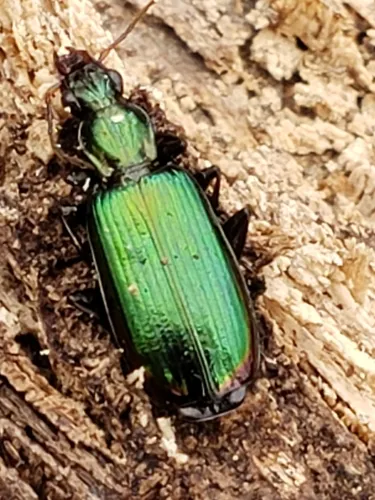
Calleida viridipennis
Calleida viridipennis
Identification: bright bluish-green, elytra can be purple, sometimes margined with copper; antennae piceous , except for antennomeres 1-3 and part of 4; venter piceous occasionally comes to lights
Callidiellum villosulum
Callidiellum villosulum
Identification: Image - IPM Images.org The Brown Fir longhorned beetle has been found in wood trunks of artificial Christmas trees imported from China. Between 1999 and 2001, more than 20 interceptions of this species were recorded.
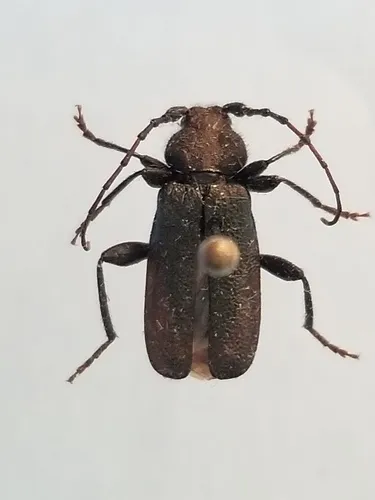
Callidium cicatricosum
Callidium cicatricosum
Callidium cicatricosum is a species of beetle, also referred to as the long-horned beetle, in the Cerambycidae family. It was described by Mannerheim in 1853.
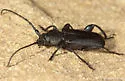
Callidium pseudotsugae
Callidium pseudotsugae
Identification: "The all black color, lack of pronotal callosities, and Douglas Fir host all separate this species from the very similar C. antennatum " (from Dennis Haines' comment on this page ).
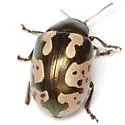
Calligrapha ancoralis
Calligrapha ancoralis
Identification: In the typical pattern, the humeral moon-shaped macula is narrowly seperated from both the enclosed dark spot, and the subsutural band (on 2nd. interval). The rear end of dark 3rd. interval is bending outwards, turning forward and may
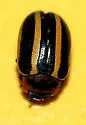
Calligrapha californica
Calligrapha californica
Identification: The black-headed larvae have a dark brown rotund body twice as wide as the head and three times as long. The adult is a dark beige beetle approximately 6 mm long with 3 black stripes on its back.
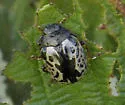
Calligrapha confluens
Calligrapha confluens
Identification: Distinguished by the narrow pale area near the suture on the apical declivity of elytra. Species is polymorphic for this feature, however. (Dr. Gomez-Zurita's comments here and here )
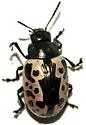
Calligrapha diversa
Calligrapha diversa
Identification: Elytra pinkish to red (yellowish in death) with many dark spots; in intensively coloured specimens, dark pattern elements usually bordered with white. Sides of elytra without dark spot, subsutural band near base divergent from sutural
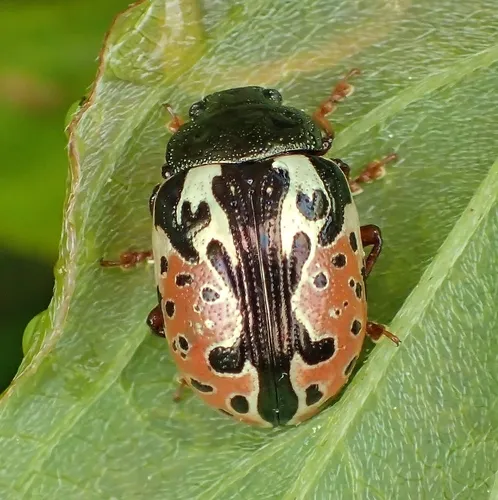
Calligrapha knabi
Calligrapha knabi
Identification: can be distinguished from C. rowena (a similar dogwood-feeding species) by the apical part of the arcuate band connected to the sutural vitta (e.g., the posterior V-shaped spot connected to the black longitudinal area where the elytra
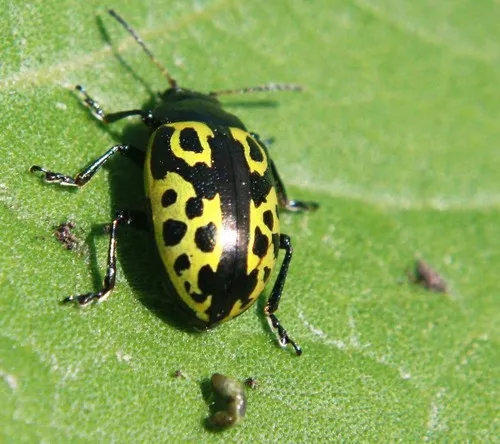
Calligrapha signatipennis
Calligrapha signatipennis
Calligrapha signatipennis is a species of leaf beetle belonging to the family Chrysomelidae, in the subgenus Zygogramma, which was formerly a genus. It is found in Central America and North America.
Calligrapha suturella
Calligrapha suturella
Identification: Specimens like this, coming from NE North America can be found in many collections mingled with C. multipunctata , for they share the pale margins of pronotum and the lack of a diagnostic spot laterally on elytra. However, it is a dif
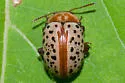
Calligrapha verrucosa
Calligrapha verrucosa
Identification: habitus photos showing variability in
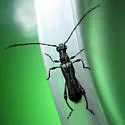
Callimoxys nigrinus
Callimoxys nigrinus
Identification: Very difficult to separate from C. ocularis
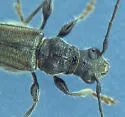
Callimoxys sanguinicollis
Callimoxys sanguinicollis
Callimoxys sanguinicollis (Callimoxys sanguinicollis) is a species in the family Cerambycidae, commonly known as longhorn beetles, belonging to the order Coleoptera (Beetles). It is classified within the subfamily Cerambycinae, tribe Stenopterini, su
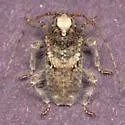
Callipogonius cornutus
Callipogonius cornutus
Identification: The most distinctive character that sets this species apart from all other Lamiinae found in the Lower Rio Grande Valley is the exceptionally long “flying” hairs that arise from most parts on the body. These hairs are especially consp
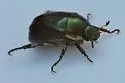
Callistethus marginatus
Callistethus marginatus
Identification: Elytra brownish, with a green tint. Head and pronotum darker, pronotum may have paler sides
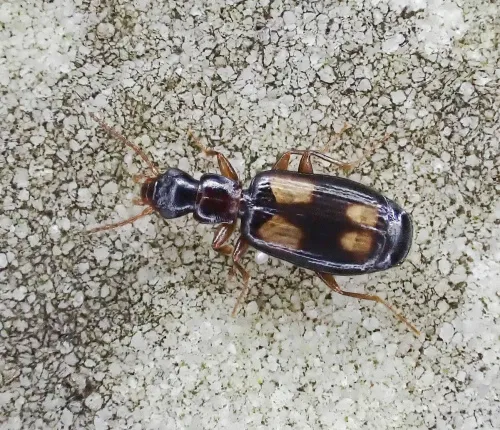
Calodromius spilotus
Calodromius spilotus
Calodromius spilotus is a small species, measuring around 3.5 to 4.5 mm long. It has a rather flat body shape and black head , the pronotum is reddish-brown, the elytra dark brown with two pale markings on each. Please provide a photograph and an ind
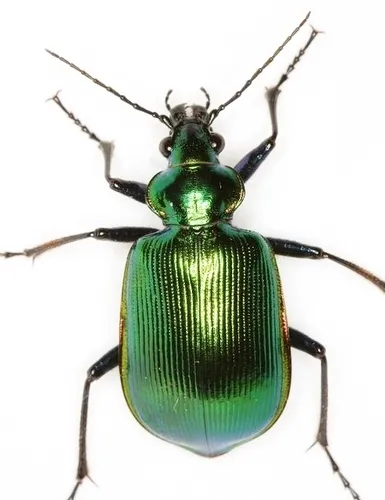
Calosoma aurocinctum
Calosoma aurocinctum
First recorded in the US by Townsend (1902) from specimens collected near Brownsville.
Calosoma macrum
Calosoma macrum
Identification: remarkable for the almost entire absence of the usual striae and foveae: the tibia are straight in both sexes. The elytra of the male are not wider than the thorax; those of the female are about one third wider. Det. J. C. Abbott, 199
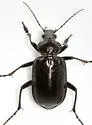
Calosoma marginale
Calosoma marginale
Identification: elytra with a few scattered coarse punctures toward base Det. E. G. Riley, 2009 Type Locality: Arizona?
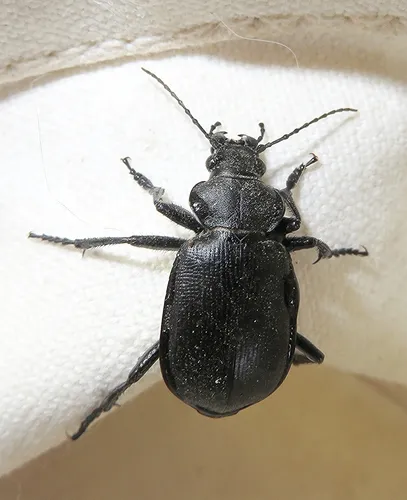
Calosoma obsoletum
Calosoma obsoletum
Calosoma obsoletum is a species of ground beetle in the subfamily of Carabinae. It was described by Say in 1823.
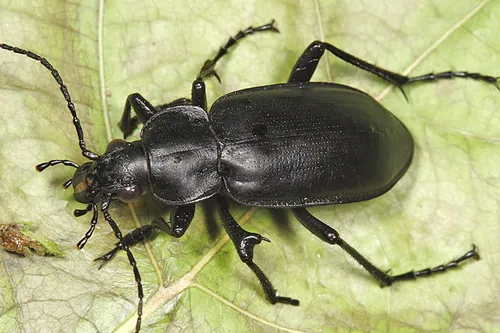
Calosoma protractum
Calosoma protractum
Calosoma macrum is a species of ground beetle in the subfamily Carabinae. It was described by John Lawrence LeConte in 1852. The species is 22–29 millimetres (0.87–1.14 in) long, black, and lives at an elevation of 1,100 to 1,700 metres (3,600 to 5,6
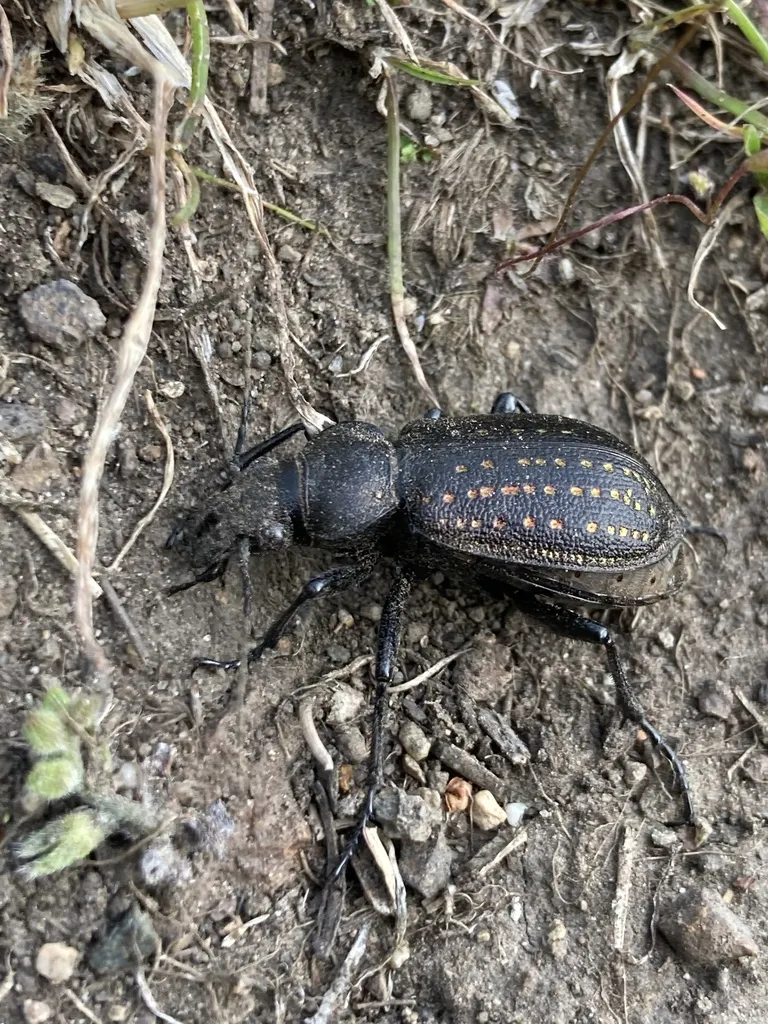
Calosoma tepidum
Calosoma tepidum
Calosoma tepidum is a species of ground beetle in the subfamily Carabinae. It was described by John Lawrence LeConte in 1851.
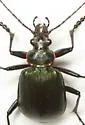
Calosoma wilcoxi
Calosoma wilcoxi
Identification: In general, smaller and duller than the similar Calosoma scrutator . See images and comments:
Calosoma wilkesii 0
Calosoma wilkesii
Identification: Species page dorsal habitus: form A · form B
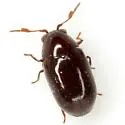
Calymmaderus nitidus
Calymmaderus nitidus
Identification: Following combination is diagnostic within genus: Body glabrous, very shiny, practically no hairs and distant punctures dorsally; last ventral segment with impressed line bordering apical margin, interrupted medially.
Calymmaderus similis 0
Calymmaderus similis
Type Locality: Brownsville, Cameron Co., Texas, 15 May 1904, H. S. Barber
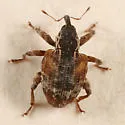
Cambium Curculio
Conotrachelus anaglypticus
Identification: diagonal orange shoulder marks seem to be a nice consistent feature: economic pest of peach
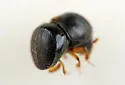
Camphor Shoot Borer
Cnestus mutilatus
Earliest record in our area: MS 1999 Recorded boring into and damaging plastic fuel reservoirs (Carlton & Bayless 2011) "Riding lawn mower gasoline tank damaged by camphor shoot borer."
Camptodes gaumeri 0
Camptodes gaumeri
Identification: Color testaceous to dark rufo-piceous, humeri feebly pronounced Pygidium ferrugineus to piceous, pronotal and elytral punctures faintly/obsoletely impressed Type Locality: Mexico, Temax in North Yucatan (Gaumer).
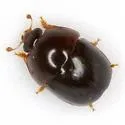
Camptodes texanus
Camptodes texanus
Identification: Rounded, convex, testaceous, head, thorax and scutellum piceous shining, fading into rufous at sides of thorax and apex of clypeus, elytra greenish black. Type series, 2 specimens collected at Brownsville, Cameron Co., Texas.
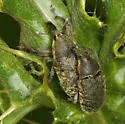
Canada Thistle Bud Weevil
Larinus carlinae
introduced to control invasive thistle in the 1960s (was later found to infect some native thistles)
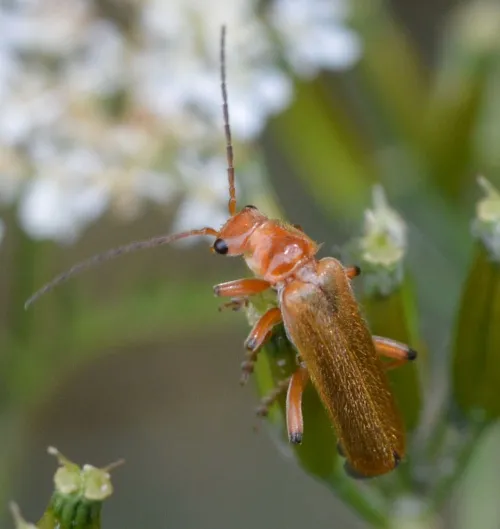
Cantharis cryptica
Cantharis cryptica
7 to 8.5 mm. An orange/brown beetle with black rings above the 'knees' and all-yellow palps. The elytra have a mixture of flat and erect hairs. Cantharis pallida is very similar but has black tips to the palps and no flat hairs on the elytra (only er
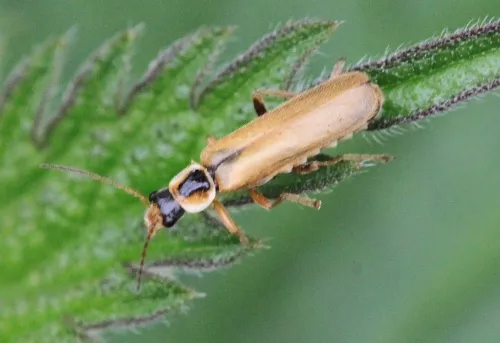
Cantharis decipiens
Cantharis decipiens
7.5 - 8.5mm. The orange/brown elytra and distinctly marked thorax help to distinguish this species from other Cantharis beetles. Rhagonycha limbata has similar colours but the black mark on the pronotum has an angled and not rounded base. Rhagonycha
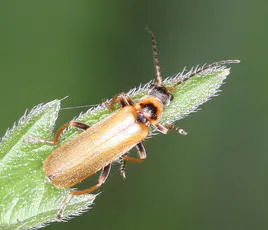
Cantharis figurata
Cantharis figurata
Length 6 to 8 mm. This soldier beetle has an orange body, a partially black head and a dark but diffuse mark on its pronotum, sometimes reduced to a few spots. It also has dark femora which change to orange before the tibial joint. Rushy pasture, ope
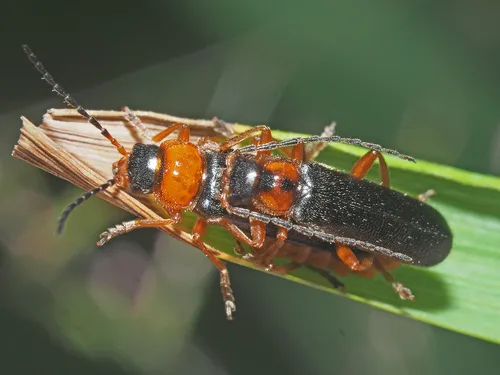
Cantharis flavilabris
Cantharis flavilabris
The black elytra (wing covers) are shiny and have a layer of very fine hairs. The pronotum can be all black or may have varying amounts of red. The scutellum is black which distinguishes the red pronotum variety from the similar C. nigra which has a
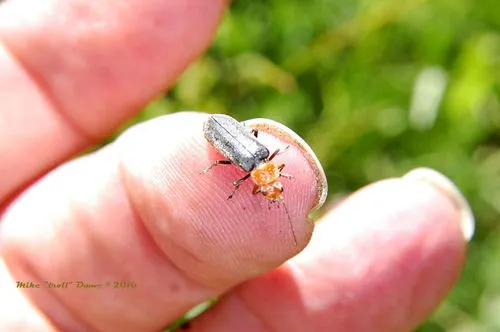
Cantharis grandicollis
Cantharis grandicollis
Cantharis grandicollis is a species of soldier beetle in the family Cantharidae. It is found in North America.
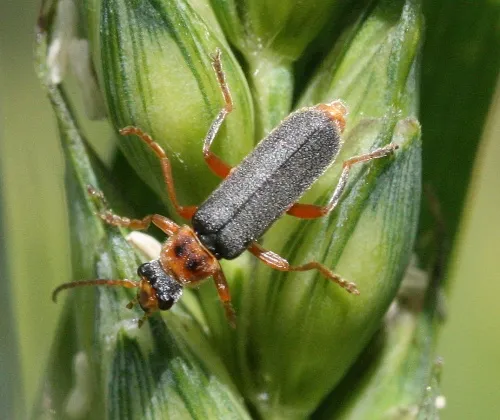
Cantharis lateralis
Cantharis lateralis
Length: 5-7mm. The head and elytra are grey-black but the pronotum is orange, sometimes with small dark marks, and is square-shaped. The legs are usually all yellow/orange except the black rear tibiae. Outer edge of elytra yellow. Widely distributed
Cantharis livida
Cantharis livida
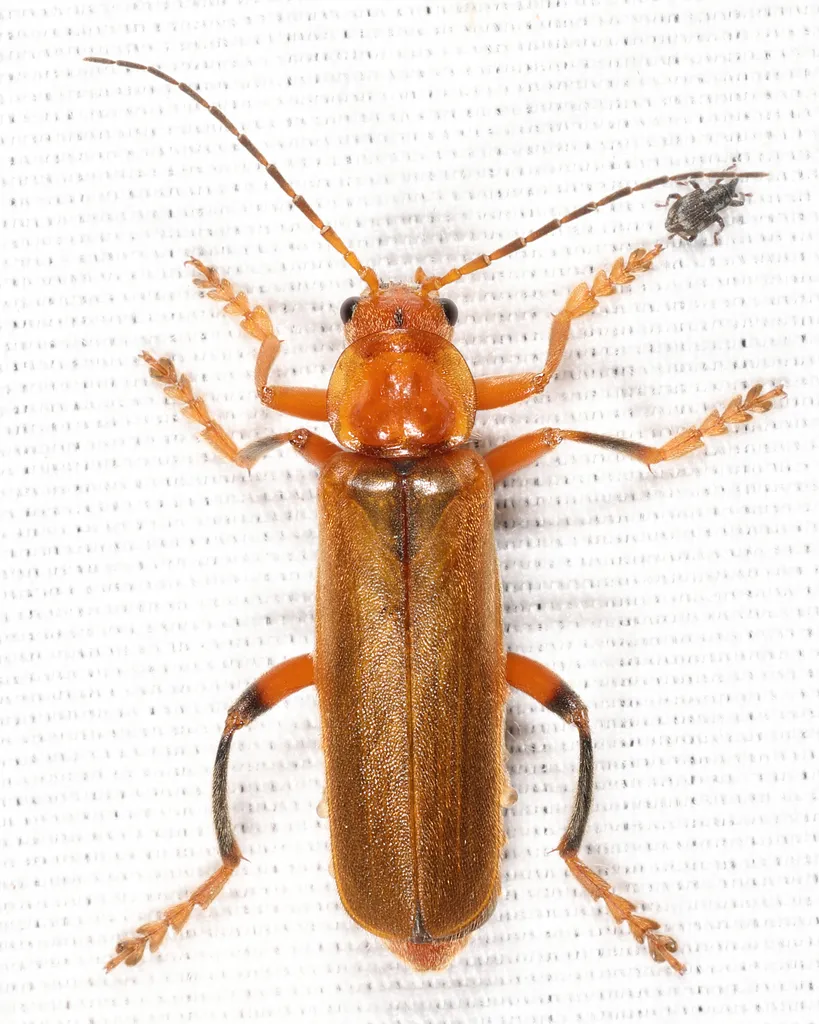
11-14mm. All yellow/orange but with a broad black band at the base of the hind femora. The black head spot behind the eyes is unique to this species. Cantharis livida also has a darker form (var. rufipes ). Your specimen should have these features: A
Cantharis nigra
Cantharis nigra
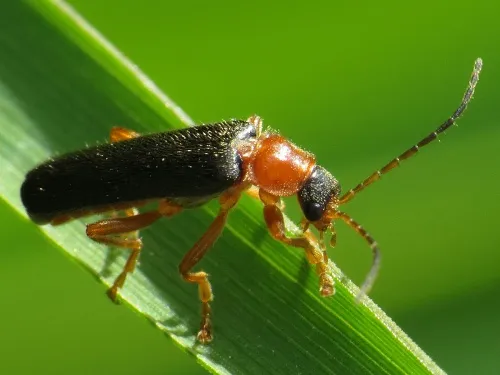
Very similar to the red pronotum variety of Cantharis flavilabris , but in C. nigra the scutellum is red (black scutellum in the red pronotum variety of C. flavilabris ) The red pronotum variety of Cantharis flavilabris (see above). Photographs requi
Cantharis nigricans
Cantharis nigricans
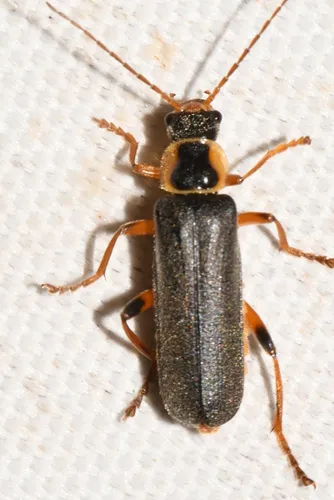
Length 9 to 11 mm. The elytra appear grey from the coating of short flat hairs amongst the longer ones. The yellow-orange pronotum may have a central darker mark and typically has a lighter orange ring around the edge. There is a broad black band on
Cantharis pallida
Cantharis pallida
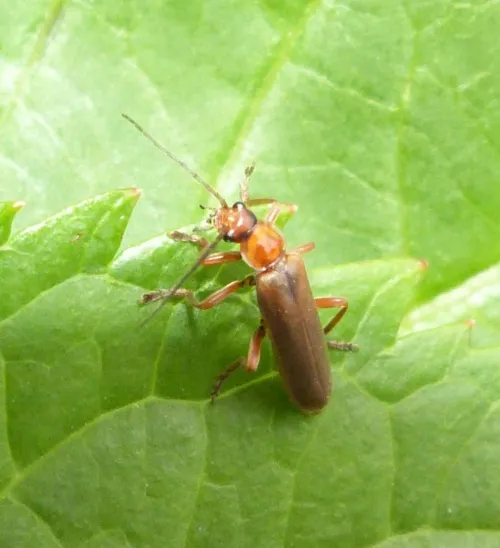
This orangey soldier beetle is one of several similarly coloured beetles that belong to the Cantharidae group. In this species the head, pronotum and legs are all predominantly orange. They are frequent visitors to thistles and umbelliferous flowers,
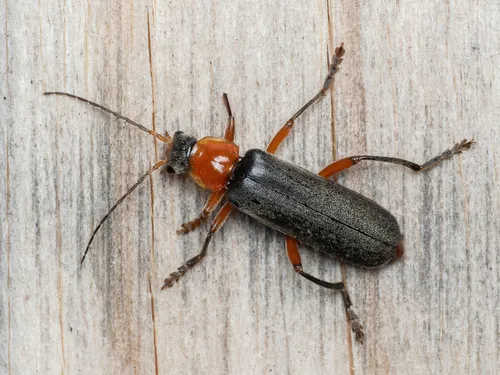
Cantharis pellucida
Cantharis pellucida
9-12mm. Dark to black elytra and an all-orange/red pronotum. It has thin bands at the tip of the hind femora and typically with dark mid-tibia. Cantharis nigricans has broad black bands at the end of the femora and overall has a duller and more yello
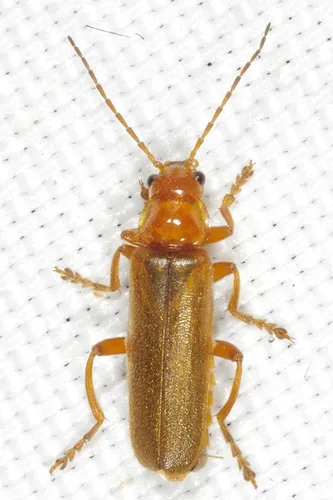
Cantharis rufa
Cantharis rufa
Length 9 - 11 mm. Variable. The head is usually red with black behind the eyes but may be black in front of the eyes too. There is usually a dark mark on the pronotum but this is variable. The legs vary from all red to having some black but not ringe
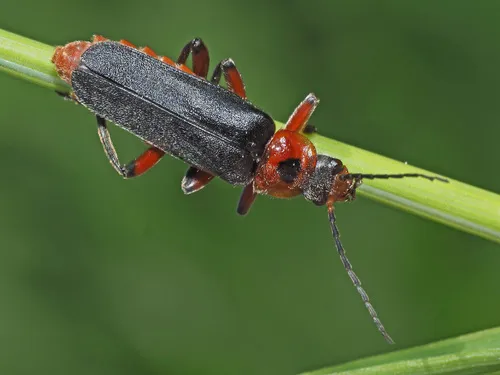
Cantharis rustica
Cantharis rustica
9 to 12.5 mm. It has black, shiny elytra (wing cases) covered in fine hairs. The red/orange pronotum has a central black heart spot. The mid and hind tibia are black. Your specimen should have these features: Areas with tall grasses, and in open wood
Canthon (Glaphyrocanthon) viridis
Canthon viridis
Identification: two 'clypial teeth', color variable our only representative of the subg. Glaphyrocanthon Martínez 1948
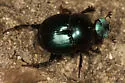
Canthon cyanellus
Canthon cyanellus
Identification: note two narrow clypeal teeth; color variable
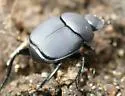
Canthon floridanus
Canthon floridanus
Identification: Dorsum with intense purpleblue sheen; clypeal edge slightly sinuate on each side of anterior rounded clypeal teeth, median emargination acutely angular and arcuate; elytral granulation finer and flatter; metatarsus with a single row o
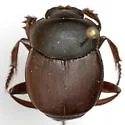
Canthon humectus
Canthon humectus
Identification: protibial teeth equidistant; dorsum without shiny spots/granules
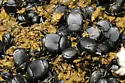
Canthon imitator
Canthon imitator
Identification: Dark blue to brownish-coppery. note clypeus
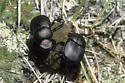
Canthon pilularius
Canthon pilularius
Identification: generally dull black, southern specimens often green. narrow eyes, shallow clypeal emargination, and the two sizes of granule on the body surface will serve to separate this sp. from other Canthon spp. in NE det. D.Edmonds 2024: 'eyes
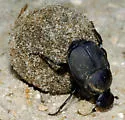
Canthon vigilans
Canthon vigilans
Identification: eyes large (for this genus), about half as wide as long. Clypeus toothed.
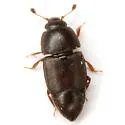
Caplothorax brevipennis
Caplothorax brevipennis
Identification: pronotal disc with a very narrow, median, impunctate line on basal half.
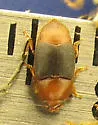
Caplothorax melanopterus
Caplothorax melanopterus
Identification: https://site.caes.uga.edu/carpophiline-id/caplothorax-melanopterus-erichson-1843/
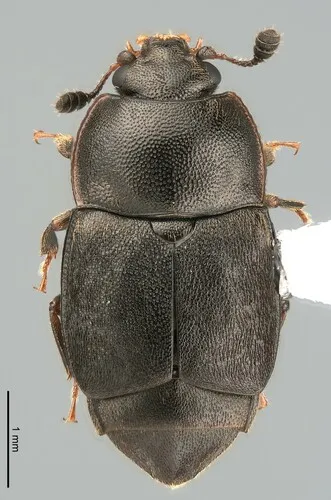
Caplothorax sayi
Caplothorax sayi
Carpophilus sayi and Colopterus truncatus are the predominant species collected from fresh wounds on red oak in Minnesota (Juzwik et al. 1999), suggesting these are the primary vectors in MN. (Cervenka et al. 2001) C. sayi was not indicated as possib
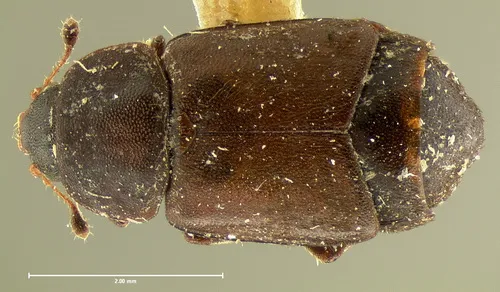
Caplothorax yuccae 0
Caplothorax yuccae
Identification: remarkable for its large size and oval, depressed form Type: from the unopened flower heads of Yucca in the Mohave Desert, California
Capraita circumdata
Capraita circumdata
=v='s avis: Anthony Deczynski told me that "none of the [photos] IDed as Capraita thyamoides are correct. C. thyamoides lacks humeral callosities, which appear in all the images. Most of them are probably C. circumdata , although some other species h

Capraita flavida
Capraita flavida
Identification: Quite narrow, all pale; underside, scutellum and terminal part of antennae only slightly darker.
Capraita nigrosignata
Capraita nigrosignata
Type Locality: Esperanza Ranch, Brownsville, Cameron Co., TX
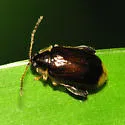
Capraita obsidiana
Capraita obsidiana
Identification: Typical colour form brown, with only pronotal side margin and elytral apex yellowish. The extreme pale form (var. flava ) has dark colour reduced to two bands on pronotum, and a variable pattern of up to three fasciae on elytra (close
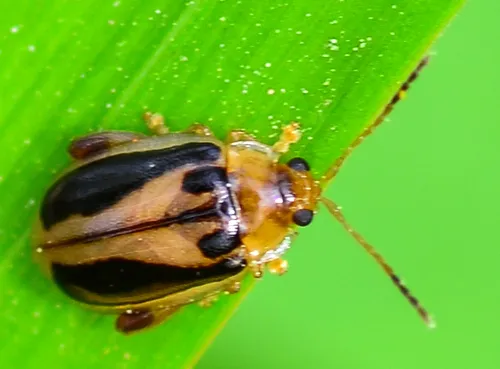
Capraita pervittata
Capraita pervittata
Identification: C. pervittata C. subvittata C. pervittata has been separated from C. subvittata mainly on grounds of the very bold, and well defined elytral pattern. The above individual demonstrates it perfectly. Note: in C. subvittata , if not larg
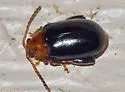
Capraita quercata
Capraita quercata
Identification: Head and pronotum reddish, unspotted; elytra distinctly punctured, blackish (margin may be narrowly lighter, but not as pale as pronotum) The species has for long been misinterpreted: Oedionychis quercata sensu Horn et auct., non Fabr
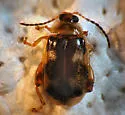
Capraita scalaris
Capraita scalaris
Identification: pale, with the thorax having acute anterior angles and broadly reflexed sides; elytra pitch-black and finely punctate, broader at the base towards the scutellum, with a trilobed lateral margin and two pale spots on the disc of each, a
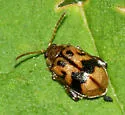
Capraita sexmaculata
Capraita sexmaculata
Identification: typical form: Det. E. G. Riley, 2009 at high-moderate risk of endangerment due to the EAB ( 4 )
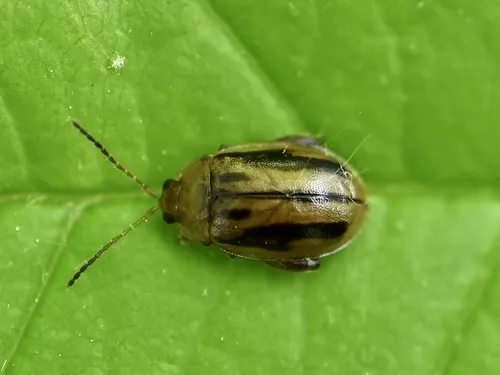
Capraita subvittata
Capraita subvittata
Identification: Elytra coarsely punctate (but less so as in C. sexmaculata ), general pattern consists of a humeral spot, +/- elongated to about half of elytron, a median vitta, not reaching base or apex, and a short basal streak near scutellum, reac
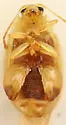
Capraita suturalis
Capraita suturalis
Capraita suturalis (Capraita suturalis) is a species in the family Chrysomelidae, commonly known as leaf beetles, belonging to the order Coleoptera (Beetles). It is classified within the subfamily Galerucinae, tribe Alticini, suborder Polyphaga, supe
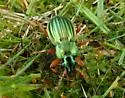
Carabus auratus
Carabus auratus
a member of the subgenus Tachypus Weber (4 spp. in Europe, one ranging into Siberia)
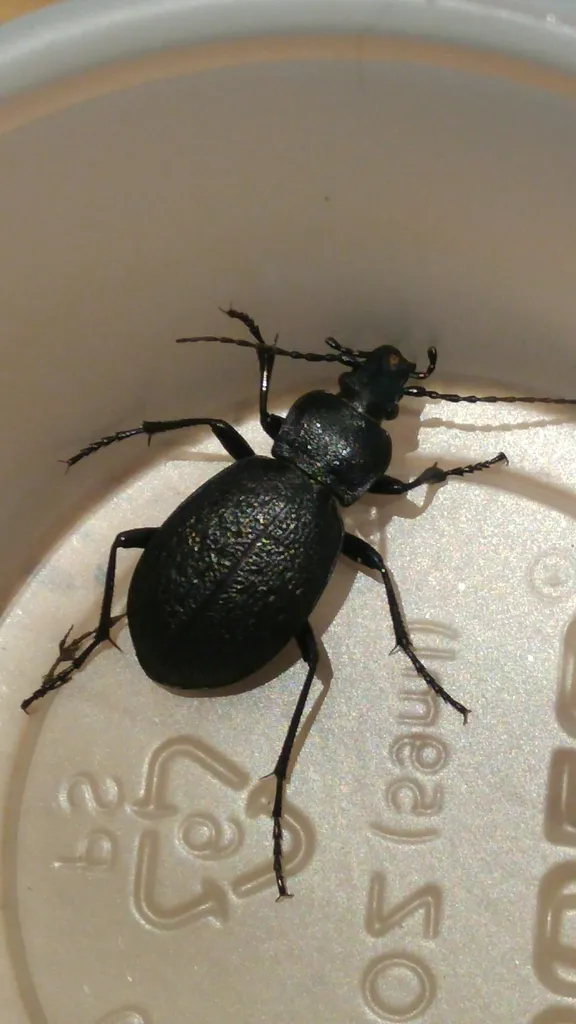
Carabus chamissonis
Carabus chamissonis
Carabus chamissonis is a species of ground beetle in the family Carabidae. It is found in tundra regions across northern Canada and Alaska, as well as isolated populations on Mount Washington, New Hampshire and Katahdin in Maine. This is a species of
Carabus finitimus
Carabus finitimus
14 spmns in the UTIC ( 4 ) from the Brackenridge Field Laboratory (BFL), UT, Austin, Travis County, Texas from Nov. 1968 to April 1969.
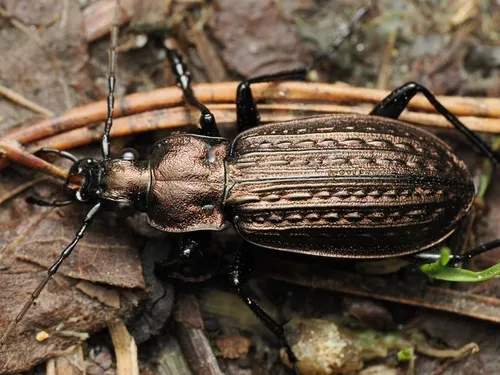
Carabus granulatus
Carabus granulatus
A large (16-23mm) granulate bronze, green or black predatory beetle. Wet fields, river margins, lakeshores and light woodland. Widespread in much of Britain but never really common.
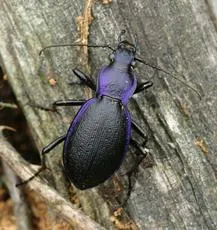
Carabus problematicus
Carabus problematicus
Up to 30mm. This species has ridges and dimples on its elytra and also has a pronotum that is barely transverse and with contracted sides. C. violaceus has smoother elytra that are more elongate and also has a more transverse pronotum. Although predo
Carabus truncaticollis
Carabus truncaticollis
our only representative of the subgenus Aulonocarabus Reitter (13 spp. in Asia, of which one ranges into n. NA)
Carabus vinctus
Carabus vinctus
Identification: Large, black, and slightly bronzed. Each elytron has "four ridges broken into elongate tubercles" . Blatchley gives the following description: Appears, like many carabids, to have potent chemical defenses (Frost, 1910):
Carcinocephalus flavidus
Carcinocephalus flavidus
"Only males of the long-winged form are known so far - all females and some males are short-winged, with short elytra, antennae, tarsi, and smaller eyes! The species does seem to be a typically cool-active one. (See Thayer, M. K. 1992. Discovery of s
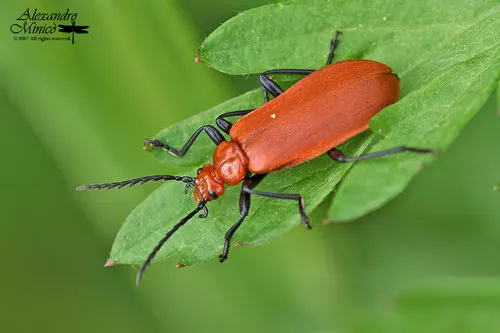
Cardinal Beetle
Pyrochroa serraticornis
One of several Cardinal Beetles, this species has a red head to distinguish it from P. coccinea which has a black head. On flowers, trunks and stumps where it hunts other insects. Widespread and fairly frequent in England and Wales.
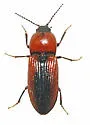
Cardiophorus brevis
Cardiophorus brevis
Specimens from Arizona previously identified as C. aptopoides are better attributable to C. brevis based on rexamimination of tarsal claw morphology [H. Douglas pers. comm. to B. Mathison 2018]
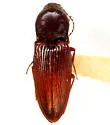
Cardiophorus panamapolis
Cardiophorus panamapolis
Identification: HOLOTYPE Type Locality: West Panama City Beach, Bay County, Florida
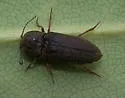
Cardiophorus robustus
Cardiophorus robustus
Had not been collected since 1965 until the BugGuide specimens (2012 and 2016)
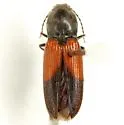
Cardiophorus togatus
Cardiophorus togatus
Identification: Horn (1871) noted a second spmn that "has the elytra entirely red with the apex only slightly darker ." Type series, two spmns, collected by Mr. Belfrage at Waco, Texas (Horn 1871)
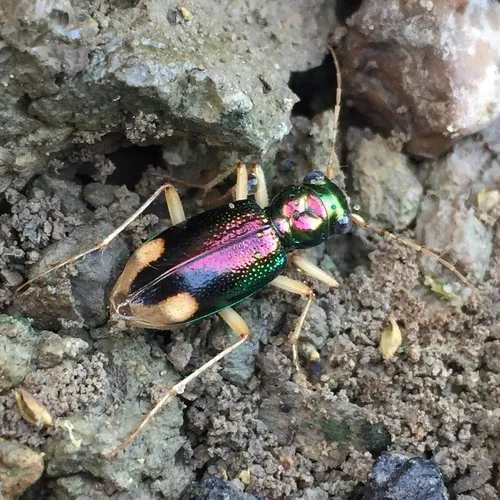
Carolina Metallic Tiger Beetle
Tetracha carolina
Identification: (Adult) dorsal surface glossy metallic green, often mixed with red or purple; large cream-colored spots (apical lunules) at apex of elytra Differentiation of larvae of T. virginica vs. T. carolina may be possible. Quoting from Hamilto
Carpelimus pertenuis
Carpelimus pertenuis
Type Locality: "Tex.: Austin; on the Colorado River above Columbus, Travis, Texas, United States" Note, the type series of this sp. was collected by Schwarz who collected in and around Austin County, Texas. Schwarz is not known to have ever visited t
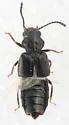
Carpelimus quadripunctatus
Carpelimus quadripunctatus
Identification: pronotum hexagonal, with 4 impressions around middle
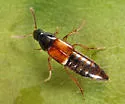
Carphacis effrenatus
Carphacis effrenatus
Identification: Females can't be confidently separated from the unicolorous nepigonensis unless associated with a male. Males have scale-like modified 8th sternite, such as: The two other NA species have setae-like modified 8th sternite.
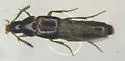
Carphacis nepigonensis
Carphacis nepigonensis
Identification: Unicolorous female can't be confidently separated from effrenatus unless associated with a male
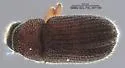
Carphobius caterinoi
Carphobius caterinoi
Identification: Distinguished from other Carphobius spp. by the presence of scale-like vestiture, and 2-3 small, acute spines on 1st and 3rd declivital interstriae.
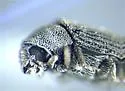
Carphoborus carri
Carphoborus carri
Identification: Frons flattened in both sexes, more deeply impressed above epistoma in male, surface shining, coarsely to finely, deeply punctured, vestiture long (female); pronotum closely, coarsely punctured; elytral interstriae coarsely, deeply pu
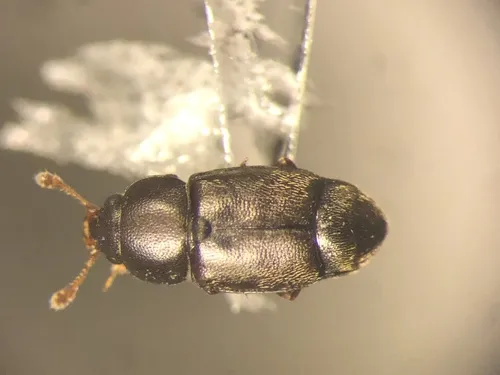
Carpophilus brachypterus
Carpophilus brachypterus
Carpophilus brachypterus (Carpophilus brachypterus) is a species in the family Nitidulidae, commonly known as sap-feeding beetles, belonging to the order Coleoptera (Beetles). It is classified within the subfamily Carpophilinae, suborder Polyphaga, s
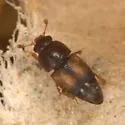
Carpophilus nepos
Carpophilus nepos
Identification: "many things have been misidentified as this species, [native range] unknown" (A.R. Cline, pers. comm. to =v= 5.iv.2011) males produce an aggregation pheromone that attracts beetles of both sexes ( Petroski & Weisleder 1997 )
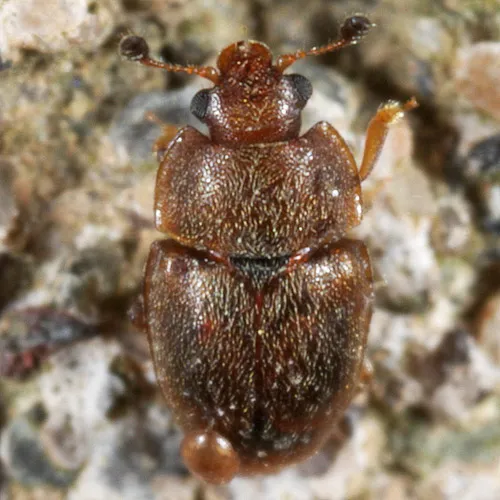
Carpophilus obsoletus 0
Carpophilus obsoletus
Identification: adult habitus photos: 1 • 2 • 3 a major pest of various dry agricultural products ( 3 )
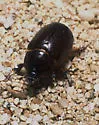
Carrot Beetle
Ligyrus gibbosus
Identification: External surface of protibia, in frontal view, deeply punctate. Pronotum and elytra with minute to small punctures.
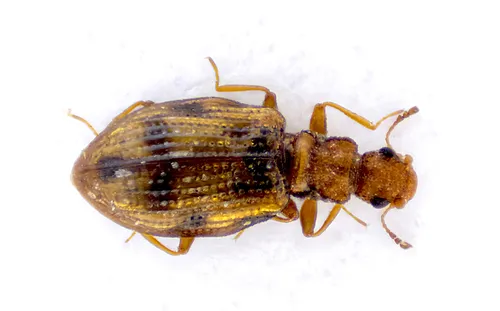
Cartodere bifasciata
Cartodere bifasciata
This is a minute scavenger beetle sometimes called a mould beetle, and measures little more than 2 mm in length. The elytra are gold-brown in colour and are marked with a darker patterning of large dot like blotches. The elytra are also studded with
Cartodere nodifer
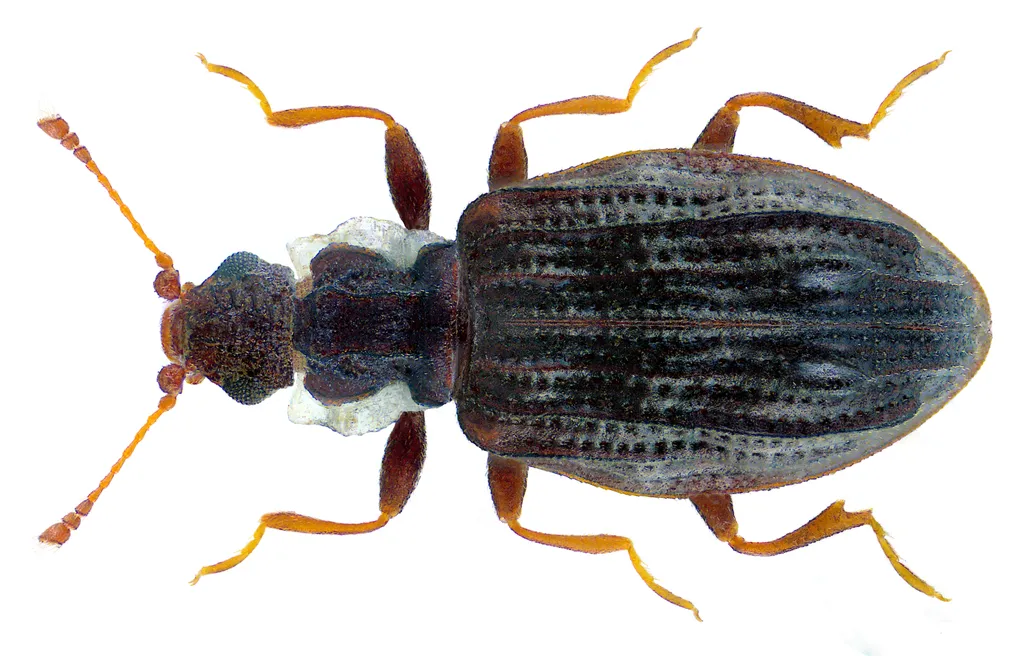
Cartodere nodifer
This is a minute scavenger beetle sometimes called a mould beetle, and measures 1.5 to 2 mm in length. Colour when mature is dull black and the mature specimens have a waxy membrane to the sides of the pronotum and on various parts of the ventral sur
Casey's Lady Beetle
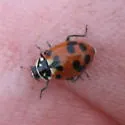
Hippodamia caseyi
Identification: Pronotum (between wings and head): Elytra (wing covers): This species wasn't proved to live in Alberta until 2007, so earlier range maps don't show it there.
Cassida relicta
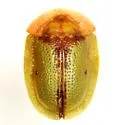
Cassida relicta
described from three specimens with the data "Illinois Belfrage." Riley regarded this species as "perhaps the rarest of the United States cassidines."