
Canthon imitator
This record describes Canthon imitator (species). Recorded family: Scarabaeidae. Recorded order: Coleoptera.
Identification and Appearance
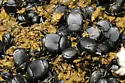
Dark blue to brownish-coppery. note clypeus
Classification
- Kingdom
- Animalia
- Phylum
- Arthropoda
- Class
- Insecta
- Order
- Coleoptera (Beetles)
- Suborder
- Polyphaga
- Superfamily
- Scarabaeoidea
- Family
- Scarabaeidae (Scarab Beetles)
- Subfamily
- Scarabaeinae
- Tribe
- Deltochilini
- Genus
- Canthon (Tumblebugs)
Imported taxonomy record. Source availability varies; see the source references and editorial policy below.
Habitat and Range
Habitat
Open vegetation, sandy soil
Geographic Range
OK‒TX • also AZ & CO per
Diet and Behavior
Life History
Lindquist (1935), in observations in Uvalde, TX, referring to what is almost surely the yet to be described Canthon imitator , says "[t]his species is widely distributed, and its actions in carving out and rolling away balls of dung are frequently observed. At times, particularly after rains, two dozen or more beetles may be seen cutting up a dropping, and sometimes the entire dung patch is destroyed. In hot, dry weather 50 to 100 beetles may be found milling around inside a dropping. One unusually large dropping was estimated to contain 600 beetles. The insects probably congregate in this manner for feeding and protection until they are ready to prepare for their progeny. ( 3 )
Additional species information
Species notes from the sources
Etymology: Canthon imitator Brown 1946
About Primitive Winged Insects: the wider group
Order-level background for Coleoptera, the group containing Canthon imitator. Species-specific details appear above.
Group overview
Coleoptera is the largest order of insects with over 400,000 described species, representing ~25% of all known animal species and ~40% of all insects. In the U.S. alone, nearly 30,000 beetle species have been identified.
Ecological role of the group
Beetles are prominent decomposers, especially in forests, breaking down dead wood and recycling nutrients. As predators, they reduce populations of pest insects. Many species are also important pollinators of flowering plants.
Economic and practical significance of the group
Beetles have major economic significance: leaf beetles (Chrysomelidae) and weevils (Curculionoidea) are among the most destructive agricultural pests globally, costing billions annually, while predatory species like ladybugs provide natural pest control.
Recorded sources for this group: Britannica, Smithsonian, NCSU Entomology. Imported estimates may describe particular regions or reporting periods.
Photos of Canthon imitator (5)
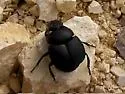
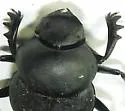
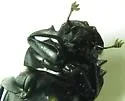
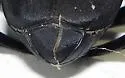
Photo credits: Contributed by Cotinis; Additional contributions by Phillip Harpootlian , Mike Quinn , v belov
Frequently Asked Questions About Canthon imitator
What is Canthon imitator?
Canthon imitator is a species in the family Scarabaeidae, within the order Coleoptera.
How do you identify Canthon imitator?
Dark blue to brownish-coppery. note clypeus
Where is Canthon imitator found?
| Feature | Details |
|---|---|
| Habitat | Open vegetation, sandy soil |
| Range | OK‒TX • also AZ & CO per |
What is the life cycle of a Canthon imitator?
Lindquist (1935), in observations in Uvalde, TX, referring to what is almost surely the yet to be described Canthon imitator , says [t]his species is widely distributed, and its actions in carving out and rolling away balls of dung are frequently observed. At times, particularly after rains, two dozen or more beetles may be seen cutting up a dropping, and sometimes the entire dung patch is destroyed. In hot, dry weather 50 to 100 beetles may be found milling around inside a dropping. One unusually large dropping was estimated to contain 600 beetles. The insects probably congregate in this manner for feeding and protection until they are ready to prepare for their progeny. ( 3 )