
Capraita circumdata
This record describes Capraita circumdata (species). Recorded family: Chrysomelidae. Recorded order: Coleoptera.
Identification and Appearance
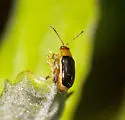
=v='s avis: Anthony Deczynski told me that none of the [photos] IDed as Capraita thyamoides are correct. C. thyamoides lacks humeral callosities, which appear in all the images. Most of them are probably C. circumdata , although some other species have variations which look similar. I would recommend placing them all in this species and I will comment if I find any which appear to be different. I found a single image of the true C. thyamoides in the unidentified [Alticini], which I commented on. (pers. comm.) Boris's comment: In fact, images of C. thyamoides , dark subvittata , and perhaps even aberrrant obsidiana may still be intermixed in our series of C. circumdata . The history of the species knew confusion for a long time (with quercata and subvittata ).
Classification
- Kingdom
- Animalia
- Phylum
- Arthropoda
- Class
- Insecta
- Order
- Coleoptera (Beetles)
- Suborder
- Polyphaga
- Superfamily
- Chrysomeloidea
- Family
- Chrysomelidae (Leaf Beetles)
- Subfamily
- Galerucinae
- Tribe
- Alticini
- Genus
- Capraita
Imported taxonomy record. Source availability varies; see the source references and editorial policy below.
Habitat and Range
Geographic Range
e. N. Amer. (ne.TX-FL-QC-IA) - Map , rare along the Gulf and s. Atlantic coastal plains
Diet and Behavior
Diet: "Apparently a generalist: BugGuide images show this species eating flowers of spring beauty ( Claytonia caroliniana ) and foliage of white ash ( Fraxinus americana ) and Amur honeysuckle ( Lonicera maackii )." (Charley's comment moved from C. thyamoides page, rendered inapplicable there as a result of the latest developments. =v=)) Clark et al. ( 3 ) report having found this species feeding on the bracts at the bases of flowering dogwood (Cornaceae: Cornus florida ) flower clusters, and on (presumably foliage of) possumhaw (Aquifoliaceae: Ilex decidua ), trumpet creeper (Bignoniaceae: Campsis radicans ), common dittany (Lamiaceae: Cunila origanoides ), ash (Oleaceae: Fraxinus spp.), smooth yellow false foxglove (Scrophulariaceae: Aureolaria flava ), and mullein foxglove (Scrophulariaceae: Dasistoma macrophylla ). They list honeysuckle and snowberry among the many other plants these beetles have been found on, but the BugGuide record (assuming the beetle is correctly identified) may be the first documentation of actual feeding on a member of the honeysuckle family (Caprifoliaceae).
About Primitive Winged Insects: the wider group
Order-level background for Coleoptera, the group containing Capraita circumdata. Species-specific details appear above.
Group overview
Coleoptera is the largest order of insects with over 400,000 described species, representing ~25% of all known animal species and ~40% of all insects. In the U.S. alone, nearly 30,000 beetle species have been identified.
Ecological role of the group
Beetles are prominent decomposers, especially in forests, breaking down dead wood and recycling nutrients. As predators, they reduce populations of pest insects. Many species are also important pollinators of flowering plants.
Economic and practical significance of the group
Beetles have major economic significance: leaf beetles (Chrysomelidae) and weevils (Curculionoidea) are among the most destructive agricultural pests globally, costing billions annually, while predatory species like ladybugs provide natural pest control.
Recorded sources for this group: Britannica, Smithsonian, NCSU Entomology. Imported estimates may describe particular regions or reporting periods.
Photos of Capraita circumdata (5)
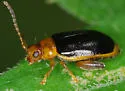
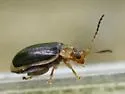
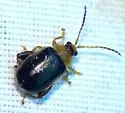
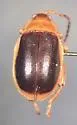
Photo credits: Contributed by v belov; Additional contributions by Mike Quinn , Boris Bueche , ceiseman
Frequently Asked Questions About Capraita circumdata
What is Capraita circumdata?
Capraita circumdata is a species in the family Chrysomelidae, within the order Coleoptera.
Where is Capraita circumdata found?
Range: e. N. Amer. (ne.TX-FL-QC-IA) - Map , rare along the Gulf and s. Atlantic coastal plains
What does Capraita circumdata eat?
The diet of the Capraita circumdata includes Apparently a generalist: BugGuide images show this species eating flowers of spring beauty ( Claytonia caroliniana ) and foliage of white ash ( Fraxinus americana ) and Amur honeysuckle ( Lonicera maackii ). (Charley's comment moved from C. thyamoides page, rendered inapplicable there as a result of the latest developments. =v=)) Clark et al. ( 3 ) report having found this species feeding on the bracts at the bases of flowering dogwood (Cornaceae: Cornus florida ) flower clusters, and on (presumably foliage of) possumhaw (Aquifoliaceae: Ilex decidua ), trumpet creeper (Bignoniaceae: Campsis radicans ), common dittany (Lamiaceae: Cunila origanoides ), ash (Oleaceae: Fraxinus spp.), smooth yellow false foxglove (Scrophulariaceae: Aureolaria flava ), and mullein foxglove (Scrophulariaceae: Dasistoma macrophylla ). They list honeysuckle and snowberry among the many other plants these beetles have been found on, but the BugGuide record (assuming the beetle is correctly identified) may be the first documentation of actual feeding on a member of the honeysuckle family (Caprifoliaceae)..