
Flies
Order Hymenoptera
The Flies (Order Hymenoptera) includes 5,194 species across 102 families and 1,491 genera in our directory.
About Flies
Hymenoptera includes over 150,000 described species of ants, bees, wasps, and sawflies. Earth harbors approximately 20 quadrillion (20×10^15) ants, with a combined biomass of ~12 megatons of dry carbon - exceeding the combined biomass of all wild birds and mammals (PNAS, 2022).
Economic Impact
Pollinators contribute $235-577 billion worth of annual global food production (FAO). In the U.S., bee pollination alone benefits crops valued at $18 billion annually, and honey bees are responsible for $5.4 billion in agricultural productivity. Between April 2023-2024, 55.1% of managed honey bee colonies were lost. The U.S. bee population dropped from 5 million to 2.5 million.
Ecological Role
About 35% of the world's food crops depend on animal pollinators. The chocolate industry, valued at over $100 billion, depends on pollinating flies and midges. Ants are the dominant soil engineers in most terrestrial ecosystems, turning more soil than earthworms in many habitats.
Families in Hymenoptera (102)
Species in Hymenoptera (5,194)
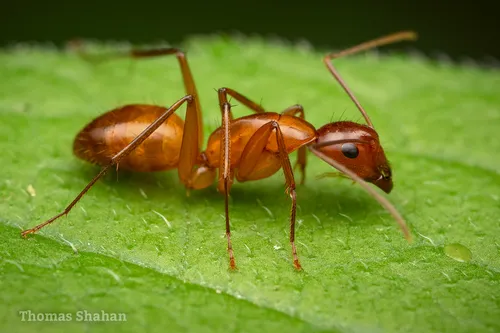
Chestnut Carpenter Ant
Camponotus castaneus
Identification: Typical Carpenter Ant, large and uniformly reddish orange. See Mississippi Entomological Museum . [OY] Its sister species, C. americanus, is in the Camponotus sensu stricto, and it fits well inside that group. No doubt this species wi
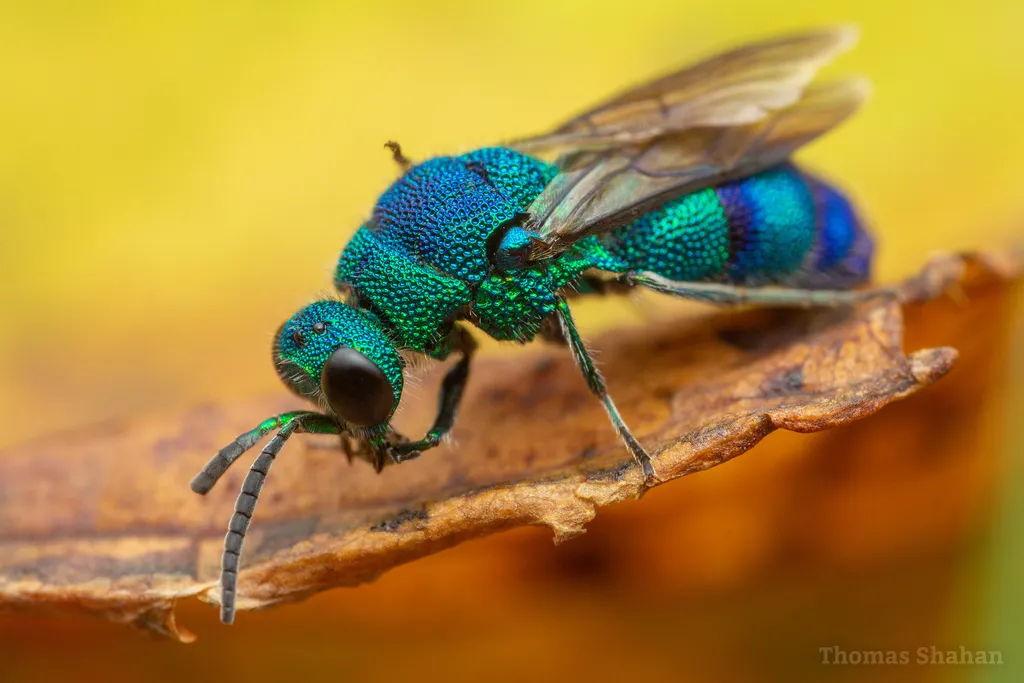
Chrysis conica
Chrysis conica
Identification: Important characters are the dentate mesopleura, not too dark wings, straight frontal carina and the placement of teeth at the distal end of abdomen (middle ones closer).
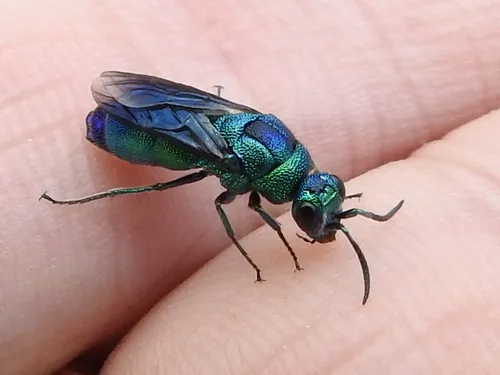
Chrysis fuscipennis
Chrysis fuscipennis
Identification: Readily distinguished as our only member of the fuscipennis -group by the infuscated wings. Introduced from the Palearctic, probably during World War II, possibly in Sceliphron mud nests
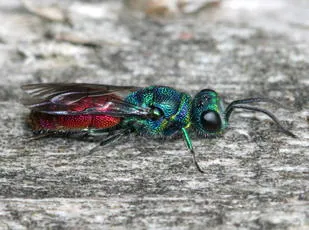
Chrysis ignita
Chrysis ignita
Length approx 12 mm. This is a brightly coloured wasp with a metallic red abdomen and bright green head and thorax. Chrysis ignita cannot be separated from other Chrysis species without expert examination of the specimen. Heathland and gardens. These
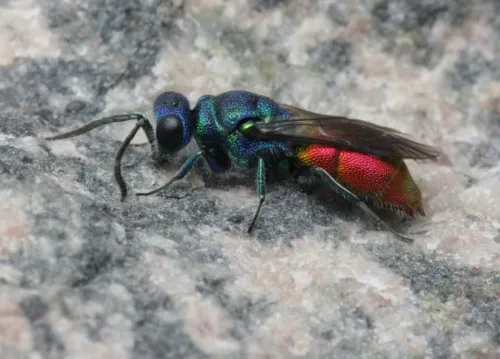
Chrysis impressa
Chrysis impressa
This is a very handsome species with a ruby red body and blue green thorax and head, the whole having a rather metallic lustre. There are several very similar species and great care is needed when identifying these wasps. Chrysis impressa cannot be s
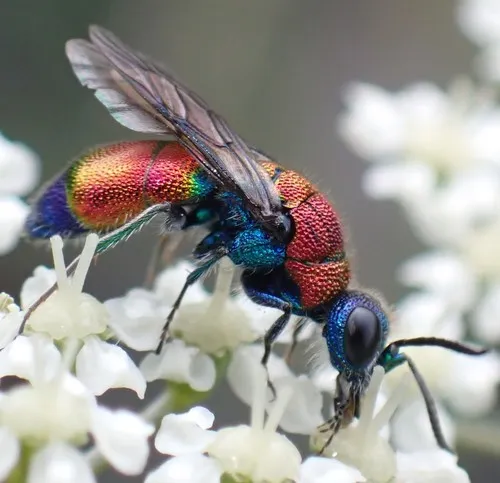
Chrysis viridula
Chrysis viridula
This is a brightly coloured wasp with a metallic sheen. There are other quite similar species, and care is needed with identification. Unless identified by a recognised expert, a photo is required. If the photo doesn't show the key ID features then i
Chrysocharis nephereus
Chrysocharis nephereus
The specimens for which this guide page was created were examined by Christer Hansson and identified as "Chrysocharis cf nephereus."
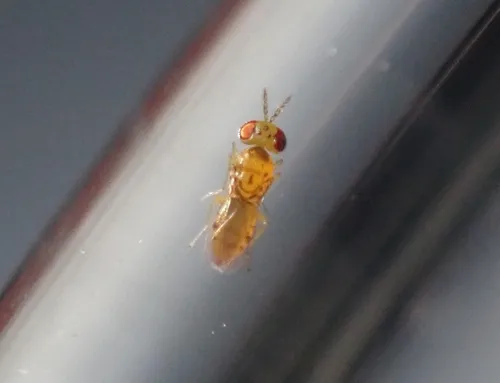
Chrysonotomyia susbelli
Chrysonotomyia susbelli
Identification: original description Type Locality: Rice University campus, Houston, Harris County; 29.7179°N, 95.4048°W; 4.v.2022. ex. gall on Quercus virginiana ; coll. Pedro Brandão-Dias
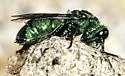
Chrysurissa densa
Chrysurissa densa
Identification: The simple notch at the apex of the abdomen is diagnostic for the genus/species.
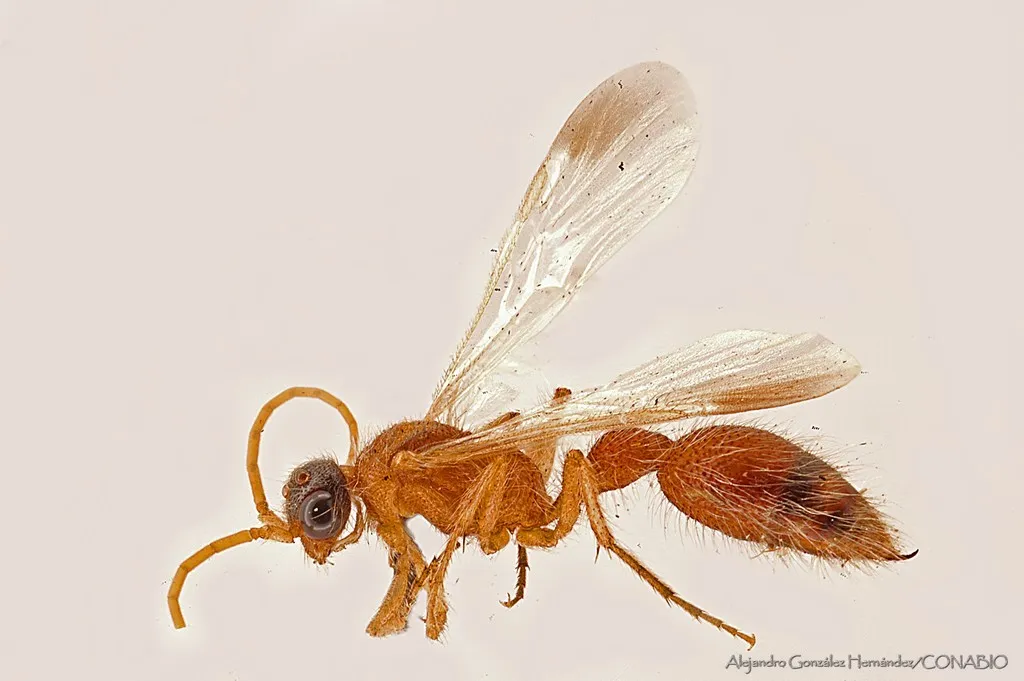
Chyphotes aenigmus
Chyphotes aenigmus
Identification: This species can be separated from other species in this subgenus by the presence of darkened integument of the head and the characteristic genitalia where the dorsal and ventral margins of paramere are divergent, curvature of dorsal
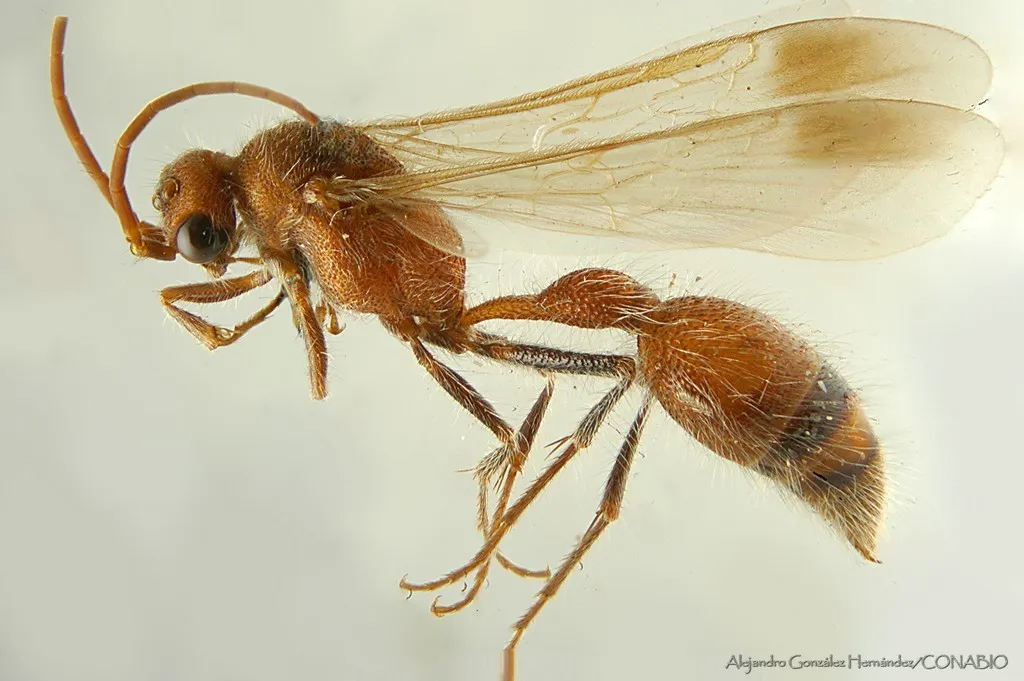
Chyphotes belfragei
Chyphotes belfragei
Identification: T3, meso- & meta- femora and tibiae piceous. One male from Big Bend (TX) had identical genitalia and entirely stramineous legs. Chyphotes elevatus overlaps in sw US, tending to occur at lower elevations than belfragei and meso- & meta
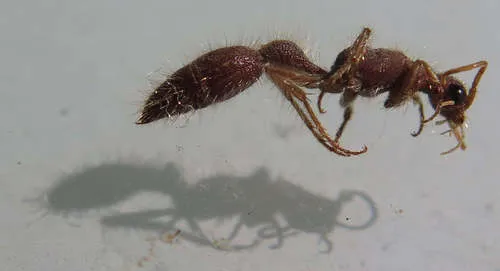
Chyphotes cooki
Chyphotes cooki
Identification: Males are conspicuously wingless like the females.
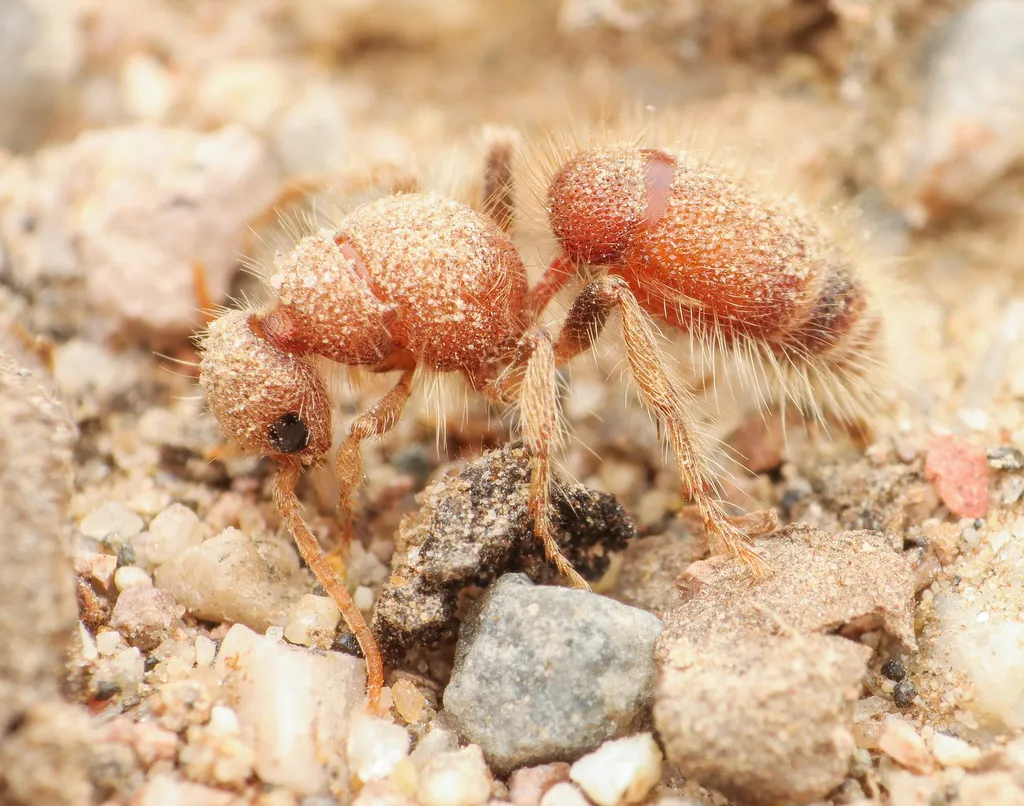
Chyphotes elevatus
Chyphotes elevatus
Identification: T3 distinctly darker, meso- & metafemur slightly infuscated. Males generally smaller than in Ch. belfragei and occur at lower elevations. In Ch. belfragei femora & tibiae are darkened.
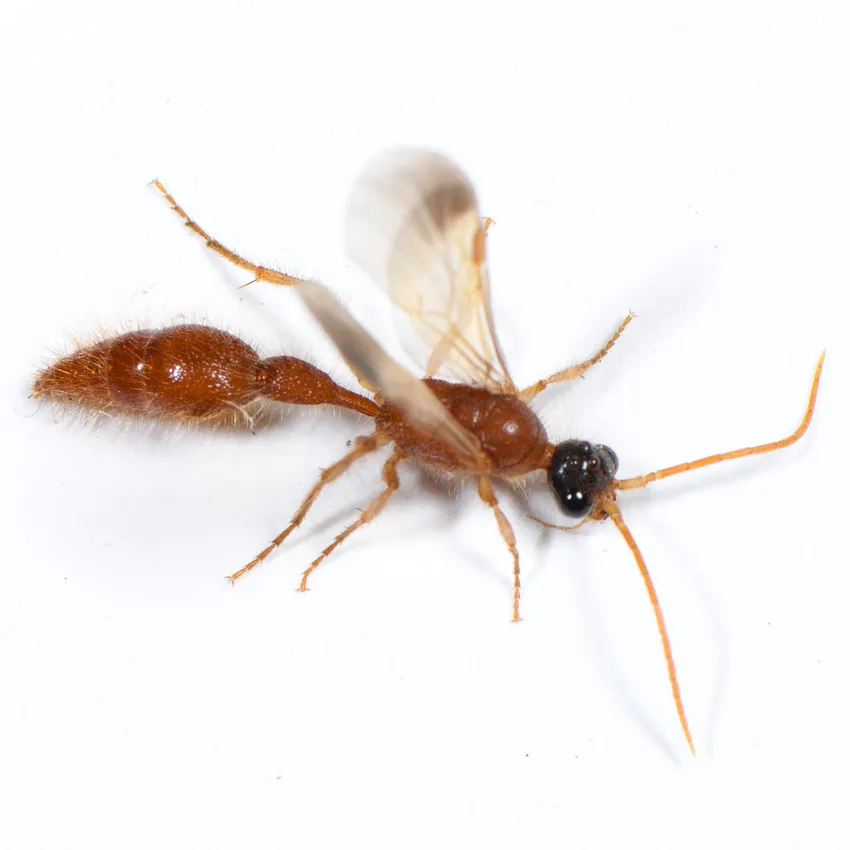
Chyphotes melaniceps
Chyphotes melaniceps
Identification: T3 concolorous with remainder of abdomen. Variable terga contrast in other 5 dark-headed species of subgenus Chyphotes makes species ID uncertain without dissection. Can be separated from other species in this subgenus by the darkened
Cladius gregarius
Cladius gregarius
Identification: A similar species, Trichiocampus grandis , has a number of large black spots on each side of the body (on the suprastigmal lobe), but there are no spots on the back, according to Lorenz and Kraus, 1957.
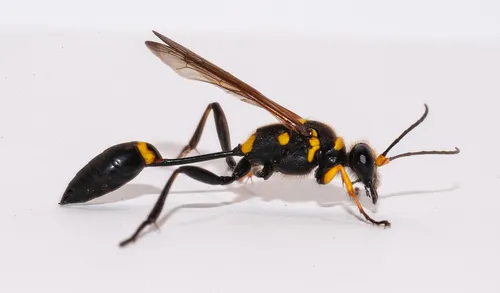
Clayman's Mud Dauber Wasp
Sceliphron assimile
Identification: hind legs mostly black; in S. caementarium , the basal half of metatibia and most of the tarsi are yellow (males of S. assimile can sometimes have a yellow streak on the inner margin of the tibia, and yellowish tarsi)
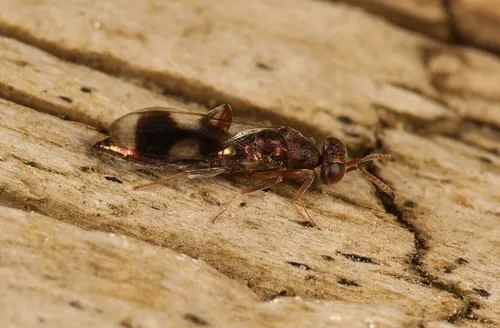
Cleonymus laticornis
Cleonymus laticornis
A very small, (length: 1.6 to 2.7 mm) parasitoid wasp with a distinctive wing pattern. Good close up photographs required please. True status in Britain is difficult to determine due to lack of records. No additional images available for this species
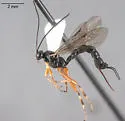
Clistopyga atrata
Clistopyga atrata
Identification: This species is identified within its genus by its almost entirely black body to dark brown and its complete submetapleural carina. The female has an entirely coarse-punctated metapleuron and a slender, only weakly upwardly-curved ovi
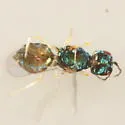
Closterocerus damastes
Closterocerus damastes
The specimens for which this guide page was created were identified as Closeterocerus nr. damastes by Christer Hansson.
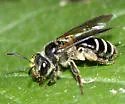
Cloudy-winged Miner Bee
Andrena nubecula
Identification: It is distinguished by the absence of apical hair on metasomal tergum 1 with the wings strongly darkened apically and in the marginal cell; and the males with the posterior margin of the gena rounded or with a weak spine. According to
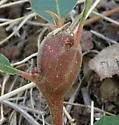
Club Gall Wasp
Andricus coortus
Identification: Wasps induce integral, polythalamous galls on the tips of new branches. Hosts are Quercus garryana , Quercus berberidifolia (and maybe other closely related scrub oaks), and Quercus douglasii .
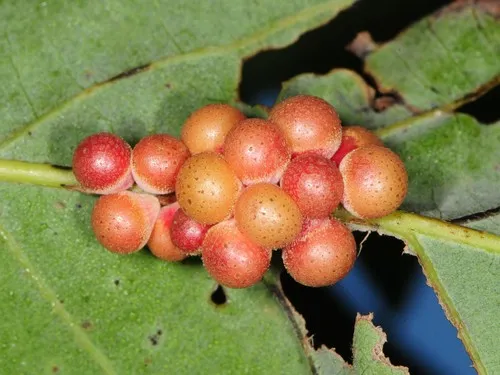
Clustered Midrib Gall Wasp
Andricus dimorphus
Forms galls on leaves in the white oak group. "Galls in rounded masses, a few to 30 in each, closely packed, clustered on the under side of the midrib or petiole, one-celled, globose, pointed basally, greenish, tinged with pink when fresh, grayish wh
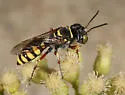
Clypeadon taurulus
Clypeadon taurulus
Identification: Male: clypeus with lateral spots; female: shape of clypeal horn diagnostic
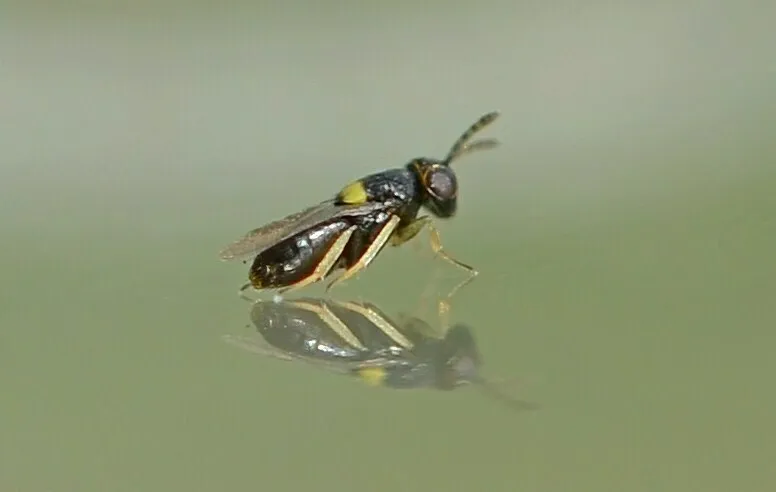
Coccophagus lycimnia
Coccophagus lycimnia
Identification: Females with conspicuous yellow spot on scutellum. Spot absent in males. This species is sometimes used for the control of scale insects in greenhouses.
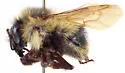
Cockerell's Bumble Bee
Bombus cockerelli
Identification: Color patterns resembles some populations of the eastern B. sandersoni with a black interalar band The known distribution covers only about 777 km2, giving it the smallest known range of any bumblebee in the world. Most of the known s
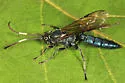
Coelichneumon sassacus
Coelichneumon sassacus
Identification: The body is conspicuously metallic blue throughout. White markings are usually restricted to lateral marks on the scutellum, with the face, pronotum, and subalarum usually entirely unmarked. The scopa is large. The flagellum is modera
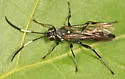
Coelichneumon vitalis
Coelichneumon vitalis
Identification: Female has bluish tint on metasomal terga but not on mesosoma and propodeum.
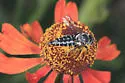
Coelioxys alternatus
Coelioxys alternatus
Medler (1964) reported rearing Coelioxys alternatus from trap nests provisioned by Megachile pugnata . (Baker J. R. 1975 and Mitchell, T.B. 1962)
Coelioxys banksi
Coelioxys banksi
Medler and Koerber (1958) reported rearing Coelioxys banksi from nests of Megachile relativa.
Coelioxys coturnix
Coelioxys coturnix
Non native, from Europe, where it is rather uncommon. Introduced very recently.
Coelioxys dolichos
Coelioxys dolichos
The host is Megachile xylocopoides (per comment by John S. Ascher here ).
Coelioxys edita
Coelioxys edita
Texas Bee expert Jack Neff has noted that in both sexes, the axilla is carinate. [This information is confirmed in the reference below.]
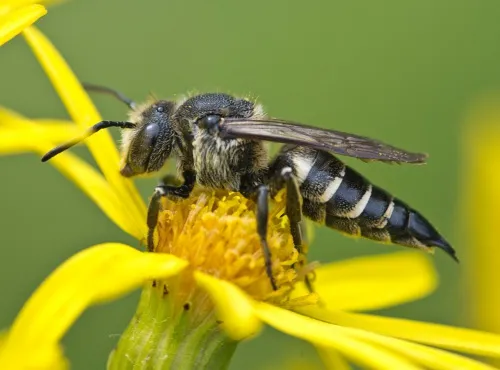
Coelioxys elongata
Coelioxys elongata
This is a darkly coloured bee 11 to 15 mm in length with narrow, sharply defined bands of pale hairs on the abdomen, hairy eyes and a toothed scutellum. As with all species in this genus, the female has a distinctively pointed end to the abdomen, whi
Coelioxys modestus
Coelioxys modestus
Coelioxys modestus hosts include Megachile centuncularis and M. campanulae wilmingtoni . (Mitchell, T.B., 1962)
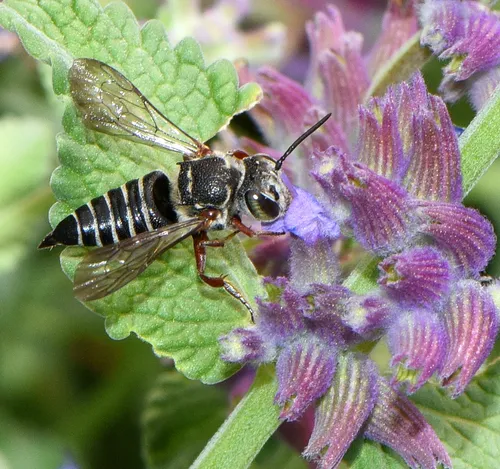
Coelioxys octodentatus
Coelioxys octodentatus
Identification: Octodentatus can be difficult to distinguish from sayi , especially in the males. Separating characters include: 1- The distance from the lateral ocelli to the vertex margin is larger than the distance between the lateral ocelli 2- Th
Coelioxys porterae
Coelioxys porterae
Megachile relativa and M. frigida have been recorded as hosts of Coelioxys porterae . (Baker J. R., 1975)
Coelioxys rufitarsis
Coelioxys rufitarsis
Cleptoparasite of Megachile latimanus and M. melanophaea . (Mitchell, T.B., 1962)
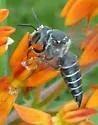
Coelioxys sayi
Coelioxys sayi
Identification: bilobed clypeus ( ref. ) Medler (1965) reported Megachile mendica to he a host of Coelioxys sayi and K. V. Krombein has reared Coelioxys sayi from nests of Megachile mendica at Lake Placid, Fla. This bee has also been recovered from
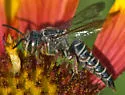
Coelioxys texanus
Coelioxys texanus
"Krombein (1967) reported rearing Coelioxys texanus from trap nests provisioned by Megachile policaris ." (Baker J. R., 1975)
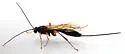
Coleocentrus pettiti
Coleocentrus pettiti
Identification: Separated from similarly-colored Coleocentrus by the darkened hind tibiae and ovipositor length of 1.08x forewing length.
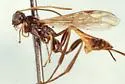
Collyria coxator
Collyria coxator
Palearctic species introduced in NA to control the European wheat stem-sawfly ( Cephus pygmaeus ; despite repeated attempts to establish it in w. Canada in the 1930's on the native Cephus cinctus , it apparently no longer occurs there ; the 1935-1940
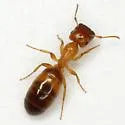
Colobopsis etiolata
Colobopsis etiolata
Described from numerous specimens of all four phases taken at Austin, Texas, in the woody galls of Disholcaspis cinerosus (Cynipidae) on the live-oaks ( Quercus virginiana ).
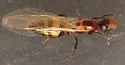
Colobopsis impressa
Colobopsis impressa
Identification: Heavily sculptured, These are the famous plug-headed ants, whose majors use their bizzarre head shape to block the nest entrance, allowing entry only to nestmates reurning form foraging.
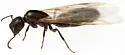
Colobopsis papago
Colobopsis papago
Identification: A dark Colobopsis with similar coloration on all female castes. Out of range of all other Colobopsis in our area other than Colobopsis cerberula , which it differs from by having a non-keeled clypeus on majors and queens, less numerou
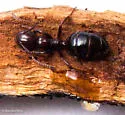
Colobopsis riehlii
Colobopsis riehlii
Identification: This species is found in mangrove thickets and has a very angular, almost triangular propodeum (when viewed from the side).
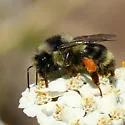
Colorado Black-notched Bumble Bee
Bombus bifarius
Identification: In both sexes the most distinctive feature is the medial notch of black hairs bisecting the scutellum more conspicuous than in other species (approached but not matched in ternarius and sylvicola). Facial hairs of female extensively y
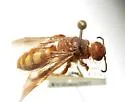
Colpa flammicoma
Colpa flammicoma
Identification: Female with interantennal space strongly elevated into a platform; head red; pronotum, propodeum, and abdomen with yellow lateral spots; abdomen with ground color reddish Male with somewhat clubbed antennae; thorax and abdomen with ex
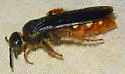
Colpa pollenifera
Colpa pollenifera
Identification: Scutellum divided (undivided in the widespread C. octomaculata ), wings with strong metallic blue reflections. ♂ ♀
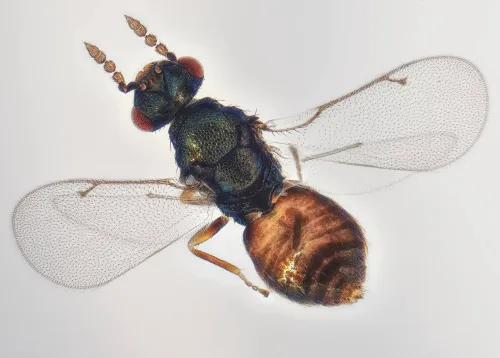
Colpoclypeus florus
Colpoclypeus florus
Funicle of female with two segments, of male with two or three segments. Clypeus with anterior margin medially incised, scutellum without sublateral grooved lines, gaster of female more or less round. One UK species. Unless identified by a recognised
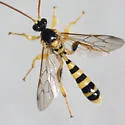
Colpotrochia texana
Colpotrochia texana
Identification: "The angle of the nervellus of the hindwing appears to be "postfurcal" (with the end that joins vein M+Cu farther from the wing base than the end that joins vein 1A) and it is "vertical" in crassipes. In addition, crassipes has a more
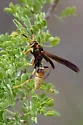
Comanche Paper Wasp
Polistes comanchus
Identification: A bright species of Polistes (Aphanilopterus) with a red-and-black thorax and an extensively yellow abdomen. P. c. comanchus has a black scutellum and extensively red T2 segment of the abdomen. Range: e. NM, TX P. c. navajoe has a red
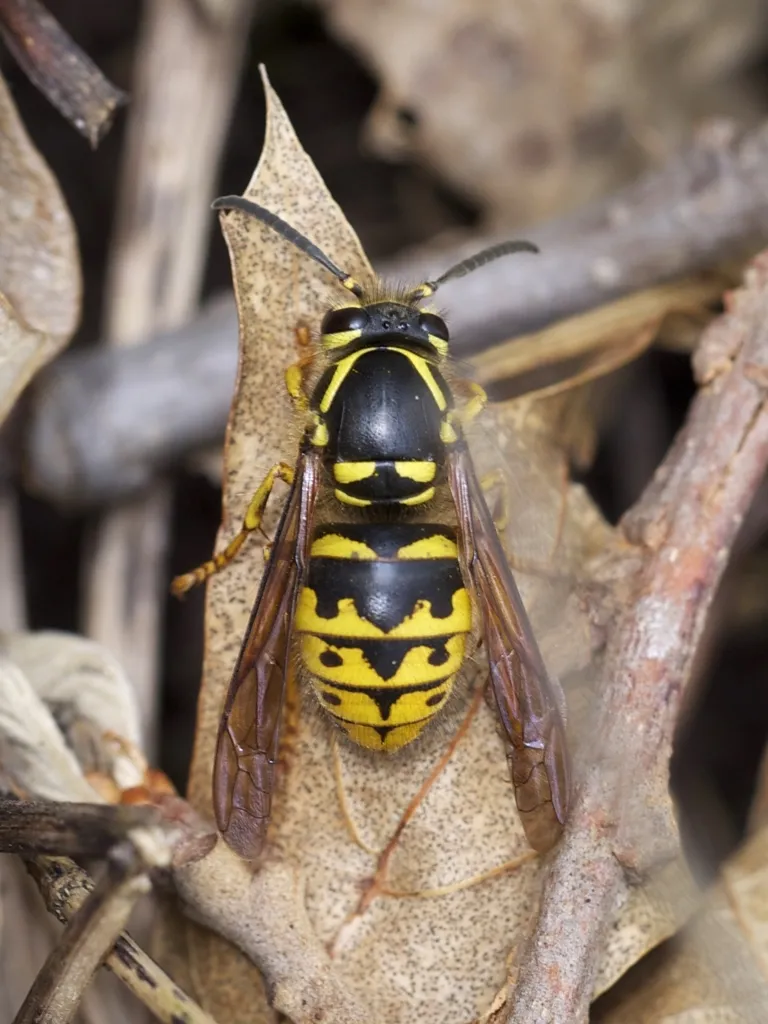
Common Aerial Yellowjacket
Dolichovespula arenaria
Identification: Queen (♀♀) Worker (♀) Male (♂) They have mostly aerial nests, from a few centimeters above ground to the tops or trees, or houses or sheds. But in some cases they build nests under rocks or even underground.
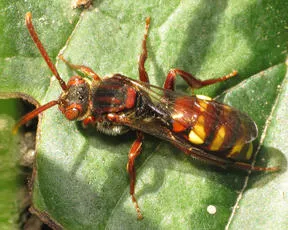
Common Bee Wasp
Nomada ruficornis
Wing length: 6.5-8mm. As with many bees, males and females are quite different, but both have a mixture of yellow, black and red on the abdomen. It is best identified by its bifid mandibles - a feature only shared with N. fabriciana which is darker a
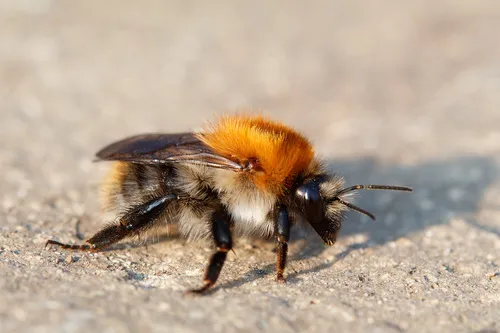
Common Carder Bumblebee
Bombus pascuorum
The Common Carder Bumblebee is one of two common bumblebees to have a ginger thorax. The other, the Tree Bumblebee has a white 'tail'. There are other less-common carder bees. Although the abdomen also has ginger bands but the hairless black bands te
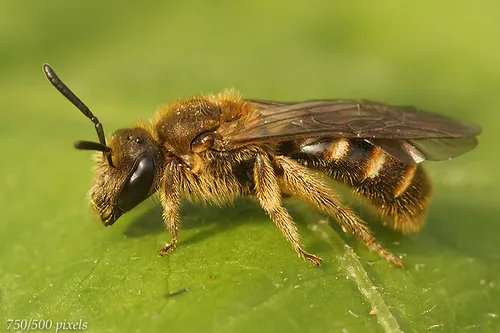
Common Furrow-bee
Lasioglossum calceatum
Forewing: 5.5-7mm (sexes similar). Males can have either an all-black abdomen or be extensively red-marked. Both sexes have pale hairs along the apical edges of the abdominal tergites. There are several similar species and expert help should be sough
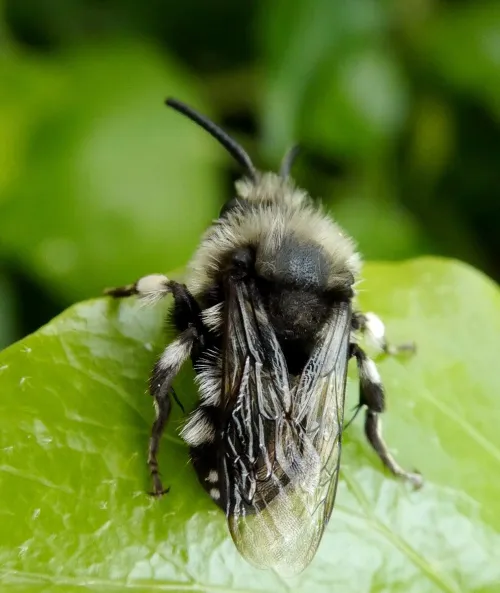
Common Mourning Bee
Melecta albifrons
Length about 13mm. This is a distinctive spring bee, with the head and body entirely black in the female except for a pair of lateral patches of white appressed hairs on most of the gastral tergites (top surface of the abdomen) and on the legs. Howev
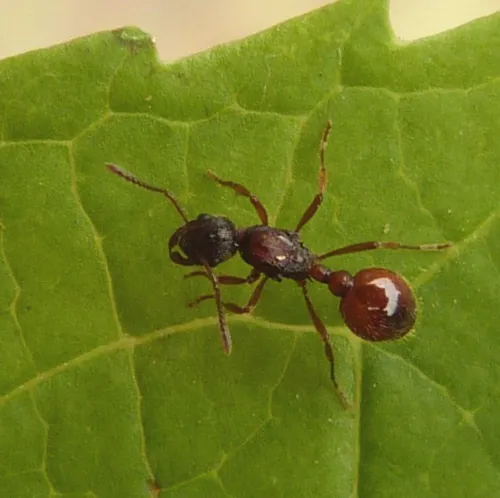
Common Red Ant
Myrmica rubra
Approximately 6 mm long. They are mainly red in colour, with slightly darker pigmentation on the head. The males are a little darker than the others. Lasius always have just a single segment waist, whereas Myrmica have two segments. M. rubra can be d
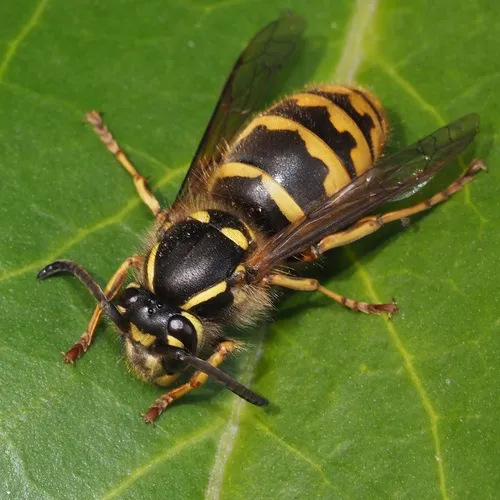
Common Wasp
Vespula vulgaris
About 2 cm long, they have bright yellow and black bands along the body, with an obvious 'waist' between the thorax and abdomen. They also have two pairs of wings and fairly long, robust antennae. The sting is located at the tip of the abdomen. The q
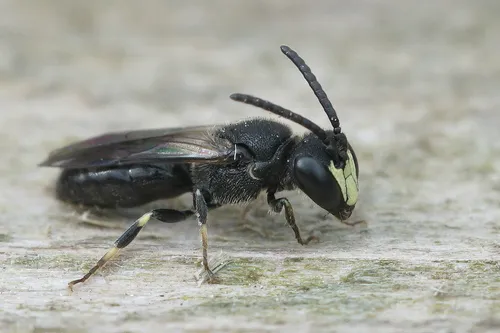
Common Yellow-face Bee
Hylaeus communis
Size 6 to 8 mm. Males can be distinguished by the facial markings with the yellow on the face obviously divided by black bands and curling around the antennal sockets. Females have far more restricted yellow on the face, just a small patch lying agai
Compsocryptus calipterus
Compsocryptus calipterus
Identification: Females are colored much like C. texensis except the ground color of the body is slightly lighter, the flagellum often has a white annulus (sometimes reduced or absent), and the wings typically have narrower black markings. Males are
Compsocryptus fasciipennis
Compsocryptus fasciipennis
Identification: Body almost entirely bluish black apart from slight fulvous tinges on the head, antennae strongly yellow with the apex black, forewing black with but a single yellowish-orange band. Our only Compsocryptus that isn't fulvous to ferrugi
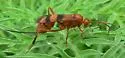
Compsocryptus texensis
Compsocryptus texensis
Identification: Female with the base of the flagellum uniformly ferruginous and lacking any sign of a white annulus. Male with the first flagellomere entirely fulvous (not fuscous above), T4 basally darkened, hind femur entirely red, hind tibia black
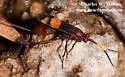
Compsocryptus xanthostigma
Compsocryptus xanthostigma
Identification: Distinct in North America by the combination of extensively black wings with only 2 orange bands (no orange at the base) and black mid and hind legs.
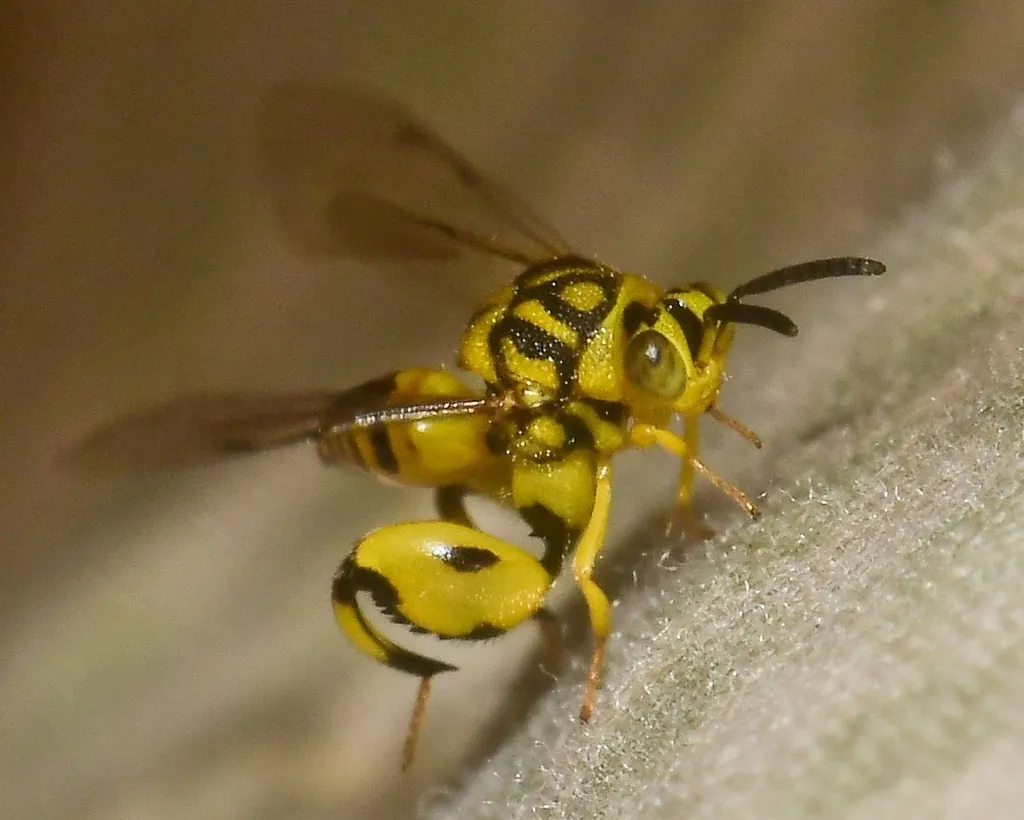
Conura amoena
Conura amoena
Identification: C. amoena has a distinctive row of long teeth on the hind femora. Note: size number, and arrangement of these teeth should be considerations when attempting to identify this species. This is not the only species with prominent teeth.
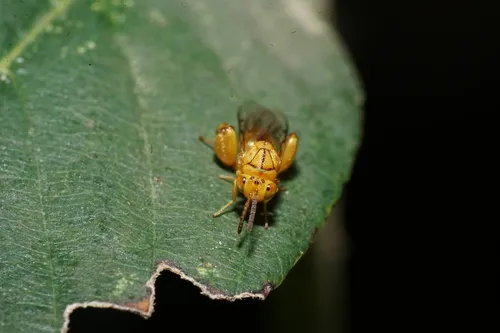
Conura igneoides 0
Conura igneoides
Identification: Females are separated from allied species by the following combination fo traits: facial carinulae ending near the margin of the eye, ventromedial tooth on the hind femur, and longer, more tooth-like projections on the propodeum.
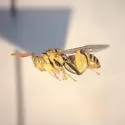
Conura maria
Conura maria
Identification: Distinguished from other members of the maculata -group by the triangular antennal pedicels in the male. Females are especially similar to other members of the group, including C. igneoides .
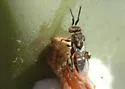
Conura side
Conura side
Austin Baker has cautioned against over-confident identification of this and other species based on photo comparisons.
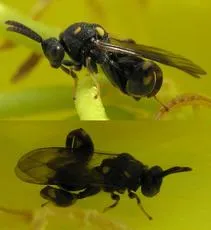
Conura xanthostigma
Conura xanthostigma
This Chalcid Wasp is around 8 mm long and is black with a number of yellow bars and spots. It lives parasitically in the larvae of sawflies of the genus Arge. It seems to be quite rare in Britain with only a handful of records, but it is difficult to
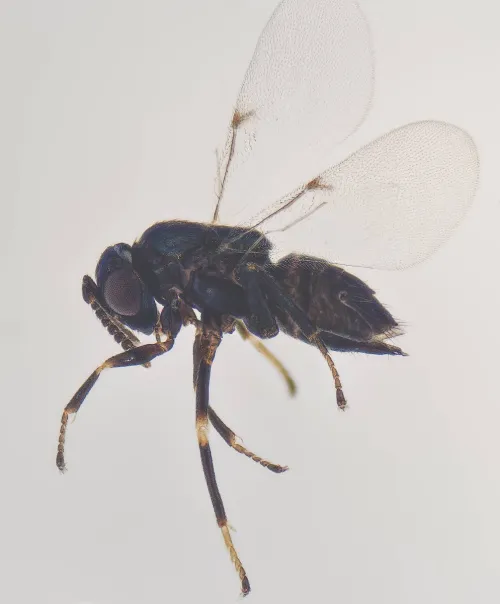
Copidosoma cuproviride
Copidosoma cuproviride
Females, length 1.2–1.4mm. Head green with golden metallic reflections; antenna brown; mesoscutum with emerald green metallic reflections, scutellum darker than mesoscutum, with golden purplish metallic reflections; tegula black; fore wing weakly inf
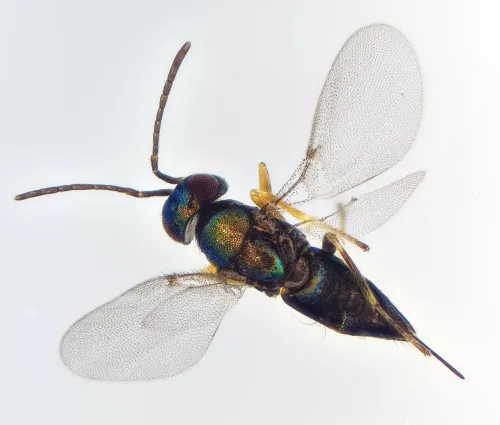
Copidosoma cyaneum
Copidosoma cyaneum
Length 1.3–1.4mm. Body with metallic green, blue or violet reflections; gena violet with a median longitudinal green band; antenna brown, scape with faint green metallic reflections; mesopleuron with green metallic reflections anteriorly, purplish po
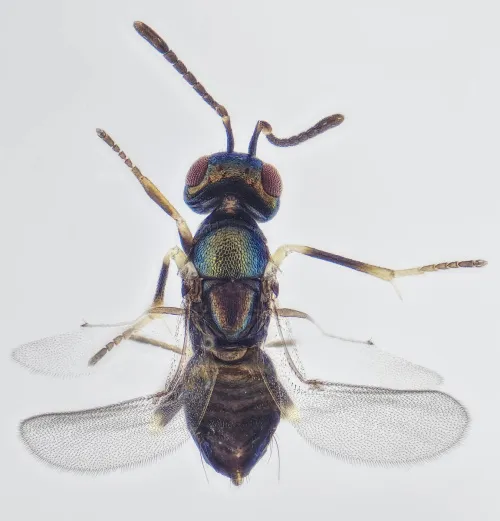
Copidosoma dius
Copidosoma dius
Female: Length 1–1.4mm. Head with metallic, golden green reflections; gena with golden or purple reflections; antenna brown, scape with metallic blue and green reflections; mesoscutum with metallic blue-green reflections, scutellum shiny brown with f
Copidosoma floridanum
Copidosoma floridanum
Because of its polyembryony it produces enormous quantity of DNA which facilitates DNA studies and it is used in genome sequencing.
Copper-Bellied Ant
Ochetellus glaber
Identification: Small black dolichoderine ants with a sharp propodeum end, almost forming a right angle. Under ideal lighting conditions the abdomen has a faint copper sheen, but it otherwise appears dark. They taste quite chemically spicy, like a Do
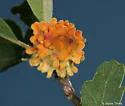
Coral Gall Wasp
Burnettweldia corallina
Identification: Larvae make summer galls on Quercus douglasii (blue oak). Galls are round with 2mm clublike projections.
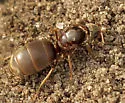
Cornfield ant
Lasius neoniger
Identification: Workers are dull, usually yellowish brown (sometimes darker). 4 or (usually) more erect hairs in a row on the lower edge of the hind tibia. Dorsal surface pubescent from head to abdominal apex. Host to Lasius latipes
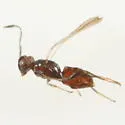
Cosmocomoidea capitata
Cosmocomoidea capitata
Both of the specimens depicted here were examined by John Huber at the Canadian National Collection and tentatively identified as C. capitata . Evidently the genus is in need of revision.
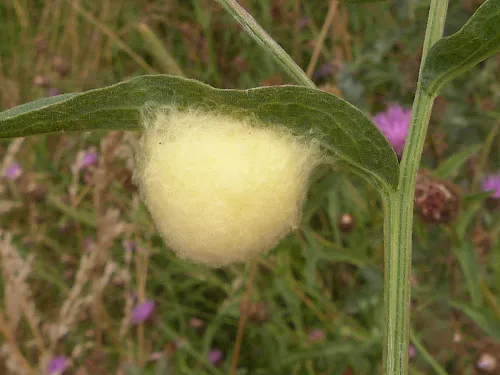
Cotesia ofella
Cotesia ofella
This is a small parasitoid wasp with a fascinating lifestyle. The Cotesia ofella female oviposits into a lepidopteran larva, which acts as host for the developing wasp larvae. The erupting parasitoid wasp larvae then cooperate in spinning a communal
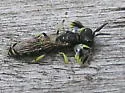
Crabro latipes
Crabro latipes
"The male's front tibiae are greatly expanded into shields. He covers the female's eyes with those things during mating. The plates don't blind her, but apparently filter light in such a way that she recognizes this is a male of her own species." Com
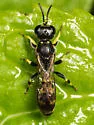
Crabro snowii
Crabro snowii
Identification: A member of the hilaris species group, in which males have no tibial shield.
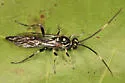
Cratichneumon sublatus
Cratichneumon sublatus
Identification: ♀ Head and thorax with sparse white markings (including inner orbits), abdomen entirely black; hind coxae without scopa. ♂ Considered very closely related to C. viator acerbus by Heinrich.
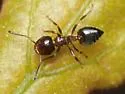
Crematogaster ashmeadi
Crematogaster ashmeadi
they are the most important source of food for the endangered red-cockaded woodpecker, Picoides borealis , and therefore warrant further research (Tschinkel 2002).
Crematogaster lineolata
Crematogaster lineolata
A rather common mid-latitude eastern and southeastern US species; mostly replaced by C. cerasi to the north.
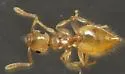
Crematogaster minutissima
Crematogaster minutissima
Identification: Propodeal spines less upturned and farther apart compared to Crematogaster missouriensis , the only other yellow Crematogaster in the US.
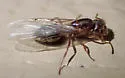
Crematogaster mutans
Crematogaster mutans
Identification: Buren (1968) notes the subpetiolar process of this species as "strikingly large," a character in combination with a postpetiole which is wider anteriorly and has straight sides, which sets C. mutans from the rest of the western Cremat
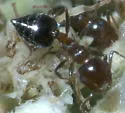
Crematogaster pilosa
Crematogaster pilosa
Identification: Note the suberect pilosity visible on the rear margin of the head. It's also on the scapes and legs, but not as clearly visible in this photo.… James C. Trager, 2 January, 2013
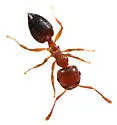
Crematogaster pinicola
Crematogaster pinicola
Identification: Morphologically identical to Crematogaster ashmeadi , but is strongly red and black bicolored in freshly collected specimens whereas ashmeadi is black or dark brown. ashmeadi nests in hardwoods, while pinicola nests in pines. The two
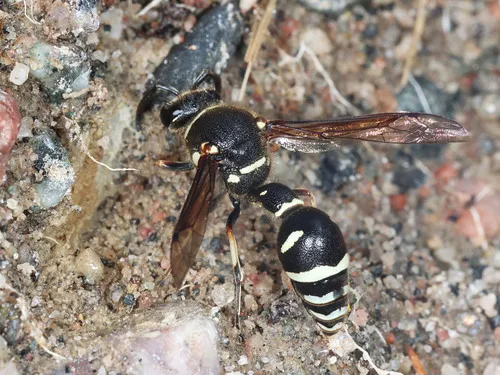
Cross Potter Wasp
Eumenes crucifera
Identification: E. crucifera can be identified based on long and golden body pubescence; clypeal punctation; black integument with varying yellow marks; T2 wide, with lateral margins strongly concave; and mainly by posterior face of propodeum weakly
Crossocerus binotatus
Crossocerus binotatus
Identification: Differs from all North American species by the unusual colour pattern (metasoma richly marked with yellow but spots on tergum 2 much smaller than on following terga; tergum 1 with yellow sides) and the unusually slender first metasoma
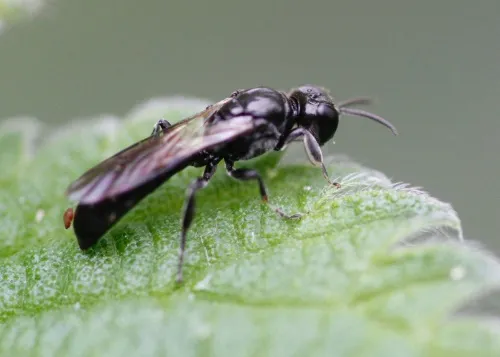
Crossocerus cetratus
Crossocerus cetratus
Another small, predominantly black wasp - the swollen front leg is distinctive in this species. There are several similar species and care is needed with identification. Most solitary bees and wasps are difficult to identify, and can rarely be identi
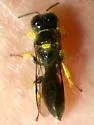
Crossocerus impressifrons
Crossocerus impressifrons
Identification: The absence of yellow spots on the abdomen separate this species from Ectemnius and Lestica . Yellow bands on the pronotum and scutellum and the yellow tibiae make this one of the few readily recognisable species in the genus. … Matth
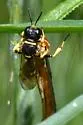
Crossocerus maculipennis
Crossocerus maculipennis
Identification: distinguished by the conspicuous yellow lateral spots on abdominal segments 2-5 and the presence of a precoxal tubercle on the mesopleuron C. maculipennis and C. nitidiventris are the only New World Crossocerus having the metasoma bla
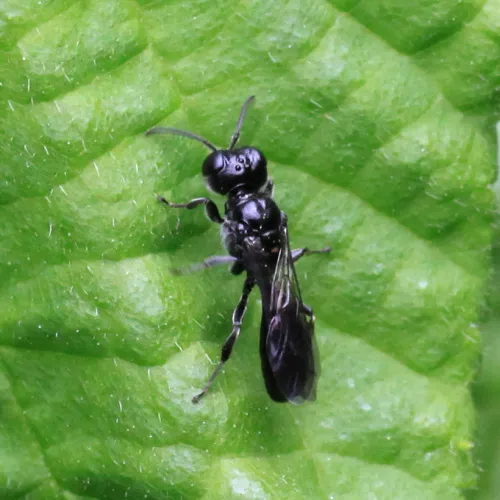
Crossocerus megacephalus
Crossocerus megacephalus
Unless identified by a recognised expert, a photo is required and the specimen should be examined with a microscope. In the comments box, state the key or ID method used and describe the size and identifying characters. May be recorded from a wide ra
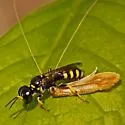
Crossocerus nitidiventris
Crossocerus nitidiventris
Identification: It is an unusual species in its genus because of the yellow markings on the abdomen (only present in one other species). What makes this this wasp distinctive is: yellow spots on smooth area of propodeum, yellow prepectus (that's the
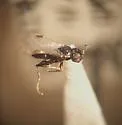
Crovettia theliae
Crovettia theliae
Identification: They lack reticulate sculpture on the head and thorax.
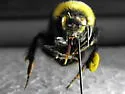
Cryptic Bumble Bee
Bombus cryptarum
B. lucorum sensu lato comprises several cryptic species now recognized as distinct based on new evidence including DNA barcodes (Williams et al., 2012).
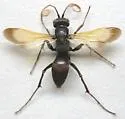
Cryptocheilus pallidipenne
Cryptocheilus pallidipenne
Identification: From the treatment in Townes : Black. Body pubescence dark gray; flagellum orange, its first segment infuscate basally; wings orange-yellow, the apical 0.21 ± of the forewing and the apical margin of the hind wing fuscous. Female: For
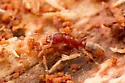
Cryptopone gilva
Cryptopone gilva
Identification: A bit larger than the Hypoponera and Ponera species in the area and more orange colored. Base of the mandible containing a circular pit as seen in this key .
Cryptoserphus dilatus
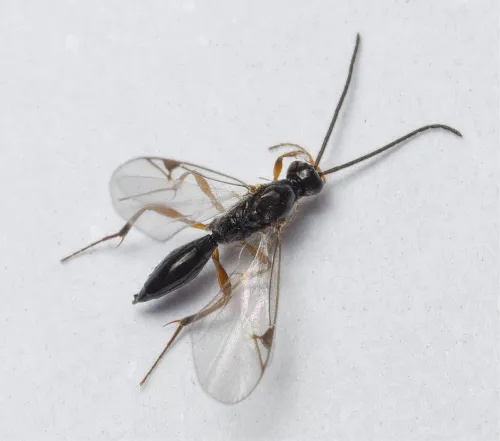
Cryptoserphus dilatus
Length ~5mm. Longer spur of hind tibia ending between the middle and the apical two-fifths of the first segment of the hind tarsus. Upper front part of the smooth area on the metapleuron not connected by a ridge to the upper edge of the propodeum, or
Cryptus albitarsis
Cryptus albitarsis
Identification: Males are most readily diagnosed and are noted for their prominent white hind tarsi and red abdomens. Females have entirely black bodies and legs apart from a red abdomen and typically with wings subhyaline to weakly infuscate. Though
Ctenichneumon minor
Ctenichneumon minor
Identification: Scutellum white, fore tibae entirely white, female with white annulus extensive and basal segments with disconnected white marks, abdomen entirely black