
Dinocampus coccinellae
This record describes Dinocampus coccinellae (species). Recorded family: Braconidae. Recorded order: Hymenoptera.
Identification and Appearance
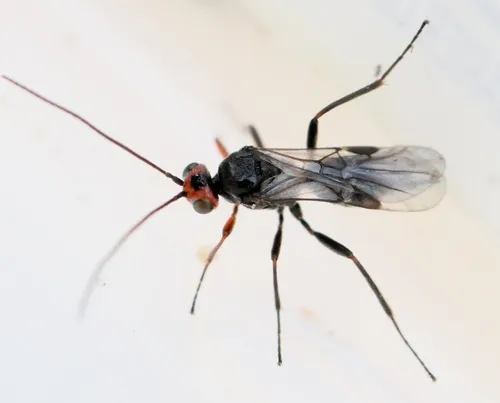
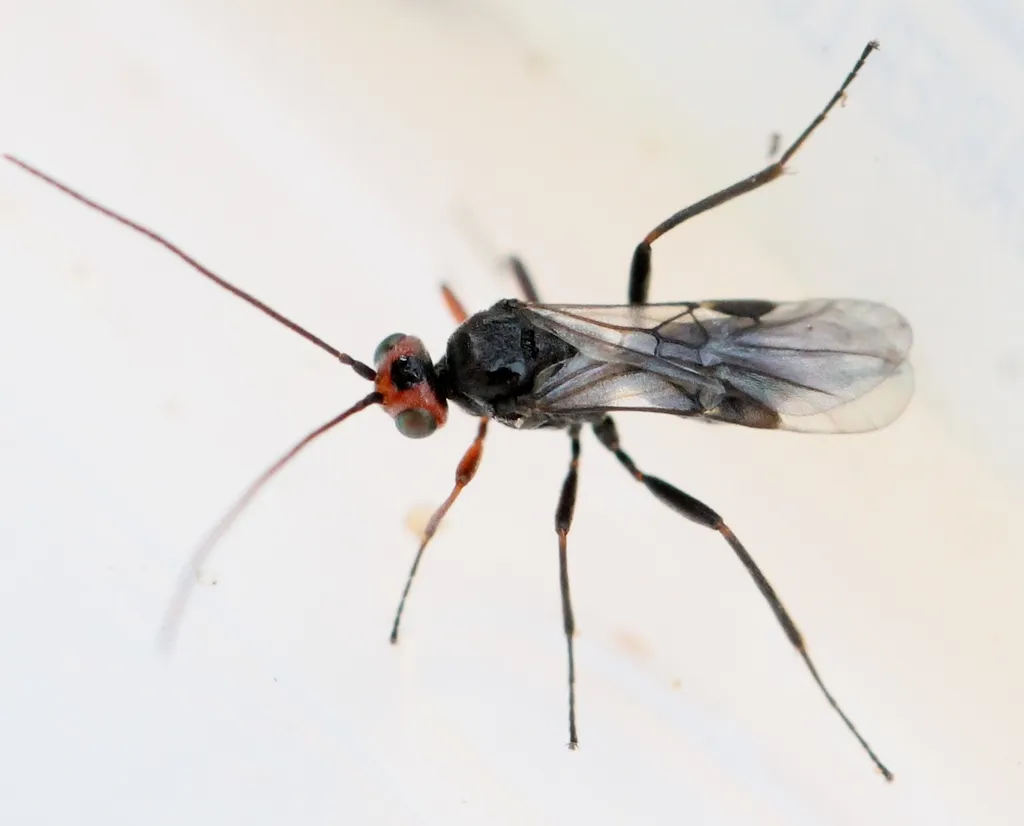
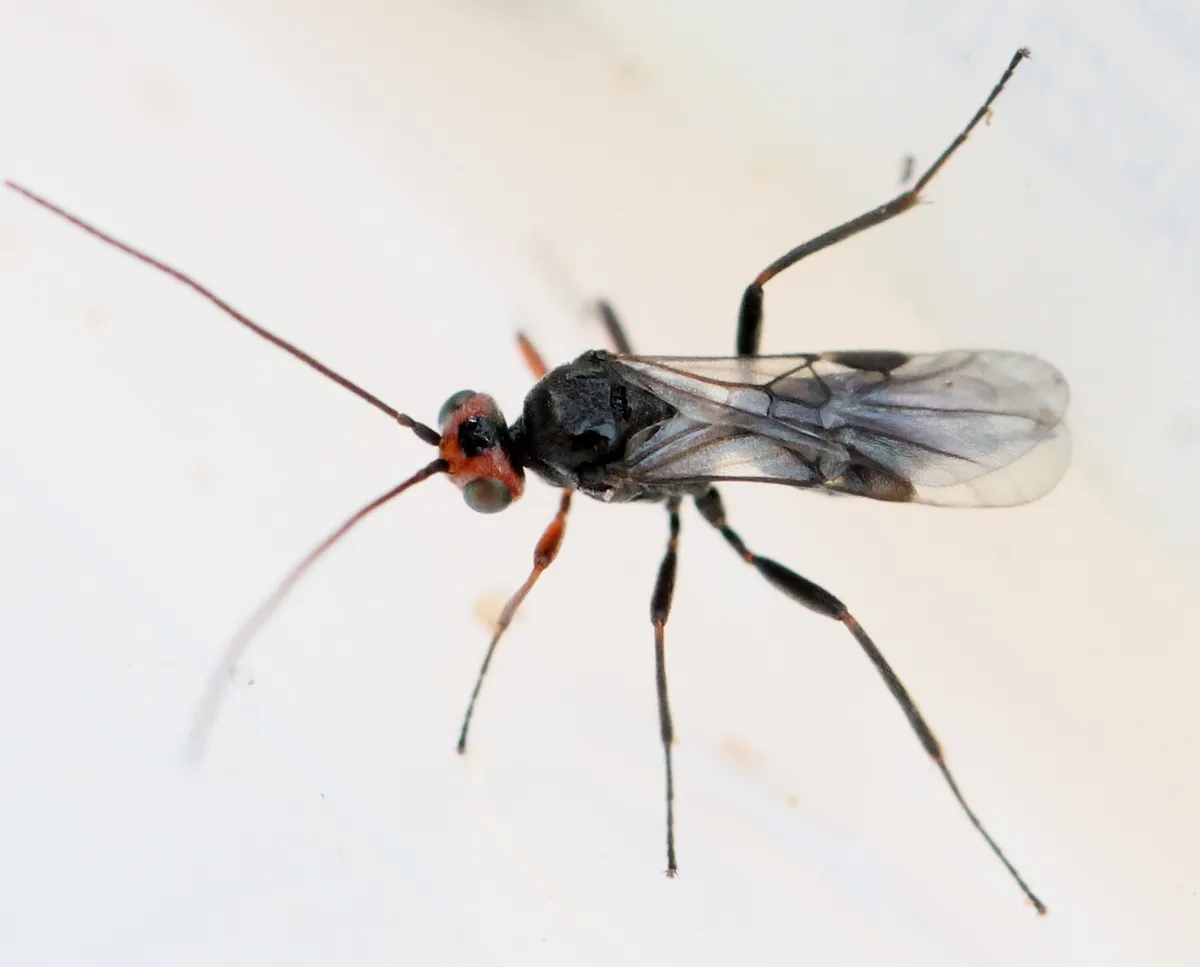
A tiny parthenogenetic wasp which is an endoparasitoid of adult ladybird beetles. The adult wasp is rarely seen but investigation of non-moving ladybirds will sometimes reveal a cocoon of this wasp beneath. Wherever its host ladybird species are to be found. 7 Spot, 11 Spot and Cream-streaked Ladybirds seem to be the preferred hosts. Spring and summer when the host ladybirds are about in numbers. The adult wasp locates and stalks its prey before inserting a single egg by thrusting its ovipositor through any weak point in the cuticle. The hatching larva then uses its mandibles to kill the eggs or emerging larvae of any other wasps which may have attacked the same ladybird. It will soon moult into its second instar with mouthparts more suitable for feeding on the host. This feeding concentrates on the fat reserves and the food that would be used to develop the gonads, leaving the vital organs intact. When ready to pupate, the larva causes the ladybird to become immobile, before breaking out of the host's abdomen through the membrane between the fifth and sixth or sixth and seventh abdominal plates. It then spins a cocoon between the host's legs. The ladybird is still alive at this point, but in a paralysed state with its warning colours serving to protect the pupa from predation. Once pupation is complete the adult wasp emerges and flies off to seek a new host, leaving the ladybird to succumb to starvation or fungal infection. Poorly recorded, but thought to be fairly frequent and widespread in Britain. Video (Nottinghamshire): https://www.youtube.com/watch?v=Fvbi5GWsFYA
Wikipedia reference for Dinocampus coccinellae: http://en.wikipedia.org/wiki/Dinocampus_coccinellae.
Classification
- Kingdom
- Animalia
- Phylum
- Arthropoda
- Class
- Insecta
- Order
- Hymenoptera (Ants, Bees, Wasps and Sawflies)
- Superfamily
- Ichneumonoidea
- Family
- Braconidae (Braconid Wasps)
- Subfamily
- Euphorinae
- Tribe
- Dinocampini
- Genus
- Dinocampus
Imported taxonomy record. Source availability varies; see the source references and editorial policy below.
Habitat and Range
Habitat
Wherever its host ladybird species are to be found. 7 Spot, 11 Spot and Cream-streaked Ladybirds seem to be the preferred hosts.
Seasonal Activity
Spring and summer when the host ladybirds are about in numbers.
Additional species information
Recorded status
Poorly recorded, but thought to be fairly frequent and widespread in Britain.
About Flies: the wider group
Order-level background for Hymenoptera, the group containing Dinocampus coccinellae. Species-specific details appear above.
Group overview
Hymenoptera includes over 150,000 described species of ants, bees, wasps, and sawflies. Earth harbors approximately 20 quadrillion (20×10^15) ants, with a combined biomass of ~12 megatons of dry carbon - exceeding the combined biomass of all wild birds and mammals (PNAS, 2022).
Ecological role of the group
About 35% of the world's food crops depend on animal pollinators. The chocolate industry, valued at over $100 billion, depends on pollinating flies and midges. Ants are the dominant soil engineers in most terrestrial ecosystems, turning more soil than earthworms in many habitats.
Economic and practical significance of the group
Pollinators contribute $235-577 billion worth of annual global food production (FAO). In the U.S., bee pollination alone benefits crops valued at $18 billion annually, and honey bees are responsible for $5.4 billion in agricultural productivity. Between April 2023-2024, 55.1% of managed honey bee colonies were lost. The U.S. bee population dropped from 5 million to 2.5 million.
Recorded sources for this group: FAO, USDA, EPA, PNAS (2022), US Fish & Wildlife Service. Imported estimates may describe particular regions or reporting periods.
Photos of Dinocampus coccinellae (3)
Frequently Asked Questions About Dinocampus coccinellae
What is Dinocampus coccinellae?
Dinocampus coccinellae is a species in the family Braconidae, within the order Hymenoptera.
Where is Dinocampus coccinellae found?
Habitat: Wherever its host ladybird species are to be found. 7 Spot, 11 Spot and Cream-streaked Ladybirds seem to be the preferred hosts.
When is Dinocampus coccinellae active?
Dinocampus coccinellae: seasonal activity - Spring and summer when the host ladybirds are about in numbers..