
Currant Stem Sawfly
Janus integer
This record describes Janus integer (species). Recorded family: Cephidae. Recorded order: Hymenoptera.
Identification and Appearance
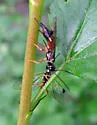
The introduced ichneumonid Collyria coxator is used as biocontrol.
Classification
- Kingdom
- Animalia
- Phylum
- Arthropoda
- Class
- Insecta
- Order
- Hymenoptera (Ants, Bees, Wasps and Sawflies)
- Family
- Cephidae (Stem Sawflies)
- Tribe
- Hartigiini
- Genus
- Janus
Imported taxonomy record. Source availability varies; see the source references and editorial policy below.
Diet and Behavior
Diet: Larvae bore Ribes stems. It eats, or girdles, the tips of new shoots causing them to die and fall off.
Life History
Adults emerge from the middle to the last of May in New York. The female punctures a cane a few inches from the tip and inserts an egg into the pith. Eggs are yellowish-white elongate ovals. Eggs hatch in about eleven days. They become full-grown about the first of September. Hibernate as larvae wrapped in a silken cocoon. Pupate in early spring and emerge a few days later
Additional species information
Species notes from the sources
Etymology: Author: Norton
About Flies: the wider group
Order-level background for Hymenoptera, the group containing Janus integer. Species-specific details appear above.
Group overview
Hymenoptera includes over 150,000 described species of ants, bees, wasps, and sawflies. Earth harbors approximately 20 quadrillion (20×10^15) ants, with a combined biomass of ~12 megatons of dry carbon - exceeding the combined biomass of all wild birds and mammals (PNAS, 2022).
Ecological role of the group
About 35% of the world's food crops depend on animal pollinators. The chocolate industry, valued at over $100 billion, depends on pollinating flies and midges. Ants are the dominant soil engineers in most terrestrial ecosystems, turning more soil than earthworms in many habitats.
Economic and practical significance of the group
Pollinators contribute $235-577 billion worth of annual global food production (FAO). In the U.S., bee pollination alone benefits crops valued at $18 billion annually, and honey bees are responsible for $5.4 billion in agricultural productivity. Between April 2023-2024, 55.1% of managed honey bee colonies were lost. The U.S. bee population dropped from 5 million to 2.5 million.
Recorded sources for this group: FAO, USDA, EPA, PNAS (2022), US Fish & Wildlife Service. Imported estimates may describe particular regions or reporting periods.
Photos of Currant Stem Sawfly (3)
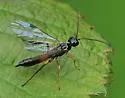
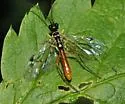
Photo credits: Contributed by v belov; Additional contributions by Beatriz Moisset , PaleoJon
Frequently Asked Questions About Currant Stem Sawfly
What is Currant Stem Sawfly?
Currant Stem Sawfly (Janus integer) is a species in the family Cephidae, within the order Hymenoptera.
What does Currant Stem Sawfly eat?
The diet of the Currant Stem Sawfly includes Larvae bore Ribes stems. It eats, or girdles, the tips of new shoots causing them to die and fall off..
What is the life cycle of a Currant Stem Sawfly?
Adults emerge from the middle to the last of May in New York. The female punctures a cane a few inches from the tip and inserts an egg into the pith. Eggs are yellowish-white elongate ovals. Eggs hatch in about eleven days. They become full-grown about the first of September. Hibernate as larvae wrapped in a silken cocoon. Pupate in early spring and emerge a few days later