
Hemlock Woolly Adelgid
Adelges tsugae
This record describes Adelges tsugae (species). Recorded family: Adelgidae. Recorded order: Hemiptera.
Identification and Appearance
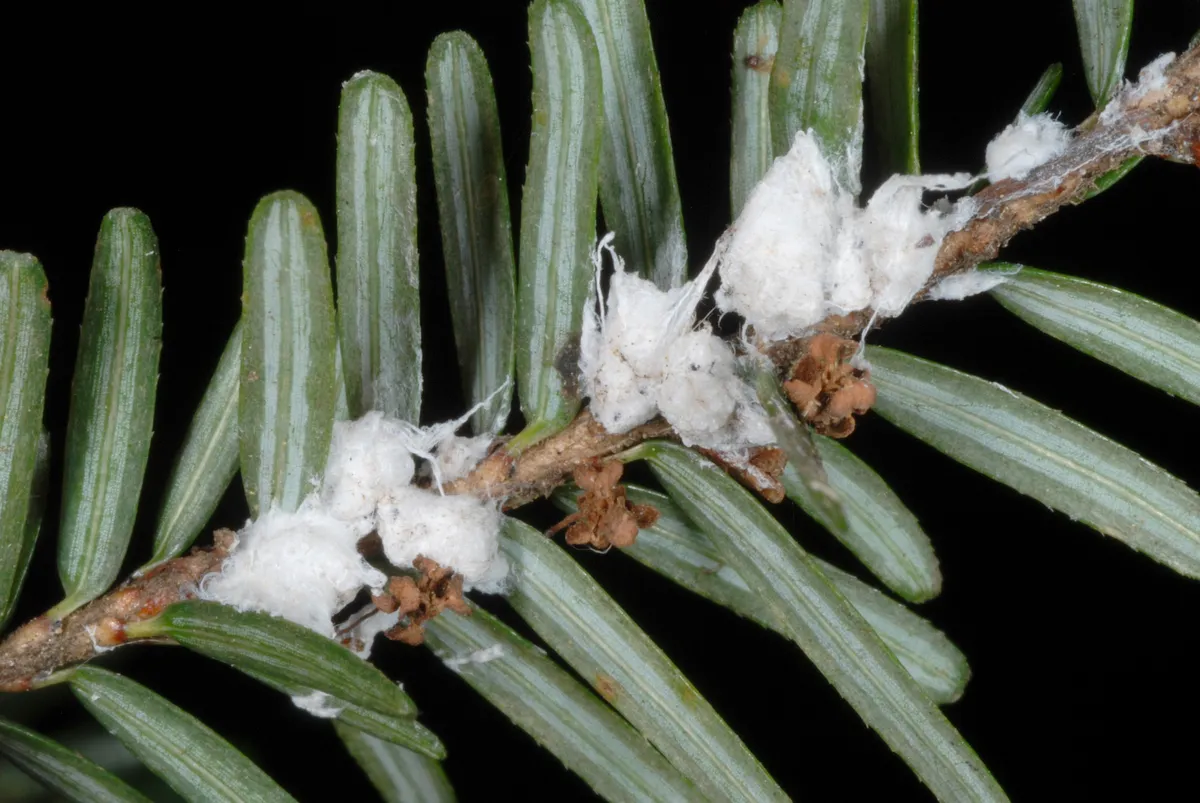
Red-purple to purple-black. As they mature, they cover themselves with white, cottony wax, becoming much more noticeable. Accidentally introduced to British Columbia and Oregon from Asia in the 1920's or earlier. The first eastern records are from 1951. By 2005 its range included 50% of eastern hemlock-growing areas. The eastern introduction is well documented but it is possible that the western population is native to the area ( Ann. Entmol. Soc ). Eggs and crawlers can be spread by the wind and on animals, especially the feathers of birds. Transplanting infested trees can also spread the insect's population. The Eastern Hemlock ( Tsuga canadensis ) and Carolina Hemlock ( T. caroliniana ) are less resistant to feeding damage than the Western Hemlock ( T. heterophylla ). Predators used for biological control include the native Tooth-Necked Fungus Beetle ( Laricobius nigrinus ). Non-native lady beetles have been introduced from Europe (Pine Lady Beetle, Brumus quadripustulatus ) and Asia ( Sasajiscymnus tsugae and Scymnus species). Laricobius nigrinus has been introduced from Western US to Eastern US. The most abundant predator of the HWA is Harmonia axyridis (Wallace and Hain 2000)
Wikipedia reference for Adelges tsugae: http://en.wikipedia.org/wiki/Hemlock_woolly_adelgid.
Classification
Habitat and Range
Habitat
Anywhere with hemlock trees, including forests and ornamental plantings.
Geographic Range
Native to Japan and possibly China, with two major North American ranges: in the west, northern California to Alaska; in the east, Georgia to southern Quebec. Also established around the Great Lakes, in central California, and the Rocky Mountains in Idaho and British Columbia. [ Worldwide Map from Invasive.org]
Seasonal Activity
One spring generation and a partial fall generation.
Diet and Behavior
Diet: Primarily hemlock trees; occasionally spruce and other conifers. They feed on new growth where the needles emerge from the stem. Feeding damage causes needles to fall off, resulting in defoliation, limb dieback, and eventual death of the tree. A mature tree may die only 4 years after the original adelgid infestation.
Life History
All Hemlock Woolly Adelgids are female and reproduce asexually. Adults appear in late winter and lay eggs from February to June. Eggs hatch in May and June. Newly-hatched nymphs, called "crawlers," seek out new stem and needle growth to feed on. They then molt into a legless form and remain stationary until maturity. Nymphs estivate (hibernate) in late summer, then resume feeding in the fall. In mid- to late fall, they cover themselves with cottony white wax, and mature under this protective coating until adults emerge in late winter.
Additional species information
Species notes from the sources
Etymology: Adelges tsugae Annand 1924
About True Bugs, Cicadas, Hoppers, Aphids and Allies: the wider group
Order-level background for Hemiptera, the group containing Adelges tsugae. Species-specific details appear above.
Group overview
Hemiptera (true bugs) includes over 80,000 described species across cicadas, aphids, leafhoppers, shield bugs, and bed bugs. Aphids alone cost global agriculture an estimated $2.5 billion annually in crop losses.
Ecological role of the group
Many Hemiptera are essential food sources for birds and predatory insects. Cicadas provide massive nutrient pulses during emergence events - a single Brood X emergence can involve trillions of individuals across 15 states.
Economic and practical significance of the group
The brown marmorated stink bug (Halyomorpha halys) caused $37 million in apple crop losses in a single year in the U.S. Mid-Atlantic region. Bed bug infestations in the U.S. increased by 500% between 2001-2010, costing the hotel industry hundreds of millions annually.
Recorded sources for this group: USDA, EPA, University research. Imported estimates may describe particular regions or reporting periods.
Photos of Hemlock Woolly Adelgid (3)
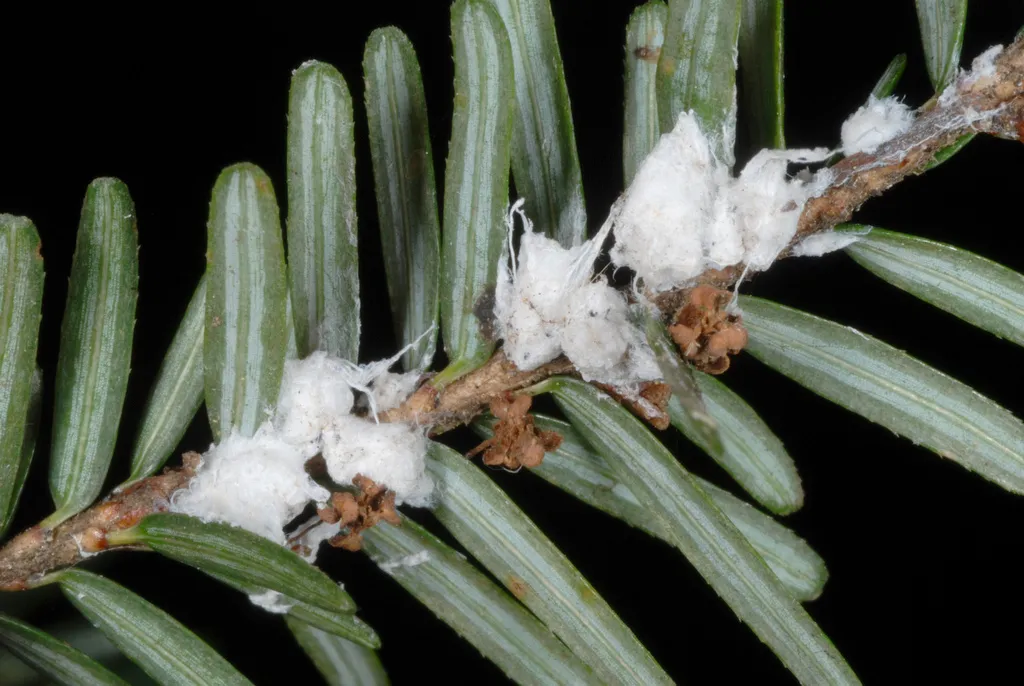
Photo credits: Contributed by john and jane balaban; Additional contributions by Beatriz Moisset , Mike Quinn , ceiseman , Abigail Parker
Frequently Asked Questions About Hemlock Woolly Adelgid
What is Hemlock Woolly Adelgid?
Hemlock Woolly Adelgid (Adelges tsugae) is a species in the family Adelgidae, within the order Hemiptera.
How big is Hemlock Woolly Adelgid?
1.5 mm (under 1/16 inch)
How do you identify Hemlock Woolly Adelgid?
Red-purple to purple-black. As they mature, they cover themselves with white, cottony wax, becoming much more noticeable.
Where is Hemlock Woolly Adelgid found?
| Feature | Details |
|---|---|
| Habitat | Anywhere with hemlock trees, including forests and ornamental plantings. |
| Range | Native to Japan and possibly China, with two major North American ranges: in the west, northern California to Alaska; in the east, Georgia to southern Quebec. Also established around the Great Lakes, in central California, and the Rocky Mountains in Idaho and British Columbia. [ Worldwide Map from Invasive.org] |
What does Hemlock Woolly Adelgid eat?
The diet of the Hemlock Woolly Adelgid includes Primarily hemlock trees; occasionally spruce and other conifers. They feed on new growth where the needles emerge from the stem. Feeding damage causes needles to fall off, resulting in defoliation, limb dieback, and eventual death of the tree. A mature tree may die only 4 years after the original adelgid infestation..
When is Hemlock Woolly Adelgid active?
Hemlock Woolly Adelgid: seasonal activity - One spring generation and a partial fall generation..
What is the life cycle of a Hemlock Woolly Adelgid?
All Hemlock Woolly Adelgids are female and reproduce asexually. Adults appear in late winter and lay eggs from February to June. Eggs hatch in May and June. Newly-hatched nymphs, called crawlers, seek out new stem and needle growth to feed on. They then molt into a legless form and remain stationary until maturity. Nymphs estivate (hibernate) in late summer, then resume feeding in the fall. In mid- to late fall, they cover themselves with cottony white wax, and mature under this protective coating until adults emerge in late winter.