
Hydrangea Scale Insect
Pulvinaria hydrangeae
This record describes Pulvinaria hydrangeae (species). Recorded family: Coccidae. Recorded order: Hemiptera.
Identification and Appearance
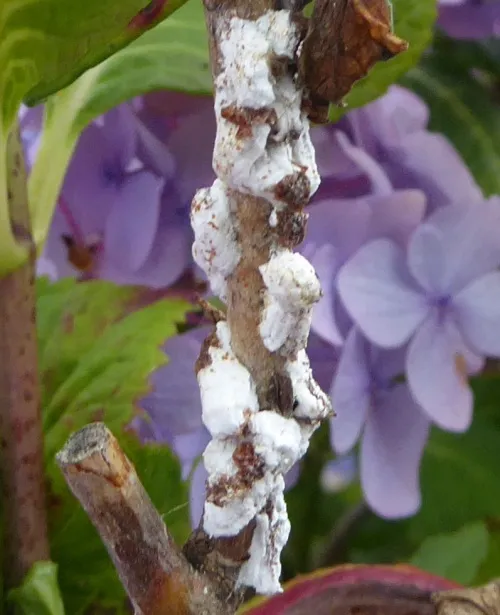
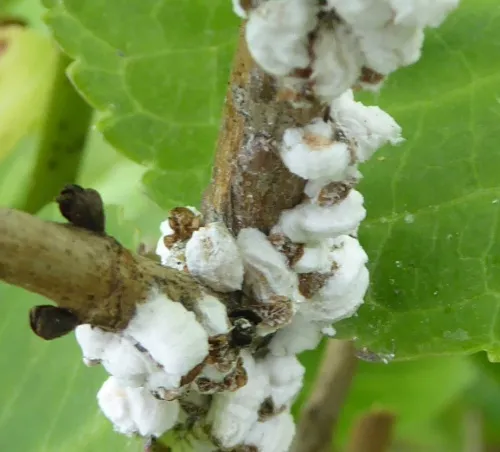
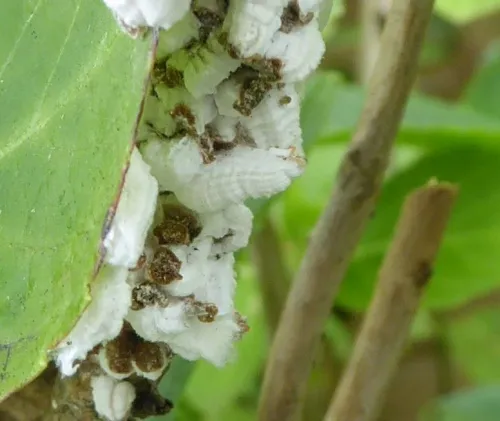
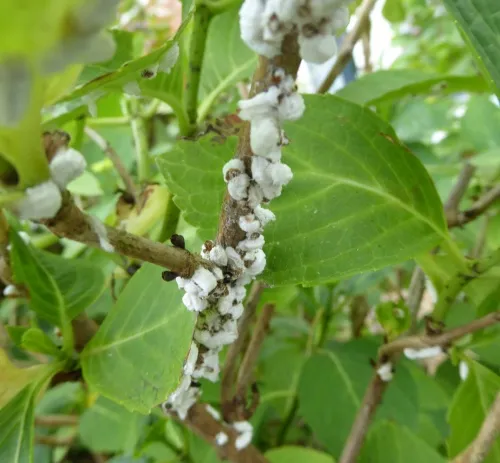
Pulvinaria hydrangeae scales affect a whole range of trees and shrubs and are often found on the underside of leaves. The whitish ovisac, up to 10 mm in length, is formed in the months of June to August and is elongated with three clear furrows. Often a female drops off after the eggs have been deposited, leaving only the ovisac on the leaf. Unless identified by a recognised expert, a photo is required. If the photo doesn't show the key ID features then in the comments box describe the size and identifying characters you have observed. Various habitats as this scale insect uses a whole range of host plant species. Look for females with white ovisacs from June to August. Univoltine; hibernation as larva on the young branches. True status in Britain is difficult to determine due to lack of records.
Classification
Habitat and Range
Habitat
Various habitats as this scale insect uses a whole range of host plant species.
Seasonal Activity
Look for females with white ovisacs from June to August.
Diet and Behavior
Life History
Univoltine; hibernation as larva on the young branches.
Additional species information
Recorded status
True status in Britain is difficult to determine due to lack of records.
About True Bugs, Cicadas, Hoppers, Aphids and Allies: the wider group
Order-level background for Hemiptera, the group containing Pulvinaria hydrangeae. Species-specific details appear above.
Group overview
Hemiptera (true bugs) includes over 80,000 described species across cicadas, aphids, leafhoppers, shield bugs, and bed bugs. Aphids alone cost global agriculture an estimated $2.5 billion annually in crop losses.
Ecological role of the group
Many Hemiptera are essential food sources for birds and predatory insects. Cicadas provide massive nutrient pulses during emergence events - a single Brood X emergence can involve trillions of individuals across 15 states.
Economic and practical significance of the group
The brown marmorated stink bug (Halyomorpha halys) caused $37 million in apple crop losses in a single year in the U.S. Mid-Atlantic region. Bed bug infestations in the U.S. increased by 500% between 2001-2010, costing the hotel industry hundreds of millions annually.
Recorded sources for this group: USDA, EPA, University research. Imported estimates may describe particular regions or reporting periods.
Photos of Hydrangea Scale Insect (7)
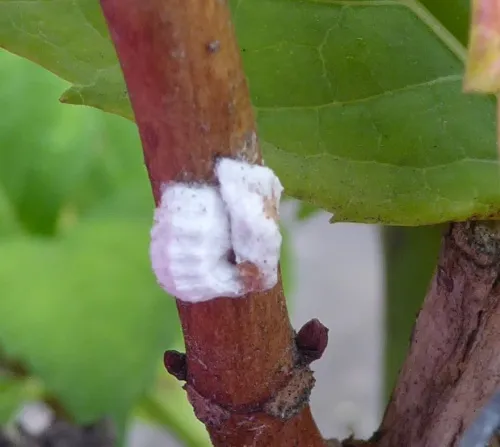
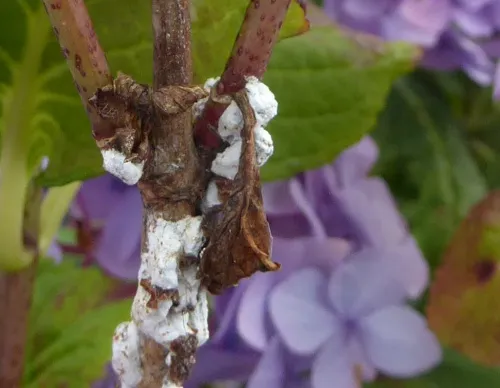
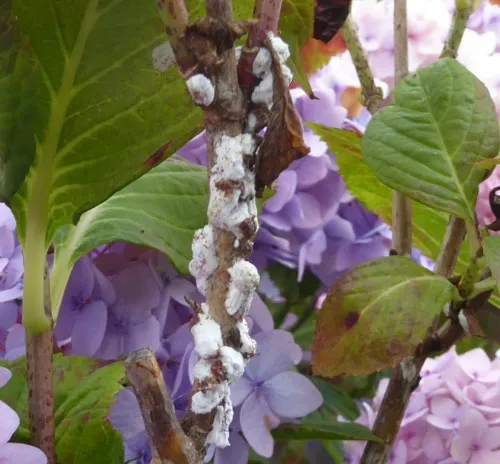
Frequently Asked Questions About Hydrangea Scale Insect
What is Hydrangea Scale Insect?
Hydrangea Scale Insect (Pulvinaria hydrangeae) is a species in the family Coccidae, within the order Hemiptera.
Where is Hydrangea Scale Insect found?
Habitat: Various habitats as this scale insect uses a whole range of host plant species.
When is Hydrangea Scale Insect active?
Hydrangea Scale Insect: seasonal activity - Look for females with white ovisacs from June to August..
What is the life cycle of a Hydrangea Scale Insect?
Univoltine; hibernation as larva on the young branches.