
Hackberry Disc Gall Psyllid
Pachypsylla celtidisumbilicus
This record describes Pachypsylla celtidisumbilicus (species). Recorded family: Carsidaridae. Recorded order: Hemiptera.
Identification and Appearance
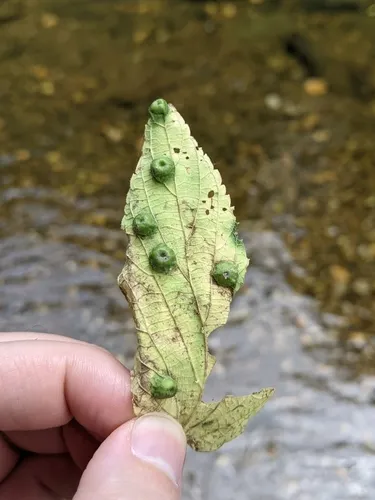
Gall on upper surface of leaf circular and abruptly depressed at its outer margin, gradually rising to surface level, with an elongate nipple in the center; ventral surface of the leaf elevated, 2mm in height and 5mm wide, circular, gradually rising with a shall depression in the center The adults are said to resemble P. celtidismamma . Riley described the gall of this and several other leaf-galling species but never formally described the adults, which Riley said so closely resembled P. celtidismamma that they can only be distinguished with difficulty. These two facts caused subsequent authors to treat Riley's names as either nomina nuda or as synonyms of P. celtidismamma . However, as D.B. Thomas points out, names published prior to 1931 based on descriptions of galls are indeed valid under the ICZN, and recent studies by Yang and Mitter concluded that P. celtidismamma was indeed a cryptic-species complex, though more work needs to be done in order to fully understand which of Riley's species are indeed valid . See also comment here.
Classification
- Kingdom
- Animalia
- Phylum
- Arthropoda
- Class
- Insecta
- Order
- Hemiptera (True Bugs, Cicadas, Hoppers, Aphids and Allies)
- Suborder
- Sternorrhyncha
- Superfamily
- Psylloidea
- Family
- Carsidaridae
- Subfamily
- Pachypsyllinae
- Genus
- Pachypsylla (Hackberry Psyllids)
Imported taxonomy record. Source availability varies; see the source references and editorial policy below.
Habitat and Range
Geographic Range
Eastern US
Diet and Behavior
Diet: Celtis occidentalis
Additional species information
Species notes from the sources
Etymology: Pachypsylla celtidisumbilicus Riley, 1890
About True Bugs, Cicadas, Hoppers, Aphids and Allies: the wider group
Order-level background for Hemiptera, the group containing Pachypsylla celtidisumbilicus. Species-specific details appear above.
Group overview
Hemiptera (true bugs) includes over 80,000 described species across cicadas, aphids, leafhoppers, shield bugs, and bed bugs. Aphids alone cost global agriculture an estimated $2.5 billion annually in crop losses.
Ecological role of the group
Many Hemiptera are essential food sources for birds and predatory insects. Cicadas provide massive nutrient pulses during emergence events - a single Brood X emergence can involve trillions of individuals across 15 states.
Economic and practical significance of the group
The brown marmorated stink bug (Halyomorpha halys) caused $37 million in apple crop losses in a single year in the U.S. Mid-Atlantic region. Bed bug infestations in the U.S. increased by 500% between 2001-2010, costing the hotel industry hundreds of millions annually.
Recorded sources for this group: USDA, EPA, University research. Imported estimates may describe particular regions or reporting periods.
Photos of Hackberry Disc Gall Psyllid (3)
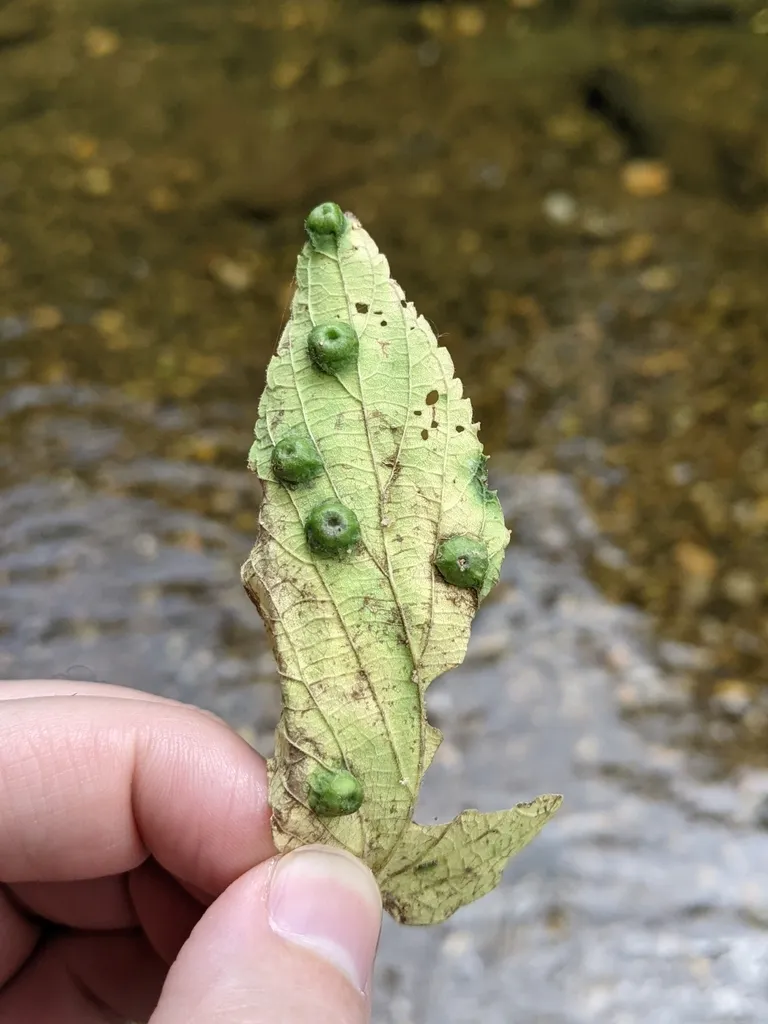
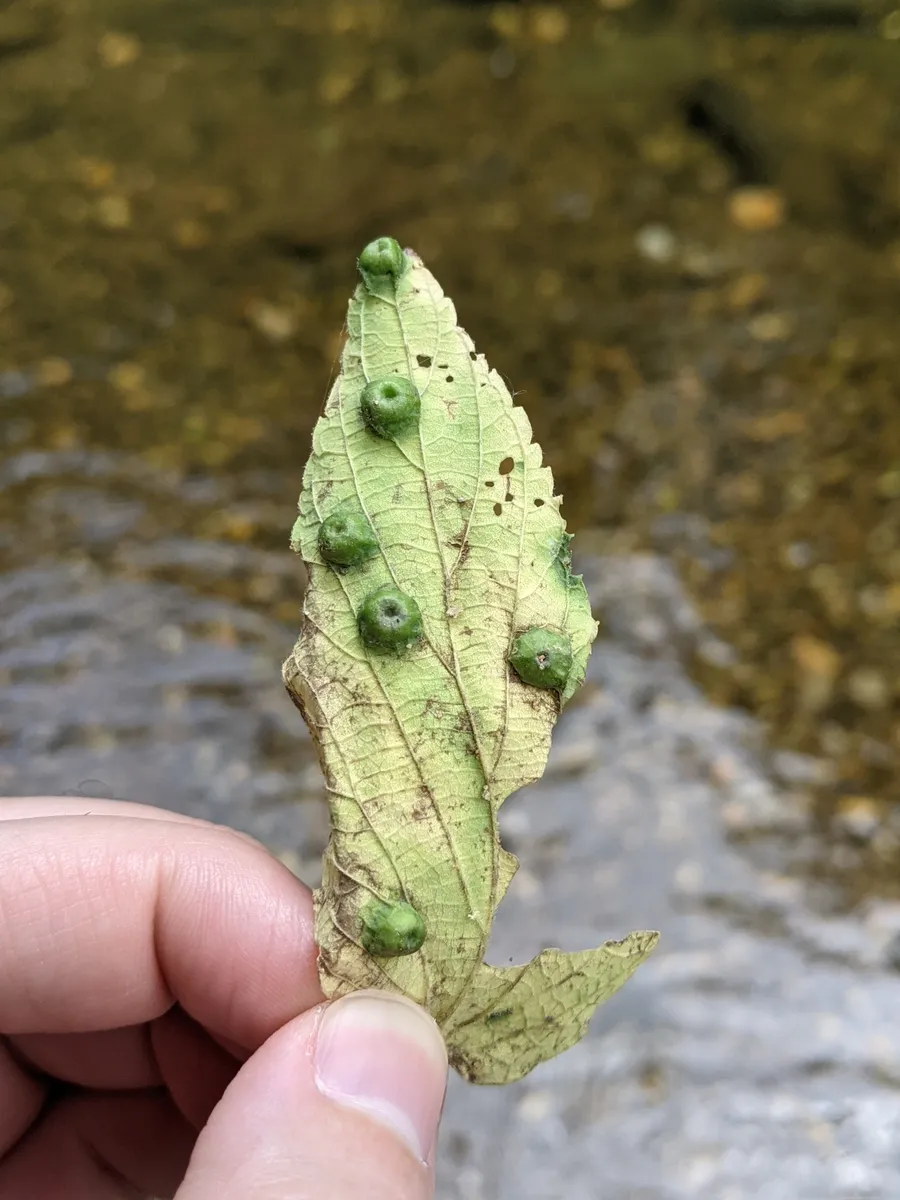
Photo credits: Contributed by Chris Mallory; Additional contributions by Beatriz Moisset
Frequently Asked Questions About Hackberry Disc Gall Psyllid
What is Hackberry Disc Gall Psyllid?
Hackberry Disc Gall Psyllid (Pachypsylla celtidisumbilicus) is a species in the family Carsidaridae, within the order Hemiptera.
How do you identify Hackberry Disc Gall Psyllid?
Gall on upper surface of leaf circular and abruptly depressed at its outer margin, gradually rising to surface level, with an elongate nipple in the center; ventral surface of the leaf elevated, 2mm in height and 5mm wide, circular, gradually rising with a shall depression in the center The adults are said to resemble P. celtidismamma .
Where is Hackberry Disc Gall Psyllid found?
Range: Eastern US
What does Hackberry Disc Gall Psyllid eat?
The diet of the Hackberry Disc Gall Psyllid includes Celtis occidentalis.