
Horse Chestnut Scale Insect
Pulvinaria regalis
This record describes Pulvinaria regalis (species). Recorded family: Coccidae. Recorded order: Hemiptera.
Identification and Appearance
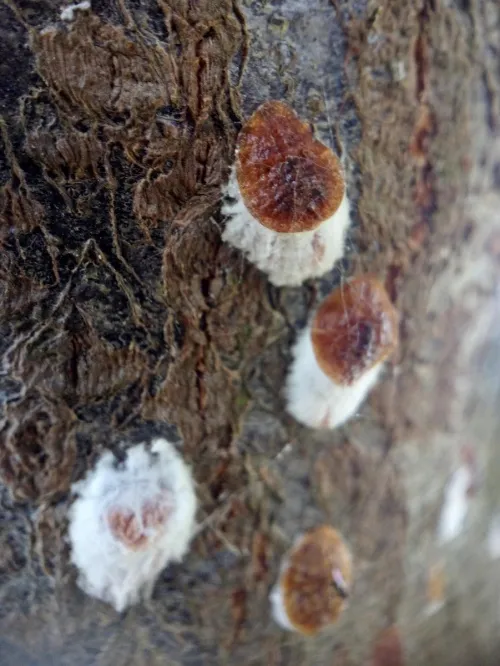
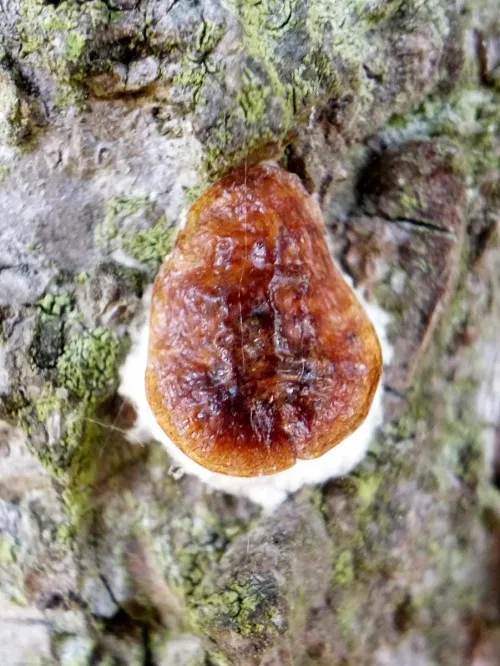
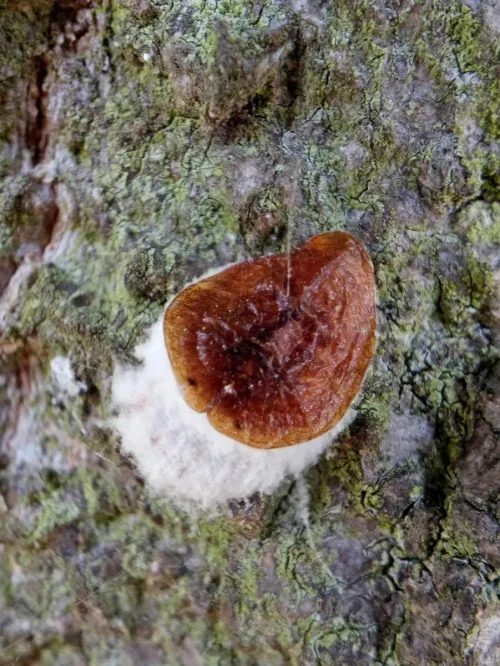
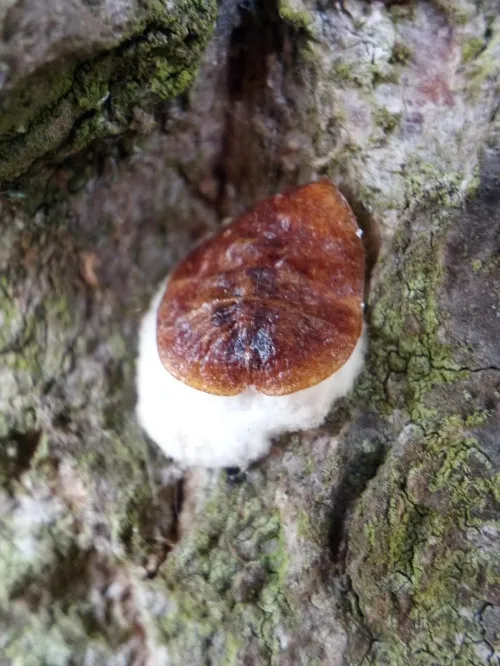
P. regalis is most conspicuous in May and June when the scale-like adult females produce large, white, waxy ovisacs in which they lay about 2000 eggs. The adult females die after oviposistion but often remain attached to the trees with their ovisacs throughout the summer (as shown in the images below). The eggs hatch in June and July and the first instars, commonly known as 'crawlers', migrate to the undersides of leaves to begin to feed. The first instars are the main dispersal stage and can be carried long distances in air currents, by other animals or in plant trade. The immatures migrate back on to the branches in Autumn before leaf fall. They mature in the following May, mate and migrate to a suitable oviposition site. Unless identified by a recognised expert, a photo is required. If the photo doesn't show the key ID features then in the comments box describe the size and identifying characters you have observed. P. regalis is broadly polyphagous being recorded on approximately 100 species of woody plants. In Britain, it is most commonly found on limes ( Tilia spp.), sycamore ( Acer pseudoplatanus ), maples ( Acer spp.), elms ( Ulmus sp.), sweet bay ( Laurus nobilis ), horse chestnut ( Aesculus hippocastanum ), magnolia ( Magnolia spp.), Skimmia spp. and Cornus spp. Adult female P. regalis may leave their host plant before producing the ovisac and this has resulted in incorrect host plants being recorded. Adult females and ovisacs have been found on brick walls, iron railings, in leaf litter and on herbaceous plants near infested trees! Heavy infestations of P. regalis can kill apical twigs and cause premature leaf drop. However, the damage caused by the pest to a mature healthy tree is usually minimal despite large populations. Young and stressed plants are most at risk. An indirect effect is the contamination of foliage with the copious quantities of excreted honeydew, which serves as a medium for the growth of black sooty moulds. This may lower the value of amenity trees. The population levels vary significantly from year to year and in some years they can completely cover the trunks and main branches with ovisacs. These large populations are controlled by parasitoid wasps, ladybirds and birds. Pulvinaria regalis was first recorded in Britain in about 1964 in Kew, London and has since become widespread throughout Britain. It is the most abundant soft scale insect in urban areas and is also common in many rural areas in Britain. It has also spread throughout north-west Europe. It is not known how it was introduced into Europe or where it originates from although it almost certainly native to Asia. The heaviest infestations are found on urban trees and it has been suggested that this is due to the trees being more susceptible resulting from stress by pollution, water shortage and cramping by pavements and buildings.
Classification
Habitat and Range
Habitat
P. regalis
Seasonal Activity
May to August.
Diet and Behavior
Life History
Heavy infestations of
Additional species information
Recorded status
Pulvinaria regalis
About True Bugs, Cicadas, Hoppers, Aphids and Allies: the wider group
Order-level background for Hemiptera, the group containing Pulvinaria regalis. Species-specific details appear above.
Group overview
Hemiptera (true bugs) includes over 80,000 described species across cicadas, aphids, leafhoppers, shield bugs, and bed bugs. Aphids alone cost global agriculture an estimated $2.5 billion annually in crop losses.
Ecological role of the group
Many Hemiptera are essential food sources for birds and predatory insects. Cicadas provide massive nutrient pulses during emergence events - a single Brood X emergence can involve trillions of individuals across 15 states.
Economic and practical significance of the group
The brown marmorated stink bug (Halyomorpha halys) caused $37 million in apple crop losses in a single year in the U.S. Mid-Atlantic region. Bed bug infestations in the U.S. increased by 500% between 2001-2010, costing the hotel industry hundreds of millions annually.
Recorded sources for this group: USDA, EPA, University research. Imported estimates may describe particular regions or reporting periods.
Photos of Horse Chestnut Scale Insect (4)
Frequently Asked Questions About Horse Chestnut Scale Insect
What is Horse Chestnut Scale Insect?
Horse Chestnut Scale Insect (Pulvinaria regalis) is a species in the family Coccidae, within the order Hemiptera.
Where is Horse Chestnut Scale Insect found?
Habitat: P. regalis
When is Horse Chestnut Scale Insect active?
Horse Chestnut Scale Insect: seasonal activity - May to August..
What is the life cycle of a Horse Chestnut Scale Insect?
Heavy infestations of