
Hairy Shieldbug
Dolycoris baccarum
This record describes Dolycoris baccarum (species). Recorded family: Pentatomidae. Recorded order: Hemiptera.
Identification and Appearance
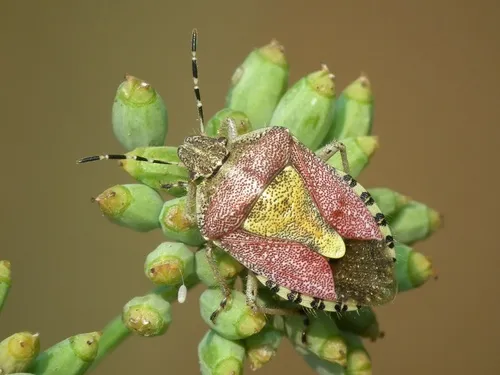
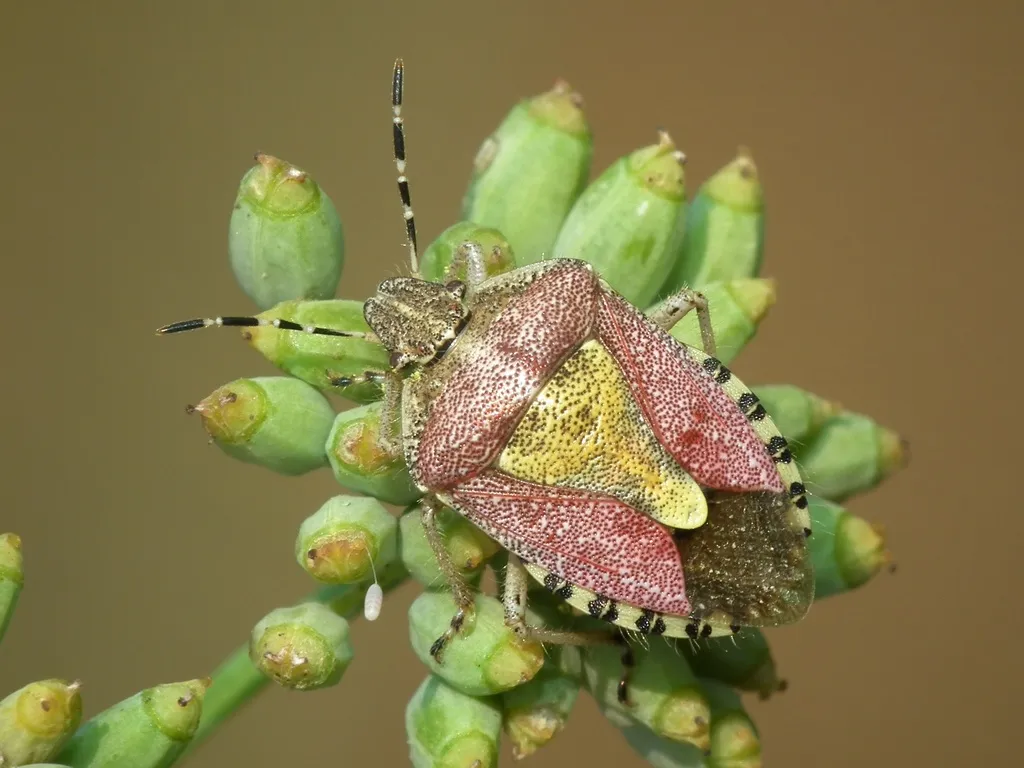
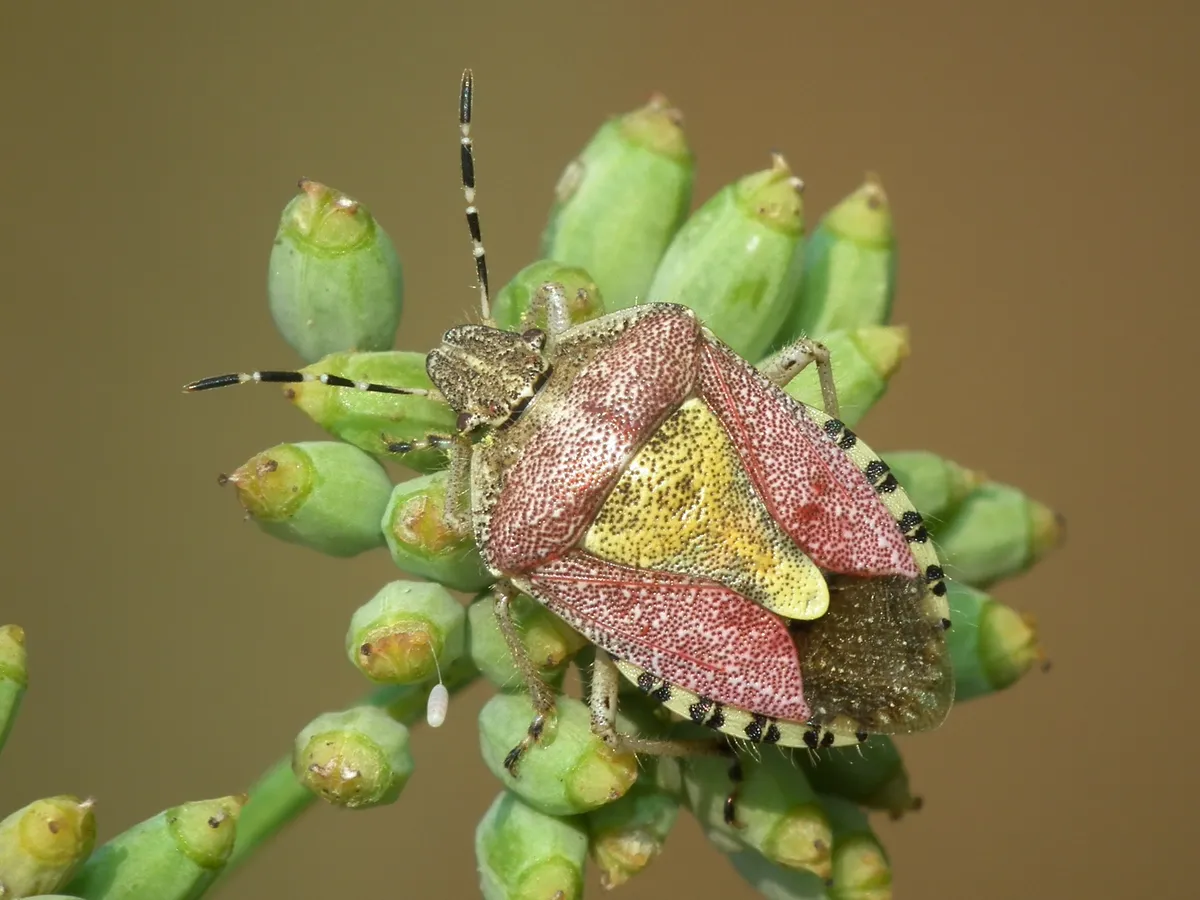
Length 11-12 mm. A large and distinctive purple-brown and greenish shieldbug which is covered with long hairs (c.f. Brown Marmorated Stink Bug, Halyomorpha halys , which is smooth). The antennae have three white bands (c.f. two in Halyomorpha halys ) and the scutellum lacks white dots. During the winter, the ground colour becomes uniformly dull brown. Brown Marmorated Stink Bug - Halyomorpha halys . Found in many habitats particularly hedgerows and woodland edges. This bug overwinters as an adult, emerging in the spring. Larvae, which are also hairy, may be found on numerous plants besides Blackthorn, particularly those in the Roasaceae family. The new generation is complete from August onwards. Common and widespread throughout Britain, becoming scarcer in the north.
Wikipedia reference for Dolycoris baccarum: http://en.wikipedia.org/wiki/Dolycoris_baccarum.
Classification
- Kingdom
- Animalia
- Phylum
- Arthropoda
- Class
- Insecta
- Order
- Hemiptera
- Family
- Pentatomidae
- Genus
- Dolycoris
Imported taxonomy record. Source availability varies; see the source references and editorial policy below.
Habitat and Range
Habitat
Found in many habitats particularly hedgerows and woodland edges.
Seasonal Activity
Adult: All year.
Diet and Behavior
Life History
This bug overwinters as an adult, emerging in the spring. Larvae, which are also hairy, may be found on numerous plants besides Blackthorn, particularly those in the
Additional species information
Recorded status
Common and widespread throughout Britain, becoming scarcer in the north.
About True Bugs, Cicadas, Hoppers, Aphids and Allies: the wider group
Order-level background for Hemiptera, the group containing Dolycoris baccarum. Species-specific details appear above.
Group overview
Hemiptera (true bugs) includes over 80,000 described species across cicadas, aphids, leafhoppers, shield bugs, and bed bugs. Aphids alone cost global agriculture an estimated $2.5 billion annually in crop losses.
Ecological role of the group
Many Hemiptera are essential food sources for birds and predatory insects. Cicadas provide massive nutrient pulses during emergence events - a single Brood X emergence can involve trillions of individuals across 15 states.
Economic and practical significance of the group
The brown marmorated stink bug (Halyomorpha halys) caused $37 million in apple crop losses in a single year in the U.S. Mid-Atlantic region. Bed bug infestations in the U.S. increased by 500% between 2001-2010, costing the hotel industry hundreds of millions annually.
Recorded sources for this group: USDA, EPA, University research. Imported estimates may describe particular regions or reporting periods.
Photos of Hairy Shieldbug (3)
Frequently Asked Questions About Hairy Shieldbug
What is Hairy Shieldbug?
Hairy Shieldbug (Dolycoris baccarum) is a species in the family Pentatomidae, within the order Hemiptera.
How big is Hairy Shieldbug?
11-12 mm. A large and distinctive purple-brown and greenish shieldbug which is covered with long hairs (c.f.
Where is Hairy Shieldbug found?
Habitat: Found in many habitats particularly hedgerows and woodland edges.
When is Hairy Shieldbug active?
Hairy Shieldbug: seasonal activity - Adult: All year..
What is the life cycle of a Hairy Shieldbug?
This bug overwinters as an adult, emerging in the spring. Larvae, which are also hairy, may be found on numerous plants besides Blackthorn, particularly those in the