
Primitive Winged Insects
Order Coleoptera
The Primitive Winged Insects (Order Coleoptera) includes 15,720 species across 160 families and 3,716 genera in our directory.
About Primitive Winged Insects
Coleoptera is the largest order of insects with over 400,000 described species, representing ~25% of all known animal species and ~40% of all insects. In the U.S. alone, nearly 30,000 beetle species have been identified.
Economic Impact
Beetles have major economic significance: leaf beetles (Chrysomelidae) and weevils (Curculionoidea) are among the most destructive agricultural pests globally, costing billions annually, while predatory species like ladybugs provide natural pest control.
Ecological Role
Beetles are prominent decomposers, especially in forests, breaking down dead wood and recycling nutrients. As predators, they reduce populations of pest insects. Many species are also important pollinators of flowering plants.
Families in Coleoptera (160)
Species in Coleoptera (15,720)
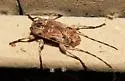
Sternidius alpha
Sternidius alpha
Identification: color pattern highly variable ; may be a complex of species One of the most common eastern lamiines ; common at lights
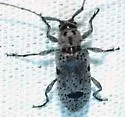
Sternidius imitans
Sternidius imitans
Type Locality: Davis Mountains, Jeff Davis Co., TX; June 13, 1935; Knull.
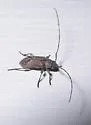
Sternidius misellus
Sternidius misellus
Identification: Nearly indistinguishable from some forms of S. alpha comes to lights
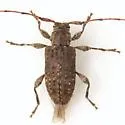
Sternidius punctatus
Sternidius punctatus
Identification: elytral pattern variable common ; attracted to UV lights
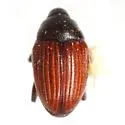
Stethobaris cicatricosa
Stethobaris cicatricosa
Identification: The prosternum is rather broadly and deeply sulcate [marked with parallel grooves]. Casey calls this a "remarkable species"
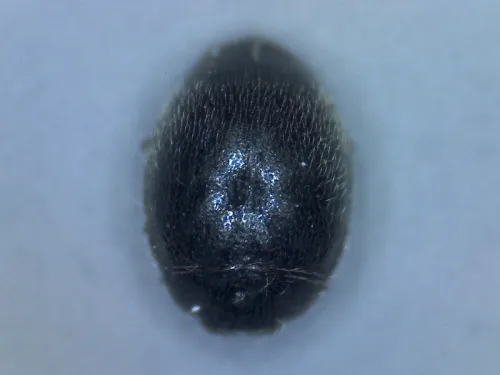
Stethorus pusillus
Stethorus pusillus
Size 1.2 to 1.5 mm. A very small member of the ladybird family, this is a black species with pale orange legs and hairs parallel to the midline. Unless identified by a recognised expert, detailed photographic evidence is required. Note the size and d
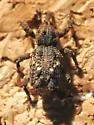
Sthereus horridus
Sthereus horridus
nocturnal; common in coastal forests ('common' for skilled collectors who beat them from trees or run berleses of forest litter; when one is found others are nearby). (C.W. O'Brien's comment here )
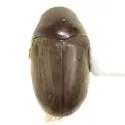
Stichtoptychus agonus
Stichtoptychus agonus
Type Locality: Brownsville, Cameron Co., TX, coll'ed by C. H. Townsend (White 1980)
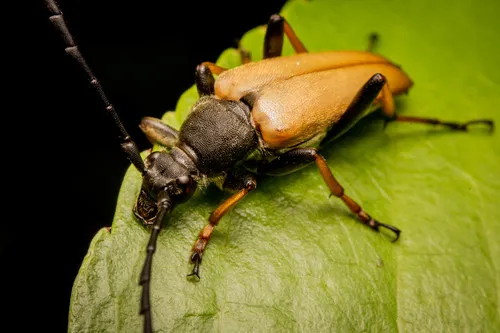
Stictoleptura rubra
Stictoleptura rubra
Sometimes known as the Red Longhorn Beetle from the colour of the female. Length up to 19 mm. The species is striking to look at the female being uniformly red-brown in colour; males having pale ochre coloured elytra and black head and thorax. Juveni
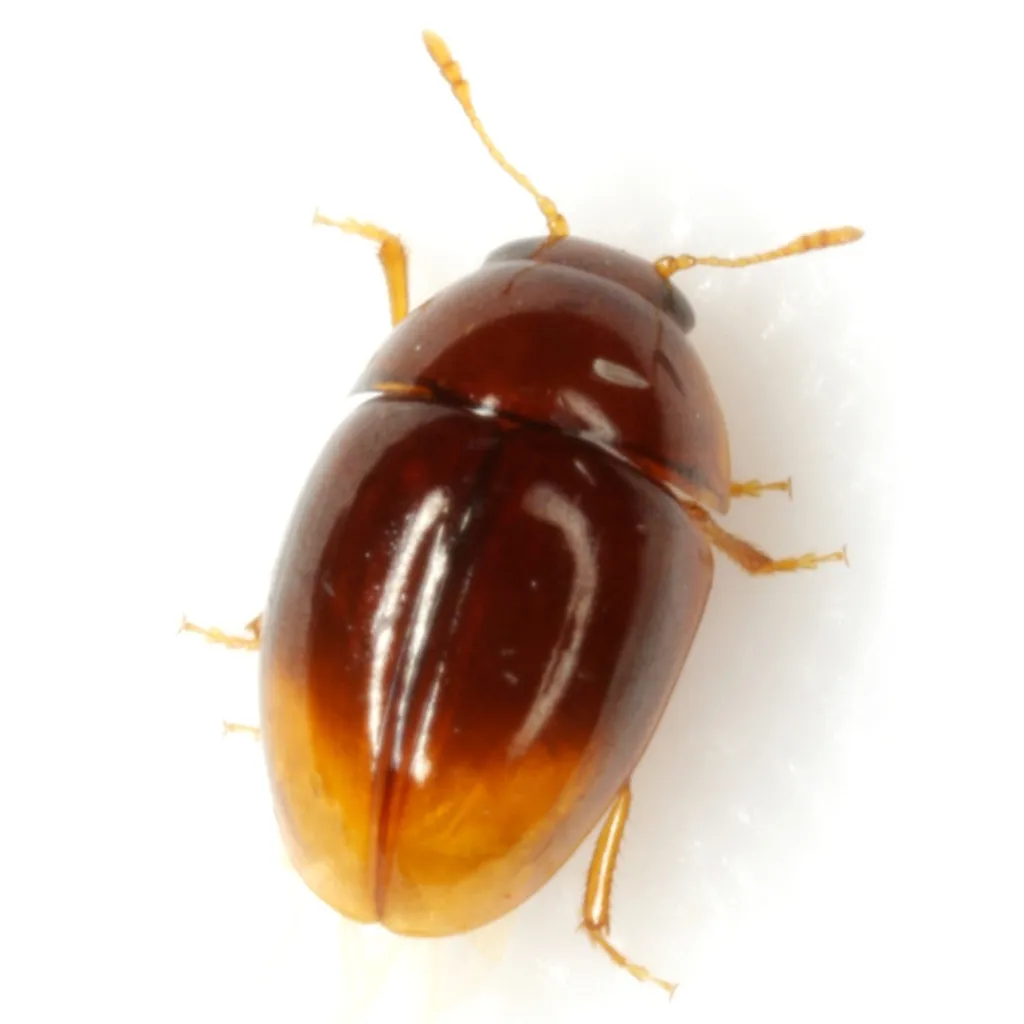
Stilbus apicalis
Stilbus apicalis
Stilbus apicalis (Stilbus apicalis) is a species in the family Phalacridae, commonly known as shining flower beetles, belonging to the order Coleoptera (Beetles). It is classified within the suborder Polyphaga, superfamily Cucujoidea. This species be
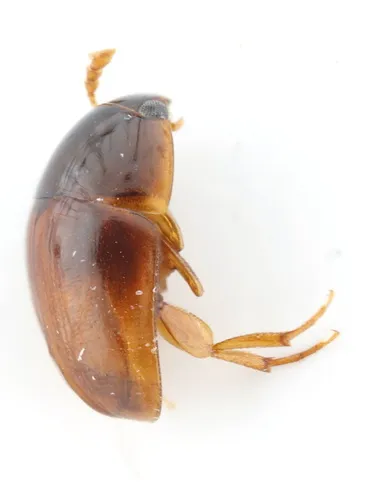
Stilbus testaceus
Stilbus testaceus
Length 1.8 to 2.3 mm. A small, shiny brown beetle with paler tipped elytra. Unless identified by a recognised expert, a photo is required and the specimen should be examined with a microscope. In the comments box, state the key or ID method used and
Stink Beetle
Nomius pygmaeus
occasionally invades homes in w. US and Canada; can produce an offensive odor retained by clothing for several weeks
Stomis pumicatus
Stomis pumicatus
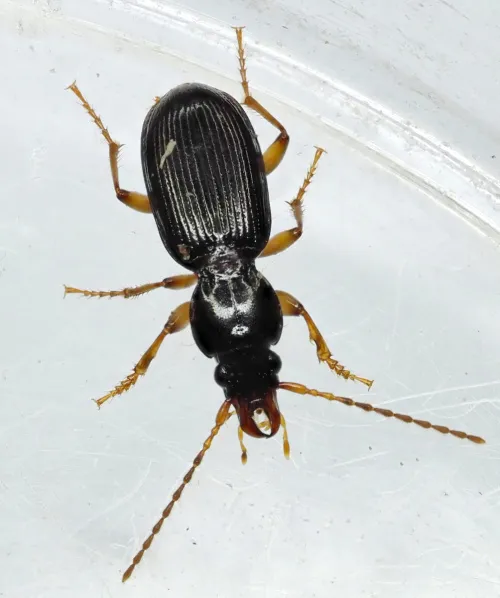
6.5-8.5mm. Dark brown but with pale yellow legs and antennae. It is elongate in shape with prominent mandibles projecting forward which are as long as the head. The right-hand mandible is broader than the left and slightly shorter. Wings are usually
Strabala acuminata
Strabala acuminata
Type Locality: Esperanza Ranch, Brownsville, Cameron Co., Texas
Strangalepta abbreviata
Strangalepta abbreviata
Identification: elytra variable, usually striped, but may be all black. Pronotum relatively globose, w/o apical collar (unlike in Pidonia ), which, like the elytra, is weakly punctate, with short pubescence.
Strangalia acuminata
Strangalia acuminata
Identification: antennae, head and prothrorax always black; elytra all black in more southern populations. Extremely slender body makes it recognizable among all-black longhorns.
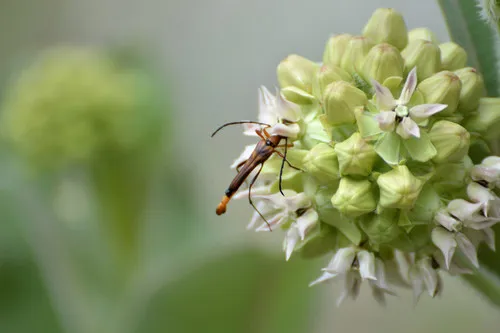
Strangalia occidentalis
Strangalia occidentalis
Strangalia occidentalis is a species of flower longhorn in the family of beetles known as Cerambycidae. It is found in Central America and North America.
Strangalia virilis
Strangalia virilis
Identification: The strongly inflated last abdominal segment in males, the large size, and distinctive color pattern characterize this species
Strategus antaeus
Strategus antaeus
Identification: Elytra without sutural striae. Male often has long posterior horns. The absence of a sutural stria will easily separate S. antaeus from all other species in the genus. Strategus antaeus is somewhat variable with regard to shape, size,
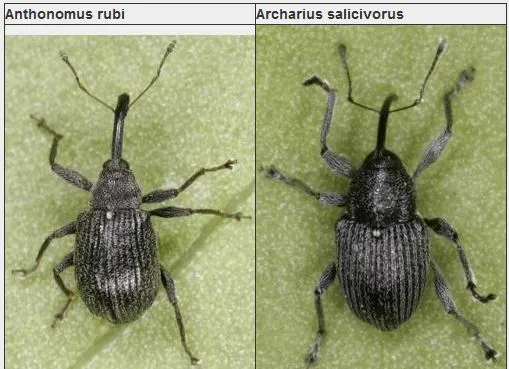
Strawberry Blossom Weevil
Anthonomus rubi
A small grey-black weevil around 2.5 to 3mm long with a tiny pale scutellum. Archarius salicivorus looks very similar but has a more rounded appearance when viewed from above. See ID Aids below. Your specimen should have these features: These small b
Strawberry Flea Beetle
Altica ignita
Identification: Shining metallic blue, with purple reflections, or more nearly completely metallic purple. Prebasal pronotal impression deep across pronotum. Elytra moderately coarsely punctate, sides usually with faint submarginal plica. Species rea
Strawberry Leaf Beetle
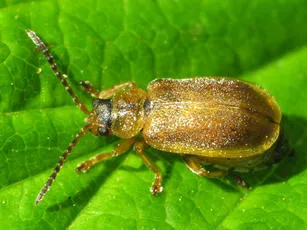
Galerucella tenella
3-4mm. Finely pubescent. Tawny with top of the head and scutellum (except for tip) dark. Front and rear edges of pronotum bare and shiny. No clear 'shoulder' spots. Antennae pale brown but darkening towards the apices. Apical sternite is bowl-shaped.

Strawberry Root Weevil
Sciaphilus asperatus
This weevil, is 4.5 to 5.5 mm in length, has a very short, blunt-tipped snout, no longer than its head; a light brown to reddish-brown body with extensive black speckling and scattered white scales. The elytra have black punctate striations and short
Strawberry Rootworm
Paria fragariae-complex
one named subspecies, P. f. kirki Balsbaugh 1970, known from AL, MD, NC, NY, PA, SC, TN Before the description of this species, it was often identified as P. canella (Fabricius) or P. quadrinotata (Say)
Strawberry Sap Beetle
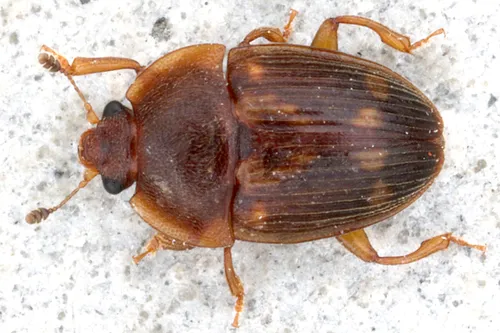
Stelidota geminata
significant pest of strawberries and a few other fruit crops in the Northeast ( Loeb & Loughner 2006 )
Streaked Lady Beetle
Myzia pullata
Identification: elytral pattern variable, pronotum dark brown medially, broad lateral border white with a median dark brown spot often connected to median area
Strigoderma knausi
Strigoderma knausi
Holotype. Male: Medora, Reno Co., KS; W. Knaus; June.
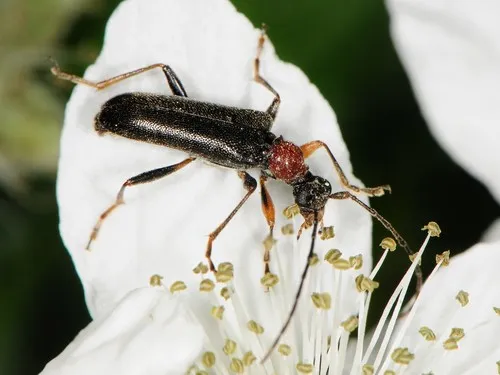
Stripe-legged Long-horned Beetle
Pidonia ruficollis
Pidonia ruficollis is a species of beetle in the family Cerambycidae. It was described by Say in 1824.
Striped Flea Beetle
Phyllotreta striolata
Identification: Elongate oval. Shining black, elytra marked with yellow. Antennae black, basal 3 segments yellow-brown, 5th segment usually 1/3 longer than 4th, its width 1/4 its length. Head, pronotum and elytra closely punctate, elytral punctures s
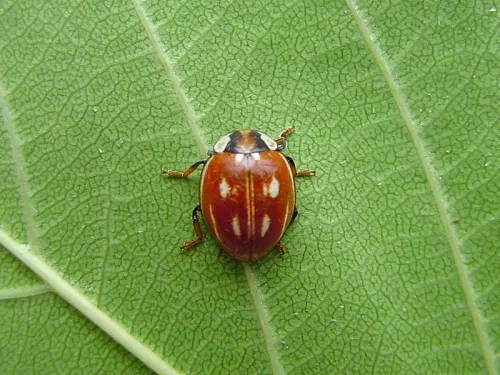
Striped Ladybird
Myzia oblongoguttata
Size 6 to 8 mm. A chestnut coloured species with cream stripes and spots. The pronotum is also white with chestnut markings. Unless identified by a recognised expert, good photos are required that show the key ID features. Also state the size in the
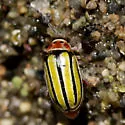
Striped Willow Leaf Beetle
Disonycha alternata
D. alternata is closely related to, and resembles two more species, D. latiovittata and D. pluriligata . Both also feed on willow; photo discrimination is problematic. D. latiovittata is exclusively western (BC - CA), while D. pluriligata has two for
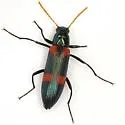
Strongylium aulicum
Strongylium aulicum
Strongylium aulicum (Strongylium aulicum) is a species in the family Tenebrionidae, commonly known as darkling beetles, belonging to the order Coleoptera (Beetles). It is classified within the subfamily Stenochiinae, tribe Stenochiini, suborder Polyp
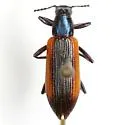
Strongylium championi
Strongylium championi
most recent prior known collection in TX: 1947 ( 3 ) Texas considers this a SGCN ( 4 )
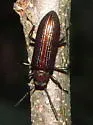
Strongylium crenatum
Strongylium crenatum
Identification: Uniformly brownish, including uniformly-colored antennae. Pronotum does not have distinct margin, but has crenate edges. Det. Patrick Coin, 2011
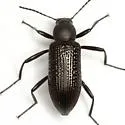
Strongylium hemistriatum
Strongylium hemistriatum
Identification: Easily distinguished from all other Strongylium in our area by unusual elytral striae which are described as being "sulcate on posterior half but not on anterior"
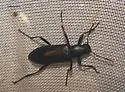
Strongylium tenuicolle
Strongylium tenuicolle
a rare variation with bright red/orange legs occurs in se. US (NC-FL-MS)
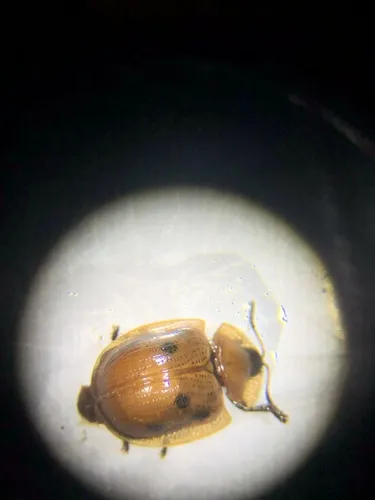
Strongylocassis atripes
Strongylocassis atripes
Identification: note the wide, shelf-like extension of the explanate elytral margin at the suture (not present in Charidotella ) --E.G. Riley's comment Type Locality: Colorado
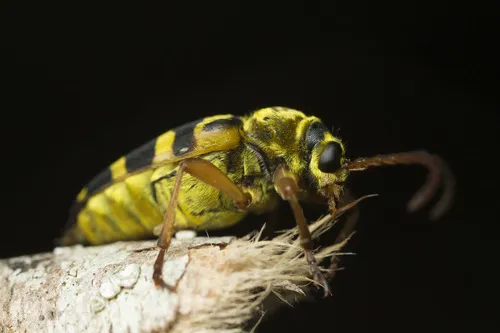
Strophiona laeta
Strophiona laeta
Strophiona laeta is a species of flower longhorn in the family of beetles known as Cerambycidae. It is found in North America.
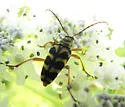
Strophiona nitens
Strophiona nitens
Identification: similar to Typocerus spp., but pronotum strongly constricted towards base and pubescence metallic yellow Det. M. A. Quinn, 2014 attracted to UV lights
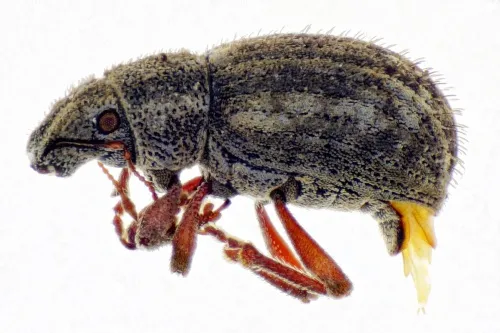
Strophosoma capitatum
Strophosoma capitatum
Measuring about 5 mm with large erect scales in punctures of striae. Details of scale patterns on elytra required. Unless identified by a recognised expert, photographic evidence is required and the specimen should be examined with a microscope. In t
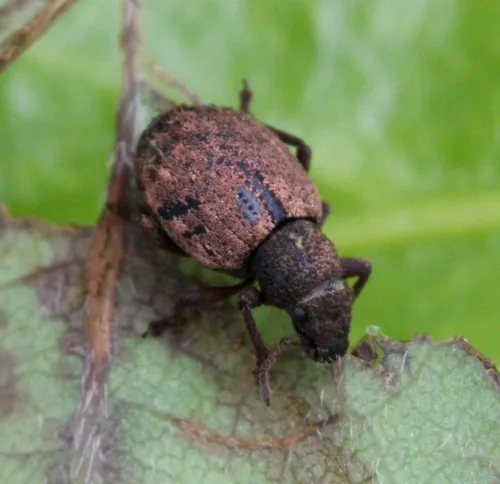
Strophosoma melanogrammum
Strophosoma melanogrammum
Length 4 to 6 mm. The elytra are blackish with a covering of bronze-brown scales, but nearer to the pronotum there is an area where these scales are thinned out or absent so that the black beneath shows through. Unless identified by a recognised expe
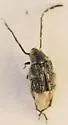
Stylantheus macrocerus
Stylantheus macrocerus
Identification: distinctive, may be known from any in our fauna by the extremely long antennae lectotype parasitized by Urosigalphus bruchivorus Crawford (Braconidae)
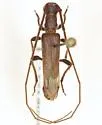
Styloxus oblatipilis
Styloxus oblatipilis
Numerous specimens collected at lights in Bentsen-Rio Grande State Park in late July and early August.
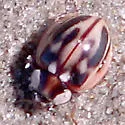
Subvittate Lady Beetle
Myzia subvittata
Identification: Gordon's figures - elytra variable, but head with dark area (at least on vertex); pronotum usually with median third black or brown
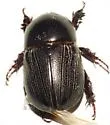
Sugarcane Beetle
Euetheola rugiceps
Identification: elytral striae distinctly punctate; clypeus with two blunt teeth. Hind tarsi differentiate it from Dyscinetus morator Syntype Locality: Louisiana
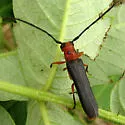
Sumac Stem Borer
Oberea ocellata
Identification: Orange head and pronotum (save for pronotal spots), all orange below Syn: Oberea ocellata plagiata Casey - Range: NC, FL - Pronotal spots fused and enlarged: - Cerambycidae of Florida - Michael Thomas Syn: Oberea ocellata plagiata Cas
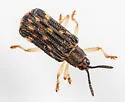
Sumitrosis inaequalis
Sumitrosis inaequalis
Identification: In central Texas, south to the Rio Grande Valley, specimens are on average of a pale coloration (as shown) and often the dark maculae are with slight metallic highlights, unlike the darker forms that occur to the east." - EGR, 2009
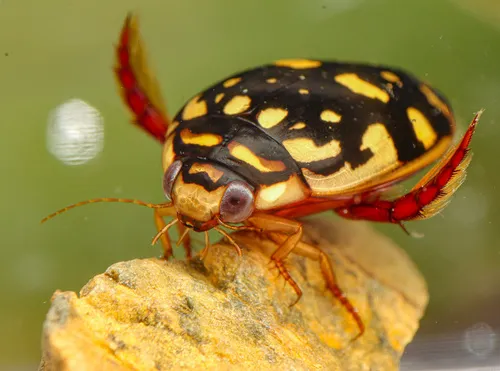
Sunburst Diving Beetle
Thermonectus marmoratus
Ejects a milky fluid from its prothoracic defensive glands when disturbed, containing a mixture of steroid compounds, presumably as a deterrent to fish predators (Meinwald et al. 1998). The main steroid compound in the defensive secretion is a novel
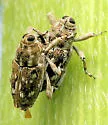
Sunflower Stem Weevil
Cylindrocopturus adspersus
"things under that name [ C. adspersus ] probably represent more than one species" --H.A. Hespenheide, pers. comm. to =v= 9.ii.2012
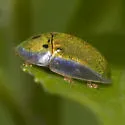
Sunflower Tortoise Beetle
Physonota helianthi
Identification: Oval. Shining pale yellow. Pronotum with margin explanate, covering head from above; having 3 black spots, median more elongate. Elytra with explanate margins; finely to moderately coarsely, mostly irregularly punctate.
Sunius rufipes
Sunius rufipes
Identification: See other photos and the original description here .
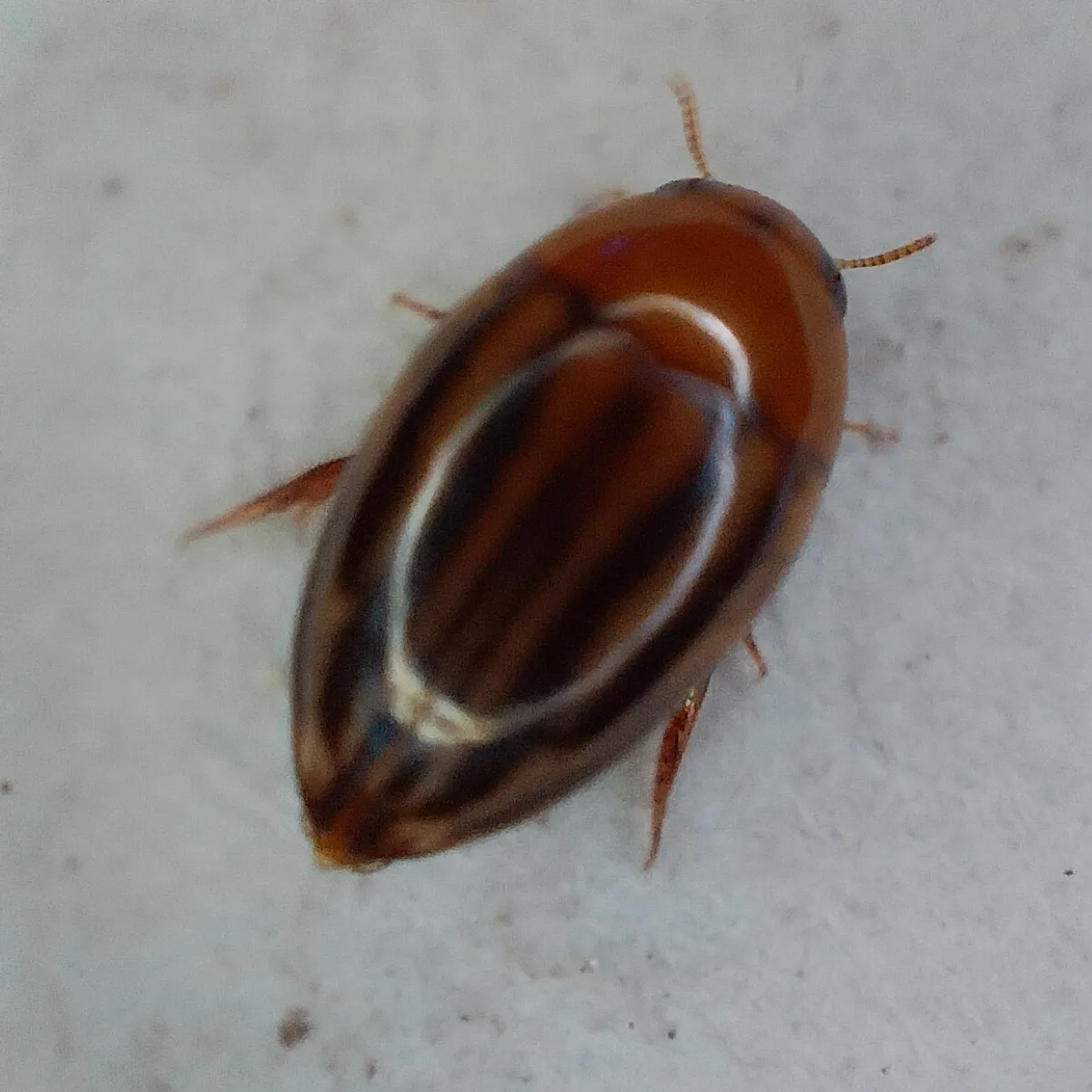
Suphisellus lineatus
Suphisellus lineatus
Type Locality: Mexico >Baja California >Cape San Lucas
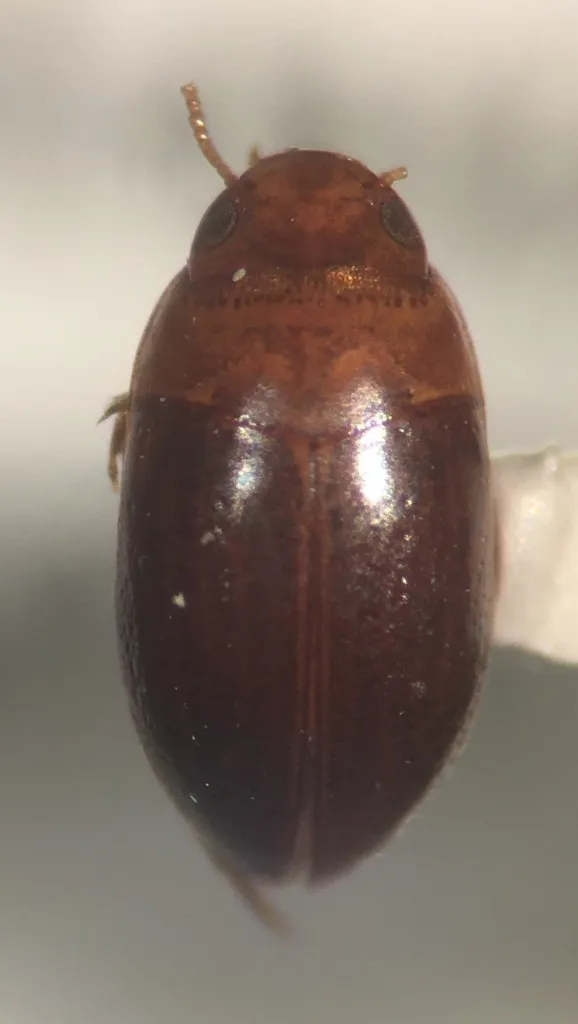
Suphisellus semipunctatus
Suphisellus semipunctatus
originally described from MI but has only been recorded since from SC-FL
Susuacanga stigmatica
Susuacanga stigmatica
Identification: Det. D. Heffern, 1993 Attracted to lights
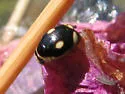
Swamp Lady Beetle
Hyperaspis paludicola
Identification: Gordon's figures Elytron black with narrow, complete lateral vitta and one discal spot Type Locality: Capron, Florida
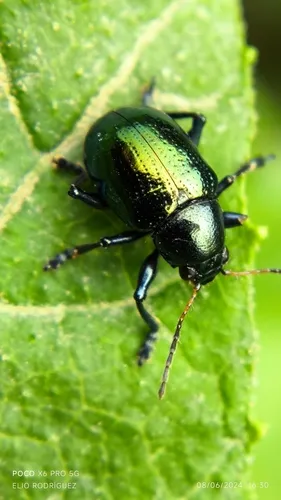
Sweet Potato Leaf Beetle
Typophorus nigritus
Identification: irridescent, tapering pronotum, and destinctive femora Of the approximately 50 genera and more than 1,000 species of Convolvulaceae, I. batatas is the only crop plant of major importance. The domestication of sweet potato occurred in
Swift Tiger Beetle
Parvindela celeripes
Identification: Flightless, dull green to brown. Elytral maculations are broken into dots Det. Alex Harman, 2018 Texas considers this to be a "Species of Greatest Conservation Need" (SGCN) this easily overlooked sp., may be more common than thought T
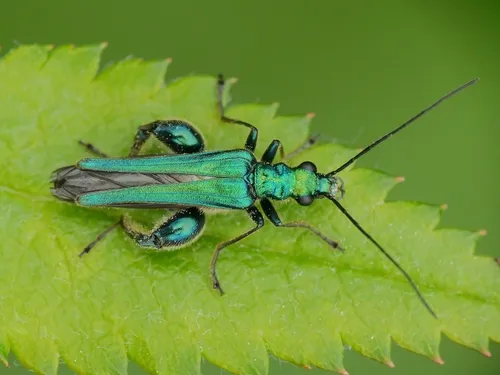
Swollen-thighed Beetle
Oedemera nobilis
Length 8 to 10mm. The green elytra (wing covers) are pointed and gape apart. The male and female of this beetle can easily be told apart, as the male has large green bulges on its femora or thighs, while the female does not. The male is unmistakeable
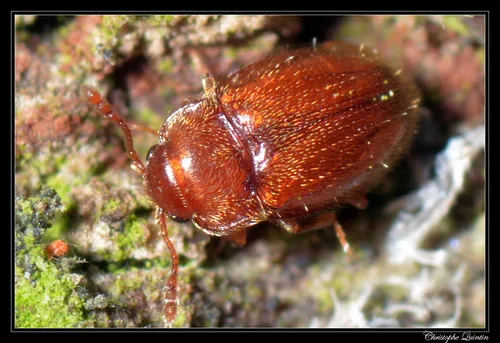
Symbiotes gibberosus
Symbiotes gibberosus
Source: discussion with F.W. Shockley & own observations in Europe
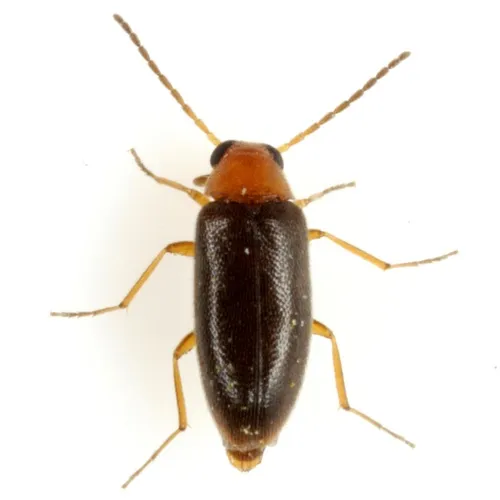
Symphora flavicollis
Symphora flavicollis
Symphora flavicollis (Symphora flavicollis) is a species in the family Melandryidae, commonly known as false darkling beetles, belonging to the order Coleoptera (Beetles). It is classified within the subfamily Melandryinae, tribe Hypulini, suborder P
Synchita fuliginosa
Synchita fuliginosa
Synchita fuliginosa (Synchita fuliginosa) is a species in the family Zopheridae, commonly known as ironclad beetles, belonging to the order Coleoptera (Beetles). It is classified within the subfamily Colydiinae, tribe Synchitini, suborder Polyphaga,
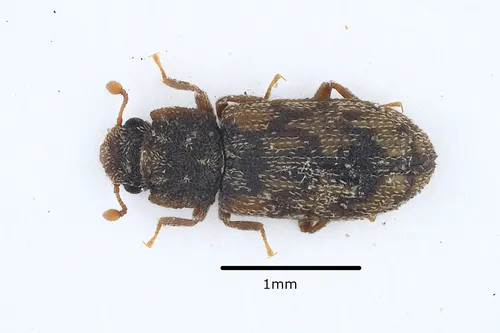
Synchita undata
Synchita undata
The pale tan or buff elytra are marked with a darker patterning which no doubt help to camouflage this beetle against bark and in shadowy areas. The present opinion appears to be that it is associated with sooty bark disease on Sycamore (Acer pseudop
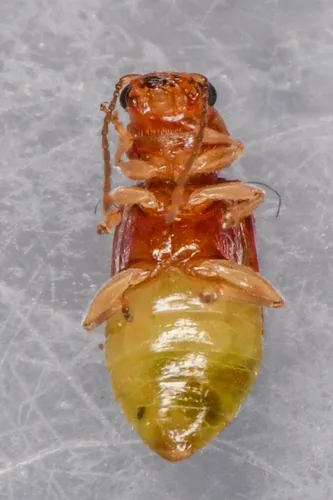
Synchroa punctata
Synchroa punctata
Synchroa punctata (Synchroa punctata) is a species in the family Synchroidae, commonly known as synchroa bark beetles, belonging to the order Coleoptera (Beetles). It is classified within the suborder Polyphaga, superfamily Tenebrionoidea. This speci
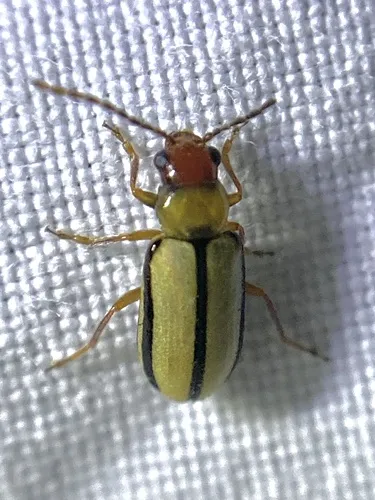
Synetocephalus autumnalis
Synetocephalus autumnalis
Synetocephalus autumnalis is a species of skeletonizing leaf beetle in the family Chrysomelidae. It is found in North America.
Synetocephalus diegensis
Synetocephalus diegensis
Identification: Elytral vittae narrow, antennae usually with terminal segments paler; head frequently more reddish than pronotum. Type Locality: San Diego, California
Synolabus nigripes
Synolabus nigripes
Identification: profemora armed Det. Chris Joll, 2016
Synuchus dubius
Synuchus dubius
Identification: Differs from widespread common S. impunctatus by somewhat larger size, dark legs, more opaque elytra.
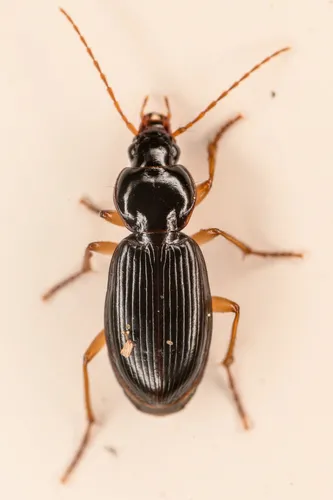
Synuchus impunctatus
Synuchus impunctatus
Synuchus impunctatus is a species of ground beetle in the subfamily Harpalinae. It was described by Say in 1823.
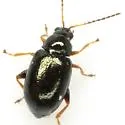
Syphrea nana
Syphrea nana
Identification: dark, shiny, pronotum with sub-basal crease, irregular (confused) shallow elytral punctations, pale tibia & tarsi, basal antennomeres also pale.
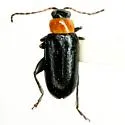
Systena collaris
Systena collaris
Identification: quadrate thorax; bluish-black, thorax yellowish-red, base of antennae piceous; head smooth; thorax sparsely, elytra more closely punctate; under side smooth. Det. E. G. Riley Type Locality: Texas (Belfrage, 878).
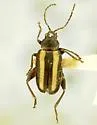
Systena dimorpha
Systena dimorpha
Identification: HOLOTYPE Type Locality: Ordway, Crowley County, Colorado
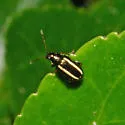
Systena elongata
Systena elongata
Identification: straight yellow stripe along each elytron; curves in slightly at apex; pronotum typically black (dull orange in S. blanda )
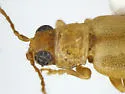
Systena laevis
Systena laevis
Identification: one of the palest and smoothest of North American species of Systena , sometimes a reddish-brown, narrow sutural vitta not reaching apex, rarely a trace of a lateral vitta; elytra especially in male not much wider than prothorax. HOLO
Systena mitis 0
Systena mitis
Identification: Very like S. frontalis , but head sparingly punctate; thorax almost smooth; legs pale, head and thorax ochreous, this with the sides black; elytra as in S. elongata , but with deeper punctures by the scutellum and along the suture. Ve
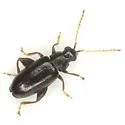
Systena pallicornis
Systena pallicornis
Type Locality: Brownsville, Texas (Esperanza Ranch). (Schaeffer 1906)
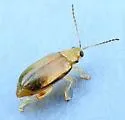
Systena plicata 0
Systena plicata
Type Locality: near Half-Moon Pond, Posey County, Indiana. September 22, 1918.
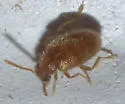
Syzeton belovi
Syzeton belovi
Type Locality: Texas. Brazos County, 5 km SW Wellborn, (80 m) [30°30’08” N 96°20’10” W]
Syzeton ouachitanus 0
Syzeton ouachitanus
Identification: Dark midband weak, transverse, slightly postmedian, and vaguely interrupted at suture (Fig. 32) Type Locality: Oklahoma: Latimer Co., IX- 1983, K. Stephan, in USNM. Paratypes: 5 males (IX-83, VIII-87, IX-88, in blacklight trap); 1 fem
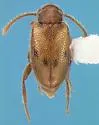
Syzeton signatus
Syzeton signatus
Syzeton signatus is a species of ant-like leaf beetle in the family Aderidae. It is found in North America.
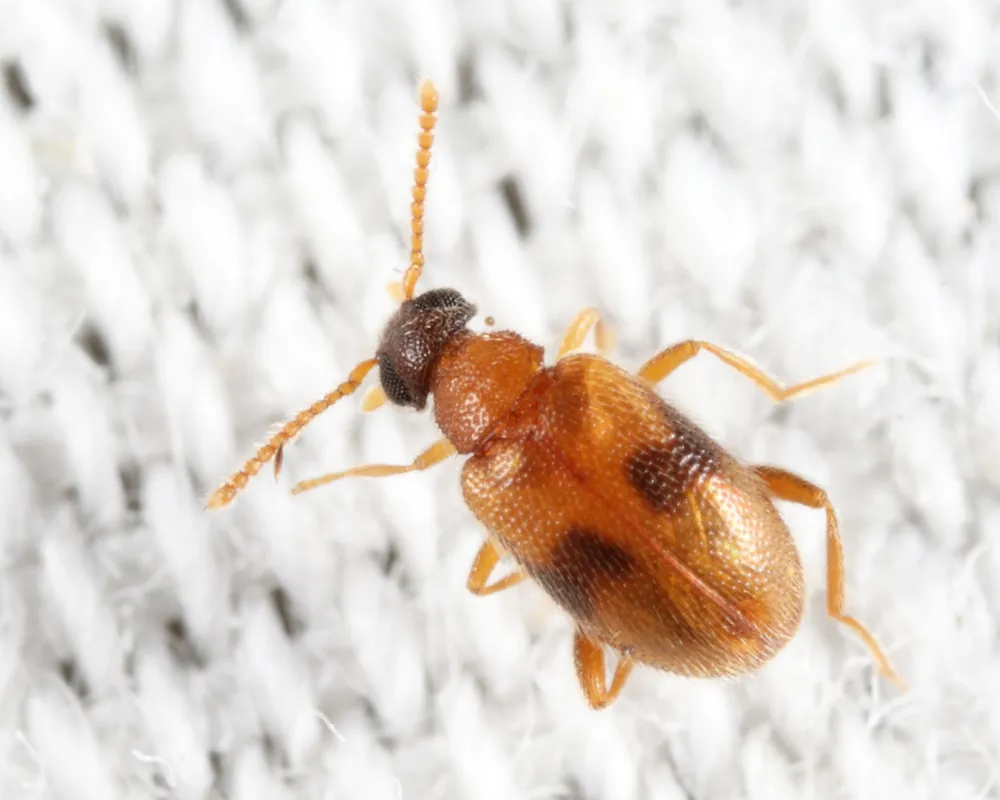
Syzeton subfasciatus
Syzeton subfasciatus
Identification: marked with a blackish spot near the suture and another at the side margin Det. v belov, 2023
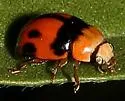
T-marked Lady Beetle
Brachiacantha tau
Identification: Color pattern on elytron variable from mostly yellow or orange in northern specimens, to a pattern resembling that of B. decora in southern specimens Gordon's figures See discussion here: Type locality: Fort Riley, Kansas
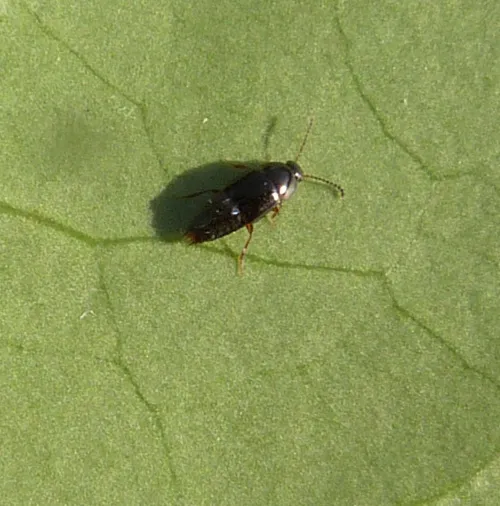
Tachinus laticollis
Tachinus laticollis
A small, almost black rove beetle with short wing cases exposing much of the abdomen. Found in various habitats, but especially associated with woodland. May be encountered in most months of the year but most frequent between April and August. Widesp
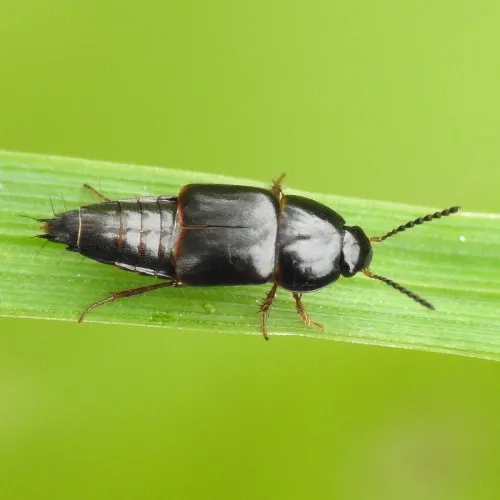
Tachinus rufipes
Tachinus rufipes
This is a relatively common dark coloured rove beetle and it has the typical short wing cases. Prefers damp (but not wet) habitats, damp logs, matted vegetation, compost and even dung. It is a predator of aphids and other small creatures. Common and
Tachinus subterraneus
Tachinus subterraneus
Identification: Elytra with well-defined, large humeral maculae reaching about mid-length, sometimes spreading over most of elytron except suture and apical margin
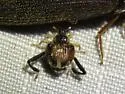
Tachygonus tardipes
Tachygonus tardipes
Identification: Det. E. G. Riley, 2021 Type Locality: Texas: [no specific locality data]
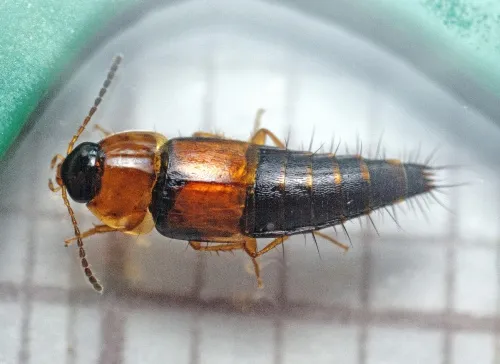
Tachyporus chrysomelinus agg.
Tachyporus chrysomelinus agg.
This small orange and black rove beetle is shaped rather like a teardrop, travelling blunt end first! It is very similar to T. dispar and can only be separated by detailed examination. In plant litter, moss, leaves etc, and on the soil surface. Preda
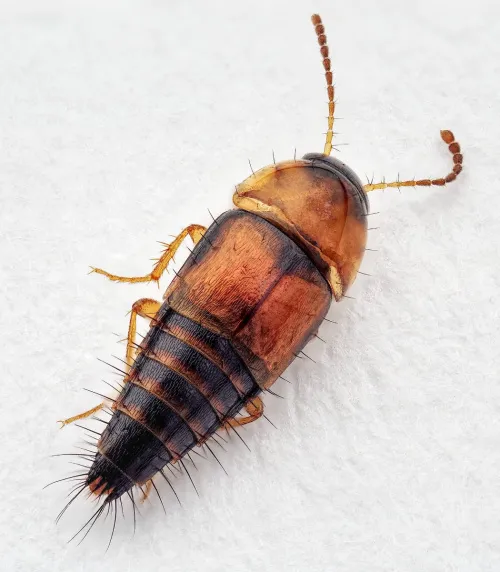
Tachyporus dispar
Tachyporus dispar
This small orange and black rove beetle is shaped like a teardrop. It is very similar to T. chrysomelinus and can only be separated by detailed examination - the hind margin of the elytra have four apical setae in T. dispar, T. chrysomelinus has thre
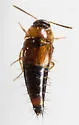
Tachyporus flavipennis
Tachyporus flavipennis
Identification: Very similar to T. maculicollis, but smaller and entirely yellowish pronotom (maculicollis usually has a dark central cloud, but can sometimes be completely pale like flavipennis).
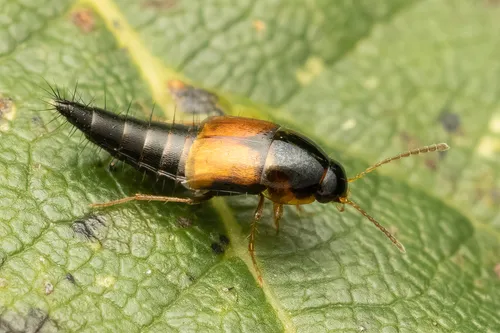
Tachyporus hypnorum
Tachyporus hypnorum
3 - 4 mm. Black with red elytra (wing cases) and a yellow patches on the hind corners of the otherwise black and glossy pronotum. Abdominal tergites have pale yellow hind margins. In plant litter, moss, under leaf rosettes, or amongst soil crumbs on
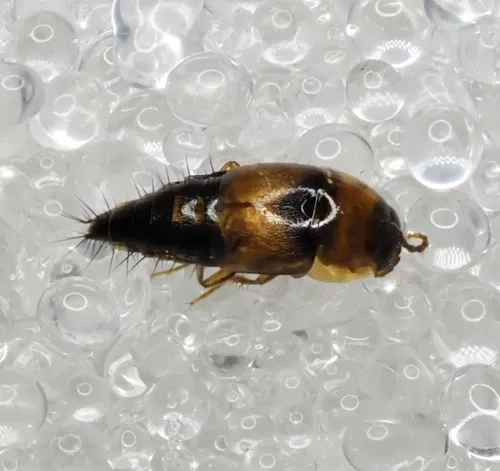
Tachyporus nitidulus
Tachyporus nitidulus
A small (2.5 to 3 mm long) rove beetle. Like most Tachyporus species, it is variable in appearance and shaped like a teardrop travelling blunt end first. It is identified by the second antennal segment being thickened and noticeable wider than the th
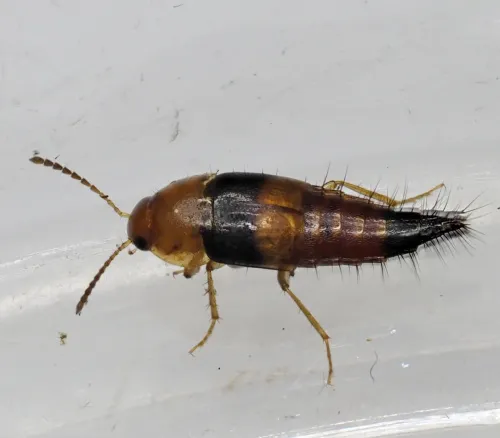
Tachyporus obtusus
Tachyporus obtusus
Length 4 mm. Generally orange but with the front half of the elytra and the last abdominal segments black. Though the genus is generally recognisable, there are 14 UK species so care needs to be taken to identify to species. Typical specimens can be
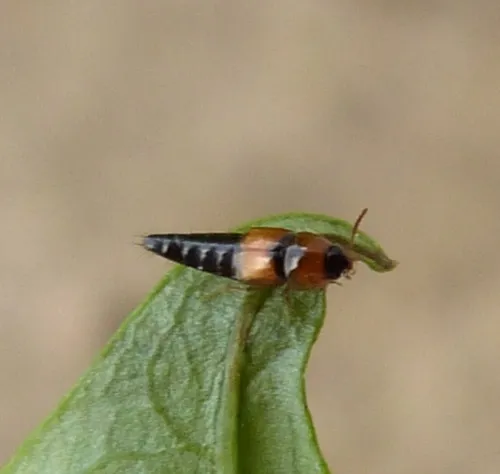
Tachyporus solutus
Tachyporus solutus
A small rove beetle of 3 to 4 mm. It has a black head and tail, but the pronotum and wing cases are orange. Most frequent in central and south eastern Britain. No additional images available for this species.
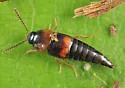
Tachyporus transversalis
Tachyporus transversalis
Its occurrence in North America is "...difficult to explain. It is unlikely... introduced because of its specialized habitat and because of the pattern of distribution in NA [which] is very unusual for a Holarctic species. Perhaps its restricted habi
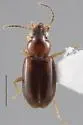
Tachys litoralis
Tachys litoralis
Identification: Notes from studying Casey's type: color uniformly reddish brown, elytra not patterned. Pronotum with sides sinuate before the hind angles which are about right, posterior margin nearly straight (not oblique). Elytral humeri clearly se
Tachys mordax 0
Tachys mordax
Identification: Uniformly pale; eyes small; pronotum cordate with sinuate margins before long and rectangular hind angles; elytral striae obsolete. holotype
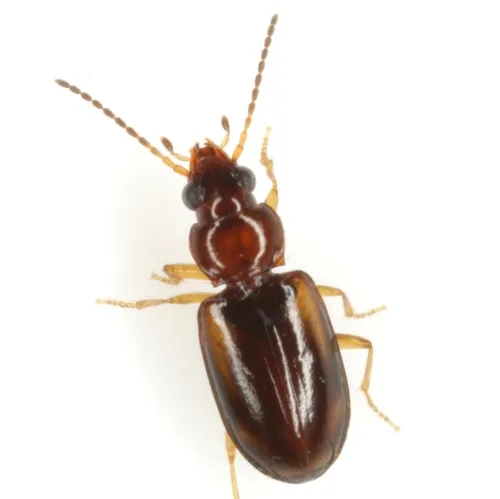
Tachys pulchellus
Tachys pulchellus
Tachys pulchellus is a species of ground beetle in the family Carabidae. It is found in North America.
Tachys translucens
Tachys translucens
Identification: (From 1937 description): Small, slender, depressed; entirely testaceous, head large ("9/10 width prothorax"), pronotum cordate with sinuate margins basally, hind angles right; elytra subparallel.
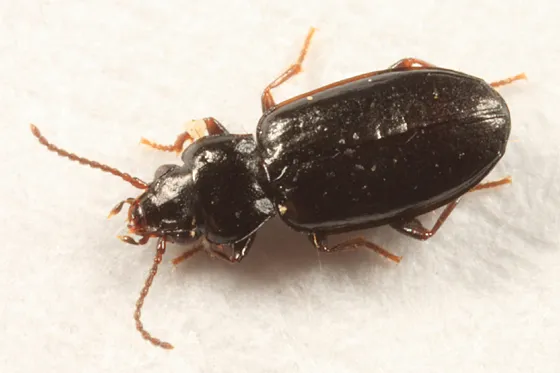
Tachyta angulata
Tachyta angulata
Identification: Some helpful clues include head with flattish frons, proportionately long elytra with staightish lateral borders, pronotum with long sinuation of lateral margins, posterior elytra punctures not distinctly anterior to ends of recurved
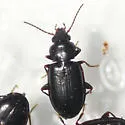
Tachyta inornata
Tachyta inornata
Identification: Key characters are pronotum with absent laterobasal carina and elytron with lateral-most stria not uniformly sulcate. --P.W. Messer, 3.XI.2010
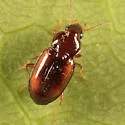
Tachyura anceps
Tachyura anceps
Identification: Among other subtle differences, head is usually brownish vs blackish in most T. incurva