
Primitive Winged Insects
Order Coleoptera
The Primitive Winged Insects (Order Coleoptera) includes 15,720 species across 160 families and 3,716 genera in our directory.
About Primitive Winged Insects
Coleoptera is the largest order of insects with over 400,000 described species, representing ~25% of all known animal species and ~40% of all insects. In the U.S. alone, nearly 30,000 beetle species have been identified.
Economic Impact
Beetles have major economic significance: leaf beetles (Chrysomelidae) and weevils (Curculionoidea) are among the most destructive agricultural pests globally, costing billions annually, while predatory species like ladybugs provide natural pest control.
Ecological Role
Beetles are prominent decomposers, especially in forests, breaking down dead wood and recycling nutrients. As predators, they reduce populations of pest insects. Many species are also important pollinators of flowering plants.
Families in Coleoptera (160)
Species in Coleoptera (15,720)
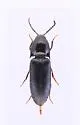
Ampedus laurentinus
Ampedus laurentinus
Identification: Amongst NE dark Ampedus: Dark pubescence, pronotal punctures umbilicate and not dense (separated by a diameter), ovipositor sub-rectangular
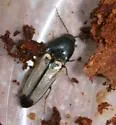
Ampedus linteus
Ampedus linteus
Identification: elytral suture & a patch at elytral apex black
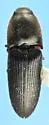
Ampedus molestus
Ampedus molestus
Identification: Subparallel pronotum and ovipositor valves subrectangular are diagnostic
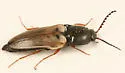
Ampedus nigricollis
Ampedus nigricollis
Identification: species has pale legs, compared to the dark legs of the similar Ampedus sellatus . Adults hibernate under bark.
Ampedus pedalis 0
Ampedus pedalis
Identification: habitus photo (specimen from TN id'd by B.A.Mathison)
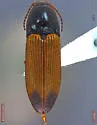
Ampedus quebecensis
Ampedus quebecensis
Identification: Pale form: Elytra red with apical dark spot cordiform, pronotal punctures extremely dense, specially on the sides. Pilosity dark/black Dark form: All black, separated from the other dark Ampedus by the piceous pubescence and the dense
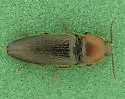
Ampedus rubricollis
Ampedus rubricollis
Ampedus rubricollis (Ampedus rubricollis) is a species in the family Elateridae, commonly known as click beetles, belonging to the order Coleoptera (Beetles). It is classified within the subfamily Elaterinae, tribe Ampedini, suborder Polyphaga, super
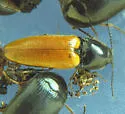
Ampedus sanguinipennis
Ampedus sanguinipennis
Identification: Coloration and shape apparently distinctive.
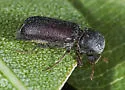
Amphicerus simplex
Amphicerus simplex
Identification: Elytra at base slightly narrower than pronotum at middle, truncate at base, without tubercles or callosities on apical declivity ; sutural margins strongly elevated on apical declivity; sides slightly expanded posteriorly, conjointly
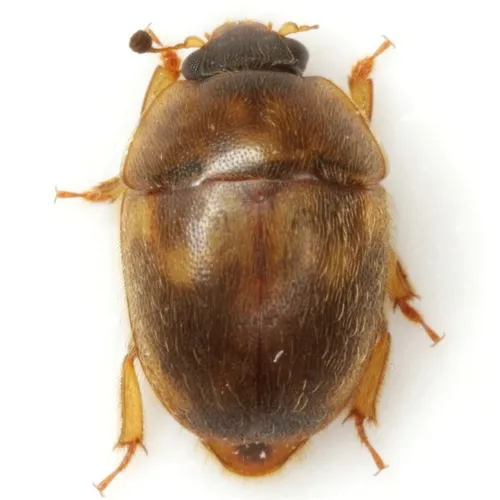
Amphicrossus ciliatus
Amphicrossus ciliatus
Amphicrossus ciliatus (Amphicrossus ciliatus) is a species in the family Nitidulidae, commonly known as sap-feeding beetles, belonging to the order Coleoptera (Beetles). It is classified within the subfamily Amphicrossinae, suborder Polyphaga, superf
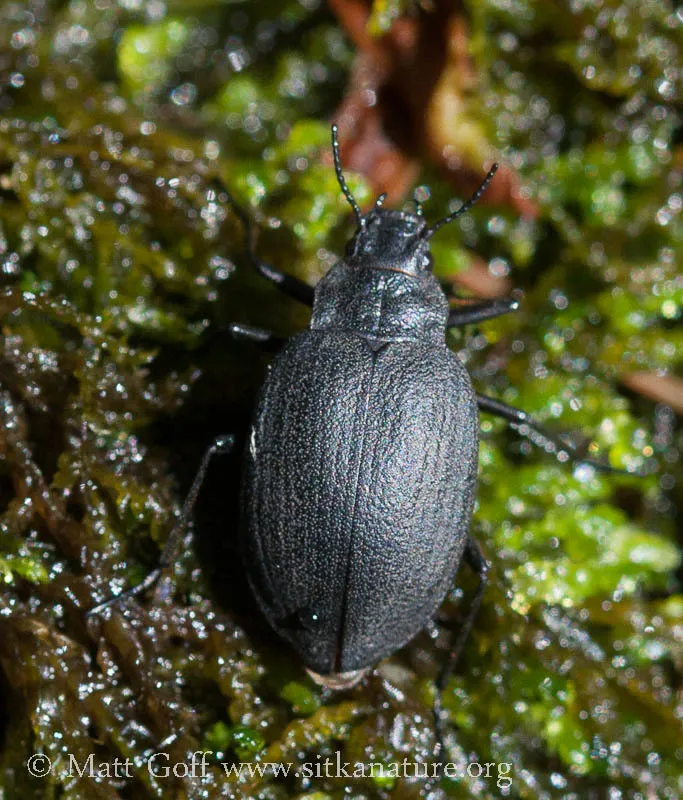
Amphizoa insolens
Amphizoa insolens
Identification: They are usually dull black, but can be brown.
Amphotis ulkei
Amphotis ulkei
Identification: Habitus Recently reported in Canada
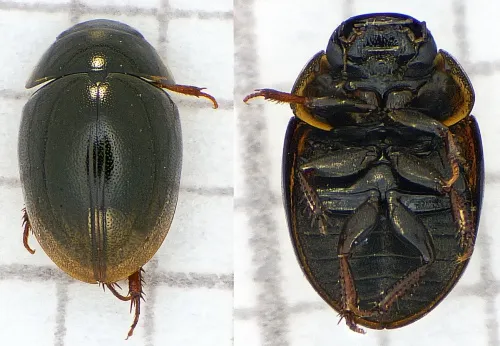
Anacaena globulus
Anacaena globulus
2.5 to 3.5mm. Strongly convex above, shape broadly oval and colouration dark, almost black with contrasting pale pronotal and elytral margins. Distinguished from our other species by the form of the mesosternum; the sharply-declined part in front of
Anacaena limbata
Anacaena limbata
Identification: Hind femora entirely pubescent except for apex; combined length of hind tarsomeres not longer than hind tibia. The identity of this species is confused, as apparently two species occur in North America that are being confused: A. limb
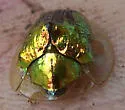
Anacua Tortoise Beetle
Coptocycla texana
Fairly common in southmost Texas, the damage they leave behind (leaf holes) can be ubiquitous (MAQ, pers. obs.)
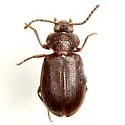
Anaedus texanus
Anaedus texanus
Type coll'ed by E. A. Schwarz in Brownsville, Texas.
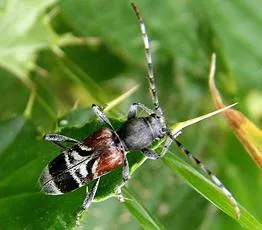
Anaglyptus mysticus
Anaglyptus mysticus
The length can be up to 13mm. This distinctive longhorn beetle has elytra with basal 1/3rd reddish/chestnut and the remaining 2/3rds black with 3 to 4 transverse pubescent bands. The thorax is grey/black. In the melanic variety hieroglyphicus the bas
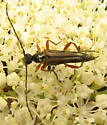
Analeptura lineola
Analeptura lineola
Identification: Color pattern variable One of the most abundant summer day-flying longhorns in Great Smoky Mountains NP
Anambodera palmarum
Anambodera palmarum
Anambodera palmarum (Anambodera palmarum) is a species in the family Buprestidae, commonly known as metallic wood-boring beetles, belonging to the order Coleoptera (Beetles). It is classified within the subfamily Polycestinae, tribe Acmaeoderini, sub
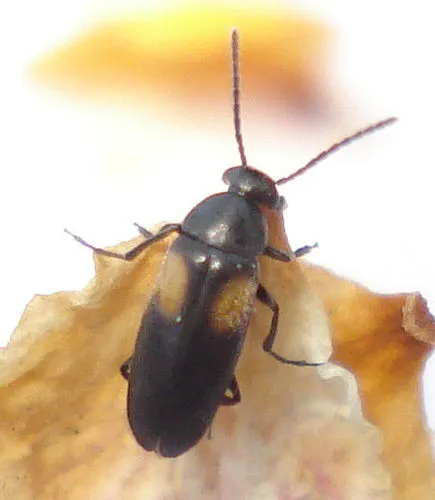
Anaspis fasciata
Anaspis fasciata
A small (about 4 mm) elongate beetle with black and orangey red elytra. Around Hawthorn and Blackthorn blossom and open Spring flowers. Fairly common and widely distributed over much of England and Wales with fewer records from Scotland.
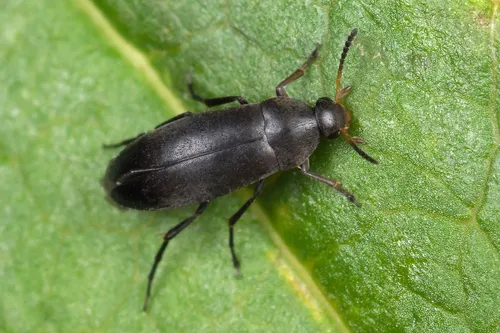
Anaspis frontalis
Anaspis frontalis
2.5-4.4mm. This is the most common of the genus, often associated with Hawthorn blossom. It is generally all black, usually with some yellow on the front of the head and the four basal antennal segments also yellow. The legs are generally except the
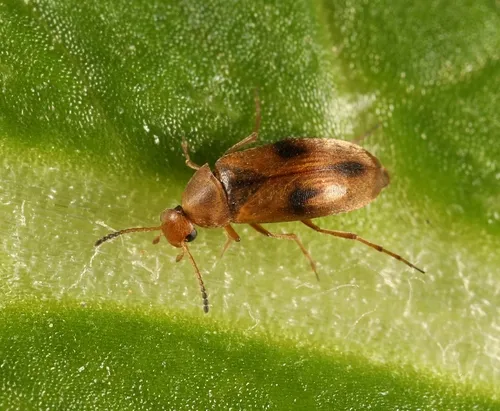
Anaspis maculata
Anaspis maculata
2.4-3.1mm. This is a small, elongate beetle which is usually yellowish-brown with variable black markings. However there are several colour forms including an all-yellow variant. The standard and most common form has a dark triangular mark around the
Anaspis regimbarti
Anaspis regimbarti
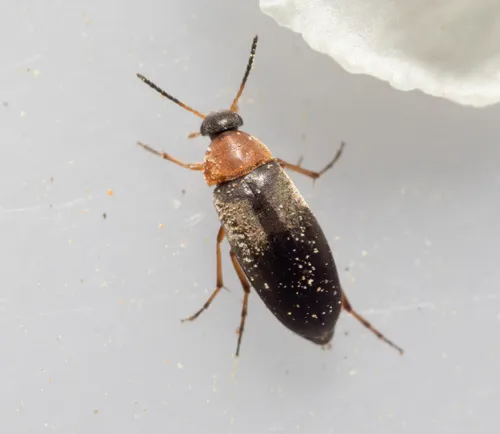
Length: 2.8 to 3.8 mm. The body is predominantly black with orange pronotum. The antennae are black with some orange towards the base, the legs are also predominantly orange. Although it is striking in appearance there are other very similar species,
Anatrichis oblonga
Anatrichis oblonga
one spmn collected by Wickham along the Rio Grande near Brownsville, Cameron Co., TX in the late 1800's.
Anchastus augusti
Anchastus augusti
Identification: Distinctive First US records in 1987 and 1989 in the Sabal Palm Sanctuary, Brownsville, TX (Heffern & Brattain, 1991). Texas considered this a SGCN in 2012
Anchastus fumicollis
Anchastus fumicollis
Identification: relatively easily recognized in the se.US by its size, color, long antennae, and subequal second and third antennomeres. Det. E. G. Riley, 2014 Type Locality: Royal Palm Park, Florida (for which there appears to be more than one in di
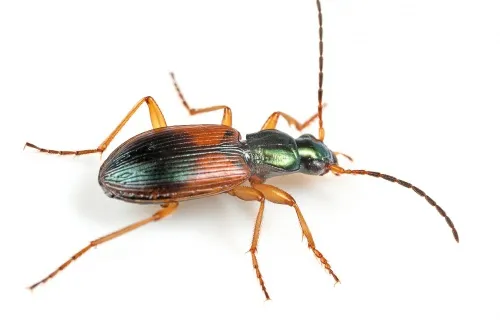
Anchomenus dorsalis
Anchomenus dorsalis
Length of 8-9mm. One of the most colourful species of this genus. The elytra vary from orange to greeny-black with large chestnut red or orange patches at the shoulders, whilst the thorax is a brassy green, and the legs are yellow. Various including
Anchonoderus quadrinotatus
Anchonoderus quadrinotatus
Identification: Check the Info tab under the genus page "Anchonoderus" for descriptive information. Horn (1878) described this sp. from two spmns.
Anchonoderus schaefferi 0
Anchonoderus schaefferi
Anchonoderus schaefferi is a species of ground beetle in the family Carabidae. It is found in North America.
Anchonus suillus
Anchonus suillus
Identification: Rostral base not deeply incised, lacks apical elytral tubercules, elytra regularly tuberculate usually with single setae per tubercle. Unknown if native to Florida, introduced via natural means, or introduced by man.
Ancylocera bicolor
Ancylocera bicolor
Identification: Males have much longer antennae ♂ ♀
Andrion regensteinense
Andrion regensteinense
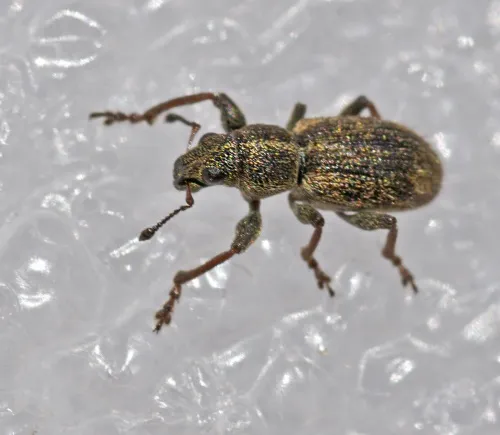
Length 5 mm. A small brown hairy weevil, usually with a pale stripe down the mid-line of both pronotum and elytra. Unless identified by a recognised expert, photographic evidence is required and the specimen should be examined with a microscope. In t
Androchirus femoralis
Androchirus femoralis
Androchirus femoralis (Androchirus femoralis) is a species in the family Tenebrionidae, commonly known as darkling beetles, belonging to the order Coleoptera (Beetles). It is classified within the subfamily Alleculinae, suborder Polyphaga, superfamil
Androlyperus fulvus
Androlyperus fulvus
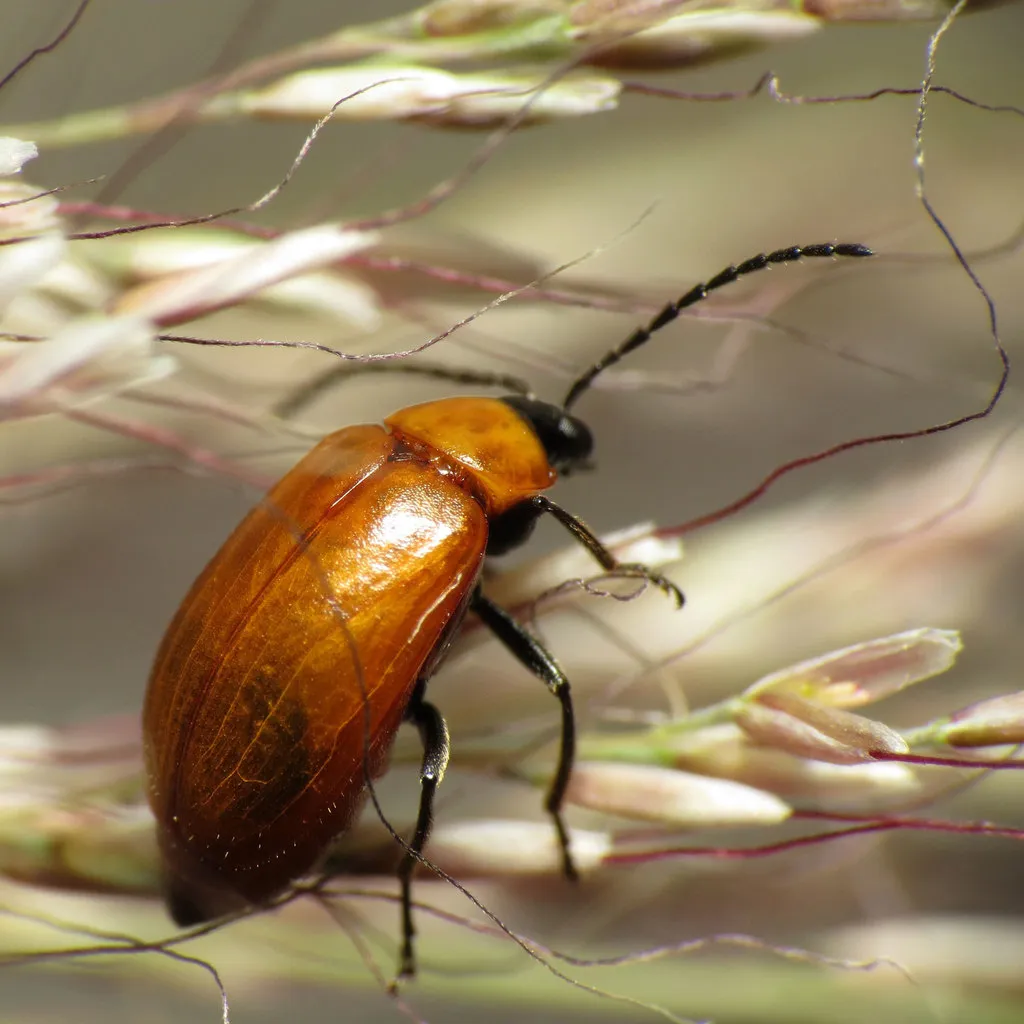
Identification: Color orange, including pronotum; Head, antennae, mesosternum, metasternum, legs and apex of abdomen are dark, scutellum brownish yellow. The broad, reflexed lateral edge (epipleuron) of the elytra extends to the incision in males,
Androlyperus incisus
Androlyperus incisus
Identification: Elytra entirely black Type locality. Quartzside [Quartzsite, Yuma Co.], Arizona.
Androlyperus maculatus
Androlyperus maculatus
Identification: As in some of its congeners, the sexual dimorphism is remarkable in this species. In addition to the modifications on the terminal sternite and at the posterolateral angles of the elytra, males have opaque rather than shining elytra.
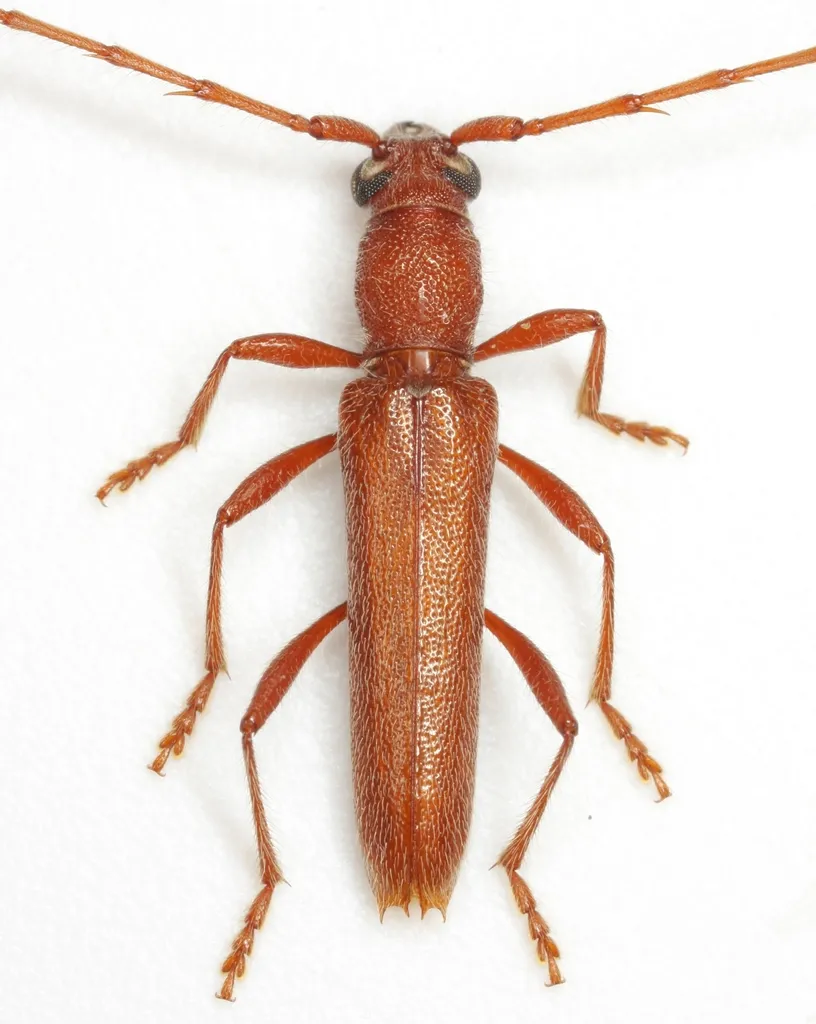
Aneflomorpha aculeata
Aneflomorpha aculeata
Aneflomorpha aculeata is a species of beetle in the family Cerambycidae. It was described by John Lawrence LeConte in 1873.
Aneflomorpha rectilinea
Aneflomorpha rectilinea
can be abundant at lights after the monsoon rains begin
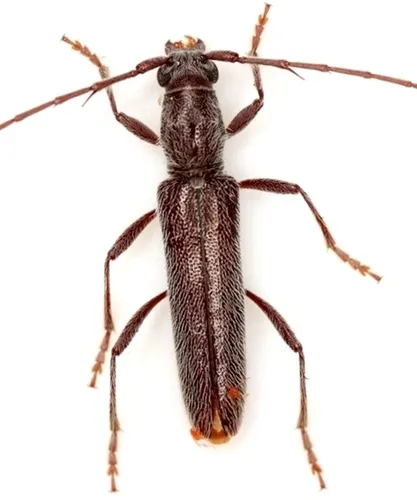
Aneflomorpha tenuis
Aneflomorpha tenuis
Aneflomorpha tenuis is a species of beetle in the family Cerambycidae. It was described by LeConte in 1854.
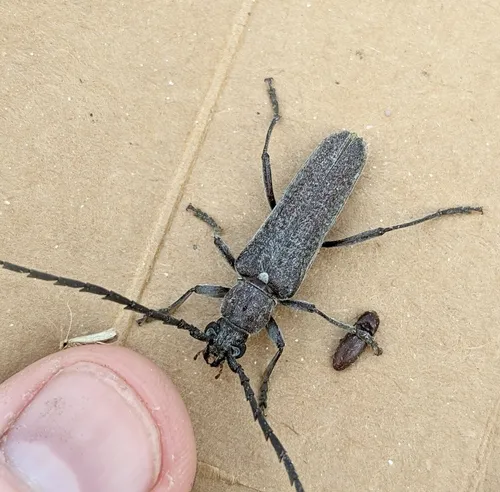
Aneflus obscurus
Aneflus obscurus
Aneflus obscurus is a species of beetle in the family Cerambycidae. It was described by John Lawrence LeConte in 1873.
Anelaphus asperus 0
Anelaphus asperus
no specimens outside of western Texas (Big Bend region) have been examined, and its occurrence west of Texas is doubtful. Type Locality: Holotype male and paratype labeled Panther Junction, 4000 ft, Chisos Mountains, Big Bend National Park, Texas, Ma
Anelaphus belkini 0
Anelaphus belkini
Identification: The other oak Anelaphus species described by Skiles, A. belkini , is not included in this complex since the structure of the elytral apex (rounded to a spinose suture), antenna (scape and third antennomere weakly sulcate), and pronotu
Anelaphus debilis
Anelaphus debilis
Identification: Elytral apices rounded to spinose suture. Elytra with off-white pubescent patches scattered throughout (Fig. 17b). Basal sutural region of elytra with ochre pubescence. commonly collected at lights, at fermenting molasses bait, and by
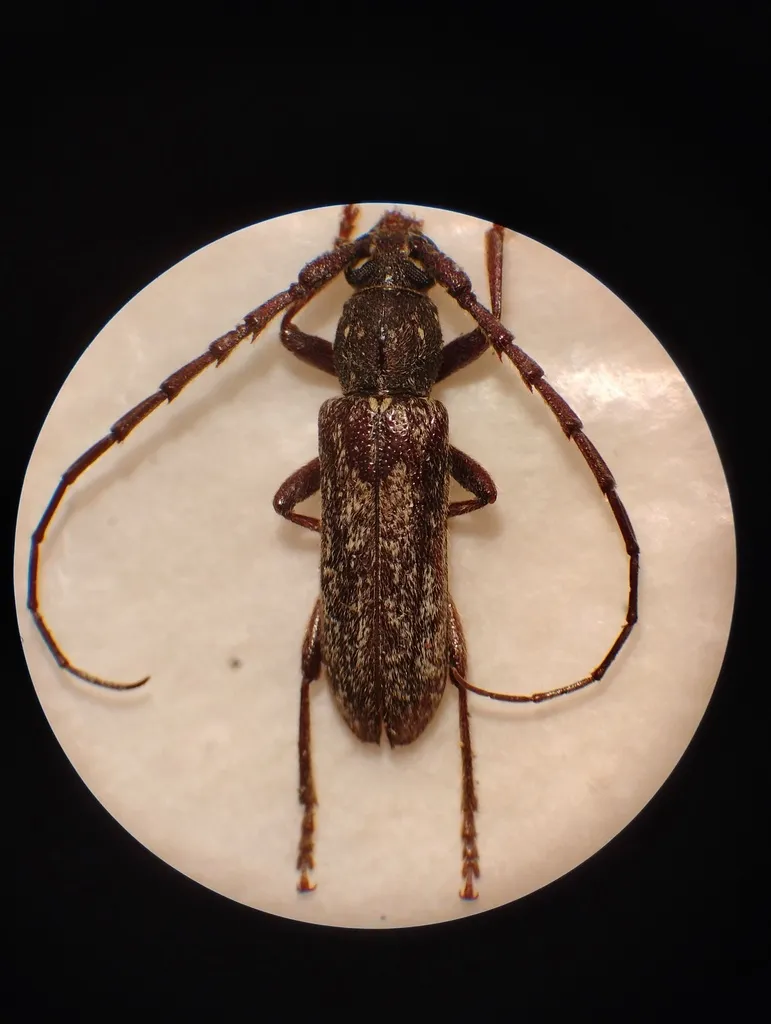
Anelaphus dentatus
Anelaphus dentatus
Anelaphus dentatus is a species of beetle in the family Cerambycidae. It was described by Chemsak in 1962 while he was doing scientific exploration.
Anelaphus inermis
Anelaphus inermis
Identification: Pronotum with small, dense maculae of white or ochre pubescence on disk. Pronotal callus oval and less than one-third length of pronotum (Fig. 21a) (indistinct in some specimens). Type Locality: St. John's Bluff, Duval County, Florida
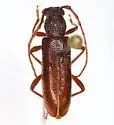
Anelaphus magnipunctatus
Anelaphus magnipunctatus
Identification: Det. (and discussion of diagnostic characters) S. Lingafelter, 2018
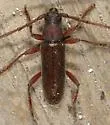
Anelaphus moestus
Anelaphus moestus
Anelaphus moestus (Anelaphus moestus) is a species in the family Cerambycidae, commonly known as longhorn beetles, belonging to the order Coleoptera (Beetles). It is classified within the subfamily Cerambycinae, tribe Elaphidiini, suborder Polyphaga,
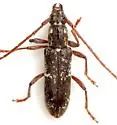
Anelaphus niveivestitus
Anelaphus niveivestitus
Identification: Elytral apex truncate or very weakly bidentate. Elytra with bright white appressed pubescent patches most concentrated at middle and apical region. (Fig. 17a). Basal sutural region of elytra without ochre pubescence. Type Locality: Es
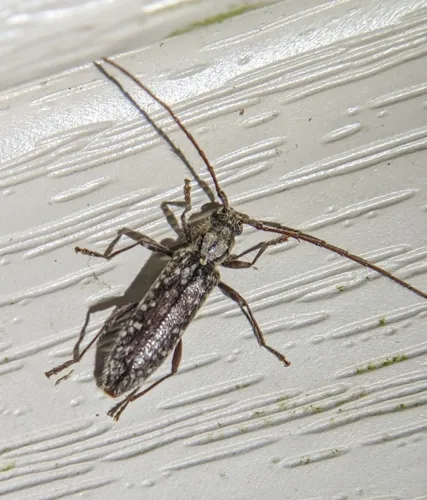
Anelaphus pumilus
Anelaphus pumilus
Anelaphus pumilus is a species of beetle in the family Cerambycidae. It was described by Newman in 1840.
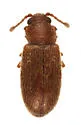
Angular Fungus Beetle
Cryptophagus acutangulus
Identification: pronotum distinctive among its NA congeners in being widest at the level of the anterior angles
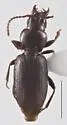
Anillinus alleni
Anillinus alleni
Identification: The males have incredibly large spines on the metafemora. The females also have modified metafemora, the only described species in which females have modified legs .
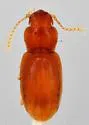
Anillinus barri
Anillinus barri
Identification: The male genitalia are very distinctive.
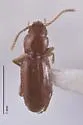
Anillinus davidsoni
Anillinus davidsoni
Named in honor of Robert L. Davidson, carabid expert and longtime collection manager of invertebrate zoology at the Carnegie Museum of Natural History.
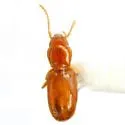
Anillinus depressus
Anillinus depressus
Identification: Adults of Anillinus depressus are distinguished easily from those of other Texan species of the genus by the following combination of external characters: small size, markedly elongated habitus, laterally oblique pronotal basal margin
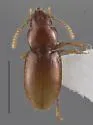
Anillinus docwatsoni
Anillinus docwatsoni
Identification: See redescription in . Named after the famous guitarist Doc Watson, who, like these beetles, was also blind.
Anillinus dohrni
Anillinus dohrni
Identification: Impossible to identify, because it is known from a single female from an unknown locality.
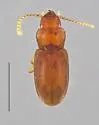
Anillinus kingi
Anillinus kingi
Described from a single specimen collected in 1976 ; in recent years, Tim King has collected hundreds of individuals from deep soil near his home [C. Harden, personal observation]. As in most Anillinus species, these large series reveal variation in
Anillinus sinuaticollis
Anillinus sinuaticollis
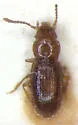
Apparently known from only the female holotype, collected at a peach orchard somewhere in Roane Co., TN.
Anillinus smokiensis
Anillinus smokiensis
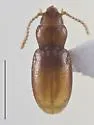
This species has been considered a "troglobite", but it is not known from troglobitic habitats. The type series was sifted from leaf litter in a cave entrance, a microhabitat that usually contains a fauna similar to the surface.
Anillinus steevesi
Anillinus steevesi
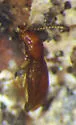
Identification: Adults are variable in external characters; male genitalia are distinctive Barr's holotype was never deposited at CMNH in his lifetime, and has not been found in his materials acquired after his death; he might not have ever designate
Anillinus unicoi
Anillinus unicoi
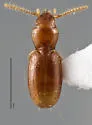
Described from a single male collected by sifting litter , the species is more easily collected by searching under rocks at the type locality or by using pipe traps (C. Harden pers. obs.) Part of the " moseleyae -group" of species, which are all soil
Anillinus virginiae
Anillinus virginiae
In the opinion of C. Harden, based on five years of collecting and studying Anillinus in Virginia, this name refers to a widespread litter-dwelling species in the langdoni-group and not the species that Jeannel illustrated the median lobe of; if this
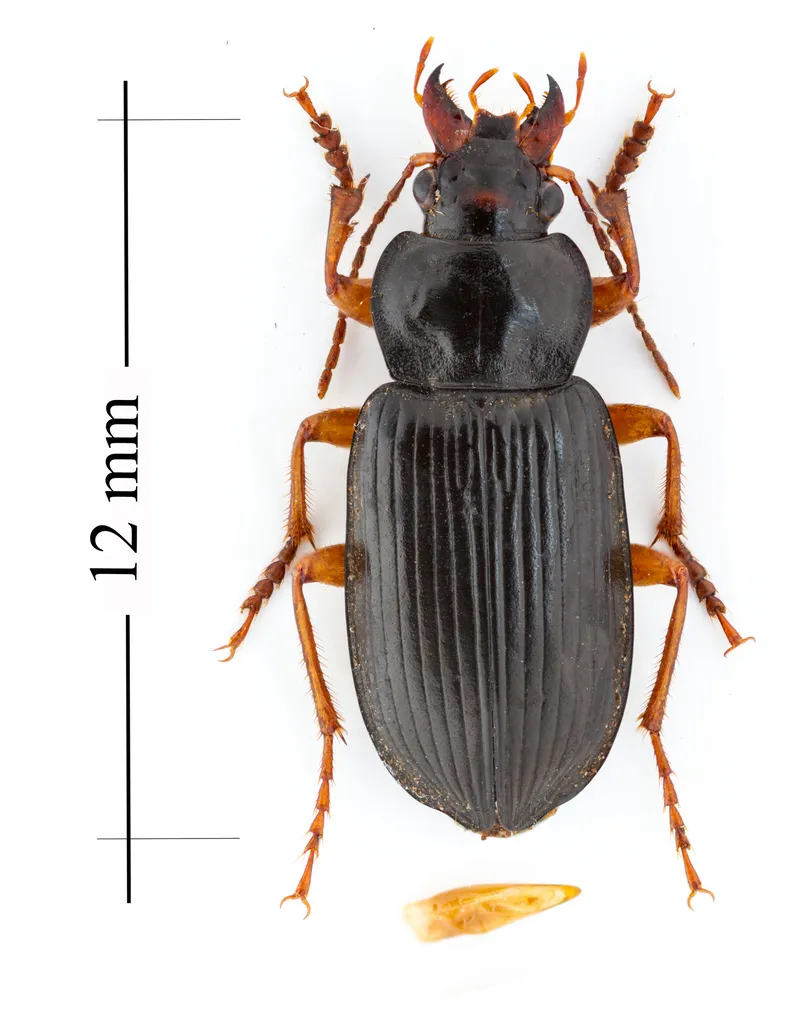
Anisodactylus (Spongopus) verticalis
Anisodactylus verticalis
the only member of the precinctive Nearctic subgenus Spongopus (that may not be closely related to Anisodactylus
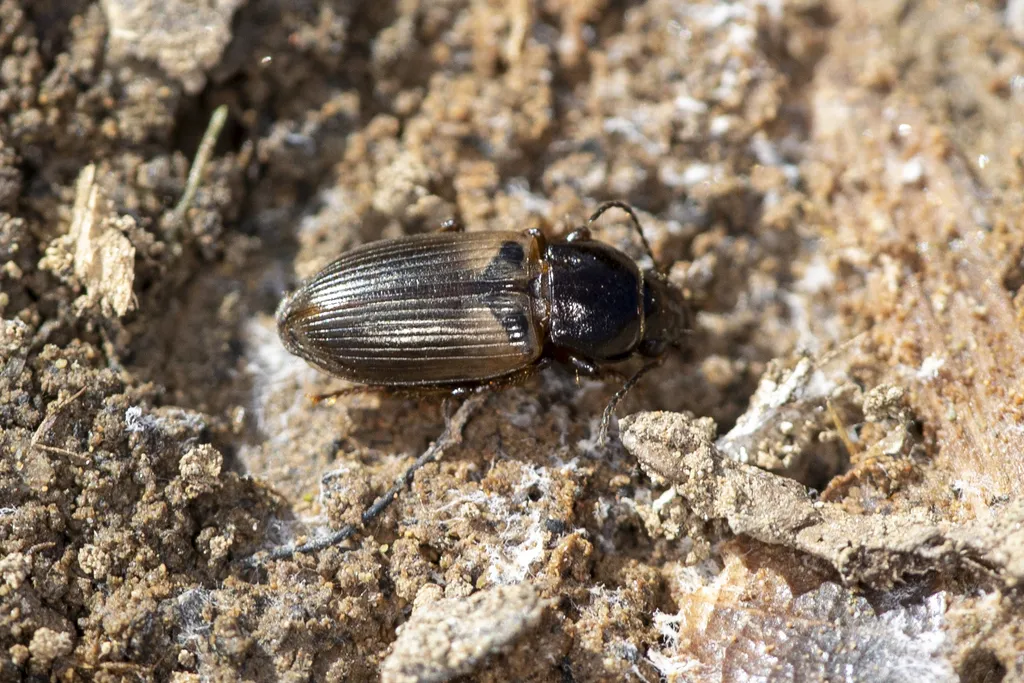
Anisodactylus alternans
Anisodactylus alternans
Anisodactylus alternans is a species of ground beetle in the family Carabidae. It is found in North America.
Anisodactylus anthracinus
Anisodactylus anthracinus
Identification: Closest to allopatric A. merula in published keys, but much more convex and is restricted to the southwest
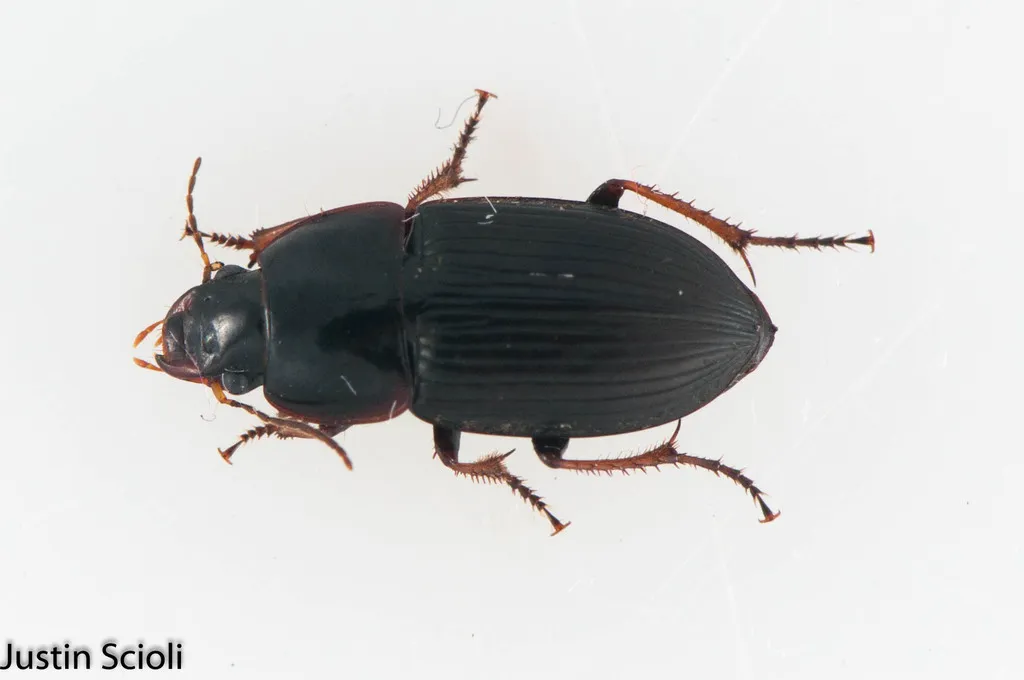
Anisodactylus dulcicollis
Anisodactylus dulcicollis
Anisodactylus dulcicollis is a species of ground beetle in the family Carabidae. It is found in North America.
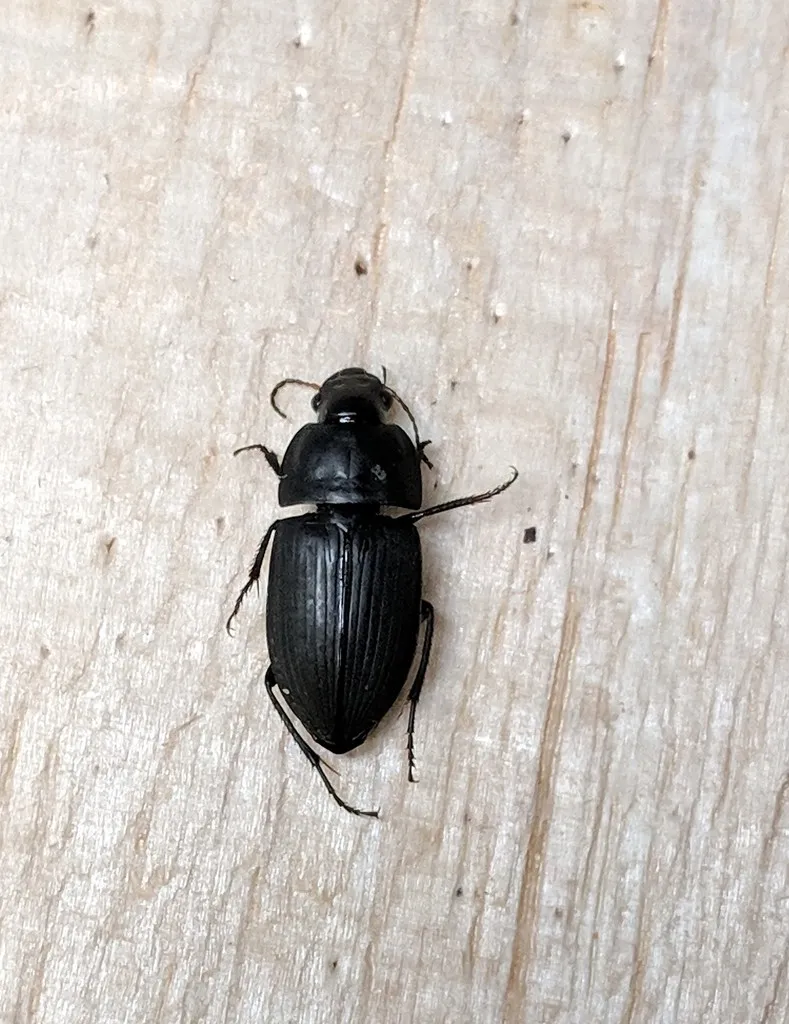
Anisodactylus haplomus
Anisodactylus haplomus
Identification: Protibial spur trifid, clypeus with one pair of setae, frontal fovea not prolonged, very fine punctules distributed rather densely and uniformly on frons. The published distinction regarding thickness of the prontal lateral bead does
Anisodactylus lodingi
Anisodactylus lodingi
Identification: "suborbiculate pronotum with very deep and prominent lateral depressions and broadly rounded posterior angles" "The species might be extinct; the only specimen I am aware of that was collected after 1927 is a male taken at Lcedale, Ge
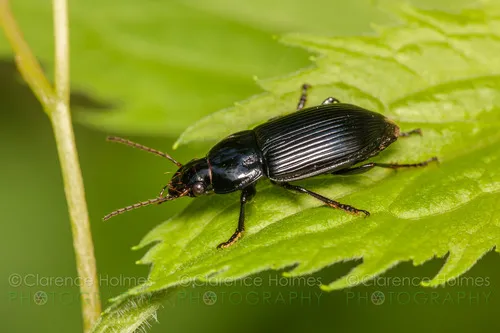
Anisodactylus melanopus
Anisodactylus melanopus
Anisodactylus melanopus is a species of ground beetle in the family Carabidae. It is found in North America.
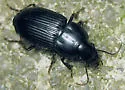
Anisodactylus nigerrimus
Anisodactylus nigerrimus
Identification: Clues include a pair of setae (bristles) on each side of clypeus plus pronotum with lateral margins minimally deplanate and hind angles rounded.
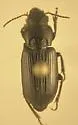
Anisodactylus rudis
Anisodactylus rudis
Identification: Photos of Holotype (MCZ #5959) Here . Pronotum cordate and coarsely punctate anteriorly on disc. Elytra with intervals 2, 4, and 6 coarsely setose .
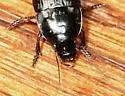
Anisodactylus rusticus
Anisodactylus rusticus
Anisodactylus rusticus (Anisodactylus rusticus) is a species in the family Carabidae, commonly known as ground beetles, belonging to the order Coleoptera (Beetles). It is classified within the subfamily Harpalinae, tribe Harpalini, suborder Adephaga.
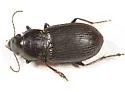
Anisodactylus similis
Anisodactylus similis
Identification: From Noonan: "Adults resemble A. binotatus in having pubescent outer elytral intervals. However they differ by having: short fine setae on the sides of the frons of the head; the pronotal disk densely punctate and wrinkled posteriorly
Anisostena ariadne
Anisostena ariadne
Identification: Head blue-black, strongly alutaceous, frons with deep, median, vertical depression, and thin carina between antennae. Eyes with deep vertical sulcus on mesal border. Antennae black, apical 5 segments with brown pubescense. Pronotum or
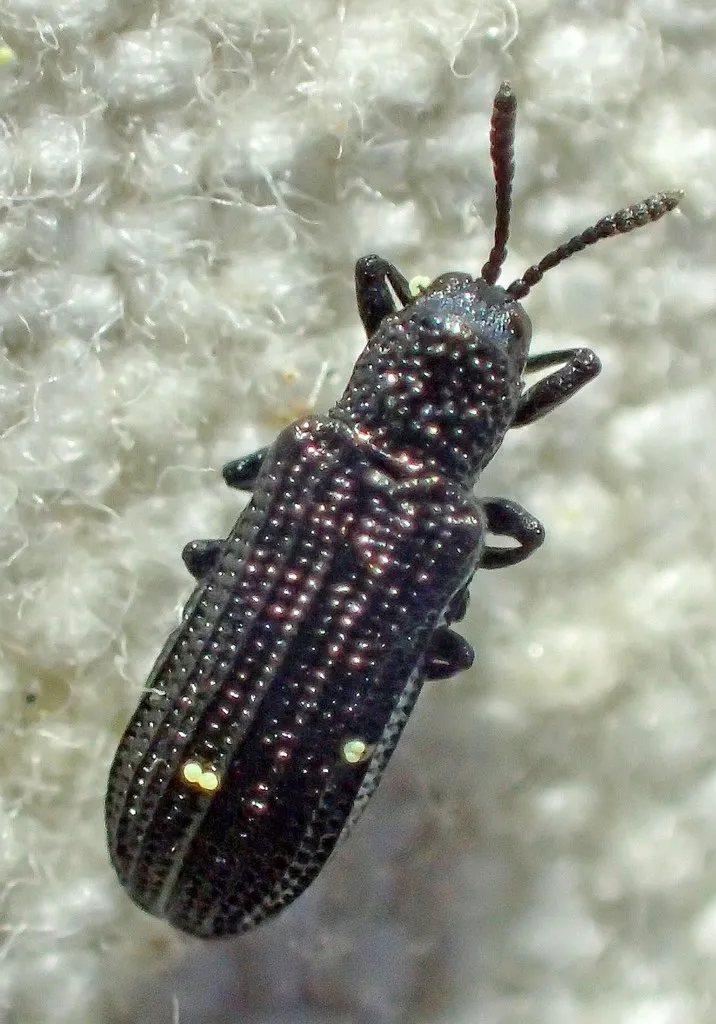
Anisostena californica
Anisostena californica
Anisostena californica is a species of leaf beetle in the family Chrysomelidae. It is found in North America.
Anisostena lecontii
Anisostena lecontii
very rarely collected (E.G.Riley, 2013 pers. comm. to MAQ)
Anisostena nigrita
Anisostena nigrita
Most widely dist. member of this genus , but apparently uncommon(???) per GBIF data
Anisostena nunenmacheri
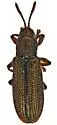
Anisostena nunenmacheri
Identification: in N.America, unicolorous dorsum , mesofemur not serrate on inner margin, and pronotum without basal impression key to this this species.
Anisotoma humeralis
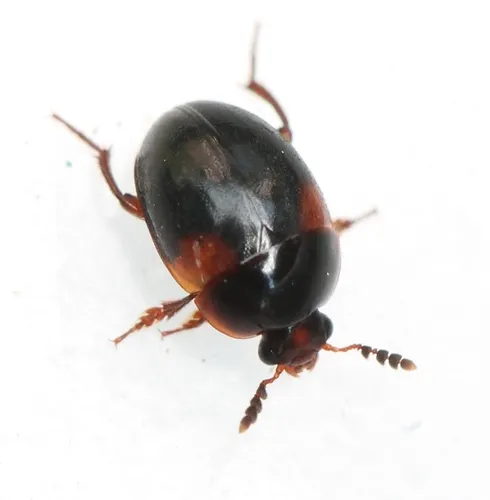
Anisotoma humeralis
There are four species of the round fungus beetle Anisotoma, but this is the only one with the orange markings, the others being entirely dark and difficult to tell apart. Woodland especially areas with fallen trees and dead wood. They are known to f
Anomala binotata
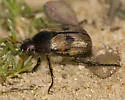
Anomalacra binotata
Identification: suture and outer margin brown to black, sometimes very broadly so; almost always with a strong central dark spot on each elytron MAQ, pers. obs.: the thick black sutural line apppears to be more consistant character than the elytral s
Anomala castaniceps
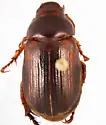
Anomalacra castaniceps
the only representative of the subg. Bucaphallanus Ramírez-Ponce & Morón 2012 in our fauna
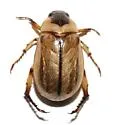
Anomala delicata
Anomalacra delicata
Identification: Pronotum with 5-sided dark brown macula, often slightly incised laterally, rarely enlarged and complete to base Det. A. Evans, 2016 Type Locality: Cochise Co., Arizona
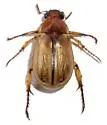
Anomala digressa
Anomalacra digressa
Identification: Elytra with only sutural margin narrowly dark brown; slender to moderately robust, subparallel to somewhat cuneate
Anomala ellipsis
Anomalacra ellipsis
Identification: elytra immaculate, with fine binotate spots or rarely with a little fine streaking Can be relatively common in spring, feeding on flower buds of Quercus turbinella and other oaks. --W.B. Warner
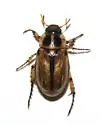
Anomala flavilla
Anomalacra flavilla
The US thing currently goes under this name, but Bates' type is from fairly far south in Mexico, so this may eventually end up under a different name currently in synonymy. ―W.B. Warner, 30.ix.2010
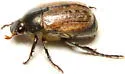
Anomala foraminosa
Anomalacra foraminosa
Identification: Lateral margins of elytra with only short dark brown or blackish band from humeral angle, extending only briefly beyond umbone Det. E. G. Riley, 2010
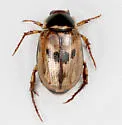
Anomala undulata
Anomalacra undulata
Identification: mostly March-May (emphasis added) Elytral maculation similar to innuba (e. added) [recommend ignoring the elytal patterns of both spp., except for the apical umbone - MAQ] Pronotal macula commonly complete to basal margin, but if not,
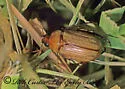
Anomalacra cavifrons
Anomalacra cavifrons
Identification: Det. E. G. Riley, 2009 Type Locality: Two males and a female collected on the Smoky Hill river, KS.
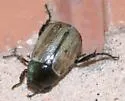
Anomalacra flavipennis
Anomalacra flavipennis
Identification: extremely variable in color and pattern last key couplet: Head and pronotum red-brown, dark brown, greenish- or brownish-black or black; clypeus more than twice as wide as long; labrum appressed to anterior face of clypeus, not porrec
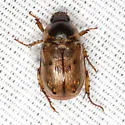
Anomalacra innuba
Anomalacra innuba
Identification: Elytra immaculate to spotted, banded or black (emphasis added) [recommend largely ignoring the elytral spot pattern, except for the apical umbone - MAQ] pronotal macula triangulate with waist-like constriction near anterior margin (e.
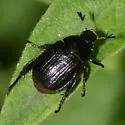
Anomalacra lucicola
Anomalacra lucicola
Identification: Dull yellow to completely black, pronotum with or without black spot or pair of spots. Labrum moderately emarginate, extended only slightly beyond nearly vertical anterior face of clypeus; elytra commonly with intervals 7 and 9 only m
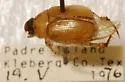
Anomalacra schaefferi
Anomalacra schaefferi
Identification: By the unusually short and broadly dilated hind tibiae this species is easily distinguished from all our species. known from two spmns, the female holotype from 'Texas,' and a specimen collected on Padre Island, Kleberg Co., Tex, V-19
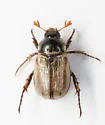
Anomalacra semilivida
Anomalacra semilivida
Identification: Elytra straw to pale brown, rarely 3rd and 5th intervals streaked darker brown; pronotal macula variable in size, but if complete to base, enclosing pale area mediobasally
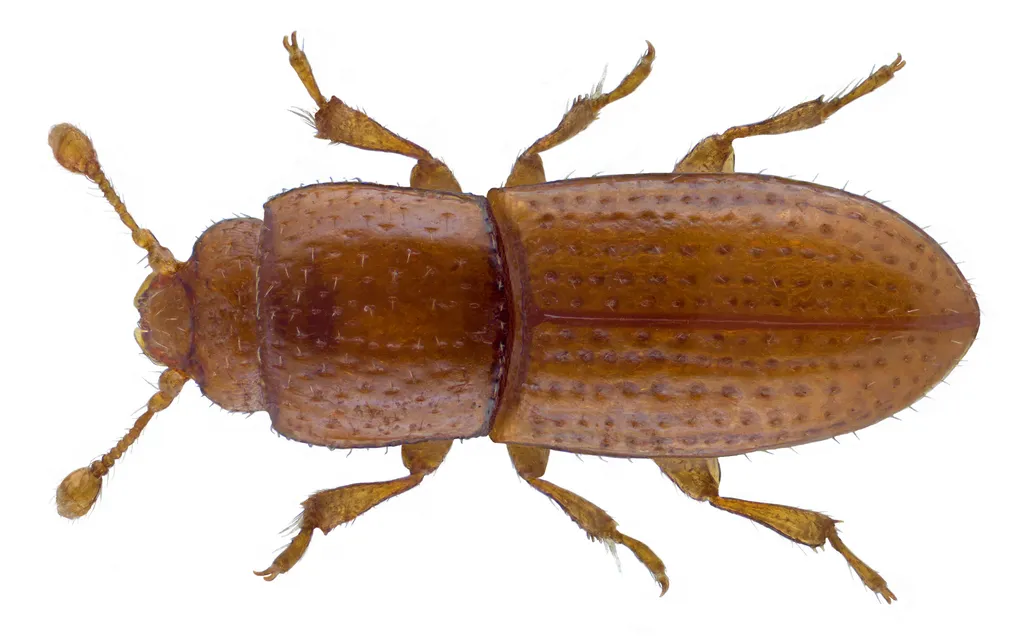
Anommatus duodecimstriatus
Anommatus duodecimstriatus
First reported from NA in early 1970s (Rochester, NY); found in the soil from imported plants ( Peck 1972 )
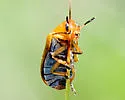
Anomoea flavokansiensis
Anomoea flavokansiensis
Identification: The dorsum being completely flavous with all femora also flavous/fulvous is distinct for US species. --John Watts, 8.vii.2008
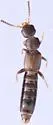
Anomognathus cuspidatus
Anomognathus cuspidatus
Identification: penultimate tergite with long median and a pair of shorter lateral spines
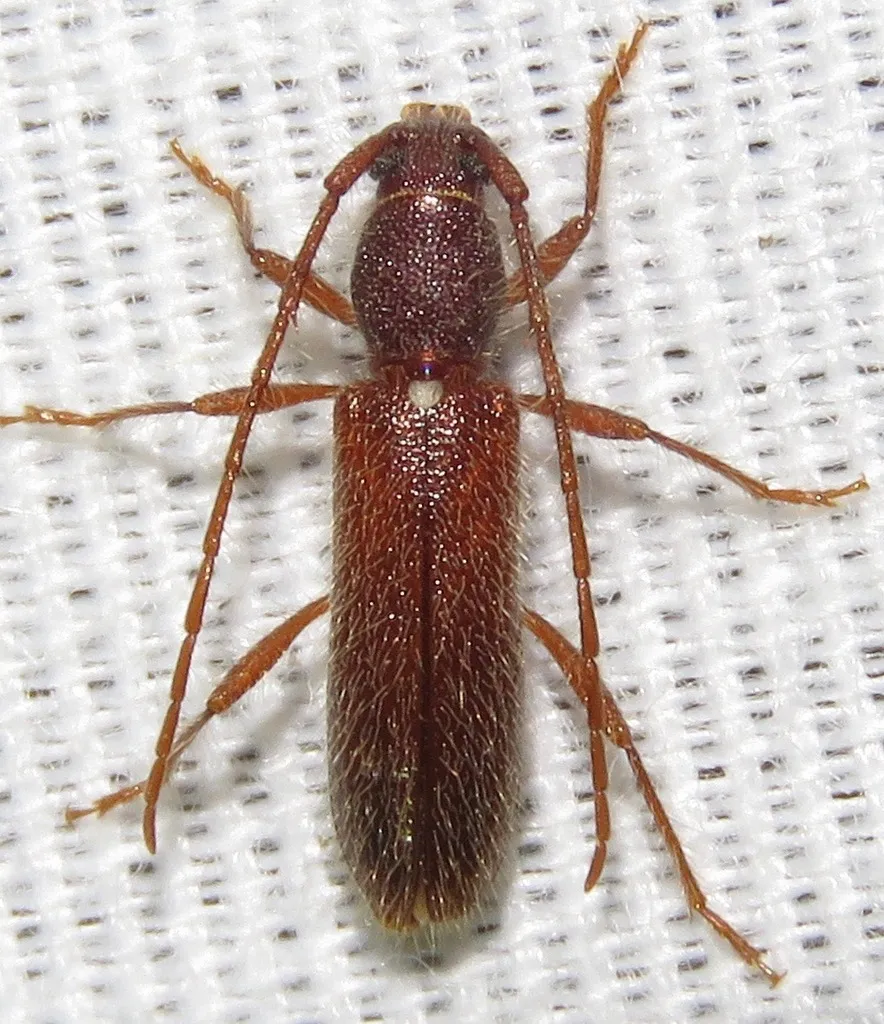
Anopliomorpha rinconia
Anopliomorpha rinconia
Identification: "The alveolate punctures on the pronotum, bright white scutellum pubescence, and relatively long third antennomere with pronounced spine are all characters of [ Anopliomorpha ] and not present in Gymnopsyra ." - Steven Lingafelter, 20
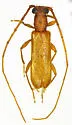
Anoplocurius altus
Anoplocurius altus
Holotypc and allotypc collected in Davis Mountains. TEXAS, July 2, 1940. Paratypes from the same locality ranging in dates from June 6 to July 6, D. J. and J. N. Knull collectors.
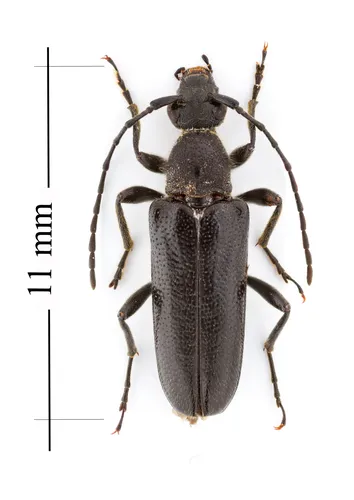
Anoplodera pubera
Anoplodera pubera
Anoplodera pubera (Anoplodera pubera) is a species in the family Cerambycidae, commonly known as longhorn beetles, belonging to the order Coleoptera (Beetles). It is classified within the subfamily Lepturinae, tribe Lepturini, suborder Polyphaga, sup
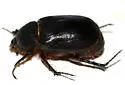
Anoplognatho dunnianus
Anoplognatho dunnianus
Identification: Antenna with 9 segments but can appear to have 10 because sometimes the 5th segment is subdivided. It can be difficult to spot so be careful and check other generic characters. Mandibles are large and semicircularly rounded.