
Anillinus smokiensis
This record describes Anillinus smokiensis (species). Recorded family: Carabidae. Recorded order: Coleoptera.
Identification and Appearance
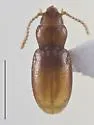
This species has been considered a troglobite, but it is not known from troglobitic habitats. The type series was sifted from leaf litter in a cave entrance, a microhabitat that usually contains a fauna similar to the surface.
Classification
- Kingdom
- Animalia
- Phylum
- Arthropoda
- Class
- Insecta
- Order
- Coleoptera (Beetles)
- Suborder
- Adephaga
- Family
- Carabidae (Ground Beetles)
- Subfamily
- Trechinae
- Tribe
- Anillini
- Genus
- Anillinus
Imported taxonomy record. Source availability varies; see the source references and editorial policy below.
Habitat and Range
Habitat
Deep soils (found under rocks in woods at two localities in Cades Cove by C. Harden in 2020). The type series was collected from leaf litter.
Geographic Range
TN Despite the name, this species is not known to occur in the Great Smoky Mountains proper. It is known from a few localities in the Cades Cove area, a relatively low elevation karst area adjacent to the Great Smoky Mountains.
Additional species information
Species notes from the sources
Etymology: Anillinus smokiensis Sokolov, 2011
About Primitive Winged Insects: the wider group
Order-level background for Coleoptera, the group containing Anillinus smokiensis. Species-specific details appear above.
Group overview
Coleoptera is the largest order of insects with over 400,000 described species, representing ~25% of all known animal species and ~40% of all insects. In the U.S. alone, nearly 30,000 beetle species have been identified.
Ecological role of the group
Beetles are prominent decomposers, especially in forests, breaking down dead wood and recycling nutrients. As predators, they reduce populations of pest insects. Many species are also important pollinators of flowering plants.
Economic and practical significance of the group
Beetles have major economic significance: leaf beetles (Chrysomelidae) and weevils (Curculionoidea) are among the most destructive agricultural pests globally, costing billions annually, while predatory species like ladybugs provide natural pest control.
Recorded sources for this group: Britannica, Smithsonian, NCSU Entomology. Imported estimates may describe particular regions or reporting periods.