
Pseudozonitis pallida
This record describes Pseudozonitis pallida (species). Recorded family: Meloidae. Recorded order: Coleoptera.
Identification and Appearance
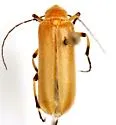
The generally pallid coloration, large size and extension of the moderately curved mandibles beyond the labrum (Fig. 23) characterize this species. ( 5 ) The elytra of P. pallida are weakly vittate in some individuals. This vittation is similar to that in other species except the three light-colored vittae are wider and contrast minimally with the modestly darker adjacent surfaces (Fig. 6). Enns (1956) described this species as usually having pallidly vittate elytra. A more extensive sampling of material suggests that this trait varies geographically. Vittate individuals are only known to occur east of 102° longitude. None of the numerous specimens examined from W Texas, New Mexico and Arizona are vittate. The single specimen from Chihuahua also lacks vittae. However, approximately 50% of the specimens examined from eastern Texas, Oklahoma and Arkansas are vittate. Only seven individuals from Florida and Georgia were available; all are vittate. Vittate and non-vittate individuals are known from the same series. For example, of the two individuals from Hope, Arkansas, one is vittate, the other is not. ( 5 ) East of 102° longitude only P. pallida has both an entirely pallid elytra and a pronotum always without a red macula. Specimens with vittate elytra can be separated from all congeners except P. florida by the absence of a red macula on the pronotum. ( 5 ) Figs. 2. P. vigilans (pallid form); 3. P. vigilans (vittate form) ( 5 ) Type Locality: Holotype male, allotype, and three paratypes, College Station, Texas, June 5-17, 1934, H. J. Reinhard. ( 4 )
Classification
- Kingdom
- Animalia
- Phylum
- Arthropoda
- Class
- Insecta
- Order
- Coleoptera (Beetles)
- Suborder
- Polyphaga
- Superfamily
- Tenebrionoidea
- Family
- Meloidae (Blister Beetles)
- Subfamily
- Nemognathinae
- Tribe
- Nemognathini
- Genus
- Pseudozonitis
Imported taxonomy record. Source availability varies; see the source references and editorial policy below.
Habitat and Range
Geographic Range
AZ-LA-AR-OK, s.GA-c.FL / nc. Mex. (CH) -
Seasonal Activity
late Apr to early Oct (113 records) ( 5 )
Diet and Behavior
Life History
Adult associations - 30% of the collections indicate collection at light. There are no plant records. ( 5 )
Additional species information
Species notes from the sources
Etymology: Pseudozonitis pallida Dillon, 1952 ( 4 ) ( 6 ) ( 7 ) ( 5 )
About Primitive Winged Insects: the wider group
Order-level background for Coleoptera, the group containing Pseudozonitis pallida. Species-specific details appear above.
Group overview
Coleoptera is the largest order of insects with over 400,000 described species, representing ~25% of all known animal species and ~40% of all insects. In the U.S. alone, nearly 30,000 beetle species have been identified.
Ecological role of the group
Beetles are prominent decomposers, especially in forests, breaking down dead wood and recycling nutrients. As predators, they reduce populations of pest insects. Many species are also important pollinators of flowering plants.
Economic and practical significance of the group
Beetles have major economic significance: leaf beetles (Chrysomelidae) and weevils (Curculionoidea) are among the most destructive agricultural pests globally, costing billions annually, while predatory species like ladybugs provide natural pest control.
Recorded sources for this group: Britannica, Smithsonian, NCSU Entomology. Imported estimates may describe particular regions or reporting periods.
Photos of Pseudozonitis pallida (5)
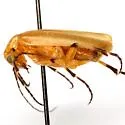
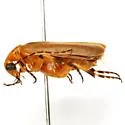
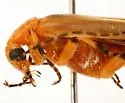
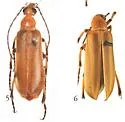
Photo credits: Contributed by Mike Quinn
Frequently Asked Questions About Pseudozonitis pallida
What is Pseudozonitis pallida?
Pseudozonitis pallida is a species in the family Meloidae, within the order Coleoptera.
How big is Pseudozonitis pallida?
9-18 mm ( 5 )
How do you identify Pseudozonitis pallida?
The generally pallid coloration, large size and extension of the moderately curved mandibles beyond the labrum (Fig. 23) characterize this species. ( 5 ) The elytra of P. pallida are weakly vittate in some individuals. This vittation is similar to that in other species except the three light-colored vittae are wider and contrast minimally with the modestly darker adjacent surfaces (Fig. 6). Enns (1956) described this species as usually having pallidly vittate elytra. A more extensive sampling of material suggests that this trait varies geographically. Vittate individuals are only known to occur east of 102° longitude. None of the numerous specimens examined from W Texas, New Mexico and Arizona are vittate. The single specimen from Chihuahua also lacks vittae. However, approximately 50% of the specimens examined from eastern Texas, Oklahoma and Arkansas are vittate. Only seven individuals from Florida and Georgia were available; all are vittate. Vittate and non-vittate individuals are known from the same series. For example, of the two individuals from Hope, Arkansas, one is vittate, the other is not. ( 5 ) East of 102° longitude only P. pallida has both an entirely pallid elytra and a pronotum always without a red macula. Specimens with vittate elytra can be separated from all congeners except P. florida by the absence of a red macula on the pronotum. ( 5 ) Figs. 2. P. vigilans (pallid form); 3. P. vigilans (vittate form) ( 5 )
Where is Pseudozonitis pallida found?
Range: AZ-LA-AR-OK, s.GA-c.FL / nc. Mex. (CH) -
When is Pseudozonitis pallida active?
Pseudozonitis pallida: seasonal activity - late Apr to early Oct (113 records) ( 5 ).
What is the life cycle of a Pseudozonitis pallida?
Adult associations - 30% of the collections indicate collection at light. There are no plant records. ( 5 )