
Primitive Winged Insects
Order Coleoptera
The Primitive Winged Insects (Order Coleoptera) includes 15,720 species across 160 families and 3,716 genera in our directory.
About Primitive Winged Insects
Coleoptera is the largest order of insects with over 400,000 described species, representing ~25% of all known animal species and ~40% of all insects. In the U.S. alone, nearly 30,000 beetle species have been identified.
Economic Impact
Beetles have major economic significance: leaf beetles (Chrysomelidae) and weevils (Curculionoidea) are among the most destructive agricultural pests globally, costing billions annually, while predatory species like ladybugs provide natural pest control.
Ecological Role
Beetles are prominent decomposers, especially in forests, breaking down dead wood and recycling nutrients. As predators, they reduce populations of pest insects. Many species are also important pollinators of flowering plants.
Families in Coleoptera (160)
Species in Coleoptera (15,720)
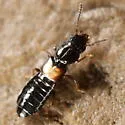
Platystethus degener
Platystethus degener
earliest NA record: 1971 ; a member of the subg. Craetopycrus Tottenham
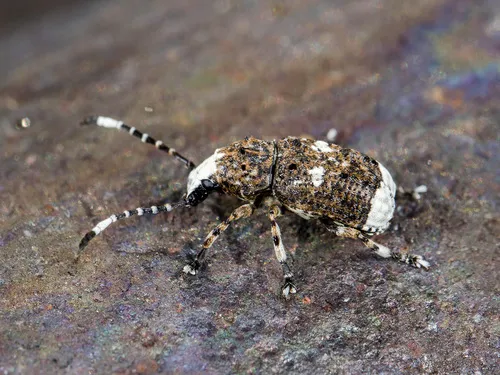
Platystomos albinus
Platystomos albinus
Length 7 to 10 mm. There is strong sexual dimorphism with the male having antennae as long as the body, but these are shorter in the female. There may also be variation in colour from grey to fawn and brown. The white markings vary in size and may be
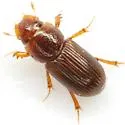
Platytomus longulus
Platytomus longulus
Identification: Det. E. G. Riley 2009 Type Locality: Camp Shelby, Forrest Co., Mississippi
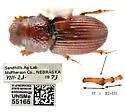
Platytomus notialis
Platytomus notialis
Metatarsomere 1 longer than metatarsomeres 2+3 combined
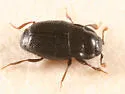
Plegaderus sayi
Plegaderus sayi
Identification: Elytra with sparse round punctures, some discal ones tending to coalesce longitudinally
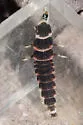
Pleotomus nigripennis
Pleotomus nigripennis
Identification: females should be all pink with short elytra and bipectinate antennae, but they remain undiscovered (Joe Cicero, comment, 2013)
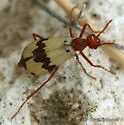
Pleuropasta mirabilis
Pleuropasta mirabilis
Pleuropasta mirabilis (Pleuropasta mirabilis) is a species in the family Meloidae, commonly known as blister beetles, belonging to the order Coleoptera (Beetles). It is classified within the subfamily Meloinae, tribe Eupomphini, suborder Polyphaga, s
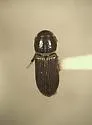
Pleurophorus caesus
Pleurophorus caesus
earliest NA record: Middle Atlantic states before 1871
Plinthodes taeniatus
Plinthodes taeniatus
has caused extensive damage to foliage of strawberries on Vancouver Is.
Plionoma rubens
Plionoma rubens
Identification: The length of the antennae of the males varies considerably, but the lateral punctation of the pronotum and elytra is fine and dense in all of the examples seen by Linsley (1942)
Plionoma suturalis
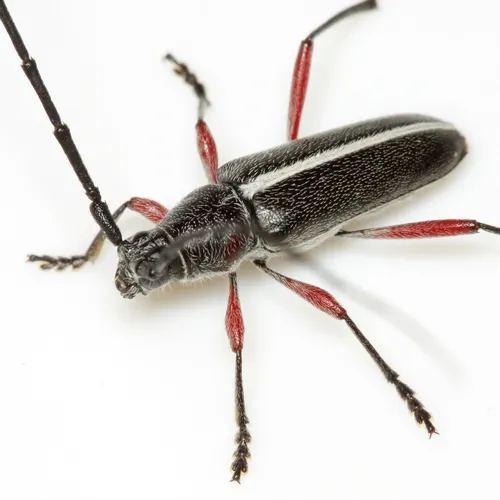
Plionoma suturalis
Identification: pronotum red (s.CA to w.TX) or black (in the rest of TX): Type Locality: Rio Grande Valley, Texas
Plocetes versicolor
Plocetes versicolor
Identification: The darkest scales on the elytra form a broad v-shaped macula Type Locality: Brownsville, Texas (Esperanza Ranch) (Schaeffer 1904) Texas considers this to be a "Species of Greatest Conservation Need" (SGCN)
Plum beetle
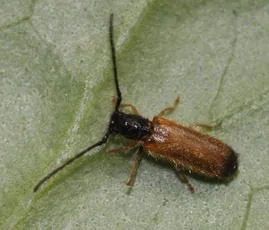
Tetrops praeustus
A small longhorn beetle to 6 mm with yellowish to tan, black tipped bristly elytra and yellowish legs. Feeds on the twigs and branches of various deciduous trees and bushes. It usually it takes the larvae 1 year to develop into an adult beetle but in
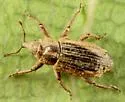
Pnigodes setosus
Pnigodes setosus
Identification: Usually coated with earthen secretion and dirt. The pale declivial marks usually concealed. (C.W. O'Brien, 29.i.2013) - pristine individual Det. C. W. O'Brien, 2013 rarely collected
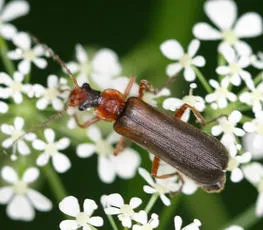
Podabrus alpinus
Podabrus alpinus
Podabrus alpinus has a distinctive head shape with bulging eyes and a relatively long neck. Likes mixed, well wooded areas, and is attracted to Pine. Adults are active during June July and August Fairly frequent and widespread in Britain, except in t
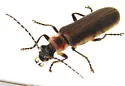
Podabrus appendiculatus
Podabrus appendiculatus
Identification: black distal femora, bicolored antennomeres
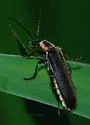
Podabrus brevicollis
Podabrus brevicollis
Podabrus brevicollis (Podabrus brevicollis) is a species in the family Cantharidae, commonly known as soldier beetles, belonging to the order Coleoptera (Beetles). It is classified within the subfamily Cantharinae, tribe Podabrini, suborder Polyphaga
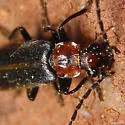
Podabrus brimleyi
Podabrus brimleyi
Author of this species, John Wagener Green (1889-1968), is a bit obscure. He was associated with the California Academy of Sciences and worked on Cantharidae and Lampyridae. See obituary .
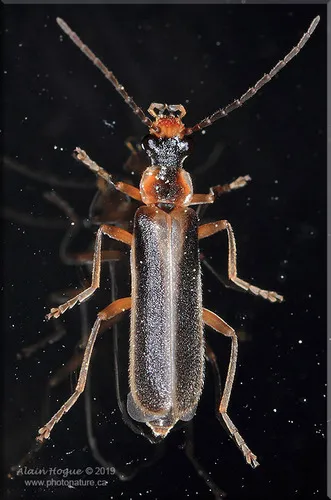
Podabrus modestus
Podabrus modestus
Podabrus modestus is a species of soldier beetle in the family Cantharidae. It is found in North America.
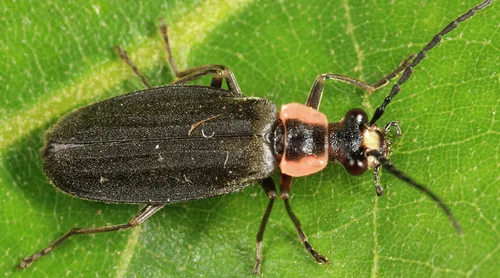
Podabrus pygmaeus
Podabrus pygmaeus
Podabrus pygmaeus is a species of soldier beetle in the family Cantharidae. It is found in North America.
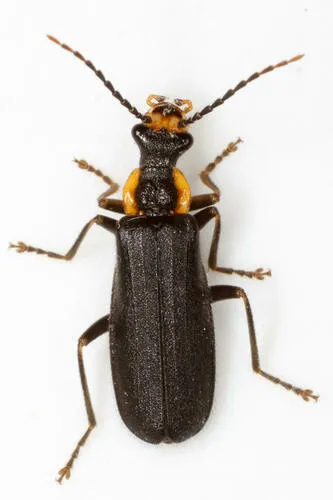
Podabrus rugosulus
Podabrus rugosulus
Identification: Cantharidae of e. Canada and ne. US
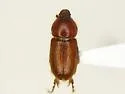
Podolasia ferruginea
Podolasia ferruginea
Identification: clypeus broadly and shallowly emarginate (emargination short but deep in P. emarginata ) Type Locality: Ringgold Barracks, Starr County, TX
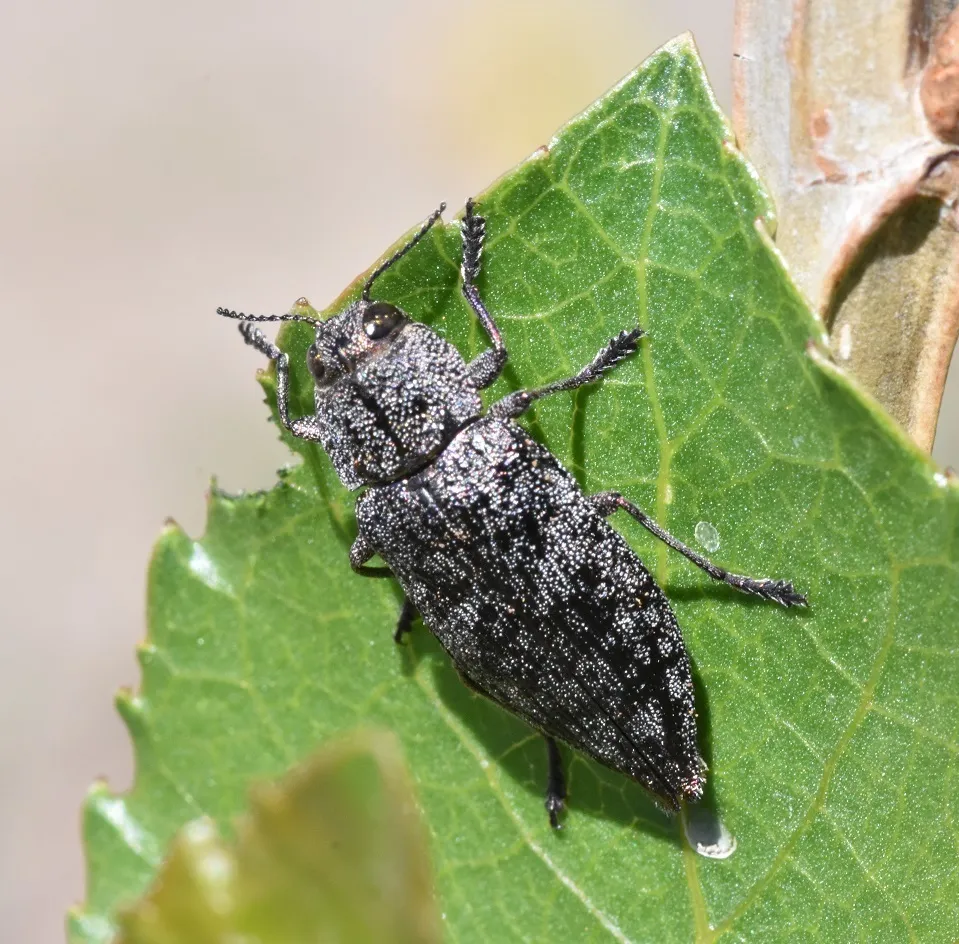
Poecilonota montana
Poecilonota montana
Poecilonota montana is a species of metallic wood-boring beetle in the family Buprestidae. It is found in North America.

Poecilus cupreus
Poecilus cupreus
Poecilis cupreus is distinguished from the similar P. versicolor by having fine punctuations on its head between its eyes. In P. versicolor , the head is completely smooth and unpunctured. P. versicolor also prefers wetter habitats. You must have exa
Poecilus scitulus
Poecilus scitulus
Identification: may be separated from the similar P. diplophryus by its sinuate prothorax sides before its right hind angle (vs. less sinuate sides before an obtuse hind angle), 2 dorsal elytron punctures (vs. 3), and BL 8.5‒11.5 mm (vs. 11‒12 mm)
Pogonocherus penicillatus
Pogonocherus penicillatus
Identification: The angled white basal band and longitudinally-arranged tufts of black setae are distinctive. … Ted C. MacRae, 21 June, 2007
Pogonodaptus mexicanus
Pogonodaptus mexicanus
Pogonodaptus mexicanus (Pogonodaptus mexicanus) is a species in the family Carabidae, commonly known as ground beetles, belonging to the order Coleoptera (Beetles). It is classified within the subfamily Harpalinae, tribe Harpalini, suborder Adephaga.
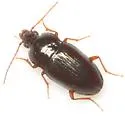
Pogonus texanus
Pogonus texanus
"displayed [...] quickness in escaping rarely surpassed among the Carabidae." (Wickham 1897)
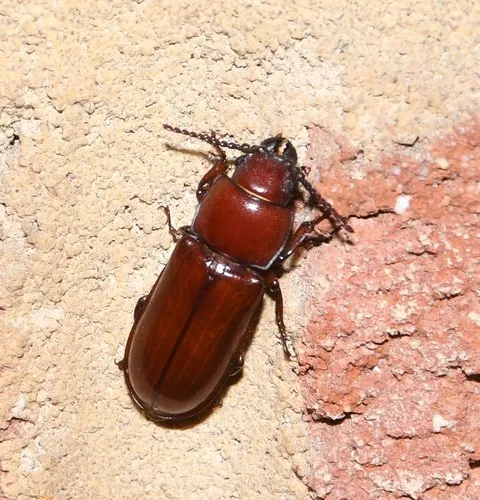
Pole Borer
Neandra brunnea
The N. brunnea is a species of the longhorn beetle family, subfamily Parandrinae. Its common names include pole borer and longhorned beetle. The longhorned beetle grows between 8 and 20 mm (0.79 in) and is yellowish-brown or reddish-brown in colour.
Polemius binotatus
Polemius binotatus
Identification: Head black behind antennae, pronotum orange with two black spots on either side of median, elytra black with grayish pubescence, legs orange with tarsi darker. Sides of pronotum incised in males. Holotype
Polemius laticornis
Polemius laticornis
Identification: antennae stongly serrate in male, less serrate in female; pronotum lateral margins indented before middle, wider after the indentation, widest at base; elytra black usually with dark reddish humerus, divergent, lateral margins widest
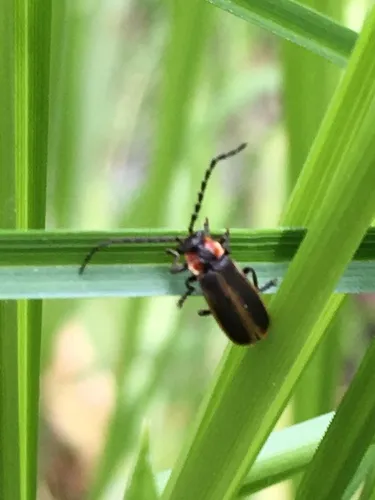
Polemius limbatus
Polemius limbatus
Identification: There is sexual dimorphism betweeen males and females, see .
Polemius repandus
Polemius repandus
Identification: Antennae filiform; pronotum black, with wide glossy reddish blotch betw. black central mark and yellow lateral margins; lateral margine bisinuate, widened posteriorly, widest at base; elytra black Variations: pronotum w black middle s
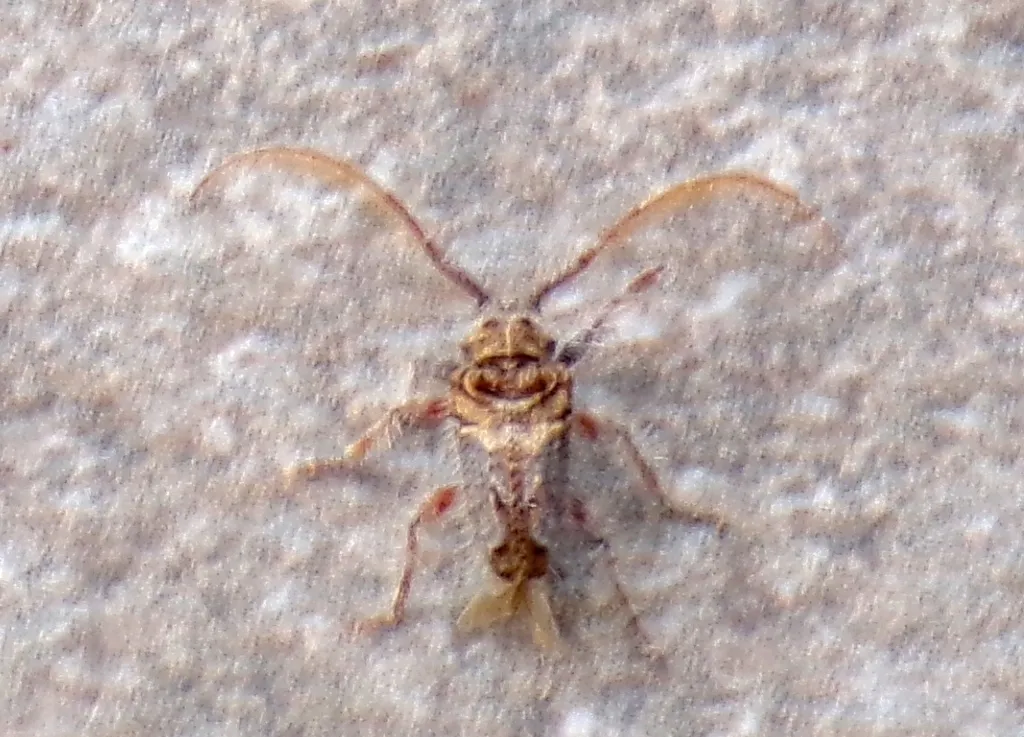
Poliaenus volitans
Poliaenus volitans
Poliaenus volitans is a species of beetle in the family Cerambycidae. It was described by John Lawrence LeConte in 1873. It is known from Guatemala and Mexico.
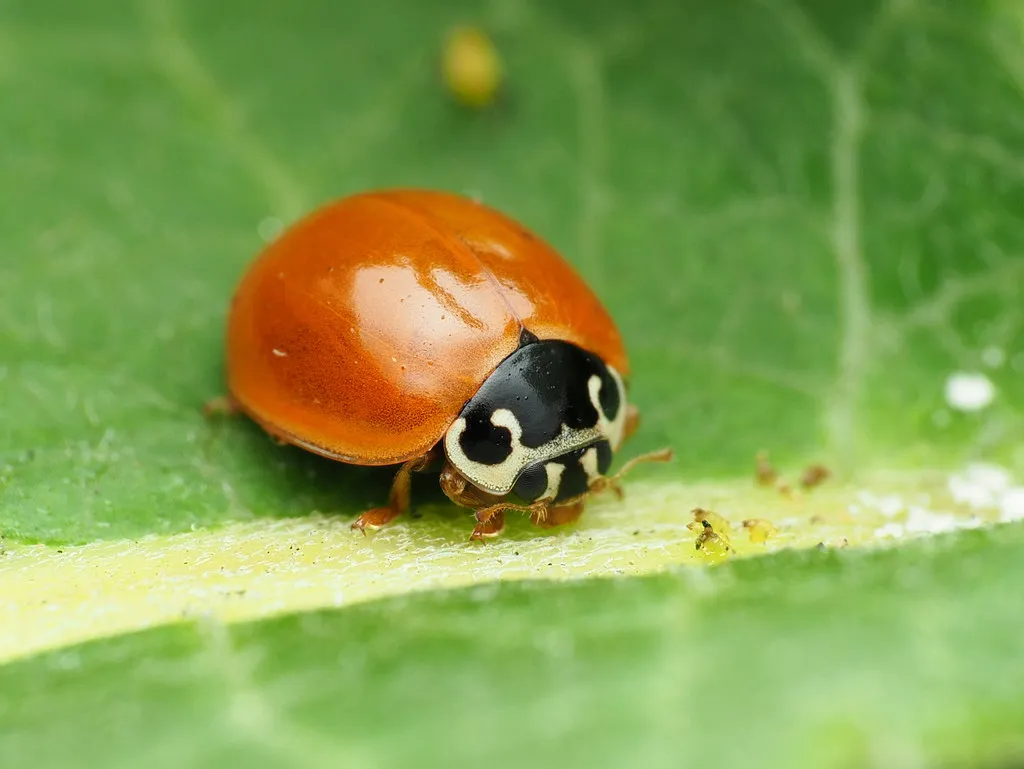
Polished Lady Beetle
Cycloneda munda
Polished Lady Beetle (Cycloneda munda) is a species in the family Coccinellidae, commonly known as lady beetles, belonging to the order Coleoptera (Beetles). It is classified within the subfamily Coccinellinae, suborder Polyphaga, superfamily Coccine
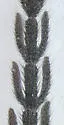
Pollaclasis bifaria
Pollaclasis bifaria
Identification: Antennae with two processes from the base of each joint. rare, local, relictual (?) ( 6 )
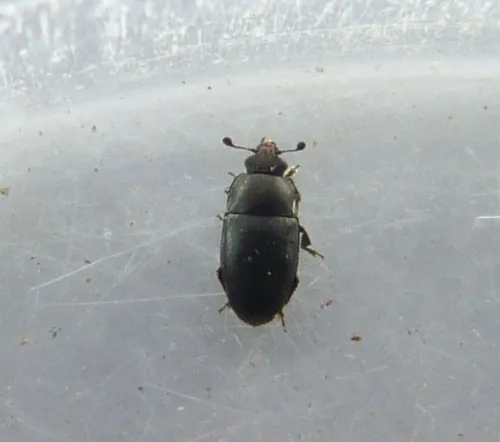
Pollen Beetle
Meligethes aeneus
This is a small black beetle with a metallic brassy or blue-green sheen. There are several very similar pollen beetles but Meligethes aeneus is the most common, particularly early in the year. Unless identified by a recognised expert, photographic ev
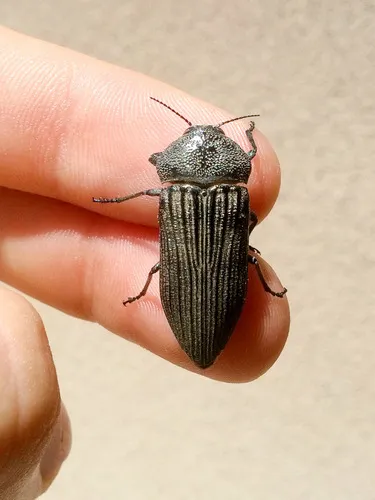
Polycesta (Arizonica) aruensis
Polycesta aruensis
Identification: [= velasco ] - alternate interstrial spaces of the elytra costate, sutural margins of the elytra widened at the apices and exhibiting a very distinctive reddish green luster. Det. S. G. Wellso
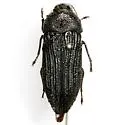
Polycesta arizonica
Polycesta arizonica
Identification: rather feebly shining, black with a reddish green luster, elytra with alternate interstrial spaces costate, apices widened internally Det. C. L. Bellamy, 2001 Type Locality: Palmerlee, Cochise Co., Arizona
Polycesta crypta
Polycesta crypta
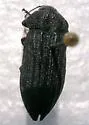
Identification: It can be separated from P. cyanea on the shape of the lateral margins of the pronotum. When Barr looked at the black Polycestas from California he found yet another species hiding among the specimens of P. cyanea , hence he named it
Polycesta cyanea
Polycesta cyanea
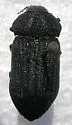
Identification: This species is black without blue highlights. Unfortunately When Chamberlin described the species he had two species in the type series. The Holotype male was P. cyanea and the allotype female was P. tularensis . He used the blue hig
Polycesta elata
Polycesta elata
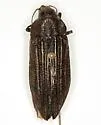
Identification: Prothorax with three large excavations; elytra strongly costate. Front deeply concave. Elytra moderately clathrate; interstices (except the smooth coste) densely punctured Det. C. L. Bellamy, 2001 one of the largest and better known U
Polycesta tularensis
Polycesta tularensis
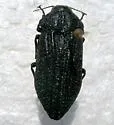
Identification: beautiful with its dark inky blue highlights. - Dennis Haines comment larvae hosts in Quercus douglasii and Fremontodendron californicum in Tulare Co., CA.
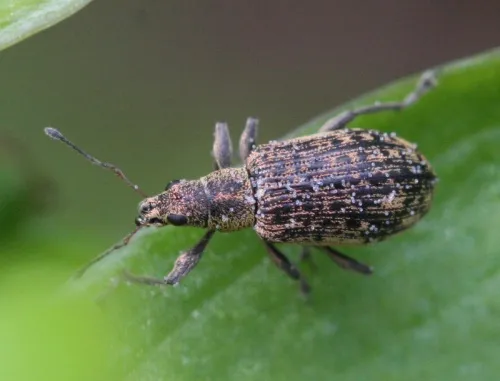
Polydrusus cervinus
Polydrusus cervinus
Polydrusus weevils are very similar to the Phyllobius group, but the main difference between the two is that the antennal insertions are on the side of the rostrum and not visible from above. Polydrusus cervinus is a rather pale golden green weevil w
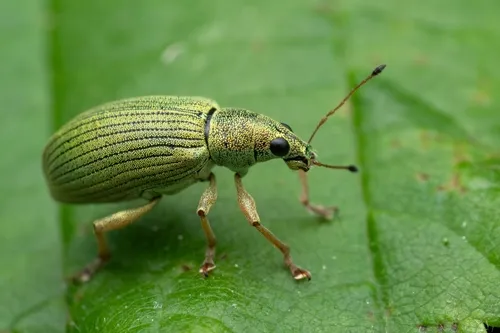
Polydrusus formosus
Polydrusus formosus
Length 5 to 6 mm. A bright metallic green weevil with round scales, a dark club to the pale antennae and a short groove between the eyes. It does not have any setae (bristles). It has conspicuous striae on the elytra. The scales can wear off to revea
Polydrusus ochreus
Polydrusus ochreus
Identification: Notice the space between the points of insertion of the antennae is narrower than in any other North American Polydrusus . … Robert Anderson, 13 August, 2021 Type Locality: Cloudcroft, Otero Co., NM
Polydrusus partitus
Polydrusus partitus
Identification: last key couplet: Upper surface with green and brown scales; elytra obliquely fasciate (Champion, 1911) Type Locality: Mexico, Oaxaca (Hoge).
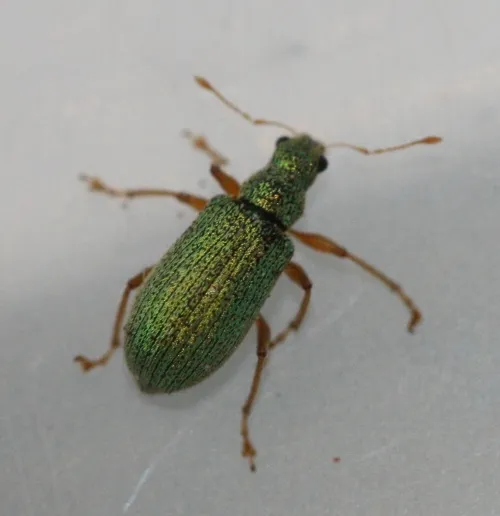
Polydrusus pterygomalis
Polydrusus pterygomalis
Length about 5 mm. Another of the green arboreal weevils. The identifying features are anterior femora without teeth, upperside of elytra with round scales and with pale semi-erect setae (view from side), the head has a bulge behind the eyes and it h
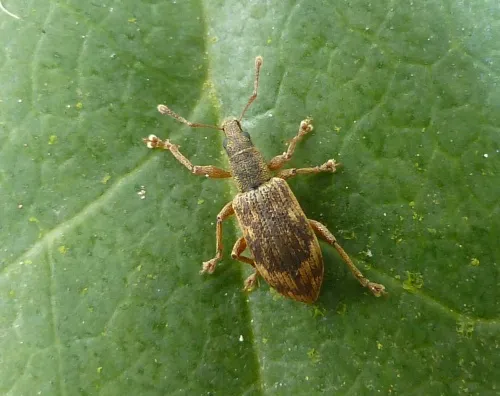
Polydrusus tereticollis
Polydrusus tereticollis
Size 4 to 6 mm. A brown species with a rather dappled appearance. Unless identified by a recognised expert, photographic evidence is required and the specimen should be examined with a microscope. In the comments box, state the key or ID method used.
Polyphagous Shot Hole Borer
Euwallacea fornicatus
Identification: virtually indistinguishable from others in the "fornicatus" clade, however... if the " E. fornicatus " you have are from San Diego or Tijuana River they are E. kuroshio , and the ones from the Los Angeles area are E. fornicatus . Thos
Polyphylla crinita
Polyphylla crinita
Identification: Tricolor (orange, black, white). Elytra integument black; covered in yellow/golden scales. Pronotum with erect hairs in central area. Most likely a geographic morph of P. decemlineata and not a distinct species, per D. Hawks (based on
Polyphylla gracilis
Polyphylla gracilis
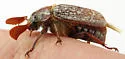
Identification: A smaller species readily recognized by the unidentate protibia of the male and its mottled elytral color pattern, bearing a broad lateral stripe • syntype
Polyphylla hammondi
Polyphylla hammondi
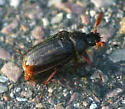
Identification: the central member of the hammondi complex, for which several spp. are recognized based on good morphological characters (like P. brownae ); western members of the complex need detailed study ( 3 )
Polyphylla nigra
Polyphylla nigra
Historically has been confused with other taxa throughout the western United States based on published misidentifications spanning decades. (D. Hawks, pers. comm. to S. Hendrix, 2026)
Polyphylla pottsorum
Polyphylla pottsorum
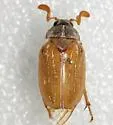
Identification: La Rue (1998) defined Polyphylla pottsorum as a complex of geographical phenotypes differing mainly by male dorsal coloration. Texas considers this to be a "Species of Greatest Conservation Need" (SGCN) ( 4 )
Polypria cruxrufa
Polypria cruxrufa
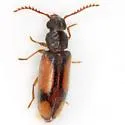
First reported for the U.S. by Wickham (1898) and Townsend (1902) in Brownsville. ( 4 )
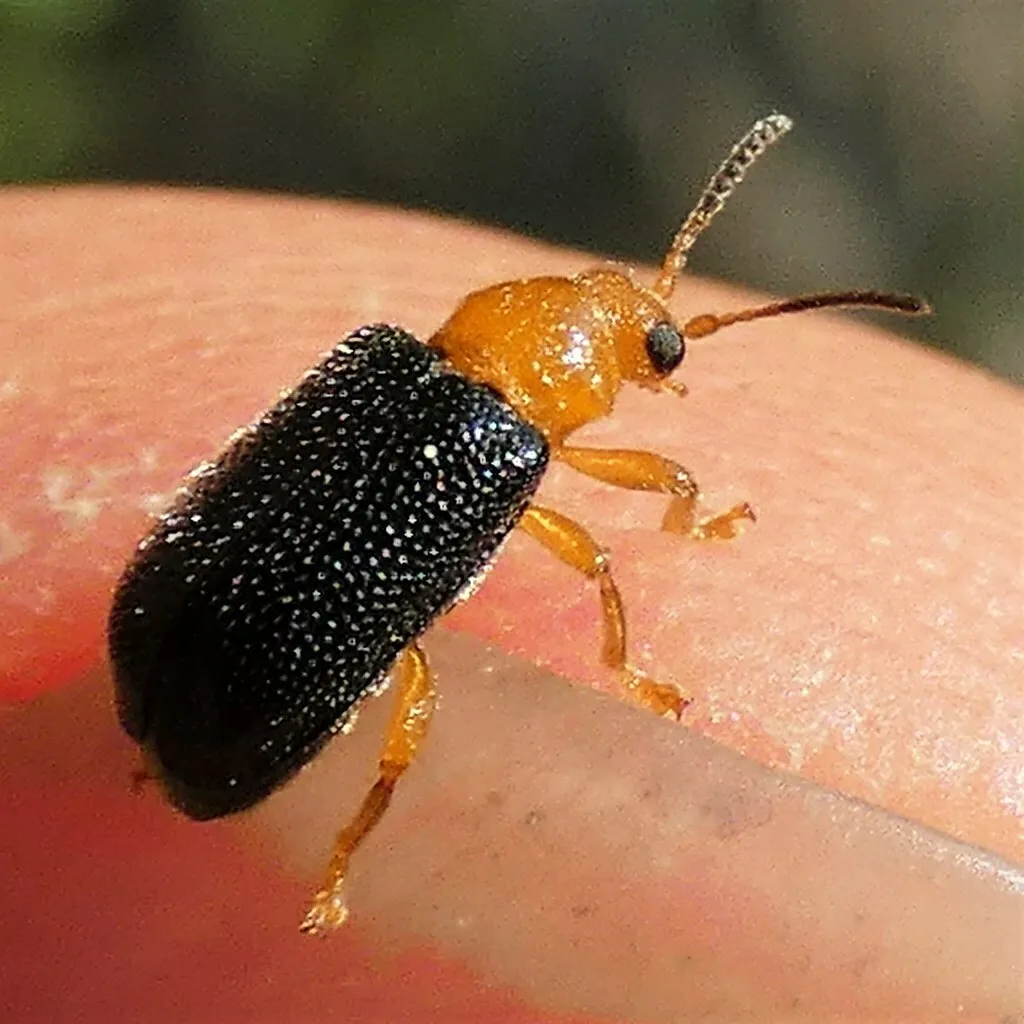
Poplar Blackmine Beetle
Zeugophora scutellaris
larvae make large dark blotch mines in cpoplar/ottonwood leaves ( 7 ) ; may damage cottonwood, poplar, and aspen trees
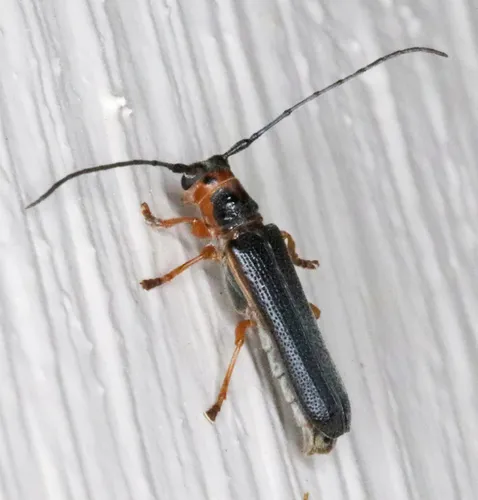
Poplar Twig Borer
Oberea delongi
Identification: Mostly black except for legs and usually last one-two ventrites which are pale reddish yellow Venter of pronotum partially pale. Legs bright orange. Pronotum shiny. Det. J.N. Knull, 1941 Type Locality: Type, allotypc and two paralyses
Poplar-gall Saperda
Saperda inornata
Identification: typically has vague lateral stripes of thickened pubescence on the pronotum
Porotachys bisulcatus
Porotachys bisulcatus
Porotachys bisulcatus (Porotachys bisulcatus) is a species in the family Carabidae, commonly known as ground beetles, belonging to the order Coleoptera (Beetles). It is classified within the subfamily Trechinae, tribe Tachyini, suborder Adephaga. Thi
Porrhodites inflatus
Porrhodites inflatus
Porrhodites inflatus (Porrhodites inflatus) is a species in the family Staphylinidae, commonly known as rove beetles, belonging to the order Coleoptera (Beetles). It is classified within the subfamily Omaliinae, tribe Anthophagini, suborder Polyphaga
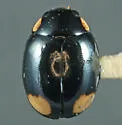
Postica Lady Beetle
Hyperaspis postica
Identification: Gordon's figures - "Elytron with single apical spot varying in size and shape"
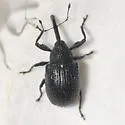
Potato Bud Weevil
Anthonomus nigrinus
Identification: Elongate-oval robust. Black, thinly clothed with fine whitish pubescence. Beak rather stout
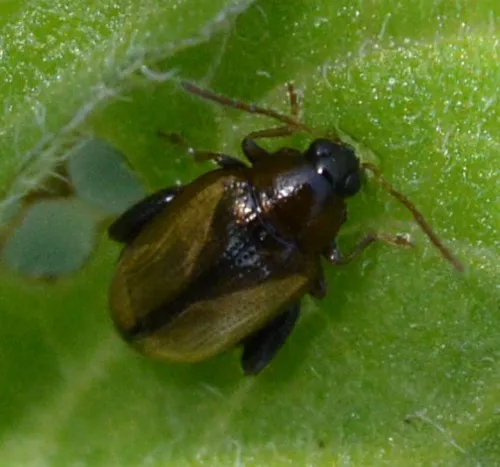
Potato Flea Beetle
Psylliodes affinis
Length 2 to 3 mm with straw yellow elytra marked with brown. It feeds on the leaves of various plants of the family Solanaceae cultivated or wild. Common and widespread in England and Wales.
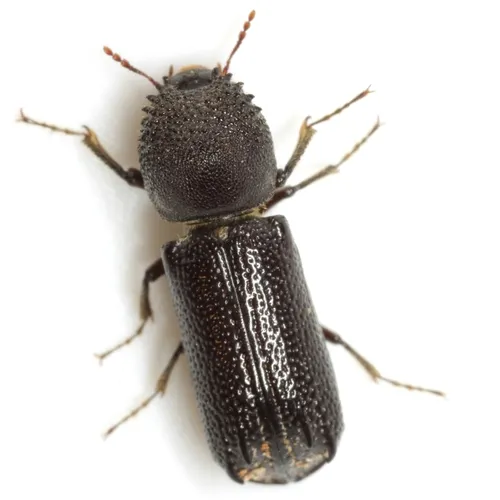
Powderpost Bostrichid
Amphicerus cornutus
Identification: Strong sexual dimorphism. Male with four dentiform projections on declivity, and pronotum with concave front margin, edges cornute Female: elytral declivity simple, pronotum truncate apically comes to lights
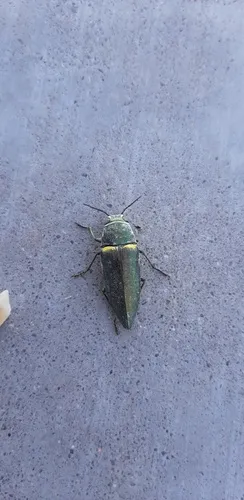
Prasinalia cuneata
Prasinalia cuneata
Prasinalia cuneata is a species of metallic wood-boring beetle in the family Buprestidae. It is found in Central America and North America.
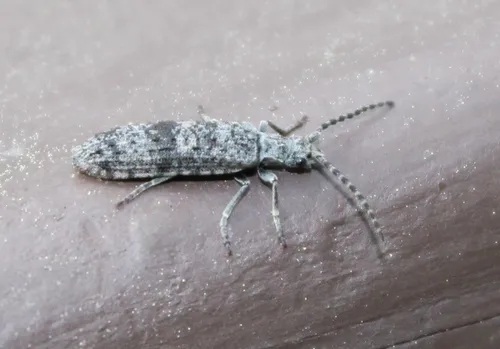
Priacma serrata
Priacma serrata
Identification: larger and grayer than Prolixocupes lobiceps . Prosternum lacks tarsal grooves and has short antennae. It is found in the yellow-pine forest of the Sierra Nevadas. They're slow fliers, but usually hover just out of reach. Known to be
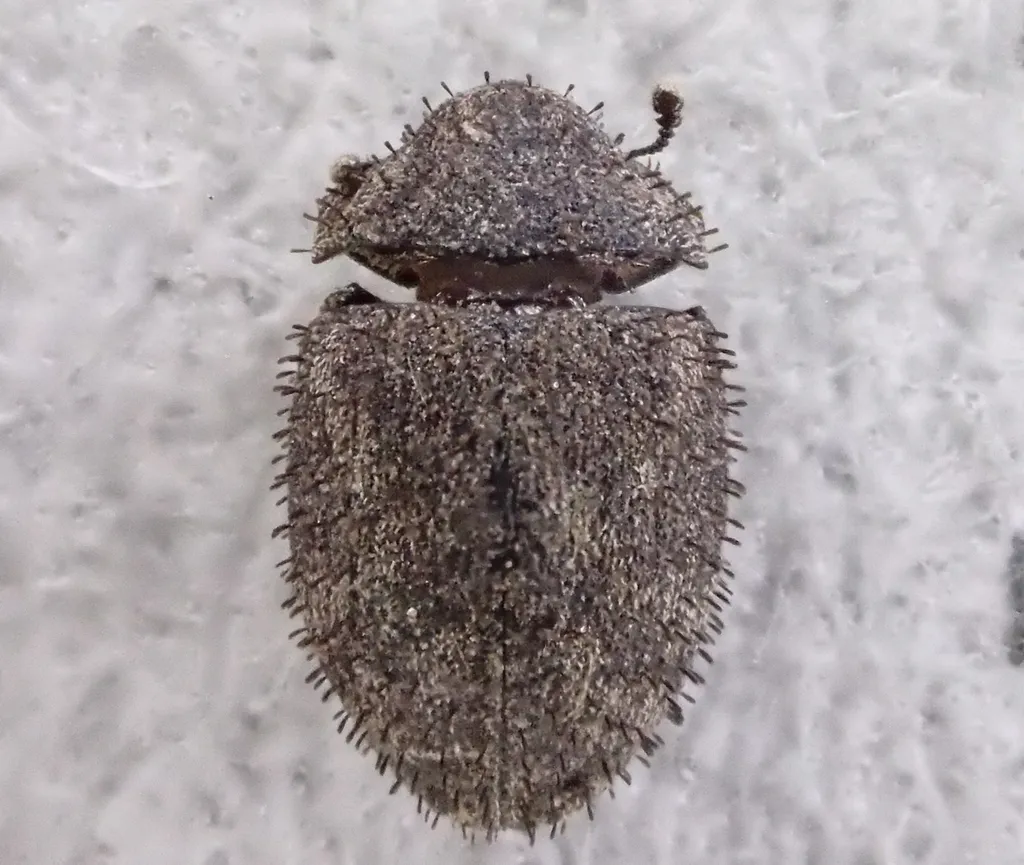
Prickly Pill Beetle
Curimopsis echinata
Curimopsis echinata is a species of pill beetle in the family Byrrhidae. It is found in North America.
Pricklypoppy Blister Beetle
Lytta fulvipennis
One AZ record (Thomas Robbins, 2013 pers. comm. to MAQ)
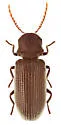
Priobium carpini
Priobium carpini
Priobium carpini (Priobium carpini) is a species in the family Ptinidae, commonly known as death-watch and spider beetles, belonging to the order Coleoptera (Beetles). It is classified within the subfamily Anobiinae, tribe Hadrobregmini, suborder Pol
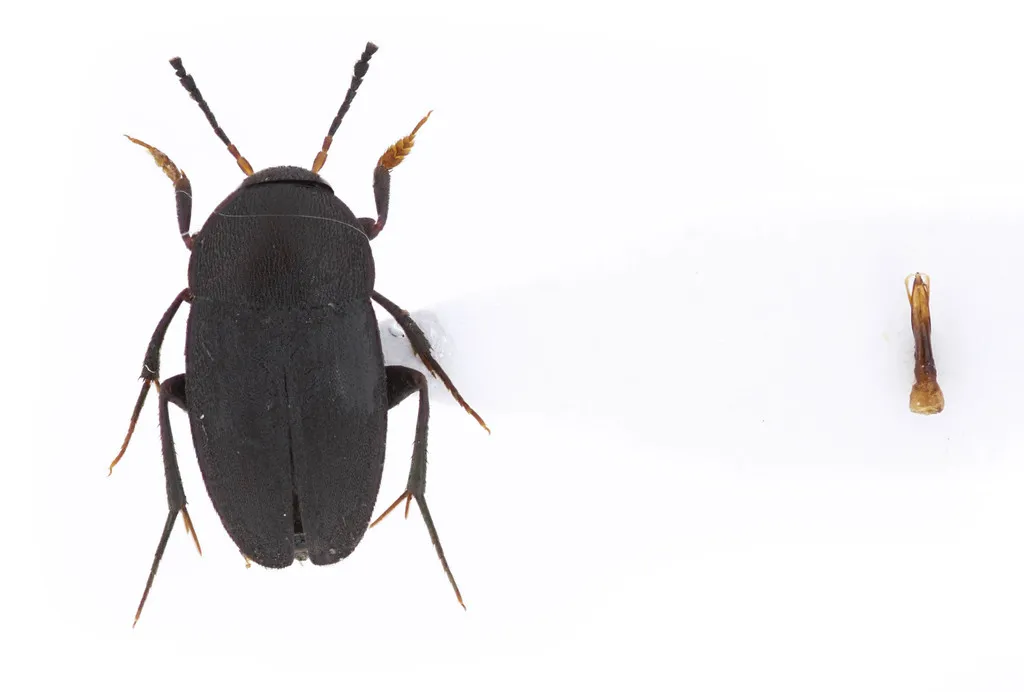
Prionochaeta opaca
Prionochaeta opaca
Prionochaeta opaca (Prionochaeta opaca) is a species in the family Leiodidae, commonly known as round fungus beetles, belonging to the order Coleoptera (Beetles). It is classified within the subfamily Cholevinae, tribe Cholevini, suborder Polyphaga,
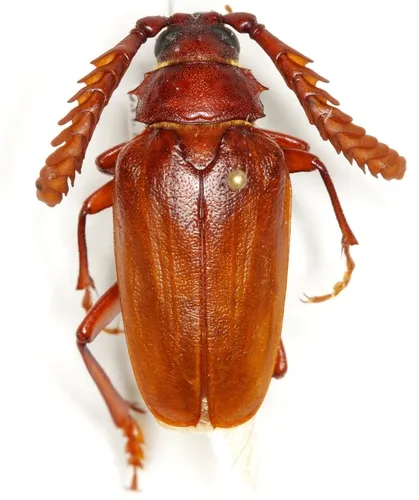
Prionus arenarius
Prionus arenarius
Identification: Distinctive from all other Homaesthesis by the broad, flattened posterior tarsi with conspicuous setal fringes , modifications for walking on sand , Described from Monahans Sandhills State Park in western Texas Texas considers this a
Prionus emarginatus
Prionus emarginatus
Identification: Hairy "neck" distinguishes this species from other North American species in the genus. This species has localized populations, and adults can emerge in great numbers after heavy summer rains.
Prionus fissicornis
Prionus fissicornis
Identification: at least 25 antennomeres, often over 30
Prionus geminus
Prionus geminus
Identification: differs from P. emarginatus by the: imbrication of antennomeres in males slightly emarginated at apex (distinctly bifurcated in emarginatus ); last antennomere in males simple or slightly complex (distinctly complex in emarginatus );
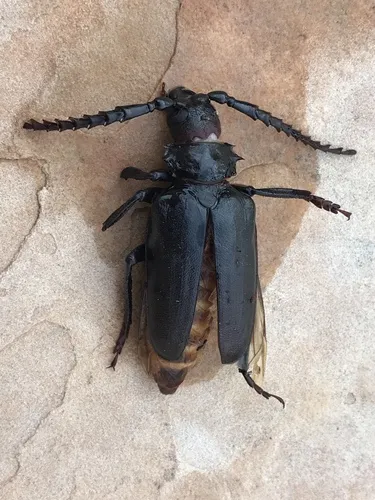
Prionus heroicus
Prionus heroicus
Prionus heroicus is a species of long-horned beetle in the family Cerambycidae. It is found in North America.
Prionus pocularis
Prionus pocularis
Identification: Similar to P. laticollis . More brown, base of pronotum narrower, elytra more punctate, eyes more closely spaced. Metasternum of female is hairy, smooth in laticollis .
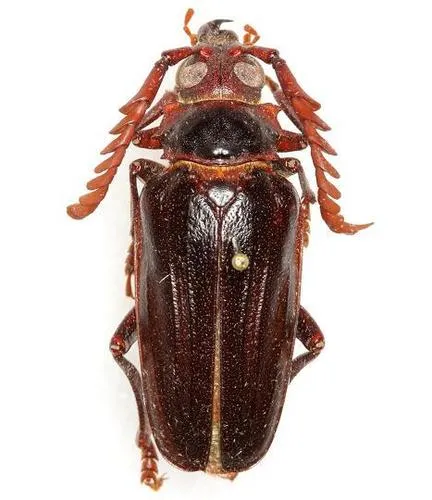
Prionus spinipennis
Prionus spinipennis
Identification: Prionus (H.) spinipennis may be distinguished from all other known Homaesthesis by the combination of 12-segmented antennae, expanded tarsi, dark-brown to piceous integument with wholly reddish antennae, and spinose sutural angle of t
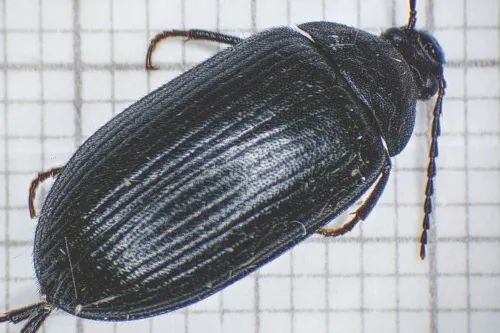
Prionychus ater
Prionychus ater
Length 12 to 14 mm. Dull appearance, head and pronotum densely and coarsely punctured. Prionychus melanarius is 10 to 12mm long with a shiny appearance with head & pronotum sparsely punctured. Good quality photographs and size of specimen required. N
Pristilophus pulcher
Pristilophus pulcher
Identification: elytra dark yellowish with large black cross-shaped marking; black dash descending from humeral angle either separated from or merging with lateral arm of black cross; pronotum with middorsal black stripe, bordered laterally by dark o
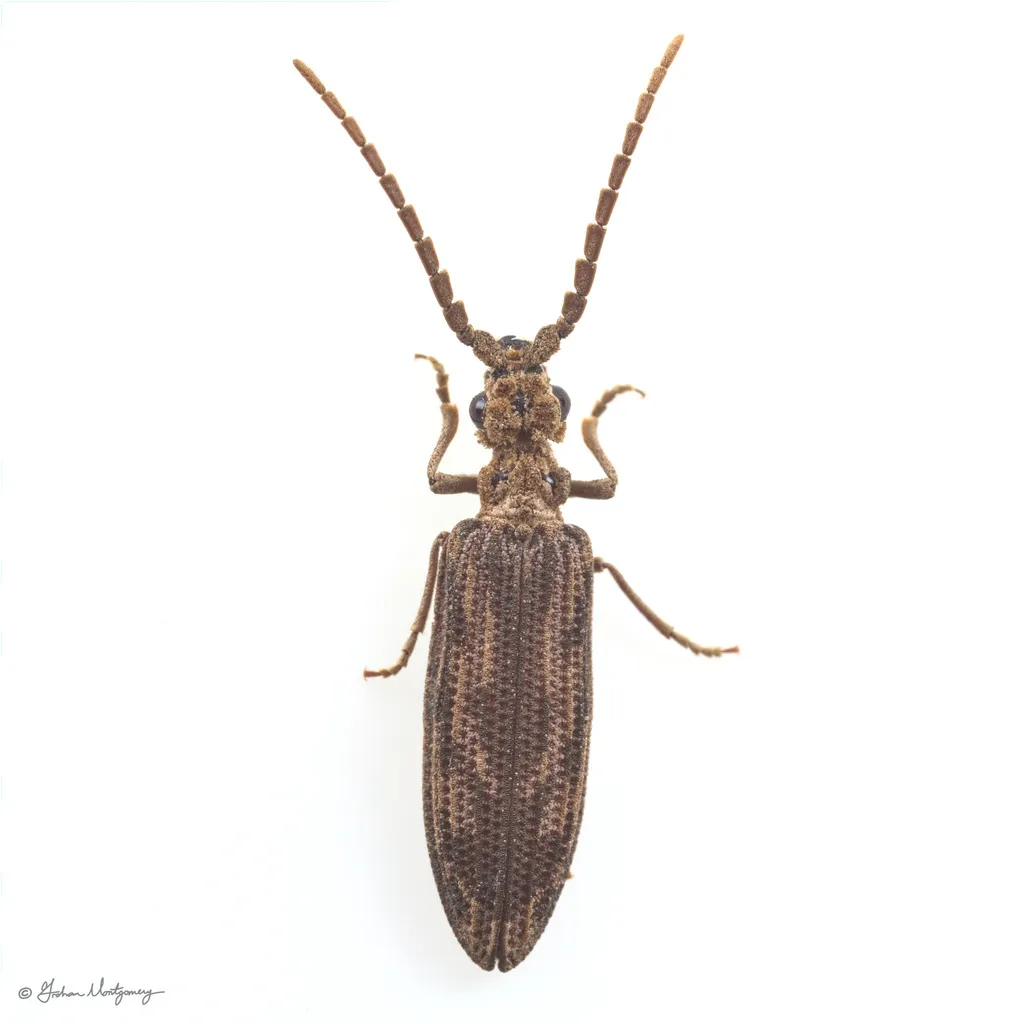
Prolixocupes lobiceps
Prolixocupes lobiceps
Identification: Antennae slightly serrate, prosternum with widely separated tarsal grooves, head tubercles not conical with rear pair distinctly larger
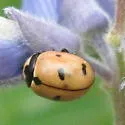
Prolongate Lady Beetle
Coccinella prolongata
Identification: Gordon's figures - Head black with 2 pale spots; pronotum with anterolateral pale spot larger than in any other species , (emphasis added) elytron with 2 black spots and a scutellar spot, suture narrowly darkened Det. T. Dobzhansky, 1
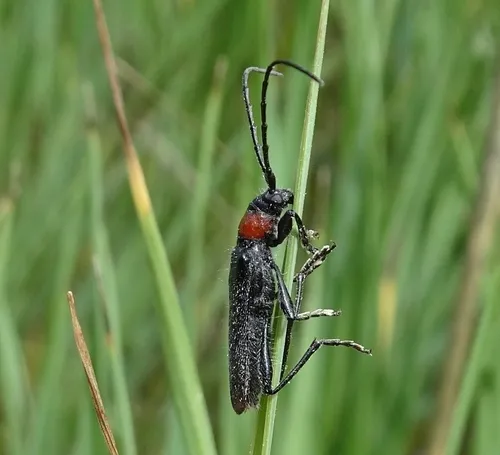
Pronocera collaris
Pronocera collaris
Identification: Distinguished from the similar appearing Phymatodes testaceus by the more densely punctate elytra and polished pronotum without calli.
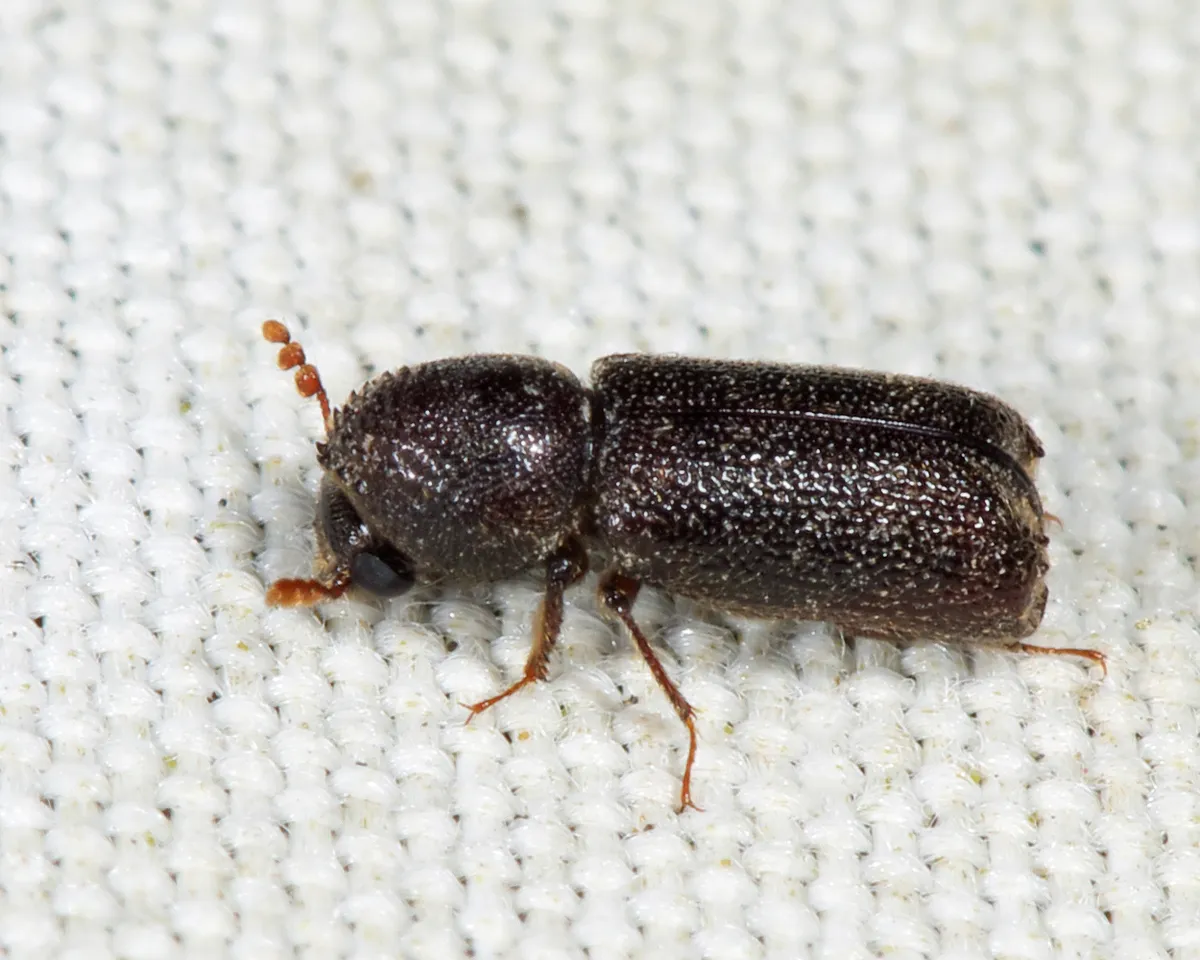
Prostephanus punctatus
Prostephanus punctatus
Prostephanus punctatus (Prostephanus punctatus) is a species in the family Bostrichidae, commonly known as horned powder-post beetles, belonging to the order Coleoptera (Beetles). It is classified within the subfamily Dinoderinae, suborder Polyphaga,
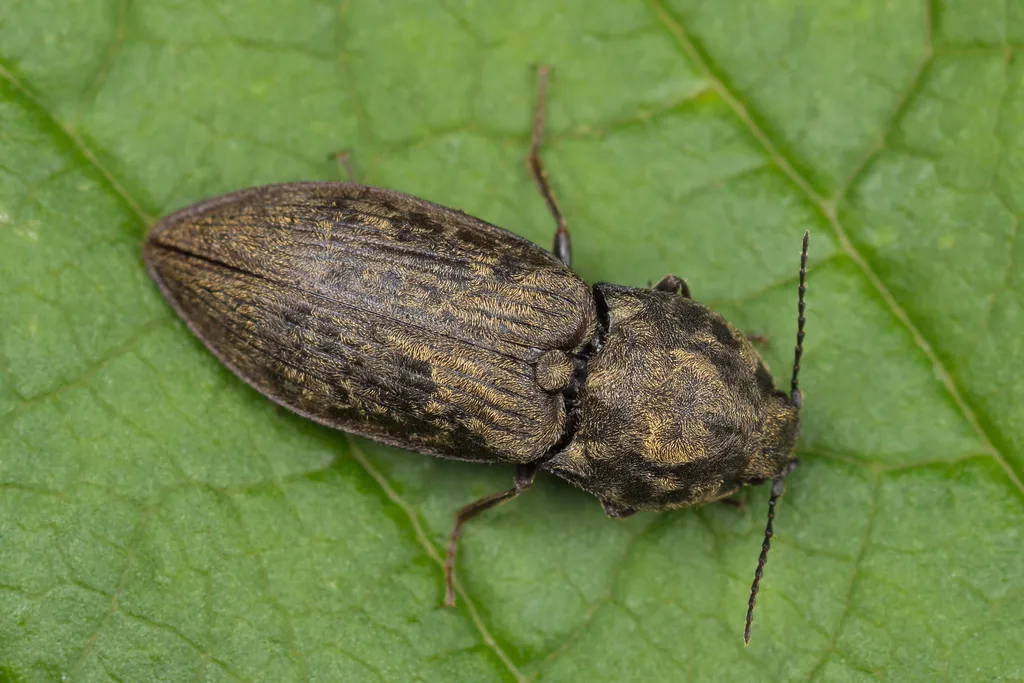
Prosternon tessellatum
Prosternon tessellatum
Length 9 to 11 mm. Rather rounded in appearance for a click beetle, uniformly dark in colour. Almost the whole of the surface area of the elytra covered in short golden brown hairs (in parts at right angle to striae, in parts parallel, giving the che
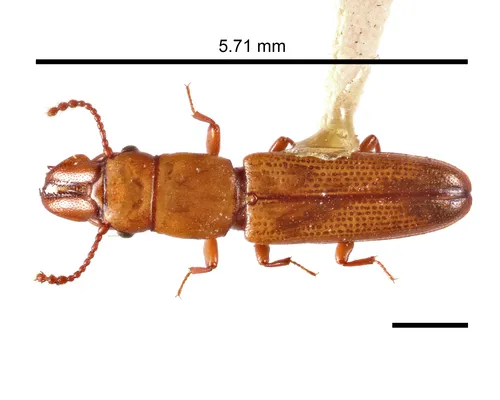
Prostomis americanus
Prostomis americanus
Identification: immature stages described in Schunger et al. (2003)
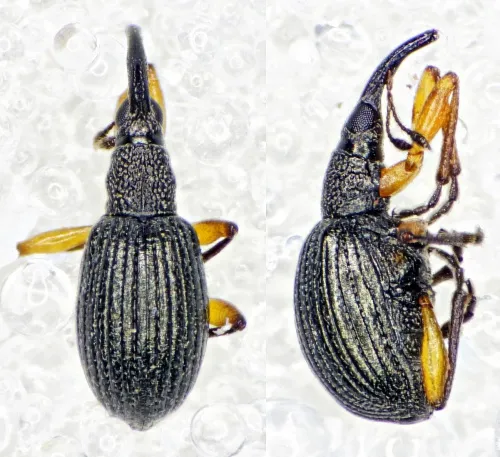
Protapion assimile
Protapion assimile
Length 2 to 3 mm. A small grey/black weevil. The legs have yellow femora but the tibiae are dark. Unless identified by a recognised expert, photographic evidence is required and the specimen should be examined with a microscope. In the comments box,
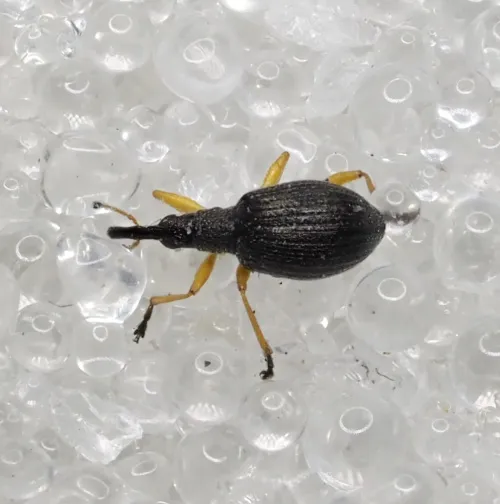
Protapion nigritarse
Protapion nigritarse
1.5-2mm. Shining black with yellow legs and black tarsi. Very hard to distinguish from P. fulvipes without microscopic examination of the antennae. In Protapion nigritarse the antennal club is slightly less rounded and the 8th segment (immediately be
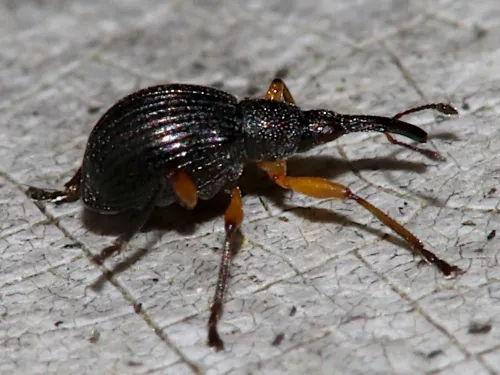
Protapion trifolii
Protapion trifolii
Body length, 1.7 to 2.1 mm, not including the head. Body, antennae, and tarsi are black. Fore coxae and trochanters are reddish or dark-reddish, distinctly darker than femora. Femora yellow-reddish. Mid and hind tibiae are black or dark-brown; fore t
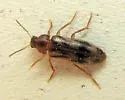
Prothalpia undata
Prothalpia undata
Identification: Newfoundland and Québec to North Carolina, west to Wisconsin
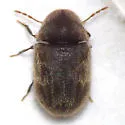
Protheca hispida
Protheca hispida
Identification: Body small, with bristling pubescence changing in direction and thus forming lighter and darker areas under light.
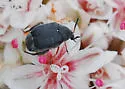
Pruinose Bean Weevil
Stator pruininus
Identification: easily recognized within the genus by uniformly gray appearance and reddish-yellow fore and mid legs
Psammodius laevipennis 0
Psammodius laevipennis
Identification: habitus photos: ▭ · ▭ · ▭ earliest NA record: Mid-Atlantic States before 1848
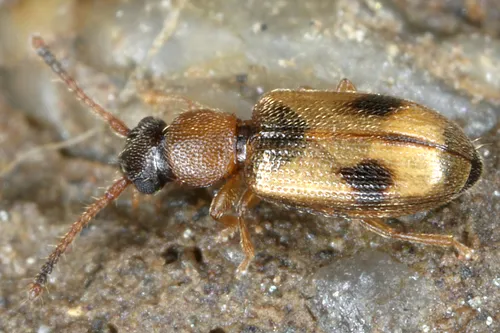
Psammoecus bipunctatus
Psammoecus bipunctatus
Length 2.3-2.8 mm. This species is easily separated from related species by its colouring. It is yellowish with a darker head and a dark spot beyond the middle of each elytron. The scutellum, head and two penultimate antennomeres are also dark. There
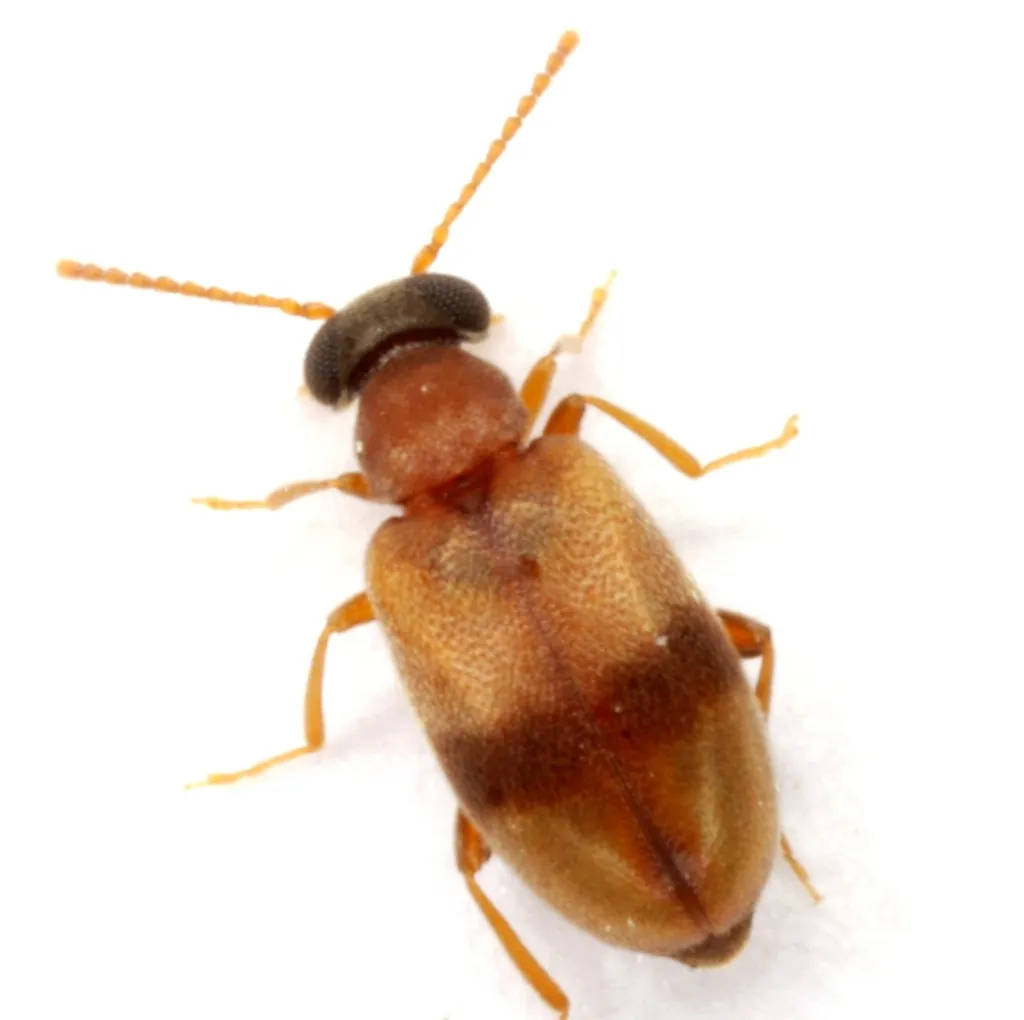
Pseudanidorus unifasciatus
Pseudanidorus unifasciatus
Identification: in our area, similar spp. ( P. lescheni & P. bifidus ) are resticted to AZ
Pseudanophthalmus hoffmani
Pseudanophthalmus hoffmani
Pseudanophthalmus hoffmani, or Hoffman's cave beetle, is a species of ground beetle in the family Carabidae. It is endemic to Virginia in the United States.
Pseudanophthalmus holsingeri
Pseudanophthalmus holsingeri
considered by VA to be a Species of Greatest Conservation Need (SGCN)
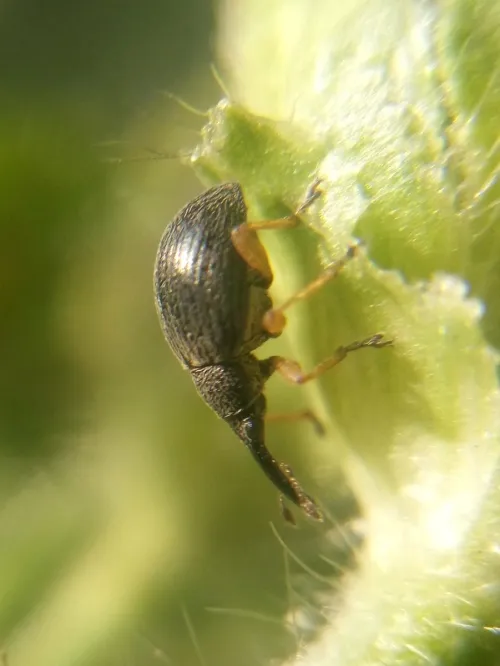
Pseudapion rufirostre
Pseudapion rufirostre
Size 2.1 to 2.8 mm. Body black with a distinct metallic green lustre antennae and legs are mostly pale orange-yellow. The rostrum is long and curved; in the female as long as the head and pronotum combined and entirely dark metallic, in the male as l
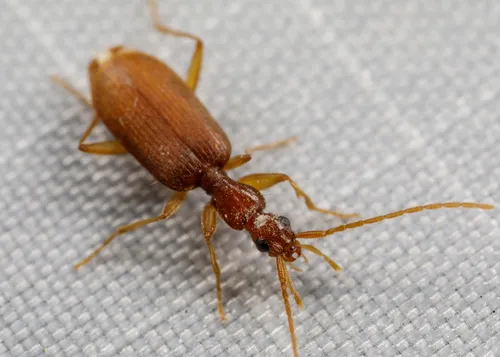
Pseudaptinus tenuicollis
Pseudaptinus tenuicollis
Pseudaptinus tenuicollis is a species of ground beetle in the family Carabidae. It is found in Central America and North America.
Pseudastylopsis pini
Pseudastylopsis pini
Type Locality: Carr Peak, Huachuca Mountains, Cochise Co., Arizona. Beaten from pines at an elevation of 9,000 feet.