
Nettle Weevil
Phyllobius pomaceus
This record describes Phyllobius pomaceus (species). Recorded family: Curculionidae. Recorded order: Coleoptera.
Identification and Appearance
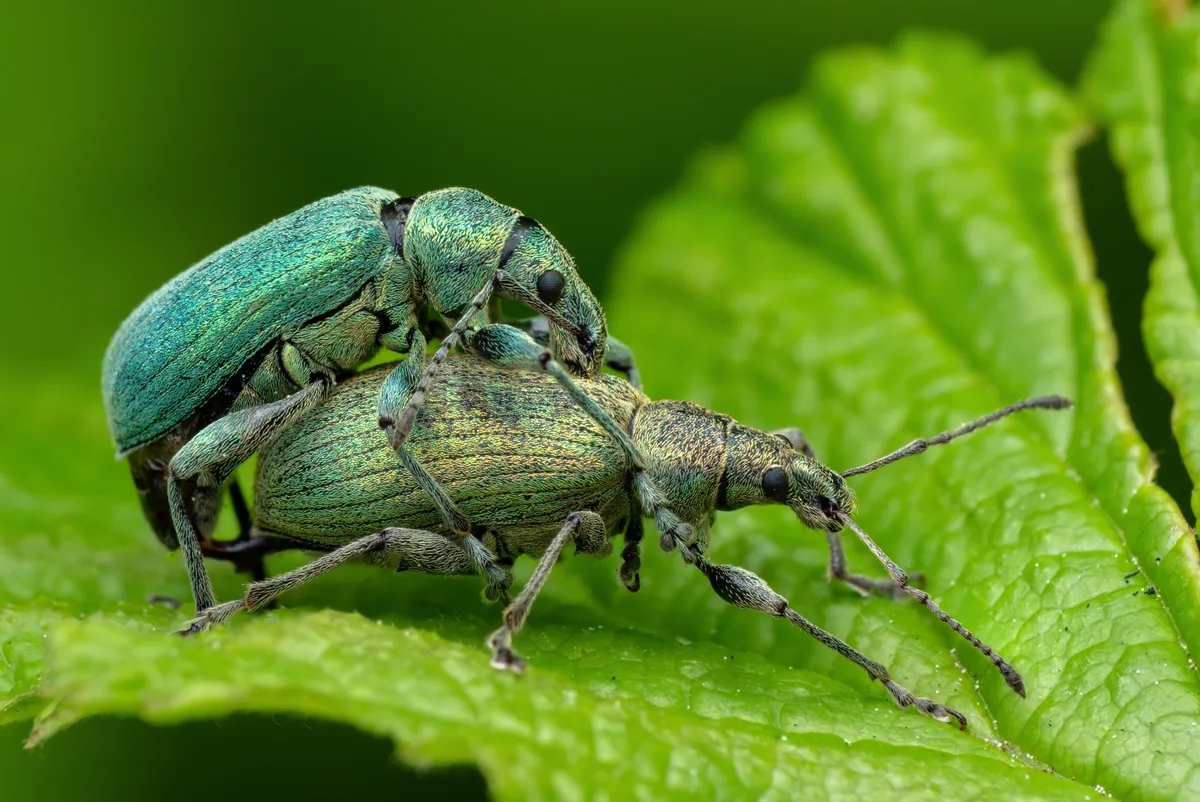
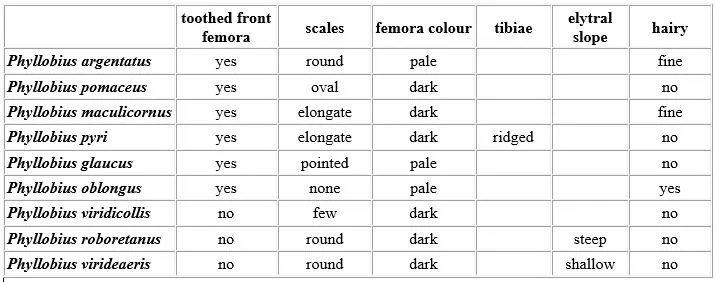
Length 7-9 mm. This beetle has a metallic green/blue covering of thin, elongate scales which are pointed apically. However the scales easily rub off and older specimens can look almost black. The front femur has a prominent tooth. The rostrum is longer than wide. The body is black (under the scales) and the legs are dark brown. P. glaucus can be very similar but usually has more reddish legs. Phyllobius is a genus of broad-nosed weevils that are commonly found on low herbage and in trees during spring and summer. Most are covered in metallic green scales that give them a very attractive appearance. There are 9 species and most look similar but they can be separated by carefully comparing the range of features shown in the table below, either under a binocular microscope or with a x20 hand-lens. Phyllobius weevils can be distinguished from the similar genus Polydrusus by looking where the antennae emerge from the rostrum. In Phyllobius the antennae emerge from the top whilst in Polydrusus they are positioned at the side. When looking directly down on the beetle it is usually clear to see. Unless identified by a recognised expert, photographic evidence is required and the specimen should be examined with a microscope. In the comments box, state the key or ID method used. Note the beetle's size and describe the identifying characters. It is advisable to retain the specimen in case further checks are needed. Common throughout England and Wales and with a few scattered records from Scotland.
Wikipedia reference for Phyllobius pomaceus: http://en.wikipedia.org/wiki/Phyllobius_pomaceus.
Classification
- Kingdom
- Animalia
- Phylum
- Arthropoda
- Class
- Insecta
- Order
- Coleoptera
- Family
- Curculionidae
- Genus
- Phyllobius
Imported taxonomy record. Source availability varies; see the source references and editorial policy below.
Habitat and Range
Habitat
Most commonly found on Nettles.
Seasonal Activity
April to late June.
Additional species information
Recorded status
Common throughout England and Wales and with a few scattered records from Scotland.
About Primitive Winged Insects: the wider group
Order-level background for Coleoptera, the group containing Phyllobius pomaceus. Species-specific details appear above.
Group overview
Coleoptera is the largest order of insects with over 400,000 described species, representing ~25% of all known animal species and ~40% of all insects. In the U.S. alone, nearly 30,000 beetle species have been identified.
Ecological role of the group
Beetles are prominent decomposers, especially in forests, breaking down dead wood and recycling nutrients. As predators, they reduce populations of pest insects. Many species are also important pollinators of flowering plants.
Economic and practical significance of the group
Beetles have major economic significance: leaf beetles (Chrysomelidae) and weevils (Curculionoidea) are among the most destructive agricultural pests globally, costing billions annually, while predatory species like ladybugs provide natural pest control.
Recorded sources for this group: Britannica, Smithsonian, NCSU Entomology. Imported estimates may describe particular regions or reporting periods.
Photos of Nettle Weevil (2)
Frequently Asked Questions About Nettle Weevil
What is Nettle Weevil?
Nettle Weevil (Phyllobius pomaceus) is a species in the family Curculionidae, within the order Coleoptera.
How big is Nettle Weevil?
7-9 mm. This beetle has a metallic green/blue covering of thin, elongate scales which are pointed apically. However the scales easily rub off and older specimens can look almost black. The front femur has a prominent tooth. The rostrum is longer than wide. The body is black (under the scales) and the legs are dark brown.
Where is Nettle Weevil found?
Habitat: Most commonly found on Nettles.
When is Nettle Weevil active?
Nettle Weevil: seasonal activity - April to late June..