
Primitive Winged Insects
Order Coleoptera
The Primitive Winged Insects (Order Coleoptera) includes 15,720 species across 160 families and 3,716 genera in our directory.
About Primitive Winged Insects
Coleoptera is the largest order of insects with over 400,000 described species, representing ~25% of all known animal species and ~40% of all insects. In the U.S. alone, nearly 30,000 beetle species have been identified.
Economic Impact
Beetles have major economic significance: leaf beetles (Chrysomelidae) and weevils (Curculionoidea) are among the most destructive agricultural pests globally, costing billions annually, while predatory species like ladybugs provide natural pest control.
Ecological Role
Beetles are prominent decomposers, especially in forests, breaking down dead wood and recycling nutrients. As predators, they reduce populations of pest insects. Many species are also important pollinators of flowering plants.
Families in Coleoptera (160)
Species in Coleoptera (15,720)
Malthodes greeni 0
Malthodes greeni
Identification: The male terminal modifications are entirely different from those of any other known North American species. It may be readily separated from any of our described species by its very deeply forked seventh ventral, a characteristic tha
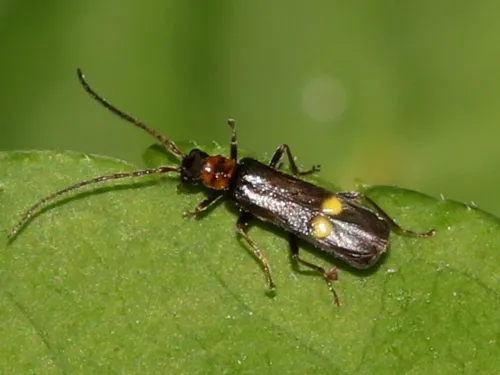
Malthodes minimus
Malthodes minimus
This small beetle is only 3-4mm long. The elytra are dark and usually yellow tipped, exposing part of the wings and abdomen beneath. There are fifteen species in the genus and they are very hard to separate. For males examination of the appendages at
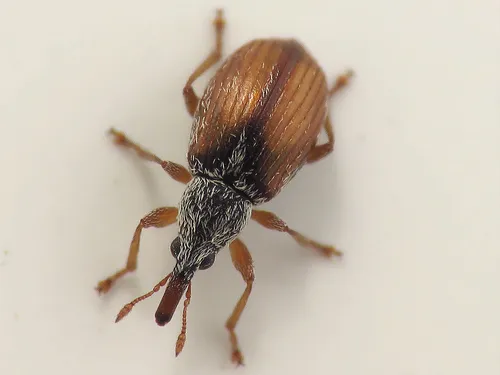
Malvapion malvae
Malvapion malvae
1.8 to 2.4 mm. The mostly orange elytra, yellow legs and dense pubescence gives this species a unique appearance. Head, thorax and base of elytra shining black with dense light yellow pubescence. Rostrum cylindrical, pubescent almost to apex in male,
Manda nearctica
Manda nearctica
Identification: Pale rufo-testaceous, with dark head (Moore, 1964), and slightly dark apical elytral patches. Det. V. Belov, 2013 Type Locality: Archbold Biological Station, Lake Placid, Florida, IV-1-47, J. W. Green, collector.
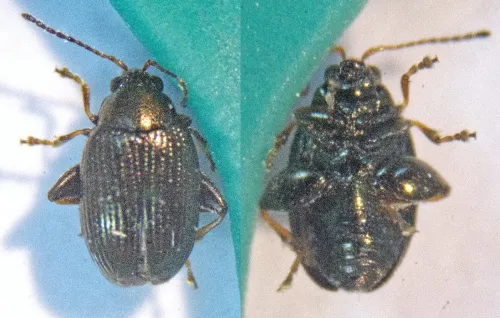
Mangold Flea Beetle
Chaetocnema concinna
1.5-2.3 mm. A dark, shiny flea beetle. Bronze, coppery or dark green with elytral punctures in straight rows. The genus has small teeth on each of the mid and hind tibia. See ID checklist below. C. picipes is the only other species in the genus with
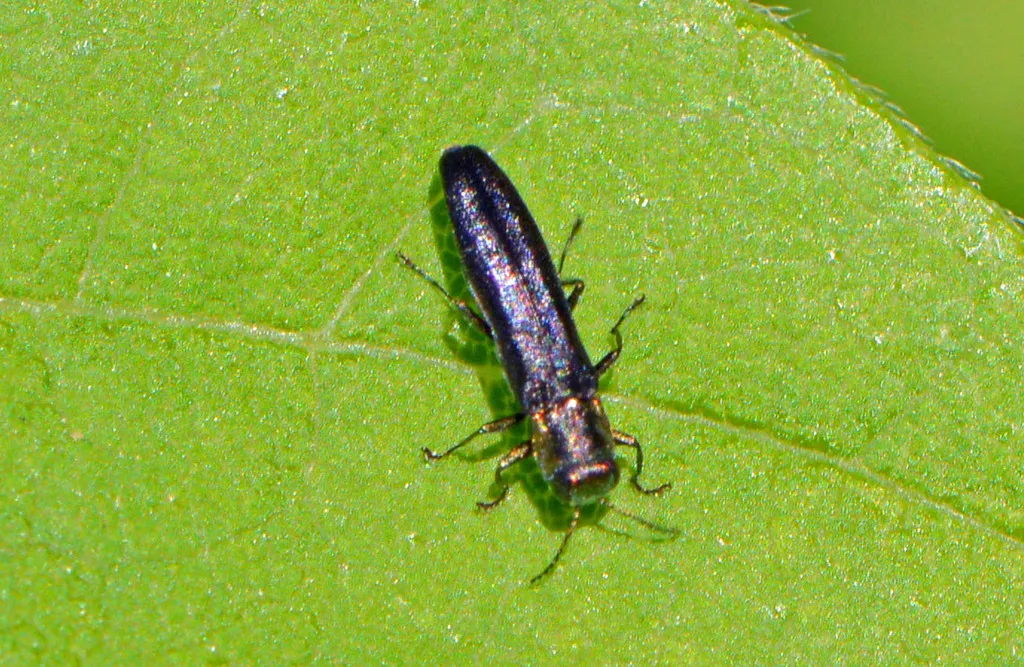
Maple Agrilus
Agrilus masculinus
Agrilus masculinus, the maple agrilus, is a species of metallic wood-boring beetle in the family Buprestidae. It is found in North America.
Marbled Click Beetle
Lacon marmoratus
Identification: Has yellowish scales that form blotches on the elytra. Pronotum with median groove. Pronotum and elytra with dense, coarse punctures.
Margarinotus confusus
Margarinotus confusus
Identification: Very similar to M. marginicollis. Male genitalia should be examined for accurate ID. Form of metepimeron also useful, but variable.
Margarinotus lecontei
Margarinotus lecontei
Margarinotus lecontei (Margarinotus lecontei) is a species in the family Histeridae, commonly known as clown beetles, belonging to the order Coleoptera (Beetles). It is classified within the subfamily Histerinae, tribe Histerini, suborder Polyphaga,
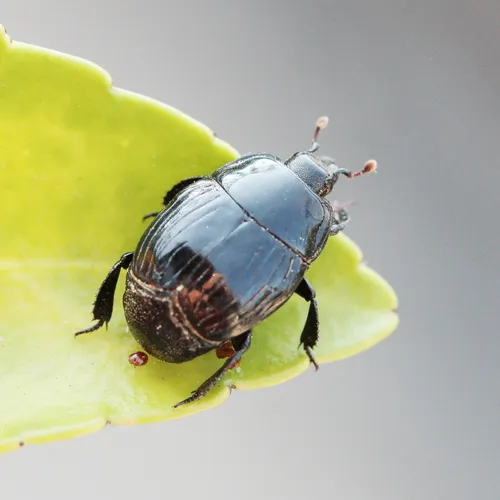
Margarinotus merdarius
Margarinotus merdarius
Size 6 or 7 mm. It has 4 'complete' dorsal stria on the elytra, an indented frontal stria on the head and most importantly, the pronotum is particularly characteristic for this species (compared to brunneus and striola) in not being so strongly curve
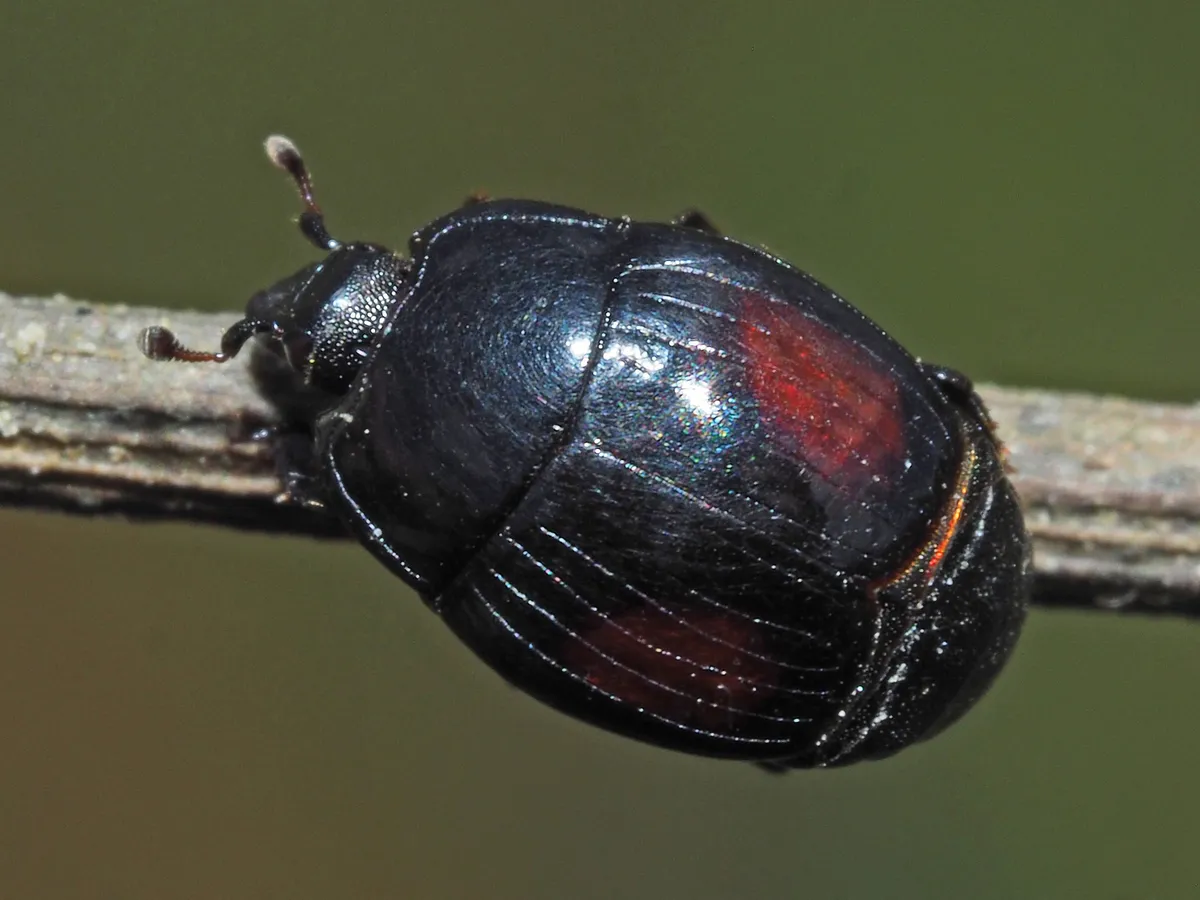
Margarinotus purpurascens
Margarinotus purpurascens
Identification: Elytra with ill-defined red blotches ( photo )
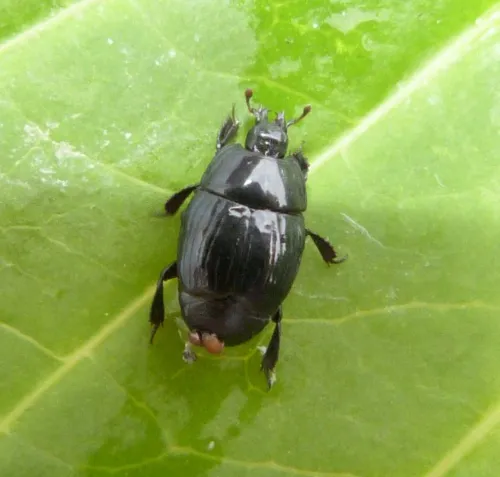
Margarinotus striola
Margarinotus striola
Length 5 to 7 mm. One of a group of similar species which require detailed examination. They are typically found under or in carrion, rotting vegetation or dung etc. No additional images available for this species.
Margarinotus thomomysi
Margarinotus thomomysi
Identification: elytral striation is unique in being essentially complete
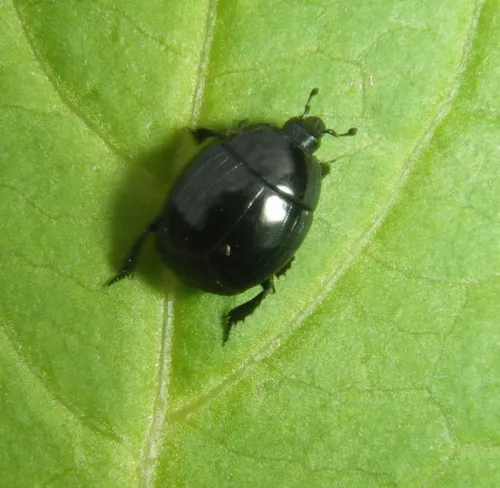
Margarinotus ventralis
Margarinotus ventralis
Formerly known as Paralister carbonarius. Approx 6 mm long and 4 mm wide. This beetle has a rounded shape and is uniformly black with well separated lines of studded holes on the elytra. The shortened elytra leave two of the seven tergites exposed. T
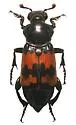
Margined Burying Beetle
Nicrophorus marginatus
Identification: Similar in appearance to N. guttula and N. obscurus , but can be easily distinguished by the fully orange epipleuron (which has a black subhumeral patch in guttula ) and the fully orange antennal club (the first segment of which is bl
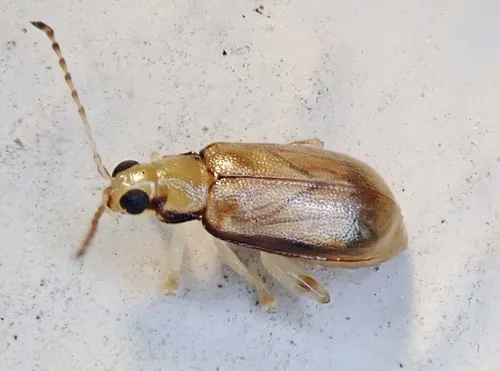
Margined Systena
Systena marginalis
Identification: Systena plicata Blatchley is similar in size and color, but has a distinct lateral fold (ridge) along the margin of each elytron (lacking in S. marginalis ). Systena corni is also similar in general appearance but differs in being les
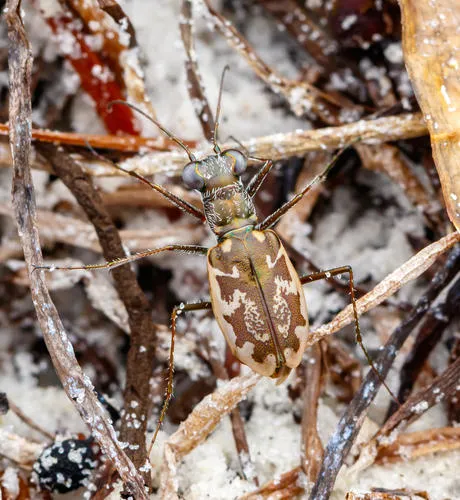
Margined Tiger Beetle
Ellipsoptera marginata
Identification: Dorsum brown-bronze to green-bronze. Head and pronotum dull greenish black. Elytral maculations complete, usually with basal dot and humeral and apical dots. Male shows diagnostic extra ventral tooth on right mandible, lacking in male
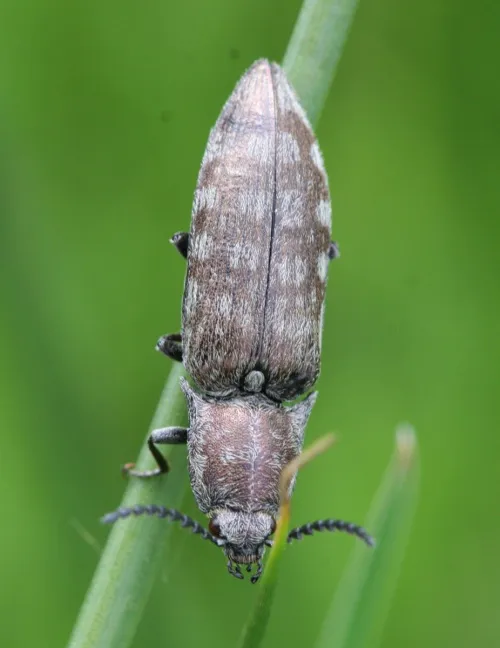
Marsh Click Beetle
Actenicerus sjaelandicus
Size 10 to 16mm. A large species, varying in shade from rather grey-brown to chestnut-brown. A fairly dense covering of lighter grey coloured hairs gives the pronotum and elytra a patterned appearance and strong ridges running down the length of the
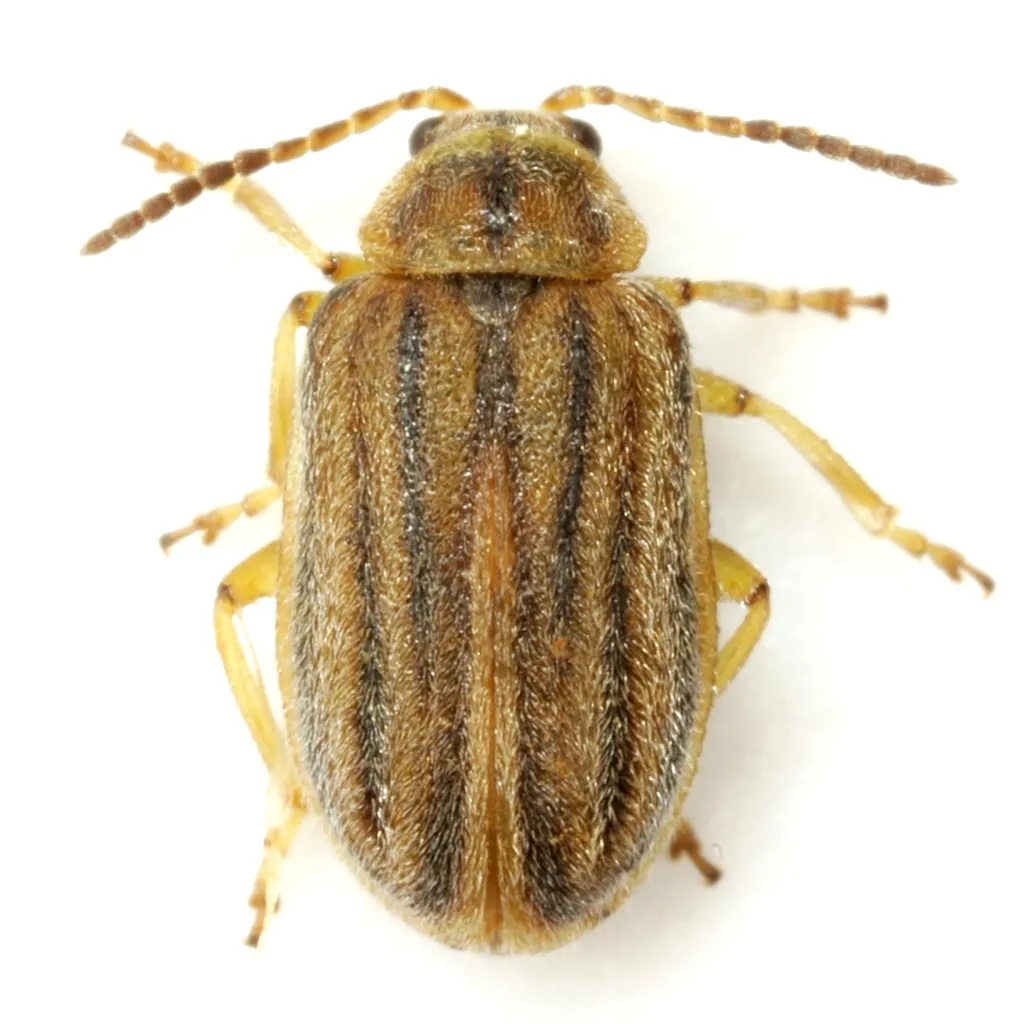
Marsh Elder Leaf Beetle
Ophraella notulata
Ophraella notulata is a species of leaf beetle in the family Chrysomelidae. It is found in Central America and North America.
Mastogenius crenulatus
Mastogenius crenulatus
Mastogenius crenulatus (Mastogenius crenulatus) is a species in the family Buprestidae, commonly known as metallic wood-boring beetles, belonging to the order Coleoptera (Beetles). It is classified within the subfamily Polycestinae, tribe Haplostethi
Mastogenius robustus
Mastogenius robustus
Identification: Form of subcyaneus but larger more robust and surface less shining, dark aeneous. (Schaeffer 1905) Posterior boarder of hind coxal plates broadly arcuate internally, third joint of antennae distinctly shorter than the fourth, hut much
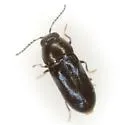
Mastogenius subcyaneus
Mastogenius subcyaneus
Mastogenius subcyaneus (Mastogenius subcyaneus) is a species in the family Buprestidae, commonly known as metallic wood-boring beetles, belonging to the order Coleoptera (Beetles). It is classified within the subfamily Polycestinae, tribe Haplostethi

Meadow Cranesbill Weevil
Zacladus geranii
2.4 to 3.3 mm in length and found on large flowered geraniums, particularly Meadow Cranesbill. It is black with white/grey oval scales on the underside. The pronotum is coasely punctuated and forms a deep collar behind the head and also has a pair of
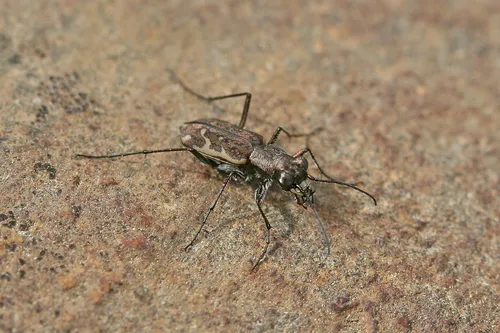
Meadow Tiger Beetle
Parvindela lunalonga
Identification: The species can exhibit very thin maculations to immaculate. The small size and dull appearance will generally separate it from other species in the region. It often appears with Cicindela haemorrhagica , but size, maculations (or lac
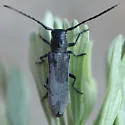
Mecas bicallosa
Mecas bicallosa
Identification: bicallused pronoturm and abbreviated distal antennal segments
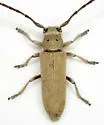
Mecas cana
Mecas cana
Identification: pronotum w two small glabrous spots Det. M. A. Quinn, 2011
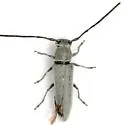
Mecas cineracea
Mecas cineracea
Identification: Uniformly pale pubescence, tarsal claw teeth of unequal length Almost identical to the slightly larger M. confusa (KS-TX; possibly further east) in which tarsal claw teeth are of equal length Many historical records of ‘ M. inornata ’
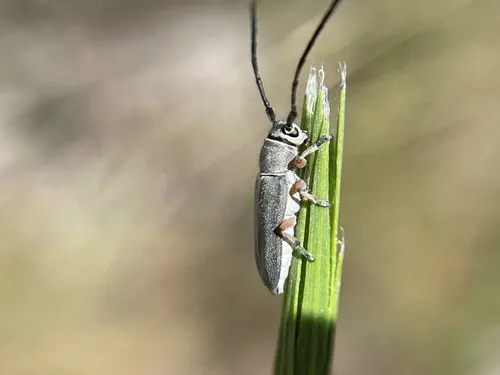
Mecas femoralis
Mecas femoralis
Identification: small size, rather uniform pubescence, lack of pronotal calluses, and reddish femora rare in collections
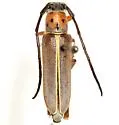
Mecas linsleyi
Mecas linsleyi
Type Locality: Bentsen-RGV State Park , Mission, Hidalgo Co., TX Type male and allotype female and paratypes collected on the foliage of Mexican devil-weed ( Aster spinosus Benth.) in Bentsen Rio Grande State Park, Hidalgo County, Texas, March 26, 19
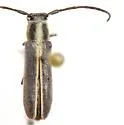
Mecas marginella
Mecas marginella
Identification: The absence of pronotal calluses [glabrous spots] and the distinctive yellowish pubescent pronotum and elytral longitudinal bands make this species easily recognizable. Det. M. A. Quinn, 2014
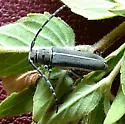
Mecas menthae
Mecas menthae
Identification: distinctive in the rather uniform grayish pubescence and the narrow bands of dense apperssed pubescence along the lateral and sutural margins
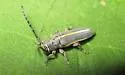
Mecas pergrata
Mecas pergrata
Identification: The five glabrous pronotal spots, the densely pubescent pale suture and lateral elytral margins, and the reddish femora will readily distinguish this species. In certain parts of the range, the elytra tend to be reddish down the disk
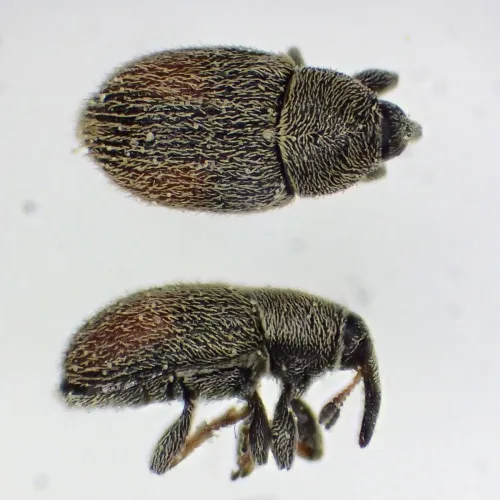
Mecinus pascuorum
Mecinus pascuorum
A small (2 to 2.5 mm) grey- brown, sometimes slightly red tinted weevil. Unless identified by a recognised expert, photographic evidence is required and the specimen should be examined with a microscope. In the comments box, state the key or ID metho
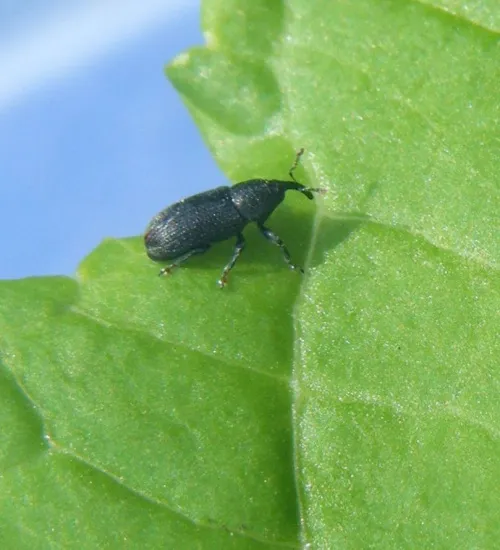
Mecinus pyraster
Mecinus pyraster
Unless identified by a recognised expert, photographic evidence is required and the specimen should be examined with a microscope. In the comments box, state the key or ID method used. Note the beetle's size and describe the identifying characters. I
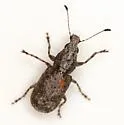
Meconemus infuscatus
Ischnocerus infuscatus
collected by beating, under bark, at light, in Steiner and ethanol/turpentine traps ( 5 )
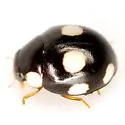
Medial Lady Beetle
Hyperaspis medialis
Identification: Gordon's figures Type locality: Brownsville, Texas
Mediterranean Sage Root Crown Weevil
Phrydiuchus tau
first released: OR 1971 to control Mediterranean sage
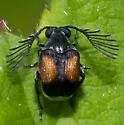
Megacerus cubicus 0
Megacerus cubicus
Identification: black pronotum, black-bordered red elytra, and horizontal black line on the pygidium (sometimes broken into two short lines). see Fig. 224-225, Vol II
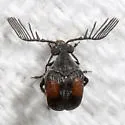
Megacerus discoidus
Megacerus discoidus
Identification: This handsome species with its quadrate, red elytral maculae can hardly be mistaken for any other eastern American bruchid.
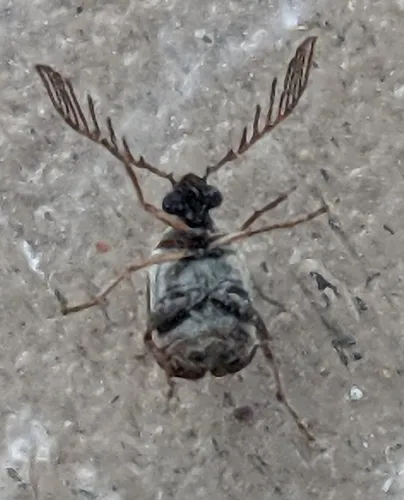
Megacerus impiger
Megacerus impiger
Megacerus impiger is a species of leaf beetle in the family Chrysomelidae. It is found in Central America and North America.
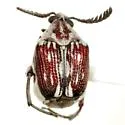
Megacerus leucospilus
Megacerus leucospilus
Identification: red and white alternating stripes on elytra Type Locality: Mexico, Veracruz
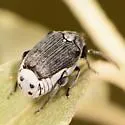
Megacerus schaefferianus
Megacerus schaefferianus
Identification: pattern on pygidium like in M. discoidus , but all black, above with uniformely distributed, thin vestiture. Type locality: Nogales, Arizona
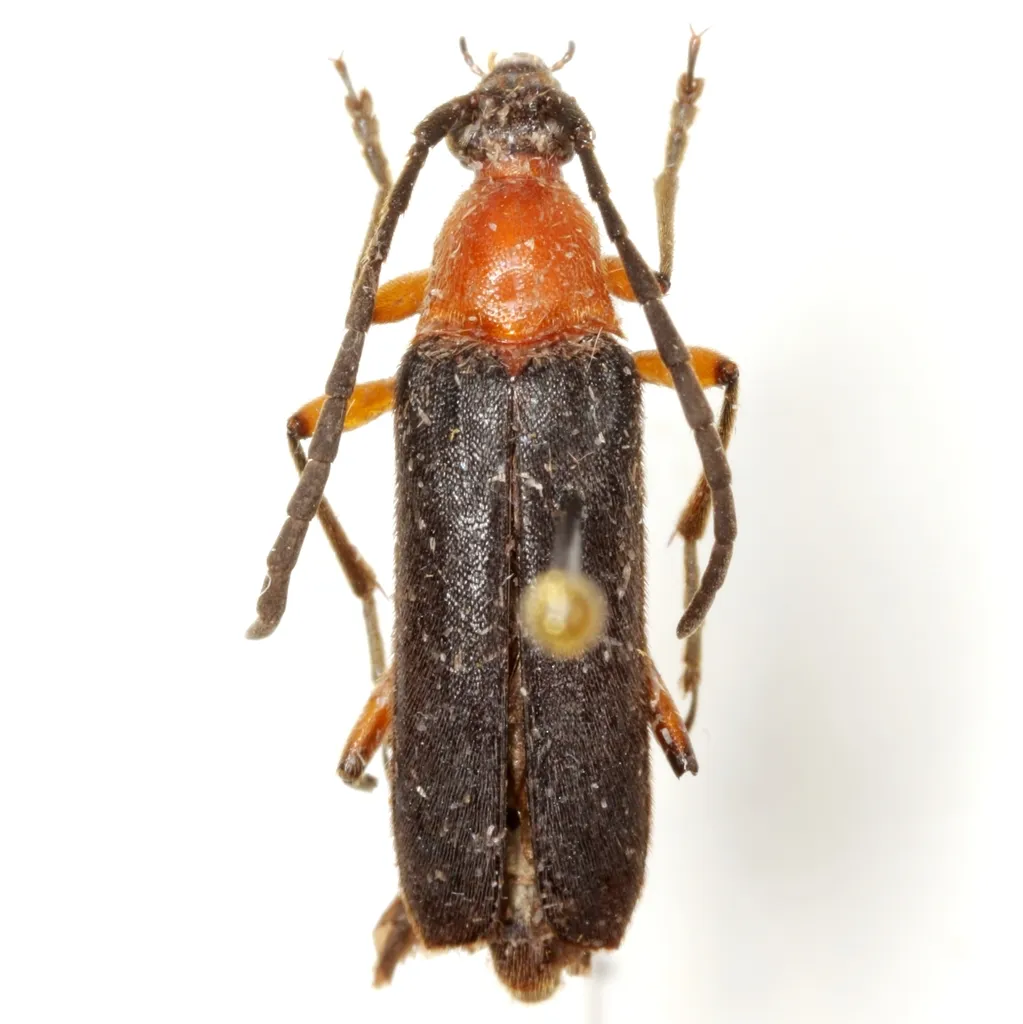
Megachoriolaus texanus
Megachoriolaus texanus
Identification: Key to spp. Giesbert & Hovore 1998 Described from one female specimen collected in the Davis Mountains, Texas, July 3, 1940, by D.J. and J.N. Knull. (Knull 1941)
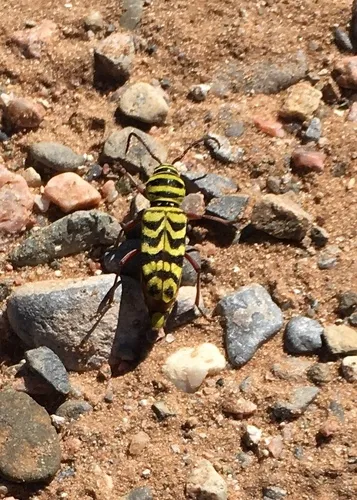
Megacyllene snowi
Megacyllene snowi
Megacyllene snowi is a species of beetle in the family Cerambycidae. It was described by Casey in 1912.
Megalopinus caelatus
Megalopinus caelatus
rarely found , although Karl Stephan collected 22 spmns of this sp. and 7 Megalopinus rufipes (LeConte) in Latimer Co., Oklahoma
Megalopinus lingafelteri
Megalopinus lingafelteri
Identification: Eyes small, head not wider than pronotum
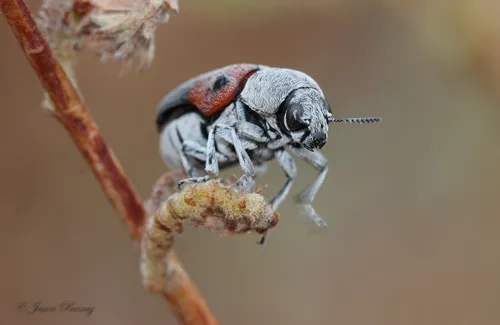
Megalostomis dimidiata
Megalostomis dimidiata
Identification: Det. E. G. Riley Walter et al. (1938) report, "The larvae of Megalostomis major are casebearers. Their cases, standing out from the walls of the runways like small rounded pegs, present one of the most curious features in the [ Atta t
Megalostomis pyropyga
Megalostomis pyropyga
Identification: The metallic blue green and purple pronotum and elytral apex are unique for US Megalostomis . … John R. Watts, 8 July, 2008
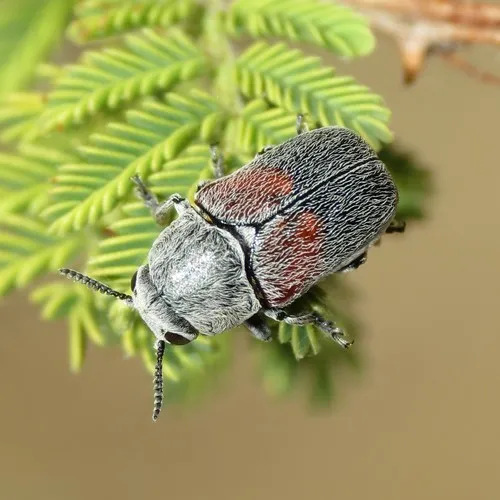
Megalostomis subfasciata
Megalostomis subfasciata
Megalostomis subfasciata is a species of case-bearing leaf beetle in the family Chrysomelidae. It is found in Central America and North America.
Megapenthes longicornis
Megapenthes longicornis
Type Locality: Huachuca Mtns, Arizona (Schaeffer 1916)
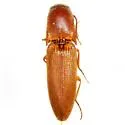
Megapenthes nigriceps
Megapenthes nigriceps
Identification: The specimen described is a male and closely related to rufilabris from which it differs in color, longer antennal joints, coarser punctation of prothorax, relatively longer hind tarsal joints and rather deeply emarginate hind coxal p
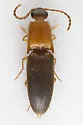
Megapenthes rufilabris
Megapenthes rufilabris
Megapenthes rufilabris (Megapenthes rufilabris) is a species in the family Elateridae, commonly known as click beetles, belonging to the order Coleoptera (Beetles). It is classified within the subfamily Elaterinae, suborder Polyphaga, superfamily Ela
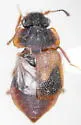
Megarthrus pictus
Megarthrus pictus
Identification: -the only nearctic species with bicolored elytra and angulate temples (=area immediately behind eye) -body and appendages predominantly yellow-brown (characteristic pattern shown below)
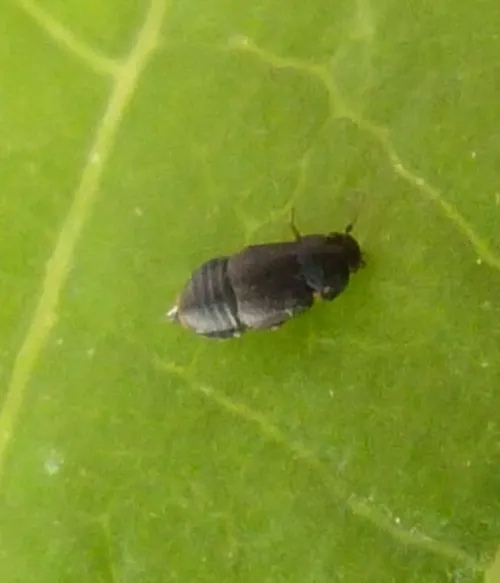
Megarthrus prosseni
Megarthrus prosseni
A very small dark maroon-brown rove beetle with a short rather stubby appearance. Associated with most decomposing material, including straw, leaves and fungi. It has also been associated with dung. All year but mostly late spring to autumn. Widespre
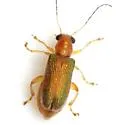
Megascelis texana
Megascelis texana
Type Locality: Brownsville, TX (Linell 1898) Texas considers this to be a "Species of Greatest Conservation Need" (SGCN) ( 6 )
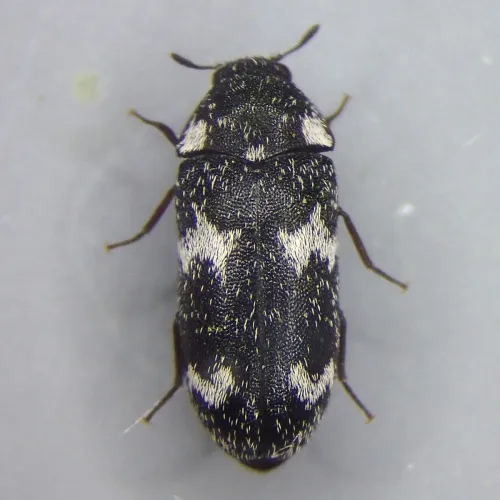
Megatoma undata
Megatoma undata
4 to 6 mm. Black with distinctive white markings on the pronotum and elytra. Freshly emerged specimens are initially brown. The typical habitat of the adults is around dead wood although they may also be found on flowers e.g. Crataegus or Malus in th
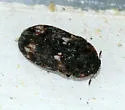
Megatoma variegata
Megatoma variegata
Identification: Female (shorter end segment on antennae) Male (longer end segment on antennae)
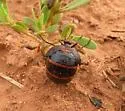
Megetra punctata
Megetra punctata
Identification: Head and pronotum relatively smooth, without clearly visible microreticulation at 32X magnification. Dorsal surface of elytra are coarsely punctate (not reticulate as in M. cancellata and vittata ). Elytra are rounded from top to side
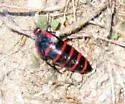
Megetra vittata
Megetra vittata
Identification: Dorsal surface of the elytra are finely, but irregularly reticulate, with punctures of varying size. Elytra are abrubtly deflexed down the side, producing a well-defined edge, a character shared with M. cancellata , but not punctata .
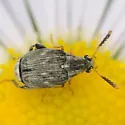
Meibomeus musculus
Meibomeus musculus
Identification: male antenna entirely pale yellow, female partly infuscated; male mesofemur yellow, female mesofemur partly infuscated; tarsi, fore leg, and mesotibia yellow. Vestiture grayish white, variegated, in an irregular band across middle of
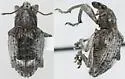
Melaleuca Leaf Weevil
Oxyops vitiosus
introduced to control its host, Melaleuca quinquenervia , an invasive weedy tree from Australia
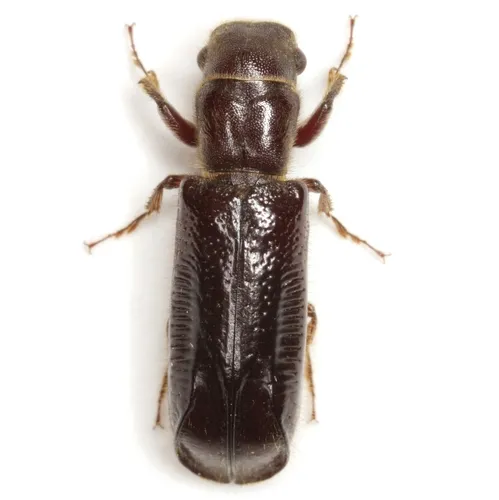
Melalgus plicatus
Melalgus plicatus
Identification: "Very distinct by peculiar sculpture of the [male's] elytra. The grooves extend about one-fourth the width of the elytra, and are wider than the interspaces between them, and very deep; they are from twelve to fifteen in number; the p
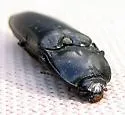
Melanactes piceus
Melanactes piceus
Identification: A large, "polished black" click beetle ( 3 ) . Blatchley ( 4 ) describes this species: (Note that this historical reference should not necessarily be relied on for keying, but the narrative description should be valid.)
Melanocanthon nigricornis
Melanocanthon nigricornis
Identification: easily distinguished from similar Canthon spp. by the presence of two apical spurs on the posterior tibia. this character also separates it from all other scarabaeines in NE Det. Brad Barnd, 2016 (from spmn)
Melanophila atropurpurea
Melanophila atropurpurea
Identification: From the original description of Say 1823 : "Black, slightly tinged with bronze or purplish ; elytra serrate and mucronate. Inhabits Arkansas. Body punctured : antennae black : labrum piceous: thorax with elevated obtuse punctures and
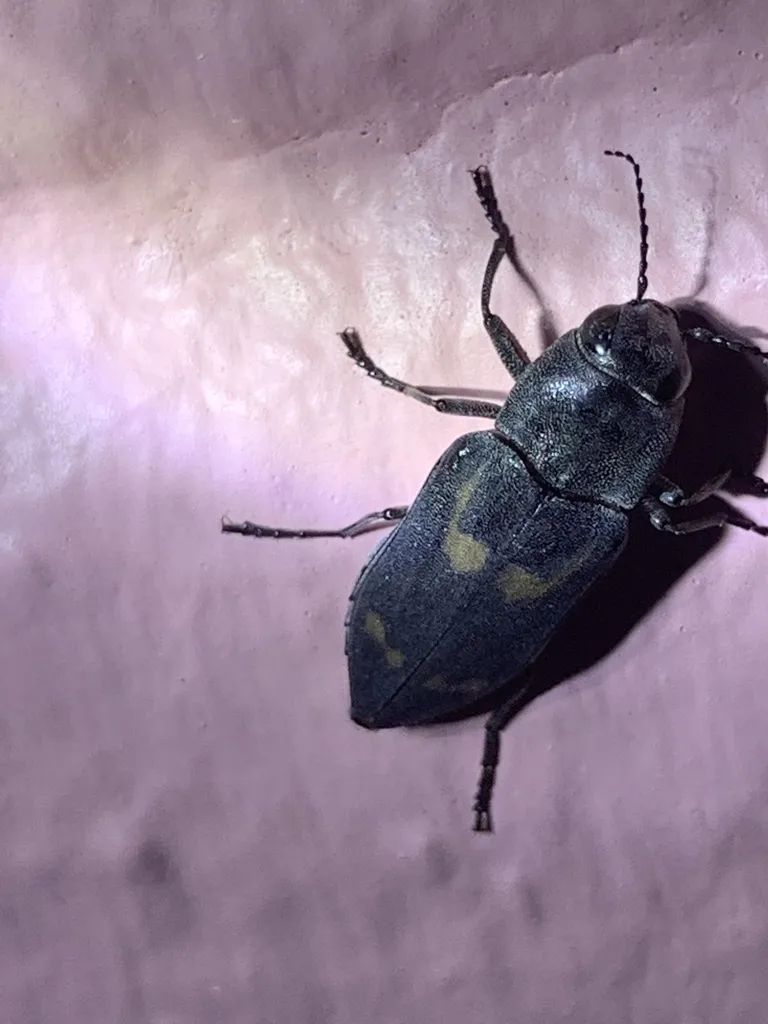
Melanophila notata
Melanophila notata
Melanophila notata is a species of metallic wood-boring beetle in the family Buprestidae. It is found in the Caribbean Sea, Central America, and North America.
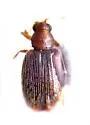
Melanophthalma inermis
Melanophthalma inermis
Identification: aedeagus not bilaterally symmetrical in ventral view
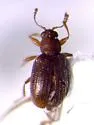
Melanophthalma pumila
Melanophthalma pumila
Identification: Prosternum swollen and prominent anterior to procoxae (easily seen in lateral view)
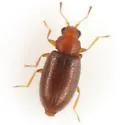
Melanophthalma simplex
Melanophthalma simplex
Identification: Det. Fred G. Andrews, 1994 comes to lights.
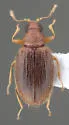
Melanophthalma taurica
Melanophthalma taurica
Identification: Requires genitalia dissection of male If using , this species will key to M. villosa .
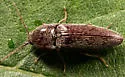
Melanotus americanus
Melanotus americanus
Identification: Small size, subequal antennomeres II and III (in male), rounded pronotum with sparse punctures usually support identification of this species externally. Male genitalia are also distinctive .
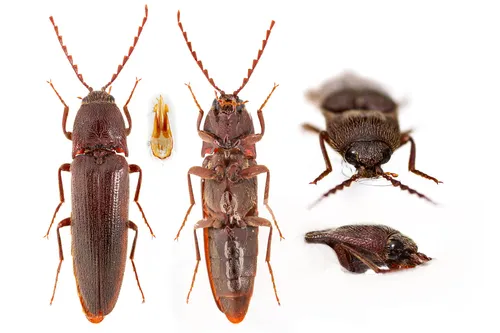
Melanotus castanipes
Melanotus castanipes
Length 13 to 19 mm It is unicolourous black, or with slightly browner head and is very elongated with tapering elytra. Longitudinal rows of pits are obvious, as are densely scattered pits on the pronotum. The legs and antennae are black and the anten
Melanotus clandestinus
Melanotus clandestinus
Identification: Small size; subequal antennomeres II and III; dense pronotal punctures; dense antennae setae.
Melanotus communis
Melanotus communis
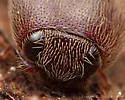
Identification: Only reliable way to identify this species is examination of male genitalia. Similar congeners are nearly identical externally. See also info. under Melanotus communis -compex .
Melanotus communis Complex
Melanotus communis-complex
members of this complex usually cannot be reliably identified without examination of male genitalia, and include the following species : Some other species are similar but can often be ruled out based on external characters:
Melanotus corticinus
Melanotus corticinus
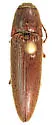
Identification: Large size (among members of the americanus -complex), subequal antennomeres II and III, and long antennae make this species readily-identified externally .
Melanotus decumanus
Melanotus decumanus
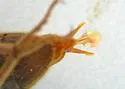
Identification: The large, jutting frons is the best external feature to separate this species from other members of the communis -complex. Males genitalia are also distinctive .
Melanotus indistinctus
Melanotus indistinctus
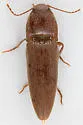
Identification: Male. - Same as communis , but average size smaller, a little darker in color, frontal margin little wider than black border, parantennal fovea small but distinct, and pronotal pimctures somewhat larger and denser. Genitalia with slen
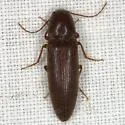
Melanotus lanceatus
Melanotus lanceatus
Identification: closely related to M. longulus ; the smaller pronotal punctures in lanceatus are the most noticeable difference
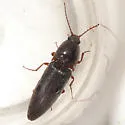
Melanotus pertinax
Melanotus pertinax
Identification: appendages are of a different color than the body; no other American Melanotus species has this coloration
Melanotus taenicollis 0
Melanotus taenicollis
Hume Douglas distinguished Ampedus rubricus from M. taenicollis : "This identification based on the lack of basal sublateral pronotal plicae (present in Melantotus), the fine red-brown vestiture (coarse and white in M. taenicollis ), and also the dar
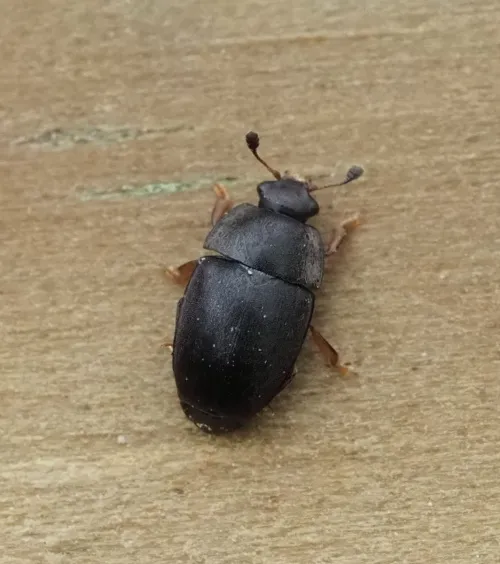
Meligethes atratus
Meligethes atratus
Length 2.5 to 3.8 mm. Black with pale brown legs and antennae (except for the dark club) and with pale pronotal and elytral margins. It lacks striae on the elytra but does have a groove running down each elytron from behind the humerus (sub-humeral d
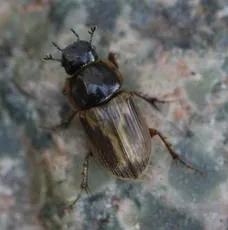
Melinopterus prodromus
Melinopterus prodromus
This rather cylindrical looking Dung Beetle has yellow-brown ribbed elytra with a black thorax. Length 5 to 7 mm. It is possibly the commonest of the dung beetles but is very similar to Melinopterus sphacelatus . Melinopterus sphacelatus looks almost
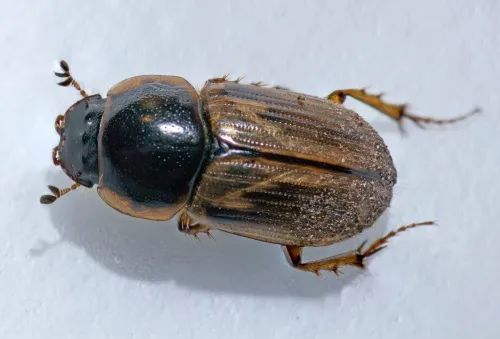
Melinopterus sphacelatus
Melinopterus sphacelatus
Size 4.5 to 5.5 mm, the females are slightly larger than the males. The elytra vary from pale straw colour to a deeper brown, the head is blacker. Melinopterus sphacelatus is very similar to M. prodromus and both can be found together in dung. M. sph
Melissa's Tiger Beetle
Cicindelidia melissa
Identification: can be distinguished from all other similar Cicindelidia by its dark green-violet abdominal venter with the two apical segments dull orange or orange-brown, a brassy-cupreous head and pronotum with metallic blue reflections in sulci,
Meloe bitoricollis
Meloe bitoricollis
Identification: pronotum with region of anteriour angles strongly inflated, edgy to subconical
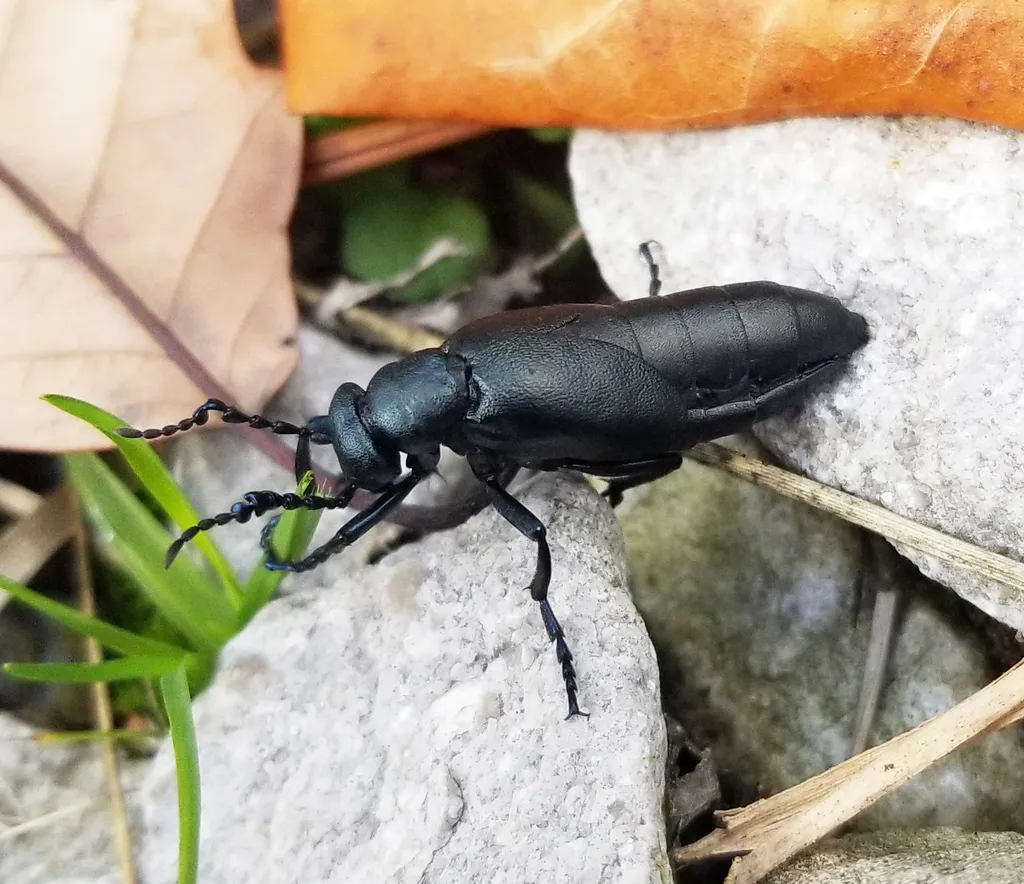
Meloe campanicollis
Meloe campanicollis
Identification: Like in most American Meloe , apical antennomeres shorter than 2x their width, unlike in M. americanus/impressus , but not M. angusticollis . A greenish/olive tint is common and quite diagnostic, if there (can be black/blue). Pronotum
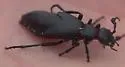
Meloe strigulosus
Meloe strigulosus
Identification: Antennomere 4 slightly shorter than 3rd and 5th
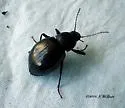
Meracantha contracta
Meracantha contracta
Identification: Det. Guy A. Hanley, 2012 Nocturnal, flightless
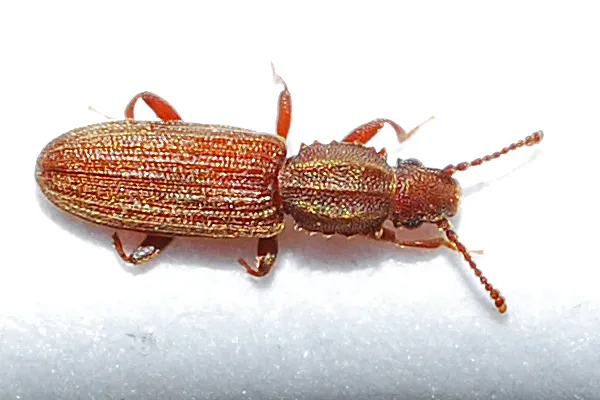
Merchant Grain Beetle
Oryzaephilus mercator
Identification: see The two Oryazephilus common in the US can be distinguished by a projection or bump just behind the eye. In O. surinamensis , this area is broad and blunt, and in mercator it is narrow and more protruding. Left: O. surinamensis , r
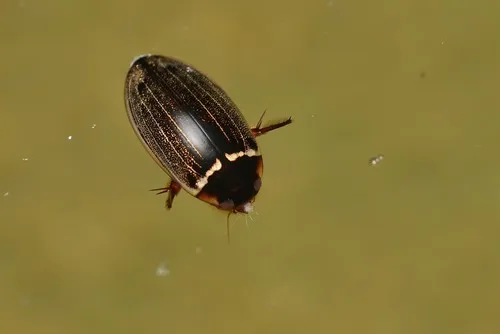
Meridiorhantus calidus
Meridiorhantus calidus
Identification: Pronotum dark medially with broad pale lateral margins; elytron variegated; ventral surface dark reddish brown ( 3 ) Adult's head dark brown to black, large eyes, front and top of head with brownish-yellow spot. Elytra with pale band
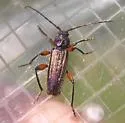
Meriellum proteus
Meriellum proteus
Hanley collected several specimens of this species in 2014 in a stand of Colorado Spruce trees in Minot, North Dakota. The trees had been inundated by floodwaters in 2011 and had been in decline since that flood, and were subsequently removed. no oth
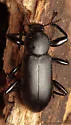
Merinus laevis
Merinus laevis
Identification: Large, elytra smooth, femora wide, club-shaped; epipleura do not reach tip of elytra (unlike in Alobates ) Males of Alobates have the anteriour femora thicker, almost as in Merinus females, but: - pronotum narrower in relation to elyt
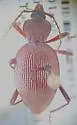
Merkel's Snail-eating Beetle
Scaphinotus merkelii
Scaphinotus merkelii, Merkel's snail-eating beetle, is a species of beetle of the Carabidae family. This species is found in North America (British Columbia, Idaho, Montana), where it inhabits mixed forests.
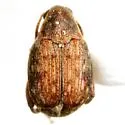
Merobruchus insolitus
Merobruchus insolitus
Identification: The salient characters that mark this species are the dark red body , elytral margins clouded with black, white basal pygidial triangle elongated into evenly tapered dart . (emphasis added) Type locality: Guatemala, near Guatemala Cit
Merobruchus placidus 0
Merobruchus placidus
Identification: the most variable and widespread species in the genus on the North American continent. Type Locality: Texas
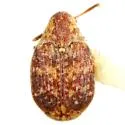
Merobruchus terani
Merobruchus terani
Type locality: Costa Rica, Guanacaste Prov., Santa Rosa N.P.
Merobruchus vacillator
Merobruchus vacillator
Merobruchus vacillator (Merobruchus vacillator) is a species in the family Chrysomelidae, commonly known as leaf beetles, belonging to the order Coleoptera (Beetles). It is classified within the subfamily Bruchinae, tribe Bruchini, suborder Polyphaga
Mesquite Borer
Placosternus difficilis
Mesquite Borer (Placosternus difficilis) is a species in the family Cerambycidae, commonly known as longhorn beetles, belonging to the order Coleoptera (Beetles). It is classified within the subfamily Cerambycinae, tribe Clytini, suborder Polyphaga,
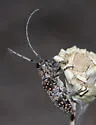
Mesquite Girdler
Oncideres rhodosticta
Identification: Distinguished from O. cingulata by three black dots on thorax, O. pustulata by much smaller size. Det. M. A. Quinn, 2017 widespread and common girdler of mesquite ( Prosopis juliflora )