
Primitive Winged Insects
Order Coleoptera
The Primitive Winged Insects (Order Coleoptera) includes 15,720 species across 160 families and 3,716 genera in our directory.
About Primitive Winged Insects
Coleoptera is the largest order of insects with over 400,000 described species, representing ~25% of all known animal species and ~40% of all insects. In the U.S. alone, nearly 30,000 beetle species have been identified.
Economic Impact
Beetles have major economic significance: leaf beetles (Chrysomelidae) and weevils (Curculionoidea) are among the most destructive agricultural pests globally, costing billions annually, while predatory species like ladybugs provide natural pest control.
Ecological Role
Beetles are prominent decomposers, especially in forests, breaking down dead wood and recycling nutrients. As predators, they reduce populations of pest insects. Many species are also important pollinators of flowering plants.
Families in Coleoptera (160)
Species in Coleoptera (15,720)
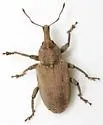
Listronotus pallidus
Listronotus pallidus
"A rare species, known only from 3 type specimens." --C.W. O'Brien, 2010
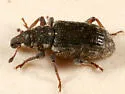
Listronotus porcellus
Listronotus porcellus
Identification: Nov 2025: Highly doubtful L. porcellus can be identified from an image without genitalic dissection.
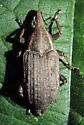
Listronotus squamiger
Listronotus squamiger
Identification: Hind tibial spur with basal tooth; elytra with odd intervals elevated, some connections with transverse wrinkles, though variable; single median carina on rostrum; some females have the elytra produced as in L. caudatus (Henderson 194
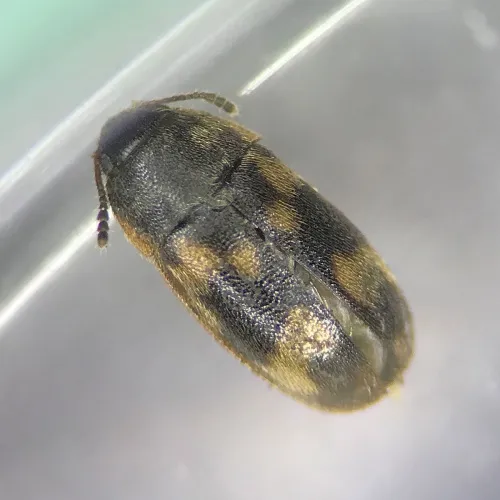
Litargus connexus
Litargus connexus
Length 2.4-2.8mm. Head and pronotum black apart from hind angles, legs yellow or pitchy. Unless identified by a recognised expert, a good macro photo is required and/or the specimen should be examined with a microscope. In the comments box, state the
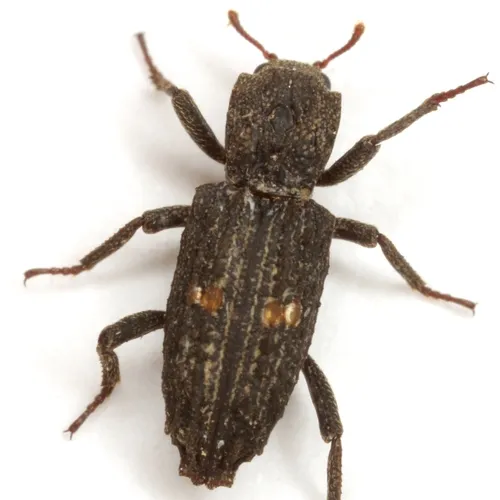
Lithophorus ornatus
Lithophorus ornatus
Identification: each elytron w/ 3 translucent amber spots near middle Det. E. G. Riley, 2009 Type Locality: Paso de San Juan, Jilotepec, Veracruz, Mexico
Little Brown Mealybug Destroyer
Nephus sordidus
Identification: apex of elytron with dark brown area extending forward along suture and along lateral border, sutural margin obscurely darker that rest of elytron Det. M. A. Quinn, 2016 Type Locality: California
Live-oak Root Borer
Archodontes melanopus
Identification: A. m. melanopus resembles Mallodon dasystomus (see Yanega )
Living-hickory Borer
Goes pulcher
Identification: Broad banded markings are distinctive. Uncommon ( 5 )
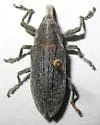
Lixus asper
Lixus asper
Identification: 2nd joint of antennal funiculus shorter than next two combined
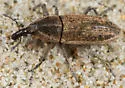
Lixus maritimus
Lixus maritimus
Identification: resembling L. perforatus and semivittatus , but less slender
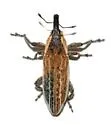
Lixus semivittatus
Lixus semivittatus
AZ in April numerous mating pairs on Baccharis salicifolia stems
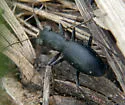
Loamy-ground Tiger Beetle
Dromochorus belfragei
Identification: The dorsal coloration of this species is brown to black with no elytral maculations. Male labrum is black with the central diamond-shaped portion ivory colored. The female labrum is metallic black. Apparently affected by the invasive
Loberus aeratus
Loberus aeratus
Identification: Paratype - Finnish Biodiversity Information Facility Type Locality: Lake Worth, Palm Beach Co., FL
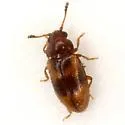
Loberus ornatus
Loberus ornatus
Identification: Disc of pronotum dark. Large blackish spot at base of elytra and broad blackish median fascia reaching to the sides and up to the humeri. Det. E. G. Riley, 2009 I have taken this beetle by random beating in the Sabal Palm Grove, and e
Lobiopa setosa 0
Lobiopa setosa
Identification: adult habitus • tends to be broader, more depressed, and darker than its closest relative undulata rare species
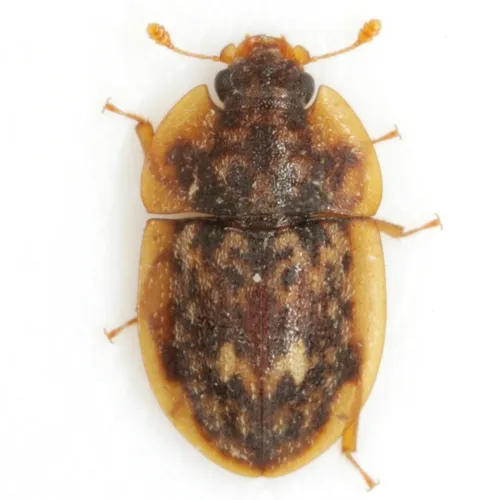
Lobiopa undulata
Lobiopa undulata
Lobiopa undulata (Lobiopa undulata) is a species in the family Nitidulidae, commonly known as sap-feeding beetles, belonging to the order Coleoptera (Beetles). It is classified within the subfamily Nitidulinae, tribe Nitidulini, suborder Polyphaga, s
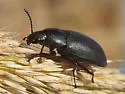
Lobometopon fusiforme
Lobometopon fusiforme
Identification: "In this lighting, you can see the faint hint of costae (ridges) running lengthwise along the elytra, and an almost-impunctate dorsal midline on the pronotum. I noticed the same thing in several NMNH specimens of this species." (per.
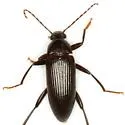
Lobopoda monticola
Lobopoda monticola
"Very similar to L. punctulata and may possibly represent a geographical race of it. Since it is anatomically distinct from either of the races of L. punctulata and is almost certainly geographically isolated from them, I have chosen to recognize it
Lobopoda nigrans
Lobopoda nigrans
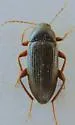
Identification: Has the smallest eyes of any Lobopoda north of Mexico: Seperated by about 1/5 width of head over eyes in male, vs. approx. by 1/3 in female. In the males of other Lobopoda , eyes (almost) touch in middle, the female condition resemble
Lobopoda punctulata
Lobopoda punctulata
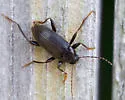
Lobopoda punctulata (Lobopoda punctulata) is a species in the family Tenebrionidae, commonly known as darkling beetles, belonging to the order Coleoptera (Beetles). It is classified within the subfamily Alleculinae, suborder Polyphaga, superfamily Te
Lobopoda socia
Lobopoda socia
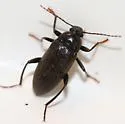
Identification: male mesotarsi widened like protarsi, though less [only segment (3-)4 wider in Lobopoda s.str.] our only representative of the subgenus Mesolobopoda Campbell 1966
Lobrathium multipunctum
Lobrathium multipunctum
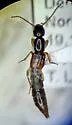
Identification: Male with deeply emarginate and impressed 6th abdominal sternite; 5th sternite with broad apical impression, bordered anteriorly with a pair of tubercles. earliest record in our area: WA 1932
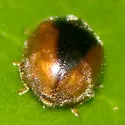
Loew's Lady Beetle
Scymnus loewii
Identification: >95% look like this, but Gordon's figures show a few other uncommon forms Det. M. A. Quinn, 2012 Introduced to New Zealand and Hawaii.
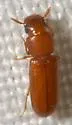
Longheaded Flour Beetle
Latheticus oryzae
In our area, a minor pest of stored grain products; much more serious in the tropics
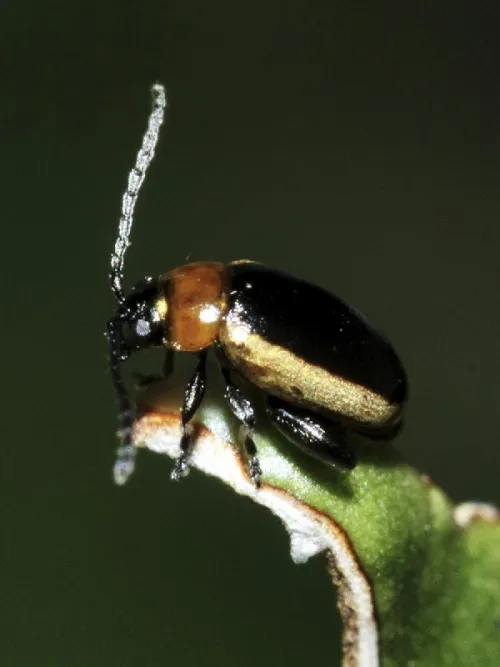
Longitarsus dorsalis
Longitarsus dorsalis
This small beetle (2 to 3 mm) has a black head and an brown pronotum. The dark elytra have broad yellow margins. Often found on post-industrial sites where Ragwort and Groundsel is plentiful. All year round, but perhaps more common in the cooler mont
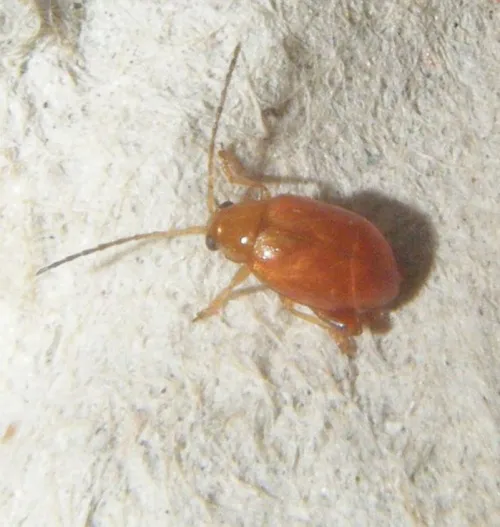
Longitarsus flavicornis
Longitarsus flavicornis
A small 2.5 to 3 mm pale orange to reddish flea beetle. Associated with Ragworts (Senecio species). Fairly frequent and widespread south of a line from the Mersey to the Humber estuaries. No additional images available for this species.
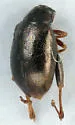
Longitarsus melanurus
Longitarsus melanurus
Identification: Dorsum distinctly alutaceous, moderately shining, brownish-piceous, antennae reddish brown, darker apically, legs except for hind femora yellowish.
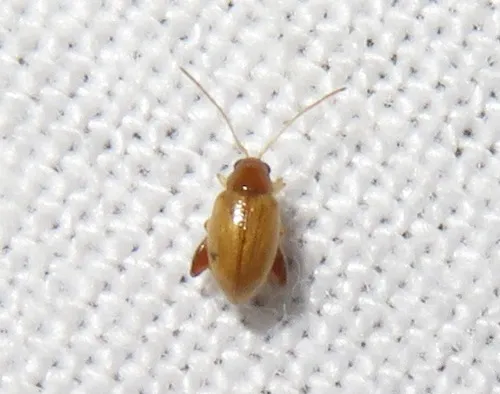
Longitarsus pellucidus
Longitarsus pellucidus
Longitarsus pellucidus is a species of flea beetle in the family Chrysomelidae. It is found in Europe and Northern Asia (excluding China) and North America.
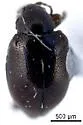
Longitarsus turbatus
Longitarsus turbatus
Identification: Oblong oval, not very convex, piceous brown or castaneous, shining, surface with extremely faint bronze lustre. Antennae with four basal joints pale, outer joints gradually piceous. Head smooth. Thorax nearly one half wider than long,
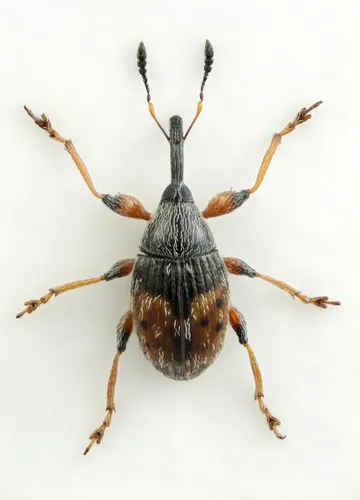
Loosestrife Weevil
Nanophyes marmoratus
A tiny weevil 1.5 to 2.5 mm. Body black with variable yellow or cream marking to the elytra; these vary in intensity and size and specimens may be entirely pale over the apical two-thirds or, conversely, entirely black. It may be possible to identify
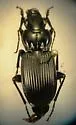
Lophoglossus gravis
Lophoglossus gravis
Identification: Pronotum is distinctive for the genus
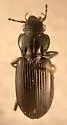
Lophoglossus vernix
Lophoglossus vernix
Will 1999 considered the species the rarest in the genus, and possibly extirpated from previous sites due to habitat destruction.
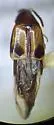
Lordithon poecilus
Lordithon poecilus
Externally similar to L. difficilis Campbell, a PNW species. Other than subtle differences in color and the 7th abdominal male sternite, the two are most reliably distinguished via male genitalia
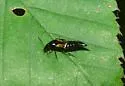
Lordithon quaesitor
Bobitobus quaesitor
Identification: It has a relatively long thin head, the body is shining black with the golden blotches on the elytra - D.S. Chandler one of the potential old-growth indicators in the Northeast; it is a species proposed for threatened/endangered lists
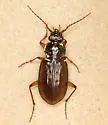
Loricera foveata
Loricera foveata
Identification: "The only nearctic species with pale legs and with 2nd, 4th, and 7th elytral intervals each with 3 foveae." ( comment by Tim Loh ) Type at MCZ .
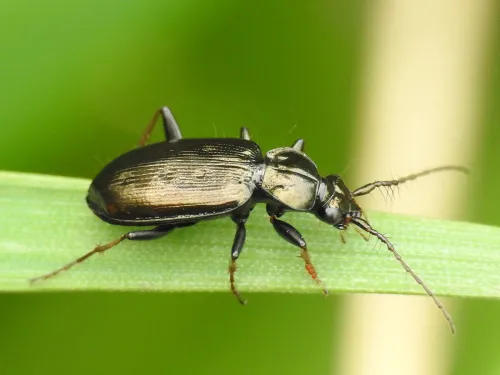
Loricera pilicornis
Loricera pilicornis
A small (6 to 8.5 mm) brassy-brown or bronze-black ground beetle, this species has cup like depressions (foveate punctures) on the wing cases with conspicuous long bristles (setae) at the bases to its antennae as well as bristles on the underside of
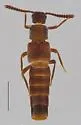
Losiusa angusticollis
Losiusa angusticollis
Identification: Disc of pronotum is continuous with hypomeron, no marginal bead present . Known from four specimens.
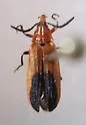
Lucaina greeni
Lucaina greeni
Identification: CA to NV & TX ( Cavan & Jones 2020 )
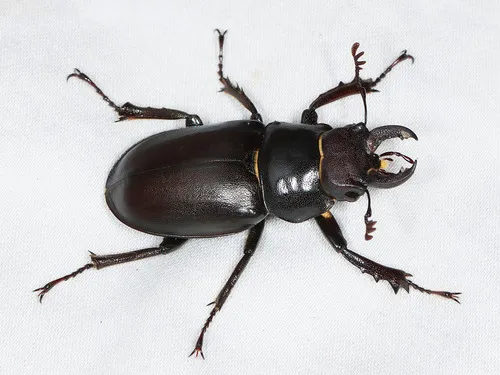
Lucanus placidus
Lucanus placidus
Identification: Similar to L. capreolus , but much darker, elytra more punctate. Legs dark reddish brown, no light brown patches as in capreolus . Several small teeth on inside of mandibles of male--capreolus has only one.
Lucidota punctata
Lucidota punctata
Identification: Similar to L. atra , but much smaller, markings on pronotum somewhat different; elytra lack costae (raised ridges) and have a more coarse granulate to punctate surface pink vittae of pronotum usually tiny, often subtriangular uncommon
Lugubrius Lady Beetle
Hyperaspis lugubris
Identification: Gordon's Figures "This species is peculiar in that the male pronotum is usually entirely pale, and the female pronotal pattern would be that of the male in most other North American species of Hyperaspis ."
Luperaltica nigripalpis
Luperaltica nigripalpis
Identification: color variable: key to Luperaltica species in Wilcox
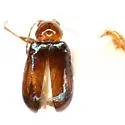
Luperaltica nitida
Luperaltica nitida
Identification: elytra shining blue-green, very finely punctate Det. E. G. Riley Holotype male, allotype female, paratypes 3 males and 6 females, Chisos Mts., Texas, July 17, 1946, D. J. and J. N. Knull collectors, also, 16 males and 8 females, Chiso
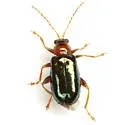
Luperaltica semiflava
Luperaltica semiflava
Identification: Oblong; elytra metallic blue-green; upper surface highly polished throughout ; elytral punctation indistinct Det. E. G. Riley, 2011 Type Locality: Dripping Springs, Organ Mtns, sc. New Mexico
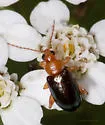
Luperaltica senilis
Luperaltica senilis
Identification: key to Luperaltica species in Wilcox
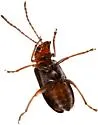
Luperosoma subsulcatum
Luperosoma subsulcatum
Identification: The semicostate elytra readily distinguish this species. (Blake 1958) Males have weakly enlarged terminal antennomeres and a small subapical notch on the inner margin of their mesotibia. (Per E.G. Riley) Lectotype Locality: Yuma, AZ (
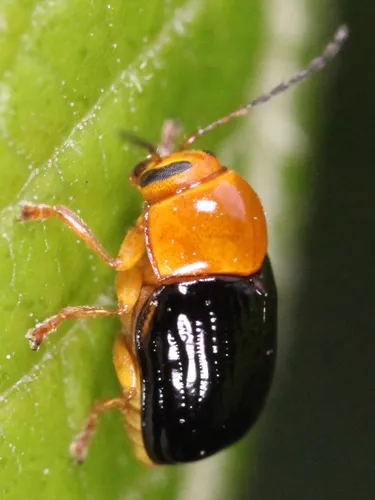
Lustrous Cryptocephalus
Cryptocephalus nanus
Cryptocephalus nanus is a species of case-bearing leaf beetle in the family Chrysomelidae. It is found in North America.
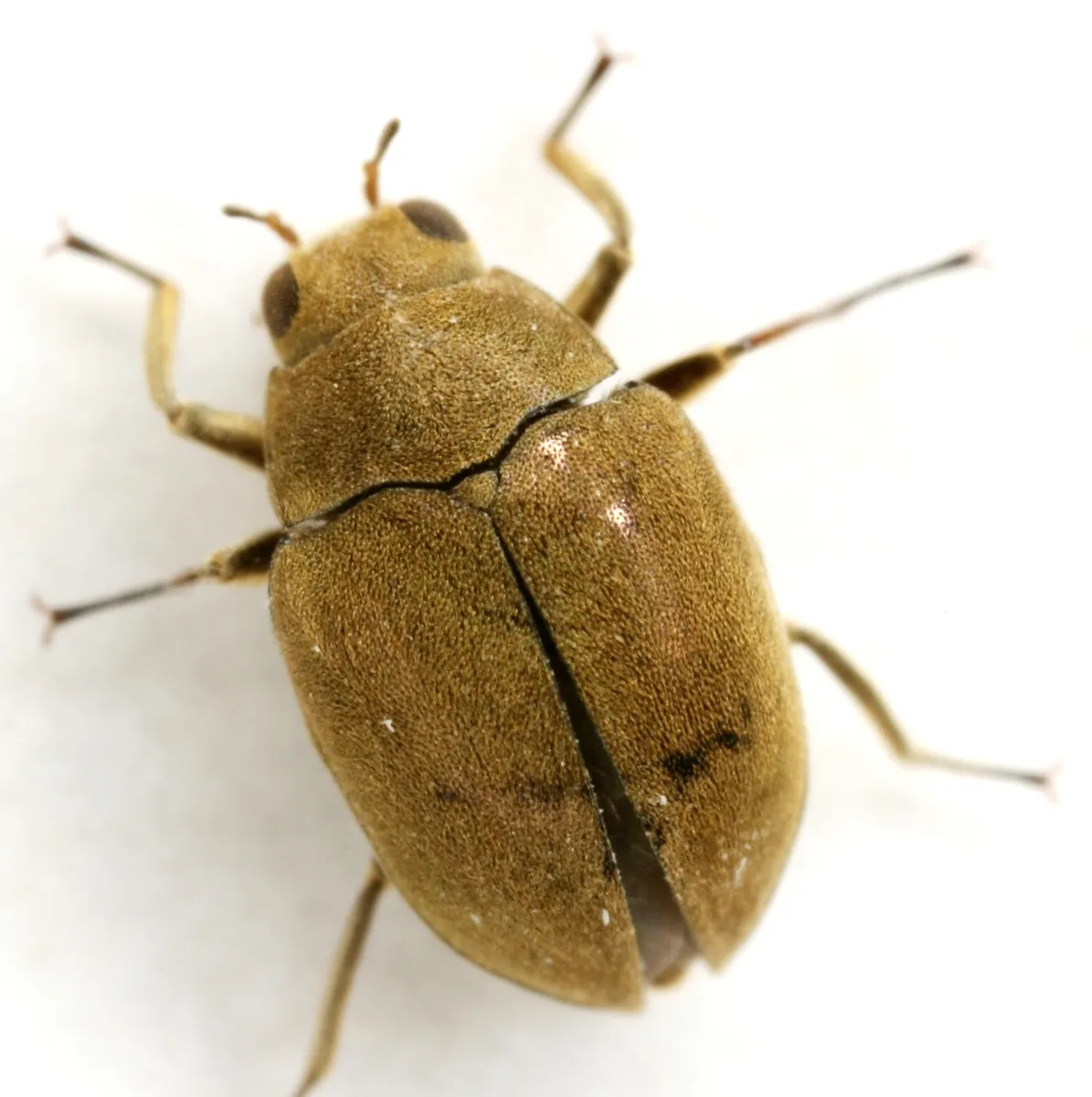
Lutrochus luteus
Lutrochus luteus
This very remarkable insect was found by Lieut. H. Haldeman, at Fort Gates in Texas; for my specimens I am indebted to his brother S. S. Haldeman. ( 5 )
Lycochoriolaus lateralis
Lycochoriolaus lateralis
Identification: Two color forms, paler form uncommon Uncommon ( 4 )
Lycoperdina ferruginea
Lycoperdina ferruginea
Identification: Det. K. Stephan, 1992 Said to engage in reflex bleeding
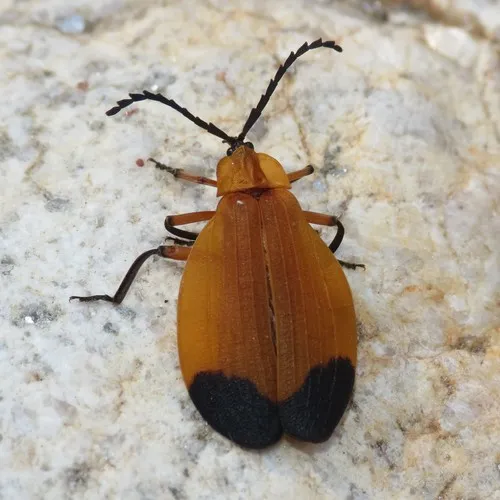
Lycus arizonensis
Lycus arizonensis
Identification: nearly identical to Neolycus fernandezi ( Lycus fernandezi ) but lacks the "notch" in the apical black spot (and is typically bigger).
Lygistopterus perfacetus
Lygistopterus perfacetus
Lygistopterus perfacetus (Lygistopterus perfacetus) is a species in the family Lycidae, commonly known as net-winged beetles, belonging to the order Coleoptera (Beetles). It is classified within the subfamily Calochrominae, suborder Polyphaga, superf
Lymantes nadineae
Lymantes nadineae
Identification: Eyes fully lacking, ocular swelling not evident. Allotype female (CMNC), Travis County, Tooth Cave, 19 May 1965, T. C. Barr. Type Locality: Texas: Williamson County, Electro-Mag Cave, 27 Dec 2006, P. Paquin, C. Crawford, K. White, fou
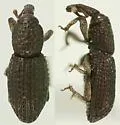
Lymantes scrobicollis
Lymantes scrobicollis
Lymantes scrobicollis (Lymantes scrobicollis) is a species in the family Curculionidae, commonly known as snout and bark beetles, belonging to the order Coleoptera (Beetles). It is classified within the subfamily Molytinae, tribe Lymantini, suborder
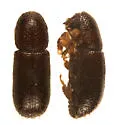
Lymantor decipiens
Lymantor decipiens
The adults and larvae reportedly feed on certain black wood fungus which are always present in dead wood.
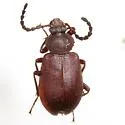
Lystronychus championi
Lystronychus championi
Identification: Antenne broader externally, the joints subserrate; thorax broader than long, sides bidentate at middle. ( 3 ) Type: One female, western Texas.
Lythraria salicariae 0
Lythraria salicariae
Identification: see habitus photos: specimens ▪ live individual
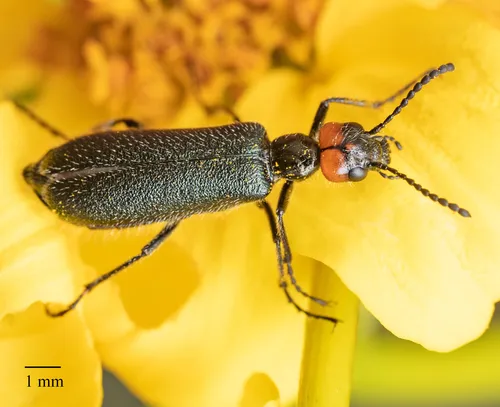
Lytta auriculata
Lytta auriculata
Identification: Det. M. A. Quinn, 2015 Type locality: Kern River region, California.
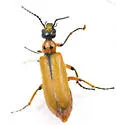
Lytta biguttata
Lytta biguttata
Identification: Pinto: the elytra can be immaculate in this sp.
Lytta childi
Lytta childi
Identification: pronotum usually red and black; variation black, to red except the posteriour margin black, primary red maculae near anteriour angles L. molesta is similar
Lytta cribrata
Lytta cribrata
Identification: Pronotoum black at center, broadly orange at sides; head with a diamond-shaped orange frontal spot. Det. E. G. Riley, 1996
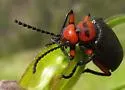
Lytta deserticola
Lytta deserticola
Identification: Tibiae black, femora rufous across middle. Elytra finely reticulate (emphasis added). Tarsi with pads. Rare forebody shiny, elytra subopaque and with fine raised reticulations; head, pronotum and fernora except for base and tip reddis
Lytta hoppingi 0
Lytta hoppingi
Identification: Head with red frontal spot; may also have red temples. Pronotum red, with black anteriour margin and median stripe, ±narrowing behind. Voucher specimen habitus: dorsal • lateral
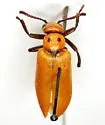
Lytta lecontei
Lytta lecontei
Identification: Head and pronotum orange, pronotum with two black spots Det. R.B. Selander, 1953 Type Locality: One specimen, Mexican Boundary; collected by Mr. Clark, under Col. J. D. Graham.
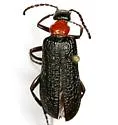
Lytta mirifica
Lytta mirifica
Identification: Mirifica and arizonica only species of Lytta possessing combination of black head, orange pronotum, and reticulate elytra. elytra coarsely reticulate, most cells at least .5 mm. in diameter. Rio Grande region near El Paso, Texas PARAT
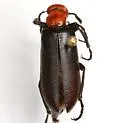
Lytta mutilata
Lytta mutilata
Identification: Prothorax widest before middle, not angulate. Head between eyes, and all of dorsum of pronotum rufous. Male with antennal segments 4 and 5 distorted. Elytra finely rugose, not reticulate. Werner et al. list Lytta mutilata as 'abundant
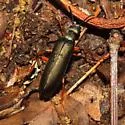
Lytta unguicularis
Lytta unguicularis
Identification: Legs orange, except for the tip of tarsi, claws (hence the name), and knees. Males with modified front and hind legs; females differ from L. aenea in the short and sparse pubescence on head and pronotum, and lack of a colour contrast
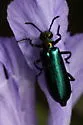
Lytta viridana
Lytta viridana
may co-occur with L. nuttalli on same plants (in SK)
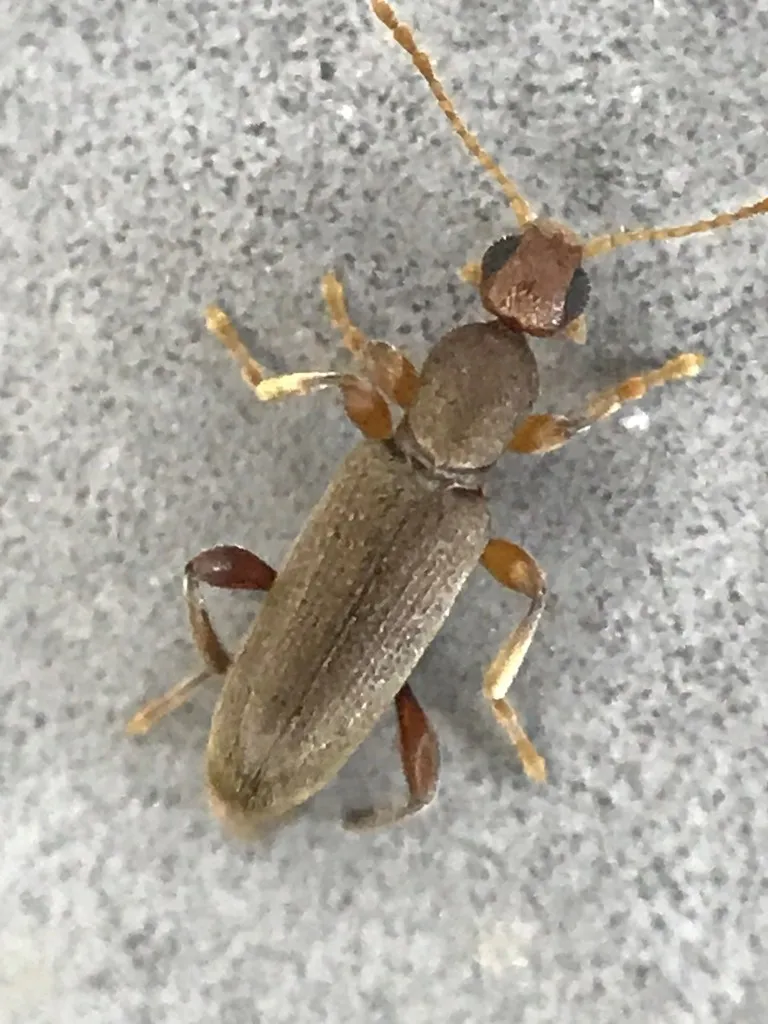
Macratria brunnea
Macratria brunnea
Macratria brunnea is a species of antlike flower beetle in the family Anthicidae. It is found in Central America and North America.
Macrelmis shoemakei
Macrelmis shoemakei
Type Locality: San Felipe Creek, Val Verde County, Texas
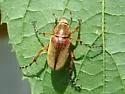
Macrodactylus angustatus
Macrodactylus angustatus
Identification: "...erect spine-like setae on the pronotal disc. According to Paul Lago, there apparently is some overlap in the character between subspinosus and angustatus (comparing external characters to DNA analyses), although subspinosus female
Macrohydnobius matthewsii
Macrohydnobius matthewsii
Adults have been collected most frequently on snow, with a few in flight intercept and pitfall traps
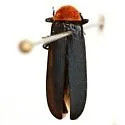
Macrolygistopterus ruficollis
Macrolygistopterus ruficollis
Identification: black, elytra blueish, pronotum red
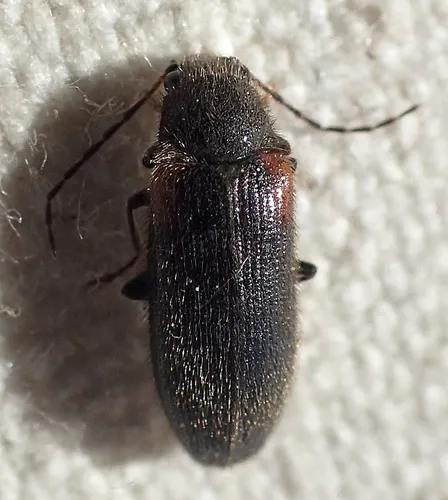
Macropogon testaceipennis
Macropogon testaceipennis
Macropogon testaceipennis is a species of soft-bodied plant beetle in the family Artematopodidae. It is found in North America.
Macrorhoptus estriatus
Macrorhoptus estriatus
Adults can be found in flowers of winecups ( Callirhoe ) (comment by Robert Anderson, 28 May, 2010)
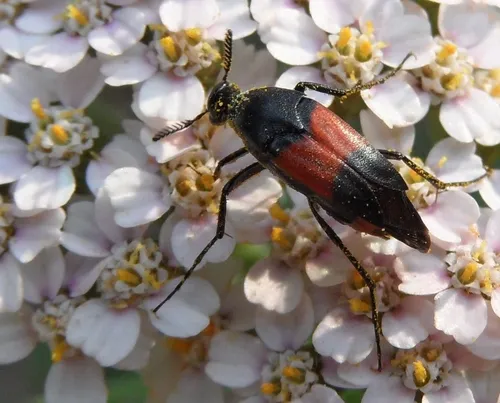
Macrosiagon cruenta
Macrosiagon cruenta
5 main color varieties: *nominate - https://www.bugguide.net/node/view/153520 *dark form *California form with little to no black - rufum - https://mczbase.mcz.harvard.edu/guid/MCZ:Ent:5145 *CA-TX form with rufous head and thorax - horni - https://ww
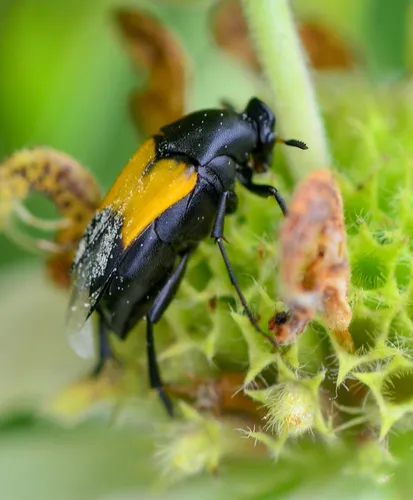
Macrosiagon dimidiata
Macrosiagon dimidiata
Identification: convex frons and lack of pronotal tubercle shown above are important differences from M. flavipennis (see Zack Falin's comment there)
Macrosiagon excavata
Macrosiagon excavata
Identification: Elytral pattern constant as margins, base, and longitudinal vitta short from base dark on pale ground; head and pronotum red to black. Pronotum with two long, triangular depressions (name!)
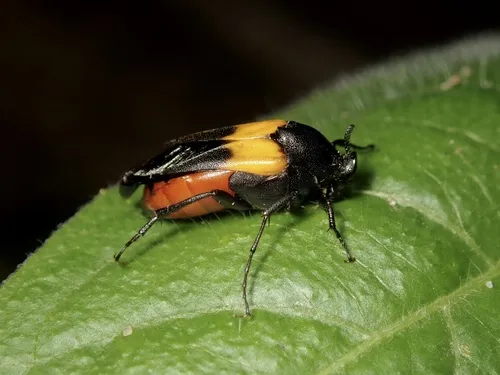
Macrosiagon flavipennis
Macrosiagon flavipennis
Identification: If you compare it to M. dimidiata , you'll notice this species has an odd, fin or cup-shaped tubercle on the posterior of the pronotum that the other one lacks. This species also has something of a dimple or concavity to its forehead.
Macrosiagon linearis
Macrosiagon linearis
Identification: of the slender shape of M. limbata , but no body part variegated. Usually, males are black, females red with elytra black (Vaurie 1955) spelling lineare found in traditional, but wrong treatment of the genus' gender as neutral (vs cor
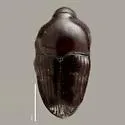
Madarellus perditus
Madarellus perditus
Identification: allied rather closely to cuneatus Casey (Range: c.TX to C. Amer.); it differs, however, in its less abbreviated and less rapidly cuneiform outline and longer elytra; in cuneatus the elytra are barely a fifth longer than wide and less
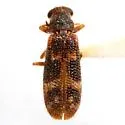
Madoniella chiricahua
Madoniella chiricahua
Identification: PARATYPE Type locality: Chiricahua Mountains, Cochise Co., Arizona.
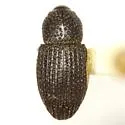
Maemactes cribratus
Maemactes cribratus
Identification: The general appearance is that of Tyloderma , but the sculpture resembles that of several species of Baris . ( 3 )
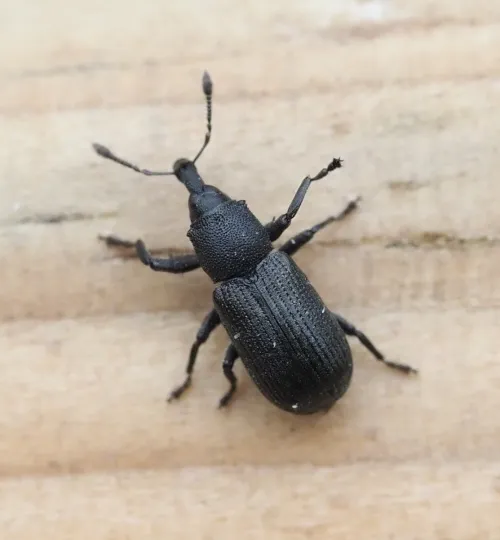
Magdalis armigera
Magdalis armigera
Length 3 to 4.5 mm. There are rows of puncturation on the elytra which are satiny, and a slate black in colour. There are quite large forward pointing projections on the shoulders of the pronotum These are larger and more forward pointing than in any
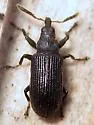
Magdalis barbicornis
Magdalis barbicornis
the only adventive NA sp. of the genus ; apparently not a serious pest
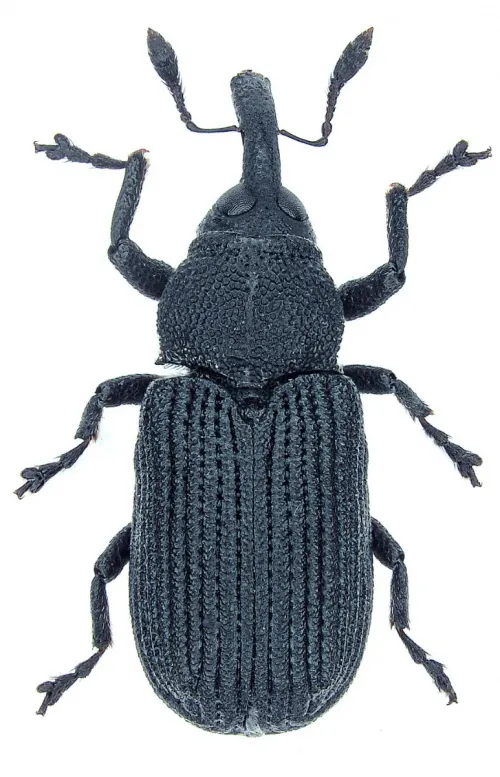
Magdalis cerasi
Magdalis cerasi
2.4 to 4.2 mm, entirely black, appears dull due to strong puncturation and microsculpture. Head dull; microsculpture strong and without puncturation. Eyes convex, discontinuous with outline of head. Unless identified by a recognised expert, photograp
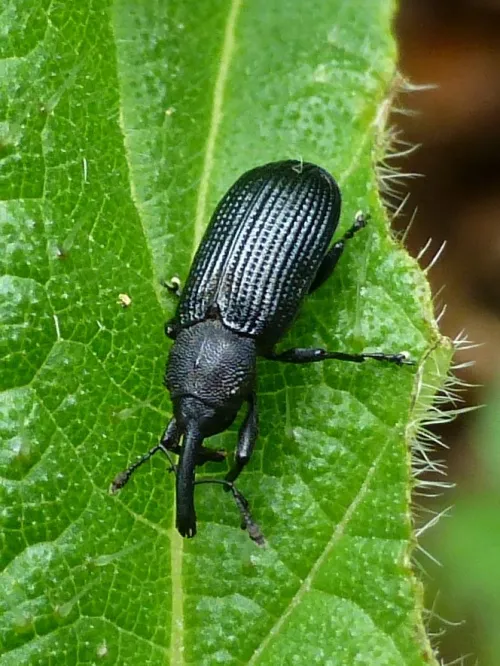
Magdalis memnonia
Magdalis memnonia
A fairly large (4.6 to 8 mm) black weevil with elbowed antennae, large teeth on femurs, flat eyes and a funnel-shaped pronotum. Unless identified by a recognised expert, photographic evidence is required and the specimen should be examined with a mic
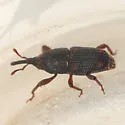
Maize weevil
Sitophilus zeamais
Identification: externally, almost indistinguishable from, and often confused with, S. oryzae (only male genitalia provide reliable diagnostic features), although tends to be larger and darker ; the two may form mixed infestations a common pest of gr
Malachius thevenetii
Malachius thevenetii
Identification: Holotype see Adriean Mayor's comments at
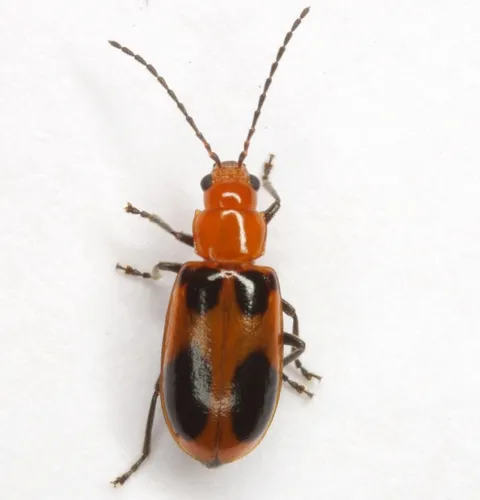
Malacorhinus acaciae
Malacorhinus acaciae
Malacorhinus acaciae is a species of skeletonizing leaf beetle in the family Chrysomelidae. It is found in North America.
Malacorhinus tilghmani 0
Malacorhinus tilghmani
Identification: elytra with sides angulate, excavated bearing tubercles; antennae 1st enlarged (Mohamedsaid & Furth, 2011) ESA member George M. Greene (1916) exhibited a male Malacorhinus tripunctatus Jacoby collected by H. Mittendorf in New Braunfel
Malagoniella astyanax
Malagoniella astyanax
First reported for the U.S. by Schaeffer. Six spmns in the TAMUIC Spmn coll'ed by C. Cate & M. Quinn in 1995 was the first modern U.S. record in 65 years. Texas considers this a SGCN
Mallodrya subaenea
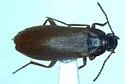
Mallodrya subaenea
This species is little-known, with only one record on BugGuide and no records on iNaturalist as of 19 September 2025. A historical report (Drury, 1896) notes its occurrence during the 19th century in Cincinnati, Ohio: "The new Melandryid, Mallodryia
Malobidion brunneum
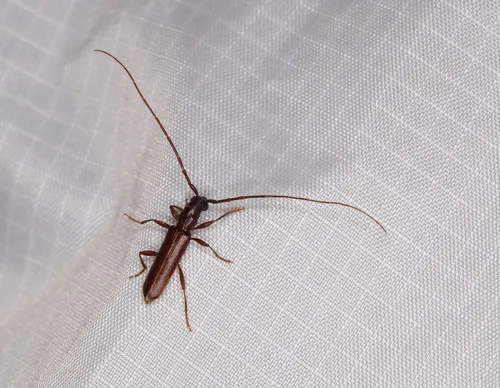
Malobidion brunneum
Malobidion brunneum is a species of beetle in the family Cerambycidae. It was described by Schaeffer in 1908.
Malporus cinctus
Malporus cinctus
Identification: Elytral apices abruptly white; setae on head and pronotum subdecumbent
Malthinus difficilis
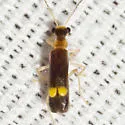
Malthinus difficilis
Identification: Spmns with uniformly yellow head and pronotum are freq., but most spmns have a brown spot of variable size at the base of the frons extending in some spmns to the upper margin of the eyes. In most spmns the pronotum has a complete, wi
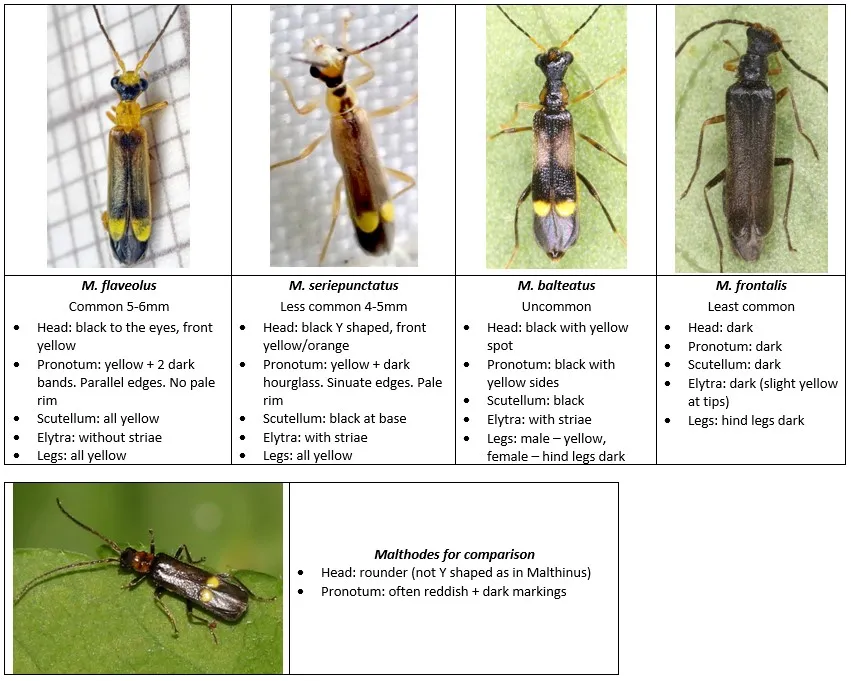
Malthinus flaveolus
Malthinus flaveolus
5-6mm. This is the commonest species in the genus. The greyish brown elytra bear a pair of yellow spots. Scutellum completely yellow. Pronotum yellow with usually with some dark markings, that can vary in extent. When viewed from above the sides of t
Malthinus occipitalis
Malthinus occipitalis
Identification: Det. M. A. Quinn, 2010 Originally described from 3 female spmns from South Carolina, however no usable characters for identification of females have been found, thus it is not possible to interpret this species unequivocally.
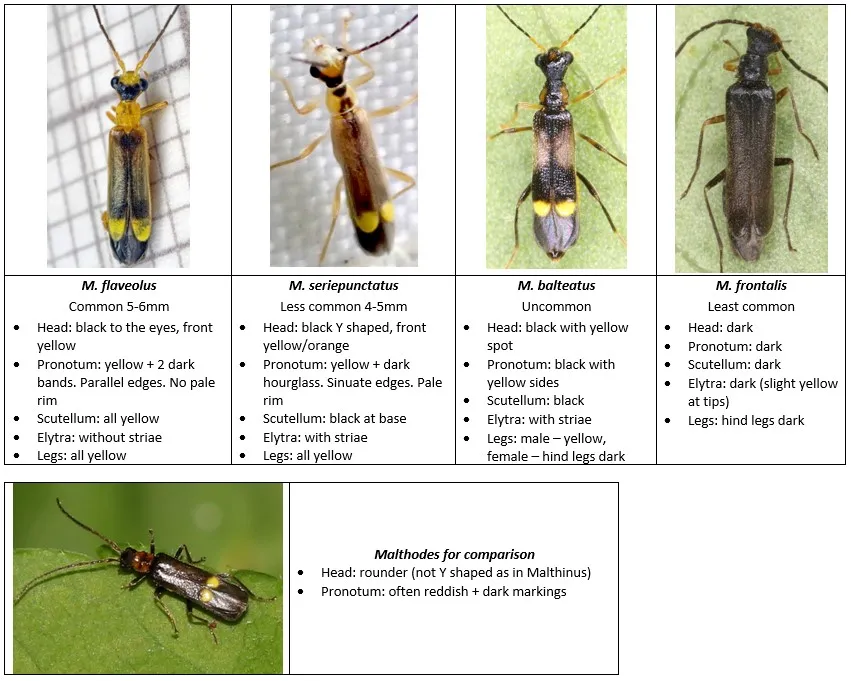
Malthinus seriepunctatus
Malthinus seriepunctatus
4-5mm. The greyish brown elytra bear a pair of yellow spots. Scutellum black at base next to the pronotum, with yellow at the apex (tip) but it is often hard to see much yellow. Pronotum yellow with an “hour glass” shaped dark mark along the length.
Malthodes atrocoeruleus 0
Malthodes atrocoeruleus
Identification: Atrocoeruleus to feebly aenecus; clypeus and mandibles obscurely paler, the basal two antennal segments pale beneath; pronotum flavous, the apical and basal margins widely darker; pubescence cinereous. Holotype, male; allotype, female