
Melanophila atropurpurea
This record describes Melanophila atropurpurea (species). Recorded family: Buprestidae. Recorded order: Coleoptera.
Identification and Appearance
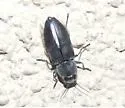
| Feature | Description |
|---|---|
| Additional details | From the original description of Say 1823 : Black, slightly tinged with bronze or purplish ; elytra serrate and mucronate. Inhabits Arkansas. |
| Body | Body punctured : antennae black : labrum piceous: thorax with elevated obtuse punctures and slightly impressed dilated ones each side; an indented spot on the middle of the basal margin : elytra scabrous with minute reflected and depressed points; lateral edge regularly serrated ; tip mucronate : beneath dark purplish. Length less than three-tenths of an inch. Taken near the Rocky Mountains. The colour to the eye is black, but upon attentive observation it will be perceived to be tinged with purplish. The key entries which distinguish this species from M. Occidentalis from Cobos 1986 , as translated into English to the best of my abilities are: 18 Anterior notch of the epistomal open arch shallow. |
| Antennae | Antennae more or less blue, including scape. Apical recess of the last ventrite shallow, forming simple acute angulations at the lateral limits. 19 Dark tan-copper above, below generally more clearly so. |
| Pronotum | Pronotum disk with underdeveloped microsculpture, widely smoothed and bright in the middle. Vivid elytral sculpture, tightly granule-punctuated, almost no place for microsculpture. Nearctic species ATROPURPUREA SAY Type locality: Arkansa , probably Arkansas Territtory which included most of present day Oklahoma when Say passed through as a member of the Long Expedition in 1920. |
Classification
- Kingdom
- Animalia
- Phylum
- Arthropoda
- Class
- Insecta
- Order
- Coleoptera (Beetles)
- Suborder
- Polyphaga
- Superfamily
- Buprestoidea
- Family
- Buprestidae (Metallic Wood-boring Beetles)
- Subfamily
- Buprestinae
- Tribe
- Melanophilini
- Genus
- Melanophila
Imported taxonomy record. Source availability varies; see the source references and editorial policy below.
Habitat and Range
Geographic Range
w US (CA-TX-OK(?)-OR) / Mex. - Map ( 3 ) ( 4 )
Diet and Behavior
Diet: larvae in Abies, Pinus, Pseudotsuga ( 3 )
About Primitive Winged Insects: the wider group
Order-level background for Coleoptera, the group containing Melanophila atropurpurea. Species-specific details appear above.
Group overview
Coleoptera is the largest order of insects with over 400,000 described species, representing ~25% of all known animal species and ~40% of all insects. In the U.S. alone, nearly 30,000 beetle species have been identified.
Ecological role of the group
Beetles are prominent decomposers, especially in forests, breaking down dead wood and recycling nutrients. As predators, they reduce populations of pest insects. Many species are also important pollinators of flowering plants.
Economic and practical significance of the group
Beetles have major economic significance: leaf beetles (Chrysomelidae) and weevils (Curculionoidea) are among the most destructive agricultural pests globally, costing billions annually, while predatory species like ladybugs provide natural pest control.
Recorded sources for this group: Britannica, Smithsonian, NCSU Entomology. Imported estimates may describe particular regions or reporting periods.
Photos of Melanophila atropurpurea (5)
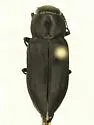
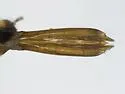
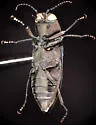
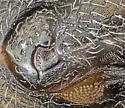
Photo credits: Contributed by Kyle Schnepp; Additional contributions by Joshua P. Basham , Mike Quinn , Edward Ruden
Frequently Asked Questions About Melanophila atropurpurea
What is Melanophila atropurpurea?
Melanophila atropurpurea is a species in the family Buprestidae, within the order Coleoptera.
How do you identify Melanophila atropurpurea?
| Feature | Description |
|---|---|
| Additional details | From the original description of Say 1823 : Black, slightly tinged with bronze or purplish ; elytra serrate and mucronate. Inhabits Arkansas. |
| Body | Body punctured : antennae black : labrum piceous: thorax with elevated obtuse punctures and slightly impressed dilated ones each side; an indented spot on the middle of the basal margin : elytra scabrous with minute reflected and depressed points; lateral edge regularly serrated ; tip mucronate : beneath dark purplish. Length less than three-tenths of an inch. Taken near the Rocky Mountains. The colour to the eye is black, but upon attentive observation it will be perceived to be tinged with purplish. The key entries which distinguish this species from M. Occidentalis from Cobos 1986 , as translated into English to the best of my abilities are: 18 Anterior notch of the epistomal open arch shallow. |
| Antennae | Antennae more or less blue, including scape. Apical recess of the last ventrite shallow, forming simple acute angulations at the lateral limits. 19 Dark tan-copper above, below generally more clearly so. |
| Pronotum | Pronotum disk with underdeveloped microsculpture, widely smoothed and bright in the middle. Vivid elytral sculpture, tightly granule-punctuated, almost no place for microsculpture. Nearctic species ATROPURPUREA SAY |
Where is Melanophila atropurpurea found?
Range: w US (CA-TX-OK(?)-OR) / Mex. - Map ( 3 ) ( 4 )
What does Melanophila atropurpurea eat?
The diet of the Melanophila atropurpurea includes larvae in Abies, Pinus, Pseudotsuga ( 3 ).