
True Bugs, Cicadas, Hoppers, Aphids and Allies
Order Hemiptera
The True Bugs, Cicadas, Hoppers, Aphids and Allies (Order Hemiptera) includes 7,349 species across 120 families and 1,727 genera in our directory.
About True Bugs, Cicadas, Hoppers, Aphids and Allies
Hemiptera (true bugs) includes over 80,000 described species across cicadas, aphids, leafhoppers, shield bugs, and bed bugs. Aphids alone cost global agriculture an estimated $2.5 billion annually in crop losses.
Economic Impact
The brown marmorated stink bug (Halyomorpha halys) caused $37 million in apple crop losses in a single year in the U.S. Mid-Atlantic region. Bed bug infestations in the U.S. increased by 500% between 2001-2010, costing the hotel industry hundreds of millions annually.
Ecological Role
Many Hemiptera are essential food sources for birds and predatory insects. Cicadas provide massive nutrient pulses during emergence events - a single Brood X emergence can involve trillions of individuals across 15 states.
Families in Hemiptera (120)
Species in Hemiptera (7,349)
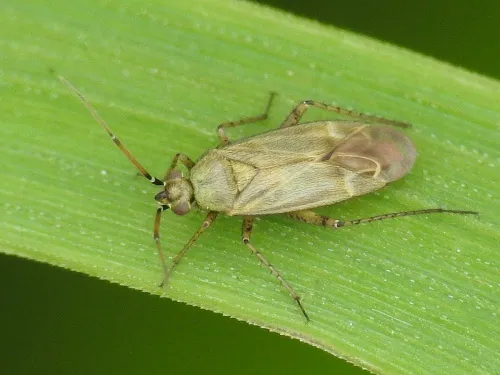
Plagiognathus chrysanthemi
Plagiognathus chrysanthemi
Length about 3.5 mm. A fairly small greenish bug with a dense covering of dark hairs on the upper surface. The tibial spines are dark and set in black spots; the hind femora are pale but also dark-spotted. The antennal pattern is characteristic. Camp
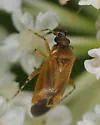
Plagiognathus cornicola
Plagiognathus cornicola
Identification: Recognized by the relatively small size, the coloration of dorsum ranging from orange to nearly black, calli darkened in lighter colored specimens, A1 almost totally black, A2 black at base and remainder of segment frequently infuscat
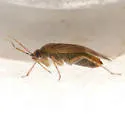
Plagiognathus delicatus
Plagiognathus delicatus
Identification: size relatively small, dorsum dominated by orange, calli usually darkened (fig, 7), scape black, pedicel usually pale (base sometimes black) (fig. 16), tibial spines with tiny dark spots at bases, tibiae pale at articulation with femu
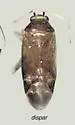
Plagiognathus dispar
Plagiognathus dispar
Identification: Recognized by the elongate body form, antennal segment 2 usually pale except at extreme base (fig. 16), castaneous coloration of the dorsum with only the posterior margin of the vertex pale, the corium narrowly pale adjacent to the ex
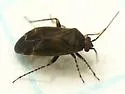
Plagiognathus fuscosus
Plagiognathus fuscosus
Identification: Antenna segment 2 with basal one quarter dark, rest pale (fig. 16). (Other species have dark base in different proportions.) Pale areas variable; the light form (fig. 8: fuscosus 1) was previously described as a different species P. a
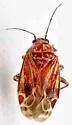
Plagiognathus grandis
Plagiognathus grandis
Identification: Recognized by the large size, very broad body, and somewhat mottled carmine coloration of the dorsum. Unlike any other Plagiognathus species in coloration and its heavy body. Det. M. D. Schwartz, 2015 Type Locality: Texas ( Belfarge )
Plagiognathus longipennis
Plagiognathus longipennis
Identification: Recognized by the very long, slender body , the somewhat exerted, anteriorly projecting head with the clypeus plainly visible from above, and the long slender femora . - male and female Dets. Jason Botz, 2022 Neotype Locality: COLORAD
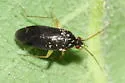
Plagiognathus longirostris
Plagiognathus longirostris
Identification: Recognized by the castaneous to nearly black, elongate body, entirely pale white legs, pale antennae with segment 1 dark only at extreme base, and rostrum reaching well onto the abdomen. Most similar in general appearance and colorati
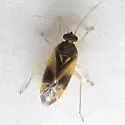
Plagiognathus maculipennis
Plagiognathus maculipennis
Identification: Recognized by the pale A1 and A2 , generally pale costal vein on hemelytra, and cuneus and basal portion of corium pale or mostly pale in contrast to much darker remainder of hemelytra, the scutellum with a dark, median, longitudinal
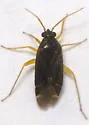
Plagiognathus modestus
Plagiognathus modestus
Identification: Recognized by the castaneous to nearly black general coloration of dorsum, entirely pale, nearly white, legs, and pale antennae except for extreme base of antennal segment 1 (figs. 10 & 17) (although segment 1 sometimes entirely dark)
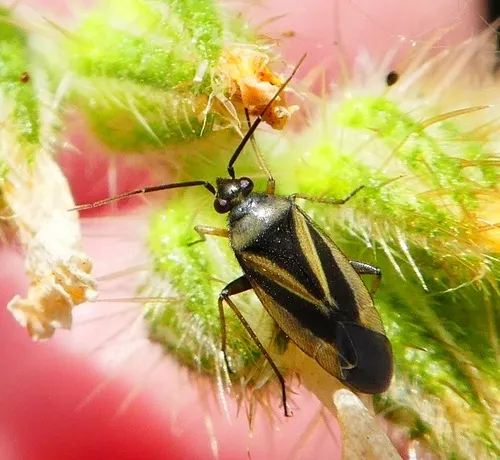
Plagiognathus moerens
Plagiognathus moerens
Identification: Recognized by the medium to large size, linear pattern of coloration with exocorium and clavus mostly opaque, pale, olive-colored, contrasting with dark endocorium, pronotum varying from entirely black to totally pale, antennae entire
Plagiognathus negundinis
Plagiognathus negundinis
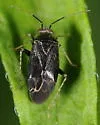
Identification: Recognized by dorsum, venter, and antennal segments 1 and 2 being entirely castaneous (figs. 10, 17), legs pale with some dark markings , and the elongate, nearly parallel-sided body form. - Fig. 10 - Fig. 17 Det. Schuh, 2001 Type Loc
Plagiognathus politus
Plagiognathus politus
Identification: Recognized unequivocally by the serrate margin of the vesical flange; dorsum convexly rounded, pronotum declivent; and dorsum clothed with recumbent, golden, shining, simple setae. Occurring as distinctive early- and late-season color

Plagiognathus punctatipes
Plagiognathus punctatipes
Identification: Recognized by the generally castaneous coloration, ovoid body, neatly arranged, recumbent, golden, shining vestiture of dorsum, pale antennal segment 2 except at extreme base, femora mostly pale with some dark blotches, and tibiae pal
Plagiognathus reinhardi 0
Plagiognathus reinhardi
Identification: "This small red species, which breeds on Crataegus spp. in the southern United States, has been placed in Plagiognathus on the basis of superficial appearance. Several features mitigate against such placement, however. Notable among t
Plagiognathus rileyi
Plagiognathus rileyi
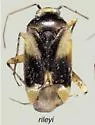
Identification: Recognized by the chocolate brown coloration of part or most of the dorsum, the yellowish costal vein (fig. 12), antennal segment 2 pale except at extreme base (fig. 18), the legs yellow with some dark blotches - Fig. 12 - Fig. 18 Det
Plagiognathus salicicola
Plagiognathus salicicola
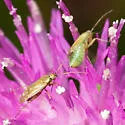
Identification: Recognized by the pale orange or light-brown background coloration of the dorsum, often with darker longitudinal markings on the hemelytra, antennal segment 2 mostly pale with a dark base, elongate ovoid body, and the calli darkened a
Plagiognathus schaffneri 0
Plagiognathus schaffneri
Identification: Recognized by the ovoid body of generally castaneous coloration (fig. 12), recumbent, golden, shining vestiture on the pronotum and anterior half of hemelytra with dark setae posteriorly, antennal segments 1 and 2 entirely dark (fig.
Plagiognathus shoshonea
Plagiognathus shoshonea
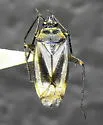
Identification: per : Coloration similar to that of lineatus and moerens ; distinguished from moerens by the dull dorsum and the shining, weakly woolly vestiture rather than black bristles; most easily separated from lineatus by the much larger size
Plagiognathus syrticolae
Plagiognathus syrticolae
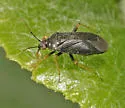
Identification: Recognized by the suberect, silvery, shining vestiture of dorsum appearing somewhat bristly, the small eyes , the transversely rugose pronotum , A2 mostly pale to weakly infuscate except at extreme base and only slightly longer than t
Plagiognathus texanus 0
Plagiognathus texanus
Identification: Recognized by the moderate size and generally shining black coloration of the dorsum (fig. 13), the black coxae and femora with the distal one-fourth of the femora white, antennae entirely dark (fig. 19) Type Locality: TEXAS: Wood Co.
Plagiognathus tinctus
Plagiognathus tinctus
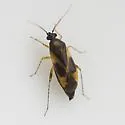
Identification: dark A1 (fig. 19), like albatus , but scutellum unicolorous dark - Fig. 19 - Fig. 13 (part) Recognized, in common with maculipennis and albatus , by mostly pale antennal segment 2 (fig. 19), generally pale costal vein on hemelytra, an
Plagiognathus tsugae
Plagiognathus tsugae
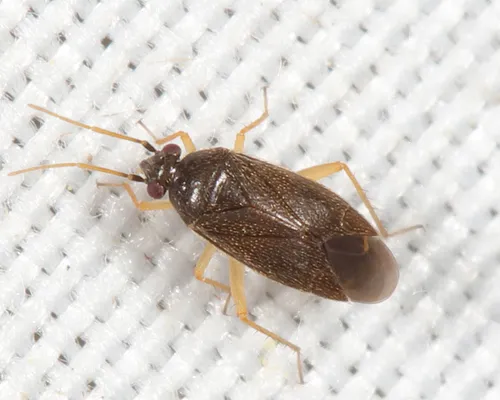
Identification: Recognized by the very small size, entirely castaneous coloration of the body, and pale legs. Most similar in general appearance and structure of the male genitalia to suffuscipennis and tumidifrons . Easily separated from suffuscipen
Plagiognathus verticalis
Plagiognathus verticalis
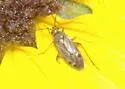
Identification: Recognized by medium to moderately large body size, the uneven brownish coloration of the dorsum with some lighter, diffuse, mostly longitudinal markings, the tumid frons with dark transverse striae, the brown calli, and the black, su
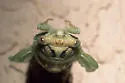
Plains Cicada
Megatibicen dealbatus
Tibicen dealbatus largely replaces T. pronotalis as one travels west into the "Plains". Both T. dealbatus and T. pronotalis are riparian species often associated with tree thickets and permanent/quasi-permanent water sheds. Not only are they similar
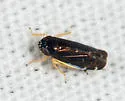
Planicephalus flavocostatus
Planicephalus flavocostatus
Identification: Adult: dark brown to blackish with yellow strip along anterior two-thirds of costa, terminating in a short white oblique dash; another short white dash nearer to wingtip, projecting at right-angles in from costa; several whitish dots
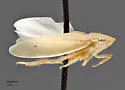
Planipona delta
Planipona delta
Identification: "A small species resembling [ Gyponana ] angulata , with strongly produced vertex. Vertex bluntly angularly produced, more than two-thirds as long at middle as basal width between eyes. Entire body slender. Pale creamy yellow, unmarke
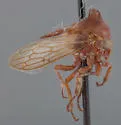
Platycentrus brevicornis
Platycentrus brevicornis
While not reported from the U.S. in the literature, there are several database records of this species from Arizona.
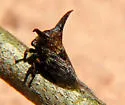
Platycentrus near acuticornis
Platycentrus nr-acuticornis
Similar structure to Platycentrus acuticornis (which is reported from CA+AZ but described from Mexico), but may be a new species based on its very different coloration and subtle structural differences.
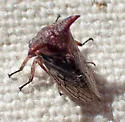
Platycentrus taurinus
Platycentrus taurinus
Identification: "Shorter and stouter than acuticornis with much shorter horns. Resembling obtusicornis , but with horns more slender and tapering. Head broader and less arcuated at base than in obtusicornis , metapodium convex, coarsely punctured, ru
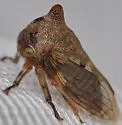
Platycotis cf-acutangula
Platycotis cf-acutangula
Platycotis acutangula is a Mexican species which closely resembles Platycotis vittata. There are records from California, but they need to be confirmed-for now, a number of morphologically similar CA specimens will be held under this page, which look
Platycotis maritima
Platycotis maritima
Identification: Hornless; heavily marked black midline on the crest
Platycotis tuberculata
Platycotis tuberculata
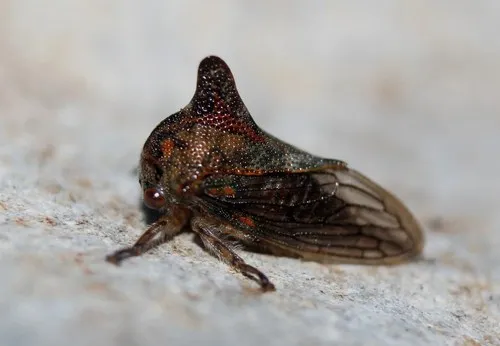
The U.S. records of this species may be erroneous, or its identity may be confused. Stu McKamey says: "Buckton 1902 lists Talapa, California as the location. I can find no record of that place in CA, but I did find it in Mexico. So the species might
Platycranus bicolor
Platycranus bicolor
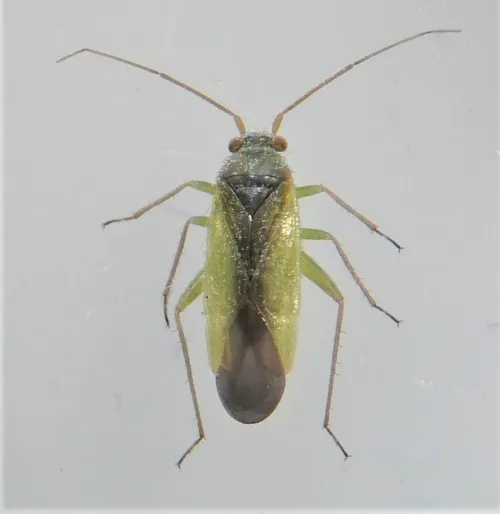
Length about 4 mm. Although similar to other green mirid bugs (e.g. Orthotylus sp.), this bug is the only one to occur on gorse in late summer. The upper surface is covered in scale-like pale hairs and the clavus is darkened in males. The vertex is r
Plesiodema pinetella
Plesiodema pinetella
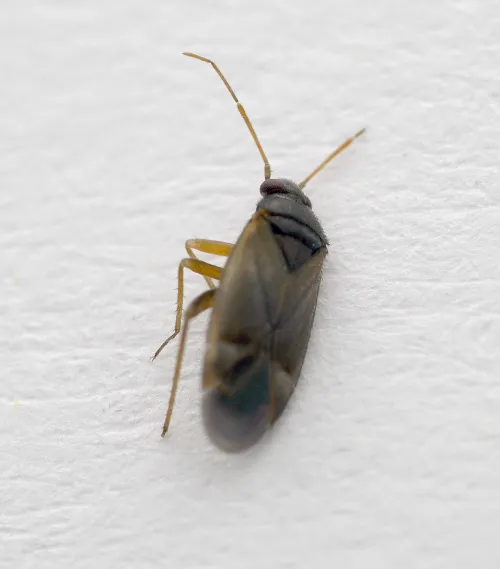
A small (length around 3 mm) dark bug which lacks pale hairs on the upper surface. The foreparts are often darker than the corium and the base of the cuneus is pale. The tibial spines are shorter than the width of the tibiae and are not set in black
Plinthisus americanus
Plinthisus americanus
Plinthisus americanus (Plinthisus americanus) is a species in the family Rhyparochromidae, commonly known as dirt-colored seed bugs, belonging to the order Hemiptera (True Bugs, Cicadas, Hoppers, Aphids and Allies). It is classified within the subfam
Plinthisus brevipennis
Plinthisus brevipennis
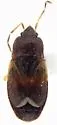
Identification: easily distinguished from the native western congeners by its size and the width of the fore femur, which in P. brevipennis is equal to, or greater than, the width of the vertex earliest record in our area: WA 1964
Plinthisus compactus
Plinthisus compactus
Identification: According to Barber: "Claval suture present. Membrane never wholly absent. Larger species, for the most part dark castaneus [sic] and pilose...Pronotum wider than long; anterior lobe not elevated; anterior angles behind eyes rounded.
Plocamaphis flocculosa
Plocamaphis flocculosa
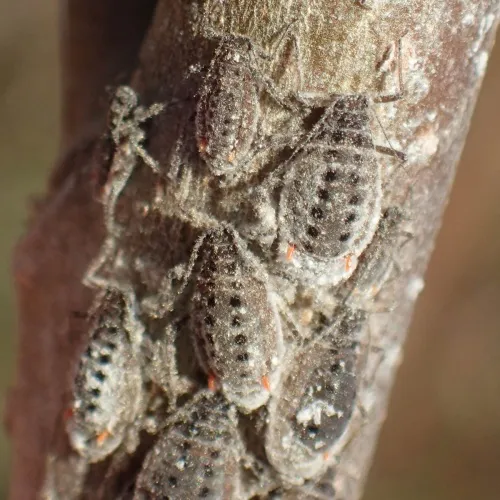
These are large grey aphids 3.1 - 5.0 mm in length. The head and legs are dark and there are two rows of dark spots running down the back. The insect is almost completely covered in whitish wax secretions. The siphunculi are bright orange. They feed
Ploiaria aptera
Ploiaria aptera
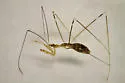
Identification: One of two wholly apterous species of Ploiaria in the United States. In P. aptera , the large spines of the profemoral posteroventral series are separated by 2-3 short processes, with both series essentially linear. Furthermore, the
Ploiaria denticauda
Ploiaria denticauda
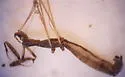
Identification: In the United States, two species of Ploiaria have a medial, caudally-projecting spine on the back of the head: P. denticauda and P. hirticornis . The former has the ultimate tergite with a longer medial projection in both sexes and
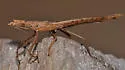
Pnirontis brimleyi
Pnirontis brimleyi
Identification: scape very short, unarmed; mandibular plates very short
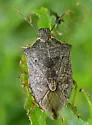
Podisus serieventris
Podisus serieventris
Identification: Strongly maculate femora and typically with a row of spots on the abdominal venter.
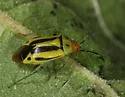
Poecilocapsus nigriger
Poecilocapsus nigriger
Identification: Note by J.T. Botz: Van Duzee wrote of P. nigriger in supposed contrast to P. lineatus : "...The cuneus has a large central black spot." I don't see a consistent difference in the size of the cuneal spot in BG entries of P. lineatus ve
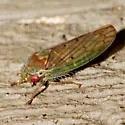
Polana quadrinotata
Polana quadrinotata
Identification: "Robust, brownish species with the vertex broadly rounded to front. Vertex short, broadly rounded, more than three times as wide between eyes at base as median length. Ocelli appearing very close to margin, closer to eyes than to medi
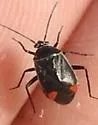
Polymerus americanus
Polymerus americanus
Identification: "[Adults] differ from those of similarly colored species of Polymerus by having three pale, triangular marks at the base of the vertex, the markings typically equal in length... The base, apex, and lateral margins of the pronotum are
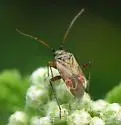
Polymerus basalis
Polymerus basalis
Identification: It varies with more or less extended and obscure or almost obsolete brown markings. Type Locality: Texas ( Belfarge )
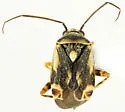
Polymerus fasciolus
Polymerus fasciolus
Identification: "Allied to elegans Reut., but size smaller, rostrum and antennal segments shorter, apical half of femora banded with blackish." Knight goes on to describe the distinctive color pattern in great detail.
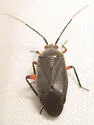
Polymerus gerhardi
Polymerus gerhardi
Identification: All black dorsum with white pubescence; coxae and femora orangish; tibia and tarsi black; tibia thick; rostrum very short, not exceeding front coxae
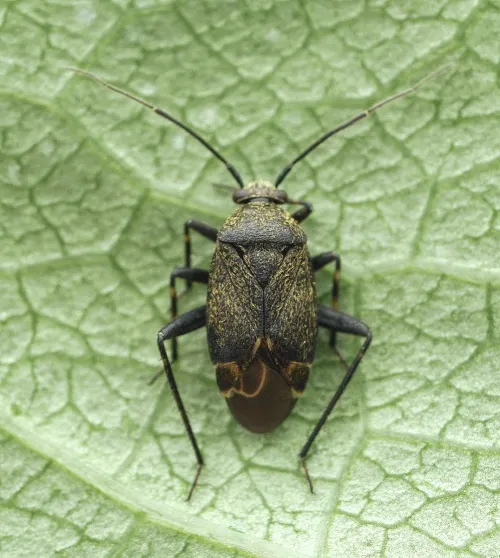
Polymerus nigrita
Polymerus nigrita
Length 4.5 mm. Polymerus species are medium-sized bugs which are predominantly black or black and yellow in colour. The upper surface is covered in scale-like golden or silver hairs and the tibiae bear strong black spines. This species can be identif
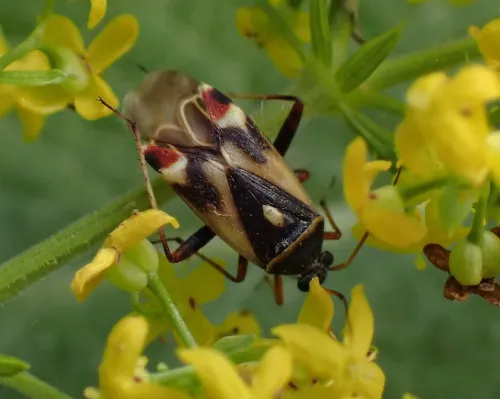
Polymerus unifasciatus
Polymerus unifasciatus
Length c. 6 mm. The upper surface is covered in scale-like golden or silver hairs and the tibiae have black spines; pronotum is mostly black, with the rear margin narrowly yellow. The corium is pale yellow and black, with a large paler area between t
Ponana aenea
Ponana aenea
Identification: "Resembling scarlatina in general appearance but with more produced vertex and with distinct male genitalia. Vertex rather strongly produced, apex rounded, more than half as long on middle as basal width between the eyes. Yellow, ting
Ponana aquila
Ponana aquila
Identification: "Vertex short, narrow, broadly rounded, more than twice as wide between eyes as median length. Pale yellow; a round black spot behind each ocellus on base of vertex, one behind each on anterior margin of pronotum, and a spot behind ea
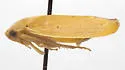
Ponana cacozela
Ponana cacozela
Identification: "Resembling citrina in general appearance, yellow, tinged with orange, and marked with brown spots. Vertex broad, about twice as wide between eyes at base as median length. Yellow tinged with orange, brown spots on elytra usually arra
Ponana candida
Ponana candida
Identification: "A pale species marked with brown spots and ramose pigment lines on elytra. Vertex bluntly produced, about twice as wide between eyes at middle as median length. Pale yellow; a black spot behind each ocellus on basal margin of vertex.
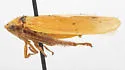
Ponana citrina
Ponana citrina
Identification: "A yellowish species tinged with orange and often with black spots on elytra. Vertex broadly rounded, more than twice as wide as median length. Green to yellow, often tinged with orange with small black spots usually arranged in three
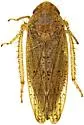
Ponana curiata
Ponana curiata
Identification: "Vertex bluntly produced, more than half as long on middle as basal width between eyes. Pale brown; a spot behind each ocellus on anterior portion of pronotum brown and fine punctures on disc and posterior portion of pronotum brown. E
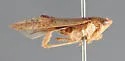
Ponana dohrni
Ponana dohrni
Identification: "The narrow head and broad pronotum cause this species to resemble superficially, Texananus majestus (Osb.). The color is similar to punctipennis Stal. [ Ponana curiata ] Vertex short, broadly rounded, about twice as wide between eyes
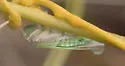
Ponana floridana
Ponana floridana
Identification: "Vertex broadly rounded, a little more than twice as wide between eyes at base as median length. Straw yellow; ocelli large, dark; pronotum with four black spots in a semicircle on submargin. Elytra with traces of the three rows of sp
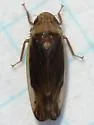
Ponana limbatipennis
Ponana limbatipennis
Identification: "Dark-winged species with pale costal margins. Vertex broadly rounded, more than half as long as basal width between eyes. Brownish yellow. Vertex and pronotum usually unmarked. Scutellum smoky. Elytra usually smoky to black, apical h
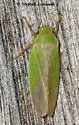
Ponana limonea
Ponana limonea
Identification: "Vertex strongly, bluntly produced, more than half as long on middle as basal width between eyes at base. Smoky green; vertex and pronotum often brighter green." - DeLong, 1942
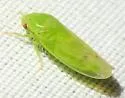
Ponana occlusa
Ponana occlusa
Identification: "Vertex short, broadly rounded, twice as wide between eyes at base as median length. Lemon-yellow to pale green with a small black spot behind each ocellus on anterior portion of pronotum." - DeLong, 1942
Ponana pectoralis
Ponana pectoralis
Identification: head, pronotum, and outer half of forewing green; scutellum brown anteriorly, pale brown or green posteriorly; inner half of forewing and wingtips brown, forming a distinctive dark streak down the back when the insect is at rest; scat
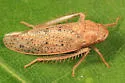
Ponana puncticollis
Ponana puncticollis
numerous similar species in the US, some likely undescribed
Ponana quadralaba
Ponana quadralaba
Identification: "A small yellowish species with four black spots on anterior portion of pronotum. Vertex broadly rounded, more than one-half as long at middle as basal width between the eyes. Yellow; pronotum with four black spots in a circle just ba
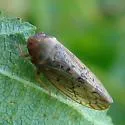
Ponana rubida
Ponana rubida
Identification: "Resembling scarlatina in general appearance but with brown ramose markings on elytra and with distinct male genitalia. Vertex broadly rounded, a little more than half as long on middle as basal width between the eyes. Yellowish washe
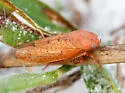
Ponana rubrapuncta
Ponana rubrapuncta
Identification: "Male genitalia distinct. Vertex broadly, roundedly produced, more than one-half longer on middle than basal width between eyes. Yellowish; vertex and pronotum rather densely covered with small red spots. Elytra tinged with brown with
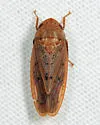
Ponana scarlatina
Ponana scarlatina
Identification: "A yellowish brown species completely dotted with bright red spots in well-marked specimens. Head narrow, vertex broadly rounded, almost twice as wide between eyes at base as median length. Varying from buff to brown, and usually mark
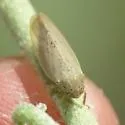
Ponana sonora
Ponana sonora
Identification: "Vertex almost angularly produced, apex rounded, more than one-half as long at middle as basal width between the eyes. Pronotum decidedly wider than vertex. Pale yellow, with a row of four round black spots on the anterior portion of
Ponana sparsa
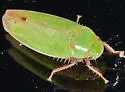
Ponana sparsa
Identification: "Resembling citrina in color and general appearance but with each branch of aedeagus forked. Vertex broadly rounded, twice as wide between eyes at base as median length. Yellowish green, with indication of the transverse rows of black
Pondweed Bug
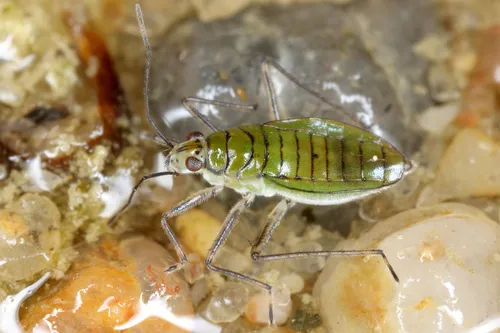
Mesovelia furcata
This is a small bug (about 3 mm) in a family group known as water treaders. Mesovelia furcata has a greenish colour and rather slim shape. It is usually wingless but winged forms do occur and these may fly to colonise new areas. Around the margins of
Poplar Gall Bug
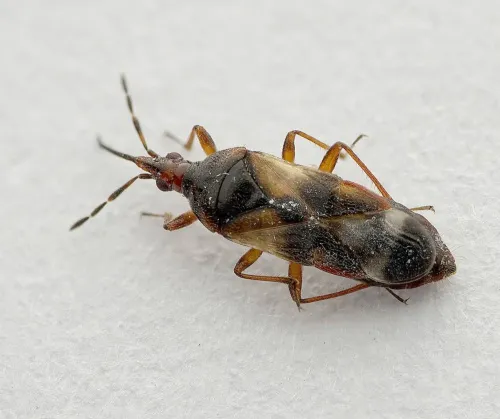
Anthocoris minki
Ground colour reddish-brown. Antennae reddish brown with spots and at least the basal half of ant2 lighter, and also frequently the base of ant3 and ant4. Pronotum brownish, darkened in its basal region; scutellum darker, black. Hemelytra with very s
Poplar Petiolegall Aphid
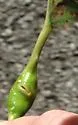
Pemphigus populitransversus
Identification: Forms oval galls with transverse openings near the middle of poplar ( Populus ) petioles.
Poplar-buttercup gall aphid
Thecabius affinis
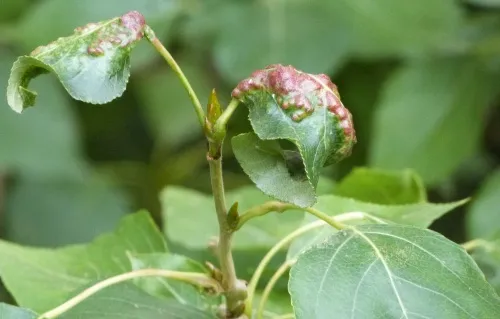
This aphid causes galls on Poplar and Buttercup species. On Poplar the galls are usually found as red blisters on the leaf. See link below for more details. Adult: Unless identified by a recognised expert, a photo is required and the specimen should
Populicerus albicans
Populicerus albicans
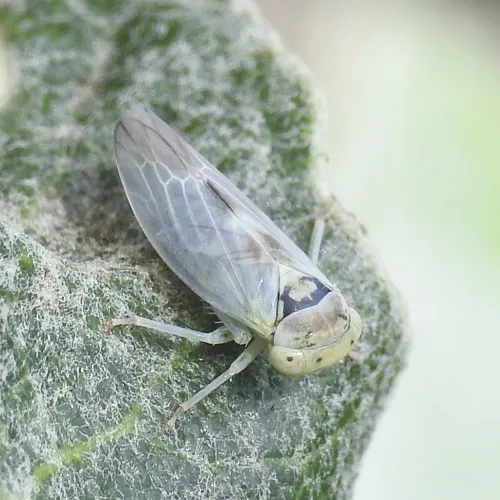
Length 5.4-5.9mm (male), 6.4-7.0mm (female). A pale, whitish leafhopper associated with Grey or White Poplars. Females are uniformly greyish; males may have darker marks on pronotum. Good photographs in the field or from a specimen; note the host pla
Populicerus aureus
Populicerus aureus
Identification: "Adults of aureus resemble those of midas , but have a more uniform orange colour. The host is probably Populus balsamifera ." - Hamilton, 1980 Structurally identical to Populicerus midas and may be a sr. syn.
Populicerus carolina
Populicerus carolina
Identification: "Adults of carolina closely resemble those of gillettei n. sp., but have much rounder antennal discs (Figs. 35, 36) and shorter, broader sternal apodemes (Figs. 43, 45). The host is probably Eastern cottonwood ( Populus deltoides ) ,
Populicerus confusus
Populicerus confusus
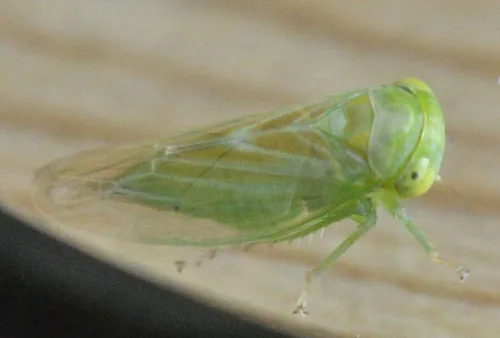
Length 5-7 mm. A yellow-green leafhopper associated with sallows. There may be some reddish-brown shading across the clavus and inner parts of forewings, some darker marks on pronotum. The face and vertex are also yellow-green, and nmarked. Close exa
Populicerus duzeei
Populicerus duzeei
Identification: "Male: Size and structural characters as in I. pallidus Fitch and I. obsoletus (Walker). Yellow, lateral triangles of scutellum orange-yellow, abdominal terga black, tegmina infumate, darker beyond apex of clavi and on basal two-third
Populicerus formosus
Populicerus formosus
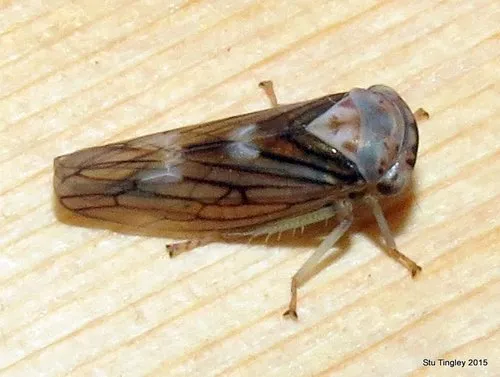
Identification: "Smaller and narrower than lachrymalis , resembling the European populi in size and form, but more heavily marked. Vertex long, but little curved; face almost flat, front broad below, but not expanded as much as usual at the antennas;
Populicerus gillettei
Populicerus gillettei
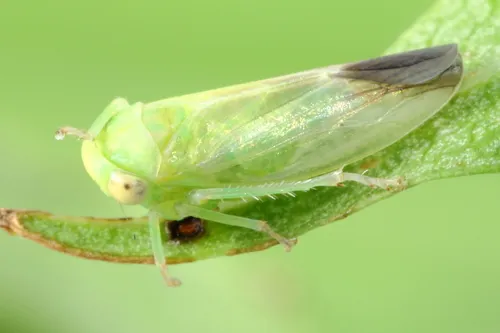
Identification: "Adults of gillettei closely resemble those of carolina , from which they may be distinguished by the characters cited under that species. Pale individuals may resemble specimens of unicolor n. sp., but the short preapical setae of th
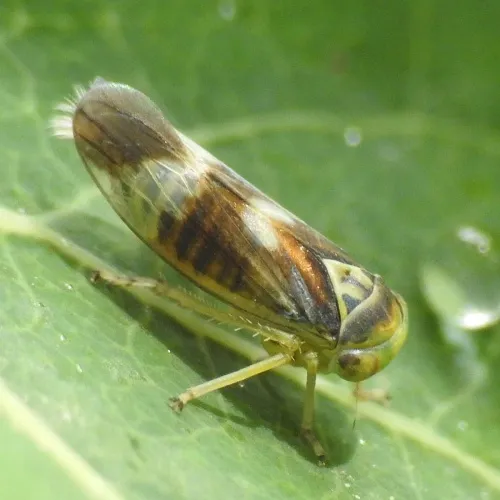
Populicerus laminatus
Populicerus laminatus
Length 6-7mm. Predominantly brown with white spot in clavus, a pale band in the apical half of the wings and dark veins. Thyridia dark, contrasting with a mostly unmarked face. Pronotum darker in posterior half. Close examination of a specimen is nee
Populicerus levis
Populicerus levis
Identification: "Resembling pallidus in form and appearance but with slight discal enlargements on antennae. Male antennal discs only slightly larger than antennae and elongate. Color pale yellow, elytra appearing milky white. Female segment rather s
Populicerus midas
Populicerus midas
Identification: "Adults of midas resemble those of lachrymalis , but have paler veins and lack coronal markings. Their hosts also differ. I. telus DeL. & Hbr. is also pale, has a wide head and short apical setae of the style, but is smaller, and has
Populicerus obsoletus
Populicerus obsoletus
Identification: "This is apparently a very variable species, as numerous collections taken across Canada show. Teneral males and about two-thirds of females are pale unmarked green (similar to pallidus ); about one-quarter of females have fuscous lat
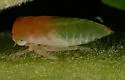
Populicerus pallidus
Populicerus pallidus
Identification: Clear wings; short, broad head. This is the most common leafhopper species on willows. Adults may show the same 2-color effect. Usually they are all green, but sometimes they are all pink to pale orange, and sometimes only the head en
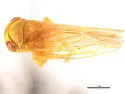
Populicerus perplexus
Populicerus perplexus
Identification: "Near pallidus , differing from that species as follows: Genae sharply incurved beneath the eyes, then rounded to clypeus, and the clypeus more broadened out towards the tip. Last ventral segment produced on posterior margin very much
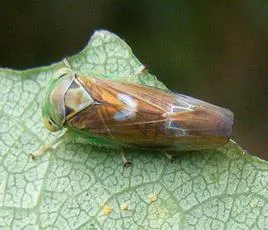
Populicerus populi
Populicerus populi
Males c.5.5mm; females 4.9-6.5mm. A brownish-yellow leaf hopper associated with Aspen ( Populus tremula ). There is a white spot on the clavus and the forewing veins are not dark. Dark triangles on the scutellum. Other Idiocerinae on Aspen, especiall
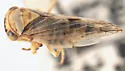
Populicerus rondulus
Populicerus rondulus
Identification: "A strikingly white species, the males with a sooty black saddle across the apex of the clavus, the faces of both sexes unicolorous. Resembling lachrymalis Fh., smaller, the head wider than deep, set slightly obliquely on the deep bod
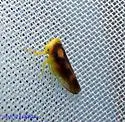
Populicerus stellaris or near
Populicerus cf-stellaris
Identification: "Resembling suturalis but distinctly marked and with elongated male antennal discs. Male antennal discs elongate oval, pointed at both ends. Color yellow, face and vertex unmarked. Pronotum brown except for anterior margin and curved
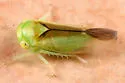
Populicerus suturalis
Populicerus suturalis
Identification: "the dark markings are distinctive" -- Andy Hamilton
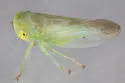
Populicerus telus
Populicerus telus
Identification: "Resembling pallidus in form and appearance but with different male genitalia. White tinged with green without dark markings, basal angles of scutellum yellowish. Elytra subhyaline, veins tinted with green. Face pale. Antennal discs l
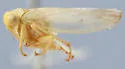
Populicerus unicolor
Populicerus unicolor
Identification: Hamilton (1980): "Adults of unicolor closely resemble those of pallidus in habitus and male genitalia, but differ in size ( pallidus males being less than 5.4 mm long, females rarely as much as 6.2 mm long), size of the male antennal
Populicerus vanduzeei
Populicerus vanduzeei
Identification: "Adults of vanduzeei closely resemble those of gillettei , but the males are more clouded with tawny or orange-brown, have narrower antennal discs (Figs. 36, 37), and smaller abdominal apodemes. The latter resemble the apodemes of ten
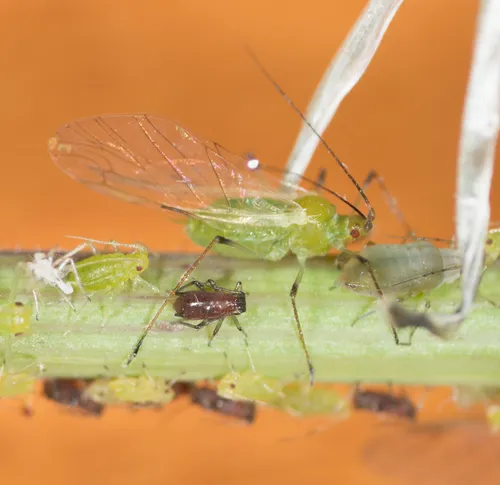
Potato Aphid
Macrosiphum euphorbiae
The adult wingless form is large 1.7 to 3.6mm and an elongated pear shape. It ranges from light green, yellowish green to pinkish red. It often has a darker stripe down the centre of its back, especially in immature nymphs. This species has noticeabl
Potato Bug
Closterotomus norvegicus
Identification: Adult: mostly green above, with two small black dots on anterior half of pronotum near midline; scutellum with dark marks at base (sometimes lacking); hemelytra of some specimens has reddish-brown tint; membranous portion of forewing
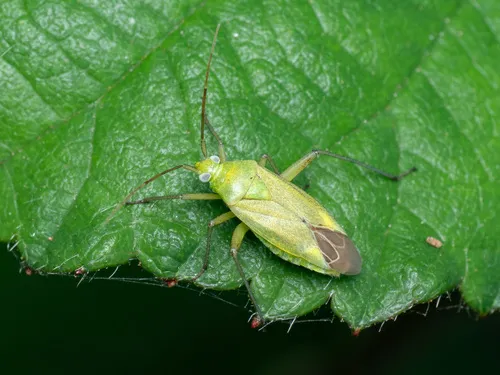
Potato Capsid
Closterotomus norwegicus
Length 6-8 mm. It is one of several similar green species, although mature males are tinged red-brown and specimens from northern Britain may have brownish-black markings. The tibial spines are shorter than the width of the tibia, and the length of t
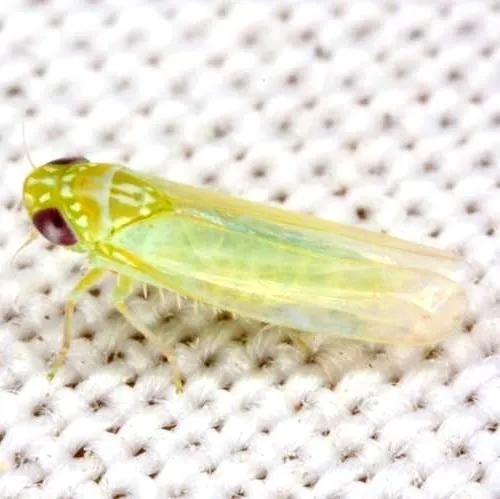
Potato Leafhopper
Empoasca fabae
Identification: Pale green with a row of six white spots behind the head seen only with help of a lens Pest of alfalfa, fruits, and vegetables; most damaging to alfalfa and clover ( 6 ) ; major pest of potato ( 7 ) Can't survive cold winter and migra
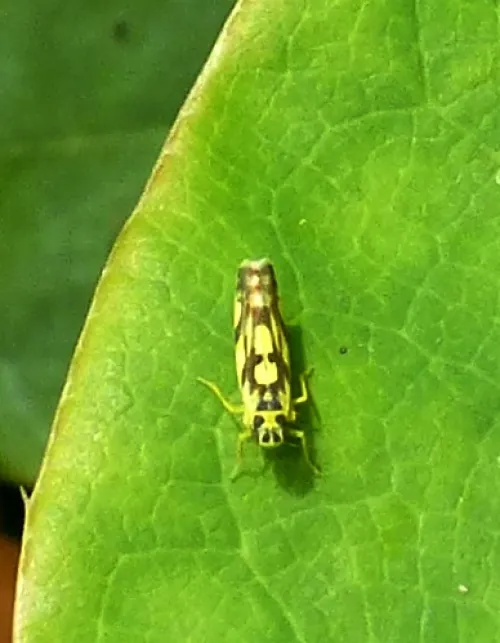
Potato Leafhopper
Eupteryx aurata
Length 3.5-4.5 mm. Identification of some Eupteryx species can be difficult and requires careful examination of markings on vertex, pronotum and forewings. Yellow ground colour, sometimes tinted orange, with dark spots or streaks on the forewings. Of
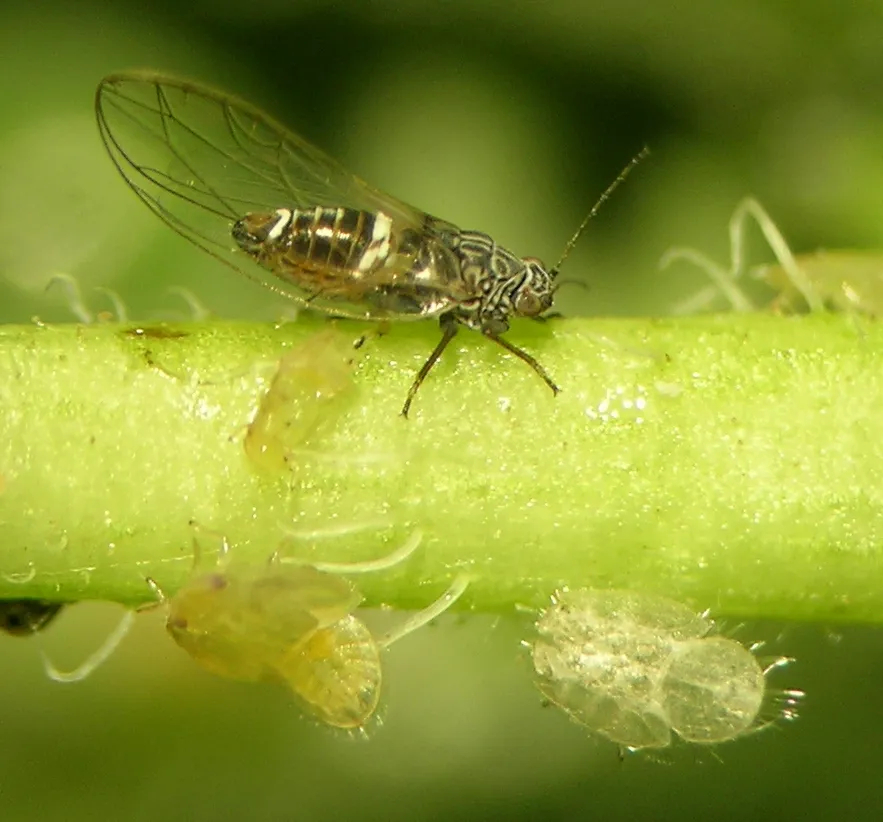
Potato Psyllid
Bactericera cockerelli
Known to cause a disease-like symptom in tomato and potato called psyllid yellows. It is not a disease per se but rather a response in the plant to the insect's "saliva" that causes the plants to be stunted, yellowed and unproductive. If the psyllid