ColeopteraCerambycidae – Longhorn Beetles

Pole Borer

Neandra brunnea

This record describes Neandra brunnea (species). Recorded family: Cerambycidae. Recorded order: Coleoptera.

Identification and Appearance
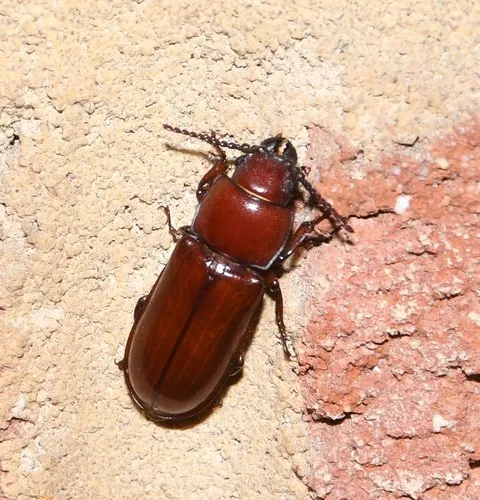
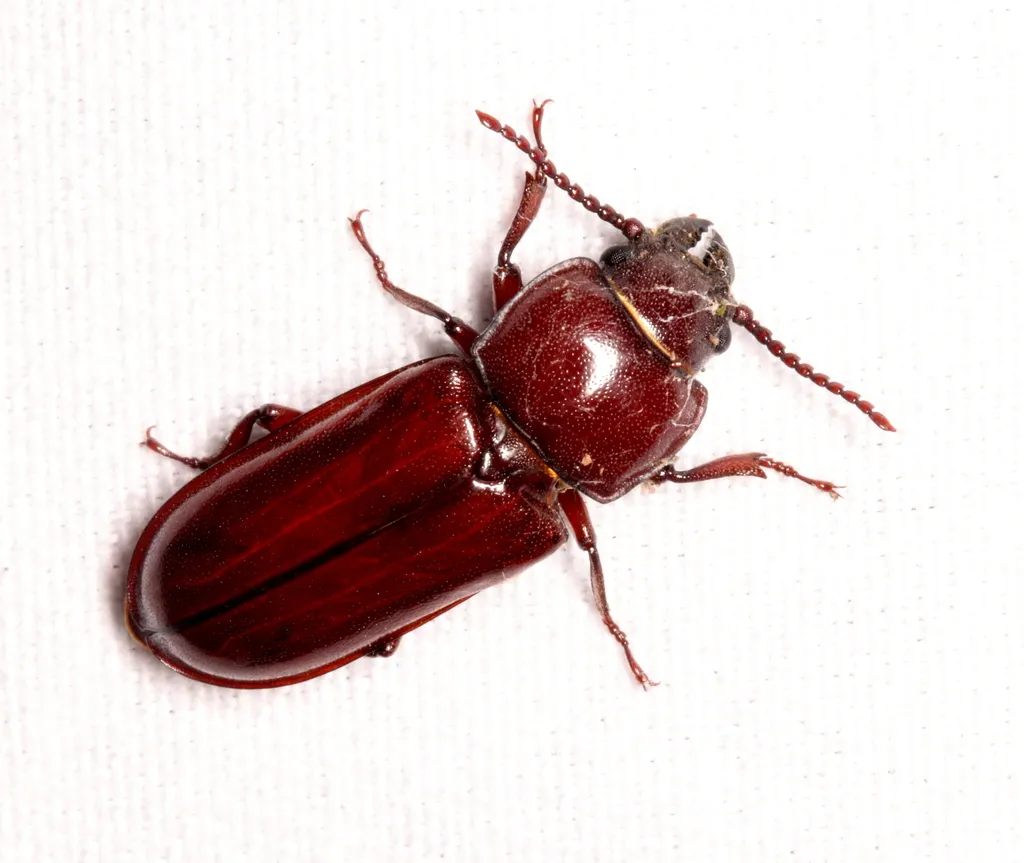
Pole Borer - Neandra brunnea
(c) Victor W Fazio III, some rights reserved (CC BY-NC), uploaded by Victor W Fazio III

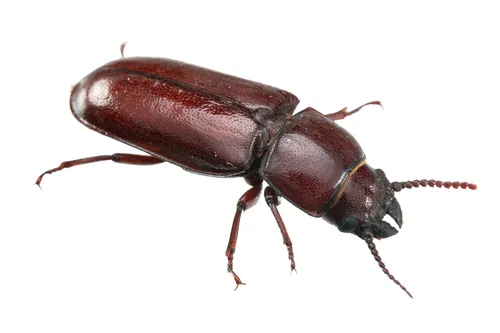
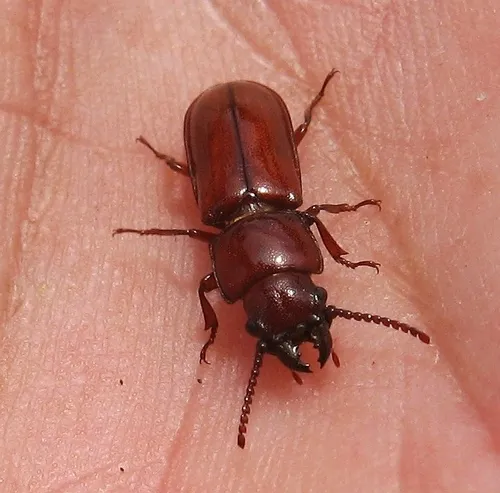
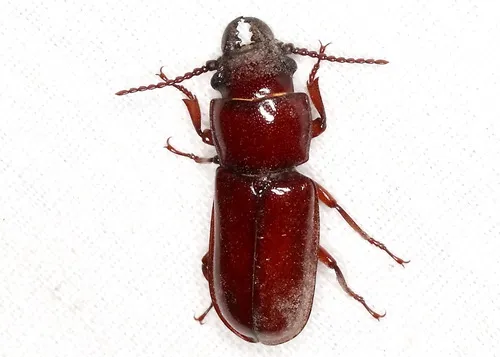
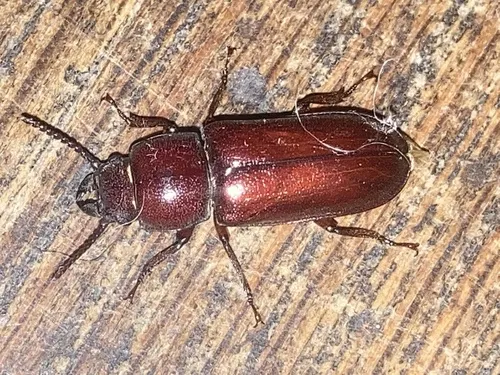
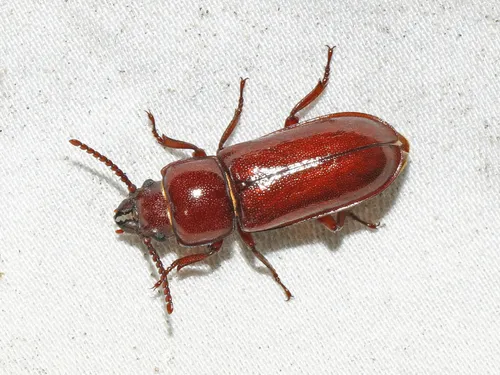
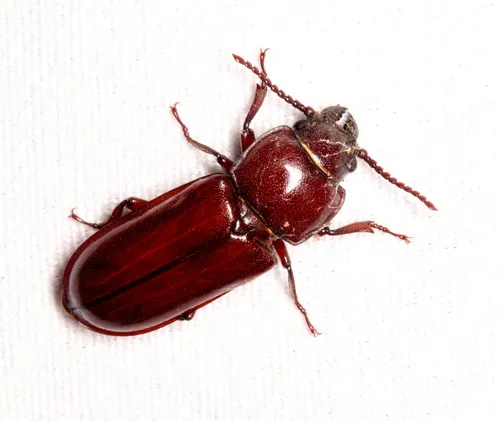
The N. brunnea is a species of the longhorn beetle family, subfamily Parandrinae. Its common names include pole borer and longhorned beetle. The longhorned beetle grows between 8 and 20 mm (0.79 in) and is yellowish-brown or reddish-brown in colour. It is the only longhorned beetle to not have longer antennae and they are serrate. Its range includes the entire eastern portion of North America. It can be seen between March and November.

Identification notes

A robust yellowish-brown to reddish-brown longhorn, resembles a stag beetle , perhaps, but antennae are not clubbed. Specific characters :

Wikipedia reference for Neandra brunnea: https://en.wikipedia.org/wiki/Neandra brunnea.

Classification

Kingdom
Animalia
Phylum
Arthropoda
Class
Insecta
Order
Coleoptera (Beetles)
Suborder
Polyphaga
Superfamily
Chrysomeloidea
Family
Cerambycidae (Longhorn Beetles)
Subfamily
Parandrinae
Genus
Neandra (Pole Borers)

Imported taxonomy record. Source availability varies; see the source references and editorial policy below.

Habitat and Range

Habitat

moist decaying wood ; larvae bore in trees and structural wood (poles, crossties, etc.) in contact with moist ground; adults may emerge, mate, and lay eggs in the same cavity they occupied as a larva

Geographic Range

e. NA

Seasonal Activity

Mar-Nov

Diet and Behavior

Diet: Hosts: nearly all eastern trees

Life History

In mid-summer eggs are laid singly, close together, deep in solid or decayed wood. The larvae feed for 3-4 years. Pupation occurs in a cell in the wood. Many adults don't emerge but mate and lay eggs in the cavities in which they are working. ( 3 )

Additional species information

Species notes from the sources

Etymology: Neandra brunnea ( Fabricius 1798)

About Primitive Winged Insects: the wider group

Order-level background for Coleoptera, the group containing Neandra brunnea. Species-specific details appear above.

Group overview

Coleoptera is the largest order of insects with over 400,000 described species, representing ~25% of all known animal species and ~40% of all insects. In the U.S. alone, nearly 30,000 beetle species have been identified.

Ecological role of the group

Beetles are prominent decomposers, especially in forests, breaking down dead wood and recycling nutrients. As predators, they reduce populations of pest insects. Many species are also important pollinators of flowering plants.

Economic and practical significance of the group

Beetles have major economic significance: leaf beetles (Chrysomelidae) and weevils (Curculionoidea) are among the most destructive agricultural pests globally, costing billions annually, while predatory species like ladybugs provide natural pest control.

Recorded sources for this group: Britannica, Smithsonian, NCSU Entomology. Imported estimates may describe particular regions or reporting periods.

Explore Coleoptera families and species →

Photos of Pole Borer (9)

Pole Borer - photo 1
(c) Victor W Fazio III, some rights reserved (CC BY-NC), uploaded by Victor W Fazio III | (c) David Beadle, all rights reserved, uploaded by David Beadle | (c) Sean Kim, all rights reserved, uploaded by Sean Kim | (c) Joe Bartok, some rights reserved (CC BY-NC), uploaded by Joe Bartok | (c) pavkata, some rights reserved (CC BY-NC) | (c) Jim Walker, some rights reserved (CC BY-NC), uploaded by Jim Walker | (c) Murray Fisher, all rights reserved, uploaded by Murray Fisher | (c) Joe Girgente, some rights reserved (CC BY-NC), uploaded by Joe Girgente | Contributed by Phillip Harpootlian; Additional contributions by cotinis , Mike Quinn , v belov , Marci Hess
Pole Borer - photo 2
(c) Victor W Fazio III, some rights reserved (CC BY-NC), uploaded by Victor W Fazio III | (c) David Beadle, all rights reserved, uploaded by David Beadle | (c) Sean Kim, all rights reserved, uploaded by Sean Kim | (c) Joe Bartok, some rights reserved (CC BY-NC), uploaded by Joe Bartok | (c) pavkata, some rights reserved (CC BY-NC) | (c) Jim Walker, some rights reserved (CC BY-NC), uploaded by Jim Walker | (c) Murray Fisher, all rights reserved, uploaded by Murray Fisher | (c) Joe Girgente, some rights reserved (CC BY-NC), uploaded by Joe Girgente | Contributed by Phillip Harpootlian; Additional contributions by cotinis , Mike Quinn , v belov , Marci Hess
Pole Borer - photo 3
(c) Victor W Fazio III, some rights reserved (CC BY-NC), uploaded by Victor W Fazio III | (c) David Beadle, all rights reserved, uploaded by David Beadle | (c) Sean Kim, all rights reserved, uploaded by Sean Kim | (c) Joe Bartok, some rights reserved (CC BY-NC), uploaded by Joe Bartok | (c) pavkata, some rights reserved (CC BY-NC) | (c) Jim Walker, some rights reserved (CC BY-NC), uploaded by Jim Walker | (c) Murray Fisher, all rights reserved, uploaded by Murray Fisher | (c) Joe Girgente, some rights reserved (CC BY-NC), uploaded by Joe Girgente | Contributed by Phillip Harpootlian; Additional contributions by cotinis , Mike Quinn , v belov , Marci Hess
Pole Borer - photo 4
(c) Victor W Fazio III, some rights reserved (CC BY-NC), uploaded by Victor W Fazio III | (c) David Beadle, all rights reserved, uploaded by David Beadle | (c) Sean Kim, all rights reserved, uploaded by Sean Kim | (c) Joe Bartok, some rights reserved (CC BY-NC), uploaded by Joe Bartok | (c) pavkata, some rights reserved (CC BY-NC) | (c) Jim Walker, some rights reserved (CC BY-NC), uploaded by Jim Walker | (c) Murray Fisher, all rights reserved, uploaded by Murray Fisher | (c) Joe Girgente, some rights reserved (CC BY-NC), uploaded by Joe Girgente | Contributed by Phillip Harpootlian; Additional contributions by cotinis , Mike Quinn , v belov , Marci Hess
Pole Borer - photo 5
(c) Victor W Fazio III, some rights reserved (CC BY-NC), uploaded by Victor W Fazio III | (c) David Beadle, all rights reserved, uploaded by David Beadle | (c) Sean Kim, all rights reserved, uploaded by Sean Kim | (c) Joe Bartok, some rights reserved (CC BY-NC), uploaded by Joe Bartok | (c) pavkata, some rights reserved (CC BY-NC) | (c) Jim Walker, some rights reserved (CC BY-NC), uploaded by Jim Walker | (c) Murray Fisher, all rights reserved, uploaded by Murray Fisher | (c) Joe Girgente, some rights reserved (CC BY-NC), uploaded by Joe Girgente | Contributed by Phillip Harpootlian; Additional contributions by cotinis , Mike Quinn , v belov , Marci Hess
Pole Borer - photo 6
(c) Victor W Fazio III, some rights reserved (CC BY-NC), uploaded by Victor W Fazio III | (c) David Beadle, all rights reserved, uploaded by David Beadle | (c) Sean Kim, all rights reserved, uploaded by Sean Kim | (c) Joe Bartok, some rights reserved (CC BY-NC), uploaded by Joe Bartok | (c) pavkata, some rights reserved (CC BY-NC) | (c) Jim Walker, some rights reserved (CC BY-NC), uploaded by Jim Walker | (c) Murray Fisher, all rights reserved, uploaded by Murray Fisher | (c) Joe Girgente, some rights reserved (CC BY-NC), uploaded by Joe Girgente | Contributed by Phillip Harpootlian; Additional contributions by cotinis , Mike Quinn , v belov , Marci Hess
Pole Borer - photo 7
(c) Victor W Fazio III, some rights reserved (CC BY-NC), uploaded by Victor W Fazio III | (c) David Beadle, all rights reserved, uploaded by David Beadle | (c) Sean Kim, all rights reserved, uploaded by Sean Kim | (c) Joe Bartok, some rights reserved (CC BY-NC), uploaded by Joe Bartok | (c) pavkata, some rights reserved (CC BY-NC) | (c) Jim Walker, some rights reserved (CC BY-NC), uploaded by Jim Walker | (c) Murray Fisher, all rights reserved, uploaded by Murray Fisher | (c) Joe Girgente, some rights reserved (CC BY-NC), uploaded by Joe Girgente | Contributed by Phillip Harpootlian; Additional contributions by cotinis , Mike Quinn , v belov , Marci Hess
Pole Borer - photo 8
(c) Victor W Fazio III, some rights reserved (CC BY-NC), uploaded by Victor W Fazio III | (c) David Beadle, all rights reserved, uploaded by David Beadle | (c) Sean Kim, all rights reserved, uploaded by Sean Kim | (c) Joe Bartok, some rights reserved (CC BY-NC), uploaded by Joe Bartok | (c) pavkata, some rights reserved (CC BY-NC) | (c) Jim Walker, some rights reserved (CC BY-NC), uploaded by Jim Walker | (c) Murray Fisher, all rights reserved, uploaded by Murray Fisher | (c) Joe Girgente, some rights reserved (CC BY-NC), uploaded by Joe Girgente | Contributed by Phillip Harpootlian; Additional contributions by cotinis , Mike Quinn , v belov , Marci Hess

Photo credits: (c) Victor W Fazio III, some rights reserved (CC BY-NC), uploaded by Victor W Fazio III | (c) David Beadle, all rights reserved, uploaded by David Beadle | (c) Sean Kim, all rights reserved, uploaded by Sean Kim | (c) Joe Bartok, some rights reserved (CC BY-NC), uploaded by Joe Bartok | (c) pavkata, some rights reserved (CC BY-NC) | (c) Jim Walker, some rights reserved (CC BY-NC), uploaded by Jim Walker | (c) Murray Fisher, all rights reserved, uploaded by Murray Fisher | (c) Joe Girgente, some rights reserved (CC BY-NC), uploaded by Joe Girgente | Contributed by Phillip Harpootlian; Additional contributions by cotinis , Mike Quinn , v belov , Marci Hess

Frequently Asked Questions About Pole Borer

What is Pole Borer?

Pole Borer (Neandra brunnea) is a species in the family Cerambycidae, within the order Coleoptera.

How big is Pole Borer?

8-20 mm

How do you identify Pole Borer?

A robust yellowish-brown to reddish-brown longhorn, resembles a stag beetle , perhaps, but antennae are not clubbed. Specific characters :

Where is Pole Borer found?
FeatureDetails
Habitatmoist decaying wood ; larvae bore in trees and structural wood (poles, crossties, etc.) in contact with moist ground; adults may emerge, mate, and lay eggs in the same cavity they occupied as a larva
Rangee. NA
What does Pole Borer eat?

The diet of the Pole Borer includes Hosts: nearly all eastern trees.

When is Pole Borer active?

Pole Borer: seasonal activity - Mar-Nov.

What is the life cycle of a Pole Borer?

In mid-summer eggs are laid singly, close together, deep in solid or decayed wood. The larvae feed for 3-4 years. Pupation occurs in a cell in the wood. Many adults don't emerge but mate and lay eggs in the cavities in which they are working. ( 3 )

How we use and review source data. Source count does not imply independent verification.

Photo credits: (c) Victor W Fazio III, some rights reserved (CC BY-NC), uploaded by Victor W Fazio III | (c) David Beadle, all rights reserved, uploaded by David Beadle | (c) Sean Kim, all rights reserved, uploaded by Sean Kim | (c) Joe Bartok, some rights reserved (CC BY-NC), uploaded by Joe Bartok | (c) pavkata, some rights reserved (CC BY-NC) | (c) Jim Walker, some rights reserved (CC BY-NC), uploaded by Jim Walker | (c) Murray Fisher, all rights reserved, uploaded by Murray Fisher | (c) Joe Girgente, some rights reserved (CC BY-NC), uploaded by Joe Girgente | Contributed by Phillip Harpootlian; Additional contributions by cotinis , Mike Quinn , v belov , Marci Hess. Contributors retain copyright over their individual contributions.