
Primitive Winged Insects
Order Coleoptera
The Primitive Winged Insects (Order Coleoptera) includes 15,720 species across 160 families and 3,716 genera in our directory.
About Primitive Winged Insects
Coleoptera is the largest order of insects with over 400,000 described species, representing ~25% of all known animal species and ~40% of all insects. In the U.S. alone, nearly 30,000 beetle species have been identified.
Economic Impact
Beetles have major economic significance: leaf beetles (Chrysomelidae) and weevils (Curculionoidea) are among the most destructive agricultural pests globally, costing billions annually, while predatory species like ladybugs provide natural pest control.
Ecological Role
Beetles are prominent decomposers, especially in forests, breaking down dead wood and recycling nutrients. As predators, they reduce populations of pest insects. Many species are also important pollinators of flowering plants.
Families in Coleoptera (160)
Species in Coleoptera (15,720)
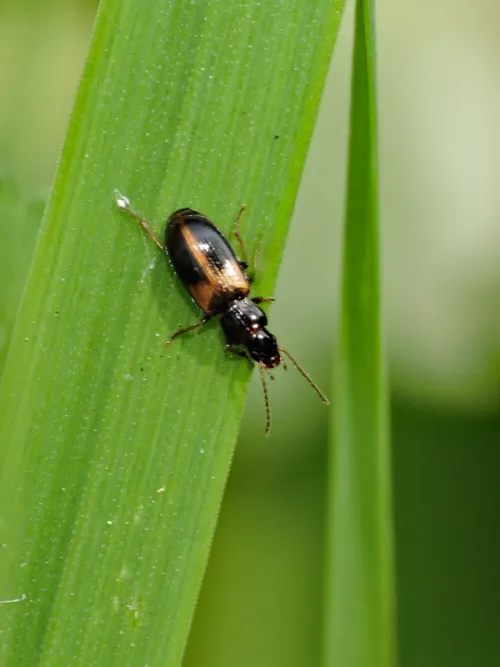
Acupalpus meridianus
Acupalpus meridianus
3.5 to 4.5 mm. The elytra of this small ground beetle are pale orange marked with large darker areas. Unless identified by a recognised expert, photos are required from above and below. If the photo doesn't show the key ID features then in the commen

Acupalpus pauperculus
Acupalpus pauperculus
Identification: Uniformly dark elytra that are very shiny non-iridescent, head normal (not enlarged)
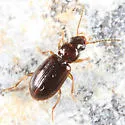
Acupalpus pumilus
Acupalpus pumilus
Identification: Some clues that help distinguish this from similar Acupalpus include small size (ca 2.5 mm), iridescent elytra, pronotal base punctate and with non-rounded hind angles.
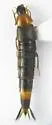
Acylophorus flavicollis
Acylophorus flavicollis
Identification: "Very easy to recognize among the North American species of the genus by the coloration of the pronotum."
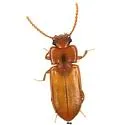
Adelina bidens
Adelina bidens
Identification: Det. E. G. Riley 2010 Type Locality: Florida
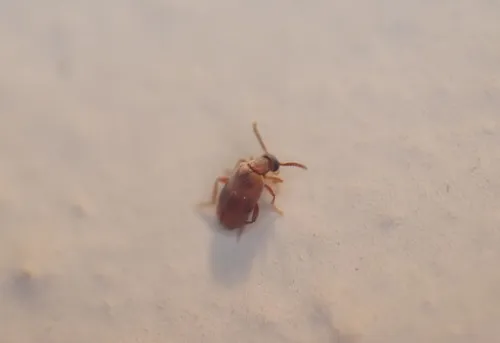
Aderus populneus
Aderus populneus
Aderus populneus is a species of ant-like leaf beetle in the family Aderidae. Native to the west Palaearctic (very common in England, it has been introduced in North America. Large eyes, pubescent antennae, 1.5-2mm
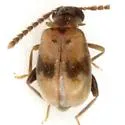
Aderus tantillus
Aderus tantillus
described from a single spmn from San Geronimo, Guatemala.
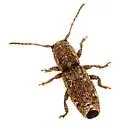
Adetaptera wickhami
Adetaptera wickhami
Type Locality: One specimen taken in Brownsville, Texas by Prof. Wickham, in June.
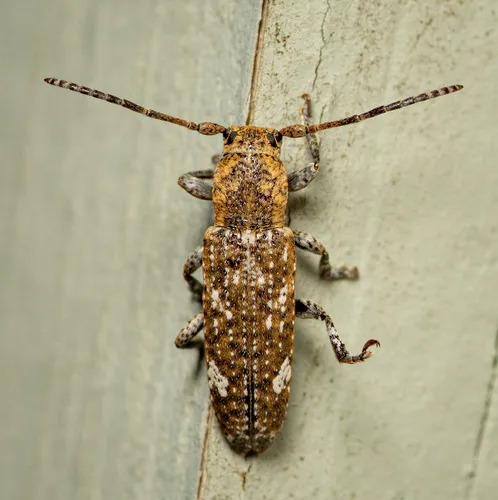
Adetus brousii
Adetus brousii
Adetus brousii (Adetus brousii) is a species in the family Cerambycidae, commonly known as longhorn beetles, belonging to the order Coleoptera (Beetles). It is classified within the subfamily Lamiinae, tribe Apomecynini, suborder Polyphaga, superfami
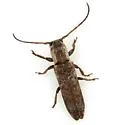
Adetus croton
Adetus croton
Type Locality: Texas: Hidalgo Co., Santa Ana NWR, 23.IV.2009, D. Heffern & B. Raber col. (TAMU). initially discovered in Texas by Edward Riley in 1987 while collecting Chrysomelidae on the shrub, Croton humilis L. (Euphorbiaceae), along Highway 4 nea
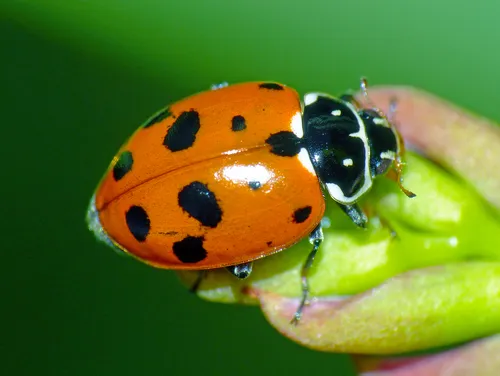
Adonis' Ladybird
Hippodamia variegata
A small ladybird, measuring only 4 to 5 mm. It has red elytra with between 3 and 15 black spots, which are sometimes fused together and tend to be concentrated to the rear. The white pronotum is mostly covered with a black pattern and the legs are ma
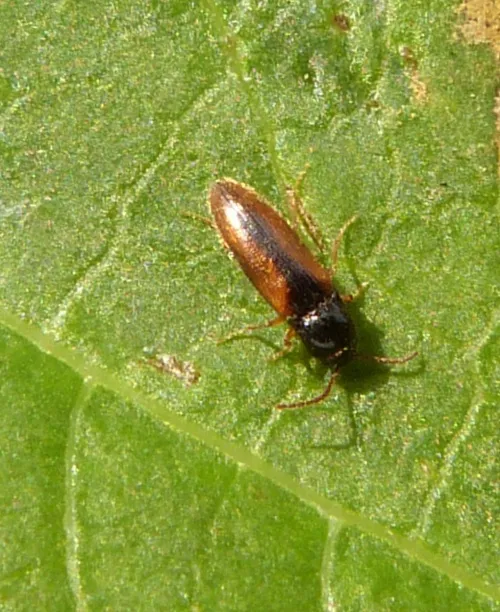
Adrastus pallens
Adrastus pallens
Length 4.5 to 5 mm. One of the smallest of the British Elaterids. The elytra, legs and antennae are orange-brown with a darker stripe down the centre of the elytra. The pronotum and head are black. The elytral striae are deep at the base but become s
Aegialia nana
Aegialia nana
Rarely collected; probably not rare only very local
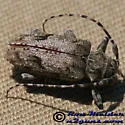
Aegomorphus modestus
Aegomorphus modestus
Identification: M-shaped elytral markings on a mottled background combined with strong lateral pronotal spines are distinctive fairly common; attracted to lights and bait traps
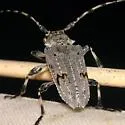
Aegomorphus morrisii
Aegomorphus morrisii
Aegomorphus morrisii (Aegomorphus morrisii) is a species in the family Cerambycidae, commonly known as longhorn beetles, belonging to the order Coleoptera (Beetles). It is classified within the subfamily Lamiinae, tribe Acanthoderini, suborder Polyph
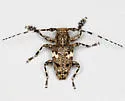
Aegomorphus quadrigibbus
Aegomorphus quadrigibbus
Identification: Elytra with well-defined, undulating, antemedial white macula
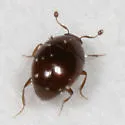
Aeletes politus
Aeletes politus
One of a few histerids collected regularly at UV lights
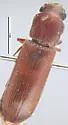
African Powderpost Beetle
Lyctus africanus
Identification: native to Africa or the Neotropics, now cosmopolitan, get readily established; in our area: NY-FL-AL + WA-CA ; "may be endemic and restricted to the Oriental and Ethiopian regions" earliest record in our area: DC 1898
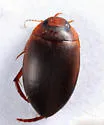
Agabetes acuductus
Agabetes acuductus
Identification: Elytra has dense, short longitudinal scratches (strioles). See Larson or Epler . Some adults may have non-functional flight muscles.
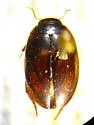
Agabus amnicola
Agabus amnicola
member of uliginosus species-group that also contains the nearctic A. margareti Larson and 5 palæarctic spp.
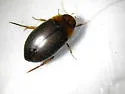
Agabus antennatus
Agabus antennatus
Identification: Males are most easily identified by the enlarged terminal antennal segments. Colour on both sexes identical- head and pronotum reddish to yellowish brown, elytra darker brown with pale lateral and basal margins. Ventral side of head r
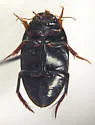
Agabus anthracinus
Agabus anthracinus
Identification: mostly black, with lighter (rufous to piceous) legs, frontal spots, palpi, and lateral & basal borders of elytra and pronotum. Antennae pale basally. Elytra sculpture rather coarse, resembling scales. Prosternal process convex to angu
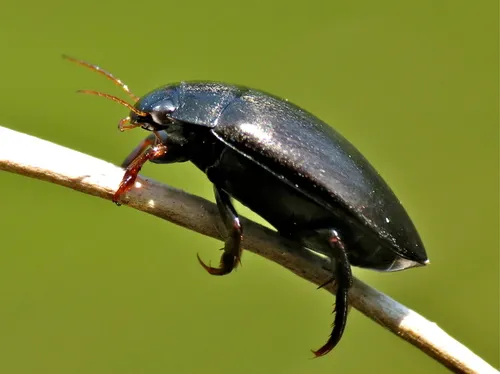
Agabus bipustulatus
Agabus bipustulatus
9.5-11.5mm. A very common black diving beetle with pale brown antennae and brown front legs. It has a smoothly rounded outline with elongate microsculpture within which is a mesh pattern. Favours still or stagnant water or sluggish bays in running wa
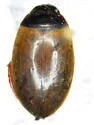
Agabus canadensis
Agabus canadensis
Identification: Shape broadly oval; Head and pronotum dark brown to almost black; elytron paler brown with basal and lateral margins yellow; A pair of reddish spots present on the frons; Sides of pronotum broadly red to reddish brown (width of the re
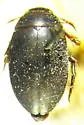
Agabus clavicornis
Agabus clavicornis
Identification: Sexually dimorphic- males with clubbed antennae.
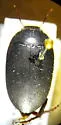
Agabus crassipes
Agabus crassipes
Identification: penultimate labial palpomere enlarged, triangular
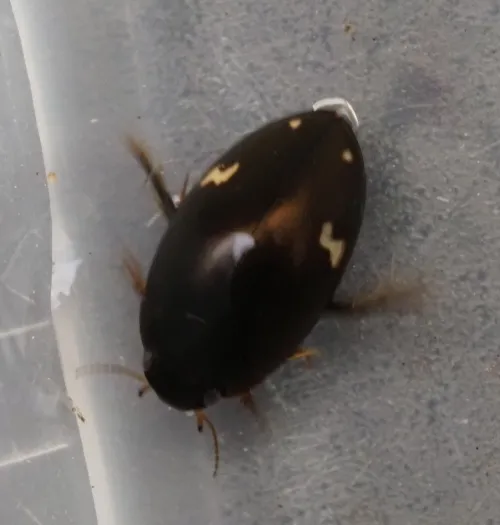
Agabus didymus
Agabus didymus
7.5 to 8.0 mm. Can be identified by its bronze colour and characteristic pale ‘N’ shaped elytral markings. Found in rivers, brooks, streams and canals. Widespread and frequent in the southern half of Britain, but less well recorded further north. No
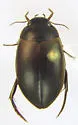
Agabus erytropterus
Agabus erytropterus
The original description by Thomas Say in 1825 ( Pdf here p.95 stipulate Colymbetes erytropterus . Fall's publication in 1922, A review of the North American species of Agabus, on page 21, mention this insect as Agabus erythropterus .
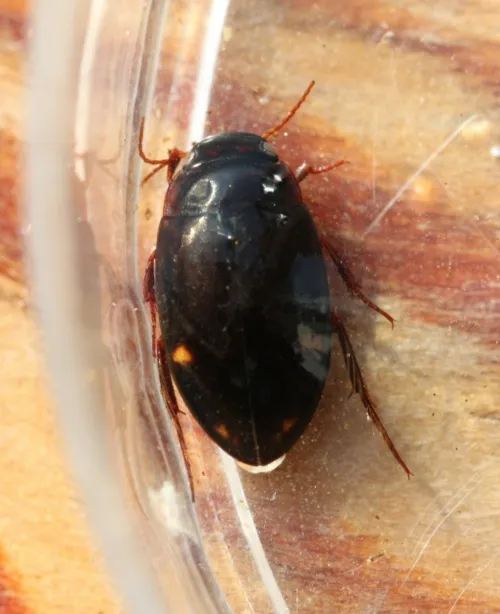
Agabus guttatus
Agabus guttatus
Length 8 or 9 mm. A dark brown/black diving beetle usually with pale spots on the elytra. Similar (but usually smaller) spots occur in other species. The elytra are covered in a fine mesh-like reticulated micro-sculpture. A row of fine punctures runs
Agabus nebulosus
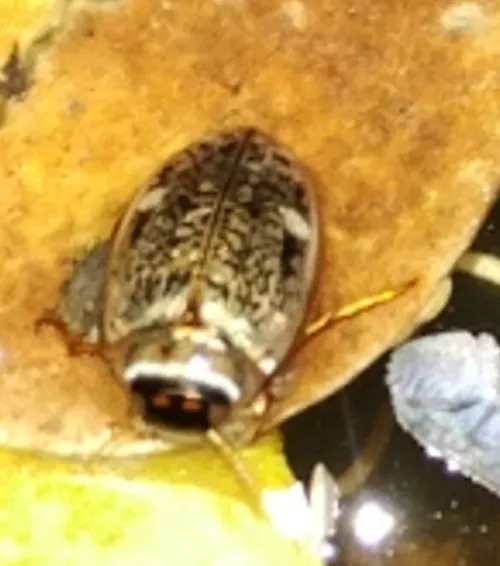
Agabus nebulosus
A brown, sometimes mottled, medium-sized (7.5 to 8.3 mm) water beetle which may be very similar to Agabus conspersus. Agabus nebulosus differs mainly in having two dark spots on the pronotum which are visible in the field. It is only safe to conclude
Agabus paludosus
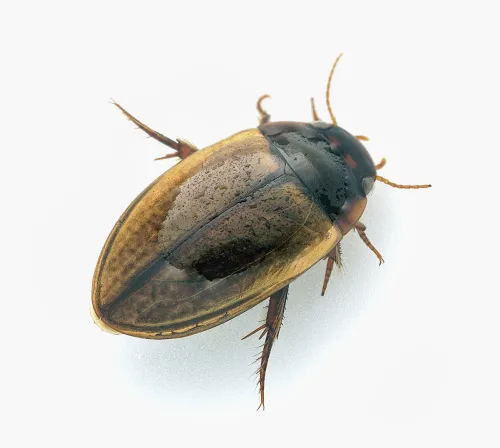
Agabus paludosus
Length 6.5-8mm. Shiny brown elytra, dark head and pronotum. Photograph showing diagnostic features required. Widespread and fairly frequent in Britain. No additional images available for this species.
Agabus punctulatus
Agabus punctulatus
Identification: oval, small; rather shiny, dark reddish brown to almost black dorsally, often with a greenish sheen in life; lateral margins of pronotum and elytra paler; male protarsal claw with a subapical ventral tooth
Agabus sturmii
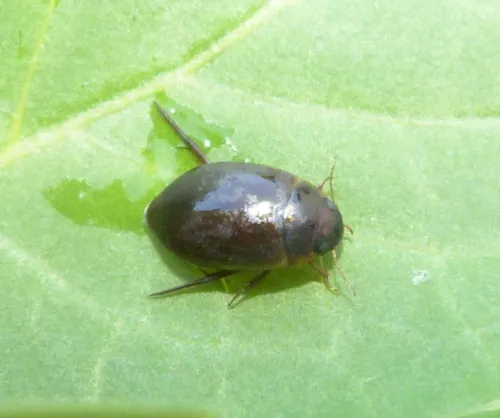
Agabus sturmii
This predaceous diving beetle is similar to a number of others and specimens must be examined for a safe identification. No additional images available for this species.
Agabus taeniolatus
Agabus taeniolatus
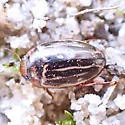
Identification: Very similar to A. disintegratus , with overlapping range. Distinguished by entirely reddish venter
Agallissus lepturoides
Agallissus lepturoides
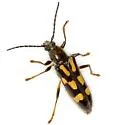
Identification: Unmistakable... LeConte (1873) was the first to report this species from Texas (with no further data). ( 3 ) Hovore et al. (1987) reported: "This exotic [looking] species has been listed from Texas several times, but we have been unab
Agathidium exiguum
Agathidium exiguum
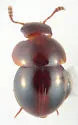
Identification: Extremely similar to A. fawcettae , can only be separated by examination of median lobe of aedeagus
Agathidium hatchi
Agathidium hatchi
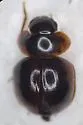
Identification: Large size (>3.5 mm), clavate antennae, relatively long postocular temporae, and male genitalia (bifurcate median lobe) are diagnostic.
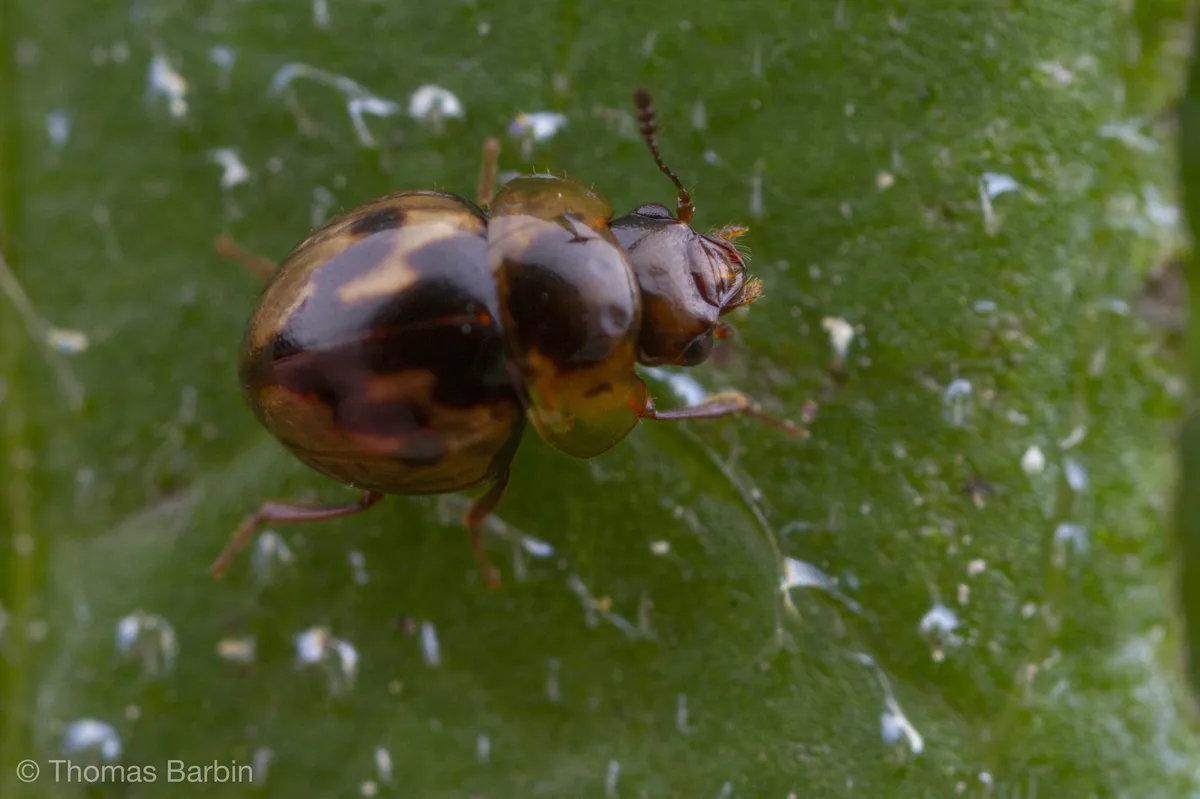
Agathidium maculosum
Agathidium maculosum
Identification: "distinguished by the prominent, irregular maculations on the elytra (figs. 46, 49), which distinguish the species from all others except A. pulchrum and A. amae , which it greatly resembles. From these species it differs by lacking a
Agathidium pulchrum
Agathidium pulchrum
Identification: "distinguished by the prominent, irregular maculations on the elytra (figs. 44, 45, 51), which distinguish the species from all others except A. maculosum and A. amae . From A. maculosum it differs by having a distinctive sutural elyt
Agave Weevil
Scyphophorus acupunctatus
Identification: see important pest of cultivated agaves; larvae used as food in parts of Mexico; one of several species put into "tequila" (actually mezcal) bottles
Agoliinus sigmoideus
Agoliinus sigmoideus
one of the larger species in the genus; local to the Olympics and Cascades; generalized dung feeder ( Richard Zack )
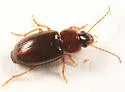
Agonoleptus conjunctus
Agonoleptus conjunctus
Identification: Within the genus, can be recognized by normal metasternum (i.e. wings normally developed, unlike in A. thoracicus ), a pale pronotum (sometimes clouded) that contrasts with the dark head, and the aedeagus not hooked at the tip. Wing-d
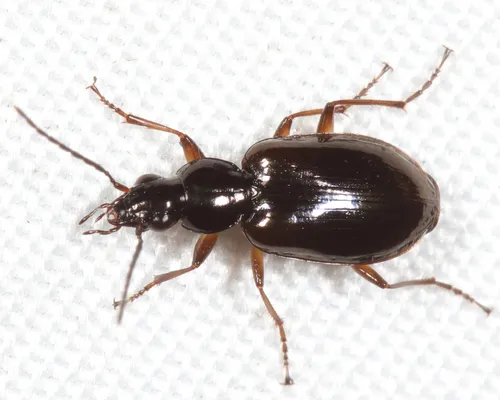
Agonum aeruginosum
Agonum aeruginosum
Identification: Based on this diagnostic combination in an Agonum: narrow circular pronotum AND punctiform pit near each pronotal hind angle AND middle elytra with distinct tranverse indentation.[Comment from Peter Messer]
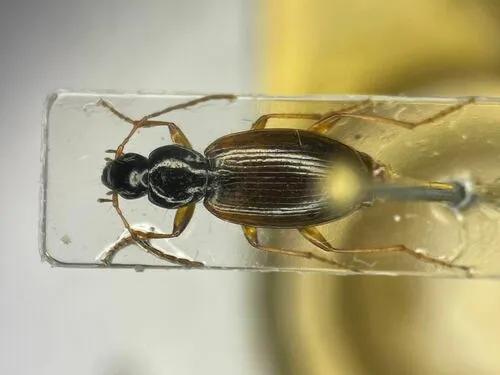
Agonum canadense
Agonum canadense
Agonum canadense is a species of ground beetle in the Platyninae subfamily that can be found in Ontario, Canada and Pennsylvania, United States.
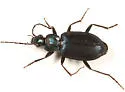
Agonum cyanopis
Agonum cyanopis
Identification: A uniformly dark species (including antennae & appendages) with metallic blue to purple sheen on forebody.
Agonum cyclifer
Agonum cyclifer
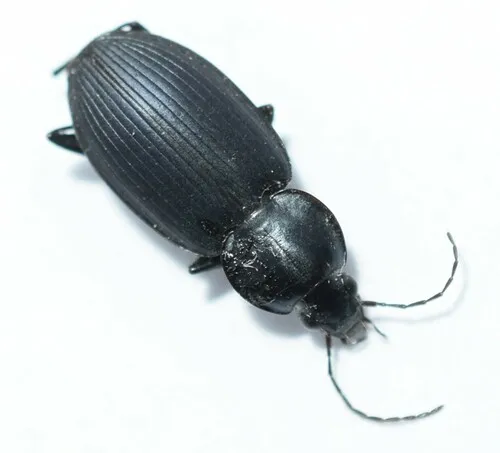
Agonum cyclifer is a species of ground beetles in the family Carabidae. It is found in Central America and North America.
Agonum deplanatum
Agonum deplanatum
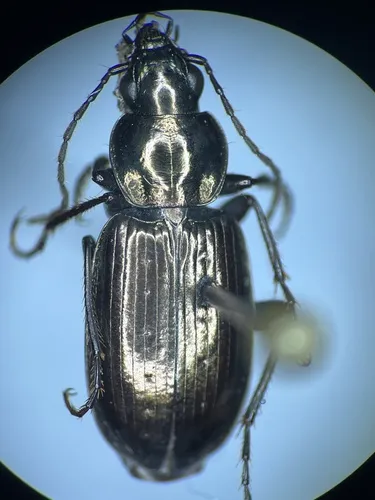
Agonum deplanatum is a species of ground beetle in the Platyninae subfamily that can be found in the United States.
Agonum emarginatum
Agonum emarginatum
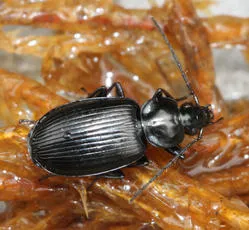
Length 7 to 9 mm. There are 15 British species of Agonum , mainly associated with damp habitats and all with rounded pronotum hind angles. Agonum emarginatum is all black, with just its tibiae and tarsi sometimes dark brown. It is found in damp habit
Agonum extensicolle
Agonum extensicolle
Identification: bright green/bluish iridescence distinctive , also pale legs and ant.
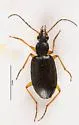
Agonum extimum
Agonum extimum
Agonum extimum is a species of ground beetle in the family Carabidae. It is found in Central America and North America.
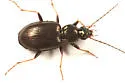
Agonum ferreum
Agonum ferreum
Identification: body & femora all dark, tibiæ/tarsi entirely pale; antennomeres 1‒3 or 1‒4 pale
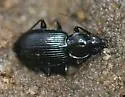
Agonum fidele
Agonum fidele
Identification: Helpful clues are the black legs and somewhat iridescent elytra.
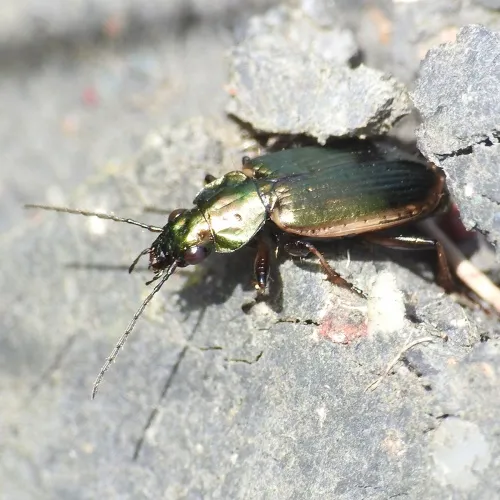
Agonum marginatum
Agonum marginatum
8.8 to 10.4mm. The overall colour of this medium-sized ground beetle is a coppery-green but the elytra have cream coloured margins. The antennae are dark apart from a paler brown first segment. The hind angles of the pronotum are strongly rounded. Un
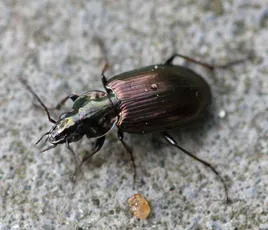
Agonum muelleri
Agonum muelleri
Length 7 to 9 mm. A handsome beetle with a metallic sheen that can vary from golden greens through to maroons and purples in certain light conditions. Mainly in open places, or under stones and in dead wood.
Agonum octopunctatum
Agonum octopunctatum
Identification: green, with 8 dimples on the dorsal surface. our only member of the octopunctatum group
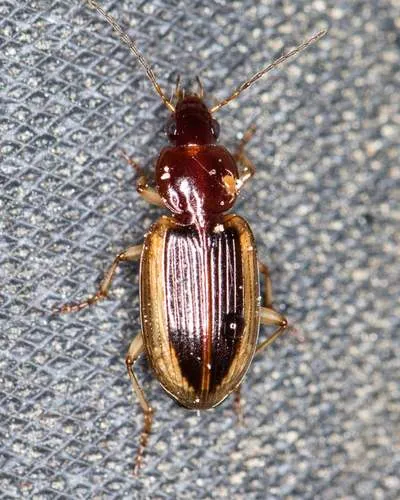
Agonum pallipes
Agonum pallipes
Agonum pallipes is a species of ground beetle in the family Carabidae. It is found in North America.
Agonum placidum
Agonum placidum
Identification: Black, at least partially with a metallic luster dorsally. Interval 3 with at least 5 non-foveate punctures. Has been collected by pitfall trapping, turning stones, sweeping & beating vegetation, light trapping, & turning drift debri
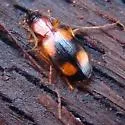
Agonum quadrimaculatum
Agonum quadrimaculatum
Identification: Rufo-testaceous, head black, elytra black with a large humeral spot confluent with that on the opposite side, another very little smaller near the apex. Det. David Kavanaugh Type Locality: collected by Mr. Klages "Feb. 27, 1881, under
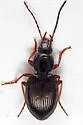
Agonum rigidulum
Agonum rigidulum
Identification: Most like A. punctiforme with fine punctures in elytral striae but differs as follows: flatter lateral to posteriolateral depressions of pronotum, microsculpture on elytra weaker, smaller body size (under 7.5 mm), elytra proportionate
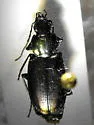
Agonum suturale
Agonum suturale
Agonum suturale (Agonum suturale) is a species in the family Carabidae, commonly known as ground beetles, belonging to the order Coleoptera (Beetles). It is classified within the subfamily Harpalinae, tribe Platynini, suborder Adephaga. This species
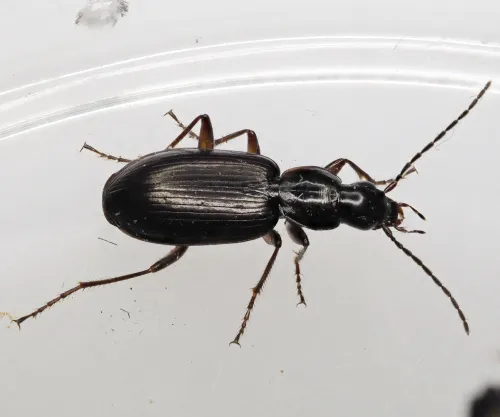
Agonum thoreyi
Agonum thoreyi
6 to 8 mm long. A. thoreyi occurs in two colour forms: one with the upper surface black or dark brown (sometimes with the elytra a little lighter), and the other has a pale yellow to brown elytra which is darker along the suture. Agonum thoreyi shoul
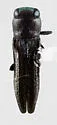
Agrilaxia texana
Agrilaxia texana
Identification: Can be separated from A. flavimana by coloration and male genitalia. Can be separated by A. flavimana by its flat frons, smooth elytra and male genitalia.
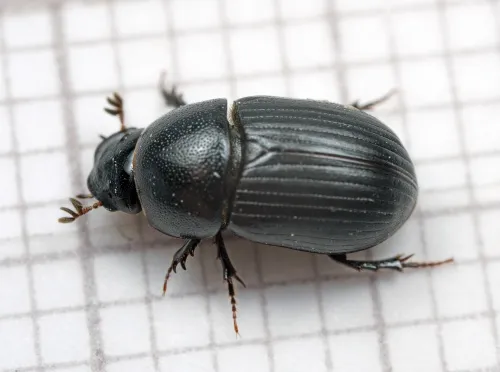
Agrilinus ater
Agrilinus ater
4 to 6 mm. Head black, narrowly expanded laterally in front of eyes, evenly rounded then sinuate to front angles, front margin distinctly curved. Pronotum black, very convex and shining, finely bordered, evenly punctured throughout with large and sma
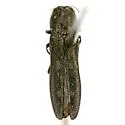
Agrilus abjectus
Agrilus abjectus
Identification: The species is not conspicuously marked, but among those in which the antennae are serrate from the fifth joint it may be known by the very convex pronotum, with a feeble median depression, absence of prehumeral carinae, the feeble pu
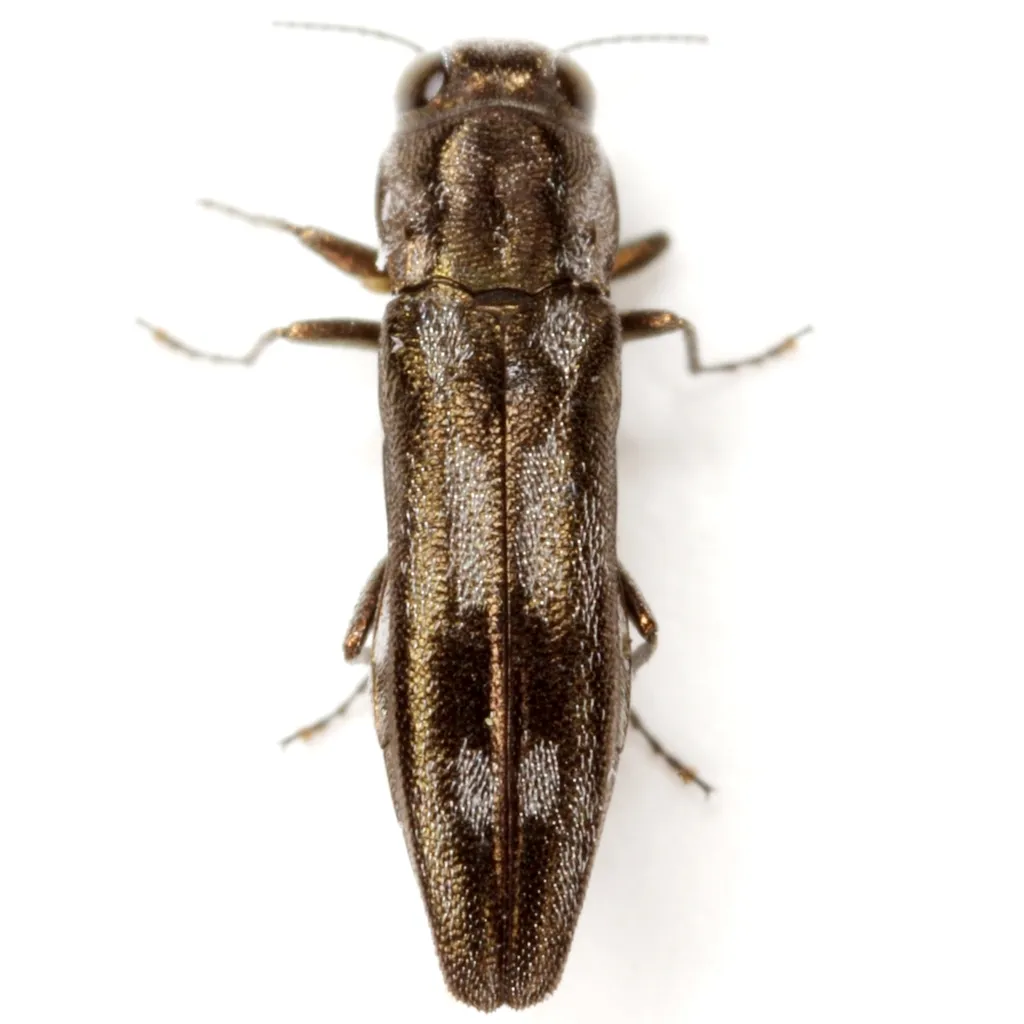
Agrilus acaciae
Agrilus acaciae
Agrilus acaciae is a species of metallic wood-boring beetle in the family Buprestidae. It is found in Central America and North America.
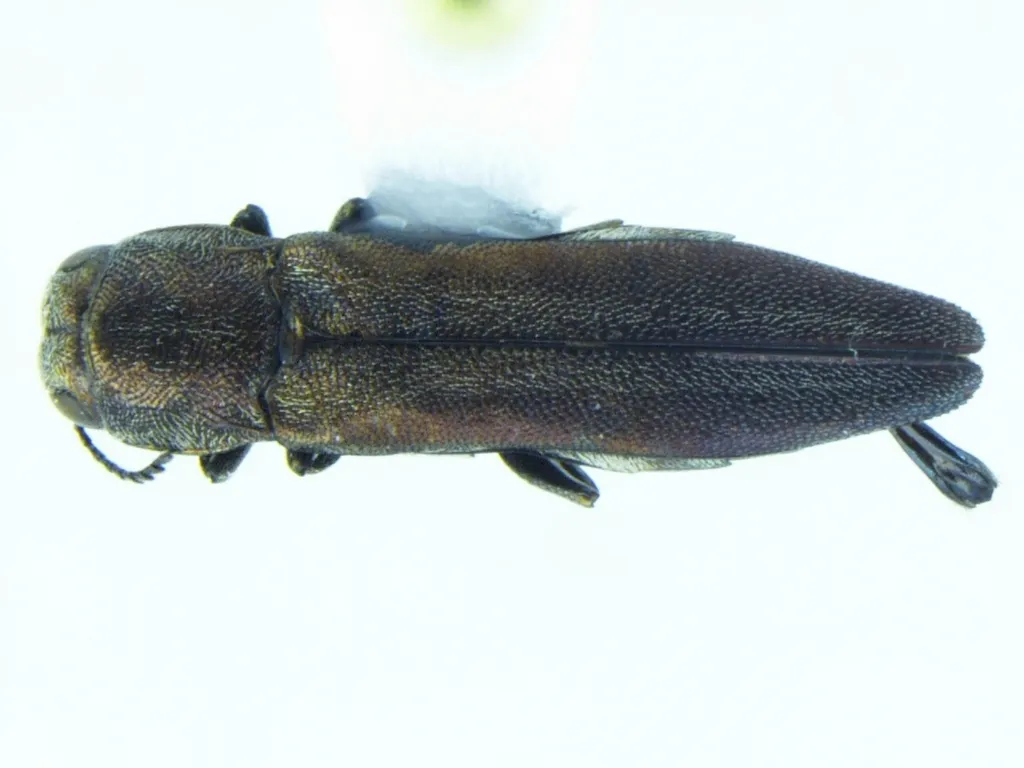
Agrilus aeneocephalus
Agrilus aeneocephalus
Agrilus aeneocephalus is a species of metallic wood-boring beetle in the family Buprestidae. It is found in North America.
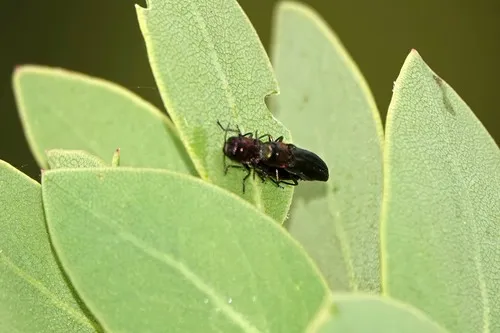
Agrilus arbuti
Agrilus arbuti
Agrilus arbuti is a species of metallic wood-boring beetle in the family Buprestidae. It is found in North America.
Agrilus bentseni
Agrilus bentseni
Identification: "Form small, rather robust; shining dark bronze throughout; a patch of white pubescence in lateral depression of pronotum, one in basal depression of elytron, an elongate patch at middle and a like patch on apical third of each elytro
Agrilus bespencus
Agrilus bespencus
Identification: A. bespencus has a very slightly, medially depressed upper frons, visible in this photo, (which A. pubescens doesn't have). Det. Norm Woodley, 2020 Type Locality: Sheffield, Pecos Co., Texas, Apr- 1924, Collector J. O. Martin
Agrilus brattaini 0
Agrilus brattaini
Type Locality: Del Rio Co., 1 mi E. Del Rio (KOA Campground), 18.iv.1973, S. G. Wellso.
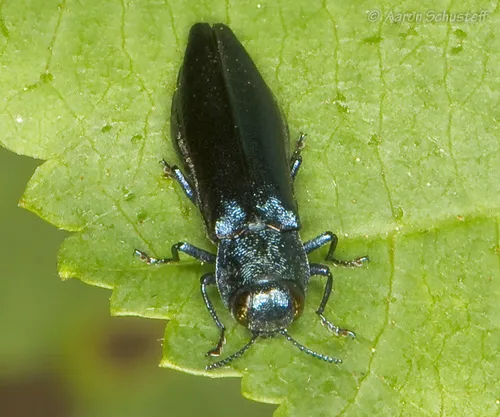
Agrilus burkei
Agrilus burkei
Agrilus burkei is a species of metallic wood-boring beetle in the family Buprestidae. It is found in North America.
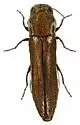
Agrilus cochisei
Agrilus cochisei
Type Locality: Dragoon Mts., Arizona, Sept. 10, 1947,
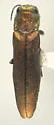
Agrilus corylicola
Agrilus corylicola
Identification: Formerly a subspecies of Agrilus arcuatus . Key to subspecies in Infrequently collected
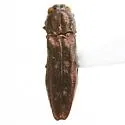
Agrilus cupreonitens
Agrilus cupreonitens
Identification: pit on pronotum is diagnostic (J.A. Hansen, comment) Type Locality: Brownsville, Cameron Co., Texas
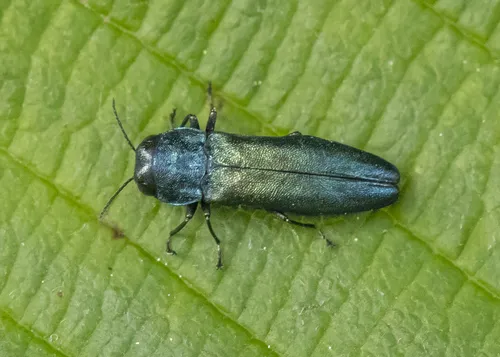
Agrilus cyanescens
Agrilus cyanescens
Length 4.5 to 7 mm. Sometimes known as the Metallic wood-boring Beetle, this species usually has a metallic blue-green appearance. The larvae are found in Honeysuckle, where they live just under the bark, but will also use other hosts. Uncommon in Br
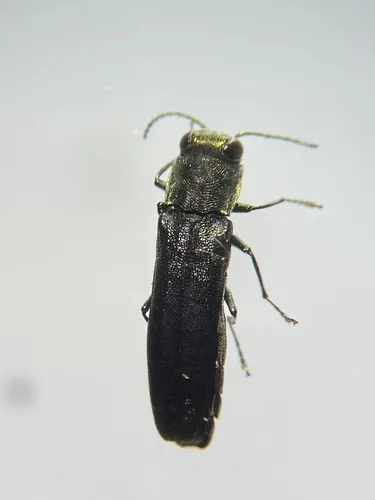
Agrilus defectus
Agrilus defectus
Agrilus defectus is a species of metallic wood-boring beetle in the family Buprestidae. It is found in North America.
Agrilus delicatulus
Agrilus delicatulus
"quite common in Mexico." (Rick Westcott, pers. comm. to MAQ, 2013)
Agrilus derasofasciatus
Agrilus derasofasciatus
Identification: adult habitus photos by Boris Loboda • Nikola Rahmé
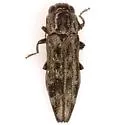
Agrilus dollii
Agrilus dollii
Identification: elytral apices emarginate (Schaeffer 1904) Texas considers this sp. a SGCN ( 5 )
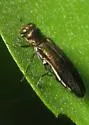
Agrilus egenus
Agrilus egenus
Identification: Male genitalia distinct with sides very strongly, arcuately expanded
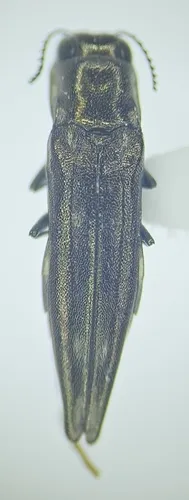
Agrilus exsapindi
Agrilus exsapindi
Agrilus exsapindi is a species of metallic wood-boring beetle in the family Buprestidae. It is found in North America.
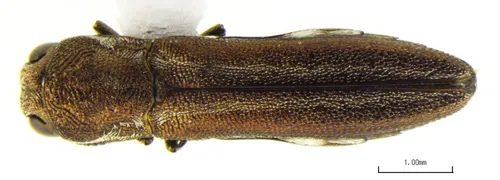
Agrilus falli
Agrilus falli
Agrilus falli is a species of metallic wood-boring beetle in the family Buprestidae. It is found in Central America and North America.
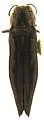
Agrilus ferrisi
Agrilus ferrisi
Identification: elytral tips distinctive? Type Locality: Cincinnati, OH Uncommon according to comment by Norm Woodley.
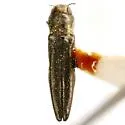
Agrilus gillespiensis
Agrilus gillespiensis
Type Locality: Holotype male and allotype collected in Gillespie Co., Texas, May 7, 1946, by D. J. & J. N. Knull Enchanted Rock is located in Gillespie Co., and is one of the the primary geological features of central Texas
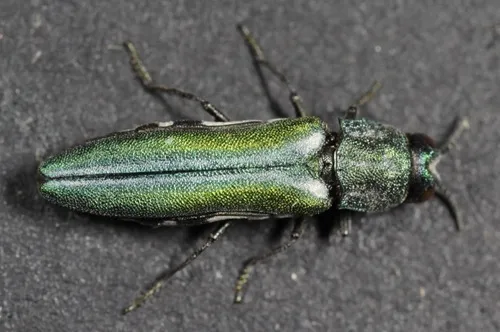
Agrilus hespenheidei
Agrilus hespenheidei
Agrilus hespenheidei is a species of metallic wood-boring beetle in the family Buprestidae. It is found in North America.
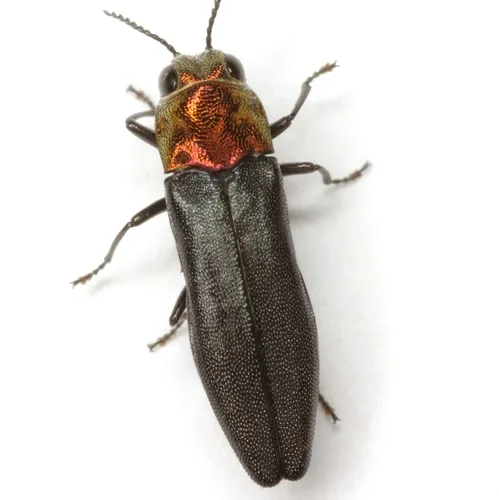
Agrilus heterothecae
Agrilus heterothecae
Identification: This species is commonly confused with Agrilus huachucae . The two can be separated as follows: Agrilus heterothecae has antennomere 3 with the distal end triangular, almost serrate, and ranges in size from 5.6-7 mm. Agrilus huachucae
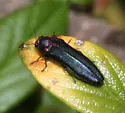
Agrilus huachucae
Agrilus huachucae
Identification: This species is commonly confused with Agrilus heterothecae . The two can be separated as follows: Agrilus heterothecae has antennomere 3 triangular, almost serrate and ranges in size from 5.6-7 mm. Agrilus huachucae has antennomere
Agrilus lacustris
Agrilus lacustris
Identification: Det. G. H. Nelson, 1997 Type Locality: Lake Superior at LaPointe, WIS
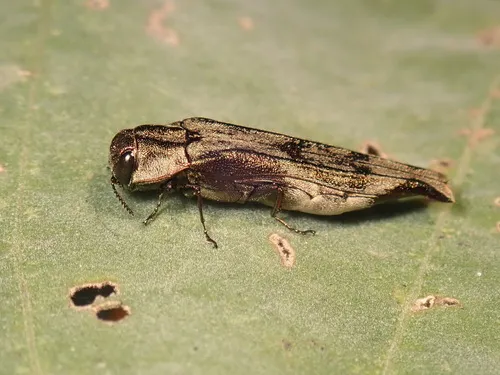
Agrilus langei
Agrilus langei
Recent new U.S. record, not listed in Nelson et al. (2008) ( 3 )
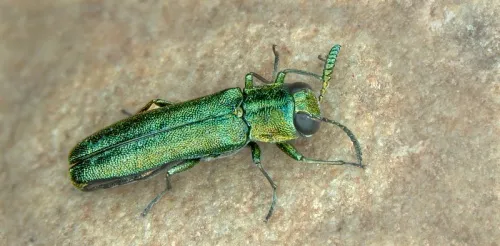
Agrilus laticornis
Agrilus laticornis
Length 4.5 to 6 mm, often with a rather bronzy sheen. Oak woodland or other areas where oak is found. The larvae burrow through the bark of dead trunks and branches of Oak. Widespread in the southern half of Britain. No additional images available fo
Agrilus lautuellus
Agrilus lautuellus
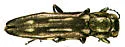
Agrilus lautuellus is a species of metallic wood-boring beetle in the family Buprestidae. It is found in North America.
Agrilus limpiae
Agrilus limpiae
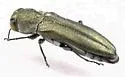
Identification: can be separated from the common A. obsoletoguttatus by more prominent pubescent markings and lateral lobes of the aedeagus
Agrilus malvastri
Agrilus malvastri
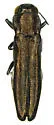
Identification: last key couplet: Pronotum wider than long; pubescent vittae on elytra feebly indicated Described from a large series of 69 specimens which show considerable variations, the color varying from bronzy green to cupreous brown, and the p
Agrilus mimosae
Agrilus mimosae
Identification: species has very odd male genitalia unlike any other North American species. Type Locality: Devil's River, [Val Verde Co.], Texas
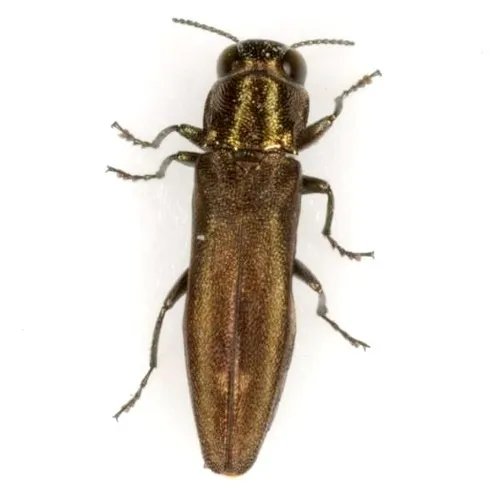
Agrilus neoprosopidus
Agrilus neoprosopidus
Identification: in the female, the front of the head is bronze Det. E. G. Riley 2009 Very similar to Agrilus pectoralis and A. prosopidis . It can be separated from both those species by the marginal and submarginal carina being joined near the base
Agrilus obscurilineatus
Agrilus obscurilineatus
Identification: sides of the abdominal segments are glabrous, but the dorsal portions above the carinae are densely pubescent. … Henry Hespenheide, 20 November, 2010 Type Locality: TX: Starr Co., 6.5 mi. SE Rio Grande City, hwy to Mission
Agrilus obtusus
Agrilus obtusus
Type Locality: TX: "probably near lower Rio Grande"
Agrilus ometauhtli
Agrilus ometauhtli
Identification: Elytra with vittae along suture, antennae serrate from 5th antennomere, marginal and submarginal carina separate anteriorly and joining near base, pronotum strongly elevated basolaterally, dense white pubescence on 1st and 2nd lateral
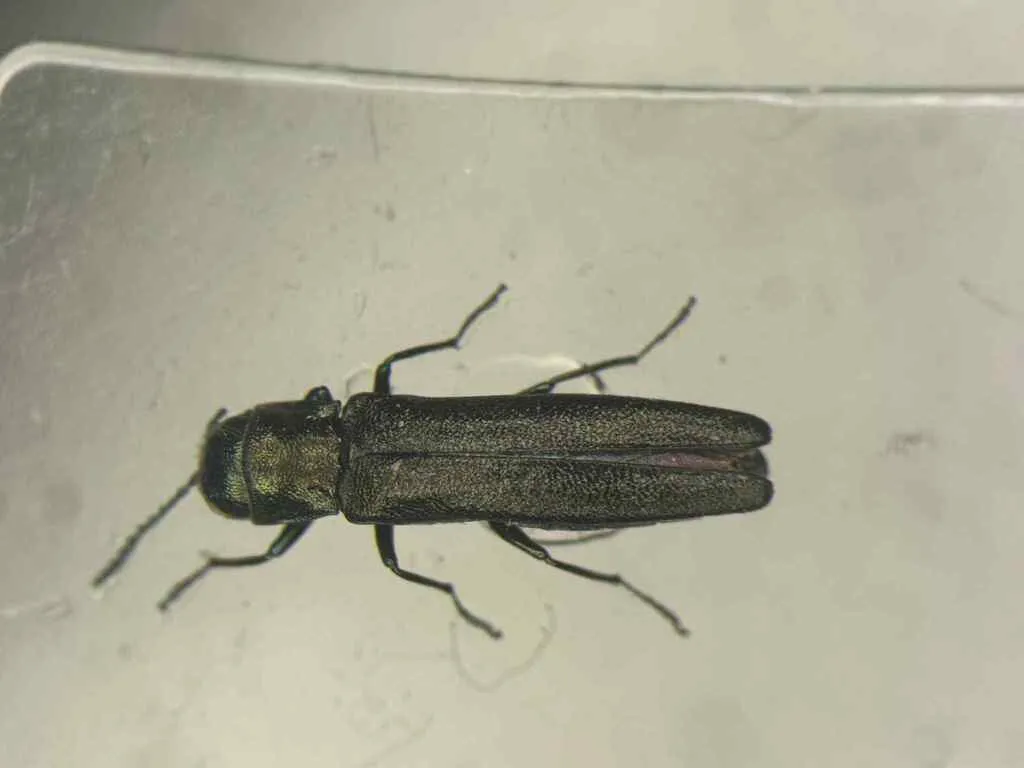
Agrilus osburni
Agrilus osburni
Agrilus osburni is a species of metallic wood-boring beetle in the family Buprestidae. It is found in North America.
Agrilus parabductus
Agrilus parabductus
Type Locality: Lake Corpus Christi, San Patricio County, Texas. Other paratypes Frio Co. and Val Verde Co.