
Agathidium pulchrum
This record describes Agathidium pulchrum (species). Recorded family: Leiodidae. Recorded order: Coleoptera.
Identification and Appearance
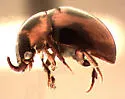
distinguished by the prominent, irregular maculations on the elytra (figs. 44, 45, 51), which distinguish the species from all others except A. maculosum and A. amae . From A. maculosum it differs by having a distinctive sutural elytral stria (fig. 51) and by having the anterior clypeal margin very strongly excavated (figs. 22, 51). Also, the male left mandibular horn, when fully formed, is more strongly curved (figs. 21, 22)... Also, A. pulchrum generally has a greater extent of dorsal brown maculation (fig. 51) than does A. amae (fig. 50). Head dark brown to piceous with medial red spot, clypeus red; pronotum yellow with large medial dark red-brown macula; elytra yellow with dark red-brown to piceous coloration around margins, including sutural margin, and in sinuate, oblique medial line often dividing yellow into anterior and posterior maculae; thoracic sterna piceous, abdominal sterna red; basal antennomeres red, basal two antennomeres of club dark brown, apical antennomere yellow; palpi and legs yellow. Illustration of A. maculosum , pulchrum , and amae by C.Wood after : View Illustration Hatch illustrates a wide variation in the maculation patterns of pulchrum, however, note that his #24 (not shown) is similar to A. amae which was later described from WA and CA : View Illustration
Classification
- Kingdom
- Animalia
- Phylum
- Arthropoda
- Class
- Insecta
- Order
- Coleoptera (Beetles)
- Suborder
- Polyphaga
- Superfamily
- Staphylinoidea
- Family
- Leiodidae (Round Fungus Beetles)
- Subfamily
- Leiodinae
- Tribe
- Agathidiini
- Genus
- Agathidium
Imported taxonomy record. Source availability varies; see the source references and editorial policy below.
Habitat and Range
Habitat
Mainly forests, from moss duff, and riparian areas, from sea level to 7000 ft. Host records: Acryria nutans, Comatricha sp., Lenzites betulina, Polyporus versicolor, Stemonitis sp., Stereum sp., Trichea decipiens, Tubifera ferruginea , and slime mold.
Geographic Range
AK‒CO‒CA east to NH‒WV
Seasonal Activity
year-round
Additional species information
Species notes from the sources
Etymology: Agathidium pulchrum LeConte 1853
About Primitive Winged Insects: the wider group
Order-level background for Coleoptera, the group containing Agathidium pulchrum. Species-specific details appear above.
Group overview
Coleoptera is the largest order of insects with over 400,000 described species, representing ~25% of all known animal species and ~40% of all insects. In the U.S. alone, nearly 30,000 beetle species have been identified.
Ecological role of the group
Beetles are prominent decomposers, especially in forests, breaking down dead wood and recycling nutrients. As predators, they reduce populations of pest insects. Many species are also important pollinators of flowering plants.
Economic and practical significance of the group
Beetles have major economic significance: leaf beetles (Chrysomelidae) and weevils (Curculionoidea) are among the most destructive agricultural pests globally, costing billions annually, while predatory species like ladybugs provide natural pest control.
Recorded sources for this group: Britannica, Smithsonian, NCSU Entomology. Imported estimates may describe particular regions or reporting periods.
Photos of Agathidium pulchrum (5)
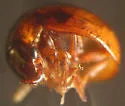
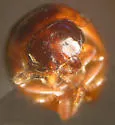
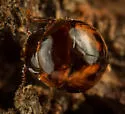
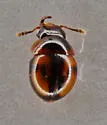
Photo credits: Contributed by Tim Loh; Additional contributions by John VanDyk , Charlene Wood , v belov
Frequently Asked Questions About Agathidium pulchrum
What is Agathidium pulchrum?
Agathidium pulchrum is a species in the family Leiodidae, within the order Coleoptera.
How big is Agathidium pulchrum?
2.3‒2.7 mm
How do you identify Agathidium pulchrum?
distinguished by the prominent, irregular maculations on the elytra (figs. 44, 45, 51), which distinguish the species from all others except A. maculosum and A. amae . From A. maculosum it differs by having a distinctive sutural elytral stria (fig. 51) and by having the anterior clypeal margin very strongly excavated (figs. 22, 51). Also, the male left mandibular horn, when fully formed, is more strongly curved (figs. 21, 22)... Also, A. pulchrum generally has a greater extent of dorsal brown maculation (fig. 51) than does A. amae (fig. 50). Head dark brown to piceous with medial red spot, clypeus red; pronotum yellow with large medial dark red-brown macula; elytra yellow with dark red-brown to piceous coloration around margins, including sutural margin, and in sinuate, oblique medial line often dividing yellow into anterior and posterior maculae; thoracic sterna piceous, abdominal sterna red; basal antennomeres red, basal two antennomeres of club dark brown, apical antennomere yellow; palpi and legs yellow.
Where is Agathidium pulchrum found?
| Feature | Details |
|---|---|
| Habitat | Mainly forests, from moss duff, and riparian areas, from sea level to 7000 ft. Host records: Acryria nutans, Comatricha sp., Lenzites betulina, Polyporus versicolor, Stemonitis sp., Stereum sp., Trichea decipiens, Tubifera ferruginea , and slime mold. |
| Range | AK‒CO‒CA east to NH‒WV |
When is Agathidium pulchrum active?
Agathidium pulchrum: seasonal activity - year-round.