
Adetus croton
This record describes Adetus croton (species). Recorded family: Cerambycidae. Recorded order: Coleoptera.
Identification and Appearance
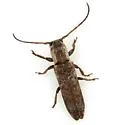
Type Locality: Texas: Hidalgo Co., Santa Ana NWR, 23.IV.2009, D. Heffern & B. Raber col. (TAMU). initially discovered in Texas by Edward Riley in 1987 while collecting Chrysomelidae on the shrub, Croton humilis L. (Euphorbiaceae), along Highway 4 near the Palmito Hill historical marker in Cameron County. Eventually, one specimen was reared from a stem of this plant by Brian Raber. All of the specimens collected in Southern Texas, we believe, were collected by beating or sweeping C. humilis , even though many labels do not indicate this. The known localities in Texas where this new species has been collected are all located in either the Lower Rio Grande Valley National Wildlife Preserve (LRGVNWR), Laguna Atascosa National Wildlife Refuge (LANWR) or Santa Ana National Wildflife Preserve (SANWR). At SANWR, a small area of about 200 square meters with Croton humilis shrubs was located near the east entrance of the old, historic cemetery within the refuge. The plants were checked multiple times before individuals were found on one visit to the refuge. In the summer of 2010, this area was inundated by unprecedented flood waters for several months. The subsequent status of this population has not been determined. The localities in LRGVNWR and LANWR were unaffected by that flood. There are undoubtedly other locations for this species, however the remaining undeveloped land in Southern Texas is largely private property or protected federal property where permission to collect is required.
Classification
- Kingdom
- Animalia
- Phylum
- Arthropoda
- Class
- Insecta
- Order
- Coleoptera (Beetles)
- Suborder
- Polyphaga
- Superfamily
- Chrysomeloidea
- Family
- Cerambycidae (Longhorn Beetles)
- Subfamily
- Lamiinae
- Tribe
- Apomecynini
- Genus
- Adetus
Imported taxonomy record. Source availability varies; see the source references and editorial policy below.
Habitat and Range
Geographic Range
southmost Texas (Cameron & Hidalgo Cos.) / Mex. to Hondouras - Map
Seasonal Activity
Mar-June, Oct. in TX
Diet and Behavior
Diet: host plant in southern Texas: Croton humilis (Euphorbiaceae)
Additional species information
Species notes from the sources
Etymology: Adetus croton Heffern, Santos-Silva, & Botero
About Primitive Winged Insects: the wider group
Order-level background for Coleoptera, the group containing Adetus croton. Species-specific details appear above.
Group overview
Coleoptera is the largest order of insects with over 400,000 described species, representing ~25% of all known animal species and ~40% of all insects. In the U.S. alone, nearly 30,000 beetle species have been identified.
Ecological role of the group
Beetles are prominent decomposers, especially in forests, breaking down dead wood and recycling nutrients. As predators, they reduce populations of pest insects. Many species are also important pollinators of flowering plants.
Economic and practical significance of the group
Beetles have major economic significance: leaf beetles (Chrysomelidae) and weevils (Curculionoidea) are among the most destructive agricultural pests globally, costing billions annually, while predatory species like ladybugs provide natural pest control.
Recorded sources for this group: Britannica, Smithsonian, NCSU Entomology. Imported estimates may describe particular regions or reporting periods.
Photos of Adetus croton (3)
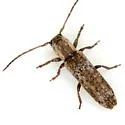
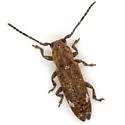
Photo credits: Contributed by Mike Quinn
Frequently Asked Questions About Adetus croton
What is Adetus croton?
Adetus croton is a species in the family Cerambycidae, within the order Coleoptera.
How big is Adetus croton?
total length: 4.25–8.35 mm
Where is Adetus croton found?
Range: southmost Texas (Cameron & Hidalgo Cos.) / Mex. to Hondouras - Map
What does Adetus croton eat?
The diet of the Adetus croton includes host plant in southern Texas: Croton humilis (Euphorbiaceae).
When is Adetus croton active?
Adetus croton: seasonal activity - Mar-June, Oct. in TX.