
Primitive Winged Insects
Order Coleoptera
The Primitive Winged Insects (Order Coleoptera) includes 15,720 species across 160 families and 3,716 genera in our directory.
About Primitive Winged Insects
Coleoptera is the largest order of insects with over 400,000 described species, representing ~25% of all known animal species and ~40% of all insects. In the U.S. alone, nearly 30,000 beetle species have been identified.
Economic Impact
Beetles have major economic significance: leaf beetles (Chrysomelidae) and weevils (Curculionoidea) are among the most destructive agricultural pests globally, costing billions annually, while predatory species like ladybugs provide natural pest control.
Ecological Role
Beetles are prominent decomposers, especially in forests, breaking down dead wood and recycling nutrients. As predators, they reduce populations of pest insects. Many species are also important pollinators of flowering plants.
Families in Coleoptera (160)
Species in Coleoptera (15,720)
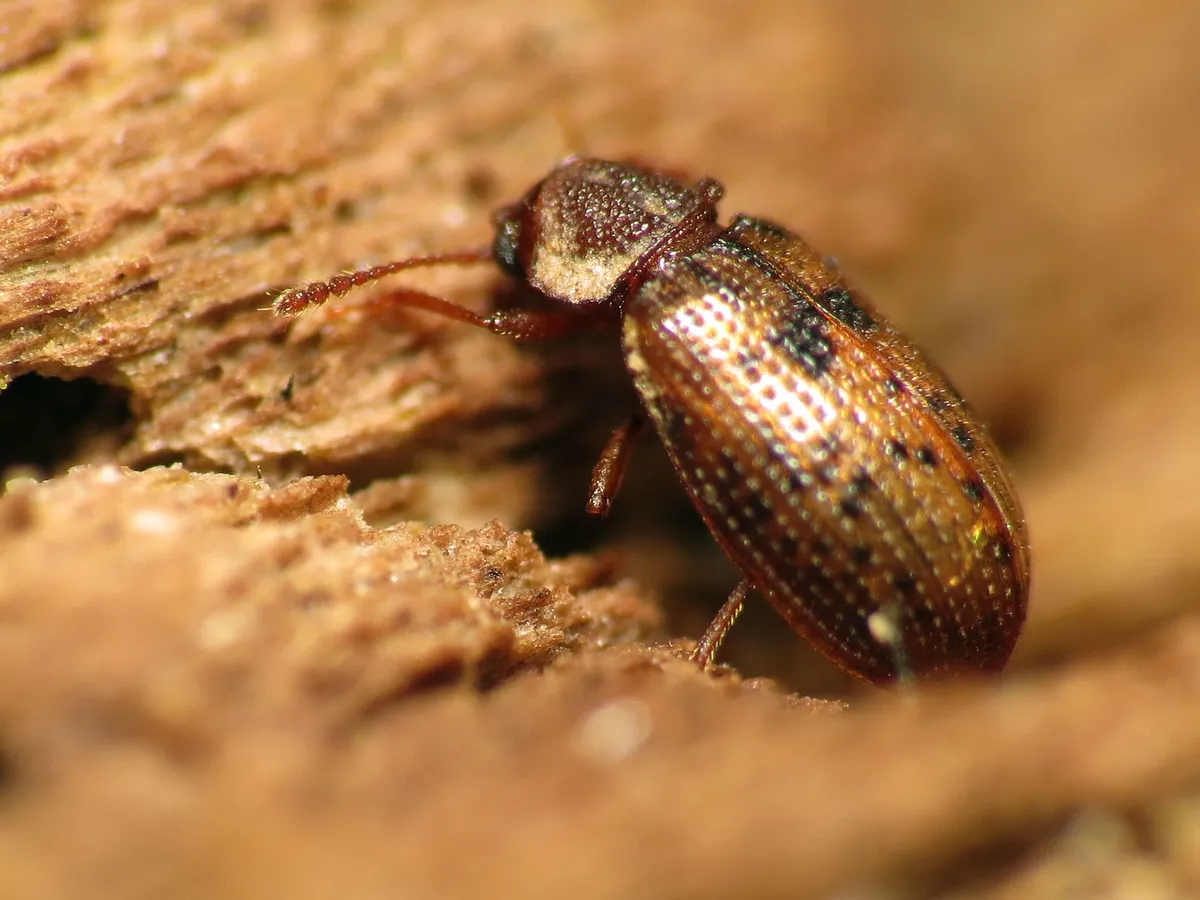
Derodontus esotericus
Derodontus esotericus
Identification: Pronotal edges dentate, lacking a distinct posteriorly directed tooth. Tarsi 5-5-5 with 1-3 filiform, not lobed beneath. Dorsum lacks distinct vestiture of setae.
Derospidea brevicollis
Derospidea brevicollis
Identification: Note non-tapering elytral stripes Det. M. A. Quinn, 2015
Derospidea ornata
Derospidea ornata
Type Locality: Brownsville, (Esperanza Ranch) Texas (Schaeffer 1905)
Desmiphora aegrota
Desmiphora aegrota
Identification: The small size, pale ground color, and fasciculate tufts or pencils of erect or sub-erect hairs in addition to the vestiture of long erect hairs are distinctive. ( 3 ) Texas considers this a SGCN ( 7 )
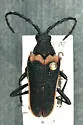
Desmocerus californicus
Desmocerus californicus
Identification: The forewings of the male are primarily red with dark green spots, whereas those of the female are dark metallic green with red margins. females of the subspecies are basically indistinguishable without DNA or locality data (per Phil
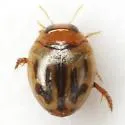
Desmopachria dispersa
Desmopachria dispersa
Identification: Body broadly ovate, somewhat depressed; elytra and pronotum rather deeply and densely punctate; metacoxal plates relatively coarsely and densely punctate;
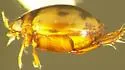
Desmopachria mexicana
Desmopachria mexicana
Identification: Elytron with lateral dark spots separate from combined discal and sutural markings; pronotum with discal punctation distinctly finer than that of elytra; metacoxal plate relatively coarsely but shallowly punctate
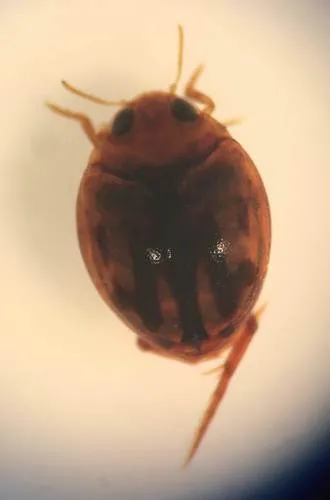
Desmopachria seminola
Desmopachria seminola
Identification: Body more narrowly ovate and more convex; elytra and pronotum more finely and less densely punctate; metacoxal plates more finely and more sparsely punctate
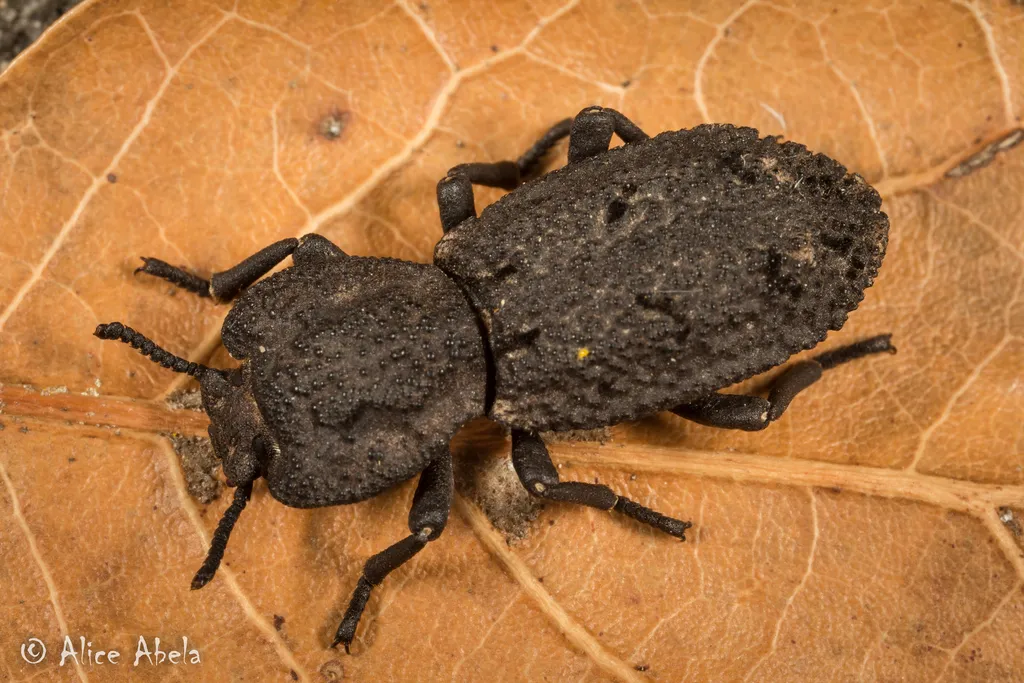
Diabolical Ironclad Beetle
Phloeodes diabolicus
Identification: Dorsal color can vary from pale brown to dark gray. Apical part of elytra, as well as shoulders, may have creamy brown to golden patches. For a full redescription of this species please see García-Paris et al (2006).
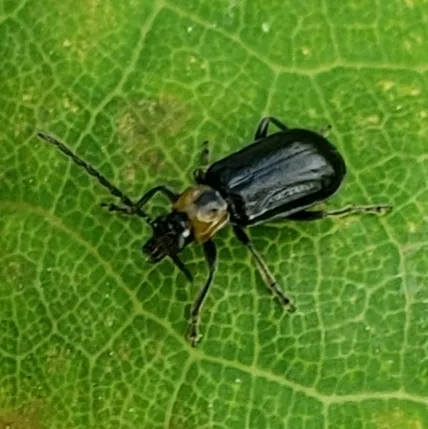
Diabrotica cristata
Diabrotica cristata
Identification: Pronotum black to orange , or less frequently: can be locally abundant:
Diabrotica lemniscata
Diabrotica lemniscata
Identification: colors of the elytra, which are yellow, with a broad common sutural black vitta, and a broad dorsal vitta extending from the base nearly to the tip; or they may be described as black with a narrow dorsal vitta, the lateral and apical
Diabrotica litterata
Diabrotica litterata
Identification: Det. M. A. Quinn, 2013 First US record, 2008 in Santa Ana NWR, Alamo, Hidalgo Co., TX (BG data) [Not listed in Riley et al. (2003)] ( 3 )
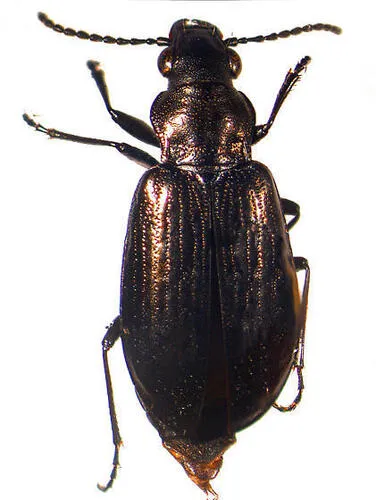
Diacheila arctica
Diacheila arctica
Identification: Black with brassy, coppery or greenish lustre, mandibles, tibiae and often tarsi reddish brown. Slenderer, more parallel-sided than polita . Prothorax with lateral carina, sides slightly sinuate in basal half. Elytra with regular rows
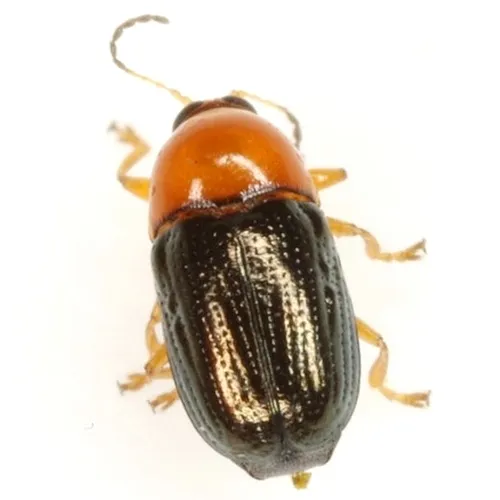
Diachus chlorizans
Diachus chlorizans
Identification: Pronotum impunctate, shining, yellow-orange, strongly convex.
Dialytes striatulus
Dialytes striatulus
Identification: neotype Easily distinguished by the pronotum with coarse punctures and median groove; elytra with prominent elevated striae.
Diaperis nigronotata
Diaperis nigronotata
Much more common than D. maculata in Brazos Co., TX
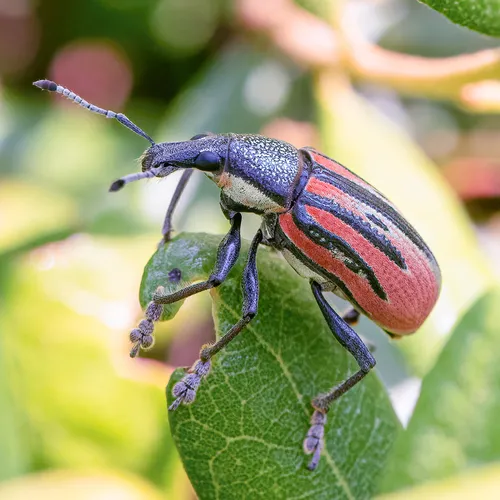
Diaprepes Root Weevil
Diaprepes abbreviatus
Identification: color variable (from gray to yellow to orange to black) Major pest of citrus crops: larvae often girdle the taproot, which may kill the plant and provide an avenue for Phythophora infections. A single larva can kill young hosts while
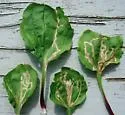
Dibolia borealis
Dibolia borealis
Identification: key couplets: Apices of elytra rounded, (not sinuous at apex). Antennae red-testaceous or red-brown. Pronotum not reddish. Form more oblong; elytra with spaces between striae with very few punctures ( 3 ) Description: Oblong oval, con
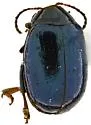
Dibolia catherinia
Dibolia catherinia
Identification: "This species is distinct from all other North American species, except reyheria , championi , and kansana , in having an orange or reddish-brown pronotum and a light-colored head and ventral surface." Distribution in Arizona combined
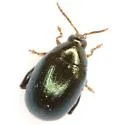
Dibolia championi 0
Dibolia championi
Identification: certainly very closely allied to [ Dibolia borealis ], but differs in the colour of the antenne, head, and thorax, and also in having the interstices of the elytra impunctate. It is quite possible that the fulvous colour of the thorax
Dibolia sinuata 0
Dibolia sinuata
Identification: Apices of elytra very deeply sinuous at apex even more broadly oval than D. ovata [Range: CA-NV / Mex.], resembling at first sight Phaedon viridis . Type Locality: Dallas, Tex.
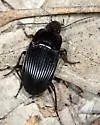
Dicaelus crenatus
Dicaelus crenatus
Identification: last key couplet: Elytral intervals smooth, without small setigerous punctures bearing short hairs, striae with relatively large punctures, pronotum either not beaded laterally, or beaded in apical ~1/3 Type Locality: Louisiana
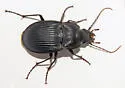
Dicaelus dilatatus
Dicaelus dilatatus
Identification: robust, dull black, elytra deeply striated, humeral carina extends for ~1/3 length of elytra; 2 pairs of lateral pronotal setae
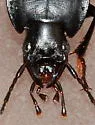
Dicaelus elongatus
Dicaelus elongatus
Identification: Similar to D. dilatatus , but smaller, with longer humeral carina (2/3 elytral length), and 3 or more pairs of lateral setae on the pronotum the sole member of the elongatus group
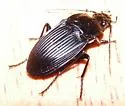
Dicaelus politus
Dicaelus politus
Identification: among Dicaelus , this one most resembles "Pterostichus", is smallest (<15 mm), shiniest, and lacking humeral carina
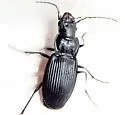
Dicaelus teter
Dicaelus teter
Identification: Lateral extension of right mandible combined with carinate elytra and lack of tubercle on left mandible distinguish this species.
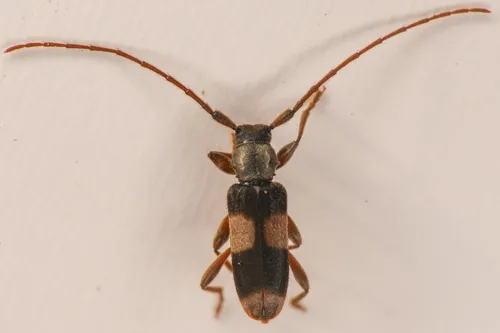
Dicentrus bluthneri
Dicentrus bluthneri
Dicentrus bluthneri is a species of beetle in the family Cerambycidae. It was described by LeConte in 1880.
Dicerca caudata
Dicerca caudata
Identification: pronotum with lateral margins widest at base, subparallel to middle, then narrowly converging to the anterior angles; body moderately convex, usually cupreous above and more strongly below and on the elytral tips that are entire or tr
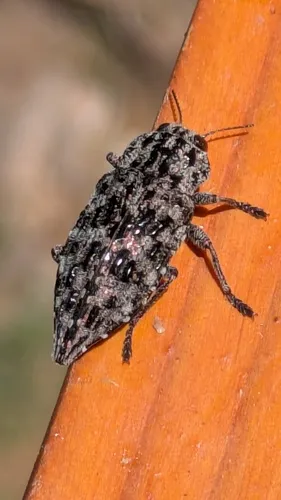
Dicerca crassicollis
Dicerca crassicollis
Dicerca crassicollis is a species of metallic wood-boring beetle in the family Buprestidae. It is found in North America.
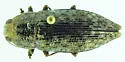
Dicerca mutica
Dicerca mutica
Identification: Most closely resembles D. lurida and related species, but can be separated by the elytral apices being entire, produced slightly at suture, and by having the prosternal process convex (♂) to flat (♀) rather than concave.
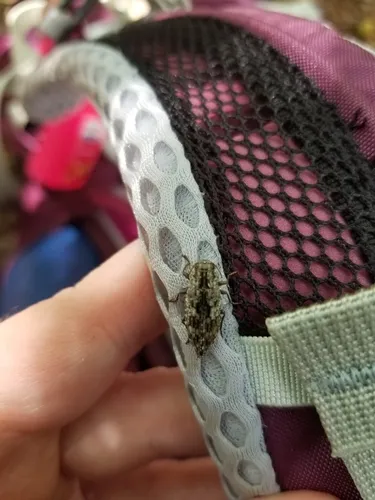
Dicerca spreta
Dicerca spreta
Dicerca spreta is a species of metallic wood-boring beetle in the family Buprestidae. It is endemic to the eastern United States.
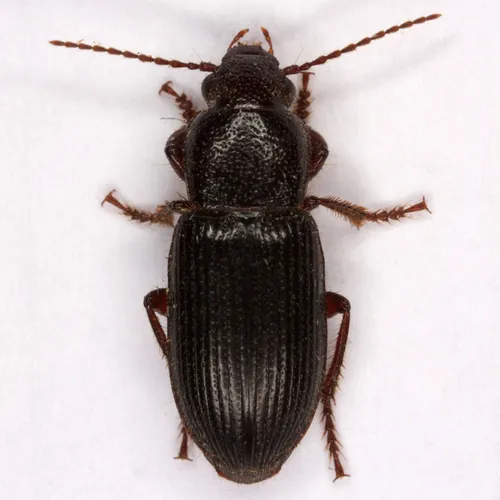
Dicheirus piceus
Dicheirus piceus
Dicheirus piceus is a species of ground beetle in the family Carabidae. It is found in North America.
Dichelonyx linearis
Dichelonyx linearis
Identification: Morphological differences between D. linearis and D. elongatulus are not well defined. Brown (1946) ( 3 ) species concepts and geographic ranges are followed here: D. linearis occurs inland; D. elongatulus , in coastal areas (roughly
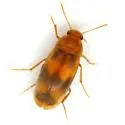
Diclidia bicincta
Diclidia bicincta
Identification: body typically multicolored, base color testaceous, elytra usually with two fasciae which may be reduced to two pairs of maculae, rarely with apical half infuscate, pronotum with dark cloud or not, occasionally unicolorous dorsally Ty
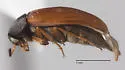
Diclidia fuscula
Diclidia fuscula
Identification: coloration highly variable, from all-dark to bicolored to all-pale • holotype
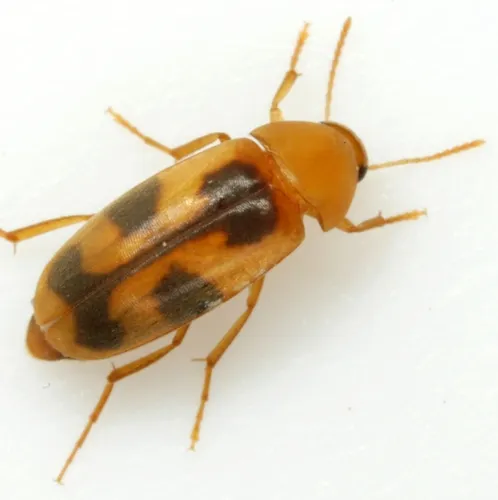
Diclidia laetula
Diclidia laetula
Identification: body testaceous, typically with infuscate sub-scutellar cloud, median and subapical bands, infuscate regions variable, bands sometimes separated into maculae and suture sometimes infuscate, some individuals unicolorous, testaceous typ
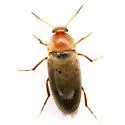
Diclidia spinea
Diclidia spinea
Identification: body testaceous with elytra variably infuscate, ranging from entirely testaceous to slightly banded, only infuscate apically, or entirely weakly infuscate
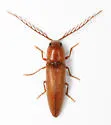
Dicrepidius ramicornis
Dicrepidius ramicornis
Identification: male habitus photo (Casari & Biffi 2012) [paywall]
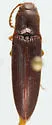
Dicrepidius serraticornis
Dicrepidius serraticornis
Identification: Males have serrate, rather than pectinate, antennae. They are superficially similar to members of the genus Dipropus but have an inverted V-shaped carina over the nasale.
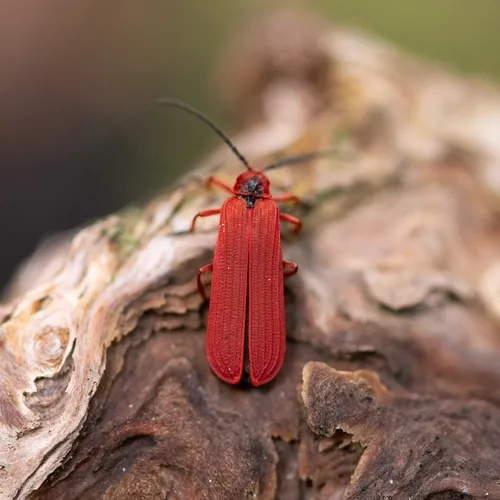
Dictyoptera simplicipes
Dictyoptera simplicipes
Identification: Note red legs and scape ( comments on photo ). Pronotum with a diamond shaped central cell
Didion nanum 0
Didion nanum
Identification: Color black; anterolateral angle of pronotum, mouthparts and leg dark reddish brown. Punctation on head fine, punctures separated by a diameter or less. Pronotum with punctures equal in size to those on head, separated by less than to
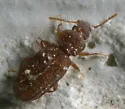
Dienerella costulata
Dienerella costulata
Dienerella costulata (Dienerella costulata) is a species in the family Latridiidae, commonly known as minute brown scavenger beetles, belonging to the order Coleoptera (Beetles). It is classified within the subfamily Latridiinae, suborder Polyphaga,
Dienerella intermedia
Dienerella intermedia
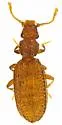
Identification: Similar to D. filum but lacking discal fovea in the pronotum. Rare
Dienerella ruficollis
Dienerella ruficollis
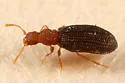
Dienerella ruficollis (Dienerella ruficollis) is a species in the family Latridiidae, commonly known as minute brown scavenger beetles, belonging to the order Coleoptera (Beetles). It is classified within the subfamily Latridiinae, suborder Polyphaga
Dihammaphora dispar
Dihammaphora dispar
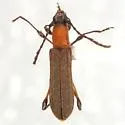
Aside from Schaeffer's record from Brownsville based on material in the Dietz collection, we know of no other TX specimens (Ottomar Dietz is known to have collected in the Brownsville area during 1901 --Horace Burke, pers. comm., 2009)
Dimorphic Flower Longhorn Beetle
Anastrangalia laetifica
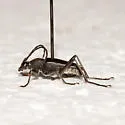
Identification: Male elytra mostly uniform dark, female elytra red with black spots ♂♀ • ♂, brown form • ♀♀
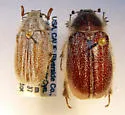
Dinacoma caseyi
Dinacoma caseyi
First collected in the City of Palm Springs, California, in 1916, and was later described by Blaisdell on California's "Special Animals" List.
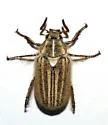
Dinacoma sanfelipe
Dinacoma sanfelipe
Identification: Male lacks a distinct third (basal) outer tooth on the anterior tibiae ( D. marginata with three distinct external teeth); have acuminate and outwardly directed anterior clypeal angles (Not so in D. marginata ); have distinct elytral
Dineutus angustus
Dineutus angustus
Identification: male profemur toothed. may be difficult to separate from D. discolor
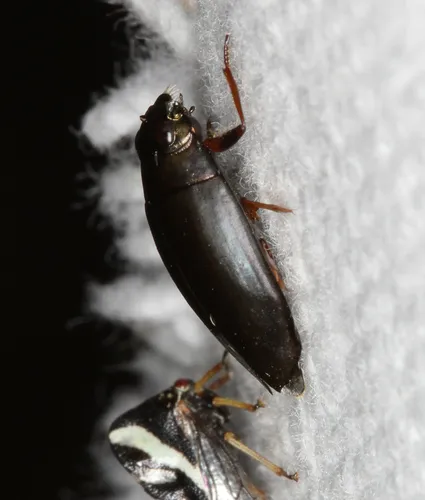
Dineutus assimilis
Dineutus assimilis
Identification: Fore tibia straight preapically, with outer angle merely rectangular; elytral apices separated vs. D. nigrior
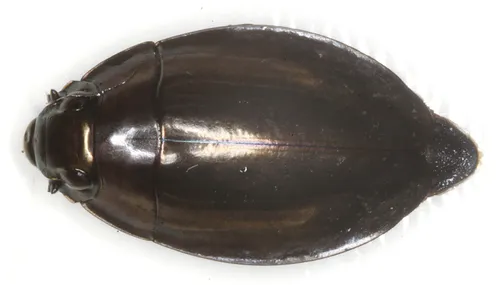
Dineutus ciliatus
Dineutus ciliatus
Identification: The large size and the slightly curved, bronzy metallic vitta on each elytron, visible at certain angles, readily identify this species. Ventral coloration varies from yellowish-brown to dark brown. Male profemur toothless.
Dineutus emarginatus
Dineutus emarginatus
Identification: Note toothed front femora and broadly rounded, non-serrulate elytra apices. -Tim Loh, 19.XI.2011 Attracted to lights
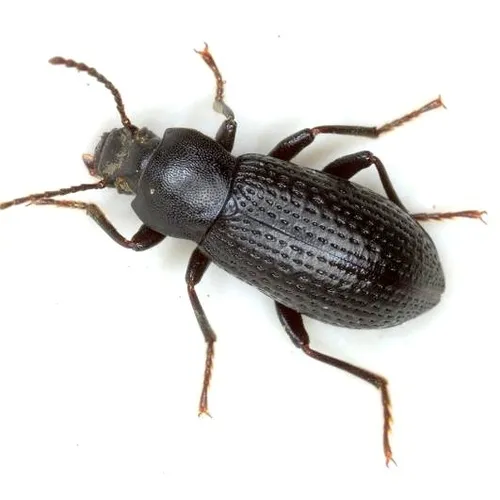
Dinomus horni
Dinomus horni
Identification: Moderately elongate, piceous or black, moderately shining. Antennae rather slender, nearly reaching the middle of the body, outer joints scarcely wider and very little compressed. Head moderately denselv punctured. Thorax wider than l
Dinomus impolitus
Dinomus impolitus
Type: One specimen from Texas, in the collection of Mr. Ulke ( 3 ) , likely coll'ed by Lincecum. ( 4 )
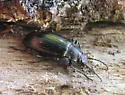
Dinomus micans
Dinomus micans
Identification: Elytra with rainbow sheen, intervals flat
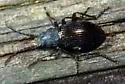
Dinomus sulcipennis
Dinomus sulcipennis
Identification: elytral intervals convex, striae pronounced
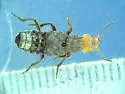
Dinothenarus (Dinothenarus) capitatus
Dinothenarus capitatus
the only representative of the nominate subgenus in our fauna
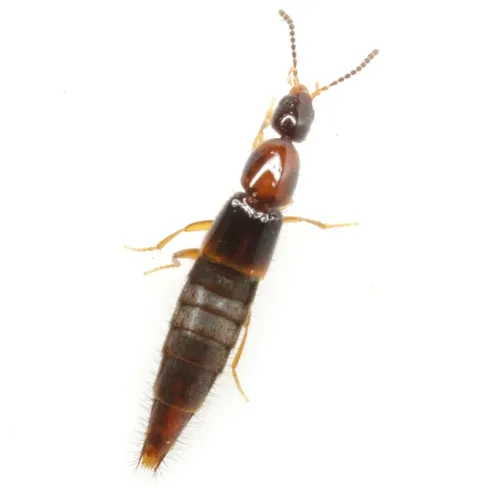
Diochus schaumi
Diochus schaumi
a widespread and variable species --Adam Brunke, 16.xi.2009
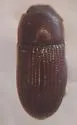
Dioedus punctatus
Dioedus punctatus
Identification: "Scutellum small, elytra without scutellar striae; antennal club with two or three anetennomeres" --> Dioedus (only one NA sp.)
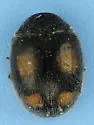
Diomus amabilis
Diomus amabilis
Identification: Highly variable. See: Gordon's figures ( 3 ) Dark brown with four light brown markings. These markings may range from small spots to large, confluent patches.
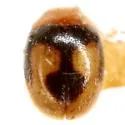
Diomus bigemmeus
Diomus bigemmeus
Identification: Gordon's Figures - Elytron with single yellow spot on disc, or with yellow spot on disc narrowly connected to broad, apical, yellow area
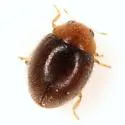
Diomus debilis
Diomus debilis
Identification: Det. M. A. Quinn, 2013 Type locality: San Jose, California
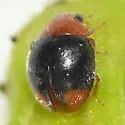
Diomus roseicollis
Diomus roseicollis
Identification: Gordon's figures Type Locality: Cuba
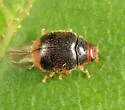
Diomus terminatus
Diomus terminatus
Identification: elytron black except apical fourth yellow - Gordon's Figures the most commonly coll'ed sp. of Diomus
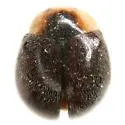
Diomus texanus
Diomus texanus
Identification: external appearance distinctive PARATYPE
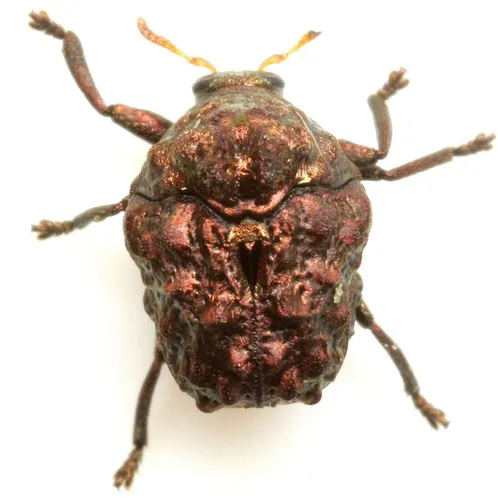
Diplacaspis prosternalis
Diplacaspis prosternalis
Type Locality: Brownsville, Texas, (Yucca Ridges and Esperanza Ranch) July. (Schaeffer 1906)
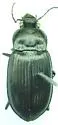
Diplocheila impressicollis
Diplocheila impressicollis
Identification: Elytral striae 7 fine to absent and distinct hind pronotal angles.
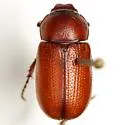
Diplotaxis beyeri
Diplotaxis beyeri
Identification: The elongate, nearly parallel sided form and the large clypeus distinguish this species. The head, basal margin and suture are generally slightly darker. (Schaeffer 1907) Type Locality: "Brownsville, Texas (Esperanza Ranch)"
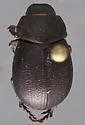
Diplotaxis connata
Diplotaxis connata
Identification: "The ovate and apparently connate [united] elytra and the absence of wings will readily distinguish this from the North and Central American Diplotaxis ." (Schaeffer 1905) Type Locality: Palmerlee, Cochise Co., Arizona
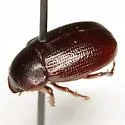
Diplotaxis curvaticeps
Diplotaxis curvaticeps
Identification: syntype common at UV lights at Laguna Atascosa NWR, Cameron Co., TX
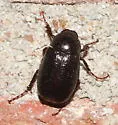
Diplotaxis lengii
Diplotaxis lengii
Identification: Det. E. G. Riley, 1998 Type Locality: LA
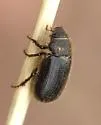
Diplotaxis mimosae
Diplotaxis mimosae
Identification: syntype • very similar to cribulosa but smaller (the two can co-occur)
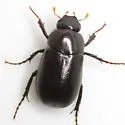
Diplotaxis pubipes
Diplotaxis pubipes
Identification: The distinct antescutellar thoracic and circumscutellar elytral impressions, together with the densely pubescent tarsal joints , render the recognition of this species easy. (Schaeffer, 1907) Type Locality: Esperanza Ranch, Brownsvill
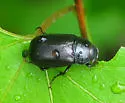
Diplotaxis punctatorugosa
Diplotaxis punctatorugosa
Identification: Easily distinguished by the dense punctuation, frontoclypeal ridge, pronotal shape and location. The labrum is flat. ‒W.B. Warner, 9.x.2010
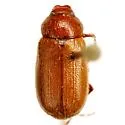
Diplotaxis rex
Diplotaxis rex
Type Locality: Norias Division, King Ranch, Kleburg County, Texas. Only one spmn in the TAMUIC ( 3 ) (as of July 2016) potential SGCN
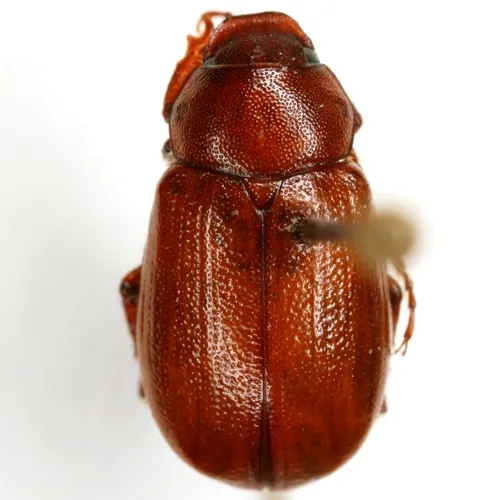
Diplotaxis schaefferi
Diplotaxis schaefferi
Identification: Per Vaurie: Small (7.5 to 8 mm), pronotum flat, narrow; elytra so densely and irregularly punctured that costae and intervals are confused, not distinct (only three specimens examined) Per Fall: In the male the tarsal claws are relati
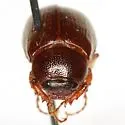
Diplotaxis simplex
Diplotaxis simplex
common at lights at Laguna Atascosa NWR, Cameron Co., TX ( 3 )
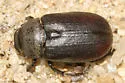
Diplotaxis sordida
Diplotaxis sordida
Identification: Generally dull, punctate habitus and completely clothed in yellowish setae
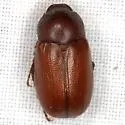
Diplotaxis thoracica
Diplotaxis thoracica
the most common scarab at lights at Laguna Atascosa NWR, Cameron Co., TX ( 3 )
Diplotaxis truncatula
Diplotaxis truncatula
Identification: Holotype • extremely variable common at lights Mar―May in Nuevo Leon and so.TX
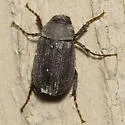
Diplotaxis vandykei
Diplotaxis vandykei
Identification: similar to D. sordida , which is much more widespread, but has the anterior pronotal angles drawn forward & acute rather than just truncate/rounded. (W.B. Warner, 9.x.2010) rare in collections
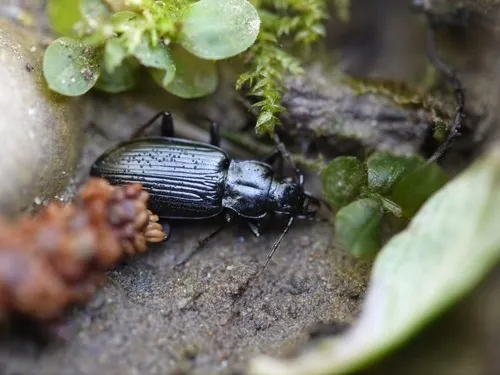
Diplous californicus
Diplous californicus
Diplous californicus is a species of ground beetle in the family Carabidae. It is found in North America.
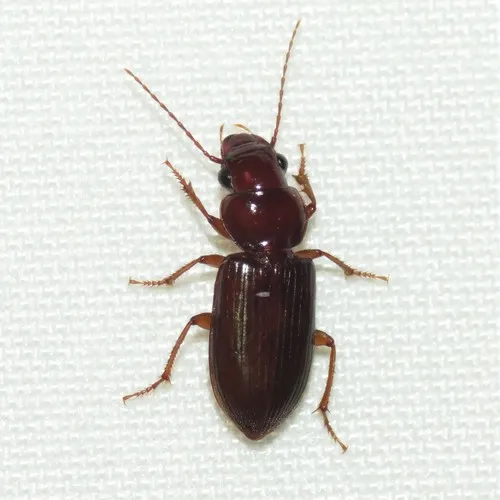
Discoderus (Senalius) cordicollis
Discoderus cordicollis
Discoderus cordicollis is a species of ground beetle in the family Carabidae. It is found in North America.
Discoderus discoderoides
Discoderus discoderoides
Type locality: Esperanza Ranch, near Brownsville, Cameron Co., Texas. ( 3 )
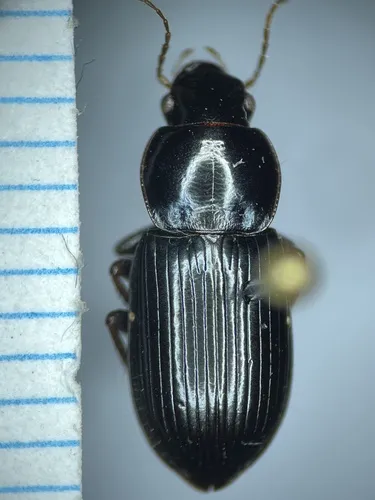
Discoderus robustus
Discoderus robustus
Discoderus robustus is a species of ground beetle in the family Carabidae. It is found in North America.
Discodon planicolle
Discodon planicolle
Identification: note the pale shoulders, black pronotal line variable, head sometimes hidden
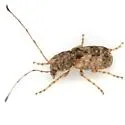
Discotenes nigrotuberculata
Discotenes nigrotuberculata
Identification: Det. E. G. Riley, 2009 Described from three specimens collected near Brownsville, Texas (Esperanza Ranch and San Tomas). (Schaeffer 1904)
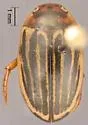
Disintegrated Diving Beetle
Agabus disintegratus
Identification: Holotype larvæ described in members of this group possess a stridulatory organ
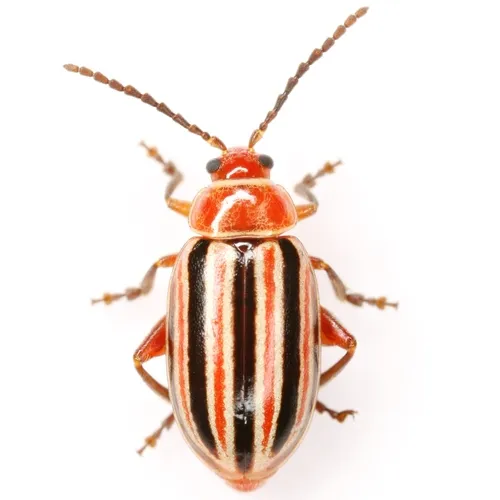
Disonycha admirabila
Disonycha admirabila
Identification: Quite small, more oval than most other species. Pronotum usually unspotted, or with two spots. Head with darker labrum, sometimes dark frontal tubercles, but pale on vertex. Most similar to D. caroliniana , but the latter with pale la
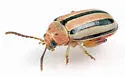
Disonycha arizonae
Disonycha arizonae
Identification: pronotal spots, plus lateral red stripes much paler than dorsal red stripes Det. E. G. Riley, 2013 Disonycha species can eventually be found on their breeding host, but for arizonae , I have never found it in series or with larvae, de
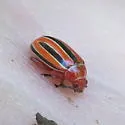
Disonycha balsbaughi
Disonycha balsbaughi
Identification: abbreviated discal vitta (E.G. Riley, pers. comm. to MAQ, 2014), =center stripe doesn't reach the apex of the elytra
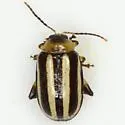
Disonycha barberi
Disonycha barberi
Identification: Det. M. A. Quinn, 2013 Differs from the similar D. glabrata in: - larger eyes (frontal width between eyes less than half of heads' width); - dark streak running down front between eyes - last antennal segment pale. Mostly coll'ed via
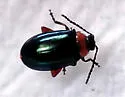
Disonycha collata
Disonycha collata
Identification: shining metallic green or blue elytra; prothorax and femora pale . (emphasis added) "Oval. Head with vertex and frons shining metallic green or blue; clypeus yellow; labrum brown. Prothorax and femora yellow. Elytra shining metallic b
Disonycha figurata 0
Disonycha figurata
Identification: Syntype • Head, pronotum and elytra pale, underside pale except for central area of metasternum and abdomen. Pronotum with two (4) dark spots in front; elytral pattern: 3 narrow vittae, median vitta not touching others at apex, vittae
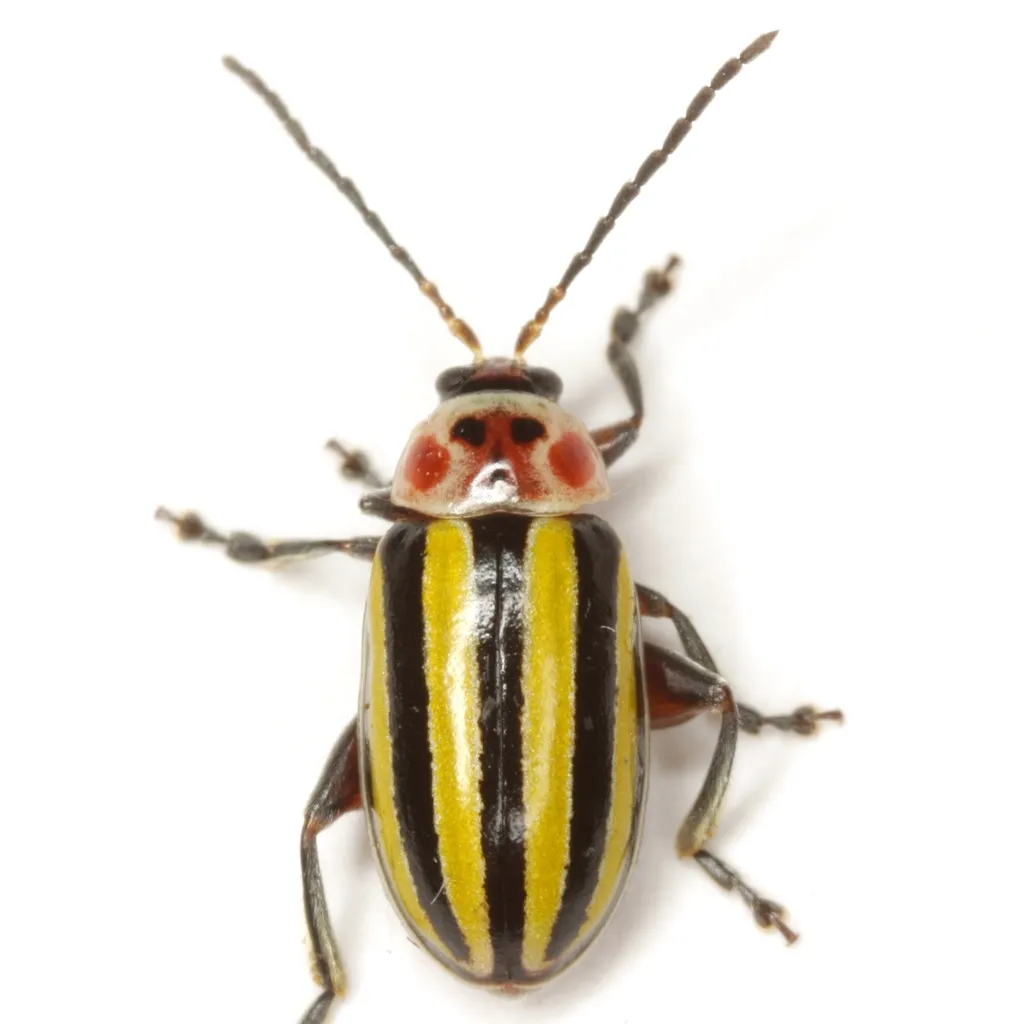
Disonycha fumata
Disonycha fumata
Identification: Very similar to D. alternata , but antennae unusually long, reaching to middle of elytra in male, or slightly beyond; 4th joint nearly twice as long as third (ratio here measured as 1.5-1.75, vs. 1.3-1.4 in alternata ) and elytra only
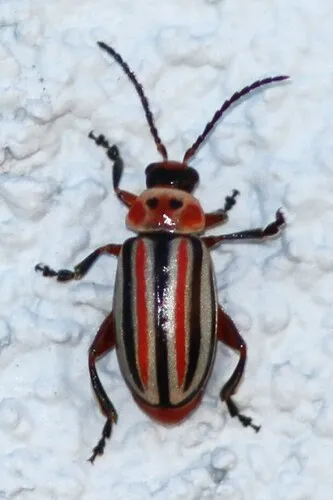
Disonycha latifrons
Disonycha latifrons
Identification: D. latifrons is a pretty variable species with large pronotum, ornate with 2-5 dark spots; head dark on occiput only, or black inbetween eyes also (but not continously so). Tibiae are described as usually completely dark. Underside al
Disonycha latiovittata
Disonycha latiovittata
Identification: Basically very similar to D. alternata ; pronotum and elytra more densely and strongly punctate, thus only feebly shining. Pronotum with 4, or 5 dark spots. Elytral bands often wider than in alternata , but variable; in CA specimens,
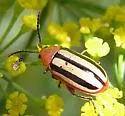
Disonycha leptolineata
Disonycha leptolineata
Identification: can be mistaken for D. discoidea abbreviata only - but quite easily. elytral punctation is distinct in D. discoidea vs. faint, partially indistinct in D.leptolineata D. discoidea abbreviata D.leptolineata A series with dark occiput (n
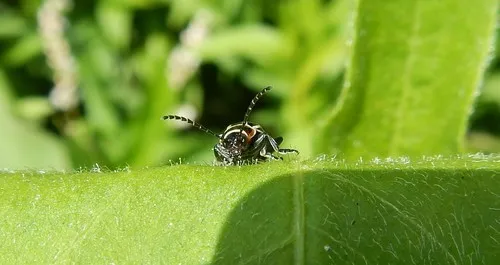
Disonycha limbicollis 0
Disonycha limbicollis
Identification: iNaturalist • see No type imaged in the MCZ
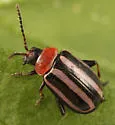
Disonycha maritima
Disonycha maritima
Identification: Elytral margin black, legs (largely) also; pronotum distinctly and rather densely punctate (except, sometimes, for a blank midline)