
Primitive Winged Insects
Order Coleoptera
The Primitive Winged Insects (Order Coleoptera) includes 15,720 species across 160 families and 3,716 genera in our directory.
About Primitive Winged Insects
Coleoptera is the largest order of insects with over 400,000 described species, representing ~25% of all known animal species and ~40% of all insects. In the U.S. alone, nearly 30,000 beetle species have been identified.
Economic Impact
Beetles have major economic significance: leaf beetles (Chrysomelidae) and weevils (Curculionoidea) are among the most destructive agricultural pests globally, costing billions annually, while predatory species like ladybugs provide natural pest control.
Ecological Role
Beetles are prominent decomposers, especially in forests, breaking down dead wood and recycling nutrients. As predators, they reduce populations of pest insects. Many species are also important pollinators of flowering plants.
Families in Coleoptera (160)
Species in Coleoptera (15,720)
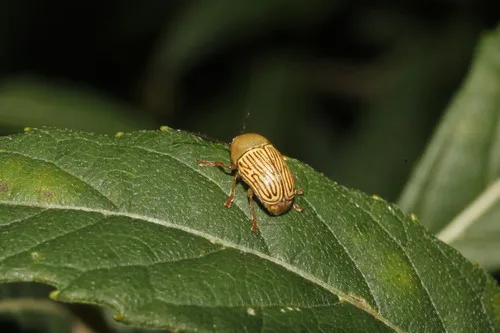
Cryptocephalus umbonatus
Cryptocephalus umbonatus
Identification: White describes the elytra as "...striae red to black, with no markings." In the types and in many of the other specimens on hand in the USNM, the elytra are waxy yellow, and the striae black and strongly contrasting with the backgrou
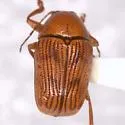
Cryptocephalus vapidus
Cryptocephalus vapidus
Identification: Det. E. G. Riley, 1984 species represented by 57 individuals (in the USNM), all taken by D. J. and J. N. Knull in the Chihuahua Mountains of Arizona, except for one from the Patagonia Mountains of Arizona. Holotype collected August 7,
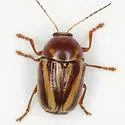
Cryptocephalus venustus
Cryptocephalus venustus
Identification: Color highly variable. The pronotum is not swollen as in C. gibbosus and the anterior margin of prosternum is produced into a spine-like lobe in the male and into a somewhat less pointed lobe in the female outer vitta much reduced, re
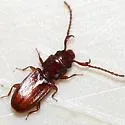
Cryptolestes uncicornis
Cryptolestes uncicornis
Identification: major males easily recognized by the elongate/sinuate scape with a hooked process
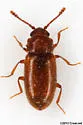
Cryptophagus dentatus
Cryptophagus dentatus
Cryptophagus dentatus (Cryptophagus dentatus) is a species in the family Cryptophagidae, commonly known as silken fungus beetles, belonging to the order Coleoptera (Beetles). It is classified within the subfamily Cryptophaginae, tribe Cryptophagini,
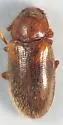
Cryptophilus obliteratus
Cryptophilus obliteratus
has been present in North America for a long time ( 3 )
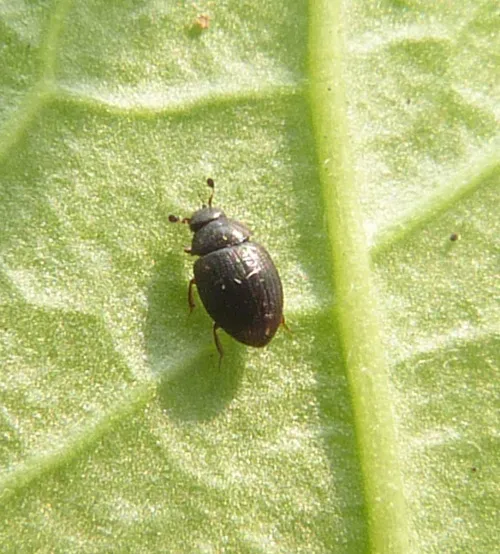
Cryptopleurum minutum
Cryptopleurum minutum
A small (1.6 to 2 mm) dark beetle with deeply ribbed elytra. Unless identified by a recognised expert, a photo is required and the specimen should be examined with a microscope. In the comments box, state the key or ID method used and describe the si
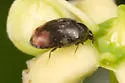
Cryptorhopalum haemorrhoidale
Cryptorhopalum haemorrhoidale
Identification: the only sp. in the midwestern and eastern US with the apical 1/3 of the elytra reddish and with a median band of light-colored pubescence. In some spmns the median band is reduced to a very few hairs... (Beal 1985)
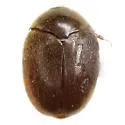
Cryptorhopalum obesulum
Cryptorhopalum obesulum
Type Locality: on the Colorado River above Columbus, Austin Co., Texas
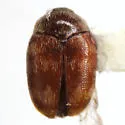
Cryptorhopalum pruddeni
Cryptorhopalum pruddeni
Identification: key to Cryptorhopalum species in Beal (1985) ( 3 ) Type Locality: Canyon of Colorado River, Arizona
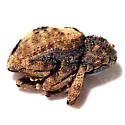
Cryptorhynchus fuscatus
Cryptorhynchus fuscatus
Identification: Pronotum with distinct tufts of black scales; male has pair of small scale-tufted tubercles on basal margin of ventrite 5 taken at lights (BG data & )
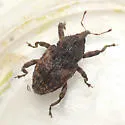
Cryptorhynchus tristis
Cryptorhynchus tristis
Identification: Pronotum with uniformly distributed erect or sub-erect scales, not arranged in concentrations or tufts; width almost as wide as elytra at base
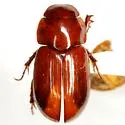
Cryptoscatomaseter rossi
Cryptoscatomaseter rossi
The type locality is Somerset (Bexar County) were it was taken from nests and refuse chambers and trapped in bait traps placed in burrows of the pocket gopher Geomys breviceps atwateri Merriam (Cartwright, 1944).
Crypturgus pusillus
Crypturgus pusillus
Identification: See remarks here: earliest record in our area: NY 1868
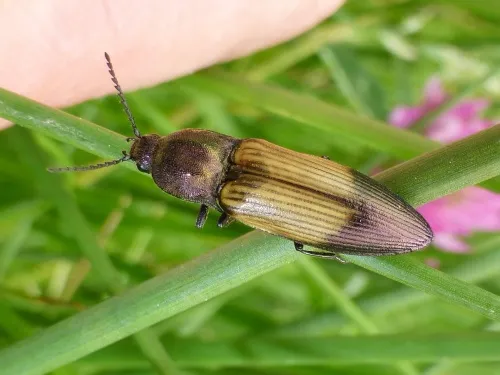
Ctenicera cuprea
Ctenicera cuprea
Length 11 to 16 mm. A large, very elongated and variable species. Colour combinations include dark yellow elytra with green tips and a green pronotum, wholly green or wholly purple. There is a conspicuous dipped line down the centre of the pronotum a
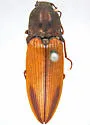
Ctenicera kendalli
Ctenicera kendalli
Larvae live in soil and are agricultural pests in recently cleared land
Ctenicera pectinicornis
Ctenicera pectinicornis
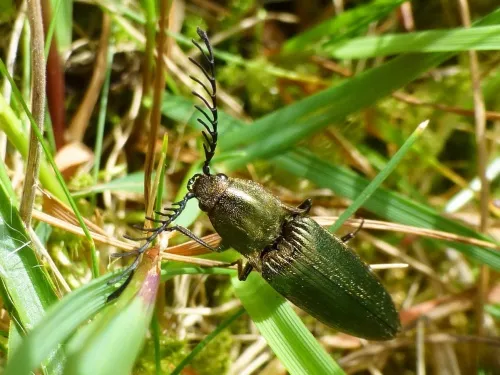
Length 14 to 17 mm. Large, unicolourous green metallic insect with very distinctive ridges running down the elytra and a sparse covering of hairs. A dipped line down the centre of the pronotum is present. Males have strongly toothed antennae that are
Cuban May Beetle
Phyllophaga bruneri
Identification: Color pattern and small size are diagnostic. Antennae 9-segmented. Type Locality: Estacion Central Agronomica de Cuba, La Habana, Cuba
Cucochodaeus sparsus
Cucochodaeus sparsus
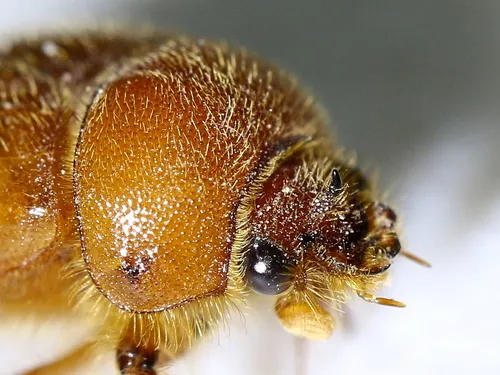
Identification: differs from other New World ochodaeids in having nine antennomeres, an unmodified propygidium, stridulatory peg absent, head declivous behind the eyes, and the anterior margin of the pronotum produced behind the eyes (not simply conc
Cultellunguis ingenuus
Cultellunguis ingenuus
Identification: Black, including black elytral pubescence, except for yellowish to orange-reddish face and pronotum. The tarsi are lobed, with the anterior claw of protarsi cleft in males, the outer cleft portion is knife-like, and slightly larger th
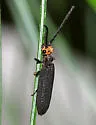
Cupes capitata
Cupes capitata
Identification: Tarsal grooves present on prosternum, separated by two low ridges
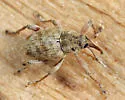
Curculio iowensis
Curculio iowensis
Identification: Rostrum in both sexes less than 1/2 length of body; rostrum continuous with frons; femoral teeth 'medium' sized. See
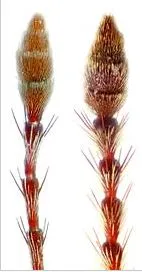
Curculio nucum
Curculio nucum
This weevil ranges from 6 to 8.5 mm. The female's snout is as long as the rest of the body, with a reddish end. The male snout is about 1/3 shorter. The body colour is usually light brown, similar to the colour of mature hazelnuts. Raised ridge of "r
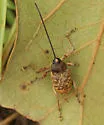
Curculio proboscideus
Curculio proboscideus
Identification: The distance between the apex of the rostrum and the antennal insertions is ~ 4 x the distance between the antennal insertions and the base of the rostrum. (sdjbrown comment on iNat)
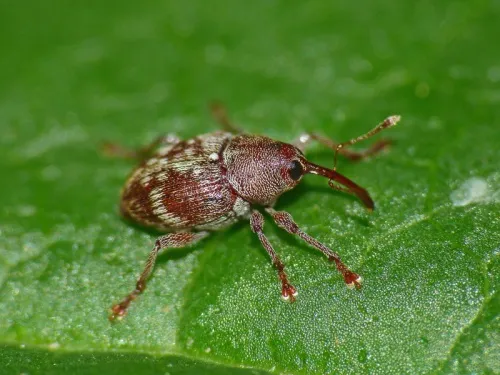
Curculio rubidus
Curculio rubidus
Unless identified by a recognised expert, photographic evidence is required and the specimen should be examined with a microscope. In the comments box, state the key or ID method used. Note the beetle's size and describe the identifying characters. I
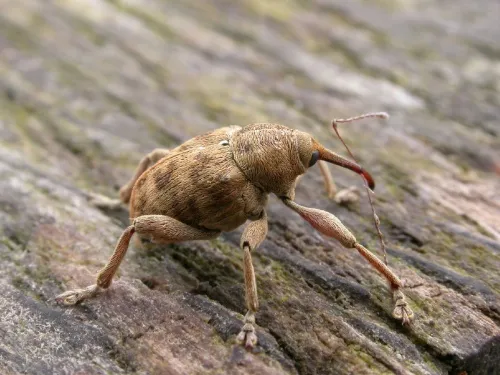
Curculio venosus
Curculio venosus
A fairly large brown weevil, with females measuring around 7mm. It is quite similar to some other members of this genus and care should be taken with identification. Raised ridge of "roof-like scales" forming an obvious raised ridge at the elytral ap
Curius dentatus
Curius dentatus
Identification: Det. J. Ott, 2012 Type Locality: St. Johns Bluff, Florida
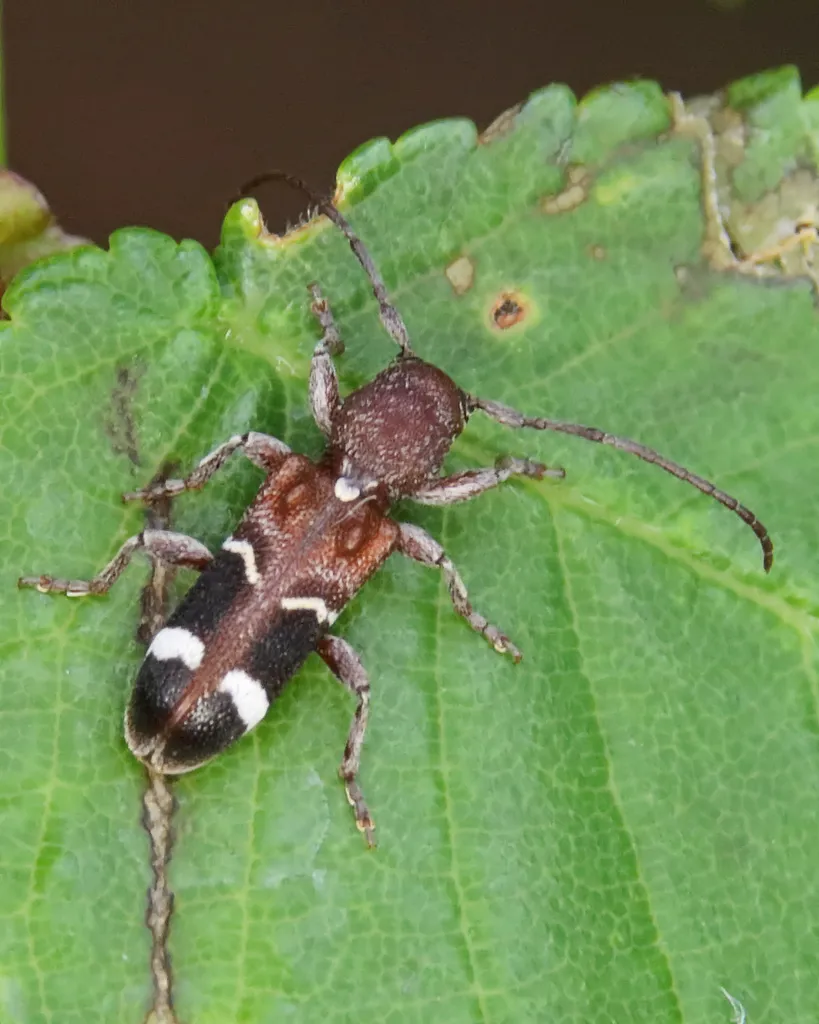
Currant-tip Borer
Psenocerus supernotatus
Psenocerus supernotatus is a species of beetle in the family Cerambycidae, and the only species in the genus Psenocerus. It was described by Say in 1823.
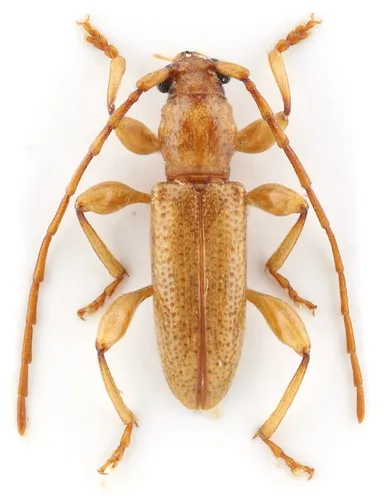
Curtomerus Longhorned Beetle
Curtomerus flavus
Curtomerus flavus is a species of beetle in the family Cerambycidae. It was described by Fabricius in 1775.
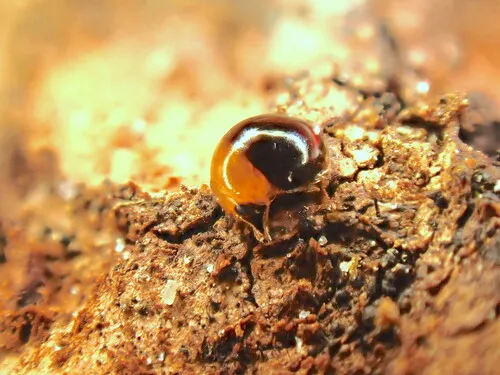
Cybocephalus nipponicus
Cybocephalus nipponicus
Identification: the only adventive cybocephaline in NA and our only sexually dimorphic species (males have a yellow to light brown head and pronotum or sometimes just a light brown head) Det. v belov, 2017 was misidentified as C. binotatus and releas
Cychramus castaneus
Cychramus castaneus
"This should be Quadrifrons castaneus ... this taxon was moved to Cychramus and then pulled back out but our recent phylogeny unfortunately does nest it within Cychramus " ―Gareth Powell, pers.comm.
Cyclocephala melanocephala
Cyclocephala melanocephala
Cyclocephala melanocephala (Cyclocephala melanocephala) is a species in the family Scarabaeidae, commonly known as scarab beetles, belonging to the order Coleoptera (Beetles). It is classified within the subfamily Dynastinae, tribe Cyclocephalini, su
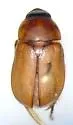
Cyclocephala parallela
Cyclocephala parallela
Identification: similar to C. borealis and C. lurida , but clypeus is smaller with margins more reflexed. Also the elytra are shinier with less reticulation. Type Locality: Jacksonville, Duval Co., Florida
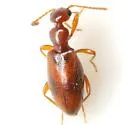
Cyclodinus californicus
Cyclodinus californicus
commonly coll'ed at UV lights at Laguna Atascosa NWR, Rio Hondo, Cameron Co., TX ( 3 )
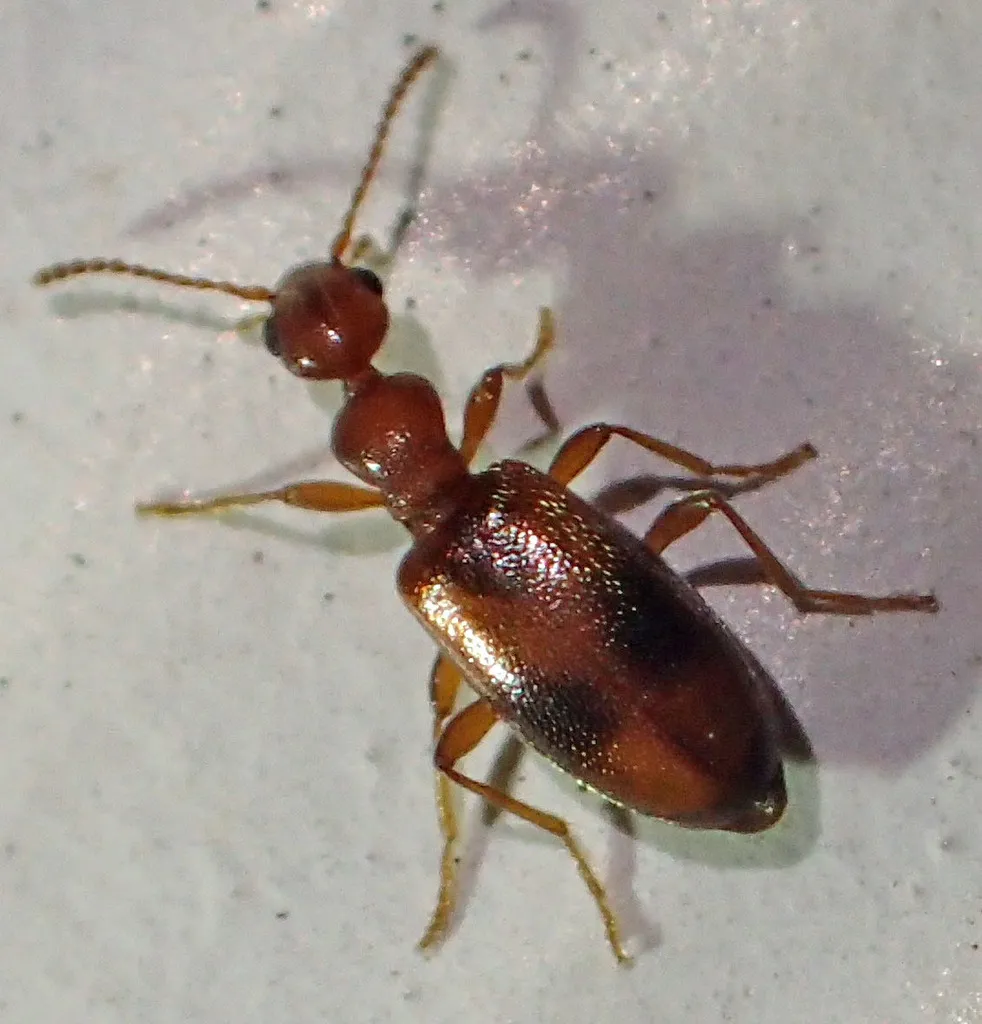
Cyclodinus franciscanus
Cyclodinus franciscanus
Cyclodinus franciscanus is a species of antlike flower beetle in the family Anthicidae. It is found in North America.
Cycloneda emarginata
Cycloneda emarginata
Identification: According to Crotch, resembles C. munda but has dark legs (pale tibia on first leg in male). Based on other records in TX and Mexico, this is a reasonably distinctive species. The body form appears more slender and oval than Cycloneda
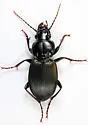
Cyclotrachelus convivus
Cyclotrachelus convivus
According to Freitag (1969), this species can usually be separated from very similar C. sigillatus by their geographic distributions, i.e., west vs east of Appalachian Mountains. Comment by Peter W. Messer
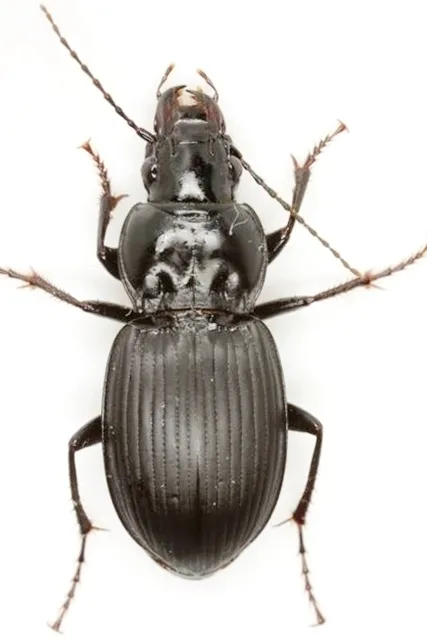
Cyclotrachelus engelmani
Cyclotrachelus engelmani
Cyclotrachelus engelmani is a species of woodland ground beetle in the family Carabidae. It is found in North America.
Cyclotrachelus iuvenis
Cyclotrachelus iuvenis
Cyclotrachelus iuvenis (Cyclotrachelus iuvenis) is a species in the family Carabidae, commonly known as ground beetles, belonging to the order Coleoptera (Beetles). It is classified within the subfamily Harpalinae, tribe Pterostichini, suborder Adeph
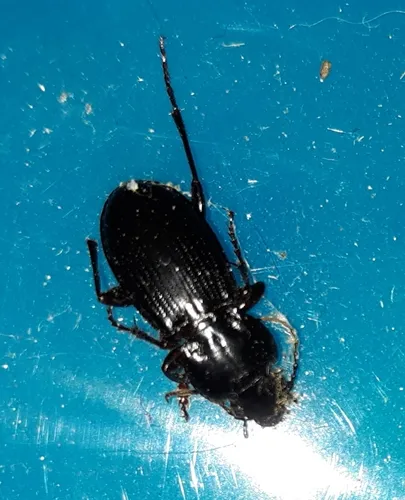
Cyclotrachelus seximpressus
Cyclotrachelus seximpressus
Cyclotrachelus seximpressus is a species of woodland ground beetle in the family Carabidae. It is found in North America.
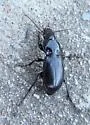
Cyclotrachelus sodalis
Cyclotrachelus sodalis
member of the sodalis group (6 spp. in our area) ( 3 )
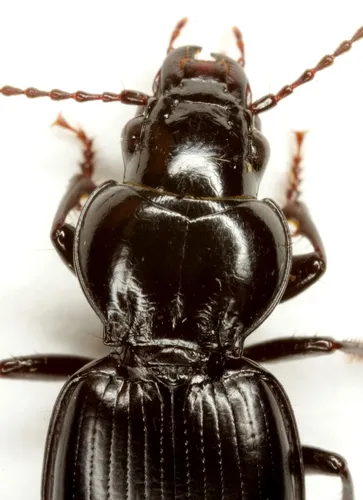
Cyclotrachelus substriatus
Cyclotrachelus substriatus
Identification: Note: This species separates from juxtapositional species in Freitag (1969) by the following combination: 1) So-called "umbilicate" punctures along anterolateral border of shoulder are not surrounded by prominent elevated ridges. 2) E
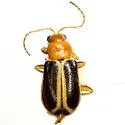
Cyclotrypema furcata
Cyclotrypema furcata
Once could be collected in the millions at the Sabal Palm Sanctuary, Brownsville, Cameron Co., TX but not seen during the intensive 2008-2010 survey period. (E.G. Riley, pers. comm. to MAQ, 2010)
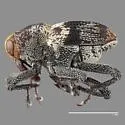
Cylindrocopturinus pictus
Cylindrocopturinus pictus
Identification: The female is rather dull while the male is more shining. The vestiture of the prothorax is not uniform some of the scales are longer and there are here and there a few very narrow, hair-like scales. (Schaeffer 1908)
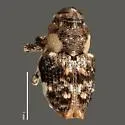
Cylindrocopturus armatus
Cylindrocopturus armatus
Identification: agrees very nearly with the description of C. mammitllatus Lec., from Southern California, differing from it in having a common, fulvous and white, /\-shaped line on the elytra below the base and a transverse white line beyond the mid
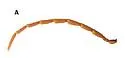
Cymatodera longicornis 0
Cymatodera longicornis
Identification: Antennae with joints two and three small, round, together shorter than joint four (first key couplet) Type Locality: Santa Fe, New Mexico
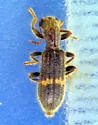
Cymatodera neomexicana
Cymatodera neomexicana
Identification: Cymatodera neomexicana is characterized by elongate paired metasternal carinae in the male, and the shape of the pygidium. The dorsal elytral patterning is not diagnostic. (J. Rifkind, pers. comm. to MAQ, 2018)
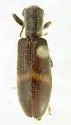
Cymatodera obliquefasciata
Cymatodera obliquefasciata
Type Locality: Esperanza Ranch, Brownsville, Cameron Co., Texas
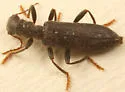
Cymatodera oblita
Cymatodera oblita
Identification: "...impossible to identify without examining the terminalia." - Jacques Rifkind, 2010 Type Locality: Camp Grant, Arizona
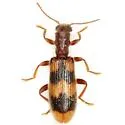
Cymatodera sirpata
Cymatodera sirpata
Identification: two wide, relatively smooth-edged black bands, each with a forward sutural protrusion, elytral apex pale Det. E. G. Riley 2009
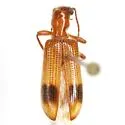
Cymatodera tuta
Cymatodera tuta
Identification: Cymatodera tuta Wolcott and C. tutoides Barr are very similar. "The only difference among them is that females of the latter species have a subapical ridge on the fifth ventrite, whereas females of the former lack this ridge. Males ar
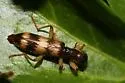
Cymatodera wolcotti
Cymatodera wolcotti
collected at UV lights/traps, Malaise traps, a wooden block nest intercept trap, Lindgren funnel traps baited with alpha-beta pinene and ethanol (separately) and turpentine and frontalin (together)
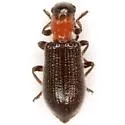
Cymatoderella collaris
Cymatoderella collaris
Identification: pronotum orange with apical and basal margins black Det. E. G. Riley 2009 coll'ed from flight-intercept traps, at mercury vapor and blacklights.
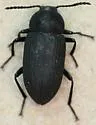
Cymatothes unicolor
Cymatothes unicolor
Identification: Base of the pronotum is bisinuate instead of broadly and feebly arcuate as in C. opaca (FL species). Thorax very convex, smooth. Elytra lightly striate (Champion, 1887, p. 332).
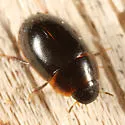
Cymbiodyta vindicata
Cymbiodyta vindicata
Identification: mesosternal ridge low, arcuate, transverse vs narrowly arcuate in C. minima and distinctly toothed in C. acuminata , the other lentic spp.
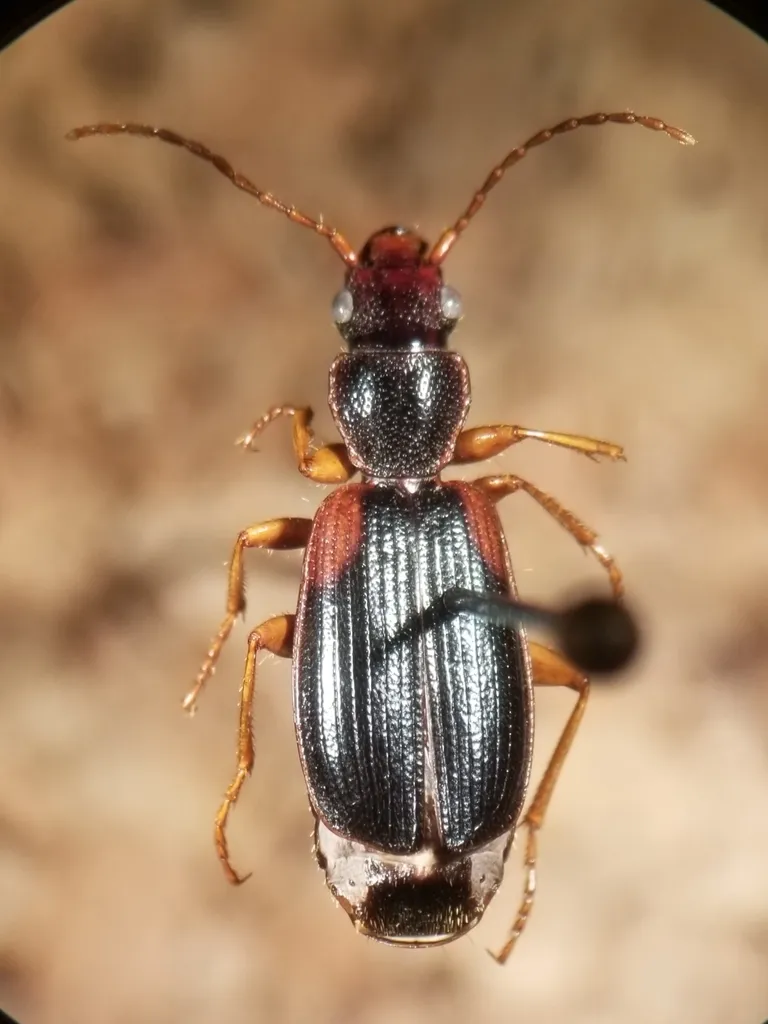
Cymindis borealis
Cymindis borealis
Cymindis borealis is a species of ground beetle in the subfamily Harpalinae. It was described by LeConte in 1863.
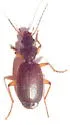
Cymindis cf-evanescens
Cymindis cf-evanescens
very thin elytral striae suggest C. evanescens but the latter has no AZ records according to (yet does occur in CA-UT)
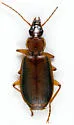
Cymindis complanata
Cymindis complanata
Identification: "ferruginous coloration throughout", characters of setae, and male/female genitalia Rare
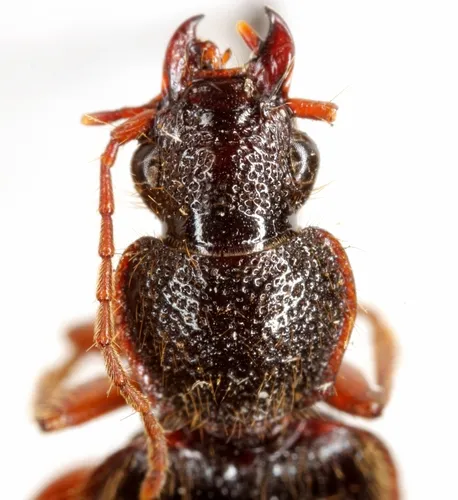
Cymindis laticollis
Cymindis laticollis
Cymindis laticollis is a species of ground beetle in the subfamily Harpalinae. It was described by Say in 1830.
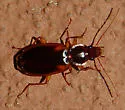
Cymindis limbata
Cymindis limbata
Identification: Pale spot present on elytral humerus (lacking in the similar C. platicollis )
Cymindis platicollis
Cymindis platicollis
a typical element of e. N. Amer. temperate forest. Unlike most carabids inhabiting the temperate and boreal regions, this species lives above the surface of the ground in trees and is usually collected by beating branches. An arboreal way of life is
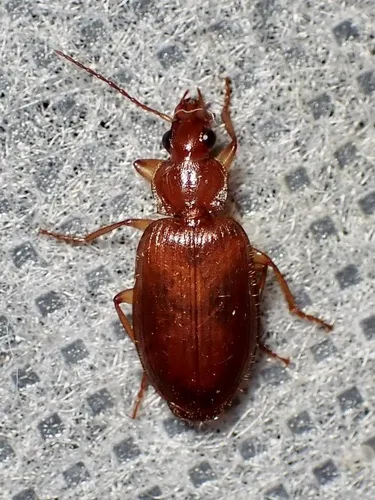
Cymindis punctifera
Cymindis punctifera
Pinacodera punctifera is a species in the beetle family Carabidae. It is found in the United States.
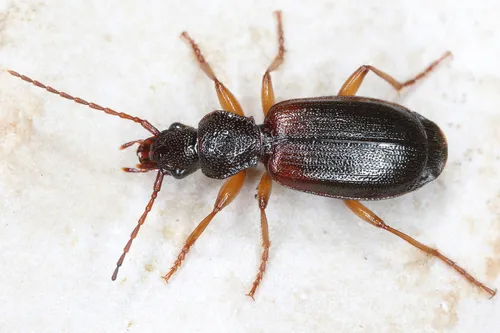
Cymindis vaporariorum
Cymindis vaporariorum
Cymindis vaporariorum is a species of ground beetle in the subfamily Harpalinae. It was described by Carl Linnaeus in 1758.Most adults collected in June and July, but likely are around all summer.
Cyparium ater
Cyparium ater
Type Locality: Brownsville, Cameron Co., Texas (Casey 1900)
Cyphea wallisi
Cyphea wallisi
Refered as Cyphea curtula (Erichson) in , but was clarified in . The Palaearctic C. curtula does not occur in NA.
Cyphonotida rostrata
Cyphonotida rostrata
Identification: C. r. texana Giesbert & Hovore 1998 Det. E. G. Riley, 2009
Cyrtinus beckeri
Cyrtinus beckeri
Type Locality: Pine Canyon, 5000 ft, Chisos Mountains, Big Bend National Park, Brewster Co., Texas. May 10, 1959. Acer grandidentatum ( 5 )
Cyrtinus pygmaeus
Cyrtinus pygmaeus
Identification: Base of elytron with acute dorsal tubercles ( 3 ) Det. E. R. Riley, 2003 Possibly our smallest longhorn species ( 5 )
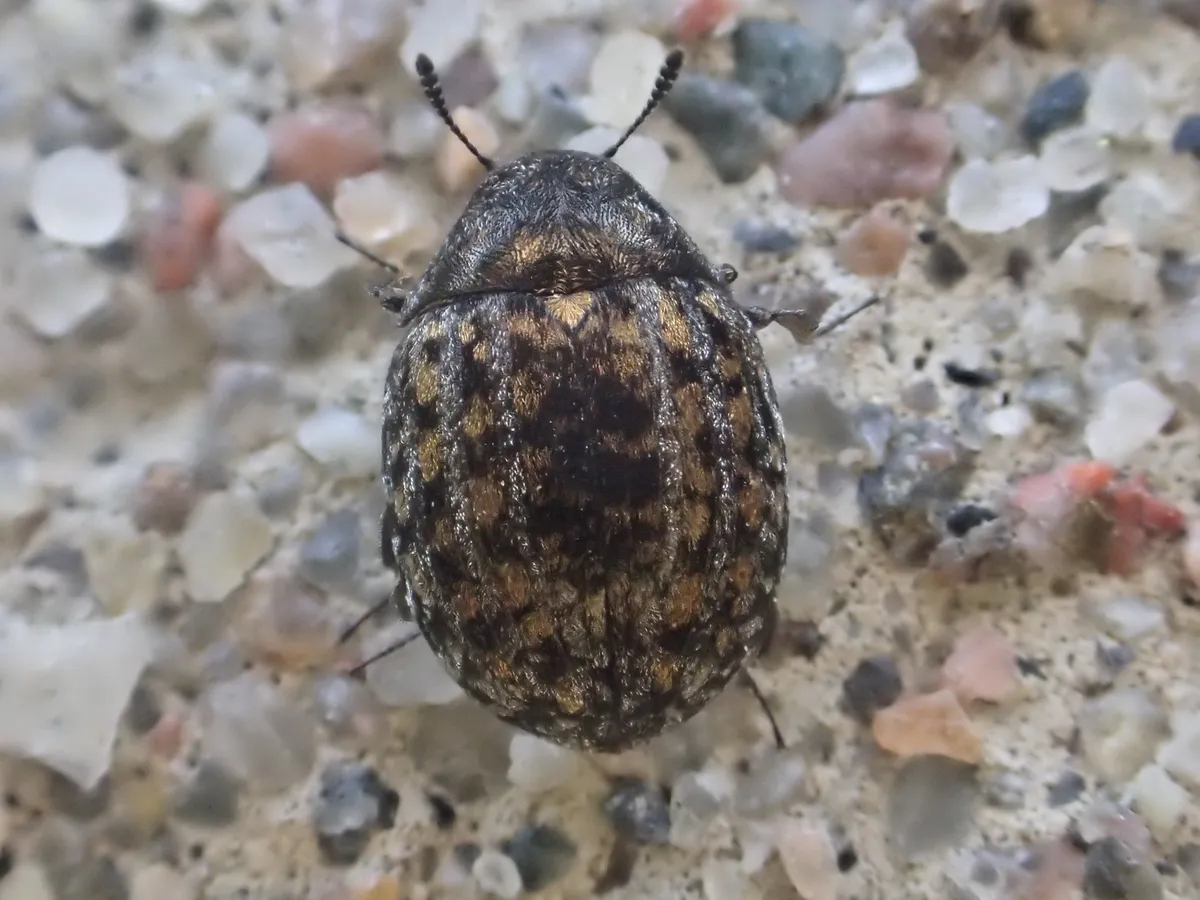
Cytilus alternatus
Cytilus alternatus
Identification: body convex and oval (shaped like a football in lateral view), dark brown with metallic sheen visible in good light; anterior margin of pronotum ovate/rounded, posterior margin composed of two concave arcs meeting at the midline to fo
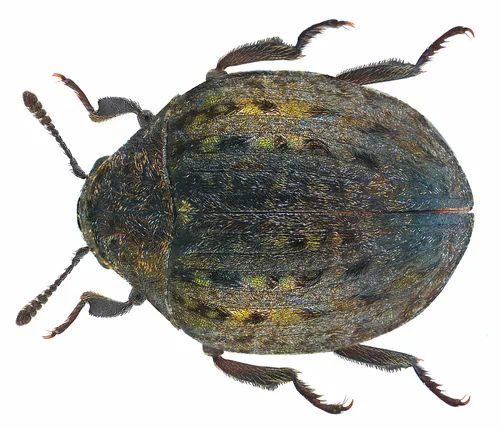
Cytilus sericeus
Cytilus sericeus
Length 4 to 5 mm. Dark bronze to metallic-greenish; pronotum shining, finely and rather diffusely punctured and pubescent. Elytra with alternate interstices with patches of black velvety pubescence. Widespread and fairly frequent in Britain.
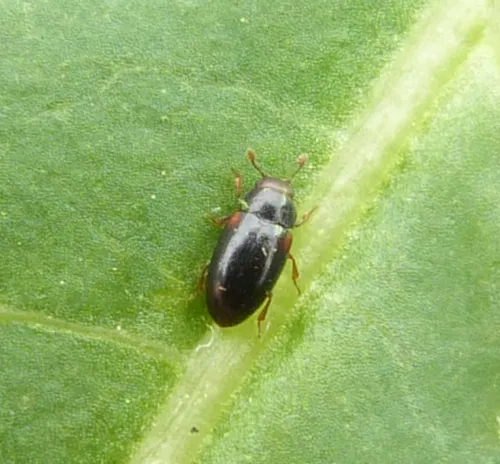
Dacne rufifrons
Dacne rufifrons
It has dark blackish or blue-black elytra with indistinct red blotches. Associated with bracket fungi and decaying timber. Breeds in dry fungus and decaying timber of broad-leaved trees. Widespread and fairly frequent in England and Wales, less commo
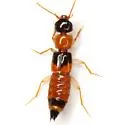
Dacnochilus angularis
Dacnochilus angularis
Identification: colour pattern diagnostic apparent New U.S. Record
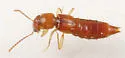
Dacnochilus laetus
Dacnochilus laetus
Identification: No teeth on labrum. Pronotum not as transverse as in other US species. • syntype Western populations lighter in colour; eastern morph with elytra brown in basal half
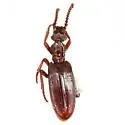
Dacoderus steineri
Dacoderus steineri
Identification: eye facets reduced in number (20‒30), the eye rests upon a broad plate-like extension of the gena and is not visible from below
Dalopius cognatus-group
Dalopius cognatus-group
Identification: Brown's 1934 group of Dalopius based on: -phallobase of male genitalia as long as, or longer than, median lobe. -elytral apices truncated -color usually red-brown to dark-brown with pale humeral maculae. -distributed in Eastern North
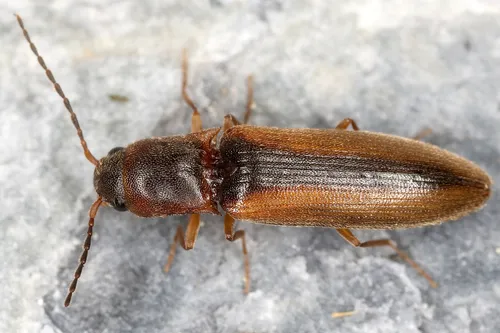
Dalopius marginatus
Dalopius marginatus
Size 6 to 8 mm. Elytra predominantly a dark orangey brown colour with a darker chestnut brown coloured stripe running down the centre, wider at the anterior and narrowing towards the posterior. Pits form rows down the length of the elytra. The pronot
Danosoma obtectum
Danosoma obtectum
Danosoma is neuter, so the correct combination is D. obtectum . uncommon
Dark Blister Beetle
Epicauta murina
Identification: E. murina vs E. fabricii : Male: antennomere 2 almost as long as 3-5, ~⅔ as long as 1 // clearly shorter, ~½ as long as 1 ////////////////////////////////// Female: antennomere 2 almost as long as 3+4 // 2nd slightly longer than 3 //
Dark Hoplia
Hoplia trivialis
Identification: Black with sparse white hairs. Similar to H. trifasciata
Dark Mealworm
Tenebrio obscurus
Identification: dorsum dull (unlike in T. molitor ), front legs enlarged in males storage pest
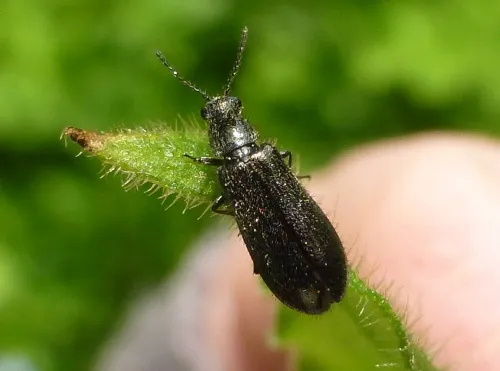
Dasytes aeratus
Dasytes aeratus
4-5mm. Grey-black with a slight bluish reflection. Pronotum about as broad as the base of the elytra. Pubescence on the elytra are pale silvery grey. Legs are entirely black or with tibiae dark brown. Dasytes plumbeous is similar but has a narrower p
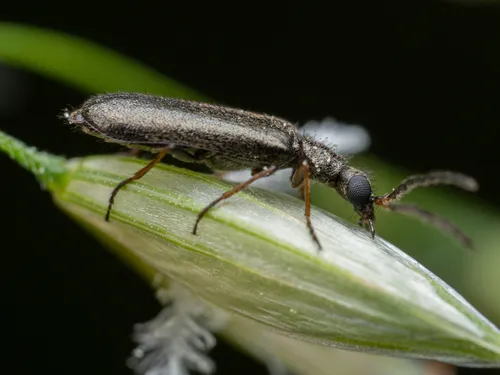
Dasytes plumbeus
Dasytes plumbeus
3.5 to 4.5 mm. Elongate, dark green with metallic sheen. Both long, erect hairs and flat pubescent on dorsal surface. Elytra wider at the base than the pronotum. Femora are black but tibiae and tarsi are pale. The adults are often found visiting flow
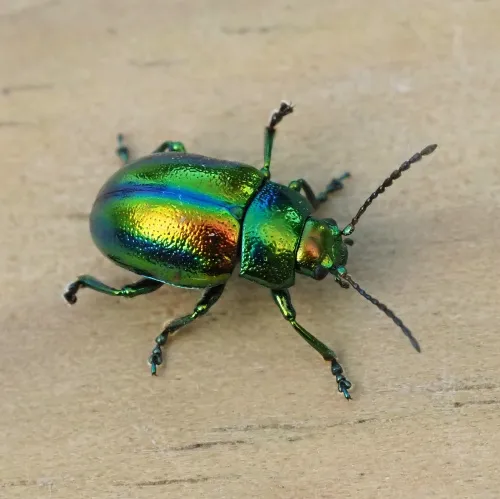
Dead-nettle Leaf Beetle
Chrysolina fastuosa
Body length 5 to 6 mm. A stunning beetle which is usually metallic green with blue, red and gold banding.
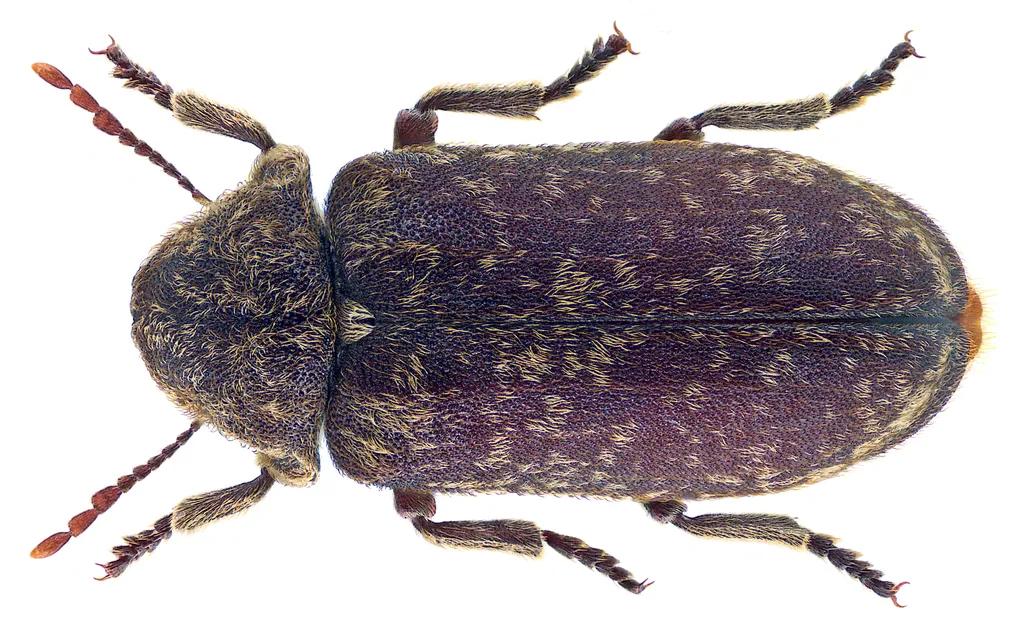
Deathwatch Beetle
Xestobium rufovillosum
adults probably do not fly, but can raise wing covers and flutter hind wings; tapping is usually heard in spring when adults emerge
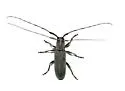
Dectes texanus
Dectes texanus
Identification: outer apex of femora dark reddish-brown to black, tarsi unicolorous, lower eye lobe usually subequal to genal area in D. sayi , outer apex of femora gray, tarsi basally pale, lower eye lobe usually shorter than genal area fairly commo
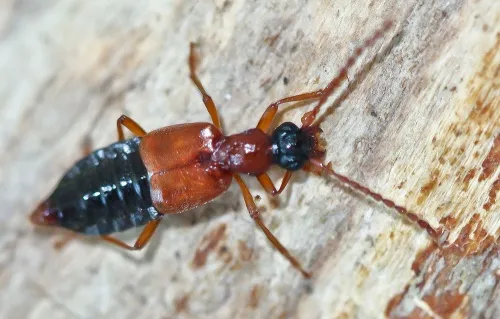
Deleaster dichrous
Deleaster dichrous
Length 7 to 8 mm. This is a distinctive rove beetle. It has a dark head but the antennae and legs are orange. The elytra are also orange, but the abdomen is dark brown-black. Flies well and sometimes visits light traps. Widespread but uncommon in Bri
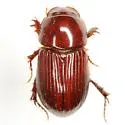
Dellacasiellus kirni
Dellacasiellus kirni
the most frequently collected scarab in Geomys breviceps burrows in Louisiana ( Tishechkin & Cline 2008 )
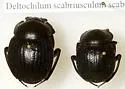
Deltochilum scabriusculum
Deltochilum scabriusculum
First U.S. report of this sp. appears to be from Leng (1920) who cites "Tex" as the range of the species. ( 6 ) Texas considers this to be a "Species of Greatest Conservation Need" (SGCN) ( 7 )
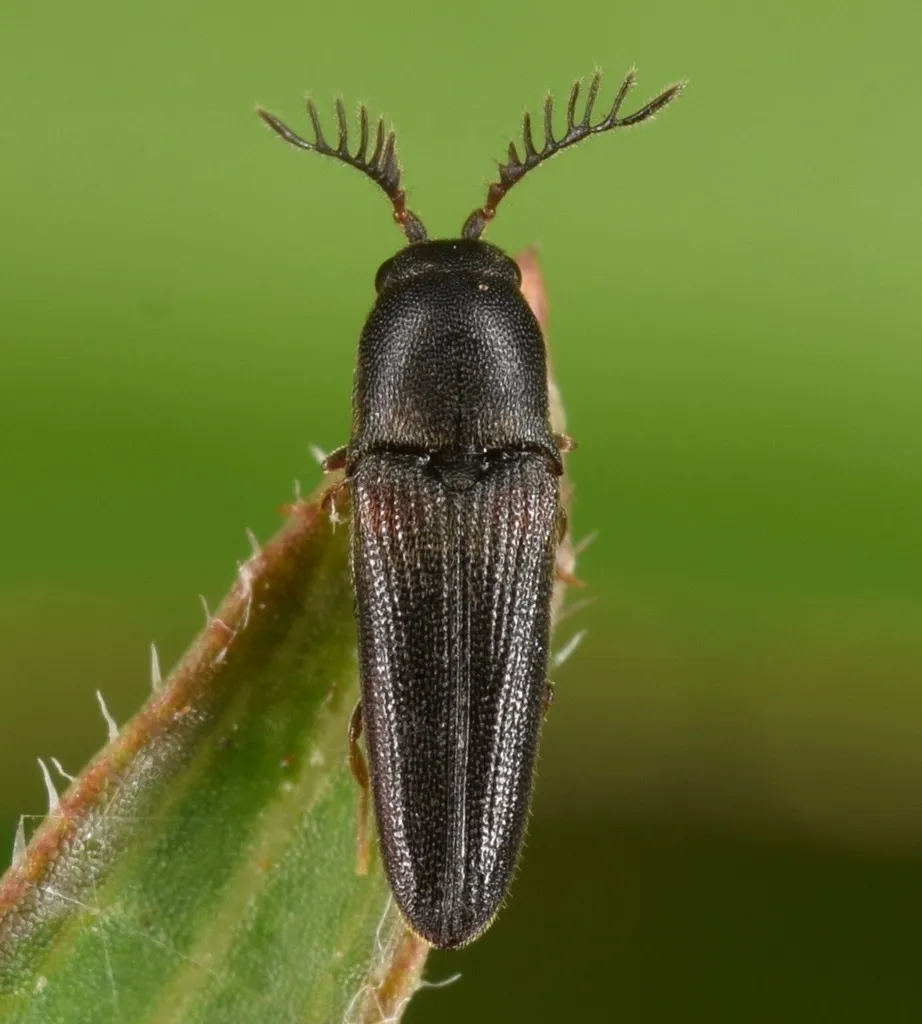
Deltometopus amoenicornis
Deltometopus amoenicornis
Identification: Black with appendages partly or entirely pale yellowish brown. Antennomeres 4‒5 always about equal to 6‒7, antennae pectinate in male, serrate in female. Prothorax bell-shaped, with antennal grooves underside. Epipleurae punctate, not
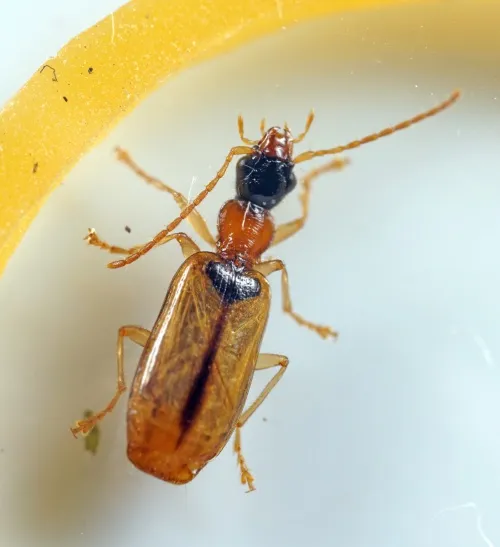
Demetrias atricapillus
Demetrias atricapillus
Length: 4.5 to 5.5 mm. Black head, red/orange pronotum and straw-coloured elytra with a dark central stripe that broadens apically. The head is punctured and hairy behind the eyes. Other Demetrias species have more marked elytra. The bi-lobed tarsal
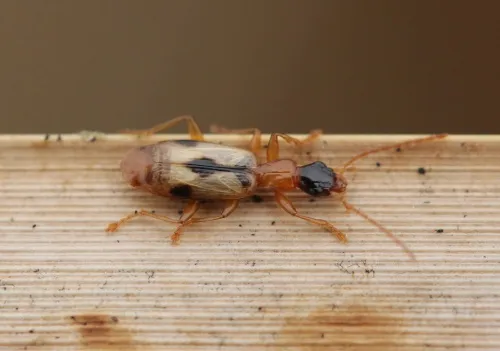
Demetrias imperialis
Demetrias imperialis
Length 5 to 5.5 mm. A distinctive ground beetle. It has straw brown elytra with dark/blackish markings. This is a rare species in our area and good photographs are required to support records. Uncommon in Britain and classed Nationally notable B. Mai
Demotina modesta
Demotina modesta
Identification: Note serrate margins of the pronotum: earliest US record is a spmn coll'ed in 1970 from n.Georgia Leaf curl and distortion caused by these beetles seems to be unique among the leaf beetles that feed on oaks. (Baker, 2023)
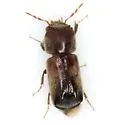
Dendrobiella sericans
Dendrobiella sericans
Identification: Forestry Images Det. V. Belov, 2014 Type locality: Ringgold Barracks, Starr Co., Texas
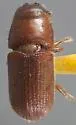
Dendroctonus brevicomis
Dendroctonus brevicomis
The oleoresin of pine bark is rich in volatile terpenes which attract the females who settle to feed on the bark. Once settled they attract males who arrive and release frontalin, which mixes with the female's chemicals (exo-brevicomin and myrcene) t
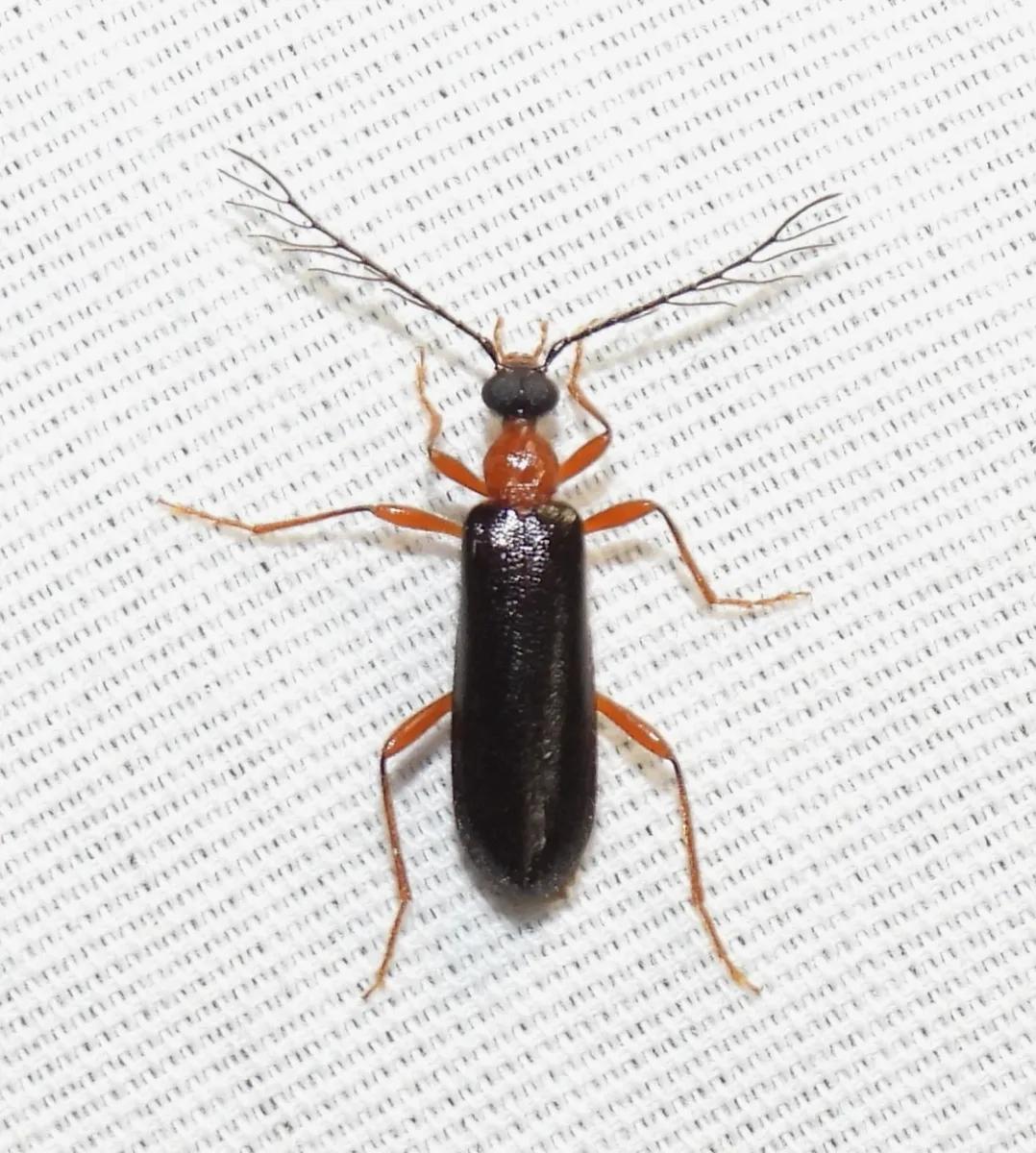
Dendroides canadensis
Dendroides canadensis
Identification: female / male larva: urogomphi (tail spines) relatively planar, not recurved: Adults active at night. Perhaps the most abundant species of the genus.
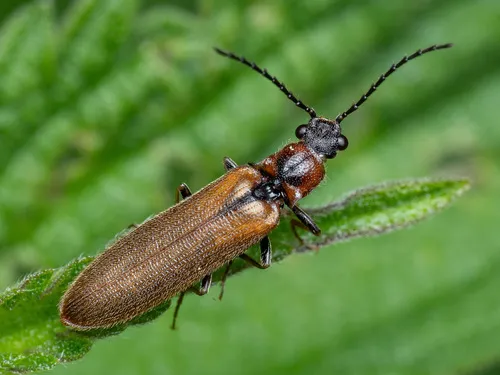
Denticollis linearis
Denticollis linearis
Length 9 to 13 mm. Although a variable species, the pronotum is always orangey red. The elytra can be various shades of brown and have pitted rows down their length. Various habitats from meadows to wooded areas. The larvae are found mainly under loo
Derelomus costiger
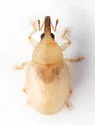
Derelomus costiger
Identification: shape of elytra mimicks petals of its host, Phoenix reclinata (Arecaceae)
Dermestes murinus
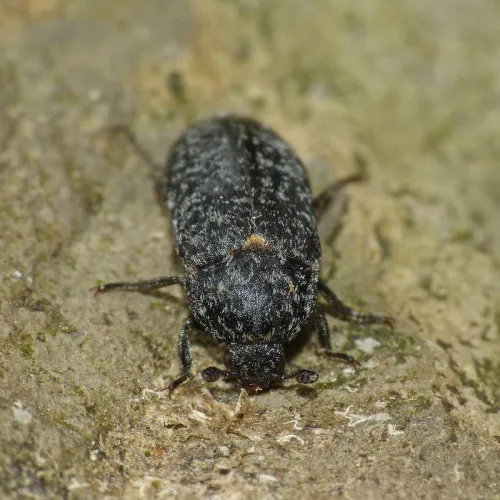
Dermestes murinus
Length 7 to 9 mm. Head, pronotum and elytra uniformly covered with recumbent stiff black and white hairs arranged in groups forming patches. Golden patches usually also present on pronotum on each side of a disc near middle of anterior margin and on
Dermestes rattus
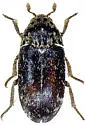
Dermestes rattus
Identification: D. r. rattus holotype • D. r. tristis syntype
Dermestes signatus
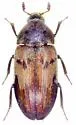
Dermestes signatus
Identification: Holotype Similar in coloration to D. lardarius but the elytral base is completely setose and doesn't appear as a dark band or patch