
Hornet
Vespa crabro
This record describes Vespa crabro (species). Recorded family: Vespidae. Recorded order: Hymenoptera.
Identification and Appearance
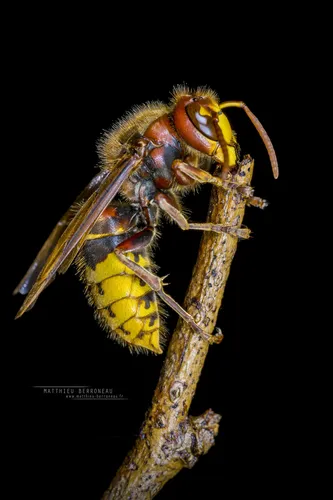
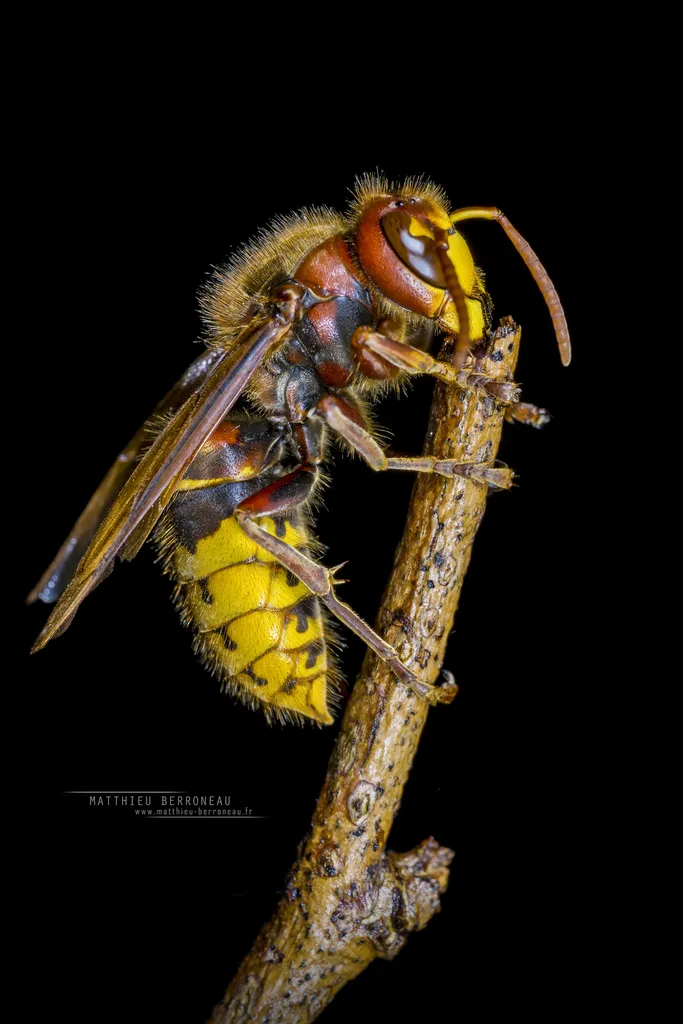
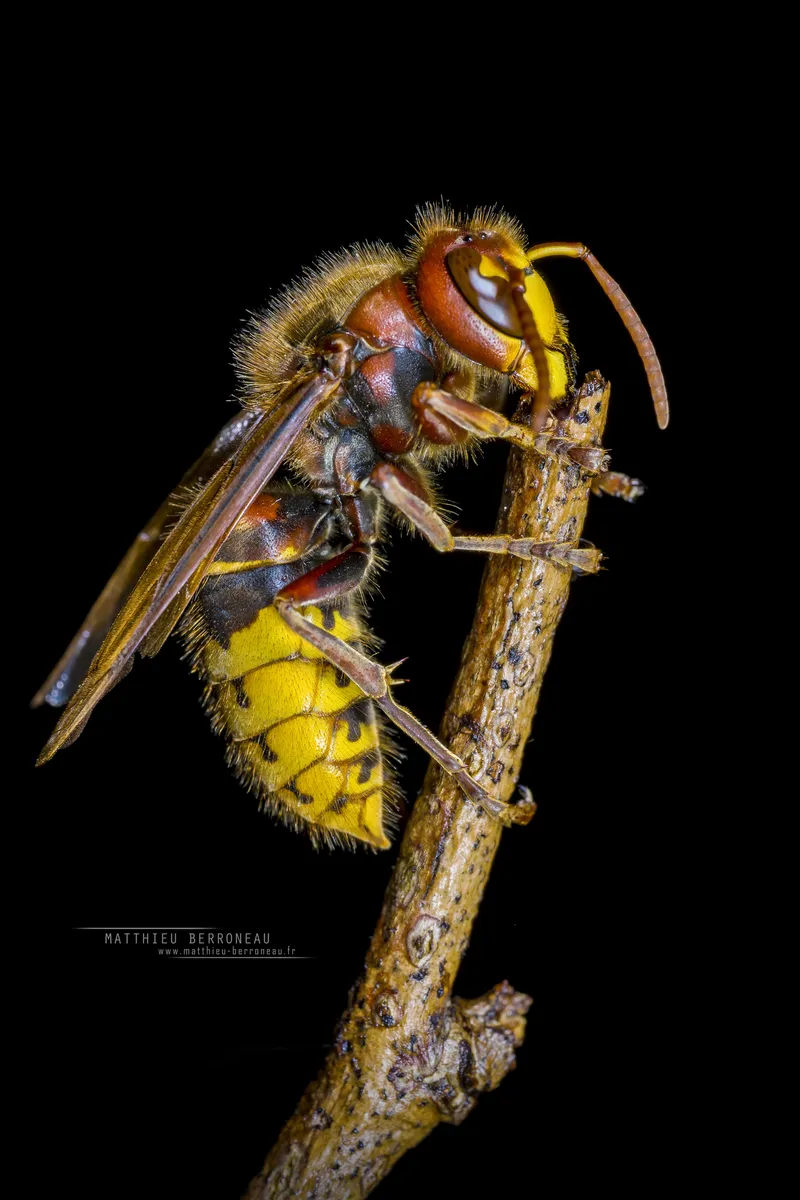
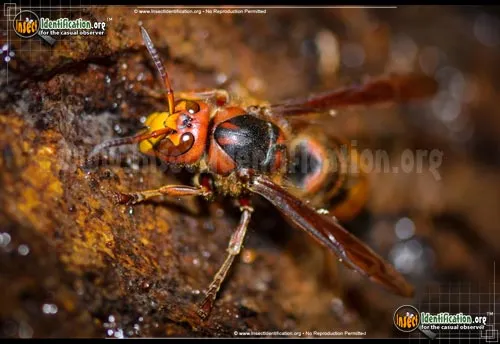
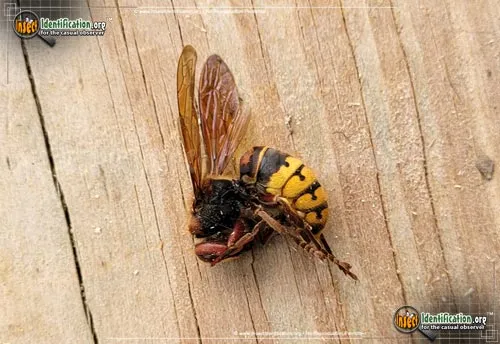
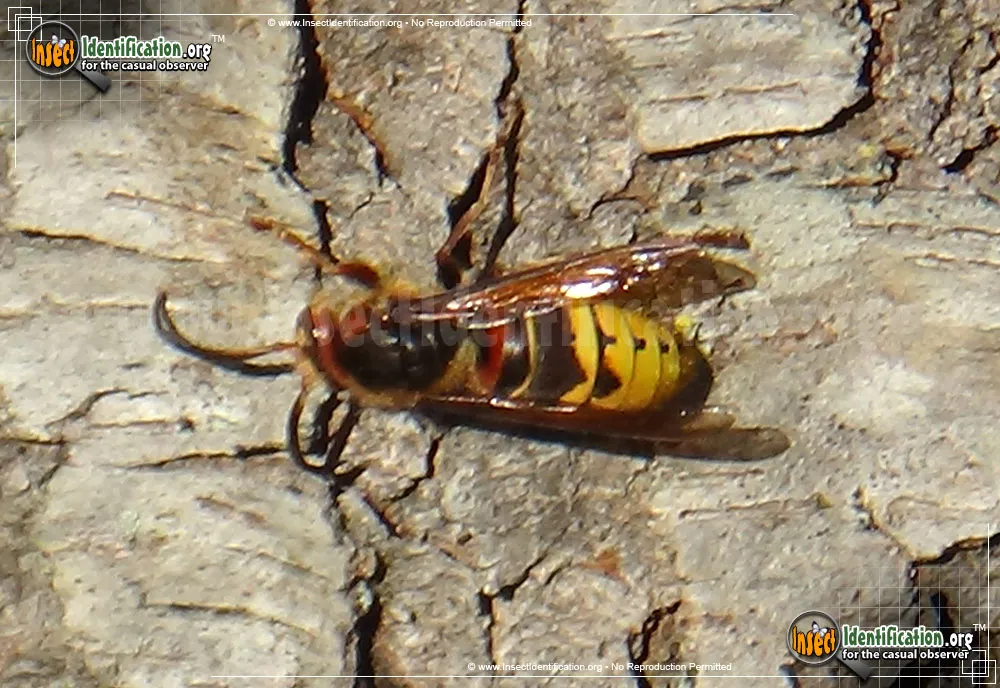
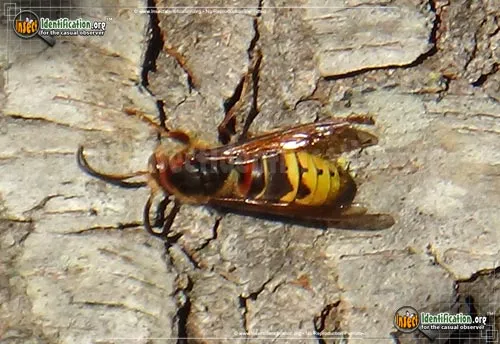
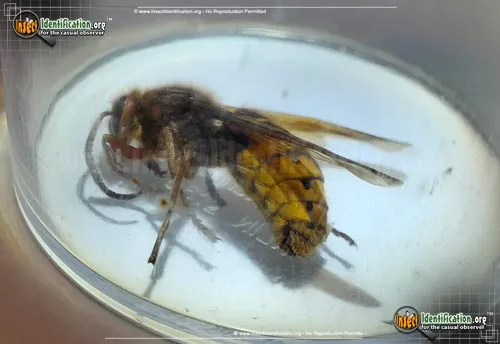
Size 25 to 35 mm. The hornet is an impressive insect and is Britain's largest social wasp. Queens (reproductive females) are larger than the males and workers (non-reproductive females). The thorax area is brown and it has alternating bright orange-yellow and brownish-black stripes along the abdomen. Can be distinguished from the invasive Asian Hornet, Vespa velutina (a.k.a. the Yellow Legged Hornet) by the dark legs. The only other likely confusion is with a queen Median Wasp , but the Hornet is larger and the front of the abdomen is red (see Identification Aids below). It is rarely aggressive unless the colony is threatened. Queens emerge from hibernation during the spring, and they search for a suitable location in which to start a new nest. The queen begins to build the nest with chewed wood pulp, and a few eggs are laid in individual paper cells; these eggs develop into non-reproductive workers. When 5-10 workers have emerged, they take over the care of the nest, and the rest of queen's life is devoted solely to egg laying. The nest grows throughout the summer, reaching its peak size towards mid September. At this time the queen lays eggs that develop into males (drones) and new queens, she then dies shortly after. The new queens and males mate during a 'nuptial flight', after which the males die, and the newly mated queens seek out suitable places in which to hibernate; the old nest is never re-used. Fairly common in some parts of the south of England. It seems to be spreading northwards and has reached south Yorkshire.
Identification notes
Aids below).
| Activity terms |
|
|---|---|
| Other recorded terms |
|
Terms from the source record, grouped for readability. Broad terms such as size or location are not measurements or a confirmed range.
Wikipedia reference for Vespa crabro: http://en.wikipedia.org/wiki/European_hornet.
Classification
- Kingdom
- Animalia
- Phylum
- Arthropoda
- Class
- Insecta
- Order
- Hymenoptera (Ants, Bees, Wasps and Sawflies)
- Superfamily
- Vespoidea
- Family
- Vespidae
- Subfamily
- Vespinae
- Genus
- Vespa (Hornets)
Imported taxonomy record. Source availability varies; see the source references and editorial policy below.
Habitat and Range
Habitat
Woodlands, parks and gardens
Seasonal Activity
May to November.
Additional species information
Recorded status
Fairly common in some parts of the south of England. It seems to be spreading northwards and has reached south Yorkshire.
About Flies: the wider group
Order-level background for Hymenoptera, the group containing Vespa crabro. Species-specific details appear above.
Group overview
Hymenoptera includes over 150,000 described species of ants, bees, wasps, and sawflies. Earth harbors approximately 20 quadrillion (20×10^15) ants, with a combined biomass of ~12 megatons of dry carbon - exceeding the combined biomass of all wild birds and mammals (PNAS, 2022).
Ecological role of the group
About 35% of the world's food crops depend on animal pollinators. The chocolate industry, valued at over $100 billion, depends on pollinating flies and midges. Ants are the dominant soil engineers in most terrestrial ecosystems, turning more soil than earthworms in many habitats.
Economic and practical significance of the group
Pollinators contribute $235-577 billion worth of annual global food production (FAO). In the U.S., bee pollination alone benefits crops valued at $18 billion annually, and honey bees are responsible for $5.4 billion in agricultural productivity. Between April 2023-2024, 55.1% of managed honey bee colonies were lost. The U.S. bee population dropped from 5 million to 2.5 million.
Recorded sources for this group: FAO, USDA, EPA, PNAS (2022), US Fish & Wildlife Service. Imported estimates may describe particular regions or reporting periods.
Photos of Hornet (10)
Frequently Asked Questions About Hornet
What is Hornet?
Hornet (Vespa crabro) is a species in the family Vespidae, within the order Hymenoptera.
How big is Hornet?
25 to 35 mm. The hornet is an impressive insect and is Britain's largest social wasp. Queens (reproductive females) are larger than the males and workers (non-reproductive females). The thorax area is brown and it has alternating bright orange-yellow and brownish-black stripes along the abdomen.
How do you identify Hornet?
Aids below).
Where is Hornet found?
Habitat: Woodlands, parks and gardens
When is Hornet active?
Hornet: seasonal activity - May to November..